0:00
Dog grooming genius here. Most people see a busy dog salon, but I see operational excellence.
0:07
Thanks to genius, from global payments. Scheduling, personalized, checkouts, instant,
0:14
absolutely genius. From game day crowds to every groomer in this shop,
0:19
genius keeps everything flowing seamlessly. Flawless execution, big league reliability for
0:26
any business. That's genius. Hi, this is Alex Cantrowitz. I'm the host of Big Technology podcast,
0:33
a long time reporter and an on-air contributor to CNBC. And if you're like me, you're trying to
0:38
figure out how artificial intelligence is changing the business world and our lives. So each week
0:43
on Big Technology, I bring on key actors from companies building AI tech and outsiders trying
0:49
to influence it, asking where this is all going. They come from places like Nvidia, Microsoft,
0:54
Amazon and plenty more. So if you want to be smart with your wallet, your career choices,
0:58
and meetings with your colleagues and at dinner parties, listen to Big Technology podcast
1:02
wherever you get your podcasts. Have you ever noticed how people use the word actually
1:09
in conversation? It's one of those small words that shows up all the time, but it doesn't
1:17
always mean the same thing. Sometimes actually is used to correct someone. Sometimes it adds
1:25
new information and sometimes actually helps soften disagreement so you don't sound too direct.
1:34
Like someone might say, actually I already did that or actually there's another option or even
1:43
actually I think we should wait. So in today's podcast English lesson, we're going to look at several
1:52
very practical ways that you can use actually in everyday English.
2:01
Welcome to another happy English podcast coming to you from New York City and here's your
2:07
English teacher, Michael. Alright, thank you John and thanks everyone. It's Michael here from
2:15
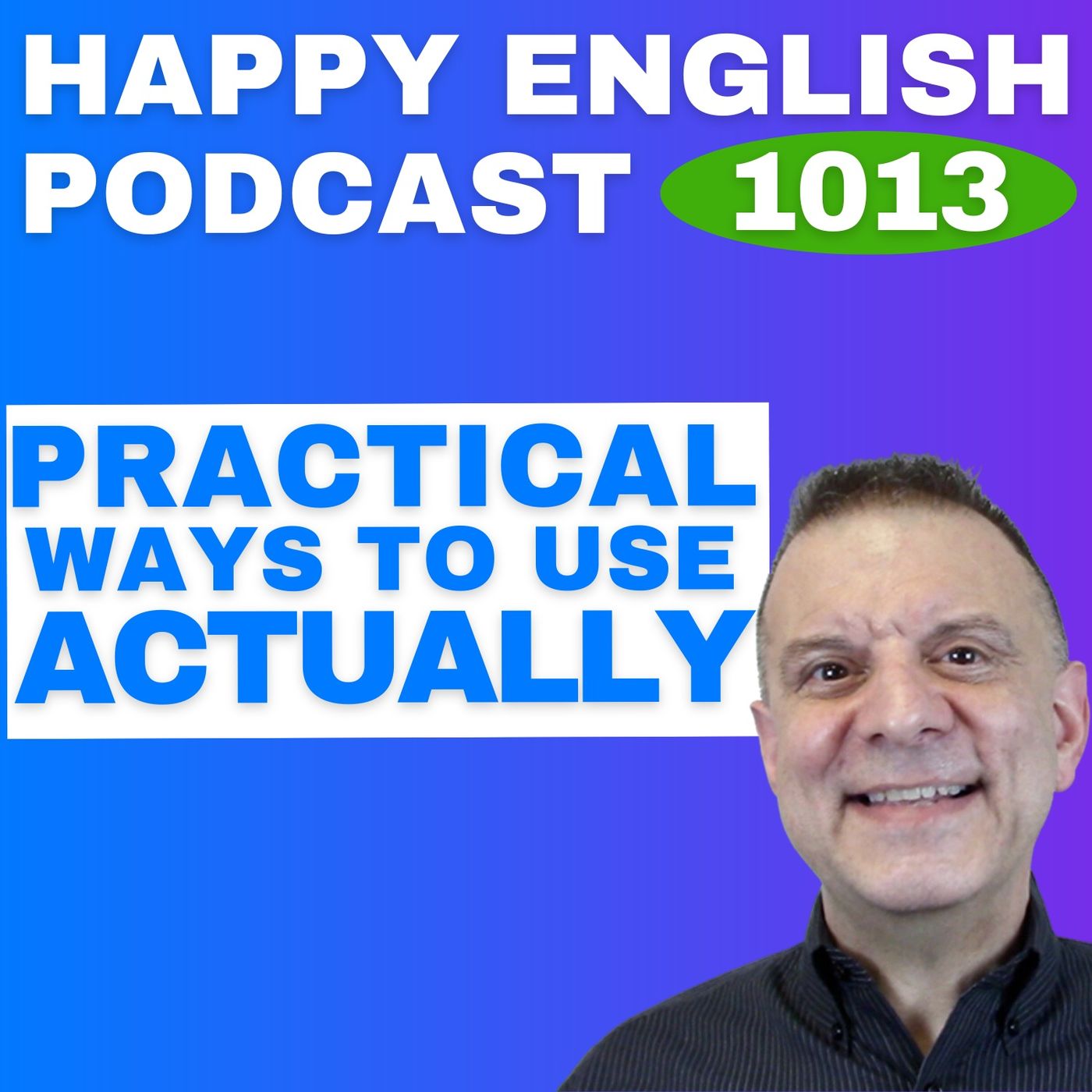
Happy English and I help people speak English better. And this is Happy English Podcast episode
2:23
2013, practical uses of actually in everyday English. Let's start off with one of the most common
2:34
uses of actually and that is correcting assumptions. We use actually when someone says something that
2:44
isn't correct or when they assume something that's not true and we want to gently correct them.
2:53
Like imagine a coworker says, uh, can you send that email to the client? You might reply,
3:01
actually I already sent it this morning. In that situation, actually helps you correct the
3:10
misunderstanding in a calm and natural way. Here's another example. Maybe a friend says, oh,
3:19
you don't like spicy food, right? You could say, actually I do like spicy food or imagine someone
3:28
thinks you're busy this weekend and says, I guess you're working all weekend again.
3:35
You might reply, actually I'm free this weekend. Have I ever said that? Hmm. So when we use
3:43
actually like this, we're correcting what the other person thinks, but we're doing it in a polite
3:52
gentle and conversational way. Another very common use of actually is when we want to add
4:02
information or introduce a new idea. In these situations, actually helps signal that what you're
4:11
about to say is something the listener may not know yet. Like imagine you and a friend are planning
4:20
dinner and your friend says, let's go to that Italian place. You might respond, actually there's
4:27
a new restaurant that just opened down the street. Here's another example. Maybe you're talking
4:33
about travel plans and someone says, are you flying to Osaka? You might say, actually I'm taking
4:41
the train. Or at work, if someone suggests one idea, you might say, actually we could try a
4:50
different approach. In these situations, the word actually introduces new or additional information
4:59
in a smooth natural way. Another important use of actually is for soft disagreement. In English
5:09
conversation, we often try to avoid sounding too direct when we disagree with someone.
5:16
Using actually helps make your disagreement sound more polite and less confrontational.
5:25
For example, imagine a friend says, I think this movie is really boring. You might respond,
5:32
actually I think it's pretty interesting. The word actually softens the disagreement.
5:40
And here's another example. Maybe a co-worker says, we should finish this project today.
5:46
You might reply, actually I think we should wait until we have more information. Or imagine
5:53
someone says, this restaurant has the best pizza in the city. You could say, you know, actually,
6:00
I think the place we went to last week was better. In all of these cases, actually helps you express
6:09
a different opinion in a more gentle and conversational way. And here's something important to keep
6:16
in mind. The tone of voice matters a lot when you use actually. If you say it with a neutral
6:23
or friendly tone, it sounds helpful and natural. But if you stress the word too much like,
6:30
actually I think we should do it tomorrow, it can sound a little rude or like you're correcting
6:36
someone too strongly. So when you use actually, it's usually better to keep your tone relaxed.
6:43
So let's recap. Native speakers use the word actually in several practical ways in every day English.
6:51
First, we use actually to correct assumptions. Actually, I already did that.
6:59
Second, we use actually to add new information or additional information. Actually, there's another
7:07
opinion. And lastly, we use actually to soften disagreement. Actually, I think we should wait.
7:16
It's a simple word, but it plays a big role in making your English sound more natural and
7:22
conversational. So here's your challenge. This week, try using actually in one of these situations.
7:31
Maybe you need to correct someone politely or add a new idea to a conversation or express your
7:37
opinion in a softer way. And as you listen to English around you, notice how often people use
7:44
actually. Once you start paying attention, you'll hear it everywhere. And keep in mind, the best
7:51
way to remember English like this and any other word or phrase in English is to take that word or
7:57
phrase, write it in a sentence that's true for you or true in your world and then memorize your
8:05
sentences. Hey, thanks for listening. And remember, learning another language is not easy, but it's
8:11
not impossible. And I'm here to help you on your journey.
8:41
Hi, this is Alex Cantrowitz. I'm the host of Big Technology podcast, a long time reporter and an
8:48
on-air contributor to CNBC. And if you're like me, you're trying to figure out how artificial
8:53
intelligence is changing the business world and our lives. So each week on Big Technology,
8:58
I bring on key actors from companies building AI tech and outsiders trying to influence it,
9:04
asking where this is all going. They come from places like Nvidia, Microsoft, Amazon and plenty more.
9:09
So if you want to be smart with your wallet, your career choices, and meetings with your
9:13
colleagues and at dinner parties, listen to Big Technology podcast wherever you get your podcasts.