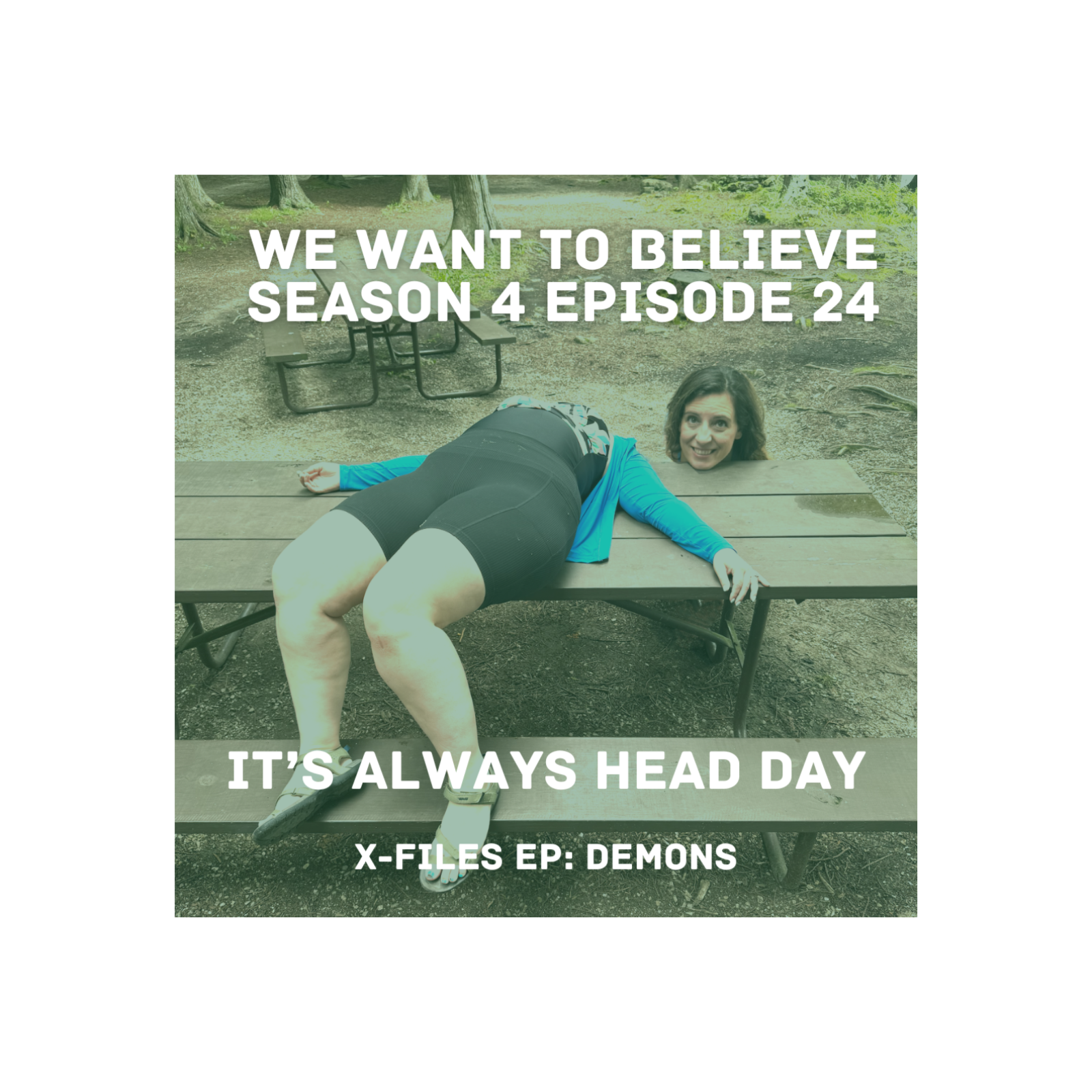
About this episode
Liz and Helen discuss "Demons," along with Helen's appearance in someone else’s X-File, interpretive dance with a knife, and Monty Hall (again). Plus, Helen might look at the goblin men, but she will not be taking ketamine.
💚👽💚👽💚
Find more info about Helen and Liz at our podcast website: wewanttobelievepod.com
Follow us on Instagram: @WeWanttoBelievePod
Email us with your questions, thoughts, or your own spooky X-files-style experiences here: [email protected]
Buy Liz's young adult novel, Mighty Millie Novak, anywhere you buy books, or start here: elizabeth-holden.com/millie.html
Support Helen and Zach's charity, The Marigold Foundation: https://www.themarigoldfoundation.org/
Get every episode summarized
Each time We Want To Believe publishes, we email you a written briefing from the transcript — the topics, who appeared, and any specific claims, with the ad reads skipped.
Email me new episodesFree for 3 shows. No card needed.
Hosts & guests

Transcript ready
1,787 searchable segments. Every word is indexed and playable.
Full transcript
We Want To Believe — 103 - It's Always Head Day ("Demons"). Machine-transcribed; use the interactive transcript above to jump the player to any line.
You're listening to a podcast right now, driving, working out, walking the dog. If you're in a podcast, chances are you have something to say too. With RSS.com, starting your own podcast is free and easy. Upload an episode and we distribute it to Apple Podcasts, Spotify, Amazon Music and more. Track your listeners, see where they're from, and start earning from ads just like this. If you've been thinking about starting a podcast, this is your sign. You're listening to a podcast right now, driving, working out, walking the dog. If you're into podcasts, chances are you have something to say too. With RSS.com, starting your own is free and easy. Upload an episode and we distribute it to Apple Podcasts, Spotify, Amazon Music, and hundreds more. Track your listeners, see where they're from, and start earning from ads like this. Even with just a few things to do with it. And start earning from ads like this. Even with just 10 listeners a month. If you've been thinking about starting a podcast, this is your sign.
Start free at RSS.com. I'm Helen and I'm Liz and we're sisters, scientists, and lifelong ex-files fans. And this is We Want to Believe. Welcome colleagues. Hi, everyone. I was in somebody else's ex-files episode, I think. What does that mean? It means I had a travel experience where I'm pretty sure that I was like, not the main character, because nothing bad happened to me. Were you the monster? Weird. Were you like a cryptid? Yeah, surprise. No, like I think I was like, someone you might see in an ex-files episode, and they're just going about their life. Okay, so I went to Denver for a conference. And everyone I think is familiar with Blusever.
We've talked about Oh, Blusever, of course, yes. The Demonic Horse Statue outside Denver Airport. So I was flying from Chicago to Denver for a conference like I said. And we got on our plane from Chicago. It was me and a colleague of mine. And I was like, almost asleep when they tell us that we're de-planning because the Denver Airport lost power. Oh, and I was like, what? It lost power. How did I not exist? It lost power. Oh, you did. The Denver Airport, the whole airport lost power. That's insane. Yeah, did it? Well, maybe. I don't know. I was just reminding people. Oh, yes. So we had to de-plane. I loved that. When you're like, you barely even notice takeoff because you're already all dreamy.
Yes. But I had to get up and get out on my seat. And like, no one was in a hurry because we were just going to wait at the airport. So it took forever to de-plane. And then this is unrelated. But we weren't sure how long we were going to have. And we were waiting for an update. And so I grabbed a cup of coffee. And I got a small, but the small was like 16 ounces or something ridiculous. And then I got back from getting the coffee. And Leslie and my colleague was like, oh, they said they're going to start boarding again. I was like, oh, okay. But now I'm annoyed because I want to take a nap. But now I have this big cup of coffee. And now you're holding a big coffee. Yes, absolutely. And so I was like, still had taken drama. That's what makes the nap so nice. Yeah. And we get back on the plane. And I start dosing off. But I'm holding this cup of coffee. And then there's like a half a week part of my brain that goes, no, you know what? You know, I got a little little babies while I've slapped.
I bet I can hold this cup of coffee and take a nap. Just like, I'll just cradle it like a baby. And so I did it. That makes sense. Yeah. Why not? Yeah. Yeah, I was like, if I can hold a baby and take a nap. And so I like got the coffee and my elbow. But anyway, so the power went out. That was weird. So we get back on the plane. And I've got my giant cup of coffee. And the guy sitting next to me takes out his laptop. And he's pulling stuff up. And I see like the like login email, you know, when you like on someone's entry. You know what I mean, right? Like you open your laptop. And it's like, oh, hello, Helen put your password in, you know. And it's an Air Force email address. It's like AF.mil. And then he puts in, he takes out from his wallet like an Air Force ID and puts it into his computer. Like a physically into it. Yeah, like it's like an SD card or something. Oh, I didn't know that was a thing. Yeah. And me neither.
And then he like put it back. So this is part of the ex file. So potentially that I was, yeah. So the airport lost power. I'm sitting next to someone in the Air Force who like doesn't be weird with his computer before we take off. And then I took my nap and curtailed my coffee. And then had a lovely trip to Denver. Oh good. Got to see our aunt. But then I'm on the way to the airport. And I see Britain in chalk on the side of a building. Do not look at the goblin men. What? Yeah. And I was like, wait. Yeah, what? That was my apparently. And so I have some information. So I looked up the phrase. Yes. And it's from the poem Goblin Market. Oh, I heard of it too. Poem by Christina Rosetti. Yes. I learned about her. I know her because she's referenced in an episode of Brooklyn 999 when they're doing a polar plunge. And Captain Holt wants to read the poem in the mid-winter by the film Christina Rosetti.
Yeah. So that is how I know who she is. That's awesome. She was an English writer. And who she's related to someone. Oh, so okay. Her mother is Frances Paladori. Who's the sister, like the Palladori who wrote the vampire story. Wow, no kidding. Right. So that her mother is Frances Paladori, who's the sister of John Williams Paladori. The vampire story writer. Yeah. Yeah. Yeah. And she wrote this poem Goblin Market. And it's about these two sisters. One of whom is named Lizzie. The other's named Laura. And like Laura wants to is like intrigued by the strangeness of the Goblins. And Lizzie is telling her like, no, don't look at the Goblin man. But that was written on some building in Denver. And so I was like, well, I think I'm in
someone else's ex-file. Yeah, I think you're right. Yeah, Laura's. Yeah. Whoa, that is an alarming thing to read. Wow. Yeah. Okay. So don't. Don't look at the Goblin men. Yeah. All right. If given the opportunity to look at them. Nope. Nope. Yeah. And of course you're telling me that, Lizzie. Of course I am. Yeah. It's good advice. But it's so tempting. Okay. You could have regretted if you look at the Goblins. Yeah, that's exactly what I do. I'm Laura. Yeah. Yeah, you would look at the Goblins. You would. Yeah. So that's interesting stuff.
Fine. Nice. I like it. I have some news as well. The first is an update. It was reboot that Ryan Kugler is doing. Oh. And it is a Himmish Patel. Himmish? The apologies if I...Hymesh. Himmish. Probably Himmish. I'm pronouncing it wrong. Okay. Himmish Patel. He was in...I don't know if you saw it. I didn't. But the movie yesterday where this guy wakes up in a world where the Beatles don't exist. And everyone thinks he's a genius because he can do the music of the Beatles. Yes. I have guys. Both. Like that movie. Oh good. So I know who that is. Oh my gosh. He's British. He's cool. He has Molder's birthday. Really? Yeah, 10-13. Oh my gosh. That's awesome. Yeah. I'm excited about that. I think that's cool.
They're not playing Molder and Scully. They're playing original characters. I think slightly more than cautiously optimistic. Yeah. Jillian Anderson has talked about how she's talked around Kugler about it. And, like, heard about some of the scripts and says, like, this could be really fucking cool. Cool. Oh my gosh. Yeah, I love it. That's exciting. Yeah. The other thing I have to bring up...I'm sorry. I bring it up so much. But I really am excited about it. Is the Monty Hall problem? You're excited about it? Yes. You have new information. You have found a way...you know how, like, you know, the dress, the, like, the gold and white, like, blue and black dress. You know how, like, once you see it, a certain way, all of a sudden, it could, like, when, sometimes it could just shift and then you're like, now it's this color. And it's stuck in that color. I feel like I had that happen with the Monty Hall problem. And now I get it. Not just mathematically, but instinctively. Oh, interesting. Yeah. Yeah. So I want to explain it in the way that helped you again. Okay. Can you give a brief overview as well for people that are less familiar?
Yes. Yes. Of course. Of course. The Monty Hall problem. I spent hours on, like, I don't know. Was it Mother's Day? What was it? I think it was Mother's Day going through different scenarios. Yes. And I think, you might have been doing them. You were doing some staff stuff that I was not involved in. But we also were just trying to run it over and over. Yeah. And I think I was doing that wrong. Oh, really? And that's why we weren't getting correct results. Oh, tell me. I think I forgot to show the goat to the children. That's such a weird sentence. So again, the Monty Hall problem says that it's from, let's make a deal. The game show host is Monty Hall. There's three doors behind one door is a car behind the other two doors are goats. And in this scenario, you'd prefer the card of the goats. I guess that's fine. Presumably the goats will be. I don't know. I always get real hung up on the goats and like their roll on the symbol. Just move past it for the moment. So you pick a door. And then this is the key. Monty Hall opens a different door and says, look, here's a goat.
Right. Would you then like to switch your door? Yeah. So for example, you choose door one. Yes. He shows you that. That door has a goat behind us. Yeah, you're like, oh, I can have the door with the goat. Absolutely. Yeah. Yeah. So he. It's because he knows which door has a car and he knows he's going to show you the goat. So again, in this scenario, let's say you choose door one. He shows you door two has a goat and says, would you like to switch to door three? It's changing the probability. Right. It's it's changing. It's going from one and three to one and two. It's going from one and three to two and three, actually, because, okay. What this is what helped it click for me. Okay. Essentially, forgetting the goat aspect of things, essentially what he is saying is, would you like to choose this one door, which you already have? Or would you like both of these other doors? Now, you know there's a goat behind one of them and you're not going to have to deal with that one.
Because obviously you would want more doors. No, this is another one. Okay. So let's try another thing. I have another one. Okay. Money Hall has a hundred doors. You choose a door. Say you choose door one. He then opens 98 other doors, shows you 98 goats and says, would you like to switch to this last door? Or would you like to keep your door? I think in this case, it seems pretty obvious. Odds are very good that you should switch, right? Like, yes. And it's the same idea with three doors just scaled down, just less dramatic. Okay. But I feel like that only works if you're assuming that he wants you to find the door with the car. Like he's saying, like, do you want to switch? Like the way that like, you know, like a student will be like, can you help me with this problem?
And I'll be like, well, I mean, it's not like that because it does depend on the fact that he knows there is no goat under the door, no car behind the door he's going to show you. He's always going to show you a door that has a goat behind it. And I think I just forgot to do that when we tried to simulate this at your house. I just was running it and being like, you chose a door, would you like to switch your door? And then kept going, which obviously, no, I need to be like, you chose a door. Door two has a goat behind it. Would you like to switch to door three? But if you could switch to door two or door three, then there's no advantage. Yeah, I don't know. For some reason, it still isn't clicking for me. Like I get it mathematically, but this isn't helping. I'm going to read one thing and then I will stop. Okay. Okay. So this is a quote from somebody on the jet lag of the game Reddit page because they did a challenge on jet lag the game related to the money haul problem.
They say, I think the best way to understand it is by first changing the second question. Instead of opening a door with a goat shenanigans, imagine that the hosts simply offered you both remaining doors. Now the choice is between your one original door against two doors and it should be clearly better to take the offer. You win if the car is behind any of the doors you didn't choose in the first step. Okay, hold on. So I choose door number one. And in this scenario, they're saying, would you like to choose door two or three? Yes, instead. Yes. And then it would be yes, because then you have twice the chance of being right. Okay. Yeah, going. So that is identical. They say, and what the host actually does amounts to the same thing because he will always open a goat door that you didn't choose. By swapping, you will win if the car is behind any of the doors you didn't choose in the first step, which is exactly the same as the two doors version.
Interesting. Yeah. Okay. Okay, that's the whole thing. When you make your first choice, you have a one-third probability of picking a car door. Yeah. The two-thirds probability of picking a goat door. Staying is a bet that your first guess was correct. One-third. And switching is a bet that it was wrong. Two-thirds. Yeah. Okay. Yeah. Okay. Yeah. Interesting. Good stuff, right? Okay. Is this, um, were you watching the, is this what made a click for you? Were you watching that show? So watching JetLeg did not make a click, but it made me excited about it. But it was making bunches of people online talk about the money haul problem. Oh, okay. And when I read that person's explanation, I was like, oh my god. Yes. Ah. I see. Yeah. Okay. I love it. Yeah. That's very helpful. Yeah. I was going to just wait until the next time I teach biometrics and then be like, all right, you all have to figure this out for me. You can, you can leave the classroom when you move the money haul problem.
So today, we were talking about Bethesma. No. Demons. You're watching Bethesma. Hold on. I've been practicing saying it. Bethesma. Bethesma. Bethesma. Bethesma. Bethesma. Bethesma. Bethesma. Okay. But you're watching that next week. Oh, okay. All right. So I didn't even have to poorly pronounce that. Yeah. I just chose to. Yeah. It's a recreational pronouncing of things. Yeah. So, yeah, we're talking about demons. Okay. And I somehow didn't remember this episode again, which is wild to me, because it's of like kind of a lot of conspiracy stuff in it. I did a lot of research as well. So I'm going to. I'm not sure yet when I'm going to bring it in. We'll just see what happens. Okay. Cool. So it opens. And it's like kind of distorted. Bold colors. Like weird in like weird sounds. A scene of adult molder being with his child self and Samantha.
In like the kind of. What do you call it? Loft area of this house. And Samantha is telling him to be quiet and saying she's scared. And their parents are downstairs fighting. And you hear Mrs. molder saying no, my baby, or something like that. Oh. Okay. Yeah. And then molder wakes up. And his shirt is covered in blood. What? Yep. And it is not even five in the morning. He calls Scully and Scully is like, where are you? And he looks at the keychain he's got. And he's like, I think I'm at a hotel in Rhode Island. Whoa. Yeah. And so Scully goes out to get him. And the last thing he says is, I don't think this is my blood. Okay. Whoa. Yeah. Weird. Yeah. I don't think I've ever seen this. How did we do this? I mean, I know I've seen it, but not much. It's not when I rewatched. And I mean, it is intense. Really? Yeah. Wow. Okay.
I mean, all right. Yeah. I never think about the music, but for some reason this time I really was. So like Mark Snow is the guy who does the X-Files music. It's so good. Like, it's really. I love all the music. It is. Oh my gosh. Yeah. So Scully comes in, molders like in shock. Like he's in the shower. He can't get warm. He's like a mess. And he doesn't even remember making the call to Scully. He doesn't know. No. Like anything that's going on. So she examines him and she's like, you gotta go to the hospital. And like the last thing he remembers is talking to her on the phone when he was in his apartment on Friday. And it is now Sunday. So he's missing two full days. He doesn't know how he got there. Scully looks at his gun and there are two rounds missing from it. So that's not good. Yeah. And she's like, you gotta go to the hospital. Like, which is her whole refrain throughout this whole episode, which I thought was very valid. I mean, this is this is like the most molder is ignoring obvious situations where he should go to the hospital episode ever, if you will.
Man. So he wants to figure out what's going on. And so he has a keychain, not not the hotel key, but like with a car key on it. And it says Amy. And there's a car in the parking lot where the steering wheel is covered in blood. And then the keys work. And so it's like, okay, he'd probably drove that here. They look up. Oh, yes. I'm sorry. I just have to drop. Please. I just finished the book. Everyone in my family has killed someone. Oh! I thought it was fantastic. Yes. That just little bit reminded me of it. Yeah. So another reminder to people who have not read the book to read it and telling you that I have now finished it. Yeah. Isn't it disturbing, but like really good. And like, yeah, it was, I didn't find it super disturbing. I thought it was a little funny. Oh, yeah. It was definitely funny. Like, I love business line where he's talking about somebody who is involved in MLMs. And he's like, I don't want to call it anything particular. But let's just say the Egyptians built them or something like that.
Yeah. Yeah. Yeah, I thought it was funny, but like gruesome. Maybe that's what I mean. Oh, yeah. A little bit. Yeah, it was really good though. So I mean, really, really good. I read so many of those books and I did not see the twist. And but I thought it was earned. Like, I felt like. Yes. It's really good. There's another one. Everyone on this train is a suspect that I enjoyed. And. Oh, same author. Yeah, it's about. Cool. It's about Argus Cunningham. It's about the same character. Oh, yeah. Awesome. Oh, cool. And then. Oh, my God, I forgot. I have it. There's a third one that just came out a week ago that I haven't read yet, but I bought it. Oh, yeah. Oh, that's exciting. Yeah, I. The like. Very, very end twist, if you know what I'm talking about. Well, I was like. Very not. Yeah. Right? It was very exciting. Yeah, I was like, yeah. How did I not see this? Like, but also I had no chance. I was not close at all to seeing it. Yeah. Nope. Yeah. I.
My. I take. My advice in these books from. Oh, yeah. In the office work said that it's. It's. Yeah, it's always the person in most medium. Exactly. And so I was like, well, who do I most medium is suspect in it? And it was. And I won't say more. But yeah. Yeah. Okay. Yeah. Were you right? Was it the person you most medium suspect? No, no, no, no. I didn't see it coming. Oh, okay. No. So. Gotcha. It was. Yeah. No, generally that that works. Yeah. It's, you know, it's never the person you most suspect because obviously it's not them. And it's never the person you least suspect because any idiot would suspect them. Yeah. It's the person you most medium suspect. Yeah. Okay. But Mulder is steering wheel. Or no, some car that he has the keys to steering wheel is covering blood. Got it. Yeah. And so the car belongs to David Cassandra, which suddenly made me go wait Cassandra. Wasn't there a character named Cassandra later in the series? Oh. Yeah. Yeah, there was. But it's not these people. Oh, okay.
But I'd forgotten. Yeah. We see a brief flash of like a younger guy cutting his face out of a bunch of photos, his own face. And a little bit of blood drips from his head. And that's unsettling. Mm-hmm. And then, okay. Next scene. They go to... Mulder and Scully go to David Cassandra's house. And a woman answers. And Mulder kind of takes a chance and goes, is Amy here? Are you Amy? Or something? And she goes, no, no, Amy's not home. I'm the housekeeper. David and Amy are out of town. And... And it's... They look inside and Mulder's like, oh, that painting back there. There's a painting of a house. And Mulder's like, I recognize that. And the housekeeper's like, oh, well, yeah. Amy painted that. Like, that's the house she grew up in. It's in... I'm gonna say Kwanaka talk. Something like that. Oh. Huh. It's a little vacation town or something. I guess the Mulder's had a summer home there. Okay. Okay. Yeah. That's familiar. Yeah. And so, Amy has done... They get to go inside and see that she has done painting after painting after painting after painting of the same house.
Oh, that's creepy. Yes. That's what they think. It is all she paints. And... So, here's... I'm gonna break away from the narrative of the episode to tell you that the inspiration for this episode. It was written by R.W. Goodwin, who is an executive producer. But he got this idea, in part, from reading an essay of Oliver Saxes in this 1995 book called An Anthropologist on Mars. Oh. And so, there's this essay called The Landscape of His Dreams. And I read it. I got the essay. I found the book on... My... On Libby. And I read it yesterday. Oh, wow. It is about... Oh, sorry. Oliver Saxes is the one who wrote the man who must stick his wife for a hat or something like that. Yeah. Yeah. Okay. Yeah. I don't know about that. I hadn't either. Yeah. So, I read this piece yesterday. He's named Franco Maniani, who is an Italian guy who is born in the 30s, who grew up in this teeny little village called...
He grew up in this little village called Pantito in Tuscany, about like 40 miles outside of Florence, real tiny little town, real charming. And he got... Sick. So, he moved away from the town. The town kind of fell apart after world... During and after World War II. Far fewer people lived there. He moved away. He was living in San Francisco. And he got sick. And they don't know exactly what he got sick with. But it seems like it might have been seizures were involved. And then he starts getting these really, really intense memories of Pantito, that like he can't even sort of control when they come on. And it's almost like physical like he looks to the left and can see down an alley that is to the left in Pantito. And, whoa. And it's all like how it was in his head... Like how it wasn't his childhood, I mean. And so, he starts doing these incredibly detailed paintings of Pantito. And that is all he paints. And it's like he has this obsession with this town that came on after this sort of medical event.
Yeah. And so, I'll tell you more about that as we go through the episode. But like that is what inspired Amy doing all these paintings of this house that she grew up in. And, and some more. So we'll get into it. But it's very bizarre. It looks like a charming little town, at least or in the 30s it was. It's very Pantito. Pantito? Or... I could talk, I think, is also nice. Yeah. Oh, I meant Pantito. Yeah, because I looked at a bunch of these paintings. I got real into this yesterday. Oh. Yeah. It's like... I mean, it's really weird. Like, there's no way he should remember exactly how the streets are shaped, given that he moved out when he was 12. And he was at that point in his 50s and had not been back. Like, he's got the layouts all perfect. The angles of these roofs and like, it's like, as if these memories are getting called up from somewhere, like in an automatic trigger sort of way. Like, he can't even control that they're coming back.
He also apparently talks about the town constantly and it's kind of irritating. Is what Oliver Sykes makes it that way. Yeah. Like... Yeah. Yeah. Geez. I mean, I totally believe how annoying that would be. And also, like... I mean, it sounds like presumably there's some sort of seizure activity or something happening in the part of his brain associated with memory. And that's what... Yeah. Fascinating. More about it as we go. Because I am, as we know, not a neuroscientist, but I've been reading a lot of stuff in the last 24 hours. So, back to Mulder and Skully. And they go to the house that Amy has been painting. And it is all decrepit and like, no one's been in there. And Skully is like, you know, if you've been here, it hasn't been recently. Like, you know, the yards have ever grown. And it's very obviously abandoned. And Mulder is outside the house and all of a sudden he like, clutches his head and starts having memories again.
Like, we saw at the beginning of the episode where he's with Samantha and his young self, his parents are arguing. And then we see that young cigarette smoking man is there. Oh. Yeah. And he notices that Mulder is eavesdropping and calls him a little spy. Oh. Yeah. So, he tells Skully about the flashback. And Skully's like, I think you just had some sort of seizure or something. I'll also note, because of course, Skully was, this was not official business. She came to help Mulder. She's dressed a little more casually and like a really great outfit with like an oversized blazer, like a black blazer. And then like a very thin gray cardigan underneath it, buttoned up. And just like kind of, I don't know, not khakis, but like casual pants, but not jeans. And just, I don't know, just looks fantastic. It's great. I dressed in such a way yesterday that a colleague told me I looked like I belonged in a Nancy Myers mood. Oh. And what were you wearing? I loved it.
I was wearing like oversized trousers. And then also oversized buttoned down shirt that I tucked into them. Oh. And then had a brown braided belt in my belt buckle. Oh no. You mean in your belt loops? You had a brown braided belt in you. Yes. Yes. Yes. Yes. Yes. Yes. Yes. Yes. Yes. Yes. Yes. Yes. Yes. Yes. I'm wearing oversized jeans today, but I think I just looked like someone who accidentally, I don't know, maybe has memories of her youth in the 90s. It came on too strong while getting dressed. Yeah. No, you're going to talk about McHenry Illinois all the time. Yeah. And the skater kids hung out at the spot. And that was right next to the jewel. And they'd skate around the parking lot and smoke cigarettes. And I would go there sometimes and say hi. And I don't know. Anyhow, Muller and Scully go in the house once Muller is feeling better. And Amy and David Cassandra are in their dead from gunshot wounds.
Oh no. Because there's two of them. And he's missing two bullets. Yeah. The math is not good. No. So some cops come and the detective who's involved is very suspicious of Muller, obviously. And so he ends up taking him in. And Scully somehow gets access to the person doing the autopsy. I feel like that was generous of them. I guess maybe because she's FBI, but I feel like I guess they just let her. Okay. And she notices that there is a little bit of like scabbing by the hairline on Amy Cassandra's body. Okay. And she's like, can you investigate more in her skull? She doesn't say it like that. She says it better. And so she's like something's going on here. Like she notices like these wounds that aren't from the gunshot that don't make sense. And Muller gets interrogated in the meantime. They've found that his shirt does have the white shirt that we saw in the beginning that blood on it.
And they're like, that's the blood types of the Cassandra's. This is not good. He's, he's arrested. And Scully's talking to him and she's, she comes and talks to the detective and is like, look, the toxicology report for Amy shows that she had ketamine in her system. Oh. We were just talking about horse drugs. Yeah. Yeah. And the horseshoe shape of the horseshoe people that take horse drugs. Yeah. Huh. Okay. We were talking about on the podcast or somewhere else. Oh. Uh oh. I don't know. Either way, horseshoe, horse drugs. Yeah. People that take too far right, you start taking Ivermectin too far left. You start taking ketamine. I think that was it. Yeah. Yeah. So Muller is like, isn't that a veterinary drug? So he knows it's a horse drug. Yeah. Yeah. It turns out he also had some ketamine in his system. Oh. Yeah. Weird.
Yeah. So Scully is like, look, this narrative is like too convenient. I feel like something is going on here. Why do you and her have the same drug in your system? Like, you wouldn't just randomly find these people and kill them. Like, something doesn't add up. And then we see that, uh, at that same police station is the cop. We didn't know he was a cop, but the cop who was cutting out his own face from photos and bleeding from his head. Oh, that's not good. Yeah. And I should have done a trigger warning sooner. Trigger warning for suicide. Just skip forward 15 seconds. The cop kills himself. They don't show it, but you hear it. Oh. Yeah. Because he's like kind of gone out of his head in some way. Oh, man. Yeah. Okay. So they go. Is he on ketamine? Yes. Okay. Yes. So they go to the cop's house. They find all the photos and skulls like something's clearly a miss here with him, you know, cutting his face at all these photos.
But then they find a magazine called abducte. Mess. Lidida. Sorry. I was trying to say abducte, but then I started thinking about abductors, like the muscles and like the. And I just like. And then I started thinking about why is that the same word? And then I just lost it entirely. No, it's no. That's why. So and muscle that acts as an abductor takes away from the body. So when you when you move like so think about your legs. And if you're going to abduct your leg, you move it away from the body. It's the same prefix, meaning away from. Oh. Yeah. If I was going to abduct my leg, I would not picture that. I would picture like. I don't know. Putting it in a trunk and making it take videos with a newspaper. I don't know. Yeah. No, but that's what I teach my students that that's how you remember because abducting means taking away from. So you're moving it away from the midline of your body. So that's the one when you do the machine at the gym where you push out.
Yeah. Yeah. Okay. Yeah. And then the opposite is adducting. Yeah. And you can remember that because ad means like you're adding two things together. You're moving it in. Oh my god. Yeah. I always just thought that was actually coincidence. Nope. It's the same rule. Oh, me. Yeah. So anyway, it's called abducting magazine. Okay. It's not about muscles. It's about aliens. And Amy Cassandra is on the cover. Oh, interesting. So yeah. So now we're getting to do something with her having an interest in aliens and conspiracy-ishness. And then we see. Oh, sorry. This is at the cops house. Yes. Okay. So the cops also had some stuff going on in interest in alien abductions. Okay. And now I'm just picturing aliens using that machine at the gym, but we'll move on. I think they could. Yeah. They don't seem like they'd have very well developed. No, that's why they should use it.
Yeah. That's true. They've been skipping like that. Yeah. Just head down all the time. Sorry. That's not useful. Yeah. It's always head down. Okay. So. Okay. So he's that he has an interest in some sort. Yeah. And so. Okay. Got it. Then Scully finds out that Amy Cassandra's puncture wound went all the way into her cranium. That puncture wound went all the way into her cranium. Yeah. So that's creepy. And then Walter has another flashback to that house, that naive to when he was a child. And he hears his mom yelling not Samantha. No. Yeah. Yeah. Oh, that's terrible. So yeah. So like if anyone is just listening to this and who's never watched the ex files. Right. Interesting choice. But that's cool.
Welcome. Right. The implication right is that we know Samantha Mulder sister disappeared. And it seems like this is the night that Mrs. Mulder found out that she was going to be taken by the government slash aliens. Right. Yeah. Yes. And now is it a like just general not Samantha or is it like a not Samantha like a like. Oh, no. Not a taken instead. More like. Oh, okay. Okay. Just general. Okay. Okay. All right. So Mulder then wakes up and starts demanding to talk to Scully. Scully gets there and Mulder's like I didn't kill those people and Scully's like agreed. We have now gotten some analysis of these blood spatter pattern on the shirt. It shows that you were there, but you couldn't have been the one that shot the gun. I would just like to say blood spatter analysis is very controversial and not used much anymore. Really?
Yeah. Yeah. It's been disproven a lot. Really? I did not know that. Yeah. It was a lot more common in the 90s. It's been within the last eight or so that it's been. Yeah. Oh, I forgot. I was supposed to update two things from two episodes ago. Oh, yeah. That's right. So number one was the fact that I didn't take the opportunity to make a pun when I said that Skinner was showing a lot of skin when he took off his clothes after he had to cover up for the bee-infused death of that woman. That is a missed opportunity. It really is. It's showing a lot of Skinner. Yeah. I missed out there. And then the other thing is that you should elaborate on. Right. We had a listener comment on the fact that I said, oh, I told the story about my students discussing the difference between manslaughter and murder and how I called our dad to find out the exact details. And then the listener was like, wait, we don't get to know.
Yeah, so we should know. We should get to know. So manslaughter versus homicide, fill us in. Yes. So one of the first things he said when I asked him about this, and this was a while ago, so I'm going to do my best. I should have asked again, is that this differs based on state. Oh. So this is state law. And so it differs a little bit. So like first versus second degree murder and then manslaughter versus homicide. Like these are things that differ partially by jurisdiction. So like I kept asking like, well, that sounds like it overlaps with this. And he'd be like, well, it kind of does partially this depends on where you are. But the difference really is intent. So do you intend to cause harm or not? And so murder. So the difference then between first and second degree murder is premeditation. Oh, yeah, yeah. So homicide versus manslaughter has to do with intent. I believe to cause harm. And then first and second degree homicide has to do with whether or not it was premeditated.
So I'm trying to think of some of the examples we talked through. So like, can I give one? And you can tell me if this makes sense. Yeah. I am doing an interpretive dance with a knife just for funsies. And I accidentally slice someone's throat. That's manslaughter. That's manslaughter, right? You didn't intend to cause harm. I'm doing an interpretive dance with a knife. And someone insults my dance. And I get so mad, I stab them. Second degree murder. I come up with this whole plan in which I'll be doing a dance with a knife. And then that'll give me the opportunity to get the knife close enough to kill someone because I've been wanting to kill them for a while. First degree murder. Yes. Exactly. Yeah. There we go. I also would like to take this opportunity that I'm wondering if I have an idea of what's happening in the episode. Please tell me. I think that there was some sort of injecting ketamine for recovering memories thing for abductees and molder got involved and don't inject ketamine into your brain for lots of reasons.
You're basically there. There's some details missing, but you're basically there. Okay. All right. Yeah. So continue. Yeah. Because of this blood spatter platter, though, because it was the 90s. Oh, right. We're okay with it. Molder is released. Okay. Well, that's good. Yeah. And so they start talking about this thing called Waxman Geshman. Waxman Geshwind Syndrome. I don't know why I've said syndrome like that. I was stressing the second syllable off all of those. Nowadays, it seems to just get shortened to Geshwind Syndrome. So we're just cutting out Mr. Waxman. I don't know. Is it the same Waxman that you probably don't know the answer to this? I'm sorry. Um, who kind of discovered the drug who stripped of my son? I would have to guess no, but I'm not sure. Okay. It's some people involved in like neuropsych. But I don't know. Okay. I don't know either. But go ahead. So this syndrome, I said it slightly more normally that time.
I did a bunch of research on this. Cool. This is what Franco Maniani, the artist who is obsessed with Pantito has, they think. It's also sometimes called Dostoyevsky Syndrome because they think the Dostoyevsky had it. And it's characterized by hypergraphia, which as somebody who's always trying to find time to write more, I feel like that sounds kind of nice. It's like people get like obsessive about keeping a diary and writing up like every detail of their lives. Good God. I mean, have you read Dostoyevsky? That seems to be fair. You know, the length of crime and punishment makes a lot more sense in this lens. Yeah. Oftentimes hyperreligiosity, typically less sexual, like hyposexual was how it was described, but then like a very vivid mental life. And so you're like, these are a bunch of traits, like it's weird. But they're associated with people who have temporal lobe epilepsy.
Interesting. And obviously not everybody who has that type of epilepsy has that. No, right. Yeah. But people who have this tend to have that type of epilepsy mostly tend to have that type of epilepsy, although I was looking at a 2021 paper that says we should really rethink Geshwin Syndrome and see it as maybe separate from epilepsy as its own thing. So, yeah, it's like this weird disorder where you're kind of fixated on the past or one thing, and you get these incredibly vivid memories and like have to like produce stuff constantly, whether it's writing or art. Wow. Okay. That's interesting. Yeah. Yeah. So that's what Franco- Okay. Okay. So, like I said, the writer of this episode was inspired by this essay of Oliver Saxes. And when I read these descriptions of how Franco-Magnani experiences his memories, and how Mulder was experiencing them in this episode, I think it makes sense.
Like they say, there was images that darted suddenly into his mind. Images of great personal resonance and intensity, sharp way, sharp with pleasure or pain. They were involuntary and sudden, flash-like and imperative, almost hallucinatory. Huh. Cool. Yeah. And so, they're like not exactly sure what caused it. It has something to do with like epileptic activity in the temporal lobes of the brain, they think. But they're, you know, trying to figure it out. He didn't really want to go back. Because it was like, he knew it wouldn't look the way it did in his memories. But he eventually did. And like, people were like excited to receive him. And Oliver Saxes talked with him about this and heard about this. This was in the 80s, by the way. And the book came out in 95. And this episode came out in 97. So it must have been like, you know, he read it new and was like, cool, I want to write an episode about this. Cool. And I guess it was very weird.
Like, it was nice to be in Pantito and people like received him very happily and everything. But then it was like, he said he almost seemed to see when he came back, two pictures of Pantito, like two separate newsreels as he put it, running simultaneously in his head with the recent, the new tending to blood out the old. So it was like, he had these new memories preserved and these old memories preserved. And it was very confusing and all that. And it's just like, you know, preserved and it was very confusing and all that. And it's just like wild brain stuff, I think. Yeah, this is like, I find so interesting, but not interested like, but it doesn't freak you out. Yeah, like, this is the way that I like to learn about it. I don't think I would ever want to be a neuroscientist. Yeah. Like, yeah. That is not my area of biology and I'm happy that way. Yeah, it's really funky. Like, yeah, it's fascinating.
But like, I don't know. I mean, the brain is just wild. And there's so much we don't know. Yeah. Yeah. And I started reading this other essay about this guy who like joined the Harry Krishnas and got a brain tumor that they didn't get treated because they thought, oh, he's just becoming more like mystical, like more at peace. But it like changed his memories. Like, he didn't really have memories, not just like because the brain tumor started, I think they said mid 70s, but it kind of intruded on his memories back until the late 60s. But then also like his personality sort of changed. And like, all that stuff is just like, it's really, I think, fundamentally unsettling to know like, our personality is due to like, all this stuff in the head. Like, it's insane. Yeah. Well, and like, I hate teaching and learning about learning for that same reason or memories because it's like, you're forming the memories of you learning this and you're learning about learning.
Like, the call is coming. I just find that very, like, yeah. Yeah, exactly. I'm using my brain to think about my brain. Oh, God, all of this is coming from within the brain. Yeah. Yeah. Yeah. Huh. That's, that's super interesting. What was I can say? Oh, just that there was like a decent amount of people that turned very violent that have had a frontal wound. Oh, that's pretty escaped as well. Yeah. Yes. Yeah. And so that is, I remember looking at one time when I was some sort of, it might have been a physiology lecture that I gave to my physiology students about the frontal lobe where I like compiled who out of like, famous serial killers has had frontal lobe injuries and it's like significant. Oh. Yeah. So makes me think I should just be wearing my Derby helmet at all times. I mean, it's, yeah.
I mean, no, but, you know, I get the ambiance. Yeah. Yeah. It's crazy. Yeah. Anyway. So they find that both Amy Cassandra and the cop who died were being treated by the same psychiatrist. And so this is going right to your theory. They go and talk to him. He's like an older man who seems very nice and well mannered and is like, he didn't know the cop had died and he seems very upset about this. And he's kind of like, you know, oh, I, you know, I'm older. I've never met you. You know, and I, he also kind of says that Waxman Geshman syndrome is not necessarily destructive. You know, these patients were still like kind of creative and like, there's some good with it. And, and Skelly just looks at this guy as smaller leaves and Skelly just looks at this mild mannered man and goes, I know what you do. And walks out. Yeah. And I was like, oh boy, Skelly. Oh, she's so cool. And molders like, yeah, I remember him. Oh, I don't know the circumstances.
And in the parking lot, he has another one of those fits where he remembers that night. And then he sees that his mom and cigarette smoking man as a young man are like having a moment together. Like that like they're arguing, but there's like this intensity in the way they're like grabbing each other that he's like, oh, oh, yeah. So he goes and he confronts his mom because he Skelly's like, you need to go to her hospital. And he's like, no, no, I need to drive to Martha's Vineyard to talk to my mom. And she's like, well, I'll drive. So compromise. And he's like freaking out and it was like, who is my father? What's going on here, man? What were you dealing with with this guy? And she's like not willing to talk to him. She slaps him for saying that. And on the one hand, I kind of like, I mean, there's a better radio approach this molder. Yeah, I mean, I feel like any time like she encounters her, it's never like let's have lunch. It's like, I'm going to show up in the middle of the night and look at a vacuum cleaner in your basement or whatever. Yeah. Like call first.
Do you do have a cell phone? Yeah. But I also honestly didn't quite get how he made that jump to like cigarette smoking man being his dad. They could have been having an affair. Yeah. Or even like, why is it an affair necessarily? It seems like, okay, there's something between them, but I wasn't even sure we should assume a fair. So now we did see those pictures of them together at some point. So like, maybe this is building on that as well. Right. Yeah. But she refuses to answer. Uh, molder's head starts bleeding. He's all upset. And they've been talking privately while Scully was waiting in a different part of the house. Scully looks out the window. Uh, molder's taking the car and driven away. Oh my god. Yeah. So that's not good. Yeah. Uh, and molder drives back to the psychiatrist, confronts him as he's leaving his office and is like, what did you do to me? Just go to a hospital man and then like, oh, you think he's making bed choices.
Wait till I get to like, two sentences from now. Oh no. The psychiatrist is like, I didn't do it wrong. You know, and molder's like, you put a hole in my head because molder is also bleeding from his head. And molder goes, finish the job. We're going to go back in. We're going to do more treatment. Oh my god. Yeah. So now he's clearly not at his best. Like, stuff is happening. He gives molder ketamine, but then he also is going to like drill into his head. And okay, so these are not the same. So I was thinking that he was like injecting ketamine into the people's brains. This is like a two step process that involves injecting ketamine and then drilling into the brain for other reasons. That's almost better scientifically because I was like, that seems like such a terrible idea. How was anyone justifying this? This also seems like a terrible idea. I don't know. Yeah, so the idea that the writer had was like, let's come up with a way that someone is using ketamine
and other techniques to induce gashwin syndrome in people so that they can recover memories. Where's the hole in that? I guess it was like a little thing by the hairline that was just like a little spot. Can you make a needle sharp enough to go through the skull? Yeah. But really? Yeah. I mean, personally or? Can you Helen craft me a needle that will go through a skull? That's what's implied, yeah, is that he is getting shots through the skull. But of what? A drill? A drill goes into the skull? Oh, yeah, because he has a drill actually. It's not just a needle. So I take it back. Oh, okay. There's a little tiny drill. Sorry. Okay. That makes more sense. It depends on the part of the skull, too.
So I mean, if they really would an ordinary needle could not go through the skull. No. Especially not like that part of it. So if you're going through the sinuses, sometimes we've talked about this. They could do the tuteri surgery going through your nose. No, okay. But if you're going through the cranium, no. You need a special diamond skull needle? Well, or drill. Yeah. Yeah. Okay. Okay. That makes more sense. Yeah. So Mulder puts on sci-fi goggles and I don't know if they're like silver to cover his eyes and he's strapped down. And then we see flashes and memories again. I don't see anything new. Okay. And these memories. It looks like the same upsetting fight scene, whatever. We see the doctors about to drill back into his skull. And then we see police rushing up. And so you assume as the viewer, or I did, we're going to see the police come in right in the neck of time to save Mulder.
No, the police come in and the doctor is taking off his gloves and is like, he left. Oh, no. So he did the skull thing, I guess. And so then, uh, scully. Oh, so he's, oh, sorry. This is the name of the episode. The doctor says he said he was going to exercise his demons. Oh, no. So he goes to this vacation home in Kwanakatog where all this happened. Scully finds him there and he's like, it's all falling into place. And he's very upset and he has a gun. And scully is like, you don't even know that these memories are real. You were given a powerful hallucinogen, which is important. I did also a bunch of research about ketamine therapy in the last 24 hours. And I have a lot to say about that too. Oh, fascinating. Yes. Okay. Because I was going to give some information. I would love to hear what you've got. Because I don't understand it from like a biological perspective. I had more about it as like a social phenomenon. Yeah. Some bad things that have happened.
Yeah. So, uh, eventually scully is like put the gun down. You know, and so he ends up firing, emptying the clip like into a mirror. And then he's safe. And she puts her arms around him. And then we see her typing up her report and saying like, okay, he's been cleared of wrongdoing. But I think that this whole experience could really have a lasting effect on him. He still has no memory of what happened. Like, and now we're leading into gasezmony. Great. I don't do you remember? Like, I mean, you, I don't know if you would have remembered at the time. Season four finale. I was a teenager. I was not yet watching the ex files, but my friends were. Oh. And it was like all they talked about that summer. Oh, really? And it was like, I mean, never it was all entertainment weekly. Like all the magazines in the grocery store was like, could this be? Yeah. I don't remember. No. I don't. This is the finale, right? Yeah.
And I think there's an anthropologist or an archaeologist in it. Oh, perfect for you. Is this someone on a mountain? Is the archaeologist on a mountain? I don't know. Oh, okay. I know there is one episode where there is an archaeologist in a mountain. Because I remember watching it in grad school and being like, this isn't what we do. Interesting. But cool for them for making us look cooler than we are. Like there was like archaeologist climbing mountains and excavating something. And like, I do remember them drinking, which is an archaeology thing for sure. You know, they do show like a little picture review here. And it does look like, oh my god, you're right. It was filmed on that one. Oh, yeah. There's a mountain in this episode. Oh, cool. Okay. I can't wait. Awesome. It's a 2013-ish. Nice. For the last time I saw it. Yeah. Awesome. But is, um, okay, well, I won't say more. I'll talk about it in a bit. Perfect. Do you have more about ketamine? So you wanted to say something. So here's the thing.
Like, it has become, since 2019, like, use a lot in the treatment of like treatment resistant depression. And like, some other psychological problems. Right. I know some people who have done it and found it very helpful. Same. I would not. Um, no. No. So I think you and I had talked about this once. I don't remember if it was on the podcast or not, or I was like, I would be interested in like the possibility of like the, because there's also similar treatments with, uh, Silasibon. Right. And I'm like, that intrigues me. Like, would I do it? Probably not, but I don't know. Like, I would want to look into that and learn more about it as there's more science. And you were like, no, no, no. Yeah. Yeah. I mean, I've always felt like, no, that's like a rave or drug. And it's also like a, like, a tranquilizer and like a hallucinogen. And that's just a little too scary for me. Like, I knew people who went to raves. And, and I don't know if they did kind of mean or new people. Like, I just, uh, uh. This is so scary, by the way, as, as my kids are getting older, the idea that you knew people who went to raves.
Like, I've, I've been having, and I'm not going to do this. But I've been having more and more feelings of just like, I'm just going to pack up and go in the wilderness. And they will not interact with anyone in society. And that won't screw them up at all. Like, but I mean, the thing to keep in mind is that I didn't go to raves. You know, like, I had enough sense to realize, like, like, I had, despite being dumb in the way that teenagers are dumb, I had a decent sense of like, what is risk I'm comfortable with taking and what is risk I'm not. And like, driving while tired was a risk I took all the time when I was young. Like, I'll just stay out late and whatever. Like, that's about it. Like, I didn't, you know, drive while tired. I mean, not good, but very different than going to raves. Yes. Yes. Yeah. I was like, slightly more willing to take risky behavior. Like, you know, maybe, I don't know, going to borders near closing time. Wait. Oh, you're being sarcastic. I thought you were going to say, like, using a fake ID to sneak into bars. Oh.
No, that doesn't sound like me. It sounds like me. It sounds like one of my IDs. Yeah. I still will never get over being told that, no, you didn't graduate in 1999. I'm so mad about that, too. You'd be like, yes, I did. Yeah. She did. Oh, my God. It's because I'm young for my age. They wanted you to say 2000, but that makes me mad because I didn't. I know. I know. But I should have, as I stormed up in bed, like, hey, dude. Yeah. She's right. I did. Yeah. I think you were at home. Yeah. Oh, okay. Because I know sometimes, like, you would go in first and then I'd go in later with myself. Yeah. No, I think I was just with my friends this night. Yeah. Yeah. Anyway. Yeah. I actually, I was talking to a colleague real quick. Yeah. You also went to school in Madison at the same time as me. We graduated at the same time. Oh. And he was telling stories about getting thrown out of two different bars for wearing
the same car heart jacket. What? That he, like, he was, he once tried to go to Madison Avenue. Oh, I remember that car. Yeah. Yeah. And they wouldn't let him in because he was wearing a car heart and, uh, and they thought it was not fancy enough. Not fancy enough. Oh, my God. Yeah. But then, um, like, years later, he was wearing the same jacket and trying to get into one of the gay bars. And they were like, we don't want trouble here, buddy. He was like, no, I'm getting. Oh, my God. I know. I know. New car heart jackets were so controversial. Wow. I know. Anyway, ketamine. Yeah. No, thank you. Yeah. So, yeah. So in 2019, there was, like, a patent out for a treatment with ketamine for treatment resistant depression, where you take it in clinic and are observed where you take a spravato. Oh, okay. It's there's been all these commercials. Oh, for it. Wait, wait. It's called Robato. Yeah. No spravato. Oh, spravato. I had pulled it up because I was. Yeah.
I was curious. It's like a nasal spray. Oh, yeah. Yeah. That's right. Yeah. It's been. Well, after that, it's sort of spring up because it's all off label use because, like, when I got my, when I got my, uh, personally replacement as I was coming out of it, I heard the mention ketamine and I also heard the mention, um, fentanyl and I was like, I was going, oh, give me. Is this okay? Am I an addict now? Like, freaking out. And I'm like, no, that's just normal stuff during surgery, apparently. I was, I did not come addicted to formal use of it from my partial knee replacement. Good. Yeah. But, uh, but, you know, it's, that's the unlabeled use for it, but you can use it. That's what it's labeled in these other ways. And it turns out, which I never really thought about, that any doctor can prescribe things off label, unlike, like, for the most part. And so there are, right, a bunch of clinics, like over 500, I think, that have spring up
that are online businesses that will send you the ketamine and you take it at home. Oh, no. Oh, that's such a bad idea. That's such a bad idea, right? Yes. Yes. And, yeah, uh, I have read some very disturbing stories about certain things that happened. And I kind of think I should just leave it at that. Well, we're not going to go, because you look at the, because we're on, don't look at the goblin men, Helen, it's very, goblin men are very disturbing. Okay. I'll say it. But, uh, yeah. Yeah. You have a warning for, um, murder, murder, murder suicide. Oh, murder. Really? Of children. Oh, my God. Oh, no. She told her doctor online, like I am having a lot of, like weird symptoms with it. I feel kind of disconnected and they said that's normal at first. They increased her dose.
She killed all her kids and herself. And she before she killed herself, she called 911 and said, I had to, people were trying to take my kids. And this was the only way I could save them. Like she had no history of violence or suicidal behavior or homicide or anything like that. Uh, and that's her family has sued the company that prescribed good idea, like, well, we're not at fault. They're like, well, no, she knew the risks. Yeah, which is insane, which I mean, it's just evil. So I horrible, I, I, yeah, this was in late 2024 and it's super disturbing. And another woman died because she was taking Xanax at the same time and those are counter indicated and they knew she was taking Danx and didn't stop her. And she took it at home. And my God. Like this is a serious drug. You should not just be popping these lozenies in your house, uh, yeah, so, uh, so awful. Oh my gosh. Yeah.
Yeah. It's really, really horrible and scary and I just feel like. I don't even understand, like, cause the one person I knew who was doing this was doing it under supervision in a clinic, not at home, which is, I mean, like, so you're going to that is at least something because, like, it's, it's, it's used for anesthesia. Like, yeah. Yeah. Yeah. I mean, I feel like giving it yourself. Oh my God. Yeah. I, I think from what I understand, it's typically a lower dose given, uh, at the doctor's appointment and that the idea is that, so I looked, okay, I'm going to say some science and I don't know that I'm going to say it correctly. So you can help me if I do it bad, okay? So they say, uh, ketamine blocks a process that regulates the brain cut chemical glutamate. Glutamate. Glutamate. Glutamate. Okay. This ultimately stimulates the release of more glutamate, which helps sends excitatory signals between brain cells, okay? And then it says these excitatory signals encourage the growth of dendritic spines.
Okay. Those are, that's part of a neuron are the dendrites, those are the part that receive signals. Okay. Oh, okay. Oh, that makes sense. It says which can serve as new connection points between cells. The growth of new connections paves the way for new neural pathways, rewiring those that have been damaged by depression. So the idea in theory is that you take a low dose over a long period of time, not super frequently, and let your brain make these gradual adaptations and physical changes. You shouldn't be taking it every day on my mind. They say that taking too much or too frequently can overload the system, damage or destroy brain cell endings. Yeah. Oh my gosh. Oh, that's so scary. And like, I mean, it's fascinating. And I like believe how tempting that could be if you have, or like, have treatment resistant depression, you don't know what else to do. Yeah. Good Lord, not at home, at least, you know, no, no, no, no, and it's just like have
someone, I mean, someone they're monitoring this, yeah, I just feel like all these companies popping up, it just seems so shady. Oh, yeah. And like, I can understand where like if you live out in the middle of nowhere, it can be hard to find doctors that do certain things like the woman who died from taking it while taking Xanax lived in Wyoming. And like, you know, maybe you don't have access to doctors who are on the forefront of things. And so you're like, oh, I have an online option. That's great. And the same way that like, oh, you get birth control pills online or something like that. But one of those things that this is a far cry from that, birth control does not have the same issues as, yeah, that is much. And also like, I mean, it goes back to what we were saying just about the brain in general. Like it's interesting that it can do this and help with depression, but like, there's so many other things that it can do. There's so many other unknowns. So like, I don't know, you know, like, I mean, birth control is, is like, I think that's
a good example because it's, yeah, it's been around for decades, it's studying so much. Like, it's been around for decades. And I mean, it does have some bad effects in people like in me, you know, but like we kind of know what those effects are, even if doctors don't do a great job of telling us about them, you know, whatever, like, right, but it's like, it's, it's entirely different. So you can also stop taking birth control and stop feeling the effects of it, where it's like changing your, yeah, so I ended up just fascinated by this whole episode of love, like the nature, the brain and memory and ketamine, because I had read about this horrible case, the murder with, with ketamine coincidentally earlier this week before watching this. Yeah. Oh, really? Yeah. So then I looked into it a little bit more. Oh, yeah. Wow. Yeah. Oh, man. Yeah. I mean, it's good. It is good. It's intense. Yeah. It's like 100% intense the whole time, but it is good.
The one criticism I wanted to share of it that I thought was pretty valid because it was a pretty good reputation amongst critics and everything is that like, is this, does it fall at the right time in the series? We are so worried about Scully's tumor, Scully's cancer. And now suddenly we're like, oh, Mulder is having seizures, Mulder is having health issues, Mulder should go to the hospital. And I did feel like, yeah, that is kind of a good point. Like, maybe this would have hit better a little earlier or a little later. Interesting. Yeah. Oh, interesting. Yeah. It has felt a little back and forth. We're like, we're talking about her cancer. We're not. Yeah. She's fine. Yeah. And seeing ghosts. And I get it, you know, because they want the episodes of TV to be able to be watched individually to a degree, especially the monster, the week episodes, although, no, because the elegy was monster the week and you just saw that stuff about Scully seeing ghosts. And this one was not. And it didn't mention it. Right. Somebody take that back. Yeah. I don't know. I don't know their logic about it, but it is weird.
Yeah. Huh. All right. Well, archaeologists. Archaeologists on a mountain. Yeah, wait. Very tool. Love it. Yeah. And get ready for the ending and picture being an obsessed teenager waiting. Three months to find out what happens. I will do my best. OK. And then listeners, we are not going to stop at the end of season four. We've got more for you this season. Our season. Our summer break. Yeah. Yeah, because we we're academics. We take a summer break. So we are going to watch the Springfield files, which is the Simpsons episode that came out during X-Files season four. And it's it's got Mulder and Scully in it. And then we're going to have we're going to start season five. I have a few episodes of that X-Files season five in our season four. And then of course, we have our interview with Susan Blummer, who played Mrs. Paddock. And I'm so excited about that. I'm going to make her a little certificate for winning our villains bracket tournament.
Oh, that's a great idea. I like the idea of like mailing her a trophy, but I also feel like I don't know what she can do with that. That's what she can do with that. I feel like she's already being like, yeah, I'm willing to talk to you. And I think that's really lovely of her. And I don't want to push it by being like, where can I mail you a weird little trophy I've created? I think it's certificate is a great idea. Yeah, yeah, perfect. All right. Well, until next time, everyone. Bye. Bye. We want to believe is hosted by Helen Werner and Liz Holden. It's produced by Zach Werner. We want to believe the music was created and recorded by Zach Werner. And as we want to believe pod.com on Instagram at we want to believe pod or send us an email at we want to believe pod at gmail.com.
More episodes
More from We Want To Believe

Summer Rerun - Liz Repeatedly Screams ("Fearful Symmetry/Agent of Chaos")
We Want To Believe

Summer Rerun - Wondering When the Spiders Come In ("Unruhe")
We Want To Believe

Summer Rerun - Have you learned NOTHING?? ("Home")
We Want To Believe

Summer Rerun - The Crown Prince of Russia ("Irresistible")
We Want To Believe