Loading...
Hosts & Guests
Transcript
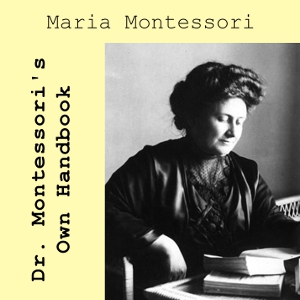
Chapter 11 of Dr. Montessori's own handbook by Maria Montessori.
This Librevox recording is in the public domain, recording by Phil Shenavere, Moral Factors.
A brief description, such as this, of the means which are used in the children's house,
may perhaps give the reader the impression of a logical and convincing system of education.
But the importance of my method does not lie in the organization itself, but in the effects
which it produces on the child.
It is a child who proves the value of this method by his spontaneous manifestations, which
seem to reveal the laws of man's inner development.
Psychology will, perhaps, find in the children's houses a laboratory which will bring more truth
the light than thus hitherto recognized.
For the essential factor in psychological research, especially in the field of psychogenesis,
the origin and development of the mind, must be the establishment of normal conditions
for the free development of thought.
As is well known, we leave the children free in their work, and in all actions which
are not of a disturbing kind.
That is, we eliminate disorder, which is bad, but allow to that which is orderly and good,
the most complete liberty of manifestation.
The results obtained are surprising, for the children have shown a love of work which
no one suspected to be in them, and a calm and orderlyness in their movements which surpassing
the limits of correctness have entered into those of grace.
The spontaneous discipline and the obedience which is seen in the whole class constitute
the most striking result of our method.
The ancient philosophical discussion, as to whether man is born good or evil, is often
brought forward in connection with my method, and many who have supported it, have done
so on the ground that it provides a demonstration of man's natural goodness.
Very many others on the contrary have opposed it, considering that to leave children free
is a dangerous mistake since they have in them innate tendencies to evil.
I should like to put the question upon a more positive plane.
In the words good and evil, we include the most varying ideas, and we confuse them especially
in our practical dealings with little children.
The tendencies which we stigmatize as evil in little children of three to six years of
age are often merely those which cause annoyance to us adults when not understanding their needs,
we try to prevent their every movement, their every attempt to gain experience for themselves
in the world by touching everything, etc.
The child, however, through this natural tendency is led to coordinate his movements and
to collect impressions, especially sensations of touch, so that when prevented he rebels,
and this rebellion forms almost the whole of his naughtiness.
That wonder is it that the evil disappears when, if we give the right means for development
and leave full liberty to use them, rebellion has no more reason for existence?
Further, by the substitution of a series of outbursts of joy for the old series of outbursts
of rage, the moral busy-ognomy of the child comes to assume a calm and gentleness which
may come appear a different thing.
It is we who provoke the children to the violent manifestations of a real struggle for existence.
In order to exist according to the needs of their psychic development, they were often
obliged to snatch from us the things which seem necessary to them for the purpose.
They had to move contrary to our laws or sometimes to struggle with other children to
rest from them the objects of their desire.
On the other hand, if we give children the means of existence, the struggle for it disappears,
and a vigorous expansion of life takes its place.
This question involves a hygienic principle connected with the nervous system during the
difficult period when the brain is still rapidly growing and should be a great interest to
specialists in children's diseases and nervous arrangements.
The inner life of man and the beginnings of his intellect are controlled by special laws
and vital necessities which cannot be forgotten if we are aiming at health for mankind.
For this reason, an educational method which cultivates and protects the inner activities
of the child is not a question which concerns merely the school or the teachers.
It is a universal question which concerns the family and is of vital interest to mothers.
To go more deeply into a question is often the only means of answering it rightly.
If, for instance, we were to see men fighting over a piece of bread, we might say how bad
men are.
If on the other hand we entered a well-warmed eating house and saw them quietly finding
a place and choosing their meal without any envy of one another, we might say how good
men are.
Evidently the question of absolute good and evil, intuitive ideas of which guide us in
our superficial judgment, goes beyond such limitations as these.
We can, for instance, provide excellent eating houses for an entire people without directly
affecting the question of their morals.
One might say, indeed, that to judge by appearances, a well-fed people are better, quieter,
and commit less crime than a nation that is ill-nourished.
But whoever draws from that, the conclusion that to make men good, it is enough to feed
them, will be making an obvious mistake.
It cannot be denied, however, that nourishment will be an essential factor in obtaining goodness,
in the sense that it will eliminate all the evil acts and the bitterness caused by lack
of bread.
Now, in our case, we are dealing with a far deeper need, the nourishment of man's inner
life, and of his higher functions.
The bread that we are dealing with is the bread of the spirit, and we are entering into
the difficult subject of the satisfaction of man's psychic needs.
We have already obtained a most interesting result, in that we have found it possible
to present new means of enabling children to reach a higher level of calm and goodness,
and we have been able to establish these means by experience.
The whole foundation of our results rests upon these means which we have discovered, and
which may be divided under two heads, the organization of work and liberty.
It is the perfect organization of work, permitting the possibility of self-development,
and giving outlet for the energies, which procure for each child the beneficial and calming
satisfaction.
And it is under such conditions of work that liberty leads to a perfecting of the activities,
and to the attainment of a fine discipline, which is in itself the result of that new
quality of calmness that has been developed in the child.
Freedom without organization of work would be useless.
The child left free without means of work would go to waste, just as a newborn baby,
if left free without nourishment, would die of starvation.
The organization of the work therefore is the cornerstone of this new structure of goodness,
but even that organization would be in vain without the liberty to make use of it, and
without freedom for the expansion of all those energies which spring from the satisfaction
of the child's highest activities.
Has not a similar phenomenon occurred also in the history of man?
The history of civilization is a history of successful attempts to organize work and
to obtain liberty.
On the whole, man's goodness has also increased, as is shown by his progress from barbarism
to civilization.
And it may be said that crime, the various forms of wickedness, cruelty, and violence
have been gradually decreasing during this passage of time.
The criminality of our times, as a matter of fact, has been compared to a form of barbarism
surviving in the midst of civilized peoples.
It is therefore, through the better organization of work, that society will probably attain
to a further purification, and in the meanwhile, it seems unconsciously to be seeking the overthrow
of the last barriers between itself and liberty.
If this is what we learn from society, how great should be the results among little children
from three to six years of age, if the organization of their work is complete and their freedom
absolute?
It is for this reason that to us they seem so good, like heralds of hope and of redemption.
If men walking so painfully and imperfectly along the road of work and of freedom have
become better, why should we fear that the same road will prove disastrous to the children?
Yet on the other hand, I would not say that the goodness of our little ones in their
freedom will solve the problem of the absolute goodness or wickedness of man.
We can only say that we have made a contribution to the cause of goodness by removing obstacles
which were the cause of violence and of rebellion.
Let us render therefore unto Caesar the things that are scissors and unto God the things that
are gods.
And of chapter 11, recording by Phil Shenaveir Batruz Louisiana, October 2011, end of Dr. Montessori's own
handbook by Maria Montessori.