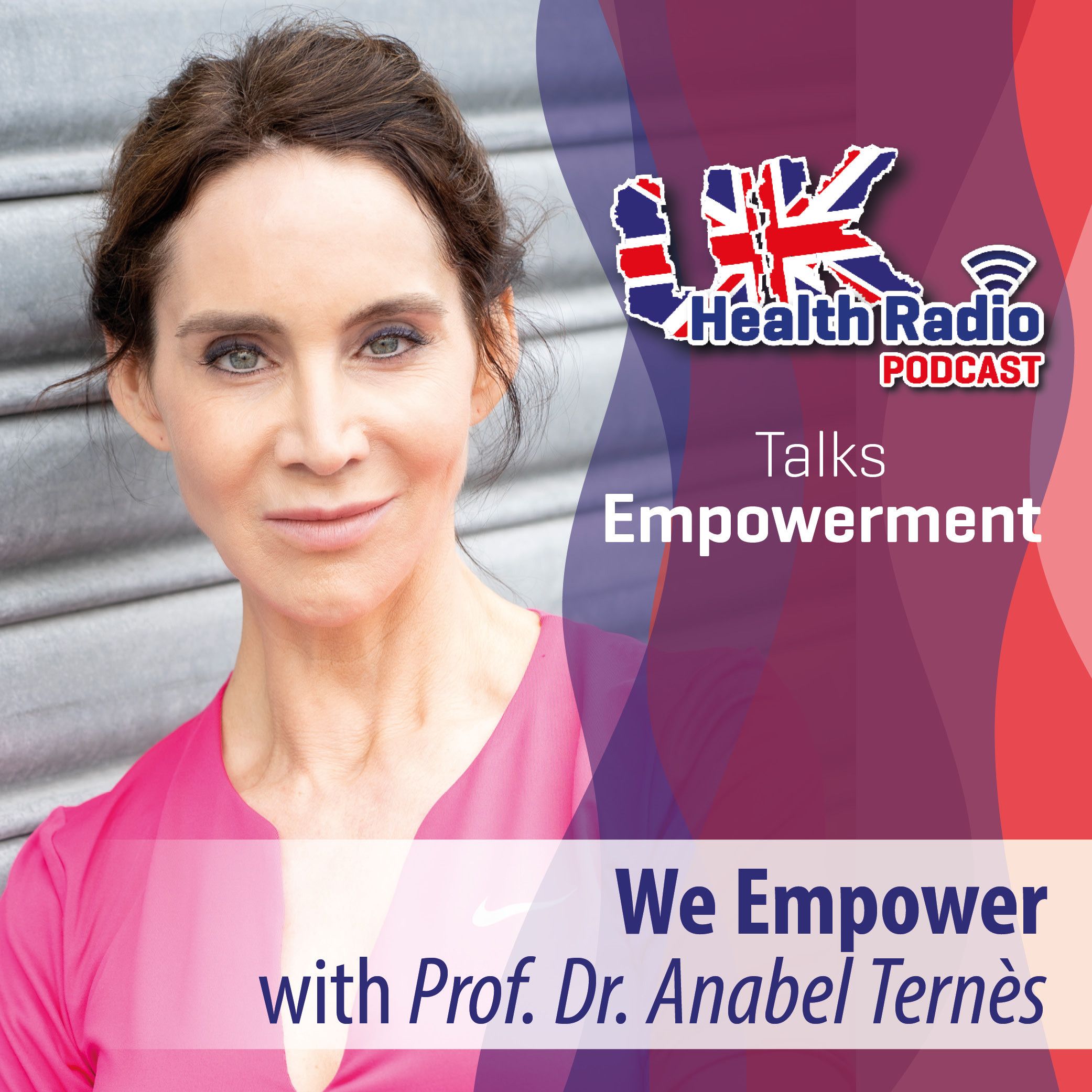
112: We Empower! with Prof. Dr. Anabel Ternès von Hattburg and guest Nicola Knappe
About this episode
Disclaimer: Please note that all information and content on the UK Health Radio Network, all its radio broadcasts and podcasts are provided by the authors, producers, presenters and companies themselves and is only intended as additional information to your general knowledge. As a service to our listeners/readers our programs/content are for general information and entertainment only. The UK Health Radio Network does not recommend, endorse, or object to the views, products or topics expressed or discussed by show hosts or their guests, authors and interviewees. We suggest you always consult with your own professional – personal, medical, financial or legal advisor. So please do not delay or disregard any professional – personal, medical, financial or legal advice received due to something you have heard or read on the UK Health Radio Network.
Get every episode summarized
Each time UK Health Radio Podcast publishes, we email you a written briefing from the transcript — the topics, who appeared, and any specific claims, with the ad reads skipped.
Email me new episodesFree for 3 shows. No card needed.
Hosts & guests
Transcript ready
609 searchable segments. Every word is indexed and playable.
Full transcript
UK Health Radio Podcast — 112: We Empower! with Prof. Dr. Anabel Ternès von Hattburg and guest Nicola Knappe. Machine-transcribed; use the interactive transcript above to jump the player to any line.
Welcome to William Power. The radio show that inspires you to embrace your potential, resilience and strength. In these challenging times we are here to help you unlock your power to overcome obstacles, pursue your dreams and shape a brighter future. I'm Ann Arbor-Taness, your host for this Empowering Hour. Hello and welcome to the show. I'm very happy to say hello this morning because on this morning and this show we have some very, one very special guest. When I met her first, I was in her audience. I was sitting there in a summer evening and just expecting nothing. And for one hour I was captured into a really big, big story. That's a sneakily. And I'm looking forward to having her here for the next hour and first listening to a song. Good morning.
I'm so happy to say welcome Nicolad. Yeah, I'm happy too. Thanks. Thanks for the invitation. Nicolad, I would like to introduce you. Of course, each person can do it much better by herself. But I would like to try it. Nicolad says somebody as I said in the beginning of the show today, which I met when I was a part of the author audience. She was staying on stage. She had some music instruments hanging around her shoulders. And she, yeah, she stood there and stage just staying there. And what happened during the next one hour was totally fascinating for me. I haven't had the meat. I haven't had the idea that just one person was standing there. I had the idea that the whole story was developing there in front of my inner eye, supported by her warm voice. And then I looked around, saw the kids around me,
fully fascinated by one person, just voice. And yeah, a bit music instruments, if you can say that music instruments, to instruments which are just making a noise or a small tone or something. But she managed it to do it with just a few things. And it's Nicolad. She can enable rooms into other worlds and she can move hearts. Thank you for being here. Thank you. Thank you. Nicolad, when was it clear that you said yes? I want to be a storyteller. Oh, I think it was clear since I'm able to speak. Yeah. So my mother always told me, oh, you were a storyteller even when you were three years old. So I just had a really big imagination and fantasy. And I told stories in the kindergarten and to my sisters and my parents.
And then I leave it for a long time. And then I had three children and we always read books and so on. But then we were on a festival and there was a storytelling woman. And I'm a music and movement teacher. So I deal a lot with music and movement and words and so on. But then we stood there and it was, yeah, it was really magic moment. And I thought, oh, wow. When as a storyteller, I can combine all these things. I have these words. I have great stories. I have music. I have movement. I have this creation of rooms. Yes.
And then I went for searching. Where can I learn it? How it works? What can I do? Yeah. And then I studied storytelling here in Berlin. I live in Berlin at the UDK, the University of Arts. And since then, I'm on my way. Is there a special study program which calls storytelling? Yes, it's storytelling and art and education. So you have really this whole thing telling to children, tell to adults, make projects, about storytelling, bring the people to tell. So it's really an international teachers and it's really a high professional program, I think. I mean, it's a great university to the ones which I don't know on the University of
Arts, the UDK Berlin. I have been also really happy to teaching there for many years. I had great students. It was so, so unbelievable, super to create things together with the students. I was working in the studio in front of my mother when we combined art and also storytelling imagination. And it was really, really great. I really loved that. So I kind of really imagined what you're saying. Of course, I mean, being a mother, maybe things have changed us a bit that you understood how important this and how much power storytelling has, haven't you? Yes, yes. Am I children love stories? And as a mother, I think you were the whole day a storyteller. So when the children said, I don't want to go to the kindergarten. Okay, you need a good story to bring this child to the kindergarten or to the doctor or
somewhere else or to sleep. So I think the whole day, if you manage this like a story and you bring always little stories in the life of the children, yeah, they can, they can, don't know the words. What do you know or have a bigger experience about the day? I think it is a really gift what you're giving to the kids. And I think there's something which I wish it would be a movement. I mean, having kids nowadays or today is very open and very early already having an iPad or a phone or phone or where they just get a kind of, yeah, I would compare it with, I mean, you can eat an apple or you can and eat a mashed apple in a plastic and a plastic bottle with a squeeze it, yeah. And so the kids often don't hear the stories anymore where the brain has to be activated
and create stories and the brain prepares synopsis which are saying, oh, that's already there. Oh, yes, interesting. I know that. Yes, this interesting is true or not. Oh, just assassinating and all these emotion building, but also story building and a kind of being creative, understanding, looking far, a wide perspective and these things. Therefore, story tingles from my point of view, really a huge huge gift and what the parents are today's open myths is exactly the power in the negative way of digital. Yes, that's a kind of, yeah, it's ready to consume. There's no need to put on your own image. And I think this is a really big part. So this, I give the children all the adults a hard apple. So they can touch it, they can grab, they can, yeah, they have to eat it as a really
hard process. And it's, yeah, stop this, not this smashing thing with it. I can feed them. And a lot of parents, yeah, I'm a little afraid of telling stories free. So they use books or texts. But then you have these defined pictures in the books. So the children, aha, the princess is like this or the dragon is like that. But when I tell the story, I don't tell how the princess is looked like or how the dragon, how big is the dragon for each children. It's a different way. So they have different pictures in their minds. And when I tell two children and classes or in kindergarten, I often, they often paint
pictures after my telling. And I just say, paint the first thing you remind of the story and in your way. So and then you can see the different ways of imagination, the story. I like that very much because in a world dominated by short videos and algorithm. Of course, storytelling has put down. And of course storytelling is also kind of, I mean, seeing that we are in an AIH storytelling as something where I would say it's a huge, huge gift because making people thinking who they are, while learning that love letters be written by AI, for example, learning emotional speeches written by AI or even the answer to the person you love the most by AI to not make any mistakes. Mm-hmm. Brings off course into this inner conflict who I am.
And there, I think storytelling is a kind of, yeah, that awakened us or making sure we are showing you also what is the real you, what is, what is the human inside you, what is your own stories, not the stories that I made you to somebody. I mean, going back to this situation where I met you, I was impressed. I was really impressed because I mean, having their small little kids just going back and forth, can I have an ice cream, mommy, hello? No, nobody said that. They are always sitting there, quite lessening, fascinated by your stories. Would you say storytelling today, primarily entertainment, culture, memory, emotional education, or is it a kind of form of social resilience? Cool. I think I'm good mixture of all these things.
Yeah, for me, it's not this cultural thing. This is for me, not the important thing. For me, it's important the community in the time of the story. So as you said, you were in the audience and it was just like, okay, here's something different happened. So I tried to create this room where this story can happen. And I'm like, like a medium, as you wanted. And I just tried to bring the story in the middle of us or in your brains, in your imaginations. So this is really a time of community and of empathy. And yeah, this is the important thing for me, I think.
I found it so fascinating. I mean, you had just a small, a small piece of fabric in your hand. And if you feel like a fabric, it was a fire. And it was totally clear for everybody, yes, this is fire. And that small thing, something where you just make a kind of, when I take this bottle, like, no? Yes. And everybody understood, yes, this is exactly opening of the big, of the heavy door. And this is exactly that, what needs to be there, this tone, very fascinating. So how does the body change a meaning of a story before the words I even understood? For me, it's important that I'm very clear of my pictures and of the characters in the story. So I have to be in the story and I switch. I'm storyteller. I'm the fire ghost. I'm the rain woman.
I'm the hero. I'm everything. So, and I just have to switch between these characters and circumstances. But I have to be very clear about the story. So there's no moment, I think about, oh, okay, I don't know what's happened next. So it's really inside me. So I think storytelling is a really, um, um, body, uh, how do you say it's inside my body. So I really have to, I go pregnant with my stories and to tell us like, giving birth, but they're really complete and I'm clear about the pictures of the characters. And I see the picture. Then I tell you about. It's not this, oh, I tell it's like this, maybe. And then they are the creation, but it's my view of these things.
Ah, there's the forest. Oh, it's really dark. And then I tell this dark forest to you. And I get in this feeling of this dark forest. And so this is, this resonates to you with your, um, experiences of a dark forest. Hmm. So then you are inside this, I think, maybe this way. Yeah. Um, I think so. I have one or two questions which might illustrate it also for our listeners, a bit better that they can also use it by themselves. Um, we have a small break of approximately two minutes and we see each other back. And, um, I have two important questions, um, which are kind of answers on that what you just explained. So stay tuned. Okay, health radio. This station I make you feel good. Okay, health radio.
This station I make you feel good. Nikola, um, I found this really nice and it's, it's stayed in my mind. Um, where you said storytelling is a little bit like being pregnant. So you feel it. Um, you are pregnant. You are the story. It's unsaid you. It's moving you. Yeah. It's dominating you. It fills you. It, um, maybe you feel the steps, um, attacking you or maybe also even. Uh, you are going with that. Um, could you imagine that you are telling a story we are not emotionally involved or is it just working being emotionally involved and managing the story by yourself, being in the story by yourself by telling it? Yeah. Yeah. It's not work without emotions and without, um, really being inside, um, the story. There are some stories I don't have much time to be pregnant with them.
So I get the story and so, okay, next Monday, you have to tell. But I'm always searching for these points of, okay, where can I, um, where can I feel this connection with the story and maybe in my really personal experience and I don't tell my personal experience sometimes I do. Um, but the, the people know, oh, she, she really knows what's going on. What she's talking about. Huh? So even if I don't, I don't fight against the dragon. So, but I can't imagine. Maybe, um, so I go into this powerful thing or and look in my life where I, where I'm I powerful and can I use this power to fight against the dragon? Ah, is it something that you look into your, um, why story telling or preparing story telling that you look into your life, um, in a kind of, yes, I look into my life or is
it like more, um, it comes to me, it comes to me, a way, uh, situations which get, um, which get powerful, which gives me maybe also the ideas of, um, strengthening the story for the audience. Yeah, it, yeah, I don't, uh, look into my life and look, um, after the situations, but it, it comes. So it's like you said, I'm going to the story, I read the text, I, I walk with a story, uh, hours and hours through Berlin and just, um, let, let it cook, uh, the stories and me. And then, um, yes, and then I, I'm searching for the spices as you want. Um, and really look after this, um, yeah, and this is, is another point for me story telling
it's, this are very old stories, but I'm telling this today. So, um, I always look, what's the matter for, for the audience in this moment, in this day, um, maybe in Frankfurt. On the mind, it's both very hot. Uh, there were many people's and so I think what's the matter in this situation for this audience? And, um, with me as a storyteller. So this are the spices for the story soup. Mm-hmm. And I like this, um, allegorium of a story soup, I am putting spices in, and, um, and get the story also, the soup with your whole four senses, you feel it, you smell it, you touch, you see the liquid, um, you enjoy, you have a really, um, full senses and, enjoyable
situation, right? And, um, yeah, um, this is something I, I just get. Um, I would like to know, I mean, you said these stories are old stories and you're trying to, or you're telling it to nowadays audience. And what I remember is not only, I mean, you know that I'm an environmental activist and, or advocate, activist is a strong word, um, at least an advocate for this and you started and you had always in the, in the story you said, you have small glumpses of saying something about, um, why it's important to take care of the whole planet. Why it's important to take care of our relationships and why it's important to be with awareness and respect and values here in this world, which is, yeah, what, what you don't need to have these if you want to be successful and, which is, um, just, um, yeah, just the world,
world of money. Um, there you can be successful without all these values. Maybe, maybe if a short note is better. Um, but you, you, you said, you said these things about sustainability. What does sustainability mean in your life? Ooh, um, ooh, that's a question. Um, I think for me, it's, I'm, yeah, as a, for me, as a storyteller, I'm always telling stories. Yes, in this, with this background of climate change or democracy or, um, diversity. So I really use these stories to go with it and to carry these big themes to the children through the audience.
And, um, yeah, and maybe the same is for me personally. I don't know really, um, yeah, um, I, I, for myself, I, I use stories even for myself to, uh, get more ideas of, how, how, how can the ways be in my life or how can I be? Uh, what's the many different, um, colors of, of me? Um, and this is really cool because I can't, it, my, um, my storytelling jobs and my private things are often a little bit like, um, mixed and away in my brain. So that's the, yeah. Um, thank you.
So, um, I have another question about, very curious. I mean, you have three kids. Yes. You have, uh, and I, I think there may be, maybe ten, maybe seven, maybe, you know, something, but they're not, they're still at school, I guess. Yeah. Um, you have, um, a little bit of, um, activity there around you. And then you are a storyteller. You have to concentrate on new stories. That has to be all set up. It has to be a really storyline. It has to be fascinating. I mean, you're standing there, standing your stories and the kids look like, ooh, what was that? That's completely not what we expected. And then we are not interested in that. So, you know, and you have a bit of pressure, maybe sometime, um, because you have to be really relaxed by telling that and on the other hand, you have to be in the story. Yeah. You have to get the audience. So you have to be with your instruments.
So it's all has to go together and you're one man, one woman shower also really read a lot. What are you? The three health habits are kind of life hacks that have you stay energized, balanced and really truly well. Um, yeah, I need this moments by myself really alone. Just one, um, one day in a week, just for myself. When the kids are in school and just have my coffee and sit and, um, this is the one day in a week. And then, um, I go, uh, for a walk. I really walk a lot, uh, in the forest. Uh, I have here and I live in Berlin, but it's a very green part of Berlin. So I have this forest next to my house. Um, and this is one thing I need nearly every day just to have this.
Uh, it's okay. Half an hour, it's the minimum, um, yes, one and a half would be better and, um, something between it's okay. Um, yeah, this was one, three, um, and then I have to dance. I need to dance. It could be in the morning in the kitchen. I put a song on maybe the song from the beginning of this radio show, uh, or anything. And I just turn the music up and have to dance or go dancing, uh, not even in a club. This too, too much information for me, but in a safe space. So, uh, but I need this movement and happiness and laughing and, um, so, yes.
I think we all need this much, much more. And, um, of course, being in the circle of, um, digital, haptic health, stress, always laid behind the emails which flow in all laid behind the saw news software, which is always laid behind the new model of AI, which is not a good feeling, but more kind of, oh my god, I'm always too late, um, stepping out and taking a break as you're describing it, going into the forest, dancing, just dancing. Mm-hmm. Really a really good, um, good recipe and kind of. Yeah. I mean, your story teller, you, um, think of stories that people touch and the people, which can make something with the people who move them. Mm-hmm. Uh, it even does need a puppet when you're doing this. No. Ha, ha, ha. Why I'm saying this, I mean, I'm saying this because, um, we had a puppet which was a
rubbish monster. Mm-hmm. Um, I'm, as a professor, I, um, I got questions from a rubbish monster, from a waste monster. And then I said, why did we do this with a monster? I mean, why can't it just be the kids and me, for example? Why is a monster necessary? Mm-hmm. And of course, the more we put it far away from us, the more we are open, uh, open to listen. But sometimes I think it would be better to get it closer to be touched. Yeah. Of course, we are also wounded by everything what is around us. Um, we don't want to hit anybody and hit him even more by not, uh, by not touching him. And, um, I think there must have been also many stories in your life which touched you. There's a one story which touched you that much that it's still your kind of guide or a kind of, your pattern which is, um, grounding you or giving you science.
Mm-hmm. Yeah, there are a few stories I, they're really like hard stories for me. Um, and the, the one story I heard from an Irish story telling story teller. And, um, it was just this moment she tell the story, told the story. And, um, and I was, okay, that's, that's the story. And I never read this story. I don't have a text. And I, um, asked her, uh, can I retell it? And she said, oh, yeah, yeah, uh, go for it. And this story I really love and this is about a woman, um, who goes her way. It's a long story. So, um, but it's really about this, um, you have like these many, uh, many things to,
to wave, um, a beautiful cup and maybe like this and these things of, um, bring in, bring in different things together. I think these are stories I really like. And there are, there's one story I told and it moved me too much. So I was standing on the stage and it really hurts me. Because in this moment of telling when, when I was in the story and this, uh, woman came and she, she had a really big, um, uh, thing, uh, behind her and many exercises. And in the last picture of the story, um, for me, it was clear, oh, this is my story. Oh, oh, no. And I was nearly crying. Um, so in this moment, um, I, I decided, okay, this story is a,
hard story too. And it's, it's a big part of my story. But I should, uh, there should be more time. Uh, so I can tell it later again when it doesn't move me like this. So it's gone. It's, it's, it's don't have to be private. So it's really me on stage, but I don't tell my emotions. So you're like a music instrument aren't you? When you are on, on stage, it flows through your body. You are the, uh, you're all the load speaker. You are the interpreter. No, um, uh, when I completely understand you, I, you know, I'm an author and, um, once I, I thought that parts of my story might interest the people. So in my last book, I, I put some of these, um, but I put it in a way that I wouldn't like to read it by myself. It was so boring.
And why did I do this just to protect me? And when I then afterwards was asked by, uh, um, by Bessela, um, by U.S. Bessela, a book company publisher and they wanted me to be part of the book. And, and they said me exactly that said, it must be a story, which is your story. It must be a story which touched you most. I was really struggling and I said, oh, I'm not sure if I should do this, um, because what you said is it's still professional. So touched by that. And can you be so professional and touched by that? And then we come to the point, what is professional? Does professional mean not to be touched by this or does it mean? Yes, you can be touched by this, but not, uh, don't like the other C or is it okay by detached, uh, let them all see, but continue. So I was not sure in the past and always started to write on a blank page, starting with my own story, putting it to the paper.
And by writing the free sentence and reading again, I started crying. Was so, I'm still in the story. It all came back to me. And on the other hand, I know that therapeutic, therapeutic, um, rewriting can be really healing. Yeah. Yeah. Sorry. And what I didn't know when I was 20 was that he had a really, really problem. He had a really problem with women. He told me that he had over 1000 of women. He wasn't love. I felt love was, has had relationships. And when he thought that it's going really, really crazy serious, he stopped with her. Even what, even if he want married, even if she wasn't pregnant, even if she was just, um, moved to him and lost everything or sold everything as he stopped with her. Because of he was so anxious that I think with him. And I would like to tell you also the result of that or what happened there. But I will do it after the break. So stay tuned. And in two minutes, we see each other.
This nation, I make you feel good. Okay. Okay. Health radio. This nation, I make you feel good. So now it's me storytelling right. So yeah, when I, when I started writing, I, um, it's really, it really took me, um, every time I started writing, it took me that much. So, but when I did it with it, with the author, um, I told him, I said, why not looking for archetype and you said this so. You also said this, right? You're looking for old stories. I looked for archetype story, which fit, um, not to a situation, but to the situation you would like to have. Mm hmm. We found, I mean, he had the situation, as I said, that he had to trouble with the
women that falling in love meant for him being wounded or feeling wounded. So he had to end that. So we sorted out for, um, figure and the, um, and the old stories, which could maybe let him feel the situation and then change it. And we found possible, possible. We took the possible from, from from from, from, from, from Ashnabah. This, this, yeah, the man who, as a son, um, were not allowed to ask questions and, um, who were not allowed to educate, were not allowed to see the world and adapt into really bad mistakes. So really bad mistakes, mistakes as really, you know, he, he made sexual abuse. He, um, he tried to murder somebody. Um, he did really, really things, uh, nobody wants to do normally, but he had to learn with that. And then he, after doing all these things against people, he understood, okay, um,
I don't know anything. And then maybe it's the most honest way to say, yes, I don't know anything, but I can ask. So he started asking questions and they asked questions. He, um, yeah, he, he awakened the emotional side of people. He, uh, he touched the people and he grew by that and the people grew by this too. And then in the end, that's of course a happy aunt. He found his wife, um, a queen and they got two kids, um, and they got their kingdom, kingdom, which is, um, working them. They shared, um, on eye level. Nice, nice story. And when I matched this guy and went this author on, I think 20 years after we've done, 20, 10 years after we, we, we did this therapy together. Um, and it was really, really anxious because I didn't know him. If he, yeah, if he's still with his wife, I'm mad. And, um, if my therapy worked and, yeah, on an official event, I saw him and his wife was there.
So, wow, storytelling can be some powerful. Yeah, it's really powerful and, um, there is, there's, um, there's this storytelling on stage and storytelling and, um, classrooms, but, um, there are always, uh, there are also, um, this, this healing storytelling. It's a really, um, you can do a school for healing storytelling. So, it's, uh, it's this you, you listen to the problem of your, um, uh, client. And then you don't tell him to do this, to this, to this, but you're searching for a story who maybe, uh, brings some movement in this life or in this, uh, structure that struggles or in this problem. So, I think to tell a story is a good way to tell people what I think about them,
maybe, or about their lives. So, I don't have to be like the moral, uh, finger, um, but the story can do. So, um, so it's not about me. I can use this way. And I think that at this point, what we had before about what moves me, what moves the audience and, uh, it has to move me, but not too much maybe or, um, what's, uh, this, what is my role in this? And I think if I show too much my personal emotions, then the audience see, are there's Nicola with emotions? But they have to see the story with this emotions and the story. So I have to tell it very emotionally, but not with my personal private emotions, because storytelling is not about me. It's about the story. And, um, I feel it with my words and my way of, uh, telling, but, um,
the people are not coming to see me. They want to, uh, yeah, to create for me the story for them. And when I, um, I tell on a few neural stories, and this is really this thing, it's not about me, it's about them. They want to cry, to laugh, to feel these, uh, big hole in their lives. And I'm just there to, yeah, to create again this room for them and to, um, and listen to the lives of the, um, dead people. And then I, I'm searching for stories who fit in. And, uh, if I manage just one point, then, then it's good. So, and, uh, and the situation is really emotional.
But, uh, not for me, for me, it's like, um, like a hug. I tell like, like, it's a big hug. And if I have this in my mind, uh, the people feel hugged. So, it's nice, um, having a storyteller on the funeral, um, awakening the, with the storyteller, the life of the person who can't speak for him or herself. And having not people involved with this, which are maybe emotionally so much touched, that, yes, you're right, this story gets their story. And it's not that easy for other people to, uh, to follow. What do you think? I mean, I think storytelling is really a very powerful instrument. What will you say? How can we use this, also can use more people this for healing, for getting out of situations where they want to get out of this? Um, because I often say to people, hey, why not imagine how it could be differently,
then it could be like a, a novel. How can this be different? It is. And then I say, yeah, but imagine, I say, there's no use in the imagine. Mm-hmm. What could we tell these people? What, how can we help these people? What do you think? Oh, yeah, this is, this is hard, um, if they don't want to imagine, so it's hard to say, okay, but you have to imagine, because imagination is, uh, yeah, powerful and heals your soul, maybe. Um, but I think to, to begin with a really short story is, and not like, oh, I'm going to tell you a story, but just, um, just fit them in in your normal, um, conversation. So, uh, there was one boy and he, but, but, but, so you are in the story. And then you can, uh, use this storytelling thing, just like, um, yeah, without, uh,
this big, um, audience and this big, um, uh, outfit. What's this? I think it's a stage thing. Yes. Without a big stage, but just really personal. And then, um, maybe the person's experience, this, ah, that was nice. Ah, it's nice. To, uh, to, uh, to listen to a story, free-telling. Uh, so, and in the beginning, you, you imagined this, uh, this picture of, there are many, yeah, many kids, uh, when I came into the room or on the stage, uh, fairy tales of four little children, and I tell even four teenies, so Greek mythology for teenage, um, boys and girls, and they are taller than me and just sitting there, I want my handy bag. And, and it's just, I say,
yeah, I can understand you, but I tell you a story. Come on, you are here, I am here, so just listen. And I begin to tell, and after two minutes, everybody is like, oh, yeah, oh, what's, what's the story like? How will it end? So it's, it's really this, not to say, oh, you don't want it, okay, I don't tell you, but you don't want it, maybe we can try. Just, just be this little second open. Let me try. And, uh, when you get this door, a little, this little, uh, open place, you can, open it for, maybe. What do we have to do to be all story tellers? So do you have some ideas for, for our listeners, what they can do to be better story tellers or even, um, beginner story tellers? Yeah. Um, don't be shy. Just, uh, just tell, just, um, and, and my next play, I have no idea about what
I should, uh, tell, I'll say a talk or maybe they say, oh, but maybe it is too emotional or they say, hmm, maybe I just to childish to tell a story. Yeah. Yeah. And then, then it's good to have these little stories, um, like zen stories or something like this. It's not really emotional or like, um, uh, it's a, what jokes, yeah. Um, tell jokes. These are little stories. Or tell, uh, tell about yourself what, what, uh, was yesterday, your day like, uh, how did you come here? What was the way like? Is it's little, um, there are games for storytelling. This, uh, story cubes, for example, um, there are cubes you, with little pictures on it. And you can just put it, um, uh, next to each other. And then, oh, here's a boy, here's a boat, here's a
four, uh, horse, here's a forest, and here's, uh, I can't see. So you tell, there's a boy, you go, uh, to the boat, uh, into the forest and so on. And so it's, um, there are many games where you can, um, just, just try out and just rehearse a little bit. And the very, uh, successful way to go into storytelling is to listen to storytelling. So, uh, go to, to theater, to marketplaces, to, uh, to any stage where's a storyteller on it. And it's really like, um, um, uh, like when you listen to a good story, you want to tell, retell it. So, and the better, the storyteller is, uh, the more you want to tell it. So it really could be a wave, storytelling wave.
Yeah. Absolutely. When the people want to sing you listening to do, where can they find you? No, they can find me on my website. It's, um, er, zeelklang.de. It's German. Why is it at zeelklang? I mean, at zeel is storytelling? Yes. Yes. The sound. Sound. Yes, because I'm musician and storyteller, and even if I don't tell with instruments, um, I feel this telling like a sound sounding and musician thing. Right. What, what, what instruments do you play? Oh, a lot of, um, oh, percussion things, ukulele, piano, um, violin. I play a lot of instruments, but not like a really professional. So I could use them and switch. And, um, yeah. That's great. And you have them all, all of them also at home. Yeah. Oh my god. That's a great for your kids, I think. And
yeah, it's a partner who has no problems when it's getting louder. Yeah, there's no partner. So, but my kids, um, really experienced all these little, here's this, um, this, um, place for the instruments and I have a piano and wow. In the cellar we have a drums and so, so you can just, this sounds like a great childhood, I would say. Yeah, also. Unfortunately, our talk comes to an end and I have a wonderful question to you. Um, if you want to give somebody who has to decide something in this world, in this country, um, a very concrete idea of something which is possible to really do not something where we think we wish and it's never, never possible to put it into place, what would it be combined or in the, in the, uh,
are, um, combined with storytelling. So, for example, um, replace a shorted half and for the education and education and raising. Oh, I think storytelling has to be a fixed institution from little childhood on to, uh, tell university. So, this really moments, one woman per week of storytelling and of being together and listen and share the stories, it's about sharing and community and I think this is, these are the two things we really need, uh, in this world today. I like this very much because all the tribes tell us this. There are stories which all tribes just give from generation to generation. And these stories, um, give information about childhood, about raising children,
about finding the right herbs to heal people. These stories, um, and bad everything, even the relationship between men and women and why the men are maybe should protect the women in a way. And these old stories we have to find again. Um, I mean, I'm very thankful to have a few of these from my family. And I think if we look deeper each of us has this. So thank you so much, Nikola, to be part of this show today, but even more, we're part of We Empower on this refsat of, episode of We Empower, the weekly radio show dedicated to celebrating the strength, resilience and limitless potential of women and men around the world. We'll run us again next week, too, as we continue on this Empower and Johnny, sharing real stories of triumph, uplifting and empowerment, your presence and engagement means the world to us. And we appreciate you taking the time to tune in. Remember this time as a gift for you, prediscver your inspiration, embracing new
insights and finding the motivation to love life to the fullest and give something back. Don't hesitate to get involved, see your voice as valued. And together we can make a difference. Thank you for being part of our community. I think today's storytelling can remind us how many stories we all have in our heart and mind and how important it is to awaken them, looking at them, facing them not only in the mirror, but also talking about these, finding your own roots in these stories and understanding it as a great, great gift you carry with you. So thank you for today. And until next time, keep shining and empowering others. Together we rise.
More episodes
More from UK Health Radio Podcast
102: Sleep Science Today with Andrew Colsky - Episode 102
UK Health Radio Podcast
95: The Hirschsprung’s Hour with Tom Richard - Episode 95
UK Health Radio Podcast
181: The Relaxback UK Show with Mike Dilke - Episode 181
UK Health Radio Podcast
13: The Smartest Doctor in the Room with Dean Mitchell, MD - Episode 13
UK Health Radio Podcast