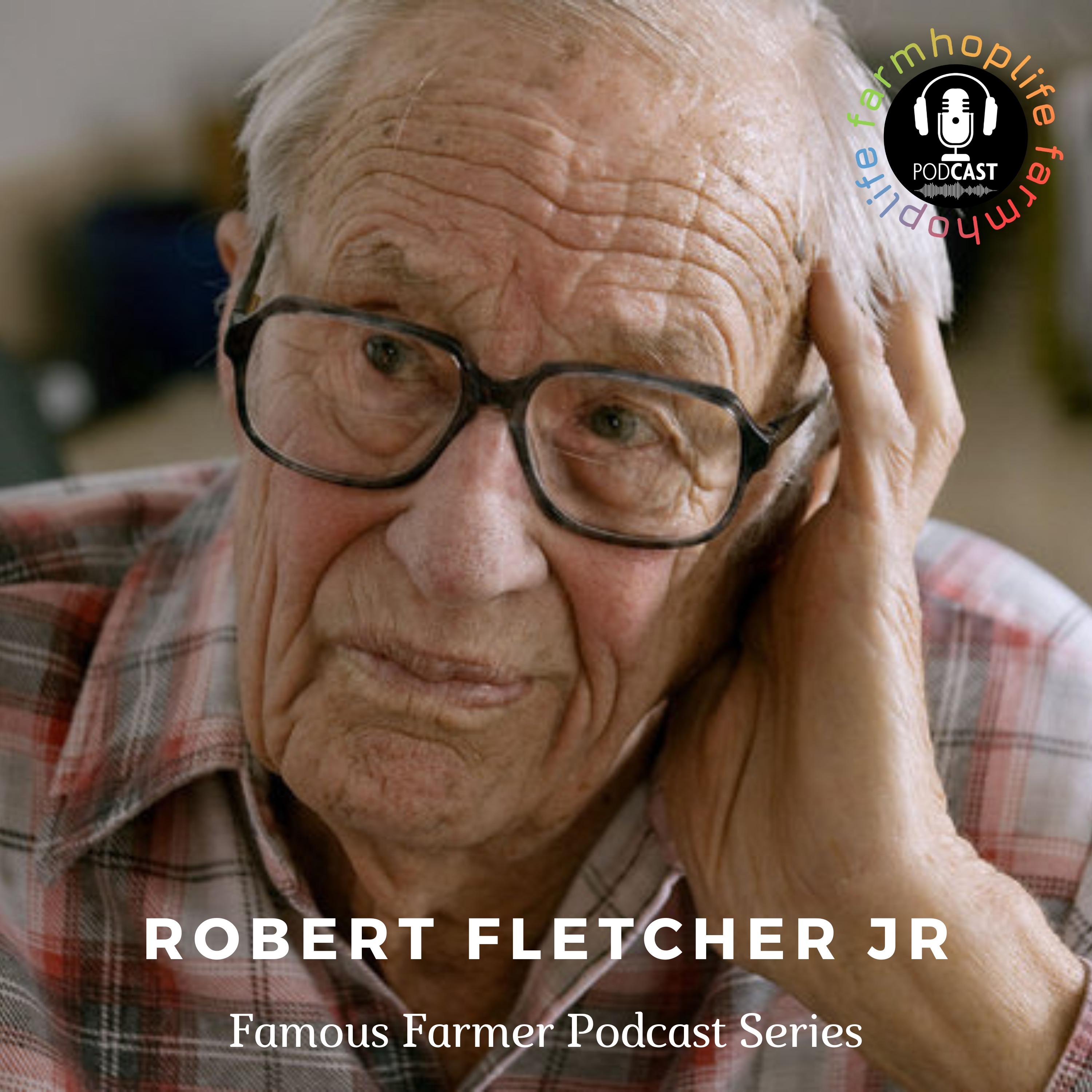
[134] Robert Emmett "Bob" Fletcher Jr - Famous Farmer
About this episode
Robert Fletcher Jr.
The only child of walnut farmers, was born July 26, 1911 in San Francisco and grew up in Brentwood, graduating from high school in 1929. He then attended the University of California, Davis beginning in 1930 where he earned a degree in agriculture.
After college, Fletcher ran a peach orchard in Red Bluff, California, and then became a state shipping point inspector (agriculture inspector). Starting in 1942, Fletcher began working for the Florin Fire Department.
Executive Order 9066, by FDR, in 1942 forced relocation of 122,000 Japanese-Americans, most of them citizens, to internment camps, where they were held without charges out of a misguided suspicion that they might be disloyal. In addition to losing their liberty, the Japanese-American internees often lost the homes and businesses that they had to leave behind. In particular, Japanese-American farmers, who had to leave their crops untended.
Near Sacramento, many of the Japanese who were relocated were farmers who had worked land around the town of Florin since at least the 1890s. Mr. Fletcher, who was single and in his early 30s at the time, knew many of them through his work inspecting fruit for the government. The farmers regarded him as honest, and he respected their operations.
Al Tsukamoto, whose parents arrived in the United States in 1905, approached Mr. Fletcher with a business proposal: would he be willing to manage the farms of two family friends of Mr. Tsukamoto’s, and to pay the taxes and mortgages while they were away? In return, he could keep all the profits.
Mr. Fletcher and Mr. Tsukamoto had not been close, and Mr. Fletcher had no experience growing the farmers’ specialty, flame tokay grapes, but he accepted the offer and soon quit his job.
For the next three years he worked a total of 90 acres on three farms — he had also decided to run Mr. Tsukamoto’s farm. He worked 18-hour days and lived in the bunkhouse Mr. Tsukamoto had reserved for migrant workers. He paid the bills of all three families — the Tsukamotos, the Okamotos and the Nittas. He kept only half of the profits.
But Mr. Fletcher’s efforts put him at personal risk, in a community where many viewed the Japanese-Americans with suspicion and resentment, in the wake of Japan's surprise attack on Pearl Harbor. He was reviled as a "Jap lover," and was nearly hit by a rifle shot that someone fired into the Tsukamoto family's barn.
Many Japanese-American families lost property while they were in the camps because they could not pay their bills. Most in the Florin area moved elsewhere after the war. When the Tsukamotos returned in 1945, they found that Mr. Fletcher had left them money in the bank and that his new wife, Teresa, had cleaned the Tsukamotos’ house in preparation for their return. She had chosen to join her husband in the bunkhouse instead of accepting the Tsukamotos’ offer to live in the family’s house.
“Teresa’s response was, ‘It’s the Tsukamotos’ house,’ ” recalled Marielle Tsukamoto, who was 5 when she and her family were sent to the Jerome center.
“Few people in history exemplify the best ideals the way that Bob did,” said Tsukamoto’s daughter, Marielle “He was honest and hardworking and had integrity. Whenever you asked him about it, he just said, ‘It was the right thing to do.’ ”
But Fletcher's efforts put him at personal risk, in a community where many viewed the Japanese-Americans with suspicion and resentment, in the wake of Japan's surprise attack on Pearl Harbor. He was reviled as a "Jap lover," and was nearly hit by a rifle shot that someone fired into the Tsukamoto family's barn.
“I did know a few of them pretty well and never did agree with the evacuation,” he told The Sacramento Bee in 2010. “They were the same as anybody else. It was obvious they had nothing to do with Pearl Harbor.”
After the war, resentment against the Japanese in Florin continued. If Mr. Tsukamoto tried to buy a part at the hardware store only to be told that the part was not in stock, he would ask Mr. Fletcher to buy it for him.
The Fletchers bought their own land in Florin after the war and raised hay and cattle. Mr. Fletcher was a volunteer firefighter in Florin for many decades before becoming the paid fire chief. He was also active in historical groups.
He was never much for celebrating his role in the war, and he noted that other Florin residents had helped their Japanese neighbors.
“I don’t know about courage,” he said in 2010 as Florin was preparing to honor him in a ceremony. “It took a devil of a lot of work.”
Mr. Fletcher, who was in good health until a recent leg infection, was a reserved man of simple tastes. He drank more than a quart of milk a day and enjoyed spending time with his wife or working.
“I did know a few of them pretty well and never agreed with the evacuation,” he told the Sacramento Bee in 2010. “They were the same as anybody else. It was obvious they had nothing to do with Pearl Harbor.”
At Fletcher's 100th birthday celebration in 2011, Doris Taketa, who was just 12 when her family was sent off to a camp in Arkansas, recalled how they had viewed him as a hero. "My mother called him God, because only God would do something like that," she said.
Mr. Fletcher, who settled in Sacramento as a farmer after the war, also served people in other ways. He spent 20 years as a volunteer firefighter with the Florin Fire Department and retired in 1974 after another 12 years as paid chief. He helped start the Florin Water District in 1959 and was a board member for 50 years.
“He never stopped working hard — but not for himself,” said Rick Martinez, a former Florin and Sacramento Metropolitan Fire District chief. “He worked hard to get done whatever needed to be done for others.”
His inspirational story is recounted in history books, including “We The People: A Story of Internment in America” by Elizabeth Pinkerton and Mary Tsukamoto, whose family farm he saved.
“I don’t know about courage,” he said in 2010 as Florin was preparing to honor him in a ceremony. “It took a devil of a lot of work.”
Mr. Fletcher, who was in good health until a recent leg infection, was a reserved man of simple tastes. He drank more than a quart of milk a day and enjoyed spending time with his wife or working.
Sources:
One , Two , Three , Four , Five , Six , Seven , Eight
Image credit: Randall Benton/Sacramento Bee
Get every episode summarized
Each time FarmHopLife Podcast publishes, we email you a written briefing from the transcript — the topics, who appeared, and any specific claims, with the ad reads skipped.
Email me new episodesFree for 3 shows. No card needed.
Hosts & guests
No transcript yet
This episode has not been transcribed. Request it and it moves to the front of the queue.
More episodes
More from FarmHopLife Podcast

[170] Now Hiring! SHTF Positions - Men's Forum
FarmHopLife Podcast

[169] Social Break - Men's Forum
FarmHopLife Podcast

[168] Kids Are NOT Alright - Men's Forum
FarmHopLife Podcast

[167] Starting Out Growing Behind - Men's Forum
FarmHopLife Podcast