Loading...
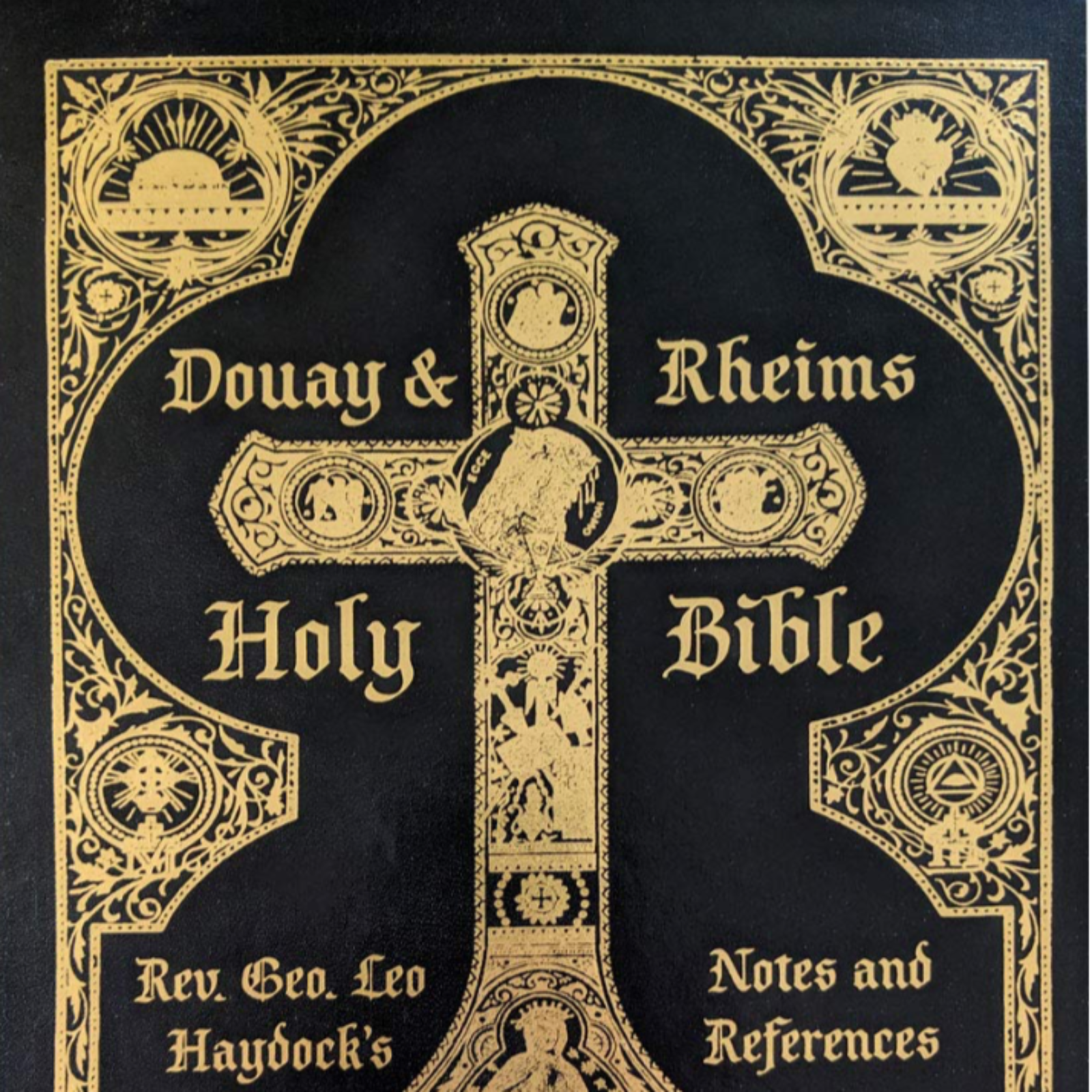
educationcoursessociety
1962 Missal - Commentary on the Mass Readings: Mon, Apr 6 (Octave of Easter)
About this Episode
Acts 10: 37-43;
Luke 24: 13-35;
Haydock Commentary
Please consider donating to help keep this podcast going by going to buymeacoffee.com/catholicdailybrief Also, if you enjoy these episodes, please give a five star rating and share the podcast with your friends and family
Hosts & Guests

Transcript
6. Monday in the octave of Easter
The epistle from the Acts of the Apostles, chapter 10, verses 37-43.
In those days, Peter standing among the people said,
You know the word which hath been published through all Judea, for it began from Galilee
after the baptism which John preached, Jesus of Nazareth, how God anointed him with the
Holy Ghost and with power, who went about doing good and healing all that were oppressed
by the devil for God was with him.
And we are witnesses of all things that he did in the land of the Jews and in Jerusalem,
whom they killed, hanging him upon a tree.
Him God raised up the third day and gave him to be made manifest not to all the people,
but to witnesses preordained by God, even to us who did eat and drink with him after
he arose again from the dead.
And he commanded us to preach to the people and to testify that it is he who was appointed
by God to be judge of the living and of the dead.
To him all the prophets give testimony that by his name all receive remission of sins
who believe in him.
8. Commentary
From the very first, says St. John Chrysostom, the Apostles preached Christ crucified and
tell them they had put to death on a cross the Lord of all things, the judge of the living
and the dead.
We may hear admire how wonderfully Peter adapts his discourse to the capacity of his
heroes.
When speaking to the Jews, he proves Jesus to be their Messiah from the testimony of the
prophets.
On the present occasion, he only just alludes to the prophets, but confirms his discourse
by the testimony of the miracles which Jesus had wrought in public and were known to all
the world.
Christ did not announce his resurrection and other mysteries to all at once, but to a
chosen few who were to be governors of the rest, teaching us thereby that we have to learn
our religion and everything necessary to salvation from the Church of God speaking to us by
her ministers.
He was appointed to be judge of the living and the dead.
This may be understood of the elect who live by grace and the reprobate who are spiritually
dead, or perhaps more literally of those who shall be found living upon earth at the
second coming of Christ and those who have died from the commencement of the world to
the end of time.
The Gospel from Luke chapter 24 verses 13 through 35.
In that time, two of them went the same day to a town which was sixty-four longs from
Jerusalem named Emmaus, and they talked together of all these things which had happened.
And it came to pass that while they talked and reasoned with themselves, Jesus himself
also drawing near went with them, but their eyes were held that they should not know him.
And he said to them, what are these discourses that you hold one with another as you walk
and are sad?
And the one of them whose name was clopus answering said to him, aren't that only a stranger
to Jerusalem and has not known the things that have been done there in these days?
To whom he said, what things?
And they said, concerning Jesus of Nazareth who was a prophet, mighty in work and word
before God and all the people, and how our chief priests and princes delivered him to
be condemned to death and crucified him.
But we hope that it was he that should have redeemed Israel.
And now besides all this, today is the third day since these things were done.
Yay, and certain women also of our company, afrighted us, who before it was light were
at the sepulchre, and not finding his body, came saying that they had also seen a vision
of angels who say that he is alive.
And some of our people went to the sepulchre and found it so as the women had said, but
him they found not.
Then he said to them, oh foolish and slow of heart to believe in all things which the
prophets have spoken, ought not Christ who have suffered these things and so to enter into
his glory.
And beginning at Moses and all the prophets, he expounded to them in all the scriptures
the things that were concerning him.
And they drew nigh to the town whether they were going, and he made as though he would
go farther.
But they constrained him, saying, stay with us Lord because it is towards evening and
the day is now far spent.
And he went in with them.
And it came to pass whilst he was at table with them.
He took bread and blessed and break and gave to them.
And their eyes were open and they knew him and he vanished out of their sight.
And they said one to the other was not our heart burning within us whilst he spoke in
this way and opened to us the scriptures.
And rising up the same hour they went back to Jerusalem and they found the eleven gathered
together and those that were staying with them, saying, the Lord is risen indeed and
hath appeared to Simon.
And they told what things were done in the way and how they knew him in the breaking
of the bread.
Hayda Commentary
St. Jerome thinks that Clovis, one of the two disciples, was a citizen of Emmaus and that
he invited Jesus to eat in his house.
His house was afterwards changed into a church which the same father says existed in his
time.
Something Clovis was a brother to St. Joseph, others that he was husband to the Mary who
was sister of the Blessed Virgin Mary and father of St. James the less.
Both the Latins and Greeks keep the feast day of St. Clovis and give him the name of an
apostle.
Some say that he was martyred by the Jews.
Their eyes were prevented from seeing him either by our saviors changing his features
or in whatever manner he pleased.
They thought that everyone must needs have heard of what had passed in regard to Jesus.
They speak as if they had lost their former hopes or now knew not what to hope for.
These two disciples were in the same error as the other Jews who expected that the Messiah
would deliver them from subjection to strangers and reestablish them in their ancient liberty.
The cross and passion had been a subject of scandal and fall to them.
They say, we did hope as if their hopes were now at an end.
What increased their defidence was that Christ had promised to rise again the third day and
some of the women had said that he really had risen.
But they expected as public and glorious a manifestation of his resurrection as his death
had been ignominious and known to the whole world.
They think that if he had wished to manifest his power, he should have done it already.
Thus the disciples reasoned as if the third day were already passed and as if it were
certain that he was not risen again.
So difficult a thing is it to believe what we very ardently wish.
The ancient fathers think our Savior consecrated on this occasion and administered the Eucharist
to the two disciples.
In the acts of the apostles, this same term breaking of the bread is explained without
difficulty of the Eucharist.
The Luke seems fond of this manner of expression to signify that sacrament.


