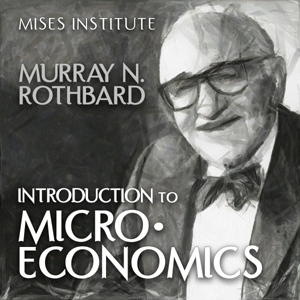
About this episode
Why is it that things like bread and water which have high use values are cheap while on the other hand luxury items like diamonds are very expensive? This paradox was not solved until it became understood that people choose only a marginal unit - this loaf or this diamond. Value can be attached to a good only by individuals' desires to use it directly in the present or in the present expectation of selling to such individuals in the future. It is subjective only.
Part 2 of 14. Presented in 1986 at New York Polytechnic University.
Get every episode summarized
Each time Introduction to Microeconomics publishes, we email you a written briefing from the transcript — the topics, who appeared, and any specific claims, with the ad reads skipped.
Email me new episodesFree for 3 shows. No card needed.
Hosts & guests

No transcript yet
This episode has not been transcribed. Request it and it moves to the front of the queue.
More episodes
More from Introduction to Microeconomics
11. The Structure of Production
Introduction to Microeconomics
12. Labor and Unions
Introduction to Microeconomics
14. Interest Rates and Course Review
Introduction to Microeconomics
13. The Labor Market
Introduction to Microeconomics