Loading...
religionspiritualitychristianity
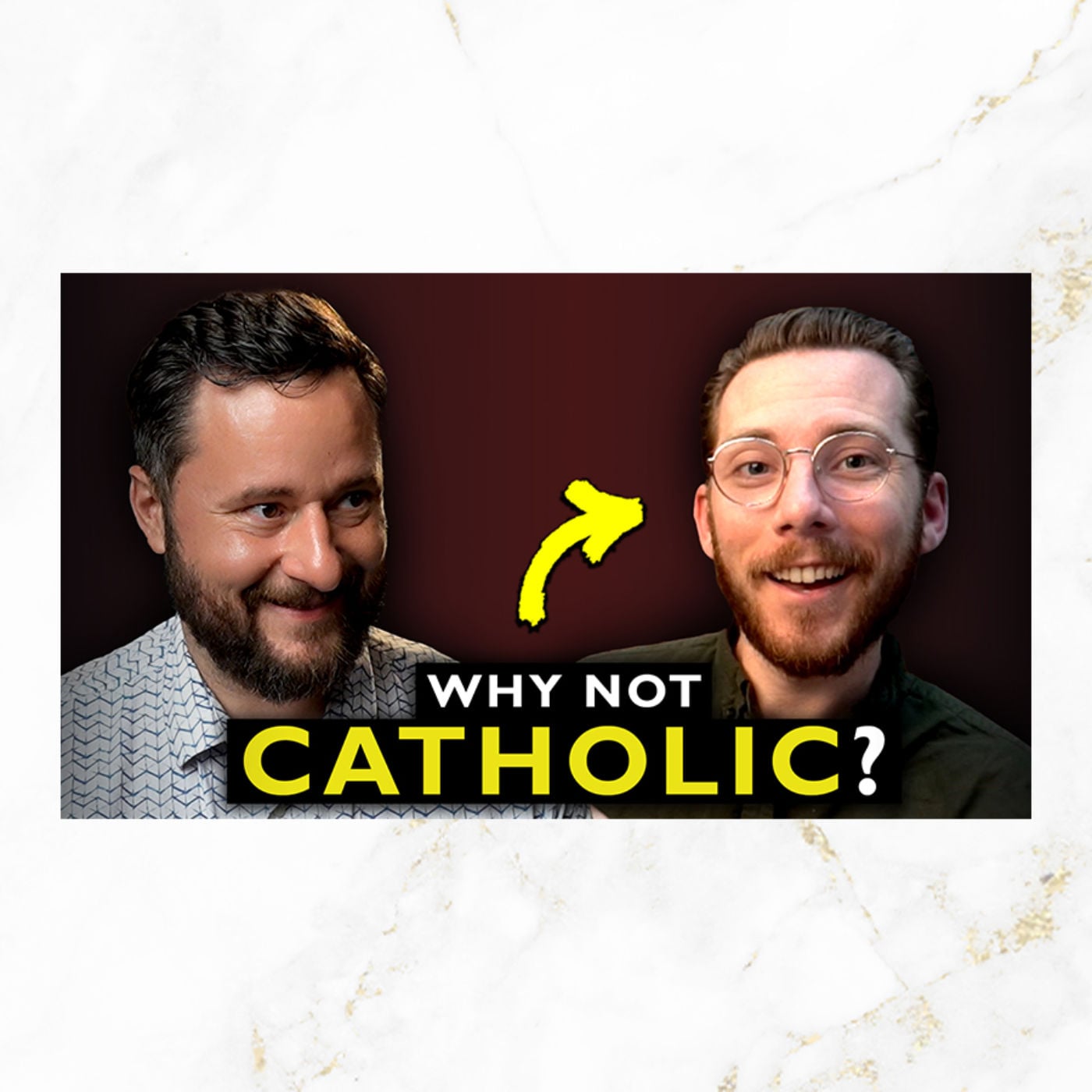
#255 Talking To My Favorite Protestant YouTuber (Catholicism and Orthodoxy) ft. Gospel Simplicity
About this Episode
Having a chat with Austin Suggs from Gospel Simplicity about Catholicism, Orthodoxy and his personal faith journey.
Transcript:
Mike:
Go ahead.
Joe:
Welcome back to Shameless Popery. I’m Joe Heschmeyer, here to have a cup of Joe with my friend Austin Suggs of Gospel Simplicity. Austin, thank you so much for being with us.
Austin:
It is my pleasure. I just looked at, I don’t know if this is the public title for the conversation, but the one in StreamYard. Your favorite Protestant YouTuber. I’m touched, Joe.
Joe:
Yeah, I will say two things. One, Mike chose the title, but two, ...
Hosts & Guests

Transcript
Go ahead.
We're on.
Welcome back to Shema Spopri.
I'm Joe Heschmeyer here to have a cup of Joe with my friend Austin Suggs of Gospel
Simplicity.
Austin, thank you so much for being with us.
It is my pleasure.
I just looked at, I don't know if this is the public title for the conversation, but the
one in Stream Yard.
Your favorite Protestant YouTuber, I'm touched, Joe.
We'll say two things.
One, Mike chose the title, but two, I don't disagree with the title.
I think I said something about that on a stream once, and he was picking that up.
I was like, ah, my favorite Protestant channel.
So you're now committed to that quote forever.
I'm going to apparently show which I, you know, I've, I've said things I've regretted much more.
Well, I'm glad.
It's a low bar.
You said.
There we go.
So what we normally do on this channel, we have some coffee and talk about some issue of theology,
apology, apologetics, et cetera.
So this morning, got my coffee.
I don't know if you've got anything on your end, Austin, but I didn't think.
You didn't send me the memo.
I've got.
No, I apologize.
It is called cup of Joe, but I guess it's not self explanatory.
I didn't realize that was the title.
I thought I was just like Thursday live streams.
Okay, it's all ruined from here.
Well, alas.
I got to work on branding.
That's what I'm learning.
But in all seriousness, maybe you can introduce yourself and give us a little bit of your own background.
Yeah, for sure.
My name is Austin Suggs, which I find a lot of people don't know my name, even who have watched my channel for a while.
I often get called Justin or just that gospel simplicity guy.
But yeah, Austin's my name if people care to know that or use it.
I run the channel gospel simplicity, which I've been doing for a while has recently become my full-time job.
I grew up in the evangelical church, eventually got interested in questions of Catholicism in orthodoxy when I was studying theology during my undergrad at moody after my undergrad at moody.
For people who don't know, can you explain what moody is?
Moody, yes.
The place where Bible is our middle name.
Moody Bible Institute is a Bible Institute out of Chicago.
It's kind of like one of the last holdovers from the era of like Bible colleges.
A lot of them have either shifted into just Christian universities or have gone out of business.
Moody is kind of one of the original ones stuck around basically everybody there out of like your 120 credit undergrad degree takes like 90 credits of Bible and theology.
So it's yeah, it's a lot.
So that's kind of their whole thing.
They've got a couple different majors, but they're all ministry were related and I studied theology there.
So they kind of build it as like an undergraduate seminary is the kind of type of experience.
And I assume moody is the last name like moody Bible is not just a reference to limitations or something.
No, it is not.
Yeah, it is a Dwight Lyman Moody, the mid 19th century evangelist.
It is named after him.
So you clearly had a passion for God for scripture, et cetera to end up at Moody in the first thing that's fair to assume.
Yeah, absolutely.
So out of high school, I mean, during high school, I had a brick kind of brief deconstruction period, but came back.
I think even more in love with the faith.
As I was figuring out, you know, like every junior in high school gets asked, like, what are you going to do when you grow up?
Like most of them, I had no idea.
But at that time, I was really interested in studying medicine.
I was thinking about doing something like doctors without borders.
I'd actually gotten in in my senior year to like a combined medical program.
So it where you have like your undergrad and graduate kind of all set up.
I had my roommate lined up.
I was ready to do that, but I was also interning at my church at the time.
And at the end of that internship, they offered me a full time job and much to the chagrin of my parents who are very committed Christians,
but also just American parents.
I decided to take a gap year and defer my enrollment into that program and see if see if ministry was for me.
And during that time, I like to say the church made the mistake of letting me teach in the high school ministry because I absolutely fell in love with it.
But I also realized how much I didn't know.
And so that's why I wanted to go study theology at moody because I figured that was the place where I could learn as much as I could.
Beautiful.
Now, how do we get from there to here and what does here look like?
Yeah, absolutely.
Okay.
So my current kind of like ecclesial context is that my wife and I worship in an episcopal church down the road from us, which is kind of like Anglo Catholic and its liturgy.
I like to say there's more Latin in our episcopal liturgy than there is probably in like 95% of the Catholic churches near us.
It's, you know, Latin coral hymns and it's beautiful.
We really enjoy that.
But that was kind of a process that we can get into.
But it was basically an interest in more liturgical expressions of the church and I was something that we found locally and really enjoyed.
But how I got to where I'm with gospel simplicity and interested in all the Catholic Orthodox stuff would be a different question.
I don't know if that's where you're going or not.
All of that is I think having people have a sense of where you are right now because I already saw someone asked in the comments, you know, they just didn't know your own background.
Yeah, where are you and I think the, I don't know if you want to pull that up.
Mike, there was a question where somebody asked, I don't forgive me for not know.
Here it is, please forgive my ignorance because I don't know what flavor of Protestant Austin is.
I think the universal attestation of real presence and church fathers convince him at least to Catholic east or orthodox, maybe Luther.
Yeah.
Great question.
I think this is already giving a little bit of, you know, because I think people are wondering, OK, like, so there's, you went from a non denominational thing, you clearly got some depth.
I think people looking at your setup can see icons and, you know, like, you don't seem like the stereotype many people might have of like a non denominational person.
Like you've been on some kind of journey.
Yeah, that's definitely fair.
What's that looked like, maybe, and I know we're going to talk with that probably a fair amount, kind of where you are, what your thoughts are.
But that seems like maybe a good way to dive into the question from an angle.
Sure.
So when I was studying at Moody, two professors had a really big impact on me and both of them were Anglican.
They didn't cause me to become Anglican right away, but they got me interested in church history.
What we might call like the Catholic tradition, generally speaking, which caused me to look into the church fathers and these types of things.
And it was at that point that I became convinced of the real presence in some sense.
I would say from there, you know, how I think about theology today would be like a high church Anglican, but whose biggest theological influences are probably all Catholics for the most part.
Most of my theological heroes are the people who were parathy, I think would be the plural there in Latin, like the experts of Vatican II.
I get in trouble with a lot of Catholics.
I feel like I'm a bigger fan of Vatican II than most of the Catholics I know.
But people like Henri de Lubac, concerts on Balthazar, Eves Kangar, John Danielu, these are the kind of people that I spend my free time reading.
So, yeah, I would say that might describe my kind of theological trajectory from being really interested in church history, which I still am.
And then I'm also really interested in kind of the project of what they call in theology, resourced mob, which is like.
I just want to share with you on your own kind of resource on journey of retrieving retrieving all this stuff from the tradition.
Absolutely. Yeah, that I think that would be an accurate description of kind of my my theological journey. So yeah.
Very beautiful.
I'm sure many people are going to wonder why Anglican Catholic and not Catholic or why Anglican, especially if so many of your theological influences are Catholic.
I'm sure other people are going to wonder why Anglican Catholic and not Orthodox.
So, do you want to take that as one giant question or do you want to make it maybe break it up?
I think those would be interesting areas to explore.
And I'll say this maybe a little bit of unnecessary preamble.
Frequently, when I see Protestants openly exploring Catholicism, there can be a little bit of a boom and bust cycle where at first everyone clicks and they're like, oh, we're super excited.
And then if they don't like immediately say, and I'm entering our CIA on Thursday, then people say, oh, you were just doing this for the clicks.
And I don't think that's true. Like I don't think.
Yeah, you know, I think the risk of alienating people is often much bigger than the traffic. I just think that's a very cynical kind of take.
But I.
I think it's better for people, you know, because as a Catholic, you look at this and you're like, well, of course, Catholicism's true and it seems so natural and so like, how can anyone think otherwise.
But obviously that's not the experience everyone has coming in, including people who might eventually become Catholic that it doesn't always just seem completely obvious and self evident.
And I think it's very tricky for all of us to sort of step outside of our own hermeneurnic bubbles.
You know, I know this as a Catholic, when Protestants are like, well, obviously this Bible verse means X because it's what they've always been taught that it meant that it's not obvious to me.
And I think so often the evidence for Catholicism can feel the same way in the opposite direction of well, clearly this Bible verse points in Catholic doctrine or clearly like the history of this points in this Catholic direction.
And it can be genuinely mystifying, even if you're trying to be charitable to say, well, how is someone reading this same, you know, corpus of evidence differently.
Like I said, I don't necessarily long preamble take that wherever you want to go with it.
Yeah, so I'll break up the Catholic and Orthodox reasons because I think they're probably different and yeah, it might be helpful to separate those.
So I'll start with the Catholic and I think there's kind of levels at getting into this as well.
So I appreciate you bringing up kind of the boom or bust cycle. I also think as someone who's a Protestant on the other side, not necessarily like the clicks on the YouTube side, but I think there's also this kind of boom and bust cycle as far as excitement about investigating questions like this and looking into the Catholic church.
So maybe I can tell my own story a bit through that lens. I'll start up front though. So why am I not Catholic? I think my biggest difficulty with Catholic theology would be in fallible people in fallibility specifically.
And we could get into why that is and what I mean by that, but I'll put that up front for some people aren't kind of like waiting for me to explain it.
But then I'd say my experience looking into Catholicism feels kind of like that boom bust or like hills and valleys type of thing. So when I first got interested in it, I think what evangelicals, especially who come from low church settings when they start reading the church fathers, there is this wow, they look really different than my non denominational mega church kind of environment.
And they look a lot more Catholic and Orthodox than they look Protestant. And I think that is just like by and large, a good assessment of the church fathers, they do look more Catholic and Orthodox than they look kind of non denominational Protestant.
And so I think for me that created this sense of what am I going to do. I also got kind of thrown into this by making a video about Catholicism that I had like 100 subscribers at the time and got like 10 views on my videos and I made something about Catholicism.
And all of a sudden I was coming across all these arguments for Catholicism and I went into that like rabbit hole of binge watching, like trend horn videos. And I don't think you were making them yet. This was.
Yeah, that's pretty. Yeah, that's pretty this channel.
But you know watching all the debates. And I think I had a first sense of wow, like the arguments for Catholicism seem a lot better than the arguments I have in response.
And then I think one of the biggest things that put the breaks on for me at that point was taking a class with a Calvin scholar and realizing, oh, wait, what I thought was Protestantism, my kind of mega church context of this looks a lot different than the reformers at the source.
It becomes kind of a different level of question, right? So it's, well, it's not just a right or do I have the wrong title Protestantism.
Yeah. And so I think that made me say like, wait, I should really get to know my own tradition because I felt like I was comparing a quietness to my local pastor and I was realizing that's probably not quite fair.
And as I was reading kind of the reformation sources, I was like, huh, like this medieval period like had some stuff going on, these reformers seem to be making some sense.
So I'm going to kind of slow it down and try to understand at that level.
And then I think there were certain Catholic apologetic arguments that didn't quite land for me at that point because they began to be arguing against a form of Protestantism that I no longer thought was the best form of it.
And then I think, you know, it took some time trying to understand my own tradition, those things.
I'd say where I'm at now is a bit different in the way I look at these things, you know, also having changed within Protestant traditions into a more liturgical, more sacramental tradition, where the questions I'm asking now, as I spend a lot of time with Vatican II and the people that I like or more.
And somewhat theoretical questions of like what would be necessary for unity also questioning not even just that because I think that was early on.
But I think my view of what the Catholic church is has changed over time.
Can you say more on that? I think that's a really fascinating.
Sure. Yeah.
That's just kind of thing to drop.
Yeah. Absolutely.
How my view of the Catholic church has changed?
Yeah.
You're like, well, I didn't realize before that it's actually the horror of Babylon.
But I assume that's not it.
No.
I might get myself in some trouble here.
I don't know.
We'll see.
I mentioned in our video that we did recently that I've begun thinking of Catholicism as something akin to like a theory of everything.
And I think the vision of Vatican II is very compelling in a lot of ways.
And so far as it seems to be this like grand project of synthesis and trying to see the good in like literally anything that is good and how that can be kind of brought in to Catholicism going through a filter and being seen in the light of Christ, all of those things.
But that kind of like outward look at the look from the Catholic church towards the modern world.
I made a video yesterday in which I probably very controversially said,
Gaudium and Spes might be the best document the Catholic church has ever produced.
Which might just tell you that is very controversial.
I would say that.
But but I think I think the thing you're saying about the theory of everything.
I want to make sure people are getting it because I think this is brilliant.
That the Catholic church is in this position to say,
we have the fullness of divine revelation, we have this robust belief in the relationship of faith and reason that scripture tradition as well as those things that we can know from sound philosophy and everything else.
We can build on all of this and we have this long standing tradition that we see both supported in scripture itself as well as from the light of human reason of believing even in things like the natural virtue of religion.
That if you think of the Christian story as God reaching out to man.
There is also this movement inspired by the Holy Spirit of man reaching out to God.
And without the fullness of revelation that takes all these various forms.
So how do we recognize having the answer key as it were where the various members of the class of you know people seeking God throughout the world.
What answers are they getting right and that's not relativism right is actually the opposite of relativism.
But it is a robust embrace of Catholicism is something more than just like one theory among many that it's pointing towards as you say a theory of everything like a robust vision of of the nature of reality.
Is that a I guess first of all is that a fair description of what you mean by a theory of everything.
And if so how does that kind of interact with.
Yeah, so I think and I probably haven't articulated this that well.
That was a really good description of what I mean by theory of everything.
I think how that maybe shifts from my previous version was thinking of the Catholic church as a bit more kind of defensive.
And I think one of the struggles I have today is a lot of the people I mentioned as like my theological heroes.
They were also at one point banned from teaching theology.
That's one of like the fascinating stories of Vatican two that some of the leading experts at the council just a few years prior were barred from teaching theology.
And so it leaves me in this question today of going back to like what is the Catholic church.
Is it the church that's barring a lot of my theological heroes from teaching.
Is it the one that elevates them to experts at the council.
Is it the syllabus of errors or is it Galadian that spes like and I'm not I'm not doing this in a political sense of trying to say.
That the Catholic church completely changed its mind like I again I think Vatican two is actually great.
But I think in the past I was reading the Catholic church primarily as like council of Florence council of Trent.
Syllabus various things like this which are all part of the tradition.
And so the questions I often ask myself today is like I can't imagine being a Catholic in the 19th century.
Then again I've never been in the 19th century so my opinions today are very 21st century opinions.
Vatican two was great. I also understand the trad arguments against some of the continuity which places me in a just very different position of thinking about Catholicism of.
I find the theory of everything version of Catholicism like one of the most exciting intellectual projects I could conceive.
But is it faithfully Catholic in like the full sense.
So again that's a very different question than I was asking a few years ago when I was thinking like.
Were the reformers right about X Y or Z or even not so much that at first it was like soloscriptura or solafide those questions all still matter.
But they're just a bit different than the questions I'm asking today.
So that might describe my own journey with the Catholic church.
Yeah that's a really fascinating journey because I think you just you hit the nail on the head right at the very end there that it's not just a question of what do I think on this particular doctrine or that particular doctrine but it's this much broader vision of what is the Catholic church in relation maybe to reality in relation to truth and how do we make sense of the way this gets lived out.
I mean if I can maybe just put maybe a gloss on on one part that you said because you're right like the new both theology guys I can't speak French the new theology guys from the only 20th century we're very controversial.
But a lot of people who were pushing back against them were a certain type of Thomas and the whole domestic project when it began was very controversial for frankly similar reasons of what do we have to learn from all these pagans like Aristotle.
And then it became what do we have to learn from these you know enlightenment thinkers or what do we have to learn from you know Vatican to like what what could what do we have to benefit from even finding out what it is that these other religions believe and what what we agree with them on the that kind of perennial question of saying how do we take you know because if someone said tomorrow.
I'm going to start a project on exploring the the Catholic interface with faith interfacing Catholic interaction with Buddhism and I'm not going to say it.
Catholic interaction with Buddhism that could be really good that could be really synchronicistic in a way that is really bad and without knowing more about the project it's hard to know what to make of that which I think speaks maybe to.
It's just comfort people have had perennially in the church with everyone from St Thomas Aquinas to Delubak you know like that and and you see guys who do it really bad yeah so.
I don't have a good question formulated from that but I think it sounds like that's maybe where some of your current exploration is of how do we make sense of this sort of ongoing dialogue even within the church as well as this ongoing dialogue between the church and the world.
The world or between the church and other expressions of Christianity or whatever it is is that I can't even tell from being to hear yeah I think that's right I would add a third layer to that please and I think one of the most pressing ones is between the church and itself throughout history and one of the areas of thought that interests me a lot is just not.
History as just the data of history at a given time but looking at trajectories of theological history and like newman's project of doctrinal development and how we make sense of that and also how we.
How we make sense of the church in this era versus the church in this era that it's this kind of you know the hermeneutic of continuity of reform of like how do we make sense of going from.
The 19th century to the 20th century when there's certainly shifts in attitude at the very least i'm i used to look at those things as.
Weekness is for Catholicism because i'd engage more in the you know are there contradictions which is a good question to ask absolutely it's it's not unimportant i think today i'm just also interested in what what is going on here like because if there is development and i think developments a word we can all like here.
What does that mean for where the church has been and where it might go in the future so yeah i think that the church dialoguing with those outside of it is an interesting thing the church kind of wrestling with those people within its balance who are trying to do that is an interesting thing but it's not even so much like the interfaith dialogue that i'm interested in myself but it's just that movement of like what can the church.
And the church take in including change or development within its own history yeah.
Yeah i think that's very well said and it's a good question to explore along the way do you have.
Want to put this to provocatively go for people end up being anglicate particularly anglicathic as a sort of.
Sort of a via media in a negative sense you know when the couple says like.
The marriage isn't going well but we're not going to get divorced we're just going to live separately is it just like this is not i don't think this is anybody's idea of of how things ought to end up you've just sort of.
I'm not ready to just accept where this thing is going over and i'm not endorsing divorce and just just for the sake of the analogy yeah.
This would be almost the exact opposite in some ways that you can have people who are carried along by seeing the force of the Catholic claim or the Catholic argument or the Catholic vision of reality whatever that is.
But then they still have some hang ups and anglicanism and for some people frankly orthodoxy can be an attractive option for people coming from a Protestant background where i think two things are true.
One there often is much more definition and opposition you know like Protestantism exists in opposition in some way to Catholicism in a way that it doesn't Anglicanism in a way that it doesn't to orthodoxy.
Like the relationship of even in what ways is Anglican Protestant and not Protestant that's a whole thing.
But it's it's not really defined in that way like i've talked to numerous people who their journey was they were drawn towards the Catholic Church and at some point either one spouse or a parent or somebody else sort of said what about Anglicanism you know where it's not like.
I read all these Anglican divines and was so overwhelmed by this incredible English tradition of theology that I just knew this is exactly where I am meant to be or maybe where everyone is meant to be.
It for many people seems to be i'm not ready to take that jump at this point in my life but I want something as you said with more liturgy with more you know maybe tradition with more reverence.
So do you find you have positive reasons for being Anglican vis-a-vis everything else or do you find some unsettled tensions in terms of fully committing to being Catholic or is that maybe a bad way of framing the question itself.
I don't think it's a bad way of framing the question i think there's a few different ways of being Anglican right so there are those who say that yeah i've read the Anglican divines or i think the Oxford movement is the greatest expression of theology the Oxford movement for those aren't familiar was what john Henry Newman was in saint john Henry Newman was in before becoming Catholic helped start which was like a retrieval project.
So i think there are those who like positively Anglicanism is the best on Anglican grounds i think there are a lot to say.
Anglicanism is like practically for me the best option which i'd say well there are aspects of like the Anglican divines that i find really compelling i would say land more in that category of not Anglican because.
Everything else is wrong or Anglicanism is the height of the church per se i think i find myself in this tradition more so because.
I look at the Catholic church and there's so much i love there but i struggle to see how it lives up to its own claims about itself is often i think the way i would put it.
That i think it has maybe set a bar for itself that it doesn't quite meet and then you kind of have this question in my mind of okay so if you don't think it's true or making good on it true in the sense of making good on its claims about itself.
What do you do there for some you could just become Catholic and think okay like every church it's gotten some things wrong maybe the one thing it's gotten wrong about itself is that it hasn't.
Something's wrong that said it right you know like functionally I know people who do that.
Or I think you can say okay well then do I become orthodox do I if not orthodox maybe if you're you like really precise doctrinal lines Lutheranism I think is a kind of compelling one.
This might not be surprising to me or to people listening given my talk about like theory of everything and kind of wide resource Mont type of thinking but I think what.
Anglicanism does offer is a big tent that can embark on a project like that of retrieval and synthesis not synthesis in the sense of like syncretism but in taking truths and trying to understand them better wherever we find truth and again this all sounds like a lot of like inter religious stuff that's not primarily but i'm interested in but more just like wide resource Mont within the Christian tradition anyway.
May I think Anglican is a ruptured with a of course audience question so yeah we have Roberto asking can also explain what is Anglo Catholic and why not just be Catholic I think he's kind of explaining the second part but yeah people may not be very familiar with the term Anglo Catholic.
Like how's that different than being an English Catholic because like if you just looked at a dictionary those two should be the same thing.
Sure so and i'll be clear here that it can mean different things so for some Anglo Catholic can refer to groups of Anglican.
Churches that are in what are known as like the continuing Anglican movements or various offshoots of Anglicanism wherein like the ecclesial governance is all churches that have this specific outlook not only on liturgy but also the outside.
i'm not in one of those I worship in an Episcopal church I describe it as Anglican because of its liturgical style and when I use Anglican in a liturgical sense I really just mean it has a.
More formal more reverent robust traditional liturgy and its expression so think again you know Coral Latin hymns maybe the use of incense vestments all of those things because within Anglicanism broadly you can have.
Pretty low church expressions all the way up to you know very high church expressions so I mean it not in the polity sense not in the sense of a like.
Denomination within the Anglican movement I just mean it in a liturgical sense does that answer that question I mean I give what you're saying with that we'll see from Roberto if he finds that explanation.
Helpful yeah I think it's yeah we don't need to necessarily get into even the continuing Anglicanism that's kind of the the schism that happens over women's ordination back in the 70s and then that's different from the A and C.A.
Yeah ACNA I do that every time ACNA I don't know why Anglican church North America and yeah yeah okay sorry.
So yeah ACNA where that splits over issues of sexual morality like same sex relationship stuff kind of brought that good description and so you're in a church that's in communion with people who.
Maybe you don't share their theological principles is that fair to say I mean I guess that's true yeah I'm sure I wouldn't agree with everyone in the Episcopal church at all.
And I so I think this is where Anglicanism and that's another kind of Anglican versus Episcopal sometimes in American context people use Anglican to mean ACNA but Anglican is just a way of describing the church of England broadly the Anglican communion.
Anyway I think one of its great benefits is that it's a really big tent I think one of its great drawbacks is that's a really big tent so you have a lot of latitude within the church of England from the very beginning I would say in what you can believe I mean the 39 articles are not all that restrictive.
And the way they've been interpreted over time hasn't been I think often Anglicans have seen their unity coming from two things one relationally like agreeing to stay in communion with one another and two in terms of devotionally praying with the book of common prayer which I think the book of common prayer is just an absolute treasure which is at like a personal level maybe my favorite thing about Anglicanism is just being able to use that to.
Structure my own devotional life so yeah I forget where I was going before I know I think that's helpful the latitude and erinism is an interesting kind of principle within Anglicanism as well of like giving as much sort of bandwidth to believe various things even you know maybe contradictory things that you you can have different views so one thing that can be very confusing for a Catholic looking in and to say what do Anglicans believe on X is there rarely is an answer.
I mean it's often some Anglicans believe this and some Anglicans believe this this radically different thing and in some ways you know on unsettled matters of doctrine that might actually be lottable on other things it can be again speaking as a Catholic mystifying so if you say something like well what's happening from an Anglican perspective in the liturgy is the bread and wine becoming the body and blood of Christ or it's the end with an under or is it a symbol.
It seems like you're going to get very different answers within Anglicanism I mean the 10 articles of 1536 had a very high eucharistic theology the 39 articles that you alluded to before reject transubstantiation seemingly but it's not clear what they're kind of putting forward as a positive eucharistic vision and it seems like within the maybe family of Anglicanism.
There are answers maybe all over the place it maybe even within the same congregation and so easy idea well if this priest or this congregant believes it's Jesus said it's Jesus then but not otherwise I'm true I want to be charitable to the Anglican Catholic perspective because I love aesthetically Anglicanism I love what I understand of the idea of what they're trying to do.
I think I share Newman's sense that I'm not sure it works as a project ultimately I mean he's as you say one of the guys who kind of found something and then concludes that it can't work but yeah so particularly Liz list if you are willing to go here specifically on the Eucharist what is your understanding of what's happening and what does that mean if the person next to you or maybe the priest doesn't share that same view of the Eucharist.
Yeah so I think I could probably answer this at a couple different levels as far as like functionally what does that mean if you and your priest disagree or you and the person next to you disagree but doctrinally I think the general thrust of the book of common prayer would be towards a view of I would say real presence but probably more in the world.
The Calvinistic sense of that as far as presence by the power of the Holy Spirit and less of a localized presence so I often describe the difference between like Calvin and Luther directionally as far as what's happening in the Eucharist as far as is Christ coming down and being present in the in with and under the elements.
So describe that as like a downward arrow and Calvin's being an upward arrow so that in those elements you are brought by partaking in those elements you are brought up to truly participate or a partake of Christ flesh and blood now interesting things happen in the book of common prayer like historically and like what is the most Anglican of Anglican moves I think was that I hope I've got these dates right.
The book of common prayer undergoes a couple revisions very early on the 1559 edition I think it was the 1559 had very let's say like more is Vinglian language to it so it was like do this you know emphasis on remembrance emphasis on yeah emphasis on remembrance generally but then three years later in 1562 it's much more literal so it's you know take eat this is my body.
That's brought back in in the words of the institution there you know feed on Christ is brought in and so what they do in the kind of authoritative version of this in 1662 but this came out before that into they just put the two together so like you get this long words of institution where like half of it sounds Vinglian half of it sounds Lutheran and they just kind of put them both there.
But I think the general thrust is probably more towards a reformed sense I mean the 39 articles are fairly reformed in their theological outlook I would say but like so functionally what does this mean well I think the way I would think about the Eucharist would be one having people in the congregation that disagree with you on what's happening there might be problematic in some sense but I think is also just inevitable.
You know in any church no matter what their official doctrine is people in the pews might disagree but you could at least adjudicate whether one is kind of with the church or without the church but yeah at a functional level the person the few next to you whether that's in an orthodox church or Catholic church might have a different understanding whether by bad catechesis or going against church doctrine I think what is happening in the Eucharist I don't think necessarily depends on well how do I want to put this.
Yeah I think you're getting to understand obviously any any denomination any church you go into you might have someone who doesn't doesn't believe in what that church believes about the Eucharist my question is more like does it change what's actually happening you know because if somebody we would say if somebody doesn't believe in the mass the mass is still happening if they might receive unworthily they might receive ignorantly but that doesn't mean that oh well it's just bread for them like we wouldn't say you know it's not.
Schrodinger's Eucharist where you know the receiver changes what's happening.
Yeah so I would say that from I'll start with the priest and then come to the person because I think the person's a little more complicated I think the the worthiness of the priest and I think this would be an idea that we agree on they're like moral worthiness at least isn't.
Isn't decisive in what happens with the Eucharist I think if you have a bit more Calvinistic understanding of what's going on there it's less of a change in the elements right to there so it's even less dependent on the priest in that sense but the person there is like an intra Protestant debate whether the one who receives unworthily truly receives Christ or not and I think they're probably.
It would be Anglican disagreements on this I'll put all this with the caveat of there are people that are much better at explaining traditional Anglican theology than I am again like most of the people that I spend my time reading are Catholics but I would say that it doesn't change what's happening even if I don't fully understand what's happening with the elements but I do think there's there's room within Protestant theology to say that the person who receives not.
Well it's more so whether or not they're they have faith in Christ like whether they're Christians what do they receive I think there's space within Protestant theology say that perhaps what they're receiving is not quite the same in that way because they are not united to Christ that the elements that aren't bringing them up into union with Christ on a Calvinistic few but I don't think that one understanding what's going on in the Eucharist or having the completely right theology about it would determine whether or not they.
If someone had like an intellectual disability such that they couldn't understand Transubstantiation they weren't able to that would they be able to receive because I know you don't give communion to children in the Latin right.
Yeah so I mean the right there is is a very important question the standard usually is for someone to be able to understand that it's not ordinary bread.
But in the case of I don't know how this is normally handled in the West with like severe intellectual disabilities I believe I mean there's no reason spiritually they wouldn't be able to receive they may not have an appreciation like the reason.
There's an ordinarily in the West that there is this time of making sure that the person can discern that this is Christ is I think twofold one we want to kind of spiritually prepare them for this encounter in two we want to take seriously everything St Paul says about not receiving without discerning the body but someone who's just literally incapable of discerning the body for reasons of you know intellectual inability I don't think that would be a barrier to them receiving and as you sort of alluded to it's a very easy thing.
It's a very easy in the East where even infants receive communion so I mean it's clearly not a bar in terms of validity.
Right and so I guess the point I was going to make there as I'm getting to this roundabout way is I don't think someone having a right theology of the Eucharist in terms of having it all worked out is determinative of what they receive.
I think there's I guess I would put myself as just a bit more undecided on the question of like if someone is not in Christ can they then partake of Christ in the Eucharist I think a more reformed understanding would say no because those things would be put together one's union with Christ and what it one is having in this sacrament because again the kind of it's a directional move.
Rather than it being focused on the elements but that was probably a long enough to answer to what was well I think people who are familiar with the history of the different expressions of Eucharistic theology of the different camps they have a clearer sense of where you are with it.
I know we've gotten questions already on papacy and I think you've alluded you know one of the common themes that come up in your story both in what you are drawn to and struggle with in Catholicism and what you've liked in Anglicanism.
Seems to be this idea of a unit me if I can put it in words you haven't a unity and diversity of saying like how do we have a common thing where we're not just because like the broadest way would just be like I'm going to be an agnostic I want you know such a broad view of everything that I want people who both believe in and don't believe in God and so I'm going to start like the church of agnosticism where we stand for literally nothing.
And so everybody is welcome because we have no principles whatsoever and that might be a caricature of Anglicanism but that's not really what Anglicans believe that they're always like everyone no matter how a lot of Tudinarian they are has to say we're united in some way in something that there has to be some point of boundary where you say up to here and no farther.
And some people might draw those boundaries very broadly some of them might draw them very narrowly but someone somewhere have to draw boundary or you have no definition to the thing like if a term means everything it means nothing if body stands for everything it stands for nothing like every political movement every definition of a word seems to you know if you can have a word with maybe there's a little bit of.
In a morpheus boundary where it's not precisely defined.
Vic and Stein gives the example of the word game like what does and doesn't constitute a game is something where we know some clear cases and then there's a lot of fuzzy cases but it can't be just literally everything or it ceases to be a usable term again long winded prep.
So someone's got to draw boundaries the papacy is obviously an important part of that conversation ecumenical councils are obviously an important part of that conversation but I also know that even in that role there's a lot of controversy with that so where you are in your journey now.
Do you see the papacy and if you want to add ecumenical council you can you don't have to.
As an important source of unity as a cause of disunity and you know factionalization or some third thing I haven't anticipated in that formulation.
So when I quickly call out Matt Frads with us here in chat saying Austin what a guy you got to do it in the right voice.
Hey Matt.
Hell no not happening partner like we're sorry I'm not I'm not offending Matt Frad with an australian accent right now.
Nice yeah I won't do that either okay so how do I look at the papacy yeah not to like plug my own stuff but I did just explore this on sub stack if people want maybe a slightly more coherent version of my thoughts where the conclusion of that article.
It was like church unity in a post christendom era and what I say there is in a time that we live in today where we don't have civic rulers enforcing doctrinal unity which I think is an aspect of church unity that's often forgotten in our modern discourse about why the church is or isn't united for the record I'm not calling for a modern confessional state that's just like a historic.
When you were talking about what what you nice anglicans I thought you were going to at least mention allegiance to the king as the head of the church of England which is historically what like that was the boundary yeah fair.
So I think that Catholics have adapted to that situation the best and I think the papacy is the most efficient means of carrying out church unity in the situation we're in today so points to the Catholic church for that.
I think what I say in that article or maybe it was an article before that I've been exploring these things on sub stack is that you have like 39.
What was that it was an anglican joke no that was good that was good I was like I don't know if I've had 39 I don't know how many I brought anyway I'm slow here we go I think something we have to separate is the papacy could be an adaptive.
Mechanism that the church came up with for governing the church and happens to work well for promoting unity but that's not actually what the Catholic church claims about the papacy I mean it does correct that it is good for her unity but the claim is more than that so I would grant that the papacy is that that it is a good way of having unity especially without even needing necessarily.
Civil rulers to enforce it even if that might have been a help throughout a lot of history.
The question though is what I think I say in that article like but if the papacy is not founded by Christ then our faith is in vain kind of in our faith in the magisterium is in vain.
Yes Paul there on the resurrection so that's kind of the the more difficult question but I would grant that it is a good way of ensuring unity I would even this is impression say this online I don't know I don't get this is just a freebie for all the Catholic apologists out there I don't get why you guys don't like drawn Vladimir salovia more because he like was orthodox and then became convinced of the papacy and he has this wonderful book like Russia and the Catholic church or something like that and he puts for the argument.
Against ecumenical counsel is really working for this and he basically says like the papacy this is the way this could work and in a lot of ways I would agree with him like this I don't have a if we want doctrinal unity and we want it in a certain way like the papacy seems to be in the kind of front runner right now for like this is a way it could be done.
But the question again is just not it has to be more than is this an adaptive mechanism for ensuring unity or absolutely is it true I mean right because there's a lot of things that would be well this is this works very well and you can even have things that like the pentarchy where you have the patriarchs we don't claim that's of apostolic origin so maybe that's a good way of structuring a church from a pragmatic perspective.
But that's a very different like that is a prudential question not a this is going to determine whether you become Catholic or not I mean one of the things I say and hope Peter is if the papacy stripper should be Catholic it's papacy isn't true no one should be Catholic and it seems like you have the same.
Is it fair to say you have the same sort of read of the history that it's not enough to say this works or it doesn't work there's a much deeper question to be asked there.
I agree with the way you said at the end I would agree with half of the claim and Pope Peter so I would agree that if the papacy is true everyone should be Catholic I am not convinced of the second half of that because I think you could have a situation where it's kind of similar to my like disagree with Lewis on like liar lunatic lord like the papacy could be just sincerely but mistaken or it could even be that.
You know I.
Well yeah I mean certainly I can accept that it could be sincerely mistaken my thinking is if it's sincerely mistaken we shouldn't say we believe that Jesus established a church that in that case he seemingly wouldn't have established even if that church is innocent and its delusions.
Yeah I guess like the way I would put it is let's say that this isn't going to happen right but like you know next year some Protestant apologist writes the definitive work that disproves the papacy I don't think at that point and like Catholics agreed like man yeah case closed papacy is wrong I don't think like the Catholic church should shut its doors I think it would just.
Adapt to that and say okay our claims about the papacy were wrong in one sense but we could still say of all of our options for governing the church this is the the most adaptive one and so we might have to massage some of the claims we made about it but.
I wouldn't say that therefore everyone should stop being Catholic I think just what it means to be Catholic would change in that situation that's interesting I mean it's very pragmatic in a certain way.
This okay that's actually related to a question I wanted to make sure I asked you there's a lot that it seems that you have an attraction to and not just have an attraction to that's too relativistic it seems to me and correct me if I'm wrong there's a wealth of things that you think the Catholic church has gotten right that were in many cases surprising to you coming from a moody Christian background yeah people have to heard the beginning to know I'm not insulting you there.
I'm so moody yeah exactly and and even in terms of things that we agree Protestant Catholic orthodox on things like the three hypostasis and one divine substance in the Trinity or the way the two natures cohere and unmixed but united way and in Christ person those very subtle questions and those things.
We're time in time again. It seems that the church is getting things right not just on the soft balls but getting things right on the curve balls the things where the answer is quite surprising and the church says this thing that when you first hear it you're like that's not at all what I think and then you do a little more digging and say well actually the church was right now is wrong like this happens in my experience just happened over and over again I think even from having heard the bits of your story that I first.
You've had something of this experience as well but there are still areas where you say I can get this far but but right I can get no farther and my question is what you think is happening not in the areas where you still struggle to see whether the Catholic church is right or remember you think the Catholic church is wrong but what you make of all of those surprising successes because is this at the Holy Spirit.
Was leading the church on some of these things and then I don't know what you think of branch there like maybe started leading different factions of the church in different directions or do you see what I mean by that like were they just lucky is this the wisdom of crowds or is this the work of the Holy Spirit or is there some you know maybe I'm giving you a false tralema right after you warned me that Lewis gave a false tralema is there some other way of viewing this thing because like yeah what.
How did we get so much right if it's not if if there's a fundamental even innocent self deception about like who and what the church is.
Good question so.
The way I look at kind of the history of this I think it depends on the issue we're talking about so when we talk about something like the three hypotheses and the one who see in the Trinity.
Let the record show I think that's right I also think that I think that's right probably solely on the grounds of tradition which maybe not solely but the mix of tradition in the credence to which I give that is really high and so I don't know that's necessarily like I've exhaustively looked at all the alternative theories on this I remember one of my theology professors saying and this is going to sound very Catholic something's just aren't on the table.
And he didn't mean that in the sense of like we couldn't ask questions about these things he wasn't trying to shut down discussion but he's like if you're going to do theology within the broader Catholic like lower C K C tradition we're not going to redo the Trinity like we hammered that one out move on like figure out the next question.
And I think you know like when I look at something like the Council of Calcadon we brought this up one time I think actually on Keith a little channel I find that to be like an incredibly complicated sense like I again let the record show I affirm the Council of Calcadon but I don't know that I could have come up with that on my own and I'm not entirely convinced that it's better than the way that the Compton orthodox church has under.
They're stood it over time especially in the light of the sense of maybe we've been saying the same thing with different words and so whether our words were better than their words like I don't know but I'm a Christian in the West I take it so I think you know some of those things on the one hand that's like a strong argument maybe for the Catholic church on the other hand.
It's not so much like a wow I can't believe they got this right so much as a I'm in this stream like I'm not outside of it deciding if it was right and like the just broad lower K C Catholic you know conciliar tradition I'm just I've never looked at it from the outside really because I've never read the Bible not thinking that God was trying you know before I could read I was told that Jesus is God and I don't think that makes it just
a relative claim at that point I don't think it means it's not true but I also recognize like it wouldn't be surprising to me that I think this is right because it's just kind of the water I've always been swimming in and but I do again for the record think it's right I guess on other areas where I've been surprised that the Catholic church was right on like smaller things I think in some ways it it has shifted my thinking and you know at the beginning you think how the Catholic church must be right
and I think it's wrong about all of these things because that's just what you think as a low church Protestant and then you realize like the Catholic church has been the largest expression of Christianity with the greatest minds that it's disposal for a really long time like I don't think it's surprising that it got things right but I feel like I'm probably missing the thrust of your question somewhere somewhere.
I guess I mean you said you don't know that you would have come up with like the tomb of Leo you know left here on devices yeah I'm paraphrasing you there but I think it's fair to say almost nobody would like you and you have people who aren't I guess even in in the way you've just formulated that you have certain
credal and traditional commitments that you just sort of start from in terms of a hermitant of how you read the text I think without those we've certainly seen a lot of people who are trying to be faithful followers of our Lord go and wildly different directions up to an including rejections of the Trinity getting Christology wrong and I don't just mean
wording it in a different way where maybe we're saying the same thing in different words I mean like just out and out modalism tritheism you know whatever else the Trinity maybe seem self evident now you know if those are the waters in which we're swimming and I think we would both say the Trinity is correct but it strikes me as being correct in a way that isn't intuitive where oh there are three
persons in one divine substance is the kind of answer it's hard to imagine someone even thinking up as a multiple choice option because it you know you see what I mean like it it seems like the church got this one right
in a very surprising way where it better explains the evidence in any of the alternatives even though like you I've always been a
Trinitarian so I've never had this situation of being on the outside looking in but in terms of the ability to explain all of the biblical data say I would suggest we can say pretty objectively
Trinitarianism accounts for the biblical data in a more robust way than any of the options that take the three persons to the exclusion of one
substance or take one substance the exclusion of three persons where that's doing a good job of one part of the
data and not the other part but again in this way that I don't think you could reverse engineer very
effectively like I don't think you could just start with the biblical data put a hundred people who'd never
heard of the Trinity in a room and say what do you guys come up with and have any reliable indication
that a majority or maybe any of them would say okay I think it is three persons in one being
do you see what I mean because partly we don't have any earthly encounters with
multi-personal beings in terms of the created world so that's just one example but it's an example of the church
seemingly not just being led be like oh this is the smartest people the holiest people in the room so of course
you're gonna come up with the right answer but it seems to be from my perspective and act of the
Holy Spirit guiding the church under the fullness of truth and would be hard to explain on a
merely human level as evidenced by the fact that on a merely human level it hasn't really been replicated
like I've never heard of someone who'd never heard of the Trinity kind of stumbling into that as
the explanation of the data I don't know do that does that make sense I don't think we can just say
well this is what we've accepted so we're just going to accept it out the gate in a pluralistic
society in which plenty of people don't accept those starting premises unless we're just
going to do a kind of presuppositional form of theology yeah I think there's a tension here so on
the one hand I would grant that these seem like strokes of genius we could say and not just a
stroke of genius in the human way but in like this must have been guided by the Holy Spirit at the
same time you said like I think this is objectively correct and so if it is objectively correct
and we have any access to objective meaning and texts it doesn't seem inconceivable that someone
could get to that and I think also we'd have to wrestle with the fact of it's not as though
Trinity was first proposed we would both agree at the Council of Nicea I mean maybe Homo Useos
was like a genuine holy spirit inspired stroke of genius but like Tertolian got to Trinitas
and we wouldn't say at least in the same way I don't think that that was guided by the Holy
Spirit in the same way a Council we might say was guided by the Holy Spirit so I think there at
least has to be the possibility of people getting to that without the Council or without a kind of
direct oh yeah so just sorry just to clarify when I talk about the Holy Spirit leading the church
under the fullness of truth I don't just mean like I obviously I would say at the Council but I
would include within that the whole movement of the Census Fidelian being led in this direction
that we can look back and say aha that you know this great tradition has gotten these things right
and it doesn't seem to just be this one thinker was really brilliant and this really crazy
innovative idea but there was something of a shared theological tradition that found increased
nuance and expression and development but we can still see this is clearly the same thing going
through history and becoming more defined that like the Council would be part of that story but
I don't mean to to just be like no one had ever thought of the Trinity and then like 325 they
would I would push very hard against that as exactly the wrong kind of view of history because
that sounds much more like just a total break from the tradition right so yeah I'm glad you clarified
that too because I didn't mean to say it that way right and so I would agree with that and I would
agree that the Holy Spirit is guiding the church generally but I do think we do I think we'd have
to recognize a bit of maybe our own presuppositionalism coming out here because I think you had said
I've never seen in history where someone just comes to the text in kind of a purely human way
and comes to this conclusion if I'm butchering that feel free let me know because I think someone
could say wait if we don't assume that the Holy Spirit was guiding Tertoli and like isn't that
precisely what has happened it isn't the historical data precisely that humans read this and came
up with this conclusion now we can say it feels unlikely that there must have been something else
going on here but I do think if I'm just going to be fair to the skeptics we might be doing a little
bit of that you know chicken and egg with the Holy Spirit of it's inconceivable without the Holy Spirit
but sure I get that for the record I think Theophilus uses it like 20 years before Tertulian
I just I mentioned that because Theophilus is not a heretic where's Tertulian? No a letter is back
to make a little more complicated yeah like if if the first mention of Trinity came from someone
who who left the church and became a mountainous I'd be a problem but no I think you're right to say
okay so here the early Christians are maybe we can put it this way where we're hopefully I can
strip it of the presuppositions the early Christians with whatever tools they're using scripture
the apostolic teaching and explanation that maybe isn't as immediately accessible to us
whatever guidance of the Holy Spirit whatever tools we might say they're using the early Christians
are explaining the biblical account using Trinity from the late 100s and this becomes increasingly
kind of nuanced and explained over time and that this seems to do a good job of explaining the
biblical data I'm not suggesting they're limited to the biblical data I don't think that they are
but this does a good job of explaining the biblical data in a way that that no other explanation
similarly has that same explanatory power and then today if you were to just say okay everyone just
you know read these texts and tell us now I don't maybe I'm inadvertently making an argument
against the list of Torah that maybe with a broader interpretive tradition more people would come
to a Trinitarian reading but they couldn't get it from scripture alone and that you know maybe
I don't know I maybe maybe that's how how you would counter with that it just seems and maybe
the Trinity is not the best example to use it just seems like there's so many issues where
in terms of dogma the church has this incredible track record over time of landing in the right
spots time and time and time again in spots that even like high church Protestants would say yeah
these were the right spots and in spots that a lot of our fellow Christians are failing to
kind of land in today yeah sorry we're interrupt because we're a little over now oh okay yeah
we still have several several viewer comments that we should get to here yeah let's say other people here
yeah okay there's John Roberts question it's it's starred like this is back in the very early part
of your time before we get to there I think we should hit a few superchats first um I'm fine
hitting superchats or not hitting superchats with with these conversations I want to prioritize
the the discussion let's go to John Roberts questions that superchats on my patrons though
suggest that bill thanks for that yeah bill says great that you have Austin on today my five cents
when looking use the Lord's own prayer they will be done to honestly ask God to put you where he
needs you in his church he won't disappoint it's a beautiful sentiment and I agree all right um
John John Roberts I don't know if it's the Chief Justice or not wanted to know if you're a
dare we hope her because of your uh my affection for mom balthazar yeah I would say yes yeah um I think
I mean I think balthazar is more complex here than people often summarize him to be um but in
so far as the theological virtue of hope which I take him to be making his argument um yeah I think we
we can we can and should hope um but I don't I don't think my balthazar or myself would say that
that should give us license to assume um and thus live as though it is definitely the case
and become lax in our evangelism our moral lives etc but yeah if you want to jump down
mic to channel 74 broadcast he asked or she asked I don't know if there's one near you Austin
but if you became Catholic would you join the ordinary it and there's a couple you know
I think you can answer that or however you want to answer that oh no uh I so there are two
ordinary churches in area which I've meant to go to I think the answer would be yes if I became
Catholic I joined the ordinary it most likely I mean having not been to those churches um
and the reason I'd say that well one I've just I'd love the angle can
liturgy and I love the book of common prayer and I wouldn't want to give up either of those
things if I didn't have to um to if my wife were to attend a Catholic church with me which
I don't know if she would but I don't want to kind of rope her into this um but it would be the least
liturgically jarring should we do that together because it would be most similar to where we're at
um so yeah I mean I don't want to put you in an awkward spot in terms of having to share
your wife's dream but what if you are okay sharing this much what was her own background pre
where you are now did she also come from a lower church Protestant world or something else
we met at church so yeah we came from the same church um we met when we were 18 and 16
or long distance all of college got married two weeks after college um yeah she was Lutheran
before that um like her I don't know maybe till she was like 10 or something like that um and so
being in the Episcopal church now has been a a funny like revert back to a more liturgical tradition
which she would have never expected but I will say she is like our church's biggest fan um yeah
she she has loved uh the Episcopal church she's on the altar guild it's so fun now
altar guild for those who don't know like they set up the altar and like we'll go to church and
she'll be pointing out like not like did I put that candle there but like this is what it means
and like she absolutely loves it so beautiful well I mean certainly if you end up going the
ordinary at route or becoming Catholic we please express to her that we desperately need people
with liturgical sensibilities and Catholic churches um okay they two more things if I can knock
them out I this might be too big of a question ask at this point in the stream but
St Joseph Pray for us said as someone who used to be an English Catholic what convinced me was
my affirmation of absolute succession if I believed my bishop for valid from this doctrine the
gates of Hades could never prevail that's I mean it's not exactly a question but I'm curious if
you have an immediate reaction to that um and if it if you say that's just too big to hit right now
I totally respect that um I don't think it's too big to hit probably because I don't fully
understand it I would have thought that as an Anglo Catholic they would have believed their
bishops had valid apostolic succession so I would have thought an argument for for apostolic
succession of Rome wouldn't have been as compelling but maybe I'm not understanding the
thrust of the question do you feel like you have a better read on it than I'm not a hundred percent
the way usually if you hear Anglo Catholic to Catholic apostolic succession that means I concluded
they didn't have valid orders and that might be what's happening in that question but the other
way of reading it might be that if if you believe apostolic succession existed in the west up to
the point of the Anglican Reformation how do we harmonize that with the idea of a total loss of
um small oorthodox faith I'm not I don't know I don't know if that's where where he's going with that
but I can see those being the two ways that that could be interpreted yeah and I guess I would
just say on the latter part I don't view it as like a total loss um and I I think probably from
what I've shared I think the Catholic Church has gotten a great deal right um but I I would disagree
with certain other points so yeah but I know maybe more than that would be two in the weeds okay
and then the um getting back to the interpretive tradition conversation we had a couple moments
ago greenimper says I was just going to say coming from a noxistic background I get what you're saying
Austin of coming to the text with no tradition that's why I always asked how do I know areas is
incorrect I think that might be a good way of of wording you know because there were smart people
when you read the history of the early heretics when you actually read their writings or the
writings of the people who defended their positions sure we might imagine like oh yeah these people
just hated the Bible and wanted to compromise with the world they were just you know puffed up on
human philosophy is like no no they're they're doing theology and they're coming to conclusions we
would now recognize as wrong but how do we know that we're right that they're wrong
I yeah I guess I'll just I won't give my own thoughts any further I'll just ask you what you
would say to that yeah this is good so I think one of the big underlying questions with
areas and there's been a lot of really good work done on areas uh not least Rowan Williams
shout out to an anglican there uh has done fairly groundbreaking work on him is the question of whether
areas was actually more traditional in some ways than the likes of Athanasius if that is the case um
I think that does really interesting work on the question I've asked about the Catholic Church
throughout history and some of the the early conversations we were having of what does
development look like um because in that case I think we would I would still say Athanasius was
correct and this is all provisional on if such a thesis is right um but it's actually because it's
it's better able to make sense of all of the data it's not just kind of okay this is more
traditional in the sense of I can you know attest more people on my side of it throughout history
but actually as this is developing it's it's growing into a a further fruitfulness a further
explanatory power that maybe we wouldn't have anticipated at the very beginning but once we see
it we're like wow that's it um if that's the case I think it makes it difficult because I think
something about knowing a doctrine is right becomes not only it's uh looking backwards it's pedigree
you know kind of going in the past but actually going forward as well for those who would really
want to explore this argument I think David Bentley Hart's book Tradition in Apocalypse is where he
kind of puts forward a thesis like this that we know doctrine not just by its first cause but
by its final cause so where it's heading um which is maybe a even more radical sense of doctrine
development um but if Harris wasn't more traditional um but he was at least equally biblical in the
sense of his arguments were not equally right about the Bible but like could uh deduce the same
amount of proof texts yeah I think it becomes difficult in that sense as well um and we have to
think about what does it mean for me to know a doctrine is right um we could either say I'm just
going to have less certainty about that than I thought I was going to have we could say um it has
to do with being able to have the most explanatory power um or it could have to do with just trusting
the church I think there's probably other options as well um but I think those are a couple
just initial sketches on that question and I think it's a really good question yeah I think
that's very well so and actually you one of the things you raised there um oh who is i'm
completely the cardinal manning I believe it was the uh sort of I don't want to say a rival
to St. John Henry Newman but the two of them had an uneasy relationship but it's even a list
yes but if I'm not mistaken one of the points manning made was that you can't just imagine that you
you do tradition by just doing historical archaeology like just saying well here's all these
Patricia quotations that's an important part of it but how do you know if a church father is getting
something like what if this is an area where their theology had to be corrected by
by the ongoing movement of the Holy Spirit in the history of the church uh and I think that
something like areas and pre-areous quasi-areans is it really an interesting example of that thing
being done you know do you just count noses to say what the right answer is at the time of
Athanasius that wouldn't have looked good amongst the bishops it would see or or how do we do this
responsibly and how do we know uh what to listen to even we're even we're exploring the church
fathers and we'd say you know Patricia consensus and the church has this important role in recognizing
it but I think yeah you're raising this really fascinating and a beautiful point that you know what
there's so much more here Austin I think we should
cap the conversation here with my gratitude to you for your time there's so much in terms of like
how do we make sense of this wealth of theology and how we make sense of the wealth of like the
spiritual tradition of the the 2000 years of Christianity uh and hopefully you've given people
a renewed appreciation for someone grappling with that in this deep way and and hopefully
inviting us to grapple with it in a deep way and and maybe appreciate aspects of this that
we haven't noticed or thought about at a as deep a level so thank you very much for coming on
obviously I think I speak for everyone in the chat that we'd be happy to have you come back
and and kind of explore this or other topics at a much greater depth because I think there's
just so much here so yeah thank you absolutely happy to come back anytime I really thought you
were going to say I speak for everyone in the chat that would love for you to come home uh but
that's what I thought you were going to say. I'll say this everyone might also be speaking for
the chat I don't know ready for pray for Austin and his wife and you know that the Holy Spirit will
lead him in the direction he's to go and if that happens to be rumored I will pretend to be shocked.
Well Joe this is an absolute pleasure and Mike also thanks for that everyone who's
yes Mike thank you very much for for doing all the you know polling comments and
hurting cats and everything else all right well thank you guys both thank you for everyone
for tuning in for Shem's Bopery I'm Joe Hechmeyer God bless you all