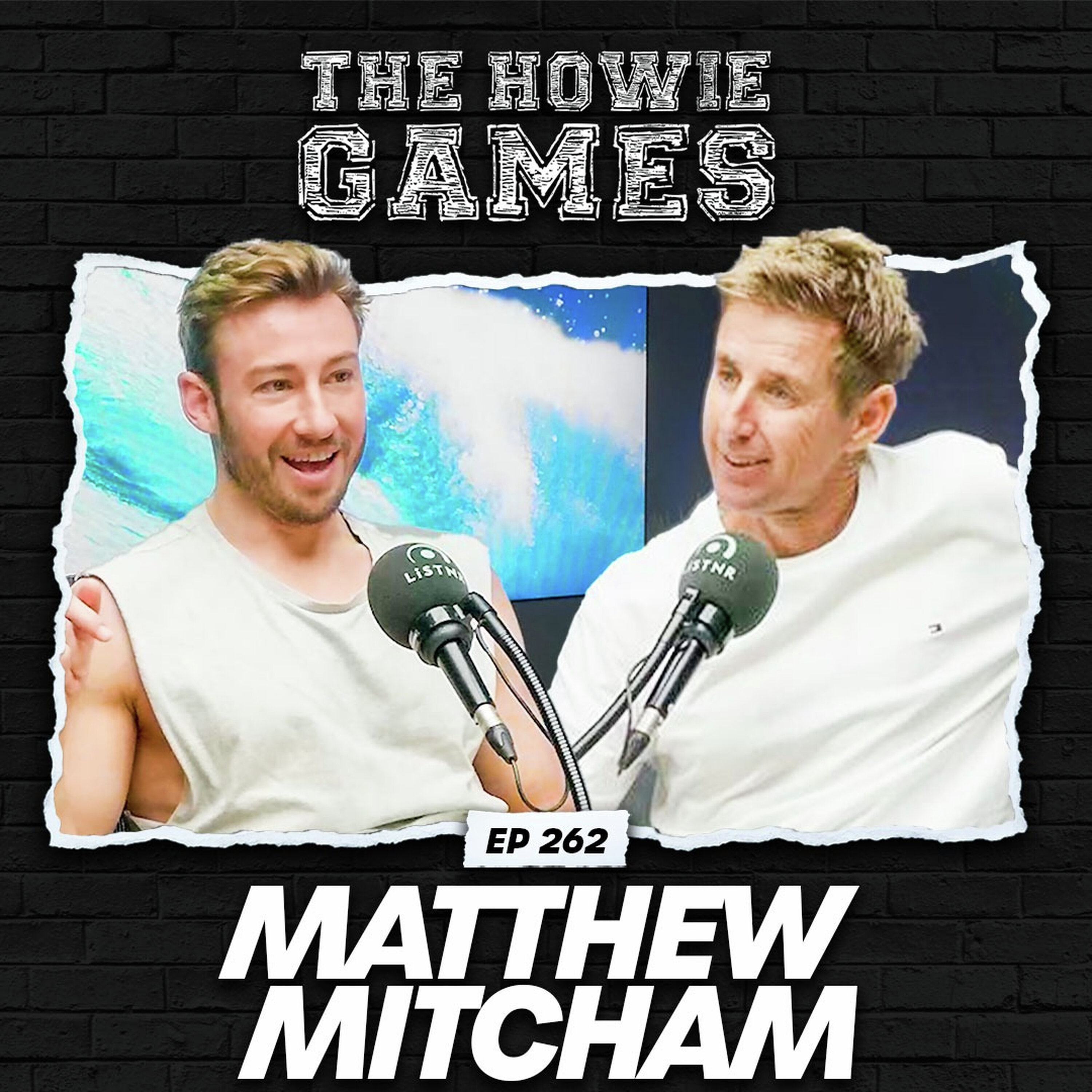
About this episode
When Matt stepped up for his final dive in the Beijing Olympics from the 10 metre platform, he’d already lived it a thousand times in his mind. What followed was Olympic history, but as Mitcham shares, that gold medal has many layers to it.
This Australian legend opens up on the journey behind the moment, from a childhood (and diving career) shaped by chance, to the highs of global success and the challenges that followed.
It’s honest, vulnerable, and at times confronting. A story of determination, resilience, and what it truly takes to reach, and navigate, the top.
Matty is an absolute beauty.
Please note: This episode discusses sensitive topics. We encourage listeners to tune in thoughtfully and take care while listening.
*
Catch Matt in the Off-Broadway hit play AFTERGLOW which is at the Eternity Playhouse in Sydney NOW. For tickets and more information, go to afterglowtheplay.com.au
See omnystudio.com/listener for privacy information.
Get every episode summarized
Each time The Howie Games publishes, we email you a written briefing from the transcript — the topics, who appeared, and any specific claims, with the ad reads skipped.
Email me new episodesFree for 3 shows. No card needed.
Hosts & guests
Transcript ready
845 searchable segments. Every word is indexed and playable.
Full transcript
The Howie Games — 262: Matthew Mitcham (Part B). Machine-transcribed; use the interactive transcript above to jump the player to any line.
A list-knife production. You are listening to episode 262 of The Howie Games Part B, featuring Olympic gold medal-winning diver, Matthew Mitchim, Omega Tommy. So you go to China. Famously it was the 8th to the 8th of 2008. We'll kick it off for you because it's a lucky Chinese number. You know, you perform obviously to a level, we get to the Olympics. Why are the Chinese so good at diving? Is it the discipline and just the relentless work required? I think it's a case of survival of the fittest, to be honest. I mean, yes, they've got very good technique and whatever. And a big pool of athletes to draw from. And so you can't train them until they break. And like if one breaks, they're at 18 more to take their place. And because it is so competitive, and because there are so many athletes, they can just push them and push them and push them.
Because eventually you're going to be left with the ones that don't break. And I mean, I don't know what other socioeconomic factors might be at play. I know a lot of the athletes support their families back home with their training. But also they get paid a lot better comparatively speaking. Then say for example, we do in Australia where they can actually support themselves and their families and buy a house for themselves and buy a house for their families if they do well. So competition to the side will talk about the competition in depth because I've made notes. And I've got scores on every dive to run you through, which I look forward to going back over. You're very good at your job. I think that's a very common thing to say in the preparation. Well, he's actually right. He's actually right. It's nice to have notes and then as you'll notice, barely refer to them. But when I need to talk about dive number one being 73.5, I need to refer to them.
But the Olympic experience you arrive, people talk about the food hall and the international. What does it strike you as a competition to side, the Olympics? You've got there. It's like a utopia. I nearly said a naughty word. Utopia is a fancy word though. It's like everything is just so lush and green and perfect and shiny and sparkly and plentiful, bountiful. These food halls are like football pitches and just around completely boarded by different stalls of every different kind of cuisine from different parts of the world that you can think of. And then like salad bars and dessert bars in the middle and it's drink stations
and it's just like the options are endless. Well, are you catering for your weightlifter and your gymnast? Totally. You're diver and you're sprinter. Totally. You're covering the field, aren't you? It's so cool. Okay. We get to the ten meters right. Three meters spring, you're 16th in the semis out of that. But we get to the ten. In the cube, it was called the cube, wasn't it? The water cube. The water cube. And Australia has a real chance to keep the metal tally ticking at the diving. We have two divers in the final of the men's ten meter platform. They are Matthew Mitchell and Matthew Helm. Our commentator's a Dean Puller and Pete Donning. Well, what a night. What a moment. For 20-year-old Matthew Mitchell, born in Brisbane, lives in Sydney. You fell out of love with diving at the end of 2006. And he came back to clean, sweep the individual events of the Nationals in January of 2008. The first to do so since Michael Murphy in 1994. He said he was very nervous during the three meters.
And he's got that out of his system. He's changed a few things and now he's just going out there to enjoy it. Okay. This is where my nose come into play. Okay. Hit me with the numbers. Well, just before the numbers, you... Just... You mean the Mexican? Yes. He's down on the pool deck. Is there like... Is there last minute pump-up? Is there last minute affirmation? Before you start an Olympic final and you're about to go up those stairs, what happens from a preparation athlete coach relationship? All of this stuff is kind of set out beforehand. Like... Okay. Those 15 months before Beijing, I... Every competition that I did in the lead up to, I would experiment with every different factor that I could... Every different variable I could think of, like, you know, food, like, what I ate, when I ate,
what I did between the dives, what I did for warm-ups, like, you know, everything. In order to kind of figure out what worked and what didn't, because, you know, like, learning how to compete, I think, is an art form, because, you know, your brain can do a real number on you. Like, you could be like the best diver in the world in training. But then, you know, the pressure, the environment of competition, it makes... It puts you in fight or flight. You know, it really raises your arousal level, your cortisol levels, which completely changes your physiology and how your muscles react and your proprioception and how alert you are, how fast you react. Like, it changes everything. And so you have to learn how to compete. And whether you do compete well with that extra adrenaline or whether you really have to just bring it, bring it down to, like, training levels. What did you compete well with? I competed, I found that the adrenaline sharpened me up. I guess so. And you liked that little bit of... A little bit, yeah.
And so what I had to do was actually imitate that in training. And so I... To get yourself into that state. Totally. So I would... I would simulate... We would do like... I would call kind of what we call like a pop quiz, but like a pop competition in training, like, with the people I was training against to kind of simulate training. Sorry, to simulate competition. Competition. And, you know, with, I guess, like, punishments of, like, you know, push... Whoever gets a lower score has to do, like, you know, 50 pushups or whatever. You know, but even just having to compete against somebody, like, it does raise your adrenaline a little bit. So I would, I would kind of practice competing even in training. But yeah, so in terms of what we were doing before, I honestly can't remember, but it would have just been, you know, he would have just let me get on with it. So you get up there? First dive for the young Australian. And your first dive?
Wasn't that great, to be honest. And well done. He's got a big job following Zulixin. The big chance for China. So he's following. And maybe just coming out a bit early and having a look. Hasn't quite got it around to the vertical position. Look, it wasn't a bad dive, but a 73.5 sandwich between the Chinese could turn out to be costly later on. Still five rounds to come though for Matthew Mitchell, the top of eight and a half. Wasn't that great, to be honest. 73.5, yeah. After one dive, you're in ninth position. How many dudes in the final? 12. 12. Okay. So you're sitting ninth. So I commentate these days, cricket and footy, right? As a living. So you're in ninth, you're probably five goals down at quarter time. In a football situation, right?
So you may have to change your game to work your way back in. Do you have to change in diving? Or these are my six dives? And these are ones. You have to submit what dives you're going to do the day before. So you can't change. Nope. You can't get behind and say, right, I'm going to pull out a triple corkscrew with one of those fancy handstands. Look, buddy, right? If you change anything, you get a zero. Okay, this is a good explanation. Second. Matthew Mitchell with a 73.5 start. This is the time for the young Australian to make a move. Oh, yes. Unbelievable. The dive that he was looking for. The big jump, strong kick. And taking it away. Really challenging the judges to take points off him here. And that's his reaction when he looked at the scoreboard. Let's show you why. Four tens for Matthew Mitchell. Nine and a half with the other three judges. 97.35.
That is magnificent. You're going okay. You're going okay. I've got some tens in the second dive. Four judges give you tens. Yeah. So all of a sudden you're up in a second position. Yeah. Which is very, very, very comfortable. Very familiar for me. Back to the bloody silver medal. Yeah. So in the semi, you came second to pronunciation Luxin. Jolushin. Okay. Lushin. So he's Chinese. And in the second, in the semis, you come. So prelims was I came second after Jolushin. And in the semis, I came second after Hoiliang. So even though you've come second to both the Chinese, you must have beaten the other alternate Chinese in the way through. Yeah. Yeah. Important point. Well, yes. Yeah. Well, no, let's talk about it now. Well, so that thought definitely occurred to me before, before the final, except the inverse. It's like, oh, both Chinese divers have beaten me. So I've got a good chance of winning a bronze medal. But what about I've beaten both of them?
No. I could win a gold medal. Yeah. No. Like, this is, again, this is like how, you know, this is an indication of the kind of, you know, low self-esteem, like, you know, mind, like, brain, like that my brain will automatically go to, you know, worst case scenario, self-deprecating, like, self-defeator, like that kind of stuff. That is my default that I have to, like, try and, that I have to, I have to work to kind of, you know, to change that. But my first thought will always go to that. So you're thinking I can get bronze. In China, there's two Chinese athletes competing against you. So this is like, whoever's trying to run against Kathy Freeman in Sydney. So, so when you nail a dive, or they nail a dive, what's the different reaction in the crowd? Well, I mean, local crowd, like, so they're always going to, they're always going to go bananas. Bananas. 155 centimetres, woe, liang, the running world champion in 10 metre synchro,
already a gold at these games. It might be headed for two. But what I will say is that they do also support, you know, like, they do, like, they just appreciate good diving. So they respect. They absolutely. Yeah, yeah, absolutely. So, you know, a good dive is a good dive, and they will also go bananas. But like, when a Chinese diver does a good dive, like, it's like extra bananas. It's like bananas blitz. Okay, bananas blitz it is. Third dive. Inward. That also was not great. I say, I over rotated that. So that was probably what for eights, which I, seven, seven hours and eights. Yeah, we tied it back to fourth. Yeah, I mean, even that was generous to be honest. I think, but, you know, whatever, I'm not going to tell the judges that they're wrong. So now you're 26 points down. So an average score in an Olympic final, let's say an average score would be low five hundred. So for one dive. Oh, okay. So in the eighties. Yeah, yeah, yeah. So all of a sudden, you're 29 points down here.
26 points down. Fourth and fifth are listed as okay dives. Fourth. Fourth was rev. First three and a half, which I think was pretty good. Wasn't it? Did they get some nines? Four and five is okay. Yeah, it did. Yeah, okay. And I'm stunned. Yeah, that also would have gotten a couple of nines, right? Correct. So we get to the final dive. The defining moment of your diving career. I'll just set it up and then you take it away from here. Because I need to get the numbers right. Okay. So you are second, going into your final dive. But you're 32.5 behind you. Joe Luchin. Yep. The medals at the diving have not been swept at the Olympic Games since 1952. But it's a different competition. Now instead of winning four, you have to win eight. Joe Luchin is about to make eight a very lucky number for China. Okay. My pronunciation is wrong, but I've got the numbers right.
So you're 32.5 behind. Now you've spoke about an 80 or 90s, a good dive. Yes. So you're a long way behind. Do you watch his dive? No. I did not. But I heard the crowds reaction to his dive. And it wasn't positive. Well, it was ambiguous. Not a very convincing dive. 74.8. Yeah. Meaning in non-technical sport terms for a man of his ability, he muffed it. Yeah. Okay. He opened the door just a tiny bit. Yes. Invitational amount. Not the enough. Well, it is enough. But only just 5.33 for 15. So he will be the gold medalist. You would think. Yes.
I bet this is all very cerebral and theoretical. But this is definitely not what I'm conscious of. Are you doing calculations? No. You're not absolutely not. So you're just thinking, I've just got to do my best I've possible. Because this, yeah, well, no. Again, these, see, the only thing. It's actually incredible how I can have such, I can be so, like, diligent with some areas of my, you know, of my thinking and just so, so rubbish at others. But basically, um, basically, I, I would never pay attention to what other divers were doing. Really? Because it's a, it's a distraction. So I was always, you know, it's a, remember how it's about consistency. Right? So my goal was to produce exactly the same as what I do in training. Because I get my training to a level, like a certain level where I'm getting like, you
know, 9s or 10s in every dive in trail. Like that's, that's the goal is to get training to that level so that when you get to competition, all you have to do is do what you do in training. Um, and so therefore, if you're going into the competition going, all I have to do the best I've possible, it's not going to work because diving is not a sport of like absolute power or absolute speed or absolute strength. It's a sport of absolute precision where you have to try, like you know exactly how hard you have to jump. Because you're stronger than, like if you're always, if you're trying to, if you're only getting your dives to a place where you have to try 100% of your strength in order to be able to do it, you're not going to be able to do it consistently because you never have a hundred. But so you're always a little bit stronger and a little bit faster and a little bit, you know, than what you need to be to make your dive perfect so that you can, so that you've got more control over the consistency. And so, you know, I know, I knew exactly how hard I had to try and exactly how much I had to do. So when you say like, I need to do my best, you run the risk of trying a little bit harder, which is always going to be counterproductive.
It's a great explanation. So you need, well you're 107.3 points behind. Yeah, which like, like you rarely get dives over 100 points, especially in the Olympics. Matthew Mitchell produced a 106.4 dive this morning. It's the biggest moment of his young lifetime. He is 108 points or thereabouts behind Joe Luchin. So you really get over 100, you need 107.3. You are rolling out the two and a half summer soul with two and a half twists. Take me, you're up on that buddy platform. What happens next? This is cool, by the way, to go back through this. Yeah, it's really cool. And it's nice for you. It is. It's always nice to go back. So yeah, I was standing in the stairwell before.
So because I came second in the semi-final and you dive in reverse order, it went Joe Luchin. Yeah. Then like the last three dives were Joe Luchin, me and then Julian, the actual one. Yeah, who won the semi-final. When Joe Luchin did his dive, the whole crowd went, ooh, and I was like, oh, no, I don't want to know what this, yeah, I don't want to know what the scores are. So I blocked. 74 points. 74 points for the man from China. I can't hear you. I can't hear anything because I'm so concentrating in my own little world. And 74 points. You're a monster. But you do get these, what are they called? Intrusive thoughts of like, you know, or maybe if I do, do, you know, and you have to be like, no, no. You know, and just, you know, refocus on doing exactly what I need to do. Yeah.
And, you know, and then the thought. And what I, the only thing I would keep track of during the competition is what my scores were. So that I could gauge, you know, like whether or not how I felt it was, had reflected or whether I was doing well, you know, and that did give me a little bit of confidence. But it was more, it was more kind of tracking for my own, and I wouldn't compare it to anybody else. But I did know that I was in second. I just didn't know it wasn't keeping track of anybody else's scores. So in my mind, I did have a very fleeting thought, like, oh, after this dive, if my name comes up on top of the leaderboard, then I will have an Olympic silver medal because I just assumed that who ever, like, that holy egg was going to win. The vlog after you. Yeah, because I didn't, I wasn't keeping track of who, of, of the scores. So, but again, I had to just push that out of my mind. I'm just focused on, on just the little keywords that I needed to remember to make that dive, you know, exactly the way it needed to be.
His mother Vivian, his brother Marcus, and many of his 20 million or so countrymen holding their breath like him, a heart beating just a little bit faster. And so I walked to the end and, and I guess more, I guess is another maybe indication of another intrusive thought. Just this awareness, I don't remember it specifically, but, you know, watching footage of me walking to the end and doing my hair, like doing, like, you're pushing down the little cow, like, at the back, because clearly aware that millions of eyes are watching me. You'll see that, yeah. Yes. Always a performer at heart. But when I got to the end, it was just like, there's nothing more I can do now. Just relax, enjoy yourself, and have fun. And I just said that to myself a few times. And I think, and, you know, because it was literally just about doing what I do in training.
And, yeah, it was, it was kind of, it was one of those textbook in the zone, like zone moments, like flow state moments of like just awareness of anything and everything else just evaporated. Like, you know, the consciousness of the environment, the pool, the stand, the grandstands, everything just just gone. And, you know, and it did kind of feel almost a bit slow-motiony. Is it his time? Oh, that is stunning. Now it's going to be up to the judges. What a dark, this could be for Olympic gold. Hang on to your hat. It needs 108. What you're describing is what every Olympic athlete wants to feel or not feel in the biggest moment of their career. Yeah. So I don't know how you've got yourself to that point, but it's great. It's literally all in preparation.
What a dark, Matthew. Mitchum. Standby. Australia. Literally preparation. Because I practiced competing that moment. Every dive I did in the 15 months leading up to the Olympics. Not only did I practice competition with other people, but in my mind, I would say to myself just to, you know, arouse myself a bit. I literally every dive I did in that 15 months before Beijing, I would say, okay, this dive is for Olympic gold. Like just to kind of get that tension in my body, just to get that, you know, raise the heart rate a bit, just to make sure that I was trying 100 percent, like in giving 100 percent of what I had in the tank at that moment. And because I would practice that moment over and over it, like thousands of times in that 15 months. So that dive, if the best you've ever performed that dive in training or competition to that point is 100 out of 100.
And that's as good as you can do it. Where did this dive fit on that scale? Probably 90 in the low 90s. I reckon it was not the best I've ever done that dive. I mean, I'm not going to argue against the judges. The judges are so wise beyond three years. Matthew Mitchum needs 9.5 to go into first place. Oh, yes, yes. Oh, my word. Now you... 9.5, here we come. He must get the points. He must get the points. He must. Oh, my word. I've never seen a dive like it. I invented that dive and he's just perfected it. He's done with the Olympic final. This is absolutely perfect. Two and a half twists, two and a half summer solts.
Wow, I've never seen anything like that before. So you're underwater. What are you thinking? It was right on the cusp of whether or not I had, because when you go through the water, the aim is to go as vertical as possible, because that means that you basically, when you hit the water with your hands, you break the surface and you create a hole for the rest of your body to go through. And any part of your body that goes outside of this hole you've created is going to cause splash in any direction. So whether you're a bit under-rotated or over-rotated and the more under or over-rotated you are, the more surface area of your body goes outside of this hole and creates a bigger and bigger splash. As a person, there's perfect little bubbles. Exactly. When when I was growing up, a Norman May on the ABC and the Commonwealth Games, he's nailed it. That was the commentary. Yeah. He's nailed it. So you did nail it. You're underwater. Where do you think you're going to be sitting when you pop your head out?
I had no idea, because he felt like it was in that one kind of one or two degrees of like, is this too far to like have created a bit of a splash? You know, I was absolutely not sure. He felt good, but I wasn't entirely sure. And I definitely had a moment underneath the water of hesitate like of going through this like, was it good or wasn't it like, you know, am I ready to find out? So you poke your head up and the score... Well, the crowd was going absolutely, absolutely bat-shit bananas. Well, four tens, 29.5s and a nine. For a total of 112.10. Yeah. Which at that point is the highest 10 meter platform Olympic dive score in history. Ever. Yeah. He looks up at the scoreboard. Let's tell you now, 112.10. Matthew Mitchum, look at the dive.
Lines it up and takes it down. They say there's just about no such thing as perfection in sport. I think we've seen the closest possible thing. So the judges have said it is the best 10 meter Olympic platform dive that has ever been dove. Is that the right word? Yeah. That's what they're saying to you, my man. Kind of. Yes. But it's only because the degree of difficulty was so high. So I mean, I got more, I think I got more tens in the, in the diving round two. But it was a high degree of difficulty. But it was a much higher degree of difficulty. It was the hardest dive anybody was doing in the Olympic. So you see his name on the thing number one. Number one lost it. There's one diver still to go. One diver still to go. What do you mean you lost it? Laisen, like, like, bowling. You waited till you see the marks. There they are. 112.10. Almost the perfect tens. Two tens, 9.5. Yes. Ball your eyes out if you want to, Matthew Mitchum. You know, because Olympic silver medal is so, so.
Hang on, so you're not thinking gold. No. And like I thought, if my name comes up on top of the leaderboard, I've gotten Olympic silver medal, assuming that, that Holiang after me, he also did the same dive. And I just, I just assumed that he was going to win. Did you watch his dive? Yeah. Holiang. Well, he's 115 points behind Matthew Mitchum. Back two and a half, two and a half, twist park position. No. It won't be enough. He absolutely bombed it. How are you feeling about watching his dive? Are you, I asked this two weeks ago to Alisa Kaeplin Yeah. Because she had someone after her. Yeah. And I was like, we're just, like, hexing them with everything. And she said, no. That's bad juju. Right. That's really. I must be bad. Because I'm hoping I'll make just, just does a horse. That would, I feel like that would feel that. Yeah. That's bad juju, I think. Apparently this is what exactly what Miss Kaeplin told me.
Yeah. And because then it also, you would, you run the risk of feeling guilty, like as if you actually have an impact on it. And then your victory might feel hollow and like you deserve it less because you wish bad upon somebody else. But it doesn't work out. And you're the Olympic champion in that moment. Yes. So what goes through your mind now? Is that Australia has its first Olympic male gold medalist since Richmond Dickie, won the playing high dive, a discontinued event in 1924. History is made at the pool. The 20-year-old lets his emotions run wild now. He's kept them in check so well in this 10-metre competition. The Australian fans here are delirious. It is a memorable moment in diving history for the nation of Australia and a memorable dive that will go into the folklore of the Olympic Games. I just disbelief, I think. But also I was being engulfed by every member,
like it's just everybody, like all of the divers, all of the coaches, all of the, like everybody was just engulfing me on pool deck. It was actually, it was a very, very beautiful moment. And then, yeah, it was, I don't know. Honestly, like shell shocked, I was shell shocked. And I don't remember so, so much of that whole thing. Like, basically, the only things I remember are things that I've seen video footage of that as I've kind of, I don't know, either retry the memory or have kind of actually replaced the memory and go, oh yeah, yeah, I remember that. Well, Matt, you've got an Olympic gold medal hanging around your neck. You are the Olympic champion. It's, I don't know, I think it's going to take a while to sit in. My cheeks really hurt just from all the smiling and laughing and jumping. And I'm sweating and my face burns from the chlorine. And I'm in pain and I'm tired, but I'm so happy. Take it through that last dive. One of the great clutch dives. The door was opened slightly with the Chinese diver beforehand. What was going through your mind up there on the platform? I actually, I sort of did this to my ears so that I couldn't hear the crowd.
I couldn't hear what was going on in the dives beforehand. And sort of just in my mind, I was saying, you know, just, just enjoy it. And just, you know, no matter, there's nothing you can do that's going to make the dive better or worse. So I just, you know, I tried to enjoy the dive and I did the very best dive I could do. That was enough. Did you know when you'd hit the water, it was good enough? I knew it was good, but I didn't think it was good enough. There were about five or six that were all up in metal contention. So I was like, not even in my wildest dream. Well, I suppose in my wildest dreams, I thought I could get gold. But I was like, you know, maybe I could get a bronze or maybe I could get a silver, but this is just unbelievable. Well, let's take an all week. Finally, someone has broken the Chinese dominance here in the diving. And it's an Aussie. Yeah, thank you. Congratulations, well done. Thank you. So does your life change be coming in and be gold medalist? Yeah, I mean, so much more recognisable. And you get lots of experiences and opportunities that you otherwise never would have. Yeah, highly recommend. 10 out of 10.
I'm looking for time late. I appreciate you highly recommend it to me, but I think I've left my run too late, Matty. Gold medalist and Olympic champion representing Australia. Thank you, Matty. The Olympic champion. It's got a nice ring to it. More of Mat shortly. Now for those that love iconic Olympic moments, Kathy Freeman appeared on this show way back on episode 25. Kathy's detailed description of her 400 metre run in Sydney. Still one of my favourite memories from 10 years of this podcast. Gives me goosebumps when I listen back to it. It's really quite a formidable sight walking towards a full Olympic goddamn stadium in your home country and you are the one and you're going to win. But you're so focused and relaxed, but you feel like it's a dream. It's the best way I can describe it. And then it was in those metres, five metres before you actually put your foot on the track
that I felt like everything just turned into, it was just a... It was the strangest experience I've ever had. That is the star that he's Kathy Freeman on episode 25 of the show. Let's get back to Matty. There's so much more to your story. You know, you've been very honest about... You know, dealing with addiction and going through rehab and all the different things you've done since the Olympics. You've had a... You've had a life full of experiences. Like full of experiences, good ambat. What's it like walking into a rehab facility? Well, humbling if you're Joe Blow. Yes. Right?
If you're Matthew Mitchell, a recognised public figure who stood on the top step of the podium and achieved every athlete's dream. I don't know. Yeah. There was definitely some fear around being recognised. Because I had... Because I had well and truly accepted that I was a drug addict. Because I had been trying to get sober by myself and failing for over six months. Okay. I was absolutely... You know, I was at a point where of acceptance that I could not do it by myself and that I absolutely had to go and get help. So humbling still feels like the right word. And is it something...
Sorry. These ignorant questions. There are no ignorant questions. I feel these are ignorant. Is it something that you've put behind you that still tries to draw you back, that still does draw you back? Or do you look back and say that's not me anymore? This is a long time ago in your life when you're in rehab. Yeah. And look at this point in time in what you're at 2026. Yeah. I am over 10 years clean and sober. Good for you. So thank you. And is it something that... I guess I did so much work. Not early in my recovery. Not early enough in my recovery. Because I spent the first couple of years relapsing. But, you know, so it finally stuck in January 2016. What do you reckon made it for me, Steve?
I finally had complete acceptance of the fact that I just cannot do drugs anymore. Go ahead. Yeah. Like there was... I finally got that gift of desperation, I guess. You know, where I finally felt the consequences enough. Or maybe it wasn't even the consequences. It was the outlook of... And the trajectory of my life terrified me. You know, by the time it got... I got to 2016. I could really see what the consequences were going to look like for me. And so that's when I did everything within... That's when I really just threw myself wholeheartedly at actually making it stick this time. And actually really giving myself a real reality check around what I thought. The benefits were... Which was, you know, changing the way I felt.
Which is a very... Like, I'm not going to lie. Like, drugs are very effective at changing the way you feel. But they're also a very, very crude tool for changing the way you feel. Because they do come with lots of consequences. And this was the first time where I was, you know, giving myself a reality check around. Actually, how effective are they at, you know, doing what I want? And actually, you know, and not being able to ignore the consequences and really attaching all of the consequences to the using. You know, it gave me a real wake up and a real reality check around how effective and how much of a solution drugs really were in my life. And so, you know, and the first part of recovery is the hardest. Because not only are you not... Not only are you taking whatever it is that you were using to medicate away. So you've got the withdrawals or whatever from that. But you also still got whatever it was that you were medicating for that you're dealing with.
And you're actually feeling it now. But you're not... You're also choosing not to use the drug. And so, or whatever it is, the coping mechanism that you've been using. So early in recovery is always, always by far the hardest. You know, it's about kind of finding other, you know, more effective ways to either change the way you feel or to deal with the feelings or whatever that don't come with all of the consequences that, you know, these other self-harming behaviors have, whether it be drugs or alcohol or gambling or sex or, you know, or eating restriction or whatever it is. Life is good now. Yeah. It's, you know, it's all about maintenance, to be honest. I have full acceptance and awareness that I will always be predisposed to mental illness and to low self-esteem. And, you know, that stuff comes back. The indicators of it are normally around comparing myself to others.
When I'm comparing myself to others, because I'm only like somebody with low self-esteem will only compare themselves to people who they perceive to be better themselves in order to kind of reinforce, like, you know, together evidence that they are bad or less than. And so, but just to even, like, any act of comparing myself to others, is always an indication that I'm not in the best place, and that I need to kind of put a bit more work into my mental health maintenance. But, you know, in terms of, like, drugs and alcohol itself, it's so, like, does not occur to me at all. I mean, like, I kind of removed any positive association with it a long, long time ago. So, it never feels attractive to me. But I also am reminded constantly about the consequences and the impact that it could have, you know, on my life, because I work in the drug space as well.
Like, I'm a specialist key worker for a charity that people come to when they are dealing with either drug addiction, sex addiction, or addiction to sex or on drugs. It's called controlled and can sex. And people end up potentially seeing you as a counsellor. Yes. Yeah, I'm a counsellor. Congratulations. Yeah, thanks. We started this by talking about afterglow. And, do you have pride in what you did in the sporting field? And the way you lifted the country with the Olympic gold medal? Totally. I mean, I would never say I lifted the country with my gold medal, but if you want to say it fine. Every gold medal is the country. That's true. We're watching the Winter Olympics as we record this. We're hoping to see Olympic gold medal, because it makes us feel good about ourselves. Yeah, that's true, absolutely. And that's the gift that you've given the Australian public. I'll take it. My word. So, afterglow, stage plays, you've been successful at a lot of things you've turned your hand at. Are we talking Hollywood and the big screen? Like, what are we doing? I absolutely would not rule it out.
If I, you know, I wouldn't rule it out at it. But I'm, you know, I'm going to baby step my way up there. I am doing, you know, I have done a bit of film. But yes, I'm working with an agent to develop a strategy of a pathway. I mean, I love theater. I love stage. I've done some really, really cool stuff. I'm very, very much open to. But, you know, to doing any kind of, I'm, yeah, I just enjoy working, to be honest. I would like to see you in the movies. I would love to be. Yeah. You've had so much success. We always finish this the same way. And I appreciate, I feel like, often it gets to the end of an hour and a half. And I think we're, I think, I've done a lot of these now. I've been privileged to speak to a lot of people. I think you were generally done. There's areas here that I didn't explore with you that I felt we could have. There was another two hours in this conversation, I think. But time restricts us both. We always finish it the same way. We always give it an example. We have a lot of kids listen to this show that I hope we can achieve success
in their field, whether it be IT, diving, chemistry, being the world's best guitar player or saxophonist. You've achieved tremendous success in your field. Rather weighty question. But what advice would you give to those youngsters that I hope you can achieve success in their field of passion? Keep pushing yourself consistently. Yeah. Like, don't let it get comfortable. You know, if there's something, it like explore, explore in ways that interest you. But just always, you know, if you're always just pushing yourself just out of the comfort zone, then you're always growing with it. And if you're doing that consistently, then you're always going to have the best possible outcome. It's like, yeah, the harder you work, the best place you position yourself in for the outcome.
But actually, it's more about the journey rather than the destination. So focusing on exploring and pushing yourself in the moment. But as long as you're enjoying the process, that is probably the most important thing. Enjoying the process. It's a great way to finish the standing podcast. Congratulations on all you achieved, including your silver medals. It's great to see you in such great show. Thank you. In great form. After Glow is the show. It's all on the intro. You can go and see this man and catch him next in Hollywood or Ricken. Thanks, Gary. You're on Maddie Beautifully Done. Thanks to Matt. Thanks to Matt for diving in, pardon the pun, and leaving nothing on the table in this episode. Warm, gracious, and open. What a tale he has to tell. We wish him so much luck and love for whatever is next in his journey. A shout out before I go to the team of legends who put this show together. And who I haven't mentioned for far too long. Michael James.
Been with us from the start. He's now happily married to Laura. And he's winning at life. And he's now a senior bigwig at the company. And deservedly so. Darcy Thompson. Darcy edits the show. He is now married to Jane. And not only edits this show, but has moved into managing a team of work with great empathy. He's great with people. Tommy Dullard, our main man, and Tyler, his magnificent wife, have given sooth a little brother, with Oli appearing on the scene. Tommy keeps the show afloat. And also our newest member, Cass Ponton, who explains stuff to me in the world of modern media that I can be slow to grasp. Sorry about that, Cass. And when we do, by the way, the odd diary series special, our man from up east, the Bansdale Flyer, editor extraordinaire Lincoln Kelly Sprinkles Gold Dust. Gold Dust on everything he touches. They are the team that bring you this show every week. I owe them so much. I'm indebted to them. Alrighty. Until next week, peace and love. And we can do it if we try, try, try.
If we try, try, try. If we try, try, try.
More episodes
More from The Howie Games

Travel Diaries: African Safari (Part B)
The Howie Games

267: Graham Arnold & One Of The Sports Stories Of The Year (Part B)
The Howie Games

267: Graham Arnold & One Of The Sports Stories Of The Year (Part A)
The Howie Games

Travel Diaries: African Safari (Part A)
The Howie Games