About this episode
Is it time for another Q&A again already? How the months just fly by. This month we address everything from auto-generated podcast chapters and episode links to computer class-action lawsuits, corporate remote administration of your personal devices, how to move a PC across the ocean, the dream of permanent standard time, why you probably still shouldn't clean your computer with a vacuum cleaner, and a bunch more.
Support the Pod! Contribute to the Tech Pod Patreon and get access to our booming Discord, a monthly bonus episode, your name in the credits, and other great benefits! You can support the show at: https://patreon.com/techpod
Get every episode summarized
Each time Brad & Will Made a Tech Pod. publishes, we email you a written briefing from the transcript — the topics, who appeared, and any specific claims, with the ad reads skipped.
Email me new episodesFree for 3 shows. No card needed.
Hosts & guests


Transcript ready
1,574 searchable segments. Every word is indexed and playable.
Full transcript
Brad & Will Made a Tech Pod. — 332: Shout Out to the 1979 Lady Kenmore. Machine-transcribed; use the interactive transcript above to jump the player to any line.
Brad, my kid's gotten real into repo. Oh, yeah. How could you let this happen? Yeah, like, look, she knows what the bad guys are called. Wait, they have names? Oh, yeah. There's a whole thing. Is this like an inky-blinky type situation? The names are fair, like, one of them, the nightmare thing that comes out when you pop the red balloons is called the birthday boy. There's a clean-up crew that like has a bunch of lumpy faces on its back. There's the big head guys called the headman. It just sounds like some Friday nights of Freddy's slot. It just sounds like Freddy's slot. Wow. I mean, does Freddy have ProxChat? I don't think it does, does it? No, I have no idea. It's just different plate Friday nights for Freddy's. Those names sound like the types of characters you would get from that style of game. Maybe I'm generalizing too much. Yeah, like, well, that's a whole thing that I really like in games. Like, remember, PUBG came out and the map didn't have labels on it, except for like the five big cities. Yeah. So everybody just came up with, oh, yeah, totally coming up with your own vernacular for a game
is awesome. In fact, what were those names? I don't remember. Well, it was like, it was like, you had prison and you had school, school was labeled, I think. Oh, it was. Okay. Maybe not, but like, I just remember dropping at school a lot for some reason. Yeah, that was that was one of the hot drops, but there were all these other places were met named and then, and then eventually they, like, they put the names on the maps and some people found that they were wrong and some people found that they were right. And I was right in the world and I miss early PUBG, I guess I'm preaching to the choir here. Yeah. Well, but I mean, there's a thing about PUBG, it's something I was talking about. I was talking with the client about this, okay, and there's a thing about, like, everybody in, there was a blue sky post yesterday. They are really liked. It was super smart and made something clear that I hadn't really thought about this way before. Like, Fortnite, people don't play Fortnite because, I mean, some people play Fortnite because they love Fortnite, but Fortnite is a multiplayer competitive game that you can play with friends with the wildly different skill levels.
And it's a good, good way to just hang out, right? Like you don't, you don't, it's not like Counter Strike where you're always doing something and you have to hold the right corner and it's high stress and if somebody messes up, then it jacks up your entire team's game. It's not, it's pretty low stakes in terms of, like, competition because with a, with the battle royale, like, there's 25 other teams you expect to lose, right? A winning is not the 50, 50 outcome. Winning is a one in 25 chance of, of happening on a, on a four player squad game. And like, a lot of Hope games kind of work the same way, but not a lot of multiplayer games to, like, like, PvE games too. So it's, yeah, it's a, it's a weird PUBG had that same vibe for me. PUBG was a game that had a lot of downtime. There's a lot of time to fart around in and chat with your friends and hang out and then also occasionally shoot people in the face. Yeah. Like every, every match, there would be a 32nd critical event that determined the entire rest of the match. Yeah. Or a couple of sequence of those, right? Yeah.
Sure. Do you think the term slop is becoming overused? I think, I think it's interesting that, like, slop in games is a positive, like, friend slop. Is it like the $10 prox check game? I always feel like it's at best a backhanded compliment and at worst, like, profoundly pejorative. But like the ease with which my brain just popped out Freddy Slopper earlier tells me that maybe, maybe we're getting a little too saturated. Do you think you're too slop-pilled? Yes. I'm, I'm, there's two, the slop slop has got to end. Look, look, people are going to keep slop maxing as long as the games allow. That's for sure.
Welcome to brand-new-made-a-tech-pot. I'm well. I, I'm Brad. I was going to talk about a game that I really like, actually, and I couldn't have got a segway over to it in the intro, so I'm just going to say it here. Say it. I know you like a typing game. I do. There's this game called Glyphica typing survival that's out on Steam. Okay. It was not that name sounds cool. It was, like, under $10 and it's basically, you have a guy in the middle of a room and you have guns and different kinds of weapons you can kind of, you know, do your business on as you're, as you're progressing. It's like a typing rogue-like I'm seeing. It is. And as the words come, as the bad guys come towards you, you type the, the word that's above them to shoot in their general direction. And there are like bosses that have different abilities. Some of them you can't target directly, so you just have to, like, line up your shots with something else behind them as they circle around you and stuff like it's, it's quite good. It looks intense. It's got a very spare aesthetic to it.
I'm trying to think what this looks like. It's kind of reminiscent of, like, it's, it's not a colorful geometry worse. It's like a muted geometry worse type of situation. Sure. I always get down with the typing game. What happened to final sentence? They're still, they're still finishing it is my understanding. Yeah. I think they had had, oh, they've pushed it to Q2 now on the Steam page. I think it was Q1, which is up in five days or so. Yeah. It's a ways out. This game reminds me of, do you remember that iOS game prune that you had to, like, cut the, it was, it was the same kind of, like, beige background with the four shadows of the foreground. And you had to cut the branches off the tree and draw in the right direction. This might be the game I was trying to think of the, the Glyphica looks like. It's, like, kind of the exact same color palette and sort of muted gradient sort of look. Yeah. It's, like, beige and maroon kind of vibes. It's quite good. It's, it's, it's, it turns out you don't see many games that look like this. So, no, and, and for what it's worth, Glyphica is early access as well, but it's, I,
it's my chill out game at the end of the night and it has workshop support. Cool. Cool. I had to put down, well, I mean, a final sentence is not out, although I think that demo might actually still be up and functional. Oh, is it, but B, yeah, I think so B, B, I'll say real quick, quick programming note. I will be out on the podcast next week. Oh, yeah, yeah. I had to stop playing final sentence because I've, I've got some ongoing nerve issues that I'm going to get fixed next week. So, so you're saying, like, you're getting the Tommy John surgery for your final sentence thing? Something like that. Okay. Um, so yeah. Anyway, I'll, I'll be, I'll be back and ready to type in a few weeks once all, all of the hardware comes off and, uh, and we'll, we'll be, we'll have a guest next week next week after we'll see, we'll see other things go. Oh, I think I, I should be fine in the week after. Yeah. Yeah. But anyway, um, this week, though, this week, we, we wouldn't miss the most important week of the month. No. Absolutely not. My favorite week of the month. Yeah.
It's questions turning into answers week. Not, not only because the audience provides our discussion topics for this, there's a lot to be said for that. It turns out. Yeah. It helps. Yeah. Keep your finger on the pulse, you know. Thank, thank you to everyone who writes in for sure, but also it's just like a fun grab bag, if you will, a pop-a-rieve topics. It's a, yeah. We always, we always hit on a bunch of stuff we would not have hit on on these Q and A episodes because people write in about stuff we hadn't thought to talk about. Often the stuff that people want to talk about is surprising and, and, and fun for us. So anyway, if you want to send us a, if you want to, if you want to, if you want to help us be surprising and fun, you can go to, uh, your electronic mail client or emails as the kids call them and type, uh, uh, tech pod at content. email address, send us a short ish message, the, the short ones have a better chance of being read than the long ones that turns out. Yes. For sure. If you're in the discord, if you're a patron, you can go to, uh, the questions seeking answers channel and post something there. It'll disappear for you, but we'll see it. That's right. And if you're not in the discord, you can get in there by going to patreon.com slash tech
pod and support the show for five bucks a month and get access to the discord and, um, also get our patron, excuse me, episode where we talk about, uh, usually, uh, wide variety of topics as well. Mm hmm. You know, that old saying, uh, there's no business like show business brevity is the soul of getting your question read on a podcast. That is exactly true. Yeah. Well, it's my dad always used to say that. Yep. And my dad's dad before him. Uh huh. That's right. But actually, did I have any grandparents alive on podcasts where yeah, I did, I had, I had, I had grandparents, I still had living grandparents when there were podcasts. God, that's grim. Yeah. I did too. Yeah. Time marches on. Anyway. Yeah. I've, I had a weird like late night thought last night. I was actually, I don't know where then was I half asleep. I kind of like started envisioning, do we need like a late night thought with thoughts of the Brad theme song like late night thoughts with Brad. I don't know why I started thinking about what my, one of my grandmothers would have been like if she had lived in the social media age for some reason, uh, I, it's nice
to have untainted memories, uh, memories of my grandparents untainted by social media. Oh. That's a lovely agree. Yeah. Anyway. I would not, wouldn't have been good for most of them. No. No. All right. Shall we get into it? Yeah. Let's go. Yeah. The less sad about that, the better. Yeah. My, my, my grandfather's, my grandfather's username would have been Scalia was right. I heard them, you know. Wow. You know, it would have been bad. Wow. All right. It would have been real bad. Okay. Yeah. Well, on that note, um, I'm going to do a couple of emails here that touch on some like podcast feed technology. Okay. Okay. To start Brian near Seattle was listening to, uh, the recent podcast and Brad mentioned Nextlander. Apple, I guess auto transcript pulled out the mention and then showed a link in the app. Also, in case you didn't know, Apple is now auto-chaptering. It doesn't override the existing ones, but ads to ones that don't have it already. And, including a screenshot and sure enough, there is a, you know, what's crazy is the screenshot's kind of small. It looks like it's not only linking to the Nextlander podcast, it looks like it's
linking to a specific episode. It's linking to the reference episode. Yeah. I went and looked it up. Well, maybe I shouldn't be as surprised by that as I am, like, like speech parsing, text parsing has gotten pretty good these days, like it's surely good enough to, if I mentioned a specific episode, although I don't think I ever mentioned it by name or number. You probably mentioned it by topic, though, and it knows what topics are. Right. But that's, but that is definitely a fuzzier input than I would expect it to be able to handle. I don't know. I guess that's cool. I don't know. I definitely good for cross promoting businesses across different shows, but I mean, here's the thing. It's notoriously difficult to get people to do stuff out of podcasts, like to sign up for, to click a link or something, because most often people are listening to podcasts in a place where they're not able to like touch their phone, either they're driving or they're cooking or, you know, like I think about all the places I listened to podcasts and I'm never going to click links or never going to type something in. Yeah. Conceptually, I like this feature as a person who does a podcast.
Link to another podcast that you mentioned on the podcast right there in the app where I'm sure it's basically one tap to open that other episode. Yeah. Probably good for cross promotional purposes, and there's always the potential for speech to be misinterpreted. Yeah. But this is like fairly benign as that goes, like the auto chapters or maybe a little. I guess that's, I don't know. I'm curious, I'd be curious to hear from how people think that works or how well it works I should say. I'm trying to find our podcast on the thing to find the chapters and I can't, I can't find that. So podcast. So that goes straight to the next question, but there's a post script on this one. So table that for table, not being able to find the podcast for a second, because there's a post, there's a complete non sequitur of a post script on this email, I miss Windows phone. I was, I was going to call that out. I also miss Windows phone, actually, Windows phone was good, actually Windows phone was good, like straight up, well, there's an interesting phenomenon, especially as operating systems
are talked about a lot these days, where it's like, it's impossible to make a very broad normative statement about any kind of platform, because everybody has a completely different interpretation of what it means when you say it. That's true. Like when I say, for example, like if I say macOS is good, yeah, period, like I'm mostly thinking about the plumbing of macOS, you know, like all the kind of unix underpinnings and like the process man, you know, like it's technically very sound operating system, but somebody else who is more like user interface focused is just going to think about like, for example, the, I don't know, the lack of Windows snapping in macOS or things about the interface of dealing with the window windowing that they hate and to them, like they hate macOS because they don't like using it, you know what I mean? So it's like, like in the Windows phone example, you know, like you and I probably are thinking of like live tiles were awesome and like the aesthetics of the, like the metro tile layout were pretty nice, but then other people would be like, well, it had no apps so it was terrible. And it's like, in my mind, like that's not a platform, or you know, that's a more of a
business problem than a, like core technical issue with the platform, you know what I'm saying? Well, it was both, right? Sure. Because you get developers come on their platform, but, but like, no, you're right, because like my, also that changes over time, because if, if in like 2008, I said, wow, macOS is really impressive. I like macOS. I was thinking about like expose and the fact that when I closed the lid on my Macbook, the batter, it turned off and it didn't heat up my bag, you know, stuff like that. Yeah. Um, and, and these days, that's probably much more of a, hey, at least it's not full of garbage. And also, I still kind of like, I like how the icons bounce in the dock and expose is pretty good. Like, you know, or mission, that's actually mission control now. I think I liked expose better. I don't like mission controls, but they get rid of expose. I see I don't use a magic ring anymore. It's the same thing. They just read it. Well, it does more. I think they extended the expose functionality and then renamed it mission control. Oh, right. It works now like the GNOME kind of smart tasks, which are thingy, right? Where you see like a dock, you see like a list of open works, but anyway, we don't
have to get into it. Yeah. Yeah. Sure. I, my hope is this is Brian near Seattle's signature, and it's not just a one off that he put on his email to us. I think that's my dream. Is this the scent from my iPhone? Yeah. That he's got configured because that's even better. Yeah. That would be amazing. Also, if he lives near Seattle, maybe he like worked on Windows. I don't know. Yeah. It's, well, it's funny because we were talking about Windows eight. We were talking about how Microsoft has whiffed every alternate Windows of, for, alternate versions of Windows for now, like two decades, you know, because like Windows XP was pretty good. Vista stunk. Eight, seven was good, eight, then eight point one stunk, ten was okay, eleven has been an absolute turd sandwich. And like the commonality is every time they try to jam new technologies down our throats whether we want them or not, it's, it's bad. Now, like the business case of, hey, let's make our core product Windows that's used by billions of people, like let's tune that for touch interfaces that a thousandth of
a, ten thousandth of a percent of those users is going to have was a real, was a real choice. But man, the phone version of that was pretty good. It's awesome. Yeah. Like those tiles, like it's just a nice way to organize a phone screen. I just wish there's a way to play Hexick on my phone these days. Like now, now I'm thinking back. I mean, I thought it looked nice, but I'm thinking back on why I liked it so much. I think that like the ability to resize the tiles to standard sizes was a big part of why I liked it because you could like imagine, imagine your like iPhone screen where you can dictate which icons are big and which ones are small and the bigger they are, the more information they can expose in a live way. It was ja, well, and the tiles actually were pretty good for navigating. I like, I don't know if the tiles would still work in a world where I have 250 apps on my phone. Yeah. And kind of pagion, pagionating, pagionating, yeah, or better search or something. But like it did, it did multitasking well. It did, like it was a, it was a robust phone OS. It just failed because Windows blew at the time.
Yes. Yes. Indeed. The tiles old as time. Yeah. Okay. I've got to find that other email now because it was relevant. Here it is. Okay. From Ascoon, newly listening on Linux. I just switched from Windows to Linux and at the same time started using casts for podcasts. That's casts with a K. I don't listen to too many podcasts. So recreating my list was not too bad. But finding the tech pod required more effort than I thought, scrolling down a bunch, despite almost full name search. Did you know that the period at the end of the name apparently screws with certain search algorithms a lot? Or is that accidental filtering of potential listeners? It is not, it is not an effort to filter listeners, although that's, I think in coding, some kind of like filter, some kind of great filter for your audience and to your name is kind of funny. That's a funny concept. So there's a follow up email to this. I think I didn't copy over. But okay. It wasn't the period at the end of the name actually.
It's that we do tech space pod, not tech, not tech closed pod. Yeah. A lot of people. It is colloquially has become one word, I guess. Yeah. So I'll add the closed to the simple cast back end and I should fix the problem. Oh, sure. Maybe we should just rebrand. Yeah. You want to close tech pod? That seems like something to do after seven years. I mean, we could. What do you think? What are you looking for another will? It's not unheard. No, no. I mean, like just shorten it to tech pod or or make it. I don't know. It's fun. It's fun. It's fun. There's a tech dad pod. Oh boy. The hashtag Miami tech pod. The thing I'll say about the period is I have become extremely vigilant about dots in the age of, I don't know, it's not just them. It's like there's so many things that you search for in Linux that respect regular expressions and don't just interpret a period as a period and you basically can't search for an actual period unless you escape it.
So you got to be, you got to be real wary about those dots. It's so important. It turns out. How is your regular expression game? It's bad. Yeah. It's, my rejects game is one of the things that I get help from AI on occasionally. Yeah. I've got to just a test site where you can go just type in user reggae on some sample text. Like every time I need to do anything more complex than like, I could basically do like anything from this character to the end or anything up to this character is about the extent of it and anything more complex than that. I have to go look up reference. My strategy is often to find a query on stack exchange that does more or less what I want and then adapt it to suit. Yeah. I haven't bothered to learn how that stuff works out. And I went and looked at our tag list for the podcast. Tech closed pod is in there. So it's probably cast as an searching properly. Yeah. I'll go quick. I'll say the regular expression test site. There's a ton of them.
But the one I use is r e g e x r dot com reg xr dot com dot red jxr everybody says red jx but yeah, you read read regular expressions. Look man. I'm a I yeah, I'll I'm just going to say regular from now on. All right. Good stuff. Zylo writes in. Do you guys experience any issues with your memory? I find that as that as I get older, both short term and long term are getting spotty. I'm still in my mid 30s, but I find my memories much worse than most people tend 20 or even 50 years older than me to normal people to just have less stuff in their brain. Maybe she's getting old, but I often wonder if it's actually my hobbies gaming movies, coding, music, all exposing me willingly to a constant barrage of content. I have millions of media fragments from the last 30 years rolling around in there. Lots of it. I mean, while some days I feel like I have to relearn how to do my job from scratch
because I keep forgetting the details you consume content. How are your brains holding up? So I turned 50 last year, which I don't recommend. It's not good. That's yeah. I mean, it's fine. Whatever. I could be worse. I have found so I had the classic I did a memory that kids have right where I remembered everything that I consumed until I was probably 14 or 15 and it made school and stuff like that really easy. You talked to a lot of kids who had similar experiences where they were never challenged in a typical public school education and that's often it. So my memory has been in constant decline since youth, because that gets worse as you get older, right? You lose that ability as you get older, typically. Sure. On the people older than me with better memories, I mean, A, I don't have an explanation for that, but B, that seems very subjective and like hard to quantify on the spot.
So that might be more your perception, but I mean, your memory definitely worsens as you age. I think, well, there's definitely worsens as you age. I found that as I get older, doing bad sleep habits have much bigger impact on my cognitive ability on the day to day. Like it used to be that I could do four or five hours of sleep every night for your ages with no problem, and in fact, through most of my 20s and 30s, I didn't sleep much more than five hours a night, five or six on a good night, and as I've gotten older, I can't do that. Yeah. It's bad. It's definitely true. The other thing is, if you, I find that things that I'm excited about or interested in are really easy to remember and things that I'm not excited about or not, and that's sometimes a thing that you should talk to your doctor about, because that is a, that can be a sign of like ADHD, adult on ZH ADHD and stuff like that, it's my understanding. Not a therapist, not a doctor, but talk to your medical professional if that is a thing
you're realizing. Yeah. Do you ever watch those wired tech support videos on YouTube? No. Oh, wow. I've never even heard of them. I feel like, I feel like they're everywhere, but that's because I watch them, so of course, they keep... Yeah. Yeah. See, my YouTube, I'm getting a lot of toad sings, different songs videos on my YouTube because my daughter got older. My iPad the other day. Also valid. Toad sings pretty good, though. It's pretty funny. They're very, I think it's wired, but I'm surprised they haven't split this off into its own channel because they seem to do enormous views, but they're very striking because they're always, basically, always shot against a white background. It's just a person typically at a desk staring into the camera with a white background on some... And props, but is this like a pen house forum? It's actually like I never thought it would happen to me, but... Not. But there have been, there have been some sex ones, actually, but they're not really tech support. That's just the label. It's always expert from some domain. Okay. So it's like... I like that. Like, scientist answers, microbiology questions, microbiology support, you know, geopolitics
support, old Hollywood history support. Like it kind of really runs the gamut anyway, I bring it up because there was a... Like, sleep scientist one that I watched recently, one factoid that came out of that that I was kind of surprised by is that, you know, sleep is maintenance for your brain among many other things. And then he actually got pretty deep into the, like, actual sort of physiological mechanics of what maintenance is going on there. You're flushing out, you spent neurotransmitters and stuff like that. Yeah. Yeah. Yeah. Yeah. Yeah. Yeah. Yeah. Yeah. It's a good, solid, full nights of sleep to fully get over the deleterious effects of that one all nighter. Well, that's if you're a baby. What if you're good, like me? I have some special... It's like Q-tips. You're not supposed to put the Q-tip in your ear, but I got a special technique, man. You got to scoop out. And then it's totally fine. You got to get the ice cream scoop. Yeah. Don't Q-tip your ears. Also. Yeah. Or be careful with it at least.
No, no. No. No, the whole thing, I really think they're careful. Nobody's careful. It's hard to do. Yeah. Okay, fair. Okay. All right. Question from Bertron. Travis from Bertron? Yeah. Absolutely. What are your thoughts on joining class action suits or settlements, particularly for PC hardware and software? Every year I see notices for at least one or two settlements I could join, but I've never bothered. Recently, I saw a notice about a settlement in a case against G-skill for misleading advertising in regards to memory speeds. Uh-huh. During the trouble I had actually hitting the advertised speeds on my last DDR4 G-skill modules. I am considering opting into the settlement just out of spite, even if I only get a few bucks. Is there anything to watch out for with these kinds of settlement cases? PS, the link for this G-skill settlement is gskilldramsettlement.com. So there's ram settlements happening kind of the the course air what happened last year and it's closed now, I think. Yes. I signed up for that one, actually. I got 60 bucks. Oh, wait. Did that go through already?
It went through like earlier this week. Oh crap. I have to check my email. I haven't looked. Yeah. So do that live. Yeah, do it live. I got 60 bucks, which at the time when they submitted the responses, they're like, man, 60 bucks. They'll be able to buy a pretty good chunk of a ram pack. And now I can buy a tenth of a ram pack with that $60. Did I come in the mail mail or email? Paper email. Oh, okay. I have a mail. Okay. Maybe mine hasn't shown up yet. I did register for that one. I bet 60 to 80% of the class action settlements I hear about are ram related, it feels like. Right now they are. Yeah. We're definitely now. Maybe people just have the crosshairs on most companies, more so, but I feel like over time. Well, I mean, we've heard for years about price fixing in the RAM space, right? Price fixing and like, G skill, I think the G skill one is specifically that they were advertising numbers that you couldn't hit on standard hardware, on regular hardware. That's actually bad. I think the course error one or one of them was actually like shockingly pedantic or
nitpicky. Yeah. They're always nitpicky. Reading the fine print, it actually really didn't feel like a big deal. What they were being accused of, but apparently the lawyers disagree. Well, so I generally don't bother filling these out because often they're not worth it. There was an Apple one a few years ago and the thing, the thing that they were going to give you if they won was like a $5 Apple gift card, which wasn't worth having my personal information in the in the class action lawyers database. Sure. Yeah. The RAM one was kind of substantial. It was like, it was like 10 bucks per affected stick and I have bought a lot of course out of RAM over the years. That's something. So, yeah, like, I don't know, I feel like if you feel like the thing that you're going to get out of is worth it, there's no downside. Yeah. I submitted for the Sony, the PlayStation 3, other OS class action, remember where they advertised the ability to install Linux on a PS3, got a more Linux money, yeah. I never cashed the check because it was for $10 in change and the having the check was
more valuable to me. Yeah, you should frame that. Yeah. It's a belong to the museum. It's in a box around here. My crowning achievement in class actions, I talked about it on a call open, like this has been two or three years ago now. You may remember. I don't know if this was RAM related. I can't. Remember what this one was for, but I got a check for like 150 bucks or something in the mail. Wow. For it. And then some time pass. And then I guess the terms of the class action were such that anybody who had originally like submitted to be part of the class and then never claimed there or maybe never cashed there. Effectively, everybody who had cashed their first check after a time period lapsed all the undistributed money from people who had not cashed their checks was then divvied up and distributed to the people who had cashed their first checks. So then another check showed up for about the same, like it ended up being, I think like $300 total. That's pretty good. Like that one was like, all right. So a Gordon used to work with these folks.
Like he had a couple of class action attorneys that he would work with when he was doing the watchdog column of maximum PC where like like for like the IBM 75 GXP thing, which just to be clear, it had real damages, right? Like that was the hard was not the death, the death star. That was the death star. Yeah. The hey, wow, this, this new hard drive with the glass platters is insanely fast. Wow. This new hard drive with the glass platters seems to fail a little higher than normal. Oh, wow. This new hard drive with the glass platters fails 100% of the time if it runs along enough. And it turns out data loss failures in that, in that space are, you know, generally frowned upon. And yeah, there was a class action on that that resulted in, but that, but like that was well, I think the trick with the class actions is you have to find one that people have a hard time finding because you're going to get more of that of that sweet class action cheddar as a result. Yeah. Yeah. I would have liked like if I wish that Corsair would replace would just give me a ram
kit. Which rather had a ram kit right now in 50, $59 or whatever it was. God, that stuff is getting so crazy. I'm sure you saw that thing going around about that. Yeah. That prebuilt systems builder in Australia that's like trying to dodge warranty claims on faulty ram. Oh. And stuff like that. Yeah. The hub people fixed that problem. Okay. So I recall. I'm sure they did. But, but there was a, like there's so much of that stuff right now. And I want to say, I saw somebody that was just not doing a warrant, they did a, like the warranty terms gave them the opportunity to give them cash value purchase price back or replacing the hardware. And they're just giving cat like the purchase price of the ram back now. Which is a similar situation and initial, right, initial price, not the price, not the price. Yeah. Gross. Yeah. Well, and at the same time, you know, opening eye shut down the story yesterday and boy, that's all of the demand is tied up in paper purchases, not real purchases. So who knows, hopefully, hopefully this bites everyone in the ass.
Yep. Fingers crossed. Yeah. All right. We got a couple of emails about the notepad plus plus situation. Here's one from Aaron and Orlando. I manage user devices for a medium sized business for a living. This includes Windows laptops, desktops, Macbooks, iPads, iPhones, et cetera. We use Microsoft Intune to manage the Windows side and JAMF for the Apple side. Jamf. Jamf. I'm clicking through to Jamf. I don't actually see Jamf doesn't define their acronym very clearly here. It's just another map. Why Jamf? Why Jamf indeed? What is Jamf? It's SAP uses it. All right. I've scrolled through their entire about page and I don't see anywhere that delineates what Jamf stands for anyway. That's disappointing. Yeah. Both of these are mobile device management solutions. You can absolutely wipe a device remotely. The command exists for both ecosystems. They also offer how much do you want to wipe?
Such as user profiles, the OS entirely, full factory reset, total wipe, et cetera. We did have around 30 users using notepad plus plus and we removed it remotely via a remote power shell scripting and some hatch management software. This isn't the first time we've had to pull software from user's device though. Usually our EDR crowd strike will sandbox or quarantine anything that is actively affecting a user's device. We have fairly strict compliance standards we need to meet. We do not allow our users typically to be administrators on their work devices and manage software and OS updates remotely through the MDM tools. Bitlocker and file vault keys are also escrowed in their respective MDMs and users do not have access to them. Same with the UEFI or BIOS password. This would also, this is a reference to a recent next lander ramblecast, but this would also be how the old MacBook Vinnie got his hands on would still be attached to the school district. It's most likely locked to the school's Apple school manager account via the system board.
So it's funny because I had the same thing. When I scrounged up the old Mac Mac Mini for the Blue Bubbles experiment, the IT admin had to, I wasn't able to boot off of it, I wasn't able to wipe it. And then I got to the point where the IT person was like, oh, by the way, I flipped the switch on that Mac Mini. They sent me the serial of and then immediately it worked. It was wild. So commit type of thing typically to survive an entire like full low level wipe of the system drive on the Mac side it can because they like they have like they're all thing when you log into the OS the first time, right? And then I'm sure there might be stuff built into, I don't know, not the P Ram, but some kind of like persistent non-volatile storage outside of the system drive or something. Like this is a good like when they first started rolling out the the IT manages your iPhone stuff in like 20, that was probably 2010 if I had to guess 20, it was relatively early in the iPhone's life, but like after the first couple, the original thing you could
do to that when somebody left your organization was just nuke their phone. Yeah. So like when Gina left a job, but when we were in the whiskey basement, they were like the IT guy was like, hey, I'm sorry, I know it's your personal phone, but the only way I can get our stuff off of it is to wipe it. The fuck back up your pictures and shit and then I'm going to hit the button. Oh my God. What the fuck are you talking about? Yeah. Did they do it? Yeah. Oh my God. So this happened to us at CBS like we all used our iPhones constantly for email and stuff at GI bomb while we were at CBS. And then that exact edict came down that like, hey, if you want to continue using company resources like email on your phone, we have to install this and this management thing. By the way, that'll give us the ability to remotely wipe the entire device. And we were all like fuck the fuck off. Yeah. Like at that point, it becomes if you would like me to answer emails and do things in my off hours and you need to provide me a device, I am not going to connect my personal device to you. Yes. Don't connect your personal device to work email people.
Yes. That was that was my response, although frankly, I didn't really want to carry, hey, they don't think they would have given me another second phone if I'd asked or a phone or a phone, b, I didn't really want to carry two phones. No. Fuck no. Of course not. Instead, we all just became less connected to our job, which probably was the best phone. How can everybody wins? Anyway, although it didn't actually just make it harder to keep checking my email remotely. Well, I mean, it turns out you don't need to check email 24 hours a day most of the time. Probably right. Like probably. Look, I had that conversation with the kid of the other day, I, she was like, I got it. I, my email message dinged because I have like a half dozen people that get notification status and email. She was like, what does that sound? I've never heard that one before. And I was like, oh, that's just an email and she was like, why do you have a notification for email? I was like, well, this is going to blow your mind. But in the, in the olden times, we used to be excited when we, when we could get an electronic mail. Like when I first got a phone that could connect to email, I had notifications on for all of the emails because I was like, this is going to be something good.
It's an email. You've got mail. It's crazy. Like you're okay, grandpa, whatever. You've got mail. It came in catch for a reason. Yeah. It's a movie. Yeah. Yeah. Electronic version of sleep is in Seattle. Mm hmm. All right. What do you got? Pat from Chicago. Um, I'm moving to Ireland from the United States with my wife in a couple of months. I just recently graduated from the console life to a home-built PC about two years ago. We will be moving abroad with literally three checked bags filled with clothes and some photos, hence no room for a full-size PC. What do you reckon is the best strategy for me moving forward? Ship the PC. Sounds pricey. Sell the PC parts, make a million off my DR5 RAM, although I don't even know how to begin selling used PC parts, or just sell the custom built PC whole cloth for reference to my PC specs are listed below. This is a Ryzen 7700X. So it's a 5, like this is a fine computer.
Yeah, you're right, I hate that AMD's numbering got weird the way it did that you're right. It is a M5 Zen 4, now they're on Zen 5, a M5 anyway, so it's a 7700X, there is 32 gig of DDR5, 6000 and Ryzen 7900XT just for reference, but I don't man, shipping a PC overseas seems fraught, but I don't know. Well, so shipping the PC is actually not that hard, especially if you have the box that the case came in, because you just put in the case box, close it up. I would pop the video card out before you do that, and probably if you have an air cooler I would pop the air cooler off. Let's go say the CPU cooler too. Although if it's screwed in, it's fine, like if it's the coolers that used to pop off and smash around people's computer cases, we're always those Intel, Pentium 4 ones that you just snapped into place, and they had a little plastic pins that held them through
the holes. The ones that screw into the mounting bracket on the fine, you can ship that, it's fine. Yeah. I was going to say if you're flying, you can pay more money for extra check back. Yes. I was going to say that's probably cheaper, even if you bring the whole PC. Yes. What I would do is pull the RAM and the video card, and put the computer in the box, check it at the airport, and carry on the video card and the RAM, because just because like stealing RAM has got to be some real gold right now for the baggage handlers. Yeah, I wouldn't, like you're going to spend so much money trying to get like a island life is expensive, even though Ireland, Ireland's a pretty big island, you're going to spend a lot of money getting the RAM and the hardware there. Yeah. I don't know what the power supply situation is there. I don't know if you can use the existing power supply and switch the mode, you might have to buy a new power supply when you get there in the airport to work.
That's definitely something to check. My first response to this was I would pull out the parts that are actually pretty valuable and travel with as little hardware as you can and just buy, like sell the case, maybe even the motherboard, like some of the other stuff, bring the small valuable parts with you. That's valid too. Yeah. And just rebuild the system with the cheaper parts when you get there. But just like the power supply standard, you would also want to see what prices look like on the other side to see if that makes sense. But yeah, like if you pull the video card and the SSD and the RAM and the CPU, and I might not even keep the CPU, I'm like, you're going to get a better CPU for about the same money right now, but yeah, if you pull the video card and the RAM and the SSD and then just buy a new 870 chipset or 850 chipset motherboard and a new CPU and new power supply when you get there. You're good to go. Yeah. That's what I would look into that for sure. Free upgrade. Yeah. As for settling stuff, Facebook Marketplace is good.
Craigslist is good. Do the trades at like a grocery store parking lot or a fire department parking lot or something like that. Yeah. Yes. Yeah. I think I've seen too many horror stories about eBaying stuff. Yeah. Particularly as a seller, because my understanding is that in disputes, eBay's sides with the buyer like almost 100% of the time in the modern, modern era, yes, eBay exclusively sides with the seller is all I have is actually just reading a thread yesterday or a buyer rather. Yeah. Like I'm just reading a thread yesterday of people who sold stuff on eBay, shipped it, like saw that it was delivered, but then the buyer immediately marked it as lost or whatever, and like they just lost their item and the money, which just makes me not even want to touch something like that. Anyway, I don't want to sell stuff on eBay. No. Yeah. Okay. Last email from Harrison. Ray Tracing was a hot topic and point of excitement for many at the beginning of this generation. And I've been impressed with some of the games that utilize it well, but I still don't fully understand why hearing discussions about it on podcasts and reading preview content
prior to seeing it for myself. I was confused. Wikipedia describes it as quote, a technique for modeling light transport for use in a wide variety of rendering algorithms for generating digital and digital images. That's a pretty broad statement. Yeah. That's cool. But I remember playing the Resident Evil remake on the GameCube in 2002, seeing reflections of the 3D model characters on the floor in the mansion and my brain exploding. In that game, using pre-rendered backgrounds, I'm guessing they could allocate for rendering the main character twice. So while the techniques used are assuredly completely different, I can't help but think the results are similar. Modeling light transport seems to be the keyword here, but how does lighting create a mirrored image? I've read Ray Tracing is demanding, but isn't rendering a character twice? We have gotten similar results utilizing different means earlier. And you render the sky and effects twice once in a puddle? Do I misunderstand what Ray Tracing is entirely? Thank you. So as always, the answer is complicated.
The benefit of doing Ray Tracing, so to your Resident Evil example in the GameCube in 2002, yeah, like every time you saw a reflection or something that is analogous to a Ray Trace effect, it was basically happening because of some sort of simple trick and nonsense. Like we built these fixed function, math, lighting pipelines that basically used textures as light maps. So a light map is a texture that says, okay, this part of the map is dark, this part of the map is light, and then the renderer handles that kind of automatically as part of a texturing pipeline, right? When the GameCube example, they probably were rendering the same character twice on both sides, which at the time would have been fairly expensive. Like if you think about, I think about was it was a geist that was on the GameCube that had a bunch of monitors and you could, it had like a bunch of that game was looking at stuff in monitors.
That might be, that sounds right, yeah. Yeah, so they did, they did render viewpoints for that's a deep cut. At that case, it's one of my all time favorite games, it was, it was a late, it's, it's, um, yeah, well, because it was weirdly emergent in an era when there weren't that many games that had like open ended play like that. You could do some really wild stuff in that game. I think I cover up now I'm looking, now looking at the, you would, you would have been a game spot then. Yeah, definitely. I pretty sure I previewed that game, I'm looking through old articles. Yes, here is one written by me in 2004 covering that game at E3. I saw a preview of that game on, with probably GameSpot or IGN or something. And then Jerry at Penny Arcade wrote about it in a blog post, I was like, oh, I got, this sounds wild, I got to try this. And I powered through that thing in like three hours, I think it was, it was like, I went right down the hole. But anyway, yeah. I mean, like, I think the key thing to understand about those old reflection examples that you're talking about is that every time you saw something like that in a game, not only, not only was it expensive to render everything twice, but also they had to
do specific work for each instance of that in the game to make that happen. Yeah. And like the point, the point of rage reasoning is that like, this is a broad oversimplification, but it is bouncing light around the world in a way that is roughly analogous to how real light bounces. I mean, it's vastly simplified from that. Well, yeah. So like, my point is in the old days, we used a bunch of tricks to mimic the way light works kind of, right? So we were building gross approximations of how, how light works to be able to display stuff in video games. And the downsides of that was that there were always artifacts, right? So either the, if the light maps weren't high enough resolution, then the grade A gradients between dark and light areas would be, they'd be dithering and there'd be weird artifacts. They'd be stair-stepped artifacts and stuff like that based on the angle of the incidence of the light and stuff like that. Or in the reflections, you wouldn't see shadows on the objects in the reflections because it was too expensive to render the shadows twice, actually. Or like, if there's a light source, if your body, if your character's body, or something
that moves was obstructing a light source, that light source, those shadows wouldn't be reflected on other dynamic objects, other objects that can move in the environment, stuff like that. Yeah. Not only were there drawbacks to different techniques, but also it was a lot of extra work doing all this fakery. You know, it's like, you might have one technique for faking reflections. You might have another technique for faking bounce lighting. All the different types of things are shadowing, ambient occlusion, all the things that light does in a physical space. Like every one of those examples required extra work to fake in one way or another. Yeah. The whole point of ray tracing is that you get all of those effects globally everywhere, kind of automatically. You don't have to do the fakery now. The unfortunate thing is in the current kind of ecosystem, there's not high NPCs can do ray tracing and like the PS4 Pro can kind of do ray tracing, the Switch 2 can kind of do ray tracing. PS5 Pro, sorry. Yes, you're right. It's really, it is really the PS5 Pro and the Switch 2 are the only consoles that have
any like actual significant ray tracing capability on the market right now. Yeah. The Xbox series and the PS5 are basically doing like they can be used for limited ray tracing for like shadows and reflections and stuff like that for a handful of things. If you think about the difference between say cyberpunk's path trace, but actually cyberpunk is a great example because you can run this in like five different ways. And the reason a lot of people don't like the technology in general is that the fakery is real good. Like the fakery looks real good at this point. The fakery has gotten very good and is also very performance. So people have gotten people for a long time have associated very good visuals with very high performance and ray tracing is not there yet. Yeah. So, like if you turn on full path tracing mode on cyberpunk, you can, you get a much more cohesive, much more realistic environment. But at the same time, if you play a lot of video games and you're used to looking at stuff with traditional raster renders, you probably don't notice the things that look bad about
faked video game environments anymore. You don't notice that like that like a character's nose doesn't cast a shadow on the other side of their face or something, you know, like, or like, or the lighting in a scene does not really correspond to what the lights like on the ceiling, for example, look like they should be casting. Like you get a lot of cases, a lot of the side by side, you'll see like the lighting will look relatively flat in a scene that looks like it should be a lot more dynamic based on the life of the actual light sources you can see. And then the ray trace version of that, you get a lot more dynamics, you know, shadows and corners and what bounce lighting off of multiple surfaces and stuff like that. Yeah, it's like if you have an object sitting on a table, like if you have a plate with a lip sitting on a table, there'll be a little shadow under that lip in most environments and like you don't get that with the with the traditional raster renderer. It's all small stuff is the thing. I mean, it's not all small stuff. The actual end result long term goal of this is that in a few years when all the hardware that's out can run ray tracing, we'll get rid of the raster pipelines entirely.
Yes. That's the thing people don't want to hear, but everything is going to be ray traced in like 10 years. Yeah. But nobody will care at that point because when the hardware and techniques catch up and it runs better, people will yeah, people will stop objecting once the performance catches up to the conceptual part. Well, and also we'll see like Resident Evil Requiem is a good example because Resident Evil Requiem runs on existing consoles and there's some ray traced reflections and stuff in there on the on the existing consoles as I understand it. But like there were there were lots of places where you're playing in a dark scary room and there's a there's a piece of glass there and like you could walk up to that glass and see a monster behind you. They don't do it every time partly because it's bad to do that every time because then you expect it and it's not scary anymore. But also partly because a full majority of their audience isn't going to see those reflections on the hardware that they're playing on so like yeah, like it just it just takes time like anything. Yeah, I mean, the general thing to understand here based on this specific question is the
ray tracing is not just about reflections. Reflections are just one prominent example of what it does. But really, really you're bouncing light off of every surface or in the scene. Some of those surfaces are reflective so you get reflections. Some of them are refractive so you get some kind of distortion like through transparent glass or water. Some of them. Right. Like if they're math and they will kind of absorb and diffuse the lights like it it's really, it's really just testing bouncing a much light rays around defining each surface as having a specific type of material surface and then multiple care tools. Yes. Yeah. Like multiple, like every surface in your game has anywhere from like five to 20 materials properties added to it, right? Yeah. And those that can be how reflective they are, how matte, how bumpy, how rough, how smooth, how metallic, how, you know, how emissive they are. How much do they emit light, just like penetrate and bounce around inside them, stuff like that. I mean, really like the, the sense of the beginning of three graphics, like the ultimate
goal is to generalize your solutions as much as possible instead of having to use again a bunch of very bespoke techniques for different things and retracing is basically the sort of like final generalization of lighting in one pipeline that kind of does everything for you automatically. All right. Should we get into some discord questions? Yeah. This is, this is a crazy one from JASJAS. Okay. Well, listening to Brad talk about Linux firewalls and rejecting packets reminded me of something. Have you ever looked into port knocking? Wow. I've successfully used it quite a few times in the past to protect a service I wanted available on the open internet without using a VPN. Do you know what this is? I looked this up. First of all, port knocking sounds like sense filthy vaguely, vaguely obscene, but I'm just going to read the description from the arch wiki on the subject. Port knocking is a stealth method to externally open ports that by default the firewall keeps closed.
It works by requiring connection attempts to a series of predefined closed ports. What with a simple port knocking method when the correct sequence of port knocks or connection attempts is received, the firewall then opens certain ports to allow a connection. It's basically, this is basically like putting like a digital keypad on your firewall where if you, you know, I assume you could define like as many ports required as you want, but say if, you know, if a connection tries to connect to these six specific closed ports in a specific sequence, they've effectively punched in the code and now we will open the actual port they want. This sounds insane. It's six enough. I don't know. I don't know. I don't know. I'm just making up a number there, but I mean, I should read there's a big red warning box right below this on the arch wiki port knocking should be used as part of a security strategy, not as the only protection, which would be a fragile security through obscurity. So like, don't use this as your insulin only solution, I guess.
That's wild. I've never heard of this before. Yeah. I think it's cool. This exists. I would not use it personally because it seems too fraught, seems to mean, you could hit ports real fast. Yeah. Yes. And I mean, I assume I assume there are firewall mechanisms for just dropping all connections from a specific IP after enough failed connection attempts or something like that. So you can do that. Yeah. But, you know, I mean, this is basically like a combination lock for your firewall to open the specific port. This is this is very amusing and in concept, but not this is this is not for me. Um, also, I don't know how you would really do it from a phone, for example, which like probably a half, right? Yeah. I mean, you could probably set up like an iOS shortcut to try to hit a bunch of ports and sequence in a way that would that would trigger this. I bet that would open up and question immediately following it would actually not be that hard to do. And I'm happy enough just running a VPN that I connect to with my local devices.
Wireguards are really easy. It turns out. Yeah. But this is cool that this exists. Even if it's like, I don't know, maybe a little dodgy, um, question from brain. Uh, the latest questions episode, uh, we'll mention it's easier than ever switched to Linux. My daily laptop is running Fedora, but my desktop is still on Windows. The biggest hurdle is that I do direct input music recording on Windows. Support for my plugins seems sparse on Linux. What should I do? Wine slash proton or buy a Mac mini? I mean, look, the Mac mini, I'm pleased with the Mac mini so far, um, but what I was actually going to say is I don't actually know, I know that the, the infrastructure for like, for like your, your, uh, standard, what's the standard plugin format for audio, so I'm completely blank. Yeah. DST. Yeah. VSTs and all that. Um, it's pretty robust, more robust than I expected, um, but what my real answer is there
are people in the music channel that do music on Linux full time. And I would go ask there because like, like, you're, this is a discord question, you're in the discord. Uh, unfortunately, I do not make music, um, but I do know that the latency, like setting up my stream machine with, um, jack and pat chance and all that or patchage, I guess, was the one I used, um, let, let's me pipe stuff in and out of the different buses on my mixer better than anything I've ever done on Windows before. Yeah. Yeah. Some people in the Linux channel were talking about this recently on the discord and, and yeah, I get the sense that with the advent of things like jack and pipe wire that, yeah, like virtual audio routing at the low level at the operating system level in Linux has gotten pretty good in the way that seems kind of rad. It's like, I literally have an app that I open up when I want to connect something in. So I, so the setup I have is an, uh, baringer XR 18, which is an 18 port mixer that I bought during the pandemic because it was what I could get.
Um, and basically what I have is like, I have an output on from discord going into one bus. I have my output from the PC going on a different bus. I have my microphone going on a bus. I have a software from the PC, like sounds coming across USB into a third bus. And using the, the patch bay stuff that, that there's 15 million different apps that will run this, but it all ties into jack and pipe wire and all that. Like, I can pipe stuff into specific audio inputs in OBS. So I can set up an audio input capture in OBS and then that shows up as another input option in the patch bay. And you just drag connections between, between the mixer and the, and the audit software in a way that has never been possible on Windows. Yeah. It basically seems like voice meter, kind of stuff, but at the operating system level and much more robust. It seems awesome. It's, it's one of the things I've seen recently that has kind of made me think a little bit about desktop Linux again. I, the thing I'll say is I'm loving it for the stream machine, especially because it's
become like having that second machine set up. It's almost like an appliance now, right? Like I don't have the stream decks are all connecting to the, to that machine over the network. I'm not doing anything plugged directly into it anymore. And I'm like, I basically, I turned it on and hit those go live button and it's good to go. Which is really nice. Does that include video inputs? Uh-huh. Wait, how are you sending video to it now through an HDMI capture? Oh, wait, oh, sorry, I thought you meant you were sending footage to that machine over the network. I'm using an HDMI out into it. I'm using an HDMI out into that machine, but everything else, everything else is controlled over the network. I took you very literally when you said, nothing physical is going into it. Oh, yeah. No, no, no. I thought you meant to have the analog. Yeah, I have, I have analog audio coming out of my mochi on my game PC, um, both for Discord and for the game. Yeah. Of course, in fairness, that is how I do. I use in video over the network from my PCU to my NAS when I stream. Yeah.
20, when I did that, I, people always complained about AV sync problems, but that was also in like 2017 and I was using NDI instead of the other stuff, maybe not the best solution for that. It's, I've never had sync issues, but there's definitely latency. There's definitely like my, the stream is like three seconds behind real time or something like that. It definitely adds extra delay, but all right, I got one more question here on the Linux tips. In fact, we were just talking about this exact subject, tactical tug. Brad was clearly the Linux nerd going on, oh, sorry, this, this starts listening back to some older episodes. Brad was clearly the Linux nerd going on about command lines, neo fetch scripts and everything else that goes with it and will was a bit less enthusiastic. I guess as a way of putting it. Now it seems like the opposite where will has a Linux podcast and Brad seems to be happy question mark with windows. What happened? Did Brad just give up on Linux? Or does he still fiddle around with it? I am in Linux all day long. Yeah. I typically, right now I am signed into five different Linux instances around the house.
Wow. And my, which is a, well, I've been doing a bunch of Raspberry Pi work on like this. Oh, I'm aware. As I've said recently, this, this drive encryption and backup scheme has gotten a bit, a bit more complex. So there's a couple of pies in the mix that I typically, but typically I have like three different Linux sessions going into different machines at any given time to be clear. The post processing for every episode of this podcast has gone through your Linux machine at least one and a half. Yeah. Yes. So, yeah. It's a different evolutionary path. Yes. That's, that's pretty much it. I use Linux constantly, but it's always in a command line. I don't have any kind of desktop or GUI Linux thing going. And the main reason for that is that are, especially on next lander, like our, the needs of our production schedule or such, that I just don't really have time to maintain two operating systems. And for better or worse, Windows is the, Linux is a subset of what we need to do for that business. You know what I mean? Yeah.
Marathon is a great example where you had to reboot into Windows to stream marathon with this the other day. And like that, that's the type of thing, even if it's like, or Fortnite or whatever, like, even if it's like, fume far between examples like that, it's still just enough that it's like, I can't go full-time Linux because I'm always going to need Windows for reasons like that. So for now, it is just a practical reality that it's easier to just keep Windows going. And like, if I didn't have this, if I was in a completely different line of work there, I think there's a decent chance. I might be just daily driving Linux and not even installing Windows these days. I don't know. I'm going to say, like, the number of games that I play on the reg that are a problem is pretty low. It's, it's almost exclusively big multiplayer titles than, yeah. But you also do play stuff that's brand new, like the day comes out, which is, which is always a little hinky, like the one time a week I consistently reboot into Windows is what I'm doing in the next, like, next-lander stream, just because I, like, I don't want my, my bullshit to be causing you guys problems when you're trying to get your show out.
Yeah. And that, and that extends to like, games coverage, you know, like if we're, if we're talking about a PC, a new PC game on the podcast, like, I can't, I can't be sitting there wasting time saying, like, well, I have this and this problem with it, but I don't know if that's the game or Linux or the Linux compatible, you know what I mean? Like, it's, it's a more pure environment to play the game on the platform it's intended for. And then then if something goes wrong, it's probably easier to say it's the game. So the other side of that is I've been looking for people who cover Linux gaming in the way that, like, the old bomb cast did where you talk about what's available each week and what's what's, and like, that doesn't kind of exist in the market right now. I think if that's, if that's like the whole focus of your show, that's fine because that's what people are there for, but I, you know, I'm more, I'm more general gaming audience, like another growing for sure, like the number of people who would care to hear about the Linux stuff is growing, it doesn't of us, it's still going to be a pretty tiny fraction of the overall audience. So, yeah, and, and so my motivation for switching was more, I've got annoyed with Microsoft
at a pretty high level and, and the way it was 11, yeah, the, like, where when is 11's going? We're going to have to revisit. It's like the third time this episode I have resisted bringing up, and now I'm going to bring up that open letter kind of thing that Microsoft posted this week about when it was 11, we're going to have to talk about that soon. Maybe we talk about that next week on the next week's episode because they keep, or the next one I'm here, yeah, next week, but I really, I would love to dig into that. They keep dribbling out other things that they realize people are annoyed by and that they have to fix. Yeah. Like the, hey, maybe it wasn't a great idea to use React in the start menu. Yeah. Yeah. It has to be terrible for them to be putting out messaging like this. I was, I was going to, yeah, for making, like, this is, this is right up there with the hashtag fix pub G campaign of 2018, in terms of, hey, we, we've made a mistake now. Will they actually do it? I don't know. Um, I was going to say, I highly recommend, and we should maybe do an episode about this. It's an old Neil Stevenson essay that he published as a book eventually. Oh, yes. Is that in the beginning there was the command line in the beginning was the command line?
Yeah. We've gotten requests to cover that in the past. We should, we should look at that. I have a signed paper copy about someplace. I think that's cool. Um, but it's, it's, uh, he's talking, he was basically talking about the power of, like, built using a computer with the limited interface versus a GUI. Sure. And then, of course, like three years after Mac OS 10 came out, he switched to a Mac and was like, yeah, I don't, I don't find the command line anymore. Sure. Yeah. Um, God, we have so many questions left and we're almost out of time. We might have to, maybe we'll do some on the patron episode. You have patron, patron questions. Yeah. This month because these are all discord cues and try to do a couple more here. Just so folks know that's why we usually do the emails first is because we answer emails on the Q and A episode that goes at everyone and then the patron questions with the discord we sometimes spill over into the patron episode. Yeah. Yes. Where anybody who wrote in the question will presumably, we'll have access to that. Yes. To the episode, um, how about, okay, you flagged this one. This is another tactical tug.
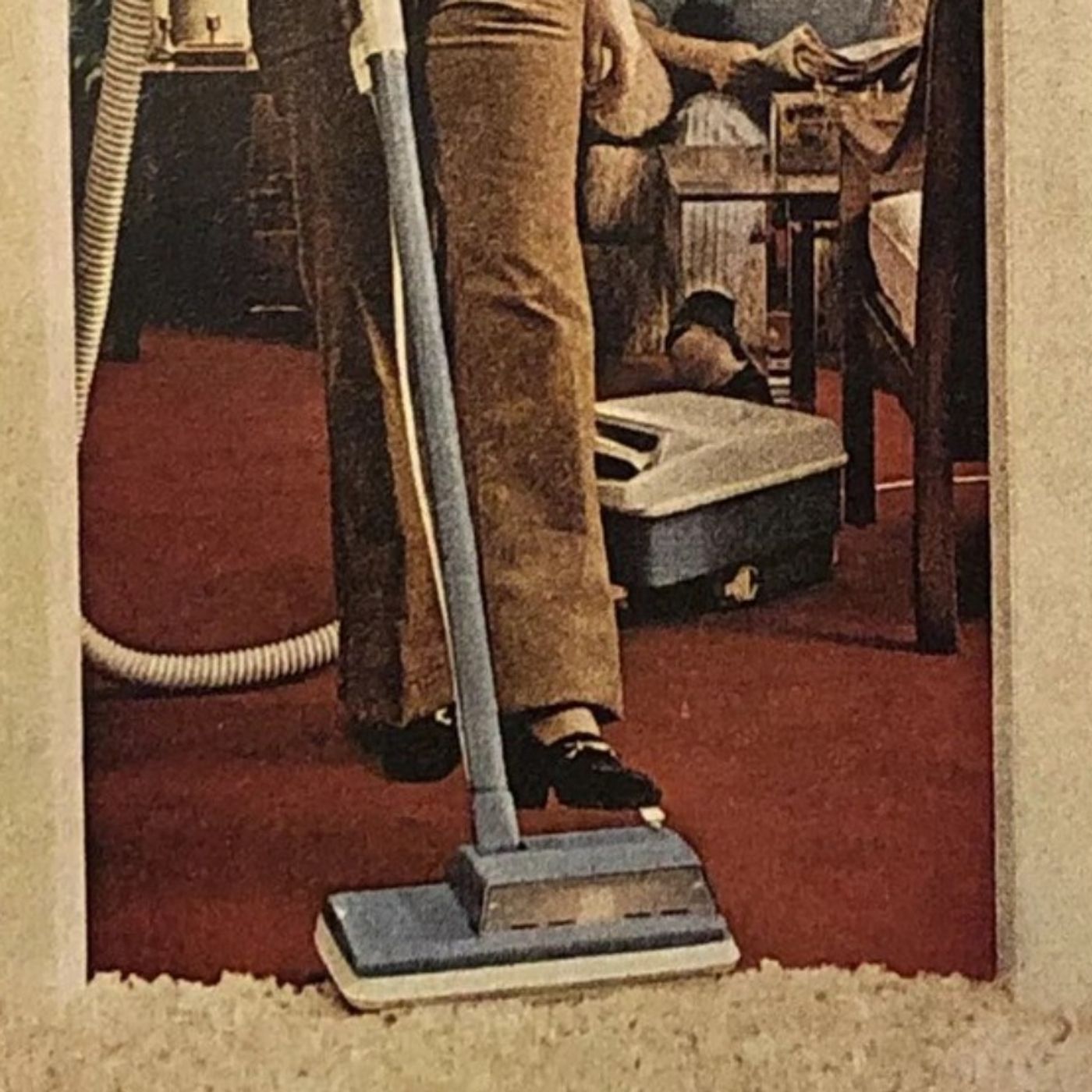
I don't have an answer for this, but I assume you do a lot. Why is it the blowing off electronics with a small handheld leaf blower or a spray can with compressed air are generally considered safe, but using a vacuum cleaner to suck off the dust can create static electricity that can damage the components. The air itself moves across the components either way. So is it the motor in the vacuum cleaner that can create the static? And if so, why doesn't the small electric blower create the same problem? It has to do with how vacuum cleaners used to work. Um, so a blower is typically just a fan that's spinning. It doesn't generate a lot of static electricity. A lot of, especially older vacuum cleaners, it's, it's less common these days with like the new Venturi style vacuum cleaners, but the older ones had a big rubber belt in there and that rubber belt would rub against stuff and create a shitload of static electricity. And if you're talking about like your 1979 era lady Kenmore that had a metal hose that was electrically connected to the main body of the, of the vacuum, you could arc a spark
across like three inches with that thing. Um, so, so yeah, that's, that's why we, that's why people say not to use vacuum cleaners. It's probably fine, especially if you're using like a modern Dyson or something like that that doesn't have the big giant rubber belt in there. But also like one of the kindest things you can buy for yourself is a, is a $20 electric candier machine, and just, just by that, just take your computer outside and blow it out. Yep. Or do it in the kitchen. Yeah, I told the kid to clean her computer a few weeks ago. And she's like, I got it. And she's the next thing I see, she's blasting it out on the kitchen counter. I was like, man, oh man, well, there were no like open dishes and then in the room. Then we know all the stuff on the drying rack got to go back in the wash in the dishwasher. Sorry, I meant, I meant like open dishes of food that were cooked or whatever. No, no, no. Um, also shout out to the 1979 Lady Kenmore. Yeah, like the, given the way that appliances used to be built, that thing's probably still running. I, like here's, so we,
we've had vacuum cleaner strife in our house over the last couple of years, because I advocated for buying this melee, um, a stick vac that sucks better than any stick vac I've ever had before, but also is fairly heavy and certain members of our household don't like the extra weight. I am constantly blown away by how good the stick facts are, but it definitely feels like an LCD monitor situation where like they, they didn't suck as well as the old kind of vacuum cleaners for a long, long time. And we're just now getting back to that point. I don't know, man, vacuum cleaners are hard. Yeah. Can I just say there was one recurring theme. We're listening. We hear you, a lot of folks want us to get a one Brad Schumacher as a guest on Dubu diaries in the future. Yes. Yes. All parties are willing, I believe is safe, safe to say at this point. Yeah. The only reason I've been hesitant is that you guys are so desktop focused and I just don't have a ton of desktop experience. So I don't know how useful I will be, but I think that we
could do some, I think it would be really helpful to have you come on and explain System D. Sure. Oh boy. Stuff like that. System D is there though. That's that's a can of worms for many reasons. System D's what? You know, I shouldn't even we need to end the spot cast. I shouldn't bring this up. I mean, did you see the hubbub this past week or two? No, where somebody they merged a poor request with a birthdate field into the Oh, no, basically into the System D user DB, which I didn't even know existed like I am deep in writing System D services myself and stuff like that these days. And I didn't even know it had a facility for yeah, I didn't use our data, but basically people see it as a prelude to age verification, sneaking its way into the next and Leonard, Leonard pottering the maintainer of System D was just like, hey, it's a completely optional field that you can just not put anything in if you don't want to deal with it scene drama. Anyway, that's I mean, there's probably a whole episode around the like state level. It seems like I think it's just California and Colorado so far. The state level age verification
requirements in your operating system legislation. Do we not talk about this here? We only talk about the full nerd. I guess I don't think we've discussed it on here. Yeah, it's the state level requirements are goofy because it's just a field you press the the data and it's going to be like it's going to be like when they started making porn sites put age verification on. That's just a Yo, are you 18? Yes or no? It seems like the kind of thing you can just fake. I mean, I get the concerns about it being. It is a free slope. Yeah, for sure. Also, who was it? I think it was the CEO of System 76 posted on mastodon recently that he met with the kind of lead sponsor of the Colorado bill. And that sponsor, the legislator basically said, well, maybe we could just exempt open source operating systems from this to per done. Perfect. So, but I think that the California bill pass already a much. It's passed. There's still time to amend it. Okay. Like there's session between now and when it goes live. I think I think even like I don't you I think we all know how I feel about Newsom. It's not great. But even he said when he signed it
that this bill has problems, it has to be adjusted before it goes live. Fingers, fingers crossed. So whether the GOP super majority, I mean, the the democratic super majority in California can get their shit together and do it or not in time. We remains to be seen. But yeah, more to come on that probably. All right. Speaking of speaking of policy change, here's the last question from cake batter. Okay. Now that British Columbia has gotten rid of daylight savings to the UTC 7 all year round. Now would be a good time to dive into explaining how time zone tracking libraries handle an update like this. Yeah, it turns out there's just a shitload of people doing a lot of work. Yeah. There's a time zone database that's maintained. It's called the Olsen database. Because that was the founding contributor. And it's the well, okay, so there's multiple time zone databases. There's TZ data, which is a zone info database or also the IA and A time zone database, which is the internet assigned to numbers authority database. That's the people that do a lot of
IP addresses. I believe TTC data is a very common time zone package across different open source operating systems. Yeah, but the TLDR is that this guy Paul Egert has maintained this for a really long time with the organizational backing of ICANN. It's one guy. Look, man, it's that there's an XKCD as always for this. It's the one little one. Yeah, that jingertower with that one guy at the bottom and holding up the whole thing. I mean, I think that might be the most cited XKCD at this point. It's either that one or the 15 standards one. Yes, that one also is a classic thing. It seems like the kind of thing that should be more standardized at an institutional level in a theoretical world where we still care about standards or I mean, it seems like ICANN is paying Paul Egert, so somebody cares. Yeah, okay. I think, well, okay, so there's two things. One is I'm really curious to see it. We did a time zone episode years ago. If you haven't heard it,
you should go back and find it because it's fantastic. Yep. The changing to full-time daily savings has never worked for a long period of time. I am so jealous of British Columbia. Yeah, I would like to go on that journey of discovery with them and find out why it sucks firsthand. They're on permanent regular. They're on permanent BC went on permanent standard time. No, I thought they went on permanent daily savings. Now that British Columbia has gotten rid of daylight savings to be UCC seven all year round. So they're on permanent standard time, which is the dream. But isn't UTC minus seven daily savings time? I will. It's their specific time. We're minus eight. Are they? Yeah. Maybe they're easterly sprung forward. Maybe they're easterly enough to be in seven and not eight. I don't know. Anyway, I mean, it seems pretty definitive. Got rid of daily savings, so it must be standard. Yeah, no, no, no. They sprung forward and they're never falling back. So they're on daily savings time forever. Oh, maybe he's got a backwards then. Well, I mean, I think getting
getting rid of implies to me that they're not changing the clocks anymore, which one they land on. We will hear from cake batter on the subject. I'm sure. But but my point is I'm curious to see how long how long it takes them before they they revert as was discussed in that episode of several years ago. Yeah, the Russians did it. Every time somebody's tried this, they've they've not stuck with it. We tried this in the US in the 70s and did not even make it through the probationary period of two years before everybody was like, fuck this. Yeah. Now the real answer to the problem as we discussed during the episode. And this is like a yo, we should get rid of pennies or, uh, hey, like the official map of the United States uses the wrong projection. So the Greenland looks really big and like idiots want to capture it as a defensive perimeter for the country, whatever yada yada. Diagonal time zones. That's the real answer is that you don't go with the longitude lines. They're all day slanted time zones. That's adjusting for the tilt of the earth. So that people have more consistent daylight hours. Yeah, because remember the thing
that we learned in the daylight saving time episode is that the more northwesternly you are in the time zone, the earlier you die. Yes. Yes. Yes. Like you get screwed daylight saving screws you based on where you live in your time zone. Yeah. Yeah. So many reasons we should do away with it. Yeah. Anyway, um, please write your angry letters about time zones to, uh, somebody that's not us. Don't hear about it. We don't care. We believe you. We appreciate you. We hear you. And, uh, we're sorry. Sure. Why not? Um, I read, I read, I read all that, but I'm happy for you or sorry that happened. Yeah. Exactly. Exactly. I'm, I'm sorry that did or did not happen to you. Um, all right. That's as good a time as any to wrap it up for the weekend, I guess. Huh? Yeah. Or week. Uh, as always, thanks to everybody for writing in. Thanks for everybody for supporting the podcast. Uh, if you would like to find out how you can support the podcast, you can go to patreon.com
slash checkbod. It's five bucks a month. Like I used to say it was a cup of coffee, but now that's like a half a cup of coffee in San Francisco, what, what is five bucks at this point? I bought a bag of candy. I used to candy for five bucks the other day. I was going to say you can still get a candy bar for less than five bucks, although that is creeping up. That's like candy bars like 250 pushing three bucks now. Yeah, you can get gas station coffee. I got a gas station coffee for five bucks the other day. Yeah. Um, so yeah, get your gas station coffee, you know, chuck five bucks to your favorite listener supported podcast. We don't take advertising money. We're just here doing our podcast for you all the listener. We're not working for anybody else. That's right. Instead of instead of half of a Starbucks latte, you can enjoy the continued existence of this podcast. Your unicorn frappe is, uh, is not going to, yeah, it'll still be there. We won't. Um, but go to patreon.com slash checkbod and, uh, if you want chuck in five bucks to support the show, we appreciate each and every person who does, um, especially our executive
and associate producer tier patrons. Uh, so starting at the top of the list with the executive producers, thank you to James Camich, David Allen, hashtag bunny jerk, Jordan Lippet, Andrew Sloskey, open AI to lend us and pantheon makers of the HS3 high speed 3d printer. Uh, special thank you also goes that to our executive, sorry, our associate producer, tier patrons, including Thomas Shea, Chad Rita, P tips, Stephen, Tom Fuller, just associate wedge, Nathan Phelps, Ben Tomman, Tom Hilton, Andre M. Burke, P.E. Andrew Dicey Shulldice, Alejandra Navarro, Matt Walker, parentheses, Walkman 80, 80 close parentheses, Sanchit Kumar, Felix Kramer, Kirk, brutal kerfuffle and Eric. Thank you also so much. We appreciate each and every one of you. We do. Thank you. Uh, and, and we appreciate everybody who supports the show and we appreciate everybody who leaves a review for the show and we appreciate everybody's sense of question and we do like, just generally speaking, we appreciate y'all. So thank you all so
much. Yeah, thank you for listening. Um, and, uh, yeah, if anybody wants to help me figure out how to make a, uh, uh, DKMS package so that my drivers for my AIO update automatically when I change the kernel, that would be dope too. That seems like a rabbit hole. That's, that's like, that's the level of Linux administration that I have been afraid to ever touch is like autumn or not autumn, sorry, not automatically, but manually dealing with like module, kernel module building or like building your own kernel and that kind of thing like, that stuff, that type of stuff is still the domain of the package manager to me. Well, so, but obviously they're not packaging the thing you need here. No, so I wrote a script that will automatically mod probe the driver in when I, when I boot the machine, but then everyone's want to throw his an error because I've gotten a kernel update that I didn't notice and I have to re, re compile it or whatever. I think you, I think you want to probably do a mod probe dot D file for that drop in file. Oh, is that how you do that? Yeah, there, there's not really recompile it. Oh, no, not to build the module though. That's just a, to load it at boot. There is a standard facility for telling it which modules to load,
which is to go, go look up slash Etsy slash mod probe dot D. I believe. Yeah, I'm going to be, the thing is I want to do it manually because I want to see the error pop when it doesn't go or else I start playing a game with my fans out like a jet engine. I don't know why. So you should probably do it as a system D service so that the output of it gets absorbed into the journal system journal. Well, so the other thing I was thinking I could do is just write a script that, that does like it. If this fails, then I, then it runs the compile thing. Okay, compile only takes like a half a second. I should come on and talk to you about system D then because yes, this is exactly what that thing was made for is that my understanding isn't the, in the CIS 5 and it days like startup ordering of services was a complete nightmare. It was, yeah. But so like it, like it's specifically built to deal with dependencies between different services. So you can, you have a lot of control over when that service runs on how. Oh, basically, like you can make, you can, like it's, CIS D very fraught subject, but there's some cool things about it. Basically, it turns every single resource in, now I'm just burning
dual-boot diaries stuff, but every single resource in the, in the machine in the OS becomes a unit, quote unquote. Yeah. So that's like services drive mounts or, you know, storage mounts, USB device, like every hardware device. Yeah. Network connections and whether the connections are up or not. And you can set up dependency chains with all of that stuff. You can be like, you can be like only run this service after this network interface is up and configured and connected, connectable. Oh, so you can do dependencies. Yes, absolutely. Oh, that's awesome. You can say, only run this service when, when this specific USB device is plugged in. Oh, like you can do all kinds of cool stuff like that. So like you would, oh, absolutely. If you make this into a service, then you can tell it, don't run the service until these other things are present and ready to go to prevent errors when things run. So then I can have like my cooler control service not run until after the HW Mondry, the carl driver loads for this 100%. Oh, that's some hot business. I need to get you to help me figure this out. It's, it's a lot. It is a fucking lot, though. I kind of
hate dealing. Okay, I'm listening to this now. It's very, I found it consistently very hard to master, but it is very powerful. But I really need as somebody else to package this up for me. So I don't have to think about it. That's the TLDR. Right. What if you became the package maintainer? I look, I looked at what was involved. And first, I have to figure out how to package the, the thing. And then I have to make a DKMS, DKMS version of that. So that means I have to learn how to do GitHub automation. So compiles automatically when there's an upstream update that I can pull in. And at that point, my eyes glaze over. I was like, this seems like a lot of actual work. And yeah, it sure is. It sure is. Yeah. Well, so we'll be like next week with more tech pod. Thanks, everybody. Please consider the environment before bringing this podcast.
More episodes
More from Brad & Will Made a Tech Pod.

355: Spindly, Greebly
Brad & Will Made a Tech Pod.

354: The Dog Nose Knows
Brad & Will Made a Tech Pod.

353: Notes About Notes
Brad & Will Made a Tech Pod.

352: Tell the Robots to Eff Off
Brad & Will Made a Tech Pod.