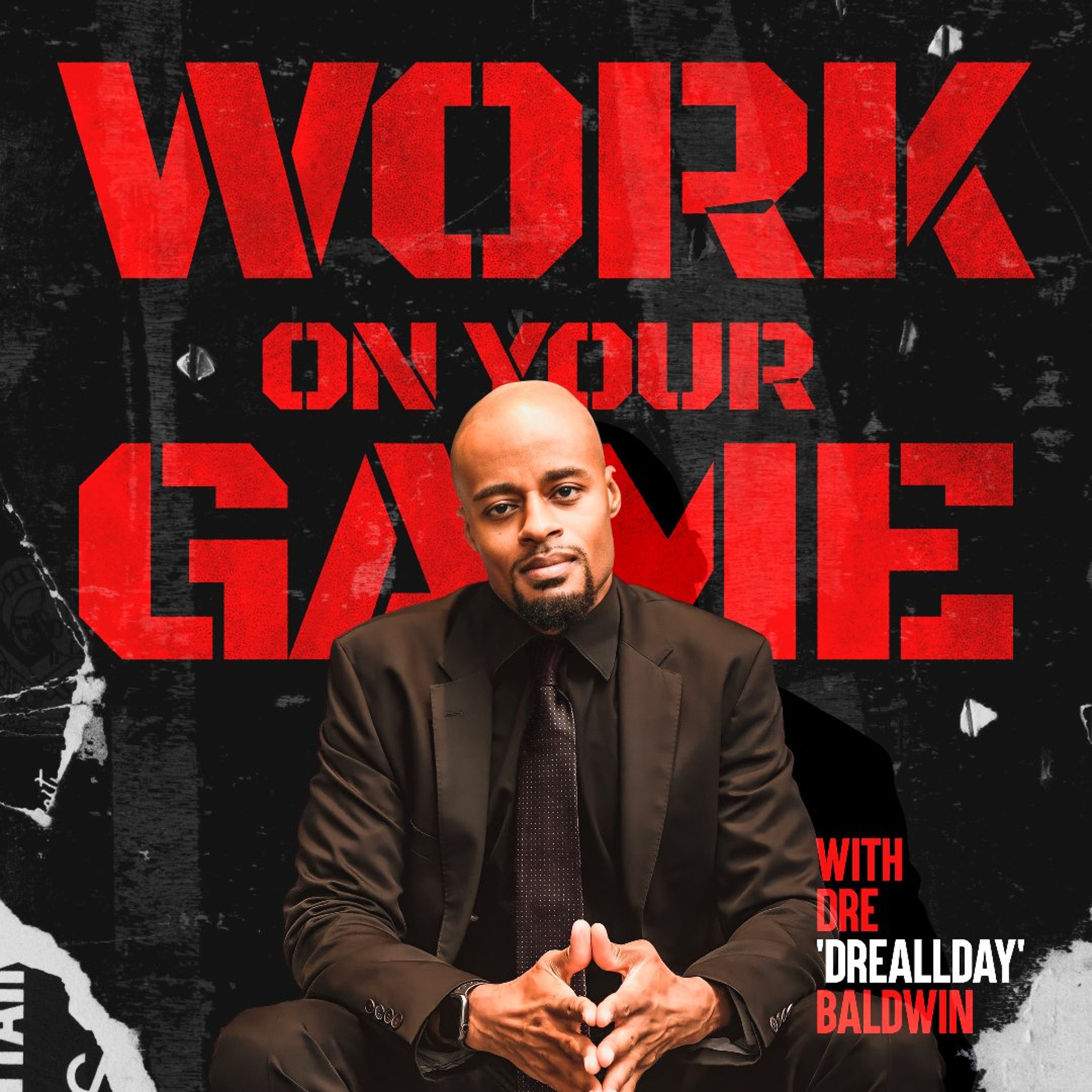
#3763: Trust Lasts Longer Than Viral Attention
About this episode
Get every episode summarized
Each time Work On Your Game: Discipline, Structure, and Execution Under Pressure publishes, we email you a written briefing from the transcript — the topics, who appeared, and any specific claims, with the ad reads skipped.
Email me new episodesFree for 3 shows. No card needed.
Hosts & guests
Transcript ready
397 searchable segments. Every word is indexed and playable.
Full transcript
Work On Your Game: Discipline, Structure, and Execution Under Pressure — #3763: Trust Lasts Longer Than Viral Attention. Machine-transcribed; use the interactive transcript above to jump the player to any line.
Power presence calibration exists. It is not training. It is not coaching. It is for people already operating under consequence. And that's not you. Ignore this. Information is in the episode description. If you're serious about improving your leadership, your discipline, and your ability to execute, I send one email every single day with one practical lesson you can use immediately. No motivational fluff, no life story, just straight to the point game on mindset, structure, leadership, and high performance. It's free. Get it every day to your inbox at workonmygame.com. That's workonmygame.com. Trust turns attention into action. If you have no trust, it doesn't matter if you have people's attention. If you have a lot of trust, you don't need a ton of attention. Get all day. Workon your game. Workon your game. Workon your game.
This is Dre Balden. And workon your game is the system that turns discipline into dominance. Today's topic is trust, and I asked longer than virality. So just in the previous episode, I was talking to you about how your personal brand is the vehicle to where you want to get to is not the destination itself. Let's talk about another angle of building the way personal brand. And this often can come with a personal brand, but it can come with other things as well is virality. When we say virality, what we mean is you putting something out there that somehow some way goes viral on the internet. There is no way to guarantee that something goes viral. I had a post from the day that I'm recording. It's just yesterday. A textual post that I put on X, go viral and get a lot of engagement yesterday. And I had one the previous week that did the same thing. I'm bringing them up not to impress you, but to impress upon you. I had no idea they were going to be the things that I said that went viral. It's just the fact that these things just pop up and happen sometimes.
Virality, first of all, since it cannot be engineered, this is one reason why you don't want to base your business around things going viral. And secondly, it can't be engineered. It cannot be predicted. You can't say, OK, if I do this, this, and this, it's guaranteed to go viral. And that's why I'm just opposing it against trust. Trust is people knowing what you bring to the table, knowing what you're about, believing that what you bring is valuable and useful to them. Therefore you're not having to be super duper popular, which is what something viral is, at least for a temporary, for a short period of time. You don't need those things in order to get your message across to the right people. Now, if you had trust from the right people, then you don't need to go viral. And for me, I generally with all the content I put out was to say long form content, not talking about some short, no click level or status update level thing. Like what I was just mentioned, I'm never having anything of viral, but I put out 30, 40,000 pieces of content over the last two decades. Plus, most people go chasing the attention that comes with virality or chasing attention
that could lead to virality because attention is visible. Revision is immediate. It's the immediate gratification that comes with attention and there are certain things that you can do to engineer attention. Each thing you do may not get as much as you wanted it to get, but generally, you can do things to engineer attention. The people who build, lasting success, however, focus on trust because trust converts into opportunities. They convert into relationships and those convert into revenue. And when you're doing business, what you want is the opportunities with people who already know why you can trust you. And that's usually based on some type of relationship, direct relationships that they have with you knowing you. And those things we need to revenue and business attention itself can lead to revenue. The problem is they can be very surface of a revenue because people are only willing to exchange money with you because you're the thing that's in front of them right now. But tomorrow you could be replaced by someone else and they can forget that you even existed even though it just gave you money 24 hours earlier. Point number one. And once again, it's trust vast longer than by reality.
Number one, by reality creates exposure, but trust creates business. These are two different things. A lot of people conflate these exposure with business. Well, hey, I could do this, this and this because more people will see me and I'll be able to meet these people and I can possibly make new contacts. And I can shake hands with these people and I'll be in the same space as this person, this person or there are this many people here. That's exposure. And exposure is you posting on social media and looking at how many likes or comments or views or how much engagement or how many subscribers or new followers you acquired through your posting online. That's exposure. That's what virality does when a lot of people are seeing the thing that you did you are being exposed than a positive way. More people know you, more people see more people here. What you have to say that is not the same as creating business. That's a different thing. Creating business is someone giving you money and exchange for your product or service. Understand it. You don't need to go viral and get a ton of exposure in order to do business.
There are people out there who you don't know who are not on social media or they're on it but not in a way that they're using it for their business in a way that they have fewer followers on social media than you. Even if you only have a couple hundred followers, they have fewer followers on social media than you. They don't use social media for business at all. Yeah, they're able to do a lot of business. Why? Because they do their business based on trust and relationships, not based on virality and exposure. There's a lot of big business that goes on and has nothing to do with a whole lot of people knowing either side of the transaction. Can we agree to this? If you don't agree, please go talk to some people who you can tell them what I said and ask them and they'll tell you. They'll tell you some examples. Millions of views or a whole lot of engagement means very little. If the people who are viewing you and engaging with you either A, do not believe you. B, do not remember you. C, do not need what you're offering or D, can't even afford to buy what you want to sell. So just because you got a lot of people to see you does not necessarily mean it is translating
into business. Just means a lot of people saw you. Now if a lot of people see you, it could translate into business. A lot of people know you, hey, maybe I could lead to a brand deal. Maybe some of those people will actually be customers. Maybe some of those people will stick around for a while, get to know you. They'll be incubated in your world and eventually they become someone who could become a customer or client of yours. Maybe that will happen if you're angling for attention alone, which again, can lead to virality. If you angle for instead, trust building relationships and establishing true value with the people who matter, your audience may be smaller than maybe less attention, less potential to go viral, but higher relationship capital or stronger relationship capital with your audience, which means the outcomes that you actually want. Because again, a lot of people seeing you, it doesn't matter if those people are not the right people. If they don't believe you, if they can't afford to buy what you're selling or they just are not paying enough attention to even care. They're only paying attention because of the element that made it viral, but not the
actual substance of what you're doing. You ever seen a commercial? If you can remember, see a commercial or an ad somewhere online or on TV and you remember the commercial or the ad, but you don't remember the product that was being advertised. Any of you ever had that experience? I think we all have, especially back in the days when everything was commercial and on TV and there were not so many channels. So many of us were seeing the same commercials. We can remember the commercials, but we do not remember the product being sold in the commercial. Or we can remember the commercial, but we had no intention or interest in purchasing the product, even though we remember the commercial. Back in the days, there was Budweiser, the beer brand. They had these frogs who would be sitting on a log and they'd be saying Budweiser, Budweiser, three frogs. One said Bud, other one said Wise on the one said Budweiser. I still remember that commercial to this day and I was probably 30 years ago. I have never drink Budweiser. I have never purchased beer ever in my life, but I remember the commercial. So just because somebody is seeing you does not mean you're a customer.
And this is what a lot of people get this wrong these days when it comes to getting attention through, let's just say the internet or through a screen. Trust turns attention into action. If you have no trust, it doesn't matter if you have people's attention. If you have a lot of trust, you don't need a ton of attention. You just need to trust from the right people. Maybe only one person. Point number two, today's topic, once again, is trust. Vests longer than viroity. Number two, viroity is temporary. We talked about this about yesterday. We talked about it a good amount already so far here today. Viroity, I just told you. I've had posts in the last week from the day that I'm recording this. I've had two posts and the last week at least that I know when I saw the metrics go viral meaning over a half a million or even over a million people saw my posts within 24 hours. And when you get over a million people saying something that you posted within 24 hours, you get a whole lot of comments, a whole lot of feedback. You may get more followers. You get negative comments. You get all the time to stuff going on because of what you said and the fact that a whole bunch of people saw it again, knowing that you can't engineer a bunch of people seeing
your stuff. You can try. But there's no way to guarantee it is going to happen. And my reality is temporary. I brought that up to tell you this that the posts that I did last Friday, that a whole a million people saw when I looked at it on Saturday by Sunday, the post was completely forgotten and nobody was engaging with it anymore. And only last but that one day. Then there was another one that I did the day that I'm recording this. There's one I did yesterday and by end of the day today, by the time I go to sleep tonight, it's already 3.51 in the afternoon. By the time I go to sleep tonight, that post will pretty much it will be as if it never even happened. That's how it works. So the viability is temporary. Discuss your go viral doesn't mean you stay viral. You go viral then you come back. Test the way it works. You go viral you come back is a one day trip. Today's viral moment is tomorrow's forgotten post. That is literally how it works in the social media space. Now there is one space where you can have a little bit of a longer shelf life. I would say that's YouTube. YouTube is a place you can have a longer shelf life. I have videos on YouTube that I have not touched. I have not opened and looked at.
I have not read a single or reply to a single comment from. They came out 10 years ago and they have a million views. And it was a slow burn to a million views. It wasn't like got a million in one day. It started out with the healthy number and then it got more and more and more and over time. Just kept getting more. So that is what we call the long tale. YouTube has a long tale. All the other social media platforms from LinkedIn to Facebook to TikTok to Instagram to X and whatever other ones are out there. They have short tales, meaning even if you get a ton of engagement on your posts or a lot of impressions on your posts also known as views, they happen and then they go away very fast. Whereas on YouTube you can start off very slow and then slow. You can build up and it can pick up steam later on three, five, 10 years later your video can become popular when it has been sitting here for 10 years collecting digital dust. Now all of a sudden everybody is looking at it. That can happen on YouTube. It does not happen on any other social media platform. It does compound over time however through consistent delivery and reliability.
Let me say that sentence again. Trust compounds over time through consistent delivery and reliability. This applies to you as a person in your career the same way it applies to your message that you put out to the world. You consistently put out messages over time. That trust starts to compound. People come to trust that you're going to give a message. They come to trust the angle of your message. I mean I know what you're going to say but they have an idea that you talk in this way about these things and you usually focus on this type of idea. They mean I know exactly what you're going to say but they have an idea of your angle and your approach. Meaning if your name wasn't on the message they could still tell it came from you. That is all part of the compounding of trust and that happens over time. In order to build trust you need time. That everybody needs the same amount of time but to build trust you need some amount of time. Reality is not about time. Virality is about a whole bunch of attention really really quick. I mean quick is time but it's not about over time. Building things over time is how you build trust.
Virality does not build trust. Virality gets you a quick burst of attention from a bunch of people who have no idea who you are may not even want to look into who you are may not care who you are may not even notice who you are because all they're engaging with is the thing. They're not engaging with you the person they're engaging with the thing that you are attached to. They may not even notice you in the process of engaging with the thing that you did. That also happens when you go viral. You get a bunch of attention from people who have no idea who you are and really don't care who you are. Trust on the other hand. Compounds over time if people really do know who you are they start to buy into who you are they become invested into your message or into your assets or into you as the person whoever the message is coming from and that consistent delivery from buy you. Bill's reliability and their minds when it comes to you to the point that they may start passing your name out through word of mouth. Which is the best form of marketing buttocks. It's one thing if I tell you that my product is great. Another thing if your best friend tells you that my product is great and you never
heard from me but you come ready to buy not because I said something but because your best friend already vouched for me. That's word of mouth. That happens when people trust you and to build trust you got to put time in. There is a point where self-awareness stops being enough. Power presence calibration exists past that point. It assumes consequence not curiosity. The reference is listed below. Point number three. Today's topic once again is trust about as long as in virality number three. Trust the people get repeated opportunities. Why do trust the people get repeated opportunities because people trust them and people trust you. They will keep coming back to you over and over and over again. Why? Because human beings are creatures of habit. We would rather we may not say this out loud but human beings would rather do the same thing over and over and over again with very little variance, very little change between executions rather than having to do something different every single time. This is the reason why people take the same route driving to work every single day. We tend to follow the same process.
Those you go to the gym we follow the same process. Getting into gym, putting our stuff down, warming up, doing our exercises and cooling down. We tend to do the same stuff over and over and over again. This is how human beings are. Why? Because it saves us brain power when we follow routines because the subconscious mind can carry out our routines and our habits. Whereas we need our conscious thoughts to do things that are different than our normal routines. And there's only so much conscious thought power we have over the course of every single day before we run out of it. Subconscious mind can run very efficiently and very effectively a whole lot of tasks about burning up a lot of energy. The conscious mind is not as efficient. So when we have to think about what we're doing, which is usually what happens when we're changing up the process every time it eventually burns us out mentally. This is many of you in business. You talk about being burned out when the reason you're burned out is because your system is running hot because you're making it make too many decisions every single day. When you systematize and process the ties, if I'm back a bit better term, I just made that word up. When you make processes and systems out of the things that you're doing, eventually they
become adopted into the subconscious because you've done them so many times. The subconscious realize, okay, we're going to do the same thing over and over again. Let me take that task over. You don't have to think about it anymore. Same way that many of you this morning, you tied your shoes. You tied the laces on your shoes and you didn't think about it because you've done it so many times. The subconscious mind did it for you and you don't even remember doing it. Trust compounds over time through consistent delivery and reliability. What I was saying here, I'm pointing number three. Again, trust that people get opportunities over and over and over again. You can do the same stuff over and over again because people like it. They trusted it. They know what they're going to get. People buy from refer to and partner with those that they trust. You want people buying from you without you having to advertise? When that be great, you want people referring you, telling their friends to come buy from you so that you are then making sales to people who you've never even tried to pitch. But they're coming in ready to buy. Wouldn't that be great? When your name is being spread out by other people, not by your Facebook ads, not by your
Google campaigns, not because you went viral on Instagram, but because other people who already trust you are telling their friends about you so that the friends are coming to you already with built in trust for you and they don't even know you. That's what a referral is. That's why I got a business. I actually not about a business every business loves referral business. I don't know why because it's the most easiest and most valuable business you can gain is referral business, as long as you don't fund with a ball. And people like to partner with those that trust when people need to work with someone else because someone else may have something they can bring to a situation that the original person does not have and does not wish to acquire on your own. They go to partner with somebody that they trust. Not just somebody who's good, but somebody that they trust. That's the key thing. Let me say that part again. Not just somebody who's good, but somebody they trust. Most people would rather partner with someone who they trust, who is less good than someone who they don't trust, who is better. Why? Because we want to know what we're going to get. Human beings are creatures of habit. That's a first principle.
We want to know what we're going to get. You can get people a repeatable, duplicatable, consistent, non-varying experience. They value that because they know what they're going to get. And human beings love knowing what they're going to get. Even though people say they like surprises, but most part know we know. We like surprises when we know what it's going to be. So it means not actually a surprise. Other than that, we don't like surprises. One trusted relationship is worth more than thousands of passive engagements. We're going after virology. We're going after passive engagements. A bunch of people engage and it feels good. You get a big rush of dopamine for that moment. But as soon as that moment passes, you go right back to baseline where you were before, which is you didn't really go anywhere. One trusted relationship can last forever and it can bring you much more return on investment of that relationship than going viral every day for a week can bring you. Again, attention comes, attention goes. Recapt in today's class, which is trust last longer than virality.
Number one, virality creates exposure while trust creates business, which one do you want? If you had to pick between the two, it was one would you choose business or exposure? Again, they are sometimes and many times actually mutually exclusive. Number two, virality is temporary. Attention comes and it goes. This is fast as you got all the attention. Today somebody else is going to get all the attention tomorrow. Do not get addicted to it because you'll be experiencing withdrawals when you realize that not only do you no longer have the attention, but also you can't do anything specific to make it come back to you. Number three, trusted people get repeated opportunities. This is the position you want to be in and life is a position you want to be in and business to where you are trusted by people of consequence who know other people of consequence and they trust you. That's where you want to be. Not going viral and getting a ton of attention because again, you begin to bunch of surface level of attention from a bunch of people who don't really matter. What is that worth? Final thought everybody. Attention gets you noticed, trust gets you paid. Work on your game. Drey, all day. You call yourself a high performer.
The ERI execution reliability index will verify this. It measures how often you do what you said you would do on time and under pressure. No opinions, just data. Get your score at workonyourgame.com slash ERI. That's workonyourgame.com slash ERI.
More episodes
More from Work On Your Game: Discipline, Structure, and Execution Under Pressure
#3772: Your Brain Needs "Alone" Time
Work On Your Game: Discipline, Structure, and Execution Under Pressure
#3771: The Death Of Nuance (And Why It's A Problem)
Work On Your Game: Discipline, Structure, and Execution Under Pressure
#3770: How "Red Pill" Men Are Just Like Feminists
Work On Your Game: Discipline, Structure, and Execution Under Pressure
#3769: The 4 Quarters Of Life (And What Each One Is For)
Work On Your Game: Discipline, Structure, and Execution Under Pressure