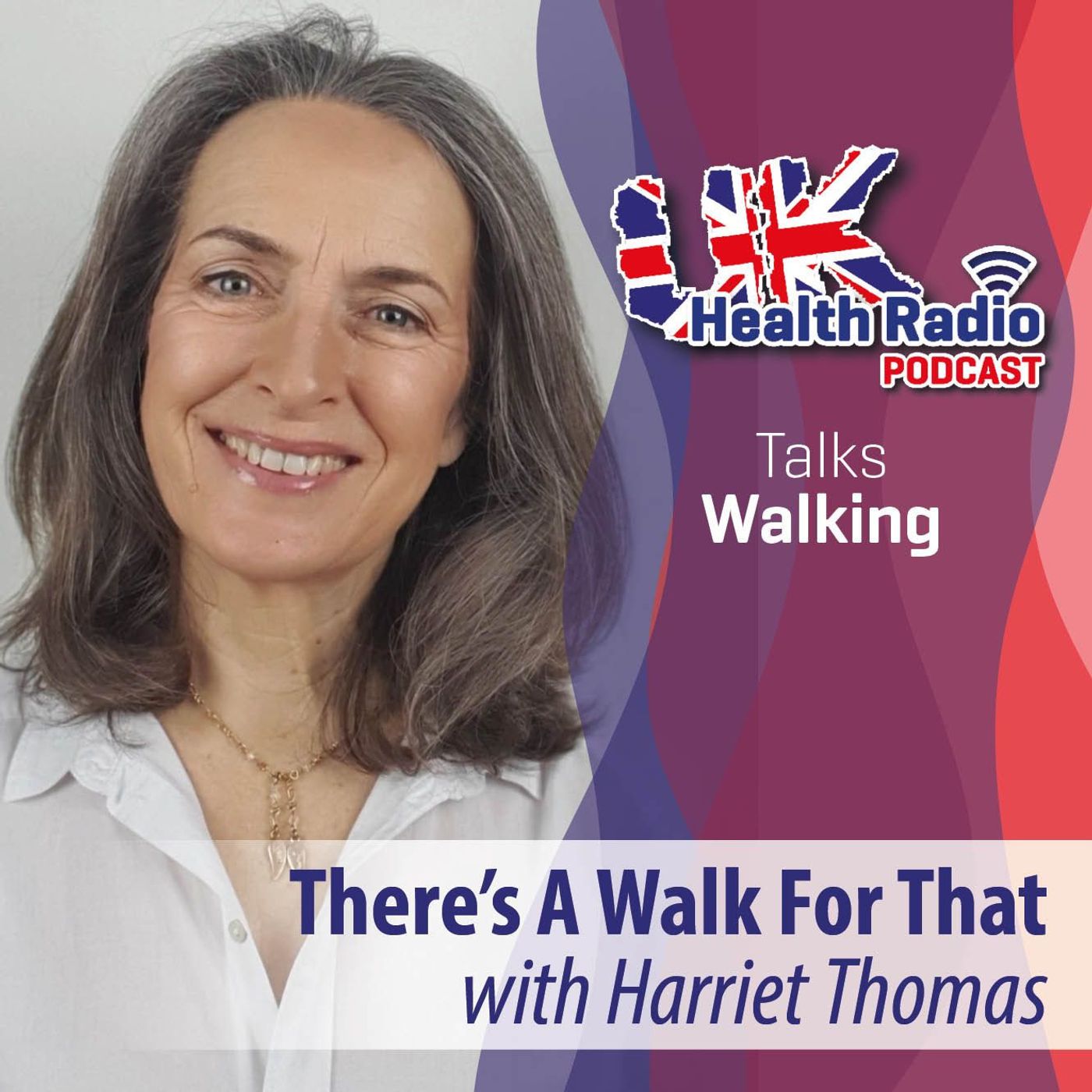
39: There’s A Walk For That with Harriet Thomas - Episode 39
About this episode
Get every episode summarized
Each time UK Health Radio Podcast publishes, we email you a written briefing from the transcript — the topics, who appeared, and any specific claims, with the ad reads skipped.
Email me new episodesFree for 3 shows. No card needed.
Hosts & guests
Transcript ready
105 searchable segments. Every word is indexed and playable.
Full transcript
UK Health Radio Podcast — 39: There’s A Walk For That with Harriet Thomas - Episode 39. Machine-transcribed; use the interactive transcript above to jump the player to any line.
College football is back. On Polymarket you can trade what you think will happen against other fans before kickoff. Think your school is finally going all the way? Of course you do. See what other fans think. Chad live with the Polymarket community. Then take your own stance. Once the game starts, keep trading live and exit whatever you want. Or combine multiple trades into one with Polymarket combos. Live now in the app. College football is an although. Trade on baseball, basketball, hockey, combat sports, tennis and more. Download the Polymarket app. New customers use promo code Rover. Deposit $10 to get 50 instantly to start trading. 18 plus. See Polymarket's terms and service for more information about restrictions and eligibility. The Polymarket app is an independent affiliate of Polymarket US and not CFTC regulated. Trading always involves risk. Complete loss could occur. The $50 offer is issued as none with drawable trading credit to use on the platform. Offer exclusively available to first time depositors.
Kitchen and bathroom professionals know what goes behind the tile matters. That's why trade pros trust fiber cement, party backer board to keep tile firmly in place, resist cracking and help block moisture. Chosen over 40 million kitchens and bathrooms party backer board. What the best build on shop now at participating home depot, lows and floor into core stores. For more information visit James Hardy dot com slash party backer. Walk yourself. Wonderful. Hello and welcome to there's a walk for that with me Harriet Thomas recorded here in my garden in London. Now you might expect a program about walking to be all about hikers, muddy boots, mountain trails and people who spend their weekends striding across the countryside.
This episode is dedicated to the people who may need walking most and that is the desk workers amongst us and I include myself in that category where the people who spend much of the day sitting staring at screens moving from meeting to meeting and wondering why by five o'clock we feel completely exhausted even though we've barely moved. The thing is walking doesn't have to be something you do after work to keep fit use differently it can become part of how you work and today I'm going to show you how a few strategically placed walks can help you think will clearly generate better ideas, reduce stress, look after an aching back neck and shoulders and create some much needed breathing space in a relentlessly busy working day. We're going to explore the science behind what I call the light bulb walk and why getting up and walking away from a problem can sometimes be far more productive than sitting at your desk staring harder and harder at it.
We're going to go further than that because we're going to look at how you can use your journey to work to plan your day, your lunch break to reset your brain and tiny five minute walks to break up long periods of sitting and even an end of day walk to stop carrying the pressures of work straight through your front door or floating them on the people you love the most. Because perhaps you still love the work you do you just don't always love how work makes you feel anymore so stay with me to the end because I'll give you a handful of simple things you can start doing tomorrow that could make a noticeable difference not only to how you feel at work but to the quality of the work you produce how you respond under pressure and even the way you show up with your colleagues your family and the people around you. Because sometimes the smartest way to work better is to get up and walk and I feel we need to say hello to that magpie sitting in the tree making a lot of noise and as my dad would always say morning Mr magpie how's your brother because it's one for sorry to for joy right well that was a beside from the natural world let's get back to the content of the show.
I want you to think back for a moment to when you first started doing the work that you do now maybe it was a new job a promotion your first big professional role perhaps you had finally started your own business. Do you remember how it felt you were interested ambitious full of ideas you wanted to make a difference you probably didn't wake up every morning thinking oh wonderful. Another eight hours staring at a screen you were excited by the work and then somewhere along the way work changed or perhaps the way we work changed the inbox got bigger meetings multiply team zoom slack what's happened notifications they follow us everywhere is always another deadline another problem another person waiting for an answer. And gradually the thing you once enjoyed starts to feel heavy.
Deep down you still love what you do but you don't always love the way doing it makes you feel you finish the day exhausted even though physically you barely moved your neck ache your back aches your leg aches your brain feels fried and there's a strange irony because when press your increases what do most of us do we walk less we cancel lunch we eat at our desks we sit for longer we stay harder at the problem and we tell ourselves I haven't got time for a walk I've got too much work to do that is the assumption that I want to challenge today because what if walking isn't taking you away from your work what if you could actually become part of the way you do your work what if leaving a desk could sometimes help you return to it karma clear and actually more productive
and what if the answer to the problem you've been staring at for the last hour isn't necessarily somewhere inside your laptop it might be outside the front door. So we're going to talk about something I call the light bulb walk but we're going to go further than creativity because I want to look at how you can weave walking right through your working day to help you think manage pressure look after your body and perhaps we discover some of the enjoyment you used to get from the job that you do and there is a really good reason and there's a very good reason why this matters the latest figures from Britain's health and safety executive estimate that 964,000 workers were suffering from work related stress depression or anxiety in 2,024 and 25 while 511,000 was suffering from a work related musculoskeletal disorder together stress depression or anxiety and the muscular skeletal disorders accounted for the majority of the working days that were lost to work related health stress depression and anxiety accounted for an estimated 22.1 million days
and muscular skeletal disorders another 7.1 million days so those are extraordinary numbers and there's another word we hear constantly now burn out the World Health Organization describes burn out as an occupational phenomenon associated with chronic workplace stress that hasn't been successfully managed it identifies three dimensions exhaustion growing mental distance or cynicism towards your body and feeling less effective professionally so it's not just about feeling exhausted it's about feeling and being less effective because when we're overloaded one of the things that can disappear is our ability to think expansively we become reactive email answer it problem fix it meeting attend it dead line deliver over and over and over again that is where I think walking becomes really interesting because walking doesn't simply exercise your legs under the right circumstances it can change the way that you think and there is some science underlying this one of my favorite pieces of walking research came from Stanford University researchers Marley Opetso and Daniel Schwarz carried out four experiments that looked specifically at walking and creative thinking what they found is that people tended to produce more and more
creative ideas when they were walking as opposed to when they were sitting and there's a really important detail walking didn't magically make people better at every kind of thinking the biggest effect was on something that is called divergent thinking so put very simply divergent thinking is the kind of thinking that you use when there might be lots of possible answers like how else could we do this what haven't we considered what could this presentation look like how could we solve this clients problem it's like brainstorming that creative brainstorming that every business needs and this is very different from convergent thinking which is where you're trying to narrow everything down to one correct answer and that's incredibly useful in a work context because it tells us what a light bulb walk is for it isn't necessarily where you make the final decision it's where you open up the possibilities so here's a sentence that might help you think about the difference the desk is for deciding the walk is for discovering
so how do you take the light bulb walk I've made the process deliberately simple first of all just choose one thing your stuck on not nine things not like a huge problem just one thing like how can I make this proposal more compelling how can we improve this service well what am I missing here what would make this project easier how can I have that difficult conversation what you do next is you prime so before you leave for your walk spend one or two minutes thinking about that problem and write down what you already know you're effectively giving your brain the ingredients and then just walk so 20 minutes is great if you've got 30 that is always going to be better but don't get hung up on that number the research tells us it's the act of walking itself that matters in the Stanford experiments creativity improved even when people walked on a treadmill indoors suggesting that you don't need the perfect woodland trail for this effect in fact you may even have a treadmill in your office or in the gym that's associated with the office so you could use that once you've done your priming all you need to do then is to wonder or get on that treadmill
and this can be the hardest bit for a busy professional because you're so used to working to deadlines and creating specific results but here's where you want to stop trying hard you don't need to spend the entire walk mentally shouting come on brain where's that brilliant idea I need just let your attention loosen look around notice where you are allow one thought to lead to another do not look at your phone do not look your emails don't listen to you listen to a podcast no scrolling please on social media give your mind some space and finally capture so when something useful arrives capture it if you like me an idea will suddenly pop into your head and it might even be an idea that isn't related to the thing I went out to think about it might be a different idea but I still see it as a bit of a download from the universe I know that I will forget it unless I record it and this is where you can get your phone out just quickly get your phone out put on the voice recorder and record your idea so that when you get back to the office it's there for you
and just a quick tip about the kinds of questions you should be asking instead of what should I do which is kind of asking for a concrete response it's why can't I solve this that's a more open-ended question that will encourage your brain in the divergent thinking that walking is so good at promoting instead of what is the right answer try what are some possible answers this is about lateral thinking creative thinking open-minded thinking so next time you find yourself staring at a document for 45 minutes changing one sentence and then changing it back and basically not making any real progress perhaps that's a sign that instead of sitting there for another 45 minutes you should stand up put your coat on ask the question and go for a walk because sometimes the most productive thing you can do at your desk is to leave it so we're going to take a short break and when we come back I'm going to show you how to take this idea much further including how to use your commute your lunch break walking meetings and even five minute walks around an office corridor
to change the rhythm of your entire working day and it makes you feel good and now participating home depot lows and floor into core stores for more information visit jameshardy.com slashhardybacker
welcome back to there's a walk for that with me Harriet Thomas and today we're looking at a different way of thinking about walking and work not walking as exercise you somehow have to fit into an already packed day but walking is something you deliberately integrate into the working day and I want to start with your journey to work so if you travel to a workplace could you walk some of your commute maybe you get off the train or bust one stop earlier or you park further away maybe you walk from the station rather than taking the final connection and if you work from home you can do something I love create a fake commute so before opening your laptop walk around the block 10 minutes 15 minutes 20 if you can but rather than using that time to start answering emails on your phone use it to design your day and you can ask yourself three questions what really matters today not the 37 things clamoring for your attention but what actually matters to me harm I can design my day
secondly you can ask how do I want to show up today do I want to show up calm decisive curious patient creative and third what am I not going to allow to hijack my day and that could be one of the most productive questions that you ask I can connect it to something that already happens so how do you research consistently points to the value of repeating an action in a stable context so that the context itself gradually becomes a cue for the behavior so instead of saying I really must walk more try saying after I get off the train I walk the final five minutes or after I close the front door behind me in the morning I do my 10 minute fake commute
I walk has a home in your schedule and it isn't competing with the rest of your day and this leads to something I call the zero minute walk no I have not discovered a way of walking without using time what I mean is this zero extra diary time so you take something you already need to do and you make walking part of it so you need to commute so walk part of it you need to call a colleague could that become a walking call you need to speak someone to someone in your building rather than send another team's message walk to them talk to them you have a one to one meeting that doesn't require screens or documents could it become a walking meeting you waiting for your coffee walk the corridor while it brews you finished one meeting and have 10 minutes before the next don't automatically open your inbox instead move and this matters because we now have some fascinating evidence about small doses of movement during the working day a 2026 study published in the British Journal of Sports Medicine tested five minute walking breaks every 30 60 or 120 minutes in a large real world intervention more than 11,000 participants actually initiated the program
the researchers found improvements in fatigue and mood across the groups and concluded that a five minute break every hour offer the best balance between benefits and what people could realistically sustain importantly for employers the walking breaks did not appear to damage perceived work performance so just five minutes not a gym session no need to change into the like where you don't have to have a shower afterwards you just get up and walk and a corridor counts stairs counts outside the building counts yes we are recording live from my garden here in London and there is the occasional siren in those busy streets so back to those micro walks there's earlier laboratory evidence to Columbia University researchers compared several different movements snacks during an eight hour period of sitting the strongest cardiometabolic results came from five minutes of walking every half hour that pattern lowered both blood glucose and blood pressure compared with uninterrupted sitting
it doesn't mean you need to sit in alarm that Rex your concentration every 30 minutes one of the reasons I like the newer 2026 study is that it looked at practicality as well as theoretical benefit because advice only works if people can actually live with it and I don't about you but I cannot automatically get up every 30 minutes if I'm in the middle of a sentence or in the middle of an idea but you can start with one simple rule once an hour change your geography get up move look somewhere other than your screen even if it's just five minutes so the second walk is the lunchtime reset and lunchtime maybe the most wasted walking opportunity in the professional working day because when we're busy lunch becomes something we can see with one hand while operating a mouse with the other but ask yourself what happens to your productivity at two o'clock when you have a walk time when you haven't properly stopped since eight thirty in the morning so instead what if lunch became a deliberate reset you might take your light bulb question with you or you might do the exact opposite you might take nothing with you no work problem no podcast no call just walk give your eyes a break from the screen let your shoulders move let your arms swing let your attention widen if you have access to a park
with trees water or even a leafy urban square there may be an additional reason to head there in a 2022 study published in molecular psychiatry research as randomly assigned participant to a one hour walk either in a forest or along a busy urban street brain scans before and after showed decreased activity in the amygdala region involved in stress processing after the nature walk while it remains stable after the urban walk your lunch break doesn't have to be an hour and you don't need a forest but if you got a choice between ten minutes beside your carriage way and ten minutes through a small park personally i would always take the trees and then notice what happens when you sit down the afternoon doesn't necessarily have to begin with that same frazzled brain that left the desk you've created a transition reset and perhaps a different perspective and there's another reason why this matters and that's your body remember those figures i quoted before more than half a million workers reporting work related muscular skeletal disorders walking is not a magic treatment for every aching neck painful shoulder or back problem for our bodies evolved over millions of years to walk walking is not trivial movement regular walking can be a meaningful part of
looking after your body and if you're working day involves hours and hours in one position perhaps one of the simplest things you can change isn't getting some partial expensive ergonomic chair maybe it's actually the time you spend outside of that chair so after the break we're going to finish the working day because there's one more walk I think maybe is important for your relationships as it is for your career and that's the walk that helps you leave work that work you kitchen and bathroom professionals know what goes behind the tile matters that's why trade pros trust fiber cement party backer board to keep tile firmly in place resist cracking and help block moisture chosen over 40 million kitchens and bathrooms party backer board what the best build on shop now at participating home depot lows and floor into core stores for more information visit James Hardy dot com slash
Hardy backer makes you feel good welcome back to there's a walk for that with me Harriet Thomas and today we're talking about how and why you should incorporate walking into your working day so we've walked into work we've used a light bulb walk to think we've broken up the day with micro walks we've reclaimed our lunch break now I want to talk about perhaps the most overlooked walk of all the walk out of your working day so think about the end of your average working day you should the laptop down but can you shut your brain down or are you still in that meeting while you're cooking dinner are you still rewriting the email while you're talking to your partner are you still worrying about tomorrow's presentation while your child is trying to tell you what happened at school sure physically you have left work mentally though workers come home with you and remote working convey even harder
there used to be a boundary you left the building you traveled you arrived home but now for millions of us the distance between office and a home is the distance from the spare bedroom to the kitchen so you really need to be responsible you need to create that boundary yourself and one way of creating the boundary is to walk it so at the end of your working day close that laptop and go outside ten minutes maybe enough to create the ritual 20 is even better if you've got it and the purpose of this walk is different from your morning walk in the morning you're asking how do I want to show up at the end of the day you're asking what am I putting down and you can make this really deliberate for the first few minutes allow yourself to think about work what happened what still needs attention what must you remember tomorrow capture anything essential with your phone's voice recorder and then tell yourself work is finished you can move your attention now outside of yourself notice the air
look up at the sky the trees notice people notice buildings notice your feet hitting the ground you're gradually changing state because the aim isn't simply to arrive home it's to arrive home as the person you actually want to be there the partner the parent the friend the person who can listen the person who can connect the person who is actually present not the body sitting at the dinner table while the brain is still in a meeting and this for me gets the heart of why integrating walking into work can be so powerful we're not just trying to squeeze more productivity out of human beings that's a last thing and over stretched workforce needs we're asking a much more interesting question how can we work well without allowing work to consume all of our work all of us obviously walking will not fix a bad workplace walking won't fix if someone is being bullied if an organization is chronically understaffed a lunchtime walk doesn't solve that and if workloads are genuinely impossible we shouldn't tell employees that the solution is to become more resilient remember the World Health Organization's definition of burnout burnout is connected to chronic workplace stress that hasn't been successfully managed
so some problems require changes to management to culture workload resources and expectations but there is a space where we do have agency we can change the way we move through our day we can stop assuming that sitting still equals working hard we can stop treating every five minutes away from a screen as lost productivity we can create thinking space before our brains reach exhaustion and we can move our bodies before they're screaming at us and perhaps we can even start enjoying our work again not because the deadlines disappeared but because we are meeting them differently so here's what I'd love you to try a seven day working walk experiment and if you accept the challenge this is how to do the experiment number one create a morning walking transition so if you commute walk part of the journey if you work from home walk for 10 minutes around your block or around your local park before you open the laptop and you can ask yourself what matters today how do I want to show up today
number two try the five minute rule as you go through your working day so approximately once an hour get out of the chair and move you can walk along the corridor you can walk up and down the stairs you can walk to go and speak to somebody you can go outside it can just be five minutes so don't make it really complicated so number three choose at least one problem this week for a light bulb walk and remember that formula so you ask a question one thing you're stuck on spend a minute or two reminding yourself what you already know about that thing you're stuck on and then you walk preferably 20 minutes or so but use the time you've got and you wander physically and you wander mentally you're not forcing the answer finally number four you capture so if you get a brain wave if you get a download from the universe write it down write down what emerged because sometimes those ideas are gold
last of all create an end of day walking transition so this is even if you work from home close the laptop and walk let the day finish then come back through your own front door and practice being where you actually are and if there's one thought I want you to take from today's program is this we've built a working culture in which productivity is often associated with being visibly busy sitting typing answering reacting but some of your best work may happen when to an outside observer you don't appear to be working at all you might be walking by a river you might be crossing a park you might be wondering what you're looking at but your brain is making connections you're nervous system is getting some breathing space and your body is moving and the problem that looked impossible at your desk starts to look different and that is not wasted time sometimes that is the work so tomorrow when you hit that familiar moment when you've
opened another tab you started doom scrolling on your phone your shoulders are hunched up in the solution to your challenge stubbornly refuses to arrive at that moment don't automatically decide that the answer is to work harder you could try something different you can stand up you can pick one good question you can leave that screen behind and you can walk and you may come back with the answer you may come back with ten possible answers we may simply come back karma clearer and we're able to do the work in front of you all three are useful because a walk doesn't have to be somewhere you go after you finish being productive it can become part of how you are productive it can help you start the day deliberately so you're in control of how your day goes it can help you think creatively so you're the one coming up with the great solutions it can break up those hours of sitting that are so
good for our bodies it can give you back your lunch break her a and at the end of the day can help you leave work where it belongs so you can return to the rest of your life being the person that you are proud to be perhaps the future of better working isn't about finding even more ways to keep ourselves attached to our desks perhaps every now and again the smartest thing we can do is to walk away from them so thanks for listening and wherever you're walking this week I hope one of those walks gives you your own little light bulb moment if you're going to try that seven day experiment I wish you happy happy walking and next week I'm back with one of my favorite walks it's the wonder walk so until then happy walking oh yeah walk yourself wonderful oh yeah walk yourself wonderful
More episodes
More from UK Health Radio Podcast

102: Sleep Science Today with Andrew Colsky - Episode 102
UK Health Radio Podcast

95: The Hirschsprung’s Hour with Tom Richard - Episode 95
UK Health Radio Podcast
181: The Relaxback UK Show with Mike Dilke - Episode 181
UK Health Radio Podcast

13: The Smartest Doctor in the Room with Dean Mitchell, MD - Episode 13
UK Health Radio Podcast