About this episode
Bourbon Lens is made possible by:
Episode Summary
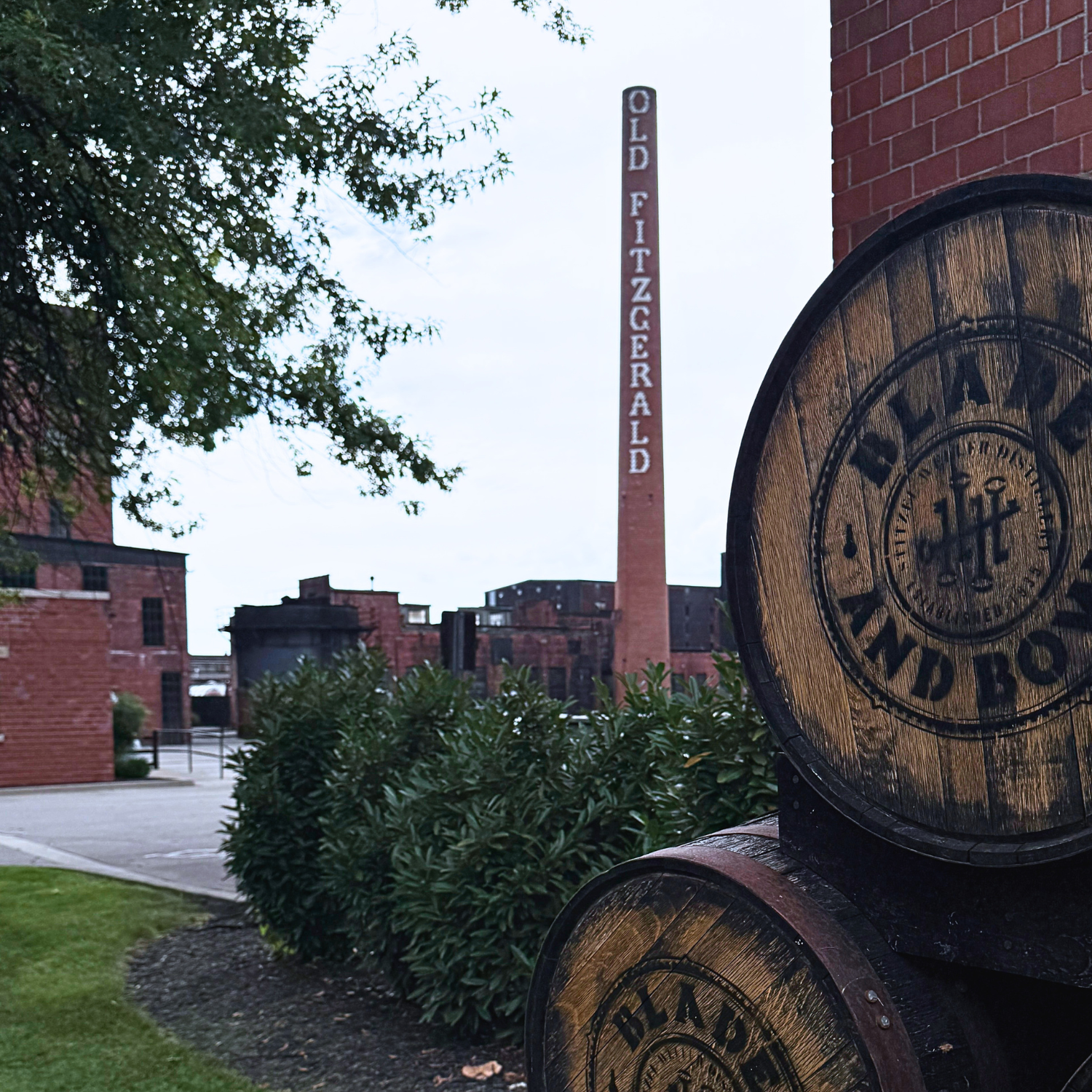
To celebrate their landmark 400th episode, The Bourbon Lens crew heads to one of the most hallowed sites in American whiskey — Stitzel-Weller Distillery in Shively, Kentucky — for a sit-down with Nicole Austin, Diageo's Director of American Whiskey Liquid Development and Capabilities. Nicole pulls back the curtain on the mystery of why decades-old bourbon aged in Stitzel-Weller's rickhouses defies the conventional wisdom that American whiskey "expires" past a certain age. The conversation covers barrel consolidation (topping off), the historic rickhouse design patented by Frederick Stitzel, and the launch of the new Blade and Bow 12-Year Solera — a 104-proof, sub-$65 bourbon built using a fractional-blending Solera process borrowed from sherry and adapted for American whiskey.
Main Themes
- The "magic" of Stitzel-Weller's rickhouses — why extreme-age American whiskey (25–40+ years) is proving possible here, and how airflow, rickhouse architecture, and shade trees may matter as much as the mash bill.
- Barrel consolidation ("topping off") — a labor-intensive practice borrowed from Scotch and Canadian whiskey that halts the "snowball effect" of angel's share loss and staving damage in half-empty barrels.
- The Solera method, Americanized — how Nicole adapted sherry's fractional-blending system into a 12-year-minimum-age bourbon blend using vintage cognac, port, muscatel, and Bordeaux vats.
- Craft philosophy over collectibility — Nicole's approach favors consistent quality and drinkability over hype-driven, numbered limited releases.
- Proof point and dilution culture — a pushback on "proof-chasing" in the bourbon community, and why a 104-proof whiskey can outperform higher-proof releases in balance and accessibility.
- Bourbon history and place — Shively's forgotten legacy as a distilling capital, and Stitzel-Weller's connection to figures like Julian "Pappy" Van Winkle.
Featured Guest
Nicole Austin — Director of American Whiskey Liquid Development and Capabilities, Diageo. Former general manager and master blender at Cascade Hollow (George Dickel), now overseeing extended-age and innovation projects at Stitzel-Weller, including the Stitzel Reserve line and Blade and Bow.
Featured Whiskey
Blade and Bow 12-Year Solera Bourbon
- Minimum age: 12 years (in new American oak)
- Proof: 104
- MSRP: $64.99
- Process: Fractional Solera blending across vintage cognac, port, muscatel, and Bordeaux vats
Quick Links
Get every episode summarized
Each time Bourbon Lens publishes, we email you a written briefing from the transcript — the topics, who appeared, and any specific claims, with the ad reads skipped.
Email me new episodesFree for 3 shows. No card needed.
Hosts & guests
Transcript ready
917 searchable segments. Every word is indexed and playable.
Full transcript
Bourbon Lens — 400: Stepping On Hallowed Ground A Sit Down At Stitzel-Weller. Machine-transcribed; use the interactive transcript above to jump the player to any line.
If you love bourbon, if you love whiskey, you're gonna love these conversations. So make sure you subscribe to the bourbon lens starting now. Welcome back to another episode of the bourbon lens with your host Jake and Scott. In this week's episode, we celebrate two things. One, our 400th episode and two, being at one of the most historic sites in all of bourbon. So sit back and buckle into the latest episode of the bourbon lens. We are joined by Nicole Austin and she will tell you her title here momentarily because it is too long and I don't remember it. But we are excited because they have a brand new whiskey out. That is one, a amazingly affordable, but two, the most important thing is delicious. So Nicole, tell us a little bit about your title here because it's about three card links. It is. Yeah, that's why my bio is so long. Exactly. All the titles are like 10 letters. My title is director of American whiskey liquid capabilities and development. Okay. Write it down. Write that down.
We'll send you the test later and your prize is a gold star. But we're excited because this hollowed ground has really kind of been on a heater lately. If you've not paid attention, there has been amazing liquid that you all have been able to really bring to life for the consumer. Thank you. I'm excited to talk about it. We'll talk about the slayer here in a minute. There's been two projects that really predate this that I want to give some shine to. We were here and got a sneak peek of one of them. It was a year ago. It's been a while. It's time flies. What is time? Exactly. We just make the most of each day. Let's first talk about what you all have been creating in these extended aged experiences that you've brought to the consumer. Yeah. That's been such an ongoing fund project. When my remade expanded, when I was given permission to expand outside of Cascade Hollow,
obviously, since the while I was the first place I wanted to go, as you said, just the legend of this place looms so large. I was just so curious about it. There is the magic, exactly, if it's all separating legend and myth from fact and just really using my access privilege to get to know this place that I've just been so curious about for so long. Pulling the inventory reports here is one of the first things I did. There's some really interesting stuff. I just started coming through it. I just sort of curiosityed more than anything else and hoping that I would find some gems, but not knowing anything. One of the things this place got quite famous for was that initial fame moment in the late 90s of a really old American whiskey getting a very high rating. Which everyone thought was not possible.
That American whiskey had an expiration date, a year pass, which is not good anymore. Those late 90s or early 2000s releases sort of defied that and that's why I got so famous. It surprised people. I was just curious, is that repeatable? Is that something that's unique to this place? Was it the distillery, the mashville, why? How? Dug into the distillery quite a bit. There's some interesting past eras, which were I'm not ready to talk in detail about, but hopefully I will soon. The stuff that got famous would have been late 70s, 80s distillate. The distillery at that time was actually not that different than a distillery that I would build today. In terms of the materials, the way it ran, the equipment, hammer mills, mashings, fermenters, commercially available use strains, the large typical column pot really wouldn't look that different than a distillery you'd run today.
Obviously, there are consistency and attention to detail and quality was exceptional, but it didn't seem like you could point to one thing in that place and say, oh, that's the magic of Stetsl. Even the Weeded mashville, which obviously is one of the things that's placed as famous for her, they did make, but they also made Rye mashville that whole time, which I did not know. So I started while I was doing that work, I'm also coming to the warehouse and just coming to see more and more or suspect more and more that that is a little bit of maybe where the magic lies here. Starting to pull down these really old whiskeys, these really, really old barrels, none of which were distilled here, just like before anyone gets super excited. We did have three barrels that were actually DSP KY 16 distillate from 1992 in the inventory. Obviously, I was like, we need to do that. I was so excited. Oh my God. They were immediately, they were like dusty as we were rolling them out of the right side and they just collapsed.
They've been empty for so long. I was like, no. And then I carried the barrel head down like a little baby out of the warehouse team thought I was nuts, I'm sure. But we pulled a lot of other ones and I was expecting what everyone expects, you know, like tanning and acetone and not much else. And I just found a lot that really defied that, not universally, you know, if I just took everything out of the recouses and just dumped them into, you know, altogether took all the 31 year old whisky from that lot and dumped it into a tank, it would taste how you expect. But whereas I might expect maybe one in 10 barrels of that age to be worth bottling or blending, I was finding more like three in 10, five in 10. Yeah. Which is really surprising. And some of them, the consolidation, there's a whole other conversation which I had never really had or seen in American whiskey that made it more like seven in 10 of like these amazing ultra aged whiskeys.
That's how blade in both 30 came to be. It's just been very, it's been so fun and so surprising and really starting to make me believe and kind of lending some credence to the idea that it's the recouses here that are really special. Yeah. Yeah. So obviously those barrels predate your time with the Agio and what makes you, what do you think made them stick around so long? Why do you think those barrels were still here in the rec houses and not had been inventoryed out or like figured out? I think it was just dumb luck, a little bit of somebody just forgot about them or what? No, I mean, they weren't, listen, they weren't lost. We didn't lose them. It was just like in, it was similar to how it was a dick like in the bourbon boom, you know, like a lot of other places really saw the opportunity with these like small little
LTOs and this higher age stuff and sold through all of it. And just that's not really how Agio runs like we're kind of a big brand company and so it's like that's part of what I sort of brought to them and brought to the table was the idea of like liquid driven innovation and sort of whiskey for whiskey's sake and that like just doing that process of like finding a beautiful liquid and then making an opportunity for it instead of like and that's not to knock. I mean, they're incredible at it. Like the Crown Apple, it was the fastest brand ever to a million cases. I think we're like it's insane what they're capable of achieving that I still don't understand the magic of how they do. And I think it's them, but they just didn't there wasn't anyone here like doing that stuff. So you know, you're I mean, I know they've done it a few times, but ideally you're not going to blend up 30 year old whiskey into like bullet. So it just sits down and just get told or yeah, but you said something that's interesting
that like I we we've talked about it and I think it's coming up more and more is like maturation is such an important aspect of whether you're creating the slara or you're trying to extend it age, you know, the experience and you talked about like the rebarrowing part of that. So like, can you explain like what you mean by that? Like is it taking is it literally a one for one into a new barrel so that barrel doesn't leak anymore like what what conditions are you trying to make so that whiskey can go longer? Yeah, it's that is a fascinating process. It's commonly called consolidation or topping off as another. It's a phrase for the same thing. I had heard of it in Scotch and it's also pretty common in Canadian whiskey. I had never seen it in American whiskey. So I was surprised. I was kind of like the first thing that happened, some of the older barrels, the 30 year old for Blanembeau, you know, you pull them down and they're sloshing and they're like half full. And my first assumptions that they have been mislabeled somehow.
And then it was further digging. Oh no, they weren't consolidated. So that process, it depends. It can be as simple as like you have two barrels, one's a leaker. I'm sorry, Zella. You have two barrels, one's a leaker. You dump that out and like put it in the barrel next to it. You know, top off the barrel next to it just so you can get rid of the leaky barrel. That is not uncommon. But then that might be just, okay, you're addressing a specific leaking problem. But the way these happened and in the era that they happened, what I am inferring is that they were taking it on a larger scale to make room in the warehouses. So you're running out of warehouse space because the demand has slowed more than you anticipated and you're making whiskey. So it's a very labor intensive process. These are 500 pound barrels, you know, like moving them around pulling them out, pulling them back in, it's not something you would do casually for no reason. But if you have 100 barrels that are all half empty because they're halfway through their
maturation, what you do is like dump all of that into one tank, you know, kind of like blend it together and then just put it back in those same barrels until they're full. So you end up with, you start with 100 half empty barrels, you end up with 50 full barrels and now you have 50 spaces in the warehouse that you can put new barrels into. So it's just a way of like having the rechouse assets you own hold more physical gallons of whiskey. My assumption is that that was the intent and it was sort of secondary that it happened to deliver this incredible sort of pause in the maturation process, which the, you know, when you're aging very far because barrels are circular, when you get below that halfway line, it starts to be a little bit of a snowball effect of high surface area to volume ratio, a lot of head space in the barrel. The top of the barrel has been dried for a while. Those steves start to shrink, you have structural integrity issues, you know, which makes the
angel share go faster, which makes the liquid line drop faster, which makes the surface, you know, it snowballs all of those things. So this consolidation process really, and the topping off addressed those issues. She had, you're still driving some crazy maturation. I have never seen conjurer profiles like I saw on that 30 year old with some of the higher alcohols, just the concentration of those that I think it's probably happening in some of the other all trades riskies, but you couldn't see it because of the influence of all those other things. So this just process sort of mitigated those impacts and helped keep that like snowball effect from happening. But some of the other ones like the stits reserved for the year old, that was not consolidated. So it is possible without consolidation to get to those ages and still have it be lovely. That's where I think the, you know, airiness of the Rick House is the physical structure
helps protect and mitigate some of those same impacts we're talking about, especially structural integrity of barrels. But like I said before, in the consolidated casks, you know, it's maybe like six or seven out of 10 that I'm loving and wanting to blend with. And in non-consolidated casks, you're maybe at like three out of 10, you know, but just still way more than the zero or one out of 10 I would have expected. But yeah, you know, it's just that they're, it's a different, different approach, different way to get there. And sell those barrels back when they were consolidated. And they could sell those barrels and take them into, yeah, exactly. So I assume it was more like just logistics. Yeah. Now, I mean, it's so cool because finding ways to go further, get bigger, bolder, better whiskey, right? And whiskey goes on a bell curve, right? Sometimes it's great at seven and then stinks at eight, but it's phenomenal at 10, right?
Like it slides away. Yeah. And I think finding ways to see what whiskey looks like at 25, 35, 40 years in America, like you didn't really think that to be possible. I know. But now you're kind of seeing it's actually possible to do it. It's so exciting. Yeah. Because I mean, I never thought we would see an American whiskey, especially coming out of this. Yeah. Yeah. Yeah. Like the Croscene tenors, the craft facilities, they might be able to get there, the notch, you know, on intukas like, yeah, of course, I could see how you could get there. But yeah, I never thought I'd find it in Kentucky. Correct. Is it the big shade trees that have grown up here for hundreds of years that are protecting the Rick houses, maybe? I think it's a bit of all those things. I think it's the big trees. I think it's the windows. I think it's, you know, if you go in, like the Rick structures, very airy, it's not very densely packed. So, you know, there's aisles in between every brown. There are only three high per level. Like, I think that's a big factor.
I didn't realize actually this Rick House design was patented by Frederick Sittle, which I did not realize. So one of the Sittles and all of the Rick House's here with the exception of Z, which is our palatized Rick House were built following the same design. So there's some other folks that have a few, from this era of this design, the fact that we have 15, I think is quite a privilege. Yeah. Well, and it's also like how many distilleries are in urban areas? Yeah. Well, this wasn't. Well, yeah. But it has grown up and changed and morphed into, literally houses all around. Yeah. Cause I mean, Chivaly used to be like. Was Parlin, yeah. And it used to be like the distilling capital of the, I was. National distillers was right down the street too. Like, For a time, this is a really big hub. And people don't, I don't think pay respect to Chivaly, like they probably should
with the history of distillation even here. Yeah. That this is sort of one of the few places where you can see what it was like. Yeah. Yeah. It's definitely like stuffin' back in time. But it's really cool. And I think that's gonna be a project you keep getting to mesh with as you go. And so that's fun. I've already got some new stuff. Yeah. But we do have a new product that is hit in the market. And it is the Bladenbo 12 year salera. And so we have that in front of us. We got to try it, I don't know, a couple of weeks ago. Excited to try it again, cause we won't be on the move this time in hot rickhouses trying to go in. Yeah. But, like I said, in the opening, two things I love about this. One is, it's a 12 year age shade of product. Awesome. But two, it's also extremely affordable, right? Like that's in today's world. Affordable, great whiskey is something that you're looking for.
I hope this checks both those boxes. Thank you. That's what I was hoping for. You know, it doesn't, if nobody drinks it, it's like, it doesn't really matter what you've accomplished, you know? It's meant to be, drank, it's meant to be shared. I want people to feel like there's a lot of value in that whiskey, you know, they're like, they're getting like way more than they paid for. That's what I was aiming for. Well, there's a ton of value in it. We're going to unpack this because there's a lot that goes into this. And so I think the first thing is just making sure we understand the label. And the first word that people probably don't understand on the label is the word salera. Yeah. So please unpack that. Happy to, happy to, yeah, that's perfect. Thank you. So actually fun, fun facts kind of going back to the OG of salera. So I used to work for Dave Pickle and legend, right?
Man myth, a legend. And he, one of his huge points of pride was he was the first person to get TTV approval to call something a salera bourbon. And that was with Hilara. Yeah. And I mean, that was a really beautiful whiskey. And I just remember thinking that was really clever, like he was a real point of pride for him. It was a way of, you know, addressing like how to make beautiful whiskey is like craftest stillery. And so I was really inspired by that. I remember taking that and thinking like that's a really interesting way to get to where we want to go of like a very complex whiskey. So I'd had that in my mind for a long time. Salera in general, it can be a bit confusing because salera process is typically used in sherry. So the most common place you would see it is sherry. And they have some pretty specific rules around like how that happens. It's typically like one third fractional blending. So you know, proportions, everything is quite prescribed.
And when you see that in like an explanation, it's usually it kind of a triangle shape of barrels where you have the like youngest sort of feeder barrels on the top and it gets less than less. And you have kind of usually in the diagram one at the bottom, but it's never really one where you take sherry out of that and then you top it off from the two above it and you top those off above them. And so it generates this fractional blending process where you always have a little bit of very old sherry that continues to age and develop complexity. And then you're regularly mixing it with younger sherry and the two things are interacting and like driving complexity and flavor development. So that is how most people, if they've heard the term, it all would have heard it. Yeah. Here, we don't have the same like tightly prescribed rules. So in general, it's just understood to mean fractional blending. So blending old and young stuff together and like leaving it for a period of time.
So in this particular case, the youngest whiskey I'm starting with is 12 years old. So that 12 year age statement is all time spent in a new American Ocast. So in some of them, much older than that actually, some of them are as old as 18 years, some of the whiskey's I'm using. But so it starts as a 12 year old bourbon blend and then I am fractionally blending it over time to create the mark for this product. My particular salara adds other layers of complexity, but that's the basis. That's the idea. And so in this, I love that you explain the age statement too, because like that's always something that people ask, like, Hey, what's that mean? Well, there can be older liquid. Yeah, it's minimum, it's a minimum age of an unlike shareier, some others. Yeah. You know, this is no droplet liquid in that bottle can be younger than 12 years old, but you can be infinitely older.
And I forget the proof point on this one. That's another fun thing. All right. Here we go. It's over 100. We're probably 104. Yeah. So not only you're not getting this diluted down experience at that really affordable price point, you're actually getting something at a proof point that the world will enjoy, right? Like because this, guess while it is uniquely American, this, you know, probably leans into some scotch drinkers profile and palette. I think so. Japanese like that are used to, you know, multiple cask blends together to create that experience because we act like sometimes we've created the wheel here in America. Yeah. Well, we have it when it comes to a lot of whiskey-making techniques. And so we're behind everyone else. Definitely we were in front. Whiskey to Stilling was legal here before it was in Scotland. Just saying 1798, George Washington was distilling. And it wasn't legal in Scotland until 1812.
Good old one. Good old wooden TV. Maybe get you some room. But you know, it's, it's just, you know, you adopt practices and see how things go. And I think this is like secondary maturation and this solaria product. Like this is kind of where I think America's headed because it does allow the burdens is still shine or the American whiskey to still shine because you're fractually bringing together this overshared product or overconiac product, right? It can be brought together in a cohesive experience. That's what I was hoping for. So one thing I'm glad you mentioned the proof because I did pour it for you all on a rock as well. Because I think this is a great way to drink it. It's a quality enough whiskey that really stands up to that kind of dilution and just makes for a really complex and pleasant and evolving whiskey drinking experience in this format. So I think we should try both. Yeah. Roughness. I love to drink it this way. Also, it's a Kentucky summer. So on a rock is the way. But when you talk about the secondary maturation, that's what I really had in mind
when I was designing this product, you know, you can see I agree the scots in terms of the complexity and the delicacy and the finesse. They have really landed it with secondary maturation. Folks, you just asked me all the time, like, was I going to do whatever whatever finished bourbon? I'm in a world where Bill Lums are in exists and like he's there's, I'm just never going to be that good as him. Like and all these beautiful Glenn Moore and G finishes he's been doing. So I don't know if I'll be futile. But then it became sort of an unavoidable thing. You can really see people love it. And of course they do like the flavors of port and cherry and cognac and different barrels that they're interesting and they're complex and they're lovely. The two shortcomings I saw most commonly in American finishes was either, like you said, they're so one note, you know, it's like bourbon and port. And you might as well have just mixed the two things together and glass,
you know, and gotten probably a more balanced experience or the timing could be really often difficult. You know, when you're putting a higher proof spirit into a cask that maybe only held a relatively low a BV wine, you can get a lot of extraction. If you don't time exactly right, you can have these beautiful aromas of like fruit and date and rate or whatever from the finish and then you sip it and end up with a really tannic kind of a stringent experience that's really in congruist. Yeah. And it especially in like cocktails or under delusion, that really overpowers and just becomes a low quality drinking experience. Yeah. So those are the two things I was really trying to avoid. So like, how do you capture what's beautiful about this, which is these complex and interesting fleavers that are not naturally found in bourbon that really add to it without falling into either of those two tracks. So my this sort of unique salera process is what I had in mind of how to get
there given the constraints of like our environment. Like you talked about how to get to that place. And so with this particular production with this salera, I did a few things to avoid those pitfalls. One is I only used vintage facts. So that were actually used in the production of those things that they contained before and people actually drank what came out of them. Yeah. So I think a lot of people don't realize as well, you know, the world's demand for share. He does not necessarily keep up with the world's demand for share. He cast finished products, you know, et cetera. So sometimes those cast are just like seasoned, you know, with share and then like no one drank their stuff that came out of there and so, you know, quality. We are an end of vinegar. You know, so that's quick comment. Pro I only sourced wood that had actually been used to make a thing that people drank a product that someone had pride in and cared about. And also that I got to taste and like new was legit.
Then the other thing I did was only source large format vats. So not like 53 or 63, but the smallest is a punch in. So most of them are very large, like kind of literally tank size. taller than Jake taller than Jake and rounder than a mountain. A small Kentucky mountain. They're very large. Yeah, the big and that helps manage the surface area of volume. Right. So you just kind of steps out and also because they had been in production for a while, they're a little more extracted wood. So you get what's beautiful about cognac and musk talent port without some of those traps. So those were things I was thinking about. And then also to get to complexity. So to avoid the like, we might as well just blended bourbon and cognac together. If you wanted is blending all of the marks from these different saleras. So I run a salera in a cognac fat and a salera in a port.
And then blend those marks on a bench scale when I'm getting ready to bottle to make sure that all of those elements are in balance with one another. And actually I brought you some pretty recent samples from some of the individual of that. So you can see a little bit maybe how I got there. A good time deconstructed tastings. I think are one of the coolest things out, right? Because that allows the consumer to see an end up in the middle of the day. And then the consumer to see and not everyone's going to do this. But like allows people to like really say, oh, that is what Sherry and bourbon did together. And now I can see it as part of the whole. And I just heard like Richard Patterson just, he has a quote in and I was just, we talked about it on one of our latest podcasts with the Dalmore. And he was like, if you're, if you're using the cask to just get the Sherry extraction, he was like kind of something, but it's about the wood, right?
It's making sure that you get the right flavor profile at the right time and then gone. Yes. And on to the next thing. Yes. And the timing of that is very tough to know. Yeah. I mean, that's got to be ridiculously hard. And like we've seen a very, very, very small amount of samples that you all did to create your marks. It was like literally the entire lab here at Stitzel when that was like one third, you said. So you all have definitely been honing in on the process. Just typical meat like takes something in, make as complicated as possible deliver. Got it. Got to have it. Got to have it. So what parts of the, the different slayer is made it into this blend in particular? So this is, there's some muscatel, some bordeaux, some cognac, and port. Okay. Now you have more levers you could pull in for different releases than along.
Yes. Yes. So my goal, I'm not doing this as like a collectible situation like different numbered releases. Yeah. Because I find that a bit tiring. It's, you know, so what I will be doing is every time I sit down about all the Swiss key, I'm going to be thinking about like, what's the best whisky I can make? Not going to perfectly match the thing for a last time, but I'm still using the same process. I'm still, you know, I'm trying to get to the same place, which is this really complex elegant bourbon whisky with all of these aromas and flavors of, you know, tropical fruit and raisins and figs and like all these extra things that those things add. And maybe I use port, maybe I share, you know, maybe I use muscatel, maybe I go get some Tokai, which I would love to get, you know, like I might get it from different places,
but ultimately I'm trying to create blending marks that sort of give those same characters. So you shouldn't, you shouldn't see the work. Like it's one thing I kind of think about. I remember I was explaining this to somebody and if you know me, I'm a horse girl, right? Ride horse is considering retirement because it's got some holes in my brain, but one of the things about horseback riding is it's just when you're doing it really well, it should look like no work at all. Yeah. And in some disciplines, you're even sort of graded on that, right? Like how effortless does it appear? And so if you're really, really good, it can look super easy and look effortless, but it is not, you know, like underneath, there's a lot. It's the, you're working hard the whole time. I want it to be similar with this, you know, like you shouldn't see the work that I'm doing behind the curtain. Like it should be just this elegant artful product that you can just appreciate for what
it is and I'm doing that all behind the curtain. The old duck on the water indeed. What? You're talking about the, okay, you know, the feet beneath are paddling. Yeah, you don't see that. You see this effortless death. Exactly. Just enjoying the water. Exactly. So let's, we just tasted it. People saw that on screen, but let's taste it. The goodness. I've tried that. I know. It's so good. Okay, so I like to ask this question in particular. Don't tell me you're tasting notes, but what should people expect with this first iteration? Complexity. Complexity. Allegans. Delecacy. A bit of a surprise. So it should not read to you as a, it's not a finish, right? It's not a cast finish. It's not a port cast finish, urban. It's, it shouldn't immediately read to you as like, oh, this is a cast finish. It should read when you put your nose in the glasses like this is a much more interesting
bourbon than I've ever tried. And is this a ride base or a wheelbase? Yeah, it's a ride. Okay. I've got something that's not disclosed because there's things from all over the place that could end up in here. Yeah. And so I just didn't know. Yeah, these are all ride, the third grain is a ride for all of these. And yeah, source from all over Kentucky. Yeah. And what I like about this is the tropical note is something you don't expect. You talked about it up front, but like, there's that like coconuty pineapple, like beach vibe that you get on this. Yeah, almost like a guava, you care. Yeah. Tiki style. Yeah. Yeah. Yeah. Which is, which is fun. Like I just, I like that just kind of, you know, experience that right off the rim. Yeah. But then that's not the only thing that's gone on. Like there's like, also you go back in and there's like fig and yeah. Yeah. And that's like a Mediterranean vibe to it. Right. So I think you, this is a glass you come back to probably 10 times and get 10 different tasting notes.
Yeah. Yeah. Yeah. Yeah. There is a lot there. Yeah. That's the idea. And how do they, how long do they mingle before bottled? It depends. So that's, I brought you today, like, so we're regularly sampling the vats to see when I'm happy with where like an individual vat is at before I pull some of it out. So and that'll depend on like, with you have available and what tank space, but maybe I pull half or 70% or each cent of the liquid out when I'm happy with where the vat is. So regularly monitoring those and saying, okay, we can pull out of the cognac vat now. So we pull that, put it into seamless, hold it till I'm ready to bottle top off. So that's the fractional blending top off with that 12 year old blend repeat. Shortest we've done it is like three, four weeks. Okay. More typical is like three to four months in that period before I'm happy to kind of take out and top off.
And then you end up with all these different marks. So like tank two, tank five that has like something out of the cognac vat and something of, and then that's when the blending gets really kukuk. So it's like, okay, what gallon do I have in what tank? And I'm going to use these three cognac ones and that and you can really begin your own head. So do you feel like a chef when you're doing this? I feel like a crazy person. Yeah. And then you can also really get this is one of the first ones actually at Diagio are worked with other blenders. I tend to be really rogue on my own. But Gabe and Dee helped me with this because there's so many marks and you can really get into the like should it be 14% or 15% or 16% of this one element and there are so many factors. It goes so much faster if you have somebody next to you to be like, yep, I agree that one is better and you don't waste time. You like converge more quickly. So that was really helpful. So like on the finish, I'm not getting a lot of like the tropical fruit that's the
sort of top out. Yeah. But like on the finish, I'm almost getting like a roasted coffee note. Then I don't know if it's like some of the oak characteristics or. I think that's the word home. Yeah. Which has that more tiniq like structure. Yeah. And a little bit of almost like nuttiness. Yeah. Well, that's the note I got was like nutty. I'm like, that wasn't expecting that. But didn't like you realize like we can drink it neat. I think you get appreciation for the fact of like how viscous it is. But then like you pull up this glass. Yeah. And then you just see all the oil separation. Yes. Not chill filtered. And I think that's what's. No, I think I did like to the I did lightly chill filter this one in the end, I think. But like there's a lot of oil and complexities. Yeah. That come out like when it's on a rock and that water has diluted into the. I think that gives it even a more roundedness. Yeah. And it's perfectly fine.
I need. But this is like, yeah, this just makes it like, oh, I could session this at a pool. And this to me, that's almost like what this is meant for because, you know, I'm not watching the beautiful ballet. And like we're dissecting it because we're nerds. Yeah. So it's appropriate that we're calling. We're calling. Not calling us out for doing this. But like, I don't know, you watch the ballet. You're not like, oh, like her wrist was so level. You just appreciate the whole thing. Correct. And like, wow, this is a gorgeous. Yeah. A heart full experience. And I think this way of sipping it, this like on a rock, just, it's just pure pleasure. It does. And it takes the pinkies out mental to pinkies in. And it's like, everyone can enjoy this. Yeah. Yeah. And I've noticed too, because I typically put some ice in my whiskey. Like, when I'm just wanting to more casually drink it, not dissect it, overthink it. A lot of whiskey's fall apart when you put ice in it. For sure. This is another picker. All right. He was like, some people, a lot of people hide flaws with high ABB. Right.
You just put ice cube in it. It just falls apart. And you're just like, what happened to that whiskey that I thought was really good? And this one just, it still has body and character that isn't just like, oh, it's now the last step of this, you know, at 20% or whatever, it'll be deleted too by the time you get to it is lovely. Well, and I think that's where we're at a crossroads with the American whiskey. The consumer versus the people who are telling you what to drink. Yeah. I'm not going to call them influencers. People tell you what to drink. Because there's really good whiskey at all proofs and all shapes and sizes. I think we got all in great to that. But if you're only chasing 120 to 140, are you really getting the full picture of what that whiskey is? Or like, maybe it only went into the barrel at 125. Yeah. And you probably taste it closer to 125 versus 140, at least to understand the principle of what it's supposed to be. I just feel like everyone's chasing proof right now.
I know. And proof is something that it blows my palate out. I don't necessarily enjoy it all the time. Yeah, I don't live it. And so that's, I feel like this shows you you can have really great whiskey at the 100 to 110 mark and be really happy with it. I mean, there's some, so a few, like for example, some of the stutts or reserves, I'm releasing all those at cast strength because for two reasons, one, well, three, one, because people want it. Like you said, people want it. They're chasing it. But also, I want you to see it just how it came out of the barrel. And like, I'm selling that to a collector to a connoisseur or someone who I trust is going to make their own choice about how to drink it, whether they want to drink a cast strength or they want to do some dilution. And then also, can't at least some of those really old whiskeys don't stand up to dilution that great. Correct. So like, yeah, if I'm going to drink the stutts or reserve 31, I'm going to drink a cast strength. Like, it's lovely.
It's balanced. Like you said, probably not tasting a ton after that. But also it's a thousand, a thousand dollar bottle. I know that that's I'm having one drink, you know, and I'm savoring it and I'm appreciating it. And that's a great way to experience it. But yeah, that's not the only, that's not my only, that's not what I typically do in an evening. Like, I'm way more likely to pour a glass of this on a big rock. And this is what I would consider the most enjoyable whisky experience. And the original cast strength releases, like when that started becoming a thing, I can say most of us never intended for them to be drunk that way. It was more to allow consumers to have the experience of diluting it themselves. It's like all the aeromatics that get released during the dilution process are so beautiful. And you get to like sort of, you know, we used to talk about it like, oh, it's like 20 different whiskies in the glass. It's like, you had a little water and you tasted it and you had a little water and you get another one. Like that was the point not to drink.
That was the intention. I don't think those people got the number. So many of them. I'm like, I'm just going to take this 140 proof to the face. Right. So funny because like, you know, like even Scotch drinkers, they dilute down at 86 proof. Yeah. Yeah. My husband, Scottish, and you know, when we pour a glamourgy result, like he has a lot of water. Yeah. And like everyone I've met over there adds like not a little dropper, but like an I opened the tap and like doubled the volume and that's how they drink it. Just go watch Richard Patterson smell glass and then I'll never be able to have that kind of ego. I can't do that. But it's so funny because he does the same thing. He's like, put your finger in the water, make sure it's the right temperature. Yeah. And then dump it in there and it is what it is. Yeah. I'm not like tear dropper measuring it. It's like, glugged. It's supposed to be a science experiment in your own super fun way. Yeah. And that's the nerdy part about bourbon and whiskey that people, I feel like we just miss.
It's like, oh, like look at me drink this. And I'm like, no, how about you try it like 20 different ways? Yeah. All in your glass. Because you just paid $300 for it. Why not get a variety of different pours out of that $300? That was the intention. But with this one, you feel bad about adding that big rock to it. Right. Because it's one or four because it's a good proof point. And also, it's not astronomically expensive like some 140 proof whiskey's are. Yeah, should be our MSRP is 6499. That's so much fun. I should not solve that. I was like, uh, what? Yeah. Yeah. Yeah. Yeah. Like, I think that's the beautiful thing about this is if you find it in the market. Like, it's one of those things that like, it takes the disciplines of like all the work that you've done, right? And I think that's really kind of the cool thing is people like, oh, Nicole worked at Dickel and like, you're going to get Dickel. Like, that's a special, special whiskey from a special place. But you also have so much more background than that. Like, and it's kind of really like, not your swan song because you got a long career
ahead of you. But like, it's your ability to take all the things you've learned and put it into an expression. And I think that's the really cool thing about it because it's also like, hey, this is my artistic viewpoint of how world whiskey has actually impacted American bourbon. Which is, which is really cool. In doing like what's right for that place. Yeah. Right for the whiskeys that are here to show them to best advantage. So yeah, I would, that probably wouldn't use this approach at Dickel. It wouldn't be appropriate. Yeah. But here where maturation, like I said, if so much of what makes this place so special and beautiful and I don't know that this place is always sort of known for being among the best. Yeah. You know, so you got to live after that. Like, that's why this is the appropriate place to really think about like, what's the best possible whiskey I can make? What is the best bourbon that I can put in a glass? It seems like anything less here to do anything less would be just not appropriate.
You know, and a place like so it's all. So those are things that I might, but that's not, this is where I am now. Is where I'm focusing now, but I appreciate you. Yeah, it's not, it's not the everything. It's not the totality of what I can do. No. And you've got a lot of tricks up your sleeve and we'll wait to see what those tricks are. Because there's hollow grounds with many barrels here as you've been spending time here, but you also have North America as your playground. It's such an honor. Like, just, I'm still not over the amazement of like, we're next to Papi's office. Like, I can go pee in that bathroom whenever I want. It's insane. That's the same place that Papi did. It's a game believe against you do this. Like these barrels are. I mean, ish to do what I think is best. Just such a privilege. I'm like, I'm not over it. It's still so exciting. Yeah, I can't wait to, I mean, I feel like I'm only scratching the surface with what this place can do. Do you ever feel like I shouldn't be here? Like I shouldn't be in this rechouse looking at these barrels that are this.
Yeah. I just am grateful that like no one's noticed. Yeah. Nobody's kicked you out. Yeah. It's like no one's been like, wait. In the hunt for information, I found some really beautiful like vintage whiskeys with Noah, we're off on, we're here and he's like, you can't open that. Like, who's going to tell me now? I can open this bottle. Who's going to tell me now? Yeah. And I am just like running as far as I possibly can with that until someone tells me no. Yeah. Huh? Well, if you're in Kentucky and you're coming to Louisville, still to well, there has to be a stop that you do because it's going to give you so much just background on what bourbon was and what it has become. And they have a great gift shop where bottles tend to show up if you have the wallet for them. Follow us on Instagram. Exactly. Right. That's how you find out about our drops. That's the best way.
It's really cool. We were here on a random day and they were like, hey, do you want to buy? It was like $900. I was like, I don't know if my wife would appreciate that. But I would appreciate it. But you know, stop here. Enjoy the history. Enjoy the experience and go to Garden and Gun Club. Try all the whiskeys because you all have created a lot of great things. And so we appreciate you being a partner on this 400 episode and sharing the Salar Reserve with us and make sure everyone goes by his bottle. They should. Two. One. Ten. At least five because you have to get one of them every key. That's right. That's right. That's why I said by ten because you probably got your odds. I just buy all of them. Please and thank you so that I can continue to be employed and keep doing this. Exactly. Well, thanks everybody for listening to this special edition of the bourbon lens on our 400th episode. We'll catch you next time. Cheers. Cheers. Thank you for listening to this episode of the bourbon lens. If you want more exclusive content, go over to patreon.com, backslash bourbon lens, and join
our growing community. If you just want to stay friendly with us, you can go over to instagram, x, and facebook, and follow us there. Also our youtube page is growing and we're producing more content there like Thursday thoughts and five minute Fridays. So don't forget to smash the subscribe button and catch all the content that we are producing every week. Until next time, cheers.
More episodes
More from Bourbon Lens

399: Why New Riff’s American Single Malt Changes Everything
Bourbon Lens

Chef Brian Landry on Food, Music & Bourbon: The Kitchen Table Story | Thursday T...
Bourbon Lens

398: Penelope Bourbon 5 Years Later: Danny Polise on Growth, Blending & the Clas...
Bourbon Lens

Wyoming Whiskey Is Back in Wyoming Hands: David DeFazio on What's Next | Thursda...
Bourbon Lens