About this episode
Hosted on Acast. See acast.com/privacy for more information.
Get every episode summarized
Each time The History of England publishes, we email you a written briefing from the transcript — the topics, who appeared, and any specific claims, with the ad reads skipped.
Email me new episodesFree for 3 shows. No card needed.
Hosts & guests
Transcript ready
641 searchable segments. Every word is indexed and playable.
Full transcript
The History of England — 442 The Treaty of Dover. Machine-transcribed; use the interactive transcript above to jump the player to any line.
Hi, who here loves when their nails are perfectly done? Me, I'm Sarah Gibson Tuttle and I started all of in June because let's be real. We all deserve to have gorgeous nails, but who wants to spend a fortune or half their day at the salon? And that's why I created the Manny System, so you can have that salon perfect manicure right at home. And guess what? The best part? Each Manny only costs $2. Yup, you heard me $2. Some are 30, 40, 50 dollar salon trips that eat up your day. Now you can paint your nails whenever you want, wherever you want, and trust me, you're going to be obsessed with your nails and everyone is going to ask you, where did you get your nails done? And here's a little something extra. Head over to oliveinjune.com and get 20% off your first Manny System with code perfect Manny20 at oliveinjune.com slash perfect Manny20. That's code perfect Manny20 for 20% off at oliveinjune.com slash perfect Manny20. We're all set for a nail glove. Let's get those nails looking fabulous, shall we?
Hello everyone and welcome back to the History of England episode 442, the Treaty of Dover. Last week we heard about some cultural flim flam and stuff. I'm sorry about that. Although we did talk about the cabal in Claren't and two, it's got to be said. Anyway, there's going to be a bit more cultural flim flam this week as well, I'm afraid. But then we can build on Charles's aim to rebuild the prestige of the monarchy and base his rule on the good solid principle that a monarch must be able to do as he chooses and follow his heart. First though I would like to introduce Nell Gwynn to you, although on the way we should also discuss some darker aspects of our guide and companion Samuel Peeps, which has been in the news recently, and I should also say a few things about the presence of the enslaved in English society at this time. Then we can talk a bit more about Nell, and a very small bit on Restoration Theatre and it's back to the knitting, the political knitting, which I suspect you are all really
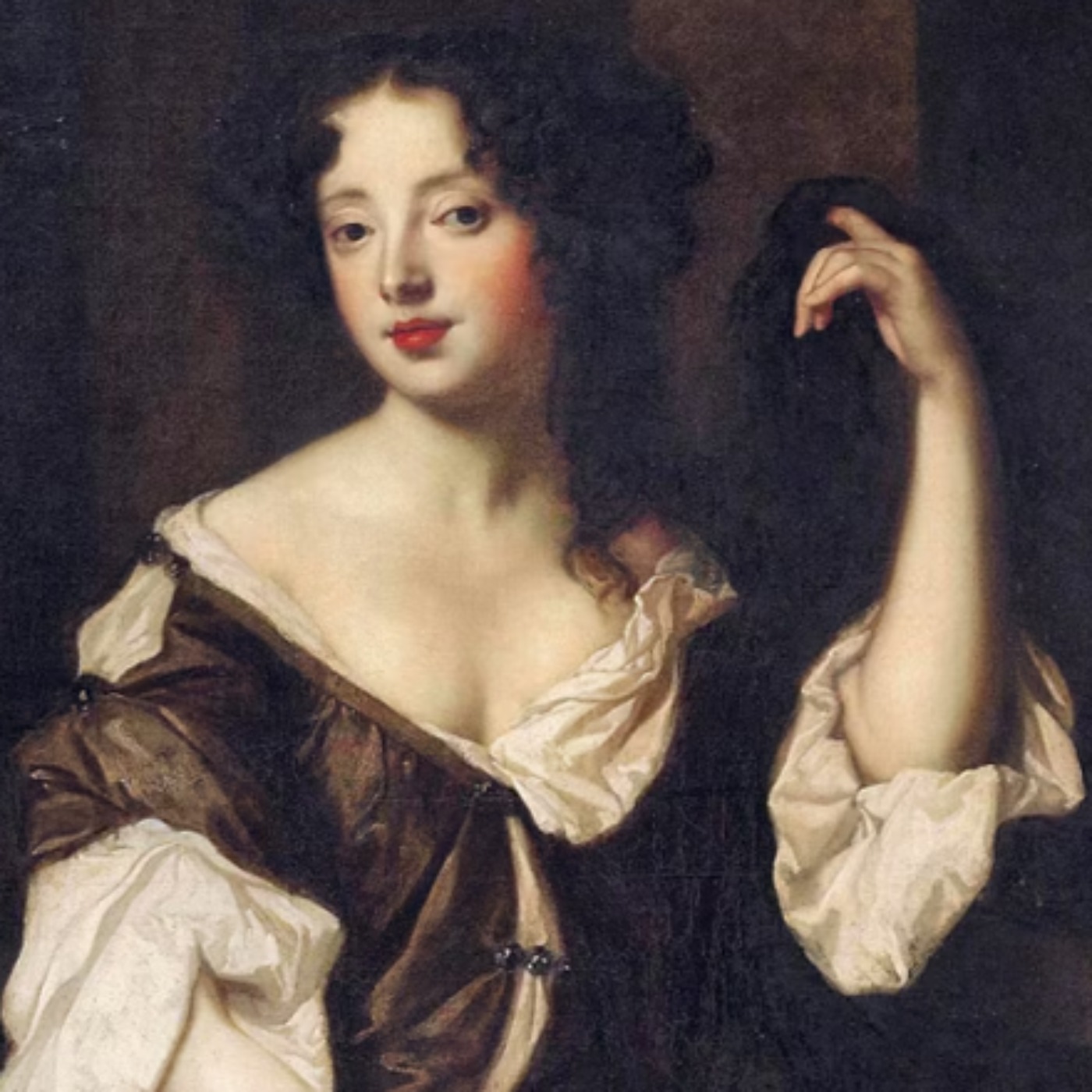
here for. Is that a plan? It is a plan. So on April 3rd, 1665, Peeps went to the theatre with his belief, and although he wasn't impressed with the play he saw at the King's Theatre, he had a great time, largely because as he wrote, the King and my lady Castle main were there, and pretty witty Nell. Pretty witty Nell is a very famous phrase which introduces us to Nell Gwynn and tells us something about Peeps' continually roving eye. Nell's place of birth is very obscure, but there's a contemporary astrology reading in her life, which means we can place her birth as the 2nd of February, 1651. So, at the time Peeps saw her, she would have been just 14, and the tone makes it seem to me that he probably knew who she was anyway, I could be wrong. She's very clearly out in the world, as they say, and Peeps was probably not alone in finding her attractive, despite her very young age.
That brings me on to a relatively recent discussion about Peeps as a sexual predator. Books by Guy de la Bedouir and Kate Loveman have uncovered something of the historiography of his diaries. Most of them were encrypted, and so we have always been reliant on what I suppose you might call edited translations, and what became clear is that during much of their public life, they had been analysed, stripped of some very problematic content, and some frankly nasty content to do with his sexual adventures and thoughts. Peeps was clearly a sex pest. There's quite a famous section where Elizabeth Peeps discovers him in an affair, and exact say certain amount of vengeance, but that's in a way probably the least bad almost. There are several examples where he elicits sex from married women as payment for their husband's getting advancement at work. Mades in his household, and others, had to deal with Peeps' constant tensions, and one
of them, little tucker, may have been somewhere between twelve and fourteen years old. He's caught groping another maid, Deborah Willett, at the age of seventeen, and so Elizabeth dismisses her. This would have been subject full force of the law in our day, but according to Dullab Bedware, his treatment of little tucker would also have been as disgusting to the seventeen century mind as it is to ours. Through all of it, Peeps' tone is the one he recognises he's got to keep this stuff secret, and it's very little sense that he feels guilty about it, or even tries particularly hard to stop himself doing it. It also seems that Peeps had invested in the slave trade via the Royal Africa Company, which is not at all unusual at this time. He actually owns an enslaved person who worked with him in the admiralty. In 1680, one of his colleagues sells the man he refers to only as his negro at his request. He's not alone.
There might have been in the region of five thousand to black people in Britain by 1700, and a good number of them were effectively enslaved. It's a little complicated, where the start only of Britain's systematic involvement in the transatlantic slave trade, so it's not at the extent it will grow to in the 18th century. But by and large, at the time, no one really objects to the trade in enslaved people. They consider it a sort of necessary evil. Also there is a likelihood to associate slavery with white enslaved people in North Africa as black Africans. Normally, most people would say that you can't be a slave in England. Edward Chamberlain in 1676 declares that a foreign slave brought into England is Ipso facto free from slavery, but not from ordinary service. Despite this, and although the racism of the 18th century has yet to fully evolve, black people have seen as something different as other and having a black servant as seen
in high societies fashionable. In practical terms, what that often means is enslavement. So Charles II, for example, buys a black page-boy from the Marquis of Antrim for 50 quid, and the contract is with the Marquis, not with the page-boy. Still, when the law gets involved, the air of England is still assumed to act in line with Sir John Holt, the chief justices words that as soon as a Negro comes into England, he becomes free, one may be a villain in England, but not a slave. This rule was applied to Deena Williams, for example, who was a black servant, whose employer tried to sell her to a slave trader in 1667. Williams refuses to go, and the court rules in her favour. Right, so we are after a difficult start to the podcast, but these are important aspects of English society of the time and they do need to be covered. But let us now get back to where we started, and to Nell Gwynne.
As I say, Nell was born in 1651, but no one really knows where she was born, or even who her father was. We know she has a mother called Helena and a sister called Rose, but she's not posh, that's for sure. Tales of her early life are Legion, Raking Senders, or a street vendor selling herrings. But Peeps tells us that she claimed to have been brought up in a body house to fill strong water to the guests. We first hear of her sister Rose, who may have petitioned Henry Killigrew to help release her from Newgate Prison. Killigrew was the owner of the King's Theatre. It's a bit of family history that Nell never forgets, despite the richness of her life that her looks and wit earn her, because she donates money to release debtors from Newgate Prison when she dies. Also, she leads a request for Catholics for showing my charity to those that differ from me in religion, as her will puts it.
Anyway, I'm getting ahead of myself, but the point is that Spookily Nell first appears in the King's Theatre, and she seems to have started as an orange cellar, and probably starts acting in 1664 or 1665. This thought she was introduced to acting by a man called Charles Hart, who was also suggested to be her lover, presumably when Nell was 13 or 14 years old. She was a hit as a comic actor, and in a mad part, Duff Beyond imitation almost. Though Peeps was correspondingly disappointed with her performance at anything serious, it does seem to kind of fit with her, because it was her energy wit, shameless vulgarity, laughter, and self-deprecating mockery that everyone seems to love about her, and which would keep her as a favourite for Charles for longer than anyone else. As we know, Peeps loved the world of Restoration Theatre, a constant visitor there going sometimes
for continuous days on end, and sometimes going for twice a day. Rather remarkably, there were only the two main original theatres for a long time, the King's and the Duke's Theatre, and they had been built for a small select audience, so they had a capacity of maybe four or five hundred only. It means that the theatre-going community is actually quite small, the core of audiences was maybe a thousand people or so, constantly going time and time again to plays, and seeing the same people over and over again. The courtiers formed an identifiable and very keen group within that community. The theatre spent a lot of time and effort and money making the decoration absolutely sing. They had deep stages, so they could wow their audience with stunning mechanicals in the background. It's tight in there and hot from all the people and smelly from the people and all the andrels.
Play started mid-afternoon, you'd want to be in your seat by three o'clock or even earlier, the whole thing probably lasted three hours, so you could be out by dusk. Despite the small size and community, there's still all sorts who go to the theatre, Peeps complains about that actually is horrified to see even apprentices in there, though they're not the people who counted, of course. And the work conduct manuals available anyway to make sure that Hoi Pillai watched their betters carefully and applauded only after the aristocrats had started clapping. I'll have a chat with the National Theatre and suggest they bring back some of those rules. It'll go down a storm out of thought. Where you sat in the theatre said a lot about you. One set of options were the galleries, two or maybe even three tiers of them. The upper gallery are the cheapest seats and this is where the servants go. The lower or middle gallery is where the wives and daughters of the professional classes would go, but also the journeyman and apprentices.
Then there are very good seats in the pit, raked tiers of benches in front of the stage, and this is where the professional men went. And according to one, it was also where you'd find bows, bullies and haurs as well. And there were boxes, which is where you'd see the smarter sort, gentlemen, courtiers and their wives or, you know, the companions. Since women always tended to go into the galleries and boxes by and large, there was a sort of fantasy of this senate of women overseeing their male suitors in the pit. And although, of course, many people at the art and culture and all that, sex and sexual tension was everywhere, because having women on the stage was a real, real turn-on for many. I mean, it was also a place to go and see and be seen in the audience too, of course. As one guide had it, many women went, that they may be seen.
Being in the pit or box, she mined not how little she observed as much as how much to be observed. For as the playwright, William witchfully knew, everyone was watching everyone else. Widows and maids are exposed, and everyone watched the fine folks, men that combed their periwigs and women, that looking on their little glasses, did set their locks and countenances. Peeps loved taking it all in, as you would expect, this was his vibe. His favourite spot for people and playwatching was the upper benches of the pit. I find I do pretty well, and have the advantage of seeing and hearing the great people, which may be pleasant when there is a good store. But seeing women acting was a sensation, and everyone played up to it, audience, impressarios, and playwrights. Playwrights are in a really high octane job trying to make ends meet here.
To turn over a place is breathless, a run might be only for a few days. If a play ran for ten, you'd have a hit on your hands. The big thing was to get to three, after which the playwright would start to get paid. As well as a lot of older plays, Johnson, Shakespeare and all that sort of stuff, playwrights like Dryden, Shadwell, Vambera, Congrieve, churn them out. And among them, of course, and one of the most successful, is also Afraben, who puts on her first play in 1670, and will produce fifteen plays, the most famous of which is the Rover. She is credited with being the first woman in Britain to make a living from her pen. She also had an obscure background, but part of it was spent in the slave colony of Surinam from which experience she wrote, they novel, Orenoko. We showed her dislike of slavery in the person of its eponymous hero, who was a black prince. She's also interesting because she leans into all the sexual excitement of the theatre,
as do the actresses themselves, they really play up to it. There was a rage for what was called Britch's plays, where the women actors wore tight-fitting bridges and stockings. And for many actresses, it wasn't just about titillation, sex was often in the weft and weave of it all. Now would have another affair when she was fifteen or sixteen, and since they had to provide their own costumes, this was how many like Nell, who started without two penis to rub together, could afford to take part. One of the most famous actors of the age was Elizabeth Barry. She had a rocky start until Lord Rochester took her under his wing, which both is and isn't a euphemism, because he took her off for six months, so she could concentrate on learning her craft. She returned in sixteen, seventy-six, and was a hit. And when, in stereotypical restoration aristocratic fashion, Rochester dumped her, complaining that she shared her favours with other blokes, which is as fair a case of double standards as you were ever like to meet.
That didn't hold Barry back, and even though only eighteen, she kept going and is called the famous Mrs. Barry, people queue up to see her. Now some people hate all of this. John Evelyn, among them, complains of foul and undecent win, who inflaming several young gentlemen gallants, became their mistresses, under some, their wives. Nell grin plays up to it too, of course, and peeps his transfixed by her. One of the more salacious activities was to go and see the tiring runes, where actors changed before and during the play, and so you had a fair chance of seeing an actress in a state of undress. Elizabeth Neb is an actress friend of peeps. He writes that she, took us up to the tiring runes, and to the women's shift, where Nell was dressing herself and was all unready, which is very pretty, pretty other than I thought. Can I almost see the dribble on the page? One of the other things peeps at everyone likes about Nell is her fourth rightness.
On this very same day, peeps continued on, but to see how Nell cursed, for having so few people in the print, was pretty. The Duke of Buckingham, he saw Nell's charms, and saw in them a way to distract Charles from the dominant influence of Castleaine. And by 1669, Nell was indeed one of Charles's mistresses, and in 1670 gave birth to their son, who in the fullness of time would become the Duke of Albans. In 1671 she was installed in a grand house at the end of Pow-Mowl, and this marks the start of her career as an official royal mistress, and part of the life of the court. In the male strum of court, Nell was an obvious target with her street-level humour and swearing. She was frequently treated with disdain and contempt, from the Dunghill was raised, with the sneer behind her back. And she was a rival, to Castleaine from the start of course, that pitiful strolling actress,
as Castleaine called her, which suggests she was a bit worried. Nell had no pretensions about who, and what she was, and was not inclined to let grander mistresses escape their realities either. So she dealt with that particular one by wandering up to Castleaine into her cheery, familiar way, capped her on the shoulder, and said she perceived the persons of one trade, loved not one another. Or well another, Mrs. Kirk called her a whore. Nell was quite capable of belitting as much as she was belittled, said of her advertiser's comments that, had another done so, she had not greed so much of it to be called so, by old notorious whore, even before whoring was in fashion, that afflicted her. It was Louise de Caruille, duchess of Portsmouth, that ended Castleaine's career rather than Nell. Portsmouth and Nell seemed to rub along fine much of the time, but Portsmouth looked down on her. And Nell couldn't help but prick her pretensions and her jealousy, squintabella, she called
her. Plus Portsmouth hated Nell's popularity with the London crowd. Portsmouth was French and Catholic, and as will hear the London public would increasingly get angry about Charles's love of, and aligns with, France. At one stage, when Charles asked how he was going to reconcile the crowd, Nell gave a straightforward practical advice, hang the French bitch, she advised. Which might have worked, but on refraction, might not be considered particularly fair or kind. In the midst of the crisis in 1681, there was the famous incident when a royal carriage was spotted by the angry mob, during the Oxford Parliament, upwent the cry. Portsmouth was inside, the carriage was surrounded, there was angry shouting, the carriage rock from side to side, who knows what could have happened next. When at that moment Nell, four towards she, leaned out of the window and told them all off, with a cheery, ''Bray, good people, be civil, I am the Protestant whore!''
Explanations and apologies followed. Nell was popular. She was popular with the crowd, but despite themselves, she was popular in court too. Bishop Burnett might have shaken his head and branded her, the indiscretest and wildest creature that was ever in court. Where the Barrest or Loy recognised that she was loved, because it was difficult to remain long in her company without sharing her gayity. Nell lasted all the way through, too much fun to be ignored. Famously she stayed in Charles's mind, so that on his deathbed he said to have told his brother James to look after, let not poor Nellie starve. But to his credit, James did indeed look after her. She died in 1687. In her will she remembered where it all started with her sister Rose, leaving her a bequest, as well as money for the prison and for Catholics. So there we go. The story of Nell Gwyn, Restoration Theatre and a little introduction to Afroben, but now,
it's back to politics. You know it makes sense. And she sent her back to get your results. The Colo Guard test is an option with a recipe to detect colon cancer in 45 years or more with average risk. Positive results must be followed by a copy of a copy, they can be results of false positive and negative false. The Colo Guard test doesn't replace the copy in high risk patients. You don't use a copy if you've had a name, if you have an inflammatory disease and certain medical symptoms, or a personal history of the family of colon cancer. Go to the Colo Guard test for more information in Spanish, visit cologuard.com-diagonal-prova.
Now you might ask, okay, so this is all a bit of fun, but I can feel you shaking your head, throwing your arms up in despair and shouting, why does any of this actually matter, dude? What about the treaty of Dover, you know the title of this blessed episode? Hopefully you're not on the train while this is all going on, but it is a fair question. Don't get me wrong. But to defend myself, I am now forced by you, forced to give you a rude clip from a rude bit of satire from the very rude Lord Rochester, Elizabeth Barra's mentor, and a genuinely restoration figure who burnt out his genius and ablaze of glory, excess, and self gratification until dying at the age of 33. Just whom the gods loved die young, in which case they had a real crush on Rochester. So turn your head away. This is one expression of why the excesses of Charles with his many mistresses really mattered and had an impact on politics.
Ready for rudeness? Then I shall begin. His scepter and his prick are of a length, and she may sway the one who plays with the other, and make him little wiser than his brother. Poor prince! I prick like thy buffoons at court will govern thee because it makes thee sport. Restless he rolls about from a horde to whore, and Mary monarch, scandalous and poor. There's more, I have to say, including the sea and airfall at a word, so I did spare you. And there we go. The Mary monarch thing, given the purpose of this poem deeply, deeply ironic that it's now used as a positive about Charles. But look, we have had a lost war and humiliation, we have had the king who steals from the national budget to play for his fun and games, we have a king surrounded by amoral courtiers of the likes of Buckingham and his content for his wife and messing around with dueling, and
we have a king who appears to spend his life in fun and games. Not only that, but with the installation of Louise de Carval in the royal bed, he seems to favour Catholics in his bed and in his privy council. We can see why the project to restore the prestige of the monarchy was on the rocks. Peeps and Evelyn, very loyal men, even they found themselves, talking of the badness of government where wickedness and wicked men and women command the king, and crossly blaming Charles as being unable to gain say anything that relates to his pleasure. More practically, Charles was in immediate trouble with Parliament, furious at spending more money than ever before on a war against the European country, their Dutch closest to them in culture and religion, and yet still all ending in humiliation. So they demanded and pursued a full inquiry into corruption and the handling of the war, and however Charles grumped and frowned they refused to be deflected.
This was particularly tricky for Charles, because he had a plan, a new project, it was a passion project. Now Charles is noted as a clever politician and he demonstrates this multiple times, but it is a tactical skill, having a grand strategy and sticking to it is not really his strength, but indeed, since that was a strength of his fathers, that may well be further evidence of his political talent. Charles was an absolutist at heart and I think despite all the hard-headed reasons, huffened advances for his indulging of dissenters, I suspect any way that Charles would have had to be no problem with religious toleration, like Cromwell, he was always more tolerant than his parliaments. But he is into Rayal Polytique, the art of the possible. So canny about both absolutism and toleration, willing to wait and work around the first, happy to throw a toleration out the window is required. His government was proving unable to properly manage Parliament, Arlington, Ashley and Buckingham,
strongly advocated rapprochement with the Dutch and the dissenters, they strongly advocated dissolving this never-ending cavalier Parliament and calling new elections, but their strategy wasn't working. Charles decided he must take his own course to achieve his heart's desire. And what was his heart's desire, here you ask, and for the love of all that's holy, what does it have to do with the treaty of Dover, remember that, Dover? Charles's passion project was Lathons. One reason for this was negative, he couldn't stand the Dutch as discussed last time. The republican and anti-orangeist Yuck, powerful colonial and commercial empire, cursed them for being better at it. He wanted to humiliate the Dutch for personal and commercial reasons, and if he wanted an ally, capable and willing and indeed eager to do it, Louis XIV was your man. But many other reasons were positive, France was his cultural vibe, he had loved being
at the court in exile there. His mistress was now French with contacts at court that she was only too keen to use on his behalf. His mother Henrietta Maria was a strong advocate for France and Catholicism, and she died in 1669 to Universal Morning in France. And his sister Minette, Henrietta Anne, was also a strong advocate and she was in his ear, clever, persuasive, selling the idea of both France and Catholicism. Look, there were good practical reasons to rely with France to boot. France was far and away, the richest, most powerful nation in Europe, best to be their friend. And Arlington reported increasing frustration in negotiations with both the Dutch and with the Spanish, who were desperately looking for allies against the French and Louis' designs on the Spanish Netherlands. But Arlington thought he could get nowhere with them. In fact, he told Charles they had to make a deal with the French before the Dutch did
so themselves. Meanwhile, Louis's wealth had another advantage. They were well used to bribing people with all that cash. Castle main, for example, she had received a bribe of a thousand quid, and she was not alone. So why couldn't Charles Cive on that gravy train forget groveling to the House of Commons? A nice, juicy bribe might allow him to take two fingers up at Parliament. I mean, it might be seen as treachery, but against whom the embodiment of the three kingdoms was the monarch, not some daft, revolutionary idea of the people. So it couldn't be treachery, despite what the court of the Commonwealth had said to his father. Louis took this moment to appoint a new ambassador to Charles's court. The marquee de croissie, and he was terribly good. He really wowed Charles's court with his sophistication, his culture, and well, his big bulging purse, not a euphemism.
Carwell received some nice gifts, Arlington actually got his share bucking him too, apparently. At in 1670, Marvel anonymously published his flagellum parliamentarium, naming over 200 MPs he accused of being in receipt of money from France in his pensionary parliament as he called it. Ironically, Louis would also bribe the Wigs, hoping that they'd cause trouble to Charles and therefore keep him distracted and keen for Louis's support. What a ratty clever though, and actually the Wigs did rather generously oblige. But Quassie was not so crude as just to splash the cash. He whined and he dined the courtes. He played tennis regularly with Charles, and this was his job, after all. He held out the prospect of a grand alliance, the French elephant and the English whale against the dustedly, triple alliance of the republican Dutch and the Swedes. None of all this work went unnoticed among other countries ambassadores.
Stuart wrote long, worried letters, Justinian of Venice reported that every industry is being employed to undo the knot of the triple alliance. He didn't go unnoticed by the English woman on the Klappen omnibus either. Franco-phobia grew on the streets. It was never far distant, to be honest. The triple headed beast of the wealth and power of the traditional enemy, with a glittering absolutist monarchy not bothering to hide its territorial ambitions and a catholic champion already persecuting French Protestants, what's the like? And now their king had a French mistress, promoted Catholics to position of power, and rumours abounded that his heir, James, and ex-commander in the French army's mind, that he was also a secret Catholic. In Parliament, there was emerging a country party, gathering MPs together to reject the court, court politics, court MPs, and they were now demanding reasons for the defeat
by the Dutch demanding that the court stop its wasteful excesses. While the fact they might be paranoid, didn't mean Charles wasn't now to get them, they were right to be worried. As Charles had indeed been attracted by Minette, Louise, and Cossy to listen to the dictates of his heart and talk to the French. Many people laid the groundwork, Henry German was one Minette, another Arlington was brought into the Royal Confluence, Arrendel, that bloke clippered again at another Catholic courtier Richard Bellings. Charles's hopes grew. After all the poor timing, he chose this moment to undo his much trumpeted wearing of English style clothes, wool, tunic, and coat, of which he had proudly taught in 1666, and now went straight back to French fashion, silk, double-toned hose. That didn't go unnoticed either. Actually, for his part, Louise was unconvinced that Charles was serious about an alliance
with him. Not only that, were the three kingdoms really worth the cost of a candle? After all, Charles had been beaten by the Dutch because the English Parliament was as mean as, well, they were real scrooges with the money, and England's navy had been beached for lack of money in 1667. They didn't even have a standing army, Louise had a 150,000 men at his instant command, even in peacetime. I mean, Charles, who? Still, destroying the triple alliance in depriving the Netherlands and Spain of Allies, would make half-inching the Spanish Netherlands easier. And so Louise listened as Arlington presented proposals, Charles's price for an alliance. But Louise's response started off as simple mockery, for example, suggesting he only needed the sport of 30 ships anyway, so go on then. Here's £34.76 and a lunch and voucher. It became absolutely essential, therefore, that Charles get money on side, to vote him
supply, even in peacetime, so that he could demonstrate to Louise that he was hot to trot and worth the winning. And resolutely sticking with his Cavalier Parliament instead of having fresh elections, he called them back from recess to meet from the 10th of October, 1669. He opened Parliament with a friendly tone, appealing for funds for an active foreign policy, euphemism alert, and to pay off his debts. Parliament's response wasn't a no, but first, they're just like to bottom out why we lost against the Dutch. And so Charles tried an innovative Louise, a bit like when he too rolled his back to throw a hissy fit, and he said, hey, look at the bright and glossy pink elephant over there. A nice distraction. His version of a pink glossy elephant was, hey, Renault night grandpa James and his Britain idea, why don't we discuss a union of England and Wales with Scotland?
This strategy had further advantages for Charles, two of them actually. Firstly, the irritatingly opinionated English could see how a properly loyal Parliament really behaved. Secondly, if there was a new United Parliament, Charles would get a bunch of loyal MPs and lords from Scotland, and they could help push through generous votes of supply, JDI good people, JDI silly not to. Now of course when the King suggests a chat, that is what you do, you chat, and talks went on into the 1670s. But no one was really keen, and Lauderdale warned Charles that this was going nowhere slowly. The Scots reminded Charles that the memory of their oppression from the usurper was yet fresh with them, and that union would as made slaves by garrison. English asked, why would this help? And frankly, they rumbled Charles's real reasons to use the Scots as an example and
flood Parliament with new supporters. Despite the big advantage of the Scots of free trade and protection therefore from the economic damage caused by daft wars with their best trading partners like the Dutch and French, there were too many problems to overcome. It crashed, fortunately it will return. Charles called in his privy council, he suggested they perrogue Parliament. There was a fallen Frank exchange of views, everyone said, keep Parliament going, only two of them, Ormond and Rupert agreed with Charles, so Charles went with them, Ashley was disgusted. No man of our age has seen a time of more expectation which is the next step to confusion. But Charles's political instincts were almost certainly bang on, he needed a better offer to get Parliament on his side, and by February 1670 he had worked one out. The centres was the obvious bone to throw to the Anglican wolves in the House of Commons.
Charles had heard and understood the rising tide of their worry as the centres had taken advantage of the ending of the 1664 preventacle act in 1668. The centres were more open, more vocal. Now I hast me said that during the last two years in any specific situation, Charles had always supported Anglican complaints and taken specific action against the centres, and particularly high on the list were the Quakers, about whom no one had a good word to say despite their newfound quietism. One example of this might be found in William Penn, some of Peeps's goodmate the Admiral William Penn. The young William became a Quaker in 1666, and just two years later the 24-year-old was sent to the Tower, after writing, the Sandy Foundation shaken, challenging the Trinity and basic Protestant doctrines. While in the Tower he wrote possibly his most famous work, No Cross, No Crown.
With what's been described as eloquence, learning and flashes of humour, he condemned the worldliness and luxury of Restoration England and promoted Puritan, self-denial and social reform. After he was released in 1670, he wrote powerfully in favour of religious liberty. It would not be long before he was banged up again, and put on trial for trumped up charges of inciting a riot. This was something of a test-case for English liberty. The government wanted a result, and the judge knew they wanted a result. But the jury, under their former Edward Bushall, they were not convinced of Penn's guilt at all, so they gave a not guilty verdict. Well the judge knew what was required of him, it was pretty clear, so he clearly and carefully directed the jury. In the finest traditions of good honest judicial practice, he told the jury that it shall
not be dismissed until we have a verdict the court will accept. The order them locked out without food and water, so they could reach the correct decision. As they were being ushered out to their prison, Penn shouted out to the jury, you are Englishmen, mind your privilege, give not away your right. The former Edward Bushall turned round and looked him in the eye and replied, nor shall we ever do. After two days of discussion and enforced fasting, the jury came back in, the judge looked at them, meaningfully, Bushall stood up to give the required verdict. Not guilty, the judges had exploded that jury were fined for contempt of court, Penn was bundled out, shouting about the magnet Carter, Bushall refused to pay his fine and petitioned the court of common pleas. The chief justice was a Welshman, John Vaughan. He knew what side his bread was buttered, but he also knew what was right, and so he ruled
in favour of Bushall's petition, saying in his judgment that the judge may try to open the eyes of the jurors, but not to lead them by the nose. This was an important moment in the history of English common law, confirming the jurors right to independence, and it is called in the legal history as therefore the Bushall case. Anyway, that was a digression. The point of all this is that Charles might believe whatever, but he sees religious toleration primarily as a political lever to be pulled, and he pulled it now. He granted Parliament a new Conventacle Act, harsher than the 1664, thus teaching dissenters never to trust fair words from the crown, which will have consequences for brother James. Charles then dealt very cleverly with Parliament's attempt to uncover wrongdoing in the war by convening a debating group about the topic. He devised rules heavily biased in favour of the crown, and Julie, oh, it cleared the
government. They should be fair, that was probably the right decision anyway. He saw his legislation get through the upper house by reviving an ancient law that allowed him to sit in there while voting went on, which meant the Lords had to cast their vote under his BDIs, or very clever and political adroit. Charles transformed the situation, when this session of Parliament was perroged, supply had been granted in peacetime, which is quite an achievement, and there was a warm, positive, fuzzy atmosphere. In France, Louis took note. In June 1670, Henrietta and Stuart arrived on the English coast. She had done much to get a treaty together, and along the way her letters to Charles often included a code, the letter R, which might seem odd. The visit was put about as nothing more than a chance for a loving brother and sister
to meet. Ooh, and a hoard of liable councils as well, of course. It was no such thing, I need hardly say, although hopefully they did manage to find time to chat and hug that sort of thing is always nice. In fact the meeting was specifically to agree the terms of the treaty of Dover. There were two bits, one to be the public treaty of Dover, and the treaty of Dover not to be talked about to anyone the ever-so-secret treaty of Dover. The public treaty committed Charles to break the triple alliance. He would provide the services of 60 ships to Louis for an annual subsidy of £230,000, and to send 4,000 infantry for their coming war against his allies, the Dutch. As a reward for destroying Dutch independence, the 30 sheckles of silver would be some strategically and commercially important islands in the mouth of the Shelter River.
Such would be the public treaty when it could be announced. Now that would be a bomb in Sendry enough when it was lobbed into Parliament, but that was nothing to the secret treaty, because the R in minutes letters referred to a religion. Under the clause of this secret treaty, Charles would convert to Catholicism. He would be paid £200,000 for his immortal soul, a fair price surely. If there was trouble, rebellion or some riots or whatever, then Louis would provide 6,000 troops to help him subjugate his own people. Also, if and when the sickly and childless King Charles II of Spain died, which had been expected pretty much daily since the poor chance, birth, Charles would support the Bourbon claim to the Spanish throne. Well, good golly! The question that has fascinated historians is, how sincere was Charles about religious conversion?
Some historians accept it at face value, and they cite a memory of his brother James looking back much later to a meeting he said happened in January 1669, when apparently Charles professed his desire to convert with tears in his eyes and I quote. And also, because it said that Charles converted on his deathbed, seems like a good case. Other historians though, poo poo, the idea. They point to Charles's general cynicism of that matters of religion. They make the point that his official behaviour changes not one jot, and that James is hardly a reliable witness, and the idea of Charles blubbing about it is deeply unlikely. And they doubt the deathbed story, too. So look, you pays your money a mixed choice. Personally, I don't buy James's story, but it does seem very likely to me that Charles did convert on his deathbed. It was the religion of his life in France, which he loved. But I doubt it gave him more than a moment's thought before that.
The secret treaty of Dover was not about conversion, it was all about money, power, and the potential to live independently of Parliament. While this treaty had all been agreed in secret, so something public was required before they could tell Parliament and explain to them why it was the best idea. They were useful for was needed, hmm, who could that be? Well, I suspect Buckingham pretty much chose himself. Across he went to France on this secret mission of negotiating a treaty, pretending to a panicky ally John Deweyat that he was just going as a way of improving his language skills, which Deweyat didn't believe, of course. Buckingham had not been told about the treaty already agreed, the public one, and the secret one. And after all, he was not the kind of bloke you'd trust to keep any kind of secret. He did find the whole trip a little bit confusing because the negotiations went like a dream. Huh, must be my negotiating skills he probably thought, he was not a man known for his lack
of self-belief. Well, that's that, the treaty of Dover at last we made it. All that remains was to announce it and deal with the fallout. It is a remarkable thing. Charles faced no rebellion at the time. He was surely guilty of treason and accepting a bribe from a foreign power and planning to use foreign troops, if needed, that a little bit unique, isn't it? I mean, kings do it when they face rebellion, Charles I, George III. But Charles was planning it as a matter of policy. You could argue that he was just playing Louis, but I can reveal that he most certainly dropped the money without telling anyone about it, and he will go back for more. Wow, I mean, wow! Another thing to consider is that Charles gave Louis the perfect blackmailing tool, gave Louis power over him to force him to do his bidding. One word in the right here, Parliament would know all hell would be let loose. Okay, so next time Charles has to persuade his Parliament that going to water out the
French increased their empire is a really good idea. Until that time, thank you all very much for listening. I am most grateful. And do let me know if you have any comments to make. Always love to hear them. And until next time, good luck and have a great week. Boost Mobile is now sending experts nationwide to deliver and set up customers new phones. Wait, we're going on tour? Well, we're delivering and setting up customers' phones. It's not a tour. Not with that attitude. Introducing store-in-a-door, switch and get a new device with expert setup and delivery. Delivery available for select devices purchased at boostmobile.com.
When you press 45, it touches you, soaps a lot of hairs and examines you against the colon cancer. Because when you detect yourself early, it's more stable in 9 out of 10 people. Use the test of colo-guard in your house's privacy and send it back to get your results. The test of colo-guard is a recipe option to detect colon cancer in 45 years or more with average risk. Resultate positive comments followed by a copy of a copy can be given to false positive and negative results. Colo-guard test doesn't replace the copy in high risk patients. You don't use colo-guard if you have a name, if you have an inflammatory disease or a certain vegetarian syndrome or a family or a family person who can get a colon. Ask the test of colo-guard to your doctor. For more information in Spanish, visit colo-guard.com-prove.
More episodes


