Loading...
leisurehomegarden
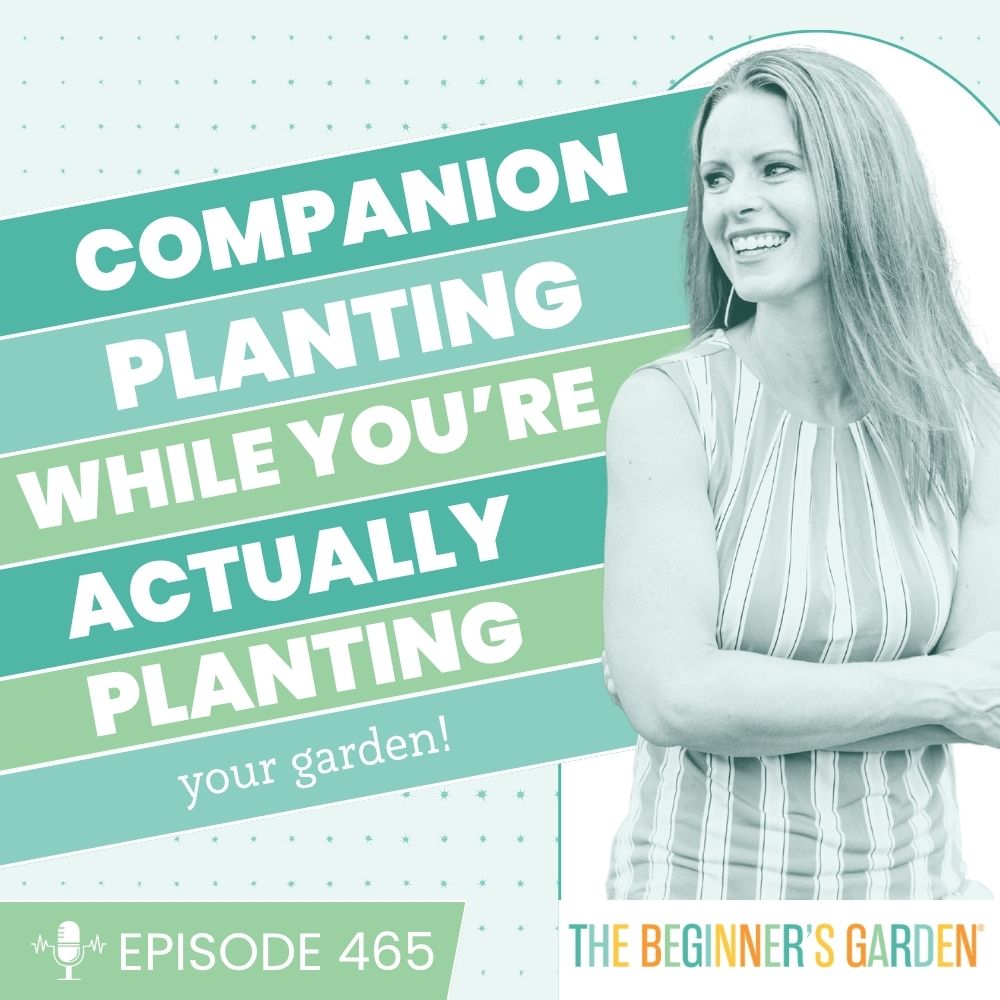
465 - Companion Planting While You're Actually Planting Your Garden
About this Episode
Feeling unsure about companion planting when you're actually standing in your garden? You're not alone. It's one thing to read charts, but another to decide what goes where in real time.
In this episode, you'll learn how companion planting really works, including spacing, timing, and practical garden layout strategies that make sense.
Free download: Companion Planting for Pest Control
A simple, practical guide to pairing plants that help naturally reduce pests.
👉 http://journeywithjill.net/companion-planting-for-pest
If companion planting has ever felt confusing or overly complicated, this episode will walk you through step-by-step principles you can actually use in your garden today.
Resource Links
- Companion Planting for Pest Control (free): http://journeywithjill.net/companion-planting-for-pest
- Beneficial insects episode: https://journeywithjill.libsyn.com/235-attracting-beneficial-bugs-to-your-garden-with-jessica-walliser
- Friday Emails: https://journeywithjill.net/gardensignup
- YouTube: https://www.youtube.com/c/JourneywithjillNet/videos
- Instagram: https://www.instagram.com/thebeginnersgarden/
- Podcast Archive: https://journeywithjill.net/the-beginners-garden-podcast/
Recommended Brands & Products:
https://journeywithjill.net/recommended-brands-and-products/
Sponsor(s) for this Episode
Garden in Minutes – Simplify your irrigation setup with an easy-to-install system designed for raised beds.
Get 7% off with code Jill: http://journeywithjill.net/gardeninminutes
Cozy Earth – Premium bedding and loungewear designed for comfort and better sleep.
Use code JILL for a special discount: https://cozyearth.com
Disclaimer
Gardening advice shared in this podcast is based on my own experience in Zone 8a (Arkansas) and from the feedback I receive from others in different gardening contexts. Your results may differ depending on your location, climate, and growing conditions. Always check your local extension service or trusted resources for region-specific guidance.
Some links mentioned may be affiliate links, which means I earn a small commission at no extra cost to you if you make a purchase. As an Amazon Associate, I earn from qualifying purchases.
Hosts & Guests
Transcript
Let's talk about companion planting. One of my favorite things to incorporate in my kitchen
garden. Now, most companion planting advice sounds simple on paper. Plant this next to that,
avoid planting this near that, and maybe that advice works when you're creating a garden plan.
In fact, that's what I do, and that's what I teach you how to do. But when you're actually
standing in your garden with your plant or with your seeds in hand, sometimes you find yourself
with some more practical questions, such as, well, does this companion go in the same area,
the same square? Does it go somewhere else in the bed? Can I plant these companions at the same
time, or should I? And how does it actually work? And does companion planting actually work if
they're not planted right next to each other, touching one another? Well, today I'm going to walk
through companion planting the way it actually happens in real time when you're planting.
Because most of us, even if we've drawn out our garden layouts, once we get out in the garden,
actually deciding where to plant our crops next to each other is another decision that we just
want to make sure is right when we're planting. Because when we're in the garden, we are maybe using
a garden plan, but we also have our tray of seedlings, or we have the seed packet, and sometimes
we do adjust things on the fly. And my goal with this episode is to give you some practical
suggestions and principles that help keep you from staring at your garden space,
fearing that you're going to make the wrong decision. If you're in the middle of spring planting
right now, filling raised beds, transplanting seedlings, direct sowing cool weather crops,
this is also the perfect time to think about watering. Before your garden fills in and gets big,
it is much easier to install a system now. That's why I love the garden grid watering system
from Garden in minutes. It waters evenly right at the soil level and is designed to fit perfectly
in raised beds so you don't have to constantly move hoses around or wonder if everything is getting
enough water. Garden in minutes products are designed by real gardeners to make gardening easier,
not harder. Check them out at journeywithjil.net slash garden in minutes and use promo code
jill for 7% off of your order. That's journeywithjil.net slash garden in minutes. Before we jump in,
I wanted to let you know about something special I'm offering this week. For this week only,
you can download my companion planting 101 guide completely free. Inside, I walk you through the
companion combinations that actually make sense in a home garden and the principles above all
that are important to follow so you're not having to memorize endless charts. And this year,
we're offering something new that I'm really excited about. When you download the guide,
you'll also get access to a new custom companion planting GPT that has been built from this
companion planting guide and my companion planting approach. So if you're out in the garden and
you're wondering, can these two plants go together? You can just ask it and get an answer right
away. I'll tell you more about this at the end of the episode, but if you want to go ahead and grab
it while you can and while it's free, you'll find the link in the show notes. In this episode,
we're going to be talking about different questions that you may have asked when it comes to actually
companion planting in your garden. And question number one is, does this companion have to be
planted right next to the other crop? Now, this may be the most common misunderstanding.
A lot of companion planting lists make it sound like plants need to be touching each other or nearby,
but in some cases, that's not necessary. So let's talk about three examples of proximity.
The first would be maybe if you're doing a square foot garden and you're talking about one square,
do you need to companion plant something in that same square or roughly three to six inches
between two companions? The thing is that that close of spacing is rarely needed, but there are
some examples where it can work. Two companions that are very common to plant near each other are
radish and carrots. And these can be planted very close to each other within a couple of inches,
but the reason is the radishes are quick growers and they're going to harvest way
before the carrots are going to need that space. So it's totally okay to plant carrots and radishes
really close to each other, probably within an inch or two of each other and they'll do just fine.
Another example is planting greens like brassica greens underneath taller crops. And these can go
really close to these other taller crops. I love to do this when I'm planting broccoli in
particular or even cauliflower. They are going to grow tall and they're going to spread out,
but there's ground space underneath that lettuce greens or other brassica greens mixes can go
in underneath. Not only are you able to get a quick harvest of some salad greens, but you're also
using that as a living mulch and a ground cover, so you don't have to worry about weeding because
you've got a crop right underneath that. So in that case, yes, you could plant them really close,
they're not going to compete. Similar to that, you can use flowers, such as a lism, which is a low
growing flower, or mistrashem, which even though it can be, it can get quite large, it usually spreads
more so than it grows high. But those plants can go underneath something like squash. I love
planting mistrashem underneath squash because you've got these mistrashem flowers and these
mistrashem leaves and they kind of grow in between all those sprawly squash vines. So you can
plant them really close to squash. And in my opinion, lism can grow under just about anything.
It doesn't require much at all and it's fantastic at attracting beneficial insects, especially
surfing flies. But even here, when we're looking at planting really close together, the point is
space efficiency. How close can you get certain companions and they still work well together,
and you're able to get more in the same space. And then in the case of planting those lettuce
greens or those flowers, that also serves at helping to cover the soil for weed control and also
helping to shade it so the soil doesn't get too hot as we get into the summer. But in general,
when we're talking about companion planting, we're talking about a little bit further away than
just a few inches. Often we're talking about planting companions about six to 12 inches apart,
maybe a little bit further, but the point is they are in the same bed. This is probably the most
common companion planting that you would need to do. We can still go back to our example of a
lesson. Yes, you can plant it really close or you can give it some own square next to something
that is a little bit taller. Another thing that you can do is let's say you have tomatoes,
and you've got tomatoes that are a couple of feet apart, you can plant something like cilantro
in between the tomatoes because it's not going to require a whole lot of room. And just kind of
letting you know this, if you're a brand new gardener, don't expect cilantro leaves to still be
of good quality when your harvest tea your tomatoes. I know we all want that for salsa,
but cilantro loves cold weather, not hot weather. But the reason I plant cilantro next to tomatoes
is that early in the season, when it's still cool, you could probably still get cilantro,
but when it starts to bolt and when it starts to form flowers, those flowers are really good at
attracting beneficial insects that prey on tomato pests. That's another good reason cilantro is a
good companion, but it's going to be in the same bed. It's just not going to be a few inches
away from tomatoes. It'll probably be more like six to 12 inches away. Another idea is to do
petunias or marigolds near tomatoes. Again, you're probably going to give them about 12 inches of
space at least. Marigolds actually grow pretty large, but petunias stay kind of compact, but still
you want to plant them, you know, six or 12 inches away in general. The idea is that with some of
these crops, flowers in particular or cilantro or herbs, the idea is that scent and pest confusion
will help to mask the scent of your crops that pests want to come. Now, I would not necessarily
hang my hat on this as a pest control strategy because it's not going to be fail safe. You're still
going to get army worms and you're still going to get beetles. They're not going to completely be
repelled, but it can help and it can limit the numbers. But more so, I have found that companion
planting with flowers helps to attract the beneficial insects that take care of many of the pest
insects. Case in point, if you've listened to this podcast for any length of time, you know that I
love planting flowers that will attract ladybugs and surface flies and lace wings because those
are the big three that they will take care of pretty much any aphid infestation on my tomatoes
in particular peppers as well. Aphids can go on a lot of crops, but the more elism that I plant,
calendula is another good example. The more these surface flies and these ladybugs are attracted to
as adults and it's their larva that are going to eat the aphids. I've watched this time and time
again and so for me, when I'm companion planting for pest control, what I have found works better than
anything in my garden is getting those beneficial insects in so that they can take care of some of
the pest insects. Again, not fail safe. Still haven't found anything that loves beetles. By the way,
beetles is still a major issue, but some of the other pests definitely can be controlled by some
of these parasitic insects that we can attract by planting flowers in herbs nearby. But we don't
only have to plant them in the same bed. We can still plant them in nearby beds and it can still
have an effect and this is something that gardeners don't always realize. Have you ever seen a
serpent fly? They fly, right? Just like squash bugs can travel. Who knows where? They're always
finding my garden somehow. Beneficial insects travel, just like pests, insects travel,
pollinators travel. So we don't necessarily always have to have all of these plants right next to
the plants we're trying to protect. In fact, you can plant flowers and beneficial plants in a bed
right beside it and that can still help. Another example is if you have a large garden area,
you can plant a beneficial border. This is something that Jessica Wallace or talked to us about in
a previous podcast a couple of years ago, I guess, but it's a really good one and we'll make sure
to put the link in the description in the show notes so you can listen to it. But beneficial
border also can help attract good insects to your whole garden space. So that would be an example of
planting flowers along the edges of your garden. I mean, beauty plus having a function to me,
that's perfect combination there. A lot of gardeners I've talked to, I haven't quite
experimented with this like I'd wanted to, but planting garlic the same way. You know, you're not
going to plant garlic until the fall, but if you think ahead and you can plant garlic maybe on
the perimeter of a raised bed that can help. Alliums like garlic are really good at
deterring pests and sometimes critters as well. Or you can plant pollinator flowers
near the garden instead of inside the beds. If you even think about herbs, I am a huge
proponent of keeping your perennial herbs in containers separate from your annual vegetable garden.
I know not everybody does that, but I've found that oregano, mint, they spread so aggressively,
I don't want them in my annual garden. And with the way that I fill my raised beds there, they are
sinking pretty consistently because of the organic matter that's breaking down. So I like to keep
my perennial herbs like rosemary and thyme and sage, mint, oregano, I like to keep them separate,
but just because you have them separate doesn't mean they can't benefit your garden because if you
have those containers nearby, they can still help. Now, once gardeners understand that companion
plants don't necessarily have to be touching to make a difference. The next question I almost
always get is, okay, but how many inches apart should companion plants be? And I kind of gave you
some examples already, but the honest truth is that companion plants, especially for talking about
flowers or herbs, they don't necessarily have a one size fits all spacing rule. But what you need
to understand is the main crop, your main vegetable crop is going to get its normal spacing.
So a tomatoes, for example, you're going to space them typically about 18 to 24 inches apart.
And so you want to make sure those still have plenty of space on their own. But then if you want
to plant companion plants with them, they don't necessarily have to be 18 to 24 inches away from
the tomato. If you're growing petunias or colingela or merry gold or basil or cilantro, those are
just some of my favorite companions for tomatoes or even lettuce. Lettuce is a good understory plant
to be able to grow underneath tomatoes. You don't have to plant them 18 to 24 inches away from
the tomato plant. It can be closer because those companions, especially for talking about flowers
or herbs or even a light feeder like lettuce, they're not going to cause a problem with your tomato
plant. So you can plant them closer. So in general, I look at how much room does this companion plant
need. And then I'll put it nearby the other plant. A lot of times I'll do my tomatoes 18 to 24
inches. And then I'll put a basil plant in between. Now you do want to consider sun and shade.
I have planted a basil in between some pretty wildly sprawling tomato plants. It got almost
zero sun. And no, that wasn't the best productive basil that I would have ever thought.
It was definitely a little leggy trying to get, you know, fight its way through the tomato leaves
to get the sun. But it still grew. I still was able to harvest some. And more than that, it was
able to obviously have the scent to try to do for pest deterrent, eventually flowered, which
brings in bees. So all that to say, you don't have to necessarily follow all the rules when it comes
to the companions, but test it out. Also consider shade. Like I said, lettuce is a really good
companion to plant underneath tomatoes. If you're wanting to get lettuce in the summer, that's
one idea is to plant it underneath mature tomato plant. So they get shade most of the time.
You're going to be watering a lot. And that's going to definitely help that that lettuce.
But the main point is to think about how can I get what I need to get in this garden space
so that nothing is overcrowded? We want to choose plants that are not going to compete with one
another. So let me give you an example of a companion planting combination I did a couple of years
ago. That was a disaster. I often like to plant tomatoes and peppers and eggplants together.
They're the same plant family. They have similar needs. But one year I planted egg plant a little
bit too close to my tomatoes. And it did terribly. And the reason was because it did not get enough
sun. The tomatoes just overcrowded, overshaded that eggplant. Now I had peppers that were nearby and
they did just fine. They were actually planted the same distance from the tomatoes. But the difference
was is that it's hard for me to for you to picture this. But basically I had a row of tomatoes.
And then in front of that on the south side, I had a pepper and eggplant and a pepper.
Now the peppers were on the corners. So one way or the other, even if they were shaded a little
bit by the tomatoes, they were still able to get some sun either the southeast sun or the southwest
sun. But the eggplant was in the middle and it was a little bit smaller than the peppers. So it
was getting a lot of shade. And so it didn't do very well. So all that to say is definitely consider
the mature height of the plant and whether this plant is going to be good to shade. Let us, yes,
totally so. Eggplant probably not. I did not work well for me. I had another example when I grew
tomatillos one year. They grow into the shape of an umbrella. And so even though the plant itself
doesn't need but like, you know, 18 to 24 inches spacing like tomatoes do, the way that it grew,
it shaded everything underneath it. I had some peppers underneath the tomatillos that did not do
well because they were getting too much shade. But when I cut back the tomatillo, they did so much
better. So all that to say, consider the sun needs and the mature size that the crop is going to be.
Question number two and these other questions are going to go quicker because this was the big one.
But do companion plants need to be planted at the same time? Now, this is another place where
gardeners get stuck, especially if you haven't already decided when your plants are going to be planted.
Like I teach you how to do in my core stream to garden, you should already have your plan where you
know when everything's going to be planted. So even if you do have two plants that we're going to
go next to each other, it's okay that they're not planted at the same time. Plants are planted at
the time that they grow the best and sometimes that won't be at the same time. For example,
in my garden plan often, I will plant nistertium next to squash, like I just mentioned,
but nistertium can handle the cold better than squash does. And so I'm planting that
sooner, but I'm leaving room for my squash nearby. But the reason why that is a good thing,
not only can nistertium handle cold a little bit better, it doesn't like the heat. But also,
if I plant that earlier, that nistertium is going to bloom sooner. And what I like the nistertium
for with squash in particular is if I can get those flowers blooming before the squash blooms,
that's going to attract the bees there. So that way, when my squash starts blooming, the bees
already know where the goods are. So they're already there in the garden ready to go to pollinate my
squash. Calendula is another example I planted earlier because it can handle cooler weather better
than tomatoes do. And then they are going to bloom earlier. And they're going to get those
beneficials on their way in particular ladybugs and serpent flies. I see those on Calendula all the
time. But then we look at a companion plant with tomatoes like petunias, petunias are a warm season
crop. And so what I'll do with them or even marygolds is I'll make it where they go in a little bit
later than the first planting of tomatoes. So a lot of times I'll plant Calendula first and then
I'll follow it with marygolds. They're kind of the same family. So it kind of works out but
Calendula does better in the early spring. Marygolds do better in the summer. But let's just say you're
doing marygolds, you can plant them at the same time. But if you have an early flower like a
Calendula, you can wait till I can come out to all that to say it doesn't have to always be planted
at the same time. Go with whatever that plant needs to thrive the best. This episode is brought
to you in part by cozy earth. And I'll tell you I am realizing more and more how much the little
comforts at home matter. After a long day in the garden, especially during planting season,
there is nothing better than a shower and slipping into something that actually feels good.
I've been wearing their bamboo pajama set made from visco from bamboo and I could tell a
difference from that very first night. It's incredibly soft, lightweight but still cozy and it
helps me keep comfortable without overheating paired with their sheets. I have never felt so
comfortable and their classic cuddle blanket. It's the one I reach to when I'm winding down at night.
It has that comforting weight without feeling heavy. It's just a really plush and inviting.
And cozy earth stands behind what they make. You get a 100 night sleep trial so you can try it
risk free. And there's a 10 year warranty which tells you that they're serious about quality.
If you want to elevate the routines that you already live in and reward yourself for that day
spent in the garden, head to cozy earth.com and use my code cozy Jill for up to 20% off your order.
And if you see a post-purchase survey, be sure to mention that you heard about cozy earth
right here on this podcast. Stop sidelineing your home life and give it the luxury treatment it
deserves. Question number three is where exactly do I put the companion plant? Now instead of
memorizing complicated combinations, let's just look at some patterns. And you've probably heard
me talk about this as I've given you some examples. But I'm wanting to really nail this down so
you get some of these examples where you can understand ideas that you could use. Number one is
the in between companion. This is when I was mentioning basil in between two tomato plants.
You just plant a crop in between two larger ones like a smaller plant in between two larger ones.
Another example would be if you've got some broccoli, then you can plant lettuce in between that
broccoli. Radishes between any slow growers. Carrots is a good example, but any kind of slow growing
crop you can put radish nearby. I mean if you're planting a cabbage plant, a cabbage plant is
going to take a little bit to grow. So radish nearby would be fine. Distortion between squash,
like I said before, this helps you to maximize the space by putting crops in between your main crops.
The second option is the border companion. As I mentioned before, you can do a come like a flower
row as a border, but you don't have to go that in detail. If you're just gardening and raised beds,
this can mean that you just decide to plant basil on the edges of your tomato bed,
or what I like to do is put Merry Golds in the corner of your raised beds, so that way they can spill
over and grow throughout the season. Nostrashems the same way. I usually, in my personal garden
planting, I usually put my flowers at the corners. I love how they're, they anchor the whole bed,
they spill over, and I'm not talking about your tall flowers like Cosmos or anything like that,
or even zinias. I'm talking about the lower growing ones are really great in the corners of the
raised beds. And so what this does is this helps protect the crop. You've got that border of good
flowers, but it also preserves the growing space, because I don't know that I love planting my
like really heavy feeders in the tip corner, just because there's not as much space for the
roots to grow. They can grow fine. Like I have, I've got potatoes in there, but I also know that those
corners are going to be better utilized if I'm able to plant something that doesn't need as much
water in nutrients. And then another way to companion plant, I've mentioned this before, is timing
the companions where it's a matter of timing in addition to planting something next to something
else. For example, if I'm planting tomatoes, and I know that I'm not going to be planting them
till after my average last frost date, but my lettuce can go in a month before, often I'll plant
my lettuce next to where my tomatoes might go later. And I'm able to plant them ahead of time,
get them to going, and then when I plant my tomatoes, they can grow and they can help shade the
lettuce when it needs shaded. Another option, carrots before peppers. I'll do a square of carrots,
and then leave room for peppers to be planted a couple of months later. And that's a timing
issue, but there'll still be companions for a short period of time. Another example is if I have
cucumbers growing in the middle of the summer, I can plant greens, maybe on the north side of
those cucumbers, so they can enjoy the shade while it's still hot, and then eventually the cucumbers
will come down and those greens will do better in the fall. Those were just examples of companions
that utilize the same space, but you're planting them at different times for whenever they do best
in the garden. Question number four is, do I need to companion plant everything? As much as I talk
about companion planting, you may think it's a requirement, but it's not really a requirement.
You don't have to companion plant everything. Companion planting works best when there's a reason
behind it, when it supports something useful. For example, you want to bring in flowers so that you
can bring in the beneficial insects, so you can bring in the pollinators. But for me, my favorite
reason to use companion planting is so I can get more out of the space that I have. This is something
I have leaned into heavily with my kitchen garden because I'm trying to get in as much as I can
in this small space, but in my large garden where I have a whole lot of ground bed space,
I'm not being as specific about companion planting because I don't need to. I've got more space to
be able to have more flexibility still doing some companion planting, but if I'm planting 50 tomatoes,
honestly, I don't need 50 basil plants. But if I'm planting two tomatoes in a raised bed,
then I'm probably doing two to four basil plants. If you can see that quantity really does make
a difference. So for me, companion planting is a huge key in efficient space use. But here's
something to keep in mind. The key is not to force everything you could possibly get into a space
because if you force companions into as many square feet as you can, the garden can become
overcrowded. This can happen so fast and it happens to me a lot because we plant these little
plants and we don't realize what they're going to become later. So before you companion plant
anything, consider the mature size of the plant. How big is this going to grow? If you're a parent,
you can probably imagine when I bought my first bed for my little girl, her first big girl bed
after the crib, I bought a twin size bed, not because she needed it at two and a half years old,
I think, as hell as she was, but because I knew that she was eventually going to grow and she
ended up growing taller than we thought. So now she has a full side bed. So all that to say, though,
is that you want to consider how big is this plant going to grow and how much space is it going
to need and then you're able to make decisions on what all can fit. And then you also, again,
want to consider sun and shade. And this is something I dive into a lot more specifically in the
companion planting 101 guide because to me, the shade issue is probably the most critical issue.
It's more important in my experience than these charts that say that beings shouldn't be planted
near onions. I just think I have had more mistakes that I have made in companion planting when I
did not consider shade than ever when I accidentally put two things together that the chart said
you're not supposed to plant together. I'm just saying, I feel like we make companion planting
way too complicated. So consider the mature size of the plant. So if you have ever stood in your
garden and you've been planting your garden and you're wondering like, okay, well, I have this
extra plant. Can I fit it here? That's usually my problem. I'm starting seeds indoors and I usually
have way more than I actually need in what my garden plan says because I overplant to compensate
if I have any failures. And usually I ended up having more than I need. So I'm like, okay, where can
I fit this? Or is it not smart to fit this in? Maybe I just need to give it away. But if you ever
ask yourself, can I plant this here? Or is this too close? Or is this combination even smart?
That's why I created my companion planting 101 guide because I want to make it where it's not
as complicated. I remember as a beginning gardener looking at blog posts after blog posts back when
those were the big deal, you probably are doing it with YouTube videos maybe and just being like,
I can't keep up with all of this. Well, that's the thing that I wanted to answer in the companion
planting 101 guide is to give you principles so that once you understand the why behind all of this,
then you don't need charts. You can make decisions using the principles and the the guidelines that
you have in your mind. And that's what I teach you with that. But even in that, I do break down some
companion planting combinations that actually help. I talk about how far apart companion plants
should be. I talk about how to consider sun and shade. And there's also a bonus lesson on
companion plantings with herbs because I think that's really important. Companion planting with herbs
does require just a little bit different of an approach. And again, as I mentioned before,
this is something brand new along with the guide. If you want to download the guide, but you're
not sure you have time to read it all, the companion planting GPT is trained on that guide and it's
trained on the way that I teach companion planting. So you may be out in your garden. And you're like,
okay, I have all these extra plants. Can I plant this next to this? Then you can ask that GPT
and it can give you guidance based on the guide. I wanted to make it easy and simple. I know we're all
busy and I have a ton of things that I've been meaning to watch or read and I just don't get to it.
But this would help you get answers quickly. You can grab the companion planting 101 guide for free
through April 6th. We'll put the link in the show notes. So I encourage you to go grab it while
it's still free. And if you're listening to this after April 6th, you can still get the guide and
the GPT, but it will be its regular price. So I think it's like 1250. So anyway, either way,
I think this will be really helpful for you, especially as you're making decisions real time
in your garden of what to plant where and what combinations will help your garden and honestly
bring you the most joy because it definitely has to be in my garden. Well, I hope this was helpful
for you and I hope that you have a fabulous day. Happy planting. One final reminder as you're
planting your garden this spring, spacing and watering matter more than most gardeners realize.
Overcrowded plants compete for water, nutrients and airflow, which can really affect your harvest.
That's one of the reasons why I love using the garden grid watering system from Garden and Minutes.
It waters evenly at the soil level and the grid layout actually helps guide plant spacing in
raised beds. So everything has room to grow. Garden and Minutes designs their raised beds,
grids, timers, hoses and cages to all work seamlessly together. So gardening feels simple and
more reliable. To check out their garden grids and their other accessories, go to journeywithjil.net,
slash garden and Minutes and don't forget to use the promo code Jill to get 7% off of regular prices.
More from The Beginner's Garden with Jill McSheehy
View all episodes →
468 - Pollinators: Are They Telling You Something About Your Garden? — with Disn...
The Beginner's Garden with Jill McSheehy
Apr 21, 2026·31:30·failed
467 - Planting Day: Tomatoes – when to plant and exactly what to do step by step
The Beginner's Garden with Jill McSheehy
Apr 14, 2026·43:03·failed