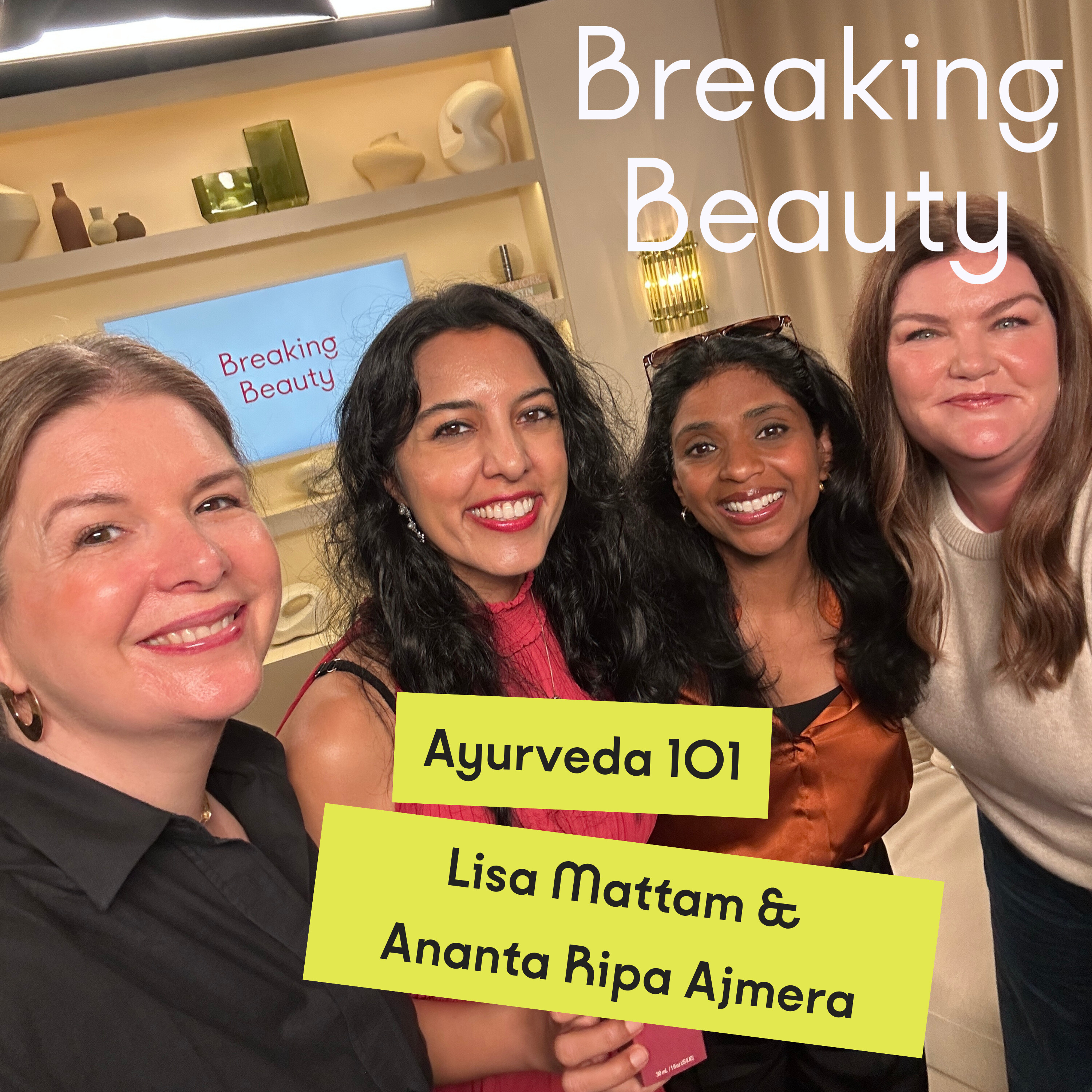
5000 Years of Glow: Decoding Ayurveda With Sahajan's Lisa Mattam and Practitioner Ananta Ripa Ajmera
About this episode
Oiling your ears? That’s right, this week we get a crash course in the wonders of Ayurveda, the 5,000-year-old “science of life” Indian tradition that's quietly behind many of TikTok’s viral beauty moments.
To break it all down, we’re joined by Lisa Mattam, founder and CEO of the beloved Ayurvedic-inspired brand Sahajan — which is now Sephora-stocked *and* the official amenities partner of Air Canada. We’re also joined by Ananta Ripa Ajmera, an award-winning author, Ayurvedic advisor at The Well in Miami and host of the True To Yourself podcast.
In this episode you'll discover:
- Demystifying the doshas — Vata, Pitta and Kapha — and why yours can shift from season to season, and even day to day
- Why, according to this duo, everything (and we mean everything!) comes back to digestion
- How Lisa combined her passion for data and science with ancient wisdom to build Sahajan — now at Sephora Canada
- The story behind Sahajan’s Sacred Flower Oil, which takes days instead of hours to make (Plus, a juicy new-product scoop!)
- The ancient oiling rituals going TikTok-viral — including why you should oil your ears, feet, and even your navel?!
- Kansa wands vs. gua sha, what you should know
- Finally, stay tuned to the end for three pro tips to glow from the inside out!
Shop everything in this episode here:
PROMO CODES: When you support our sponsors, you support the creation of Breaking Beauty Podcast!
AG1
For a limited time, save 20% on your first subscription order of AG1 Next Gen or AG1 Pro at DRINKAG1.com/BEAUTY
OneSkin
Born from over 10 years of longevity research, OneSkin is helping you unlock your healthiest skin now and as you age. For a limited time, try OneSkin with 15% off using code BREAKINGBEAUTY at oneskin.co/BREAKINGBEAUTY. After you purchase, they’ll ask you where you heard about them. PLEASE support our show and tell them we sent you.
Bombas
Bombas makes basics for every moment, from supportive comfy socks, to buttery soft underwear and tees, to luxuriously cushy slippers and shoes. With every purchase powering a donation to someone who needs it and backed with a 100% Happiness Guarantee. To try out Bombas for yourself, head to bombas.com. First buyers get an automatic 20% discount applied at checkout.
*Disclaimer: Unless otherwise stated, all products reviewed are gratis media samples submitted for editorial consideration.*
🎙️ For more related conversations like this, check out these episodes:
- Best Canadian Beauty Brands: Our Personal Holy Grails 🇨🇦
- The 7 Virtues Fragrance Story: From Dragons’ Den To Sephora Viral With Founder Barb Stegeman
- The Exact K-Beauty Skincare and Treatments That are Worth Your Money with Dermatologist Dr. David Kim
💄 JOIN THE BREAKING BEAUTY COMMUNITY 💄
- YouTube: https://www.youtube.com/@breakingbeautypodcast
- Instagram: https://www.instagram.com/breakingbeautypodcast/
- TikTok: https://www.tiktok.com/@breakingbeautypodcast
- Facebook Group: https://www.facebook.com/groups/1401081996684767
- Newsletter Signup: https://breakingbeautypodcast.substack.com/
- Podcast Hotline: 1-844-227-0302
🎙️ MEET THE HOSTS
- Carlene Higgins: https://www.instagram.com/carlenehiggins/
- Jill Dunn: https://www.instagram.com/jilldunnbeauty/
Hosts: Carlene Higgins and Jill Dunn
Theme song, used with permission: Cherry Bomb by Saya
Produced by Dear Media Studio
See Privacy Policy at https://art19.com/privacy and California Privacy Notice at https://art19.com/privacy#do-not-sell-my-info.
Get every episode summarized
Each time Breaking Beauty Podcast publishes, we email you a written briefing from the transcript — the topics, who appeared, and any specific claims, with the ad reads skipped.
Email me new episodesFree for 3 shows. No card needed.
Hosts & guests
Transcript ready
969 searchable segments. Every word is indexed and playable.
Full transcript
Breaking Beauty Podcast — 5000 Years of Glow: Decoding Ayurveda With Sahajan's Lisa Mattam and Practitioner Ananta Ripa Ajmera. Machine-transcribed; use the interactive transcript above to jump the player to any line.
The following podcast is a deer media production. Welcome to Breaking Beauty, the podcast all about the breakthrough people, products and moments in beauty. We're your host, Jill Dunn, and Carleen Higgins. Welcome back to Breaking Beauty Podcast. I'm Carleen Higgins, and I'm here with my co-host with the most Jill Dunn. Hey, everyone, and of course, we are two longtime magazine beauty editors turned beauty podcasters, and we're serving up the breakthrough people, products and moments in beauty every single week. Today, we are diving into the world of Arya Veda, something a topic that we have been wanting to cover for ages. And it's really incredible because this is a practice that has stood the test of time, quite literally. It's 5,000 years old, and it's the traditional system of medicine from India that's focused on natural healing, and holistic health, and really just all the balance in your life.
And the word comes from Sanskrit combining air, life, and Veda, knowledge, or science, and how these ancient rituals are shaking up modern science-backed skincare. So to break it down, we brought in two powerhouses. First, Lisa Matam, founder and CEO of Sahajan, and a longtime friend of our podcast. Hi, Lisa. Hi. It's so good to be here. Thank you so much. I've been at more than 15 years in Big Pharma before blending her clinical background with her South Asian heritage to build one of the most respected Arya Veda beauty brands in the world. And now it's that Sephora too, clock it. She's also celebrating a major moment this year. Sahajan was just tapped by Eric Canada to supply the amenities products in their signature class and amenities, kids. And we're so proud to be Canadian, to have a Canadian beauty brand in there. Finally, it just makes sense. And so that lip karma balm, everybody, that you're applying at 35,000 feet, we have Lisa to thank for hydrated lips. At that altitude too. Thank you so much for that.
We're also joined by a true Arya Veda expert who Lisa has collaborated with and leaned on for her expertise. And that is Ananta Ripa Azamera, an award-winning author and host of the True to Yourself podcast and advisor of Arya Veda at the Well in Miami. Welcome, Ananta. Thank you so much for having me. It's wonderful to be here. Ananta comes from a lineage of Arya Veda healers in ancient India. She has spoken at Stanford, at NYU, at Columbia, and she consults on some of Sahajan's skincare formulations, including this year's sacred flower oil. And just ahead, our guests are going to help us better understand how we can apply these ancient rituals to serve our wellness and skincare goals. Starting from defining your doasha, pitta, kafa and vata, and the rituals now going TikTok famous. I mean, these things I've never even heard of, but they probably have been around forever, oiling your ears, everybody, oiling your navel. I need to know absolutely everything about it.
And there's like a consa wand. Like yeah, what is that? I need to know more. Plus, Lisa shares how she's bringing Arya Veda into the science of clinical trials and or guests, top three tips to have you glowing as we kick off 2027. So with all of that, officially, welcome to Reaking Beauty Podcast to the both of you. Ananta, you come from this long line of Arya Veda healers, like I mentioned. So for anyone that's new to the practice, what do you say it's all about? Arya Veda is the science of life. Yeah. So there's actually no part of life that Arya Veda doesn't touch. It teaches us how to achieve well-being at four different levels. And sort of mind-body spirit, it's almost cliche, right? And especially in the magazine world. But Arya Veda also looks at your five senses as a really important aspect of overall health and well-being and also a source of where we find the root causes of what is creating our health imbalances. And in Arya Veda, it's all about attaining a state of balance or harmony between your body,
mind, spirit and your five senses. Beautiful. I love that. I love that. We've chatted before Lisa about how you grew up in a household where Arya Veda was kind of naturally woven into your daily life. Maybe you can tell us some of your earliest memories and what is stayed with you. Yeah, for sure. It is funny because we never use the word Ayurveda growing up. It was not a word that I was familiar with or heard. But as I look back in my life, what I find funny is I realize when I was visiting India with my family, I've seen Ayurvedic doctors, all the things. But I would say some of the practices as I think of my life growing up, one that I don't think we've ever talked about in Antas, my parents used to have us take milk baths. Oh wow. Yeah. Which at the time, not feeling very cool at all. I feel like all the things that my, particularly my dad made us do, there was a time where I was like, okay, I'm done. I no longer want to go to school with oily hair. I know. I remember having a sleepover and be like, and saying, just be like, everybody else is
dad and make pancakes and don't go to table morning. But I would say the earliest rituals, particularly around beauty were and skin were oiling of the hair for sure. I can remember that and something we did regularly. Milk baths for sure. And it was believed in actually there's some really good research to talk about what milk does for the skin. And I think you've probably had so many conversations about milk, even just that it has lactic acid in it is so good. Because I started to get older and my first acne presented itself, it was always a turmeric pimple patch that was homemade that presented itself. So I think what I learned and what I came to when I started the brand was that this was woven throughout my life. And I thought it was family tradition or I thought it was, you know, I'm South Asian therefore, but what I didn't appreciate particularly my parents being from the South and Carola being the epicenter of Ayurvedic study was that I was actually practicing this wall of science and I had no idea. So continuing with Ayurvedic fundamentals, can you help us walk through the doches and
the approach? So there's Pitekhafa and Vata like Curling mentioned. And what are these exactly and their significance? Yeah. So the doches are basically mind body types or constitutions in Ayurveda and they are responsible for both our physiological functioning and also for imbalances that we can have when they build up too much. We all have all of the three doches within us but to different degrees and that's what makes us all so unique. And actually the whole material world is made up of these doches and they're rooted in the laws of physics because each of the doches is made up of certain elements which now even modern physics is recognizing. And then these five elements come together to form what are called doches. So the air and space elements come together to form Vata docha which is responsible for all movement inside of our body and inside of the world. And then we have the Pitadoshha which is made up of fire with water and that is responsible
for metabolism and all transformation of one state of matter to another, right? And you see a solid ice cube melt into water and then evaporate into air. It's a perfect example of fire being present. What happens when the sun is out is that it's fire and it causes these changes to happen. And then we have the Kafa docha which is made up of the earth and water elements and this is responsible for sturdiness and stability. So it's actually really, really important for all of us in the modern world to have this kind of quality of steadiness and stability in both mind and body. And it's what we often lack in the world that is moving so fast. So a lot of the beauty and skin care is actually bringing us really healthy Kafa and earth and water, especially water back into our bodies. Now, is your docha something that you're born with or is it something that changes from
day to day or season to season? I'm so glad you asked that because it's a both-hand. You are born with a certain docha and the thing is a lot of people will think you can just do a quiz on it, but it tends to be more complex than that just because a lot of us have more than one that are combined together. Right. So you have to kind of really consider the combination of what you had at the time of birth. So the kind of questions that we asked to determine that one, which is called Procurety, your natural constitution at the time of your birth, is something you have to ideally know a lot about your birth to be able to answer in terms of... Just like when you can go deep on your astrological sign. Yeah. You need to know the time you're born, everyone. Yeah, exactly. Exactly. It's like that. Like, you need to know how tall were you, how much did you weigh, how much did you cry, how much did you eat, how much did you, you know, like all these things really help nail down what exactly. Exactly. It's your specific constitution at birth.
And then we have another constitution, which makes them more complicated, right, where it's called the Vickruthi. And that's the more important one in some ways because it's the one that's out of balance currently. So that can change throughout your life, throughout the season, throughout the week, throughout even the day, but whether or not. And you'll feel it. Like you'll feel change in your temperature. You'll feel change in the quality of your skin. You'll feel a change in your ability to digest food. And that is reflecting the current state of the dosha. So that's where the practitioner becomes really essential to be able to help you bring the things that are out of balance into balance without getting your natural constitution out of balance as well. So is part of the goal to get back to the constitution that you were born with or what is the significance of determining what you were born with, your dosha. It's good to know what you were born with just to have that idea of your foundation.
And you are baseline. Because a person's baseline, if they're already having a lot of kafa dosha, is going to be very different than someone who has a lot of pita dosha or vata and pita combined. So it's more something to keep in mind that knowing this, we will not go too far with how we bring you back into balance. You want to respect it. Yeah, you want to respect it and keep it in mind for sure always. And the goal is not so much to come back to your natural constitution as much as it is to be in a state of balance. Because if a person, like I'm, for example, having a lot of pita and vata, I don't have tons of kafa to begin with. And so if I'm just going back to my constitution that could almost be like getting yourself out of balance because you already have so much and then you have more. So what I would want is actually to have more kafa things to kind of bring myself into more of a feeling of overall, like harmony between all of the dosha's.
And that's really the ultimate goal is that everything is just in a state of balance and harmony. Yeah. So part of what inspired us to want to have the two of you on the show years ago, I had an Ayurvedic facial. And so I did do a quiz at that time. And even though it may have been very rudimentary, I did find it helpful and enlightening to figure out that, you know, because I tend to have a lot of fire, I guess you would say. So the idea that I shouldn't have heat during a facial and I should be doing more cryo and ruling it down. And then there was advice for like foods that I should eat and all of that. So I just found it to be, it was a worthwhile process to go through it. And I wondered though, do you think that Ayurvedic facials are kind of gimmicky or do you think that there's something valid to it? No, I think that's great that they're able to do that for you because they can for sure
see what's going on right now. And the idea is to bring that back into a state of balance. And so if there's red, if there's inflammation, if there's heat, you know, that's great to know because then you can bring that down. And for skin, especially, it's like real obvious what the state is, right? And how to kind of work with it that way. So we see digestion as being the root cause of overall health. And therefore food is very important. That would be the first question, you know, to ask for sure, are you eating too many red things or spicy things? And are you having acne? Okay, well, there's a connection, you know, we have to pull it down. Yep. But then we have to go deeper than that too because someone can eat all the right stuff and still not get relief because it could be some really deep-seated anger that is just hanging out in your skin because it has nowhere else to go. Fire in the belly. Right. So that's profound. And that's where Iervy that really wants to get to the root cause of what is going
on. And then even the thoughts that we're persistently thinking, right, can give us stress or they can give us ease. And a lot of times we're on autopilot and we don't even know what we're thinking on a regular basis. So it's really important to know all of these things, to be able to really help restore that overall, you know, sense of well-being with skin. Today's episode is brought to you in part by AG1. Okay. So I first got into AG1 back in the day when I was in my running group with my fellow moms until I hurt my ankle. And then I would come home and I would drink a big glass of AG1 and I loved it, but I am not running anymore and I've sort of slipped out of the routine. But here's the good news. AG1 has been evolving just like me because they now have AG1 essentials, gummies. This is amazing news, everyone.
50 vitamins, minerals and whole food sourced ingredients in one daily pack of eight gummies. I love those pocket size. I can travel. It's science-backed and it's all about daily nutrition. If you're wondering what AG1 is good for, it helps to fill in nutritional gaps. It helps boost energy, support, gut health, strengthen your immune defense system. And I don't mind that it's eight gummies because I love gummies. That's like if I go to the movies, I'm ordering gummies. That is my snack of choice. So I feel like it's a little snack pack except in there, you're getting all of these vitamins and minerals. And there's no pills that I have to sort through and figure out what I'm taking. It's just easier and so it just gives me that peace of mind. It's so convenient. AG1 Essentials does third party testing. They're NSF certified for sport. That's the highest certification you can get. They're free of GMOs, gluten, dairy, egg peanuts, artificial sweeteners, pesticides.
So it's really good quality and it just fits into my routine. I love that. If you want to try it for yourself for a limited time, save 20% on your first subscription order of AG1 Essentials at drinkag1.com slash beauty. That's drinkag1.com slash beauty for 20% off your first subscription. Have you ever heard the saying, tell me what you eat and I will tell you who you are? I'm Katie Lee Beagle and I'm food obsessed. Tune into my podcast all in the table and get to know celebrities, both face names and industry insiders in an all new way as they share the ingredients that make their recipe for life. I want to know it all from the favorite childhood birthday cake to the breakfast they eat every day, an engagement meal in Paris or a guilty pleasure fast food indulgence. You can tell a lot about a person by what's in their fridge and hey, everybody's got to eat. Make sure to tune in every Thursday and follow so we can devour every last morsel together
or putting it all on the table. And what are some of the most common mistakes you see people making that affect their skin and their overall health? I think overdoing it. Sometimes we get prescribed so many things to do for our skin. So actually just keeping it simpler and just having a few like chide and tested things that are good for all constitutions like sahajan skin care products that I work with our honor. So amazing because anyone can use them of any constitution and you will find that they're made with very natural ingredients that keep it a lot simpler. And the body just doesn't want to be overloaded. And Lisa, your entire skin care range is dedicated to our event. Principles. And you though, I feel like what's brilliant about your products is that you've taken
sort of like the clinical side of what your past gigs were, your past lives and brought it to our event because I think you understand like in North America often we are just like, what are the before and after? Yeah, we're so proud of. Yeah, it's like people want to see you like the before and after they want to see like the dark circle gone or whatever. So how did you sort of balance the automatic principles when you were like creating your skin care line? Absolutely. And I fundamentally, when I started the brand, it was based on a couple of things. One, I wanted to go clean with my beauty. I recognize, you know, I've always been on a wellness journey and I recognize the importance of whether you want to say it's like low toxin, but also actually what I love and clean beauty is the transparency of ingredients because when you go clean, it also forces you into a much smaller box of sort of whether it's plant-based actives, but really, it just forces you into a transparency that I love. But I asked myself like, why had it taken me so long to get here because I've always
been on this journey. I was a fitness instructor in grad school early in my career. I was an early adopter to yoga. It's the only thing I'm ever an early adopter to. And so I was like, why had it taken me so long? And I realized it's because when I bought, I can carry bought it for results first. Yeah. I was walking into stores saying like I want something that says like anti-wrinkle, anti-fatigue, turn back the hands of time. So when I thought about the line, I thought I want to create a line that will, you know, people intuitively believe in clean, but I want to show them that they can get the same results as any conventional brand. And the only way I could do that was with Ayurveda, which I fundamentally believed in. But I knew we had to do clinicals from the start. Even the first five formulations before an aunt and I met, we worked with Ayurvedic doctors in India, but I actually hired a chemist, a former chemist from Glexosmithline. And I wanted it to have the rigor of what we would consider like medical grade skincare or whatever terminology you like to use. And then we were one of the first clean brands to ever do clinicals, cosmetic clinicals,
but clinicals because I exactly wanted to be able to confidently say, you can take home this serum or you can take home this, you know, one of our best sellers, the Kremri and you will get the same result if not better than some of the things you're buying that's conventional. Right. And I want to demonstrate that to you. It wasn't that I had to trade one for the other, but it was in fact, we followed the rigor of Ayurveda. So no matter who we're working with on formulations and now, you know, we've progressed to working with a non-tip in our NPD process. What we do is we say we want to create X and this is what we want it to do and this is the result we want it to deliver. We then go and create the product, but before we launch it, we put it through the clinical process. So it's not that they're competitive or like two processes running separately. That we confidently start with Ayurveda and we do all the, you know, initial research on the ingredients and all of those types of things. But then prior to launching, we then say, okay, it's time for the clinical piece. Yeah. I love that. I honestly, I can't stand the duality that we have right now in society where it's like,
this is science, this is nature or clean or whatever word that you want to use. I just think that I hate the infighting that happens on Instagram where it's like, oh, but there's no data behind that. So therefore, let's ignore it all. And I think that's so unfair to let's say Ayurveda that has been around for 5,000 years or indigenous practices or anything where there is anecdotal evidence. And just because we haven't studied it yet, it doesn't mean that hundreds of thousands of people can't speak to these results, whether it's, you know, for kind of first aid or for skincare or what have you. So that's why I love that we're having this conversation. And that's why I love what you do, Lisa. And I have so much respect for your line because it kind of shows like see we have been on to something for 5,000 years, you know. So I think it's the other fundamental thing because I do consider myself, you know, I've a science degree.
We laugh at home. My husband has a PhD in neuroformicology. So my husband's always like, this is a home of science. But one of the things I've often said to the kids is that what refute science is better science. Right. And so we're sometimes if we think of a practice like oil pulling, which is fundamental to Ayurveda, there isn't a lot of data on it. But the lack of data doesn't mean that it doesn't work. Right. To your point, what it means is that there's a lack of data and probably whether it's less resources or less fundamental need to research it. And so it's interesting because oil pulling is a great example of there is some kind of some early data that shows that actually oil pulling, which is swishing oil through your mouth as part of your dental hygiene practice does reduce the bacterial load. So that early data is there. But who's going to invest in the next data to go say where it's going to go. So if you go to your dentist, and as you as you should, and most people who oil pull still pressure to you, so they're still going to tell you, you know, you're going to say, this is not a replacement for brushing or flossing is in fact, is an additional step.
And what I think of when I think of the aerobic practice of oil pulling to your point is that there's 5,000 years of practice in science, we would think of as like evidence-based support. Now what we need is, but until one of the big dental companies, one of the big toothpaste companies find their white space, no one's going to be researching that. And so I think to aren't in opposition to each other, but we have to see them for what they are. And I love what you said earlier and on to both. And I think that's such a great, that's how I see, you know, anecdotal evidence and rituals is that don't stop going to your dentist, but don't come at me if I want to oil pull as well. You know, you got to be responsible. It's common sense. Talk about this pretty product we have here. This is the Sahajan sacred flower face oil. I have not tried this yet. Came out earlier this year. What I want to talk about is how you work together. What is the process of how you consult in how that comes into this little bottle?
This is a cool one. I love that we're talking about this product particularly because it not just helps dust with many products, but this is a cool one. I wanted to create a face oil that we knew could help target dark spots that we knew could help with brightening that could, you know, have an ability on hydration fine lines, but actually what I fundamentally wanted to do and I look back and three years ago I wrote this on a piece of paper that in 2026 we would launch a Kumkumadi oil. And in Ayurveda, Kumkumadi means Kumkum is saffron and so it means saffron on more. And it is a very traditional Ayurvedic preparation. If you go to India, if you go to Sri Lanka, if you go to anywhere in South Asia, you will find tons of brands. And even brands that we're probably all familiar with that are now moving across the globe all have this very traditional formulation. And so the ask of Vananta was, I want to create a Kumkumadi oil and maybe you can take it from there. Yeah, yeah.
So I did some research, just fun. The traditional formulation, but then also different ways that different people have put it together because this kind of product you can find. A lot of different beauty brands have made a version of and I've tried some just to kind of test out what the other ones were like. And so I found that what's really nice about how this one came together was that it's a lot less sticky. Like a lot of the Kumkumadi oils are really difficult to apply on your face. They don't glide onto your skin like this one does. And I felt like the scent was also very important and to really bring the floral aspect into it because flowers are actually a huge source of healing medicine, both in terms of their physical attributes, but then even their spiritual qualities. And I feel like so much of the ancient wisdom is rooted and so much of Ayurveda is rooted in deep spiritual principles. And the flowers really encapsulate that. So I love that we have like the lotus flower as a part of this particular formulation for
your skin because the lotus is the ultimate spiritual symbol of awakening from the mud and the difficulties of life. And I feel like that's in a sense what we're bringing to our skin is that our skin may have been through a lot, right? Just going through pollution, going through traffic, going through the ups and downs of life and how life hits us, right? But then here is this rejuvenating opportunity to take in something that first of all smells really nice. And then it glides right on easily. So it's not another difficult thing to incorporate into your day. But then like even just having a little bit of knowledge of the meaning of it. And that's why I love that we went with the name sacred flower oil. Just brings that sense of yeah, ritual and the transformative power of the flower into our daily existence. And it's really like bringing a really beautiful aspect of nature into our skin. And I feel that as women in particular, we connect so much with flowers because they're
so similar to us. They go through cycles, they go through phases, you plan to see it, take some time for it to grow, right? And so even with the beauty rituals, it's not always an overnight thing, right? It's something where you want to be consistent with it. You want to do it regularly. You want to actually like give yourself that opportunity to grow. So it's a blossoming. So do you think that when you're creating formulas, like if you, is it sort of a process where you might say, okay, we want to achieve X goal and you would say, well, going back into my Ayurvedic encyclopedia, I think that saffron or lotus or whatnot would have an impact on this result. Is that so? Yeah. It goes. So typically, so when we did our first formulations, it was like very specific. So I want something that's going to impact fine lines. I want something that's going to support college and I want something. And so we would get the exact ingredients. Go put truffle, go put, go to cola, you know, and the data around a go to cola, for example,
shows that it stimulates collagen. So it was perfect. Sacred flower. I think the reason that I'm so excited about it is it's as much about the ingredients. So when Nanta shared, you know, traditionally, we needed saffron, we needed minjista, we needed turmeric and Nanta hand in this formula is also the sacred, is the lotus flower because a lot of kumkumadi oils have lotus, but not necessarily in the depth that we do. Yeah. But what with this formula, which was unique was because a lot of our formulas are serums and creams they're made in like a very traditional, how you'd make a serum and cream and the lab, this was made in the way you'd make a kumkumadi oil. So it takes us days to make this because we take often petals, herbs, all of these things and they, if you can imagine like, like if you're using a bottom for a coffee or if you're steeping a tea, all of those steep in a hojoba and sesame based oil over days. And then what we do is we sieve and sieve and sieve and sieve until we get this golden
oil that's just the richness of all these ingredients. I spent a lot of time reading about this oil and it used to be an oil that was reserved for the royals. Yeah. Only for sacred rituals because of how long it took to make and because of how expensive it is saffron being so expensive. This one was so special because it was, it was I think fundamentally true of Ayurvedev. I can say it that way, whereas you know, when I think of the next product that's coming out, it was, are we talking about new products? Yeah. Whatever you ask. Oh, yes. We're last group. You're last group? Yes. So, you know, we're, we're right now working on an exfoliator and so this is, you know, when we went to a Nanta and it was a little bit more traditional. It was like, we want an exfoliator. Yeah. Can we put some full help? Yeah. We, we wanted to obviously to be able to exfoliate what material should we use? We wanted to be gentle and so we were very specific in terms of the gentleness of the exfoliation. We were, we told her why our customers wanted an exfoliator because we do have a mask
that is an exfoliating mask, but people wanted something they could use daily. They wanted the tactile formulation. They wanted to be able to address dull skin. They wanted to be able to address, you know, again, hyperpigmentation and exfoliation resurfacing. And you know, we had a couple of other things and then so we then go and sit with a Nanta and then she says, put this ingredient in at this rate and this ingredient in this way. And then what we do is build the house around her base almost. So that is the more sort of traditional collaboration, I would say, of products. And when can we expect to get our hands on that? Yes. Well, if it's part, if you're thinking new year, new you, okay? Okay. You'll be able to pick it up in the month of January. I love that. Exciting. By the way, everybody, if you're listening and you haven't tried the Sahajan Golden Eye Bomb, it is amazing, especially for the winter. It gives you this hint under the eye of like, glowy, but also like, it's just so comforting and amazing. Is that your number one best seller? It isn't, but it does have G in it.
So we've been talking a lot about G in Ayurveda has been known to target dark circles and that was the fundamental of that product. And also viral TikTok. Yeah. But like for context, it was the number one eye product that Sephora Canada last year for the three-month event. Yeah, that's great. And that to me is like, warms my heart because it's like Ayurveda works. Yeah, exactly. Exactly. Exactly. What is the number one best seller? Oh, it's our Radiance Serum. Oh, yeah. Day and day out, it's our Radiance Serum. Okay. But the Golden Go Eye Bomb goes viral like every month. Oh, yeah. So amazing. One skin is one of our show partners this week. I'm all about female-fanded brands that are doing the most. And that's definitely the case with one skin. It's founded by four female scientists. And they have been pioneering in the area of longevity research. We know that longevity is the biggest buzzword in beauty right now. And what they were able to uncover is the OS one peptide and it's engineered to reverse
skin's visible signs of biological age. It's built on over a decade of longevity science. And the proprietary OS one peptide reverses the visible effects of senescent or dysfunctional cells that degrade collagen, elastin, hyaluronic acid and barrier strength. And the result is that skin looks, feels and acts like a younger version of itself over time. I'm a fan of the OS one face moisturizer. It's very lightweight and it's clinically shown to firm and smooth the skin. I also really love their lip mask, which is an essential for me in the winter time. It just goes on so smooth. It's so hydrating, absolutely a staple going into the fall and winter months. And one skin is born from over 10 years of longevity research. And one skin is helping you unlock your healthiest skin now and as you age for a limited time. Try one skin with 15% off using code breaking beauty at one skin dot co slash breaking beauty.
That's 15% off one skin dot co with code breaking beauty. That's O and ESK and dot CO with code breaking beauty. After you purchase, they'll ask where you heard about them. Please support our show and tell them we sent you their way. We'll link to the software in our show notes and on our website. Bombas is supporting our show this week. Bombas makes the world's best versions of your everyday go to essentials from socks and underwear to t-shirts, shoes and slippers. And there's something for everyone in the whole family. Women's, men's kids, they've got you all covered. And every purchase powers a donation to someone who isn't need. And all of Bombas purchases are back to they 100% happiness guarantee. Bombas makes basics for every moment from supportive comfy socks to compression socks to no show socks to buttery soft underwear as in tees. I can speak to the quality. I've owned several pairs of their underwear and their socks and they really hold up well
to washing and I really appreciate the quality. And Bombas was founded when the founders Randy Goldberg and David Heath, they learned that socks are the most requested clothing item in shelters for the unhoused. So this was when they established the brand and they're by one donate one mission. So over the last 13 years, the brand has donated over 200 million pairs of socks internationally through more than 4,000 giving partners. So I absolutely love that. So to try out Bombas for yourself, head to bombas.com. That's B-O-M-B-A-S.com. And first buyers get an automatic 20% discount applied at checkout. Once again, head to bombas.com. B-O-M-B-A-S.com and first buyers get an automatic 20% discount applied at checkout. We'll link to this offer in our show notes and on our website. Now, back to the show.
So Ananta, you actually offer this online course. It's called Creating an Ariabetic Home Skin Spa. So what are the steps? Can we get a crash course on this? Yeah, it really is all about the oil. Lathering your body with oil. Sahajan has amazing oils for three different aspects of your being. So literally your whole body, your hair and your face. And what we recommend for the body oil is to just warm it up. I use a small crock pot to warm up the oil. I put a little bowl inside of it and then keep the oil in there and just plug it in. It's a lunch size crock pot and it'll be warm in two seconds. And you just dip your, the hip fingers in and then you apply this oil all over your body. You don't put it on like a moisturizer. You want to really like put some vigor into it. Like really like go up and down on the long parts of your body and then go in a circular motion around your joints. And this is really great to do before you take a shower on an empty stomach ideally in
a morning. We also recommend oiling your feet and your ears and the top of your head with a little bit of oil before you go to sleep. This helps you sleep really well every night. And then after you take your shower you can go ahead and use some of the sacred flower oil and just put this onto your face and it will make you feel so good for the day ahead. If it's a hair washing day, which we don't recommend washing our hair every day in Ayurveda because it helps it damages the hair to overdo it. But when it is a day to wash your hair then we recommend just taking some of the hair oil and then really like really getting into your scalp, you know, to massage your whole head and that's really helpful for a few headaches and things like that as well. And what this whole thing does is it really rejuvenates your skin and in Ayurveda, Sneha is the word for to oil. Sneha also means to love. So you're really like giving love to all parts of your body and your being and that has
a great psychological impact on you as you go through the day ahead as well and you can do it literally every day and it doesn't take more than 10 minutes. And so why do you recommend warm in particular, warming the oil? You're actually really warming the oil because the warmth of the oil allows it to penetrate more deeply into the layers of your skin. So it goes deeper into your body and then delivers a more profound benefit that way. Do you say any like matras while you're doing this? Ideally, yeah. What do you say? Yeah, I mean, it's supposed to be like a meditative experience. I see, yeah. You know, so just even just I love myself unconditionally is a great one. I have sunscreen on there. So I like to have those, but just anything that gives you a pause and that boost of positivity because again, the mind and the skin are so related that the skin is a reflection of
our mind and our thoughts. So thinking consciously, uplifting thoughts as you're applying the oils really makes a difference. And what about oiling the ears and oiling the feet? Now is that is that just to have them moisturized or is there a significance? Yeah, it's there's a significance to it. It's recommended in the traditional Ayurveda texts to oil these three parts of your self the top of your head, like the crown of your head, your ears. You can just do the outside of your ears, you know, and then the feet and these three areas are where the Vata Dosha lives and Vata Dosha is responsible for movement. It's also responsible for the most number of imbalances in the mind and the body. So if we keep this one in balance regardless of what our own natural constitution is, we're pretty good to go through the day. And it traditionally is recommended for quality sleep at night. And it's just one of those relaxing ways to go to sleep.
It's also noted that just oiling these three target areas of the body gives you the same benefit as oiling your whole body in the morning before you take a shower. So especially if you're time pressed, this is a really good way to do that. And I've taught a lot of probation staff members and they're really busy and really stressed working with high-risk individuals day and night. And they found this so helpful that we did a before and after survey and they found that they were sleeping 46% better on average and having 47% less aches and pains. So the oiling practice also really, really, really reduces pain. And especially when you make the oil warm because warmth in general will calm the air and space which makes up Vata and Vata Dosha is always responsible for pain. So anytime you're pain, you know you've got too much Vata Dosha going on and oil is one of the best ways to relieve it. And not just because I think about it, room relationship to my life isn't Vata Dosha
also associated to like angsty, anxiety. Oh yeah, yeah, yeah. So because I remember, so for context, and not just also my Ayurvedic practitioner, but I remember her bringing these practices into my life. And I mean, I really encourage, I don't know if you want to do it like while you're having the podcast, but it's like massage the back of your ears and you would be surprised at the pain. Yeah, I've done the ear seeding, which is traditional Chinese medicine in everybody pretty much get that puts the ear season. It's like first reaction out because it's like, no, we don't really give that area any attention. Yeah, there is a lot there for sure. I actually had a lovely facial yesterday at rescue spa here in New York and they did a really good massage in my ear with oil. It was lovely because you don't always have that in facial. They don't usually touch your ear. Oh no, she was really giving love to my ears, which was lovely.
What about naval oiling? This is something we've seen on TikTok. Is there, tell us what that is about? Well, the naval is very important in Ayurveda because it's where digestion is happening. So anything you do to stimulate the digestion directly like that is very powerful. So if people are having chronic digestion issues and things like that, it just gives an additional boost to the digestive fire. It's not an idea that it's going to bring you more balance elsewhere in the body, does it? It will, just because whenever we correct the digestion, it gives profound impact on all different areas of the body and the mind. So it's really just anything that's for the digestion will impact you in so many ways because the gut is like the second brain, right? Like now they're finding that out in modern science as well about the microbiome and the mind, brain, gut connection.
And so we just want to always, no matter what a person presents with an Ayurveda ask, how is your gut? And we know that by how are you eliminating? Are you eliminating? Right, like every day and all of those kinds of unglamorous questions that we find really important to look at and work with. And then once that's corrected, it's amazing how other things just automatically disappear on their own. Absolutely. So does it matter what kind of oil? For the... For naval oiling or your feet and your ears and that. So if you have a lot of pain in your body, then sesame oil is really great. If you have a lot of heat and inflammation, then coconut oil is the traditional recommendation. So usually Ayurveda texts would say to go more sesame oil in the winter seasons and then coconut oil in the hot seasons. And then like sajjins oil is a blend of different kinds of oils.
And so if you're ever in doubt, just have a blend of... Yeah. You can't cook it. You can't cook it wrong. Yeah. And anytime of the year, and then you just can use that. And I think you have almond oil. We have almond oil. Which is a really, really nice oil. That's like something that is also pretty expensive to get normally. But they make it really affordable with the house, the hatch and has it all together. And it also smells really nice. And so yeah, like in the Invitriner, just when you don't know where you want both, like say you have pain and inflammation, then you should just literally do that. And warm it up. And I started to go on this journey. I read the sentence that I love sharing, which is that in Ayurveda, there's no greater active self-care than in anointing oneself with oil from head to toe. And so if you think about it, and I think about the experiences that I've had, there's a treatment in Ayurveda, which I highly recommend. And I will find you a place to do it called a Shirodara treatment, where they take warm oil and they initially start by pouring it into like your third eye.
It is such a powerful experience. One, it's actually I founded a little at first, like kind of, it was almost, it was hair wash day. I never did. I think I got it and I was wearing contact lenses. I was like, you have to be ready. Yeah, like it's being pigbed. But when you do it, there's like the profound experience. But again, being a hyper nerd, like I go and look and see what the benefit is. And there's so much benefit to oiling lymphatic drainage, being able to work attention. And rituals in and of themselves. And I think this is why I've gravitated towards Ayurveda, having worked in corporate. I think what we've learned is how these rituals do fundamentally help us with our health. Now, have either of you tried a consa, am I saying it right? Consa, Juan? Consa, Juan? Yeah. Yeah, tell us about that because it's sort of being compared to a guashah online. So tell us about that. Interesting. I actually don't have experience.
I can speak to it, yeah, for sure. So we have done, like when we've done popups or, you know, sometimes we've done events where we've incorporated the consa, Juan. It is a beautiful tool. So it's typically like a wooden wand and it has a copper top to it. And it's a traditional tool. It's different from a guashah though. So I appreciate the comparison. I actually think we're doing both a disservice by comparing them. Because what I think guashah allows you to do is sometimes like, you know, you'll often see like someone who's really skilled at guashah, get into the fine, like smile lines or get into specific lines. And I feel like it addresses what Consa does is it helps beautifully with lymphatic drainage. It's this beautiful wand and we used it to, we don't carry one, but I've used it many times and we've used it with activations. And we've used it when introducing people through popups to Ayurveda to experience the full experience. And what we see is when people do it, now people are going for boogal massages and those
types of things. It's ability to help with like immediate inflammation on the face, lymphatic drainage. There's a specific protocol so you don't want the consa to leave the face. It's like long, deep strokes. That's why it's different from a guashah. But the copper, maybe you could speak so that if for context, the top is copper and copper is very significant in Ayurveda. So if you want a real consa wand, you want to be able to get one that has copper as part of it. And I don't know if you want to speak to copper in terms of, because also in Ayurveda, you know, it's recommended to drink from a copper cup. But people who, who, it's interesting. So I'm going to say this that I haven't done the science on this one, so I'm very careful. But when you use consa oftentimes people will see like a grain-ess-comative form and it's believed to be part of the detoxing process. But I want to be clear that I have. Anectotal. Right. Anectotal. Or definitely experienced because I've seen it. Yeah. I've seen it. I've absolutely seen it. I've seen it online.
I've seen it in person. But I don't know why that is. Why that is. The bully system is detoxing. But I don't know that first certain. But it is a really beautiful practice. And I think if you are able to get a facial that does one. That sounds lovely. It's incredible. You know when you see sometimes a before and after from like a lymphatic drainage massage, imagine someone doing that to your face. Right. It is beautiful, wand, and they're moving oils around your face. And it's like they're sculpting your face. So I feel like washes has this incredible ability to sculpt but target. This is like overall sculpt, sculpt, phatic drainage. When I'm like, that is drainage. It's beautiful. Mm-hmm. And I know that ear muffs Lisa, ranovat carries one. Yes. And they're mine, dude. And we can link to that until Sahajan comes out with one. Tell us the significance of copper. Copper is one of those digestion promoting substances. So we do actually have a traditional ritual that involves filling a copper vessel with water
before you go to sleep at night. And then we actually will pour this to the sun in the morning just as a way to honor the sun as a symbol of the soul, as a symbol of health, as a symbol of abundance, creativity, knowledge, willpower, etc. And it connects you to the five great elements because you are pouring water to the sun into the earth with air and space all around. And then it's recommended you can also instead of pouring it to the earth, you can drink this. And it's very good for your immunity and for just promoting a great digestive fire. So everything that we talk about in Ayurveda is just really through this lens. I think it's what we see. It's, you know, use in Ayurveda as a nanta said, everything comes back to digestion. Yeah. I think that's interesting. I think that's my, it's funny. People sometimes ask me like, on a whim, like, what's the one thing you would teach me about Ayurveda? And I always answer like digestion is everything.
Yeah. I remember when we first met and I hope it's okay that I'm telling a standard, total story. I met a nanta and I went to see her because I had reflux and I was trying to work that out. And when she was asking me about my habits, I was like, I'm super healthy. Like I eat a salad every day. And she once stopped me there because in Ayurveda, warm cooked vegetables are, you know, much easier to digest. And there's a whole long story that I could tell you that she told me. But the other thing she told me is like, you have to remember it. Like we commonly think of like, you are what you eat, but in Ayurveda, it's you are what you digest. And so if you take that fundamental and you apply it to your food and you look at like, doesn't matter how many salads you eat, like, are you actually digesting that salad? Are you alone? Are you doing all of those things nutrition? And then we go and take that to the skin. Like all of that stuff. If, you know, we're so obsessed now, there's this like, zyke, geisty thing around gut health. It makes sense. Yeah. Right? So I think I get back to the bath thing though because I understand I was looking at your
website and you have sort of a tutorial on how to create your own sacred, ritual bath. Yes. So tell us what's the best way to create your own sacred, ritual bath at home. So a really easy way to have a great, ritual bath is even just to get some rose petals and put them into your bath. I've seen that in movies. Yeah. Yeah. And actually we've created a way to put it back so together. And that's really nice because it has jasmine and it has nutmeg and those things also help you sleep well. Yeah. So if you wanted to do that in the evening, that's a really nice, wind down ritual. But in general, florals, like Mary Gold is really great for people who have inflammation or after giving birth, it's a really nice way to heal the whole body and just like reduce all of that heat and intensity from your system. And in general, yeah, scented flowers are the way to go. Okay. So our final question, what would be a couple of tips that you would give our listeners
who want to glow from the inside and out? I would say eat warm, cooked foods, take care of your mind and emotions and honor the sun as a symbol of your own soul. Hmm. Okay. Wonderful. Lisa? Like tactical. You'll let's do that. That is what I'm saying. I would say I made the shift to warm water and I can't go back. Like I drink almost exclusively warm water and the parallel I would give to you is like, let's say you got like, I don't know, like greasy takeout and you're washing your plate. Do you use hot water or cold water to washing play? Yeah. And so if you think about, I always use that parallel and I just, and now I crave it because I feel like it feels good inside, but it's a morning digestion. And remember that digestion is fundamental to skin. I would say that that would be my number one. Number two would be work on sleep, which is advice I need to take for myself, but in Ayurveda sleep is the mother goddess.
She rejuvenates. She restores is very hard to have good skin if you don't sleep. And I think the third thing and this is an as an acolyte of a nonte, I would say, look to see where you can incorporate a certain spices. So one, one easy one would be it's called a CCFT. So human, coriander, fennel, you can make this at home, you put the spices together, you can see them in hot water. I'm not a huge fan of the taste. I'm not going to lie. But I'm also not going to lie what it does for both my skin and my digestion is off the charts. And like you can go, yeah, you can Google a recipe or I can give you one to add, but it's so easy. So you drink it. So you drink it. It's just like a homemade tea. You can also buy like stores have them, but there's no reason you couldn't see. So you have to get to see if you Google CCFT, but it's human, coriander, fennel, really good for your health and digestion. And there's so much good data on the impact your microbiome of the biodiversity of spices. So highly, I would highly recommend that for your skin. And thank you both so much.
Thanks for joining us. Thank you for sharing all these amazing insights. We appreciate you both. Thank you so much. Thank you. Thank you. Thank you. Thanks for listening. You can find details on every product mentioned in today's episode, along with our exclusive promo codes on our blog at breakingbeautypodcast.com. While you're there, be sure to sign up for our newsletter. Every episode will be delivered directly to your inbox so you won't miss a single thing. And get social with us. Let us know what you think of the episode. You can follow us on Instagram at BreakingBeautypodcast. And did you know we also have a private Facebook group just search BreakingBeautypodcast chatroom. You can even leave us a voice mail at any time with questions or feedback at 1-844-2270302. And don't forget to subscribe to us wherever you get your podcasts fixed. Spotify, Stitcher, Google Podcast, and Apple Podcasts, where you can show us some love by writing every view. See you next Wednesday.
Bye. Bye. Bye. Bye. Bye. Bye. Please note that this episode may contain paid endorsements and advertisements for products and services. Individuals on the show may have a direct or indirect financial interest in products or services referred to in this episode.
More episodes
More from Breaking Beauty Podcast

What Comes After “Clean” Beauty? Kat Burki on How-to Shop For Skincare Beyond Wh...
Breaking Beauty Podcast

Summer Empties (SPFs, Mascaras & Hair Masks!), Grey Blending Truths and Beauty D...
Breaking Beauty Podcast

7 Eye-Opening Skin Facts (and Myths) Only a Cell Biologist Can Tell You
Breaking Beauty Podcast

2026 Beauty Haul of Fame! The Year’s Best Performing Foundations, Worth-It K-Bea...
Breaking Beauty Podcast