0:00
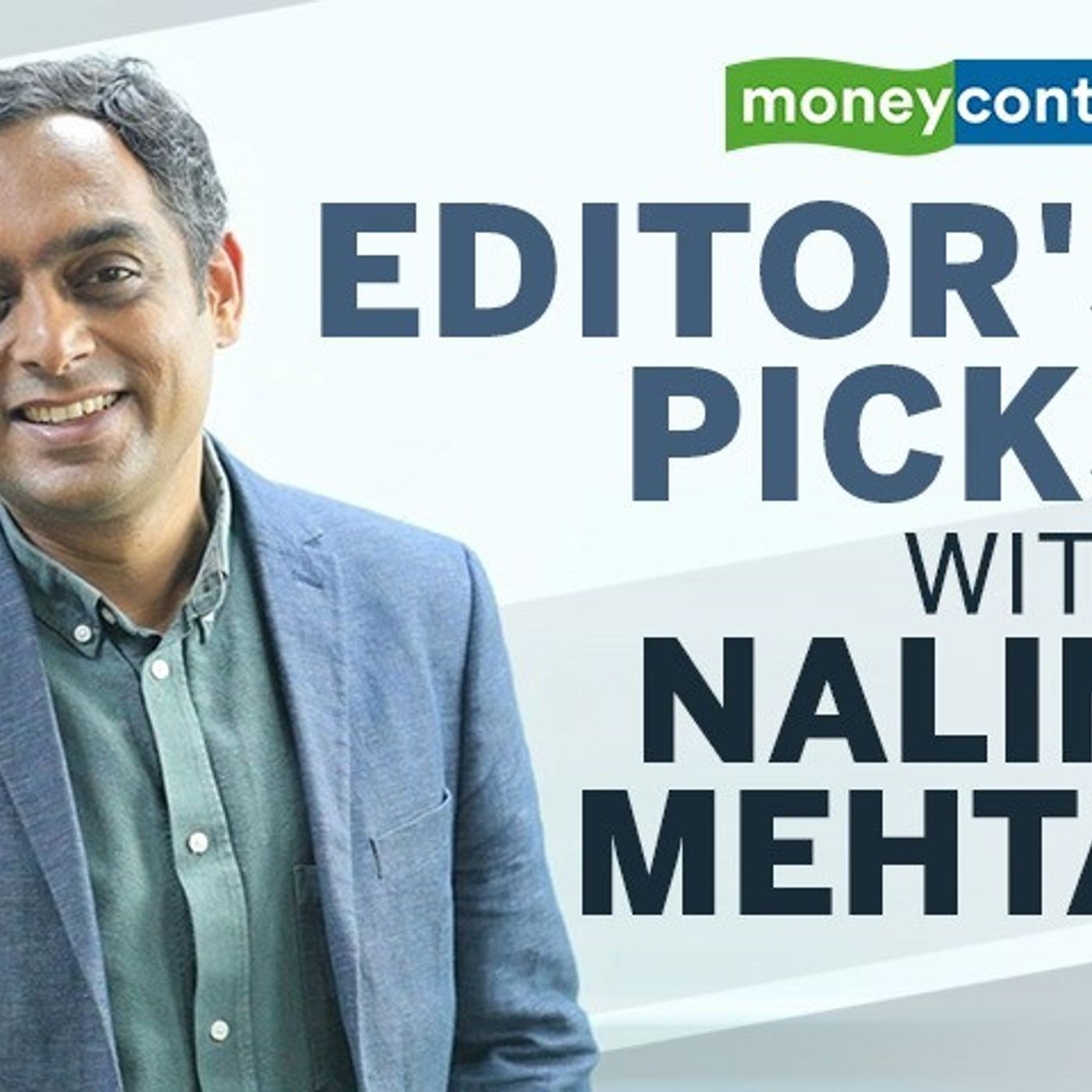
Hello and welcome to Editor's PIX, a special daily podcast brought to you by Nalin Mehta,
0:08
the Managing Editor of Money Control.
0:10
This is a specially curated podcast that brings together the best of the days' exclusives
0:15
from the stock markets, from the corporate world and the wider political economy from
0:19
Money Control's 360 degree coverage.
0:22
This voice has been generated using AI technology based on a voice clone of Money Control's
0:27
Managing Editor Nalin Mehta.
0:30
A month into the war with Iran, the strain on India's financial markets is building.
0:34
Archishma Aya reports that the Rupees brief rebound after the reserve bank of India
0:38
capped banks for expositions quickly faded, slipping to a record low vis-a-vis the US dollar,
0:44
past 95 Rupees as pressures from soaring oil prices, capital outflows and aggressive
0:51
The episode shows how constrained the RBI's room for maneuver has become.
0:55
However, the strain wasn't confined to the currency markets, equities cracked too.
0:59
J. Jaganath reports that the Sensex fell more than 2% amid crude surging above $114,
1:05
a weakening Rupee and heavy selling in banks after RBI proposed curbs on their forex positions
1:11
reports J. Jaganath.
1:13
Alongside, India's market capitalisation has logged its steepest decline in three years,
1:18
with the country's share of global market cap slipping below 3% for the first time in
1:23
four years, reports Ravindra Sonavanay.
1:26
A battle for the assets of an insolvent company has reached the top court.
1:30
Pavan Burugula reports that Vedanta has approached the Supreme Court, seeking a stay on the Adani
1:35
Group's resolution plan for J.P. Group's assets after the national company law appellate
1:41
tribunal declined to intervene.
1:43
Vedanta claims its bid offered superior value and that the committee of creditors erred
1:48
in backing Adani's proposal.
1:50
One company in the Tata Group is doing all the heavy lifting.
1:54
Dividends of about 1.7 lakh crore rupees from Tata Consultancy Services since FY20 have
2:00
helped Tata Sons absorb mounting losses at Air India and fund cash burn at Tata Digital
2:05
reports Pavan Burugula.
2:07
Since FY20, Tata Sons has received an average of 30,000 crore rupees annually in dividends
2:13
from TCS along with 40,000 crore rupees through buybacks.
2:18
Local regulations are tightening.
2:20
Aihik Sur reports that the government's draft amendments to the IT rules released on
2:24
Monday could bring user-generated news content under publisher style oversight.
2:29
While users themselves won't be treated as publishers, platforms such as Facebook and
2:34
Instagram may now have to comply with government directions on such content, including takedowns,
2:39
warnings or disclaimers.
2:41
The effects of the Iran war continue to impact the economy and companies.
2:45
Arunima Baradwaj reports that at least 10 foreign flagged energy cargoes bound for India
2:50
carrying LPG, crude and LNG remain stranded in the Persian Gulf, even as Indian flagged
2:56
vessels are being allowed to pass through the strait of Hormuz.
3:00
Meanwhile, the gas find in the Andaman Basin offers longer term promise, though commercial
3:04
output may still be years away.
3:06
The risks are not limited to energy.
3:08
Danish Khan reports that India is preparing contingency plans as the conflict threatens
3:13
sub-sea cable infrastructure, while Swaraj Bhagavanka writes that soaring airfares are already
3:19
reshaping summer travel plans, pushing many Indians to reconsider or re-root their holidays.
3:25
Economists, meanwhile, have cut their growth estimates for FY27 by 20 to 60 basis points,
3:31
writes Priyansh Verma.
3:33
In a conversation with Meghna Mital, Rakesh Mohan, a part-time member of the Prime Minister's
3:37
Economic Advisory Council, said the Iran-linked energy shock will require a coordinated,
3:43
full-spectrum policy response, spanning fiscal, monetary and administrative measures.
3:49
He expects financial stress in India's aviation sector to worsen as rising fuel costs and
3:54
route disruptions linked to the West Asia crisis begin to bite.
3:59
And finally, amid the noise around growth narratives, venture capitalist Vinod Kostler
4:04
weighs in on what matters.
4:06
He told Tushar Goenka and Bhavya Dilip Kumar that while new-age AI startups use varied
4:10
ways to report growth, what ultimately matters is the underlying cash flows.
4:15
Kostler's comments come as vibe-coding start-up emergent, which raised around $30 million
4:20
from Kostler Ventures has found itself at the centre of a debate over how AI companies
4:26
should report revenue.
4:27
That's all for today's episode.
4:30
Thank you for tuning in.
4:31
If you have any feedback or topics you'd like to discuss, feel free to reach out to
4:36
Until then, stay informed and stay ahead with Money Control.