Loading...

news
68 People Convicted In Ennis District Court Office In 2025 On Drugs Offences
About this Episode
New figures show 68 people were convicted of drug offences in Ennis last year, a drop on 2024—but nationally, convictions are on the rise.
To discuss what’s happening both locally and across the country, Alan Morrissey was joined on Tuesday's Morning Focus by Cynthia Ní Mhurchú, Fianna Fáil Ireland South MEP.
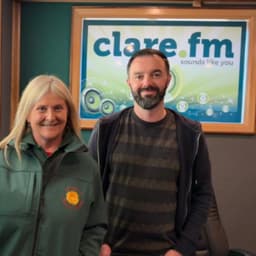
Photo (c) Pat Flynn
Hosts & Guests


Transcript
We're focusing on new figures, which show that 68 people were convicted of drug offences in
NS last year drop on 2024. But nationally, convictions are on the rise to discuss what's
happening both locally and across the country we're joined now by the Fienafol, Ireland,
South, MEP, Sinti and Nivverku. Sinti, good morning to you. Thanks for being with us.
I might focus on Claire first, and a thing drop in convictions down to 68 cases. How should we
view that Sinti as progress? Is there more to the story that we need to be aware of? And I suppose
our conviction figures always are a reliable indicator of actual drug use in the community.
Yeah, well, they're an indicator. Of course, who might say they're not reliable,
they could be the type of the iceberg figures. There's always that with figures. I mean,
I'm only dealing with the number of convictions, people convicted of drug offences.
There are many more that don't receive a conviction, they don't even receive a summons.
So what I say to you in relation to Dennis is well done. You're doing something right there.
The figures have gone down in relation to drug offences convictions by 13%. That's really good.
Now it's gone down further in other areas, such as Dundal, by 37% or Carlo, by 33%,
or indeed in Connicerti by 50%. But I'm deeply concerned that the areas that have gone up
exponentially, for example, the likes of Talamore, which has gone up by 180%, which is huge.
The biggest jump amongst all the district court areas and likes Connell, gone up 27%,
or poor Cleash, gone up 95%, but I want to know what I'm asking is,
quite some areas doing better than others. And is it to do with, obviously, law enforcement
and the judicial process and all the other stakeholders that are involved in drug prevention,
drug education, drug treatment, all of that. And if some areas are doing better than others,
then we need to look at the likes of Dennis very, very closely and see what lessons can be learned
and applied to other areas not doing so well. Because overall, I'm very unhappy about the fact
that we have an increase. Any increase at all is not good, because as we know, we have a drug's
epidemic, particularly cocaine in Ireland, where one, if not the highest user in Europe,
and we really do need to make sure that we continue to roll out our drug strategy,
robustly, swiftly, with effect, so that we can ensure that our citizens are safe.
Because the north lot of crimes stem from drug addiction or drug use.
I mean, you touched on some of those massive increases. I mean, 180% of Talamore,
100% in Roscommon and 95% in poor Cleash are huge. You've also highlighted a rise in drug
driving offences. How does that connect to what we're seeing in these conviction figures?
Yes, that's right. Last year, I made another free dose of information request in relation to
drug driving offences. And for those figures, through up with that, there was a 30% year-on-year ride
in drug driving offences. And that is huge. I mean, that's a huge percentage. And so, if we look
at road deaths and we wonder why our deaths happen, one of the reasons is obviously because
people are drunk behind the wheel or people are drugged behind the wheel. If we look at the
soft, we could say the same thing. If we look at robberies, we could say the same thing. So,
that was my point earlier, that most crimes that are carried out in the state have a background
of drug use or indeed drink. And people being drunk and being drugged. But particularly, I think
what's particularly pernicious in Ireland at the moment and affecting many, many families is
road deaths. And people in every parish, not only encountered care, but in every county around
the country, they've been affected by road deaths of loved ones. And it's simply not good enough
that we have to put up with that level of road death, which I would say to you very clearly,
is above the European average. So, that's the reason why I want to highlight this issue. And I want
to make sure that government and my very erstwhile colleague who's very committed to this
Jennifer Marnano Conner, the minister in health, who is across the drug strategy, I want to make
sure that her strategy, which is being road out of the moment, is properly funded and is properly
underpinned with resources. Because as you know, it's not just a simple case of the guard, the
guardee, apprehending a would-be offender and then issuing a summons and prosecuting the person
before a court. There are many, many other aspects to this issue. And indeed, there's a huge
health piece and there's a huge community piece. Yeah. And there are particular elements of the
national drug strategy that need to be prioritised. And even aside from that, Cynthia, do you feel
current policies in this country are keeping pace with the scale of the issue?
Yes, I think policy is, but obviously, no policy or any policy is only as good as the resources
that are applied to it. So, look, you could be very black and white about this problem and you
could say that there's carrot and stick involved, right? And there is. But I suppose it's the
detail that's applied to the carrot and stick. So, I just give you an example. For example,
the casual drug user who decides to wear the fashion eyes and just overdue it on cocaine and
think there be nobody precautions and return to work and everything would be fine. That person,
if they do come before the district court, I would be suggesting that they should be
fined and issued with a hefty fine per offence. And it shouldn't be a fine that they feel
up well able to pay that. Or it really needs to hit people who are taking a chance on this,
casual cocaine user on a weekend. But then, within drug users, we do have abusers and addicted people
and they obviously need more detox beds in our prisons or in our facilities where they offer
this kind of treatment. But then again, if somebody refuses, who is a convicted, repeated drug
treatment, they refuse to avail of a detox bed, well, then we have to look at that as well from
a judicial perspective and say, look, maybe your sentence will have to be adjusted by the judge
when you come back before him or her again. So, it's got to be in census, but it's got to be
helped as well. And it's not one five fits all. That's for sure, because the problems that are
associated with drug taking and drug addiction are very complex. You're also highlighting the
need for public campaigns. I mean, what kind of message in India do you think would actually
resonate, particularly with younger people? And do you think campaigns of this nature have they
worked effectively and often the past or do people pay any heed to them at all? Yeah, I think
that campaigns that are rolled out by the road safety authority, you know, where they do emphasize
that an accident has happened as a result of drug taking. I feel that young people don't pay
much attention to that because they don't look at television or they don't listen to radio.
So, I do think that we need to be looking at the likes of influencers. And by influencers,
I mean, even our local GAA team, even our local players, hurling football, whatever sport it is,
rugby, we need to be getting the message out there that, look, I mean, it's all good to have fun,
but I mean, these are addictive substances. In my day, it was all about don't get addicted to drink
and don't over drink. But in actual fact, neither is worse than the other. I'm not suggesting
drink is worse than drugs, but now young people are faced with either or. And unfortunately,
drugs are proving extremely attractive to young people in particular because they're avoiding
the issues in relation to body changes or in relation to other changes. And unfortunately,
it's made its way in two areas in life that we would have thought were completely drug-free,
whether it's in the sporting arena or otherwise. So, I think we do need to think again about
our advertising campaign. I think it needs to be more targeted. I think it needs to be more
personal. And I think it needs to reach young people who are the fierce on their phones.
Okay, I would do have to leave it there. But, Cynthia, thank you very much for being with us on the
program this morning. Follow us, Cheryl.