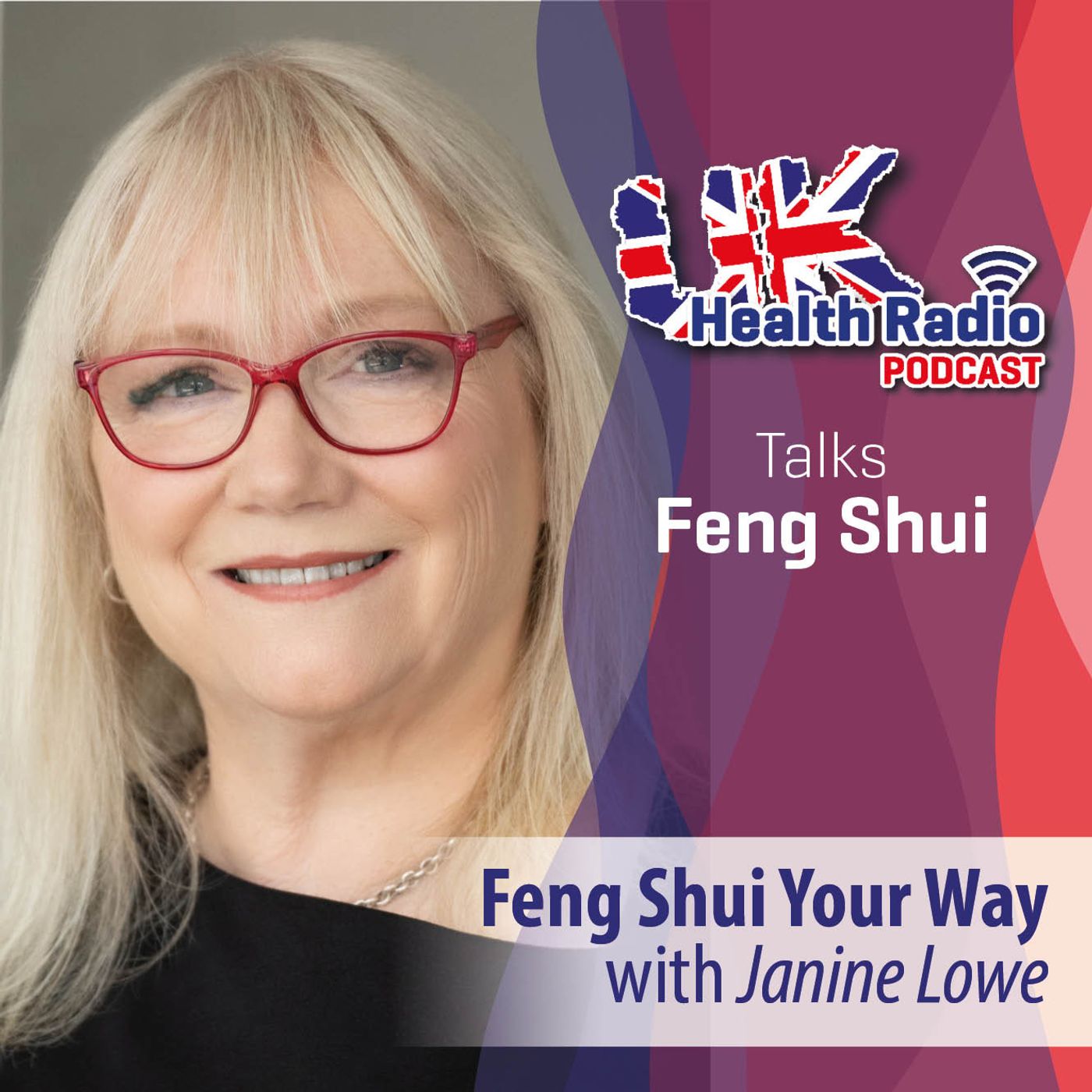
About this episode
Disclaimer: Please note that all information and content on the UK Health Radio Network, all its radio broadcasts and podcasts are provided by the authors, producers, presenters and companies themselves and is only intended as additional information to your general knowledge. As a service to our listeners/readers our programs/content are for general information and entertainment only. The UK Health Radio Network does not recommend, endorse, or object to the views, products or topics expressed or discussed by show hosts or their guests, authors and interviewees. We suggest you always consult with your own professional – personal, medical, financial or legal advisor. So please do not delay or disregard any professional – personal, medical, financial or legal advice received due to something you have heard or read on the UK Health Radio Network.
Get every episode summarized
Each time UK Health Radio Podcast publishes, we email you a written briefing from the transcript — the topics, who appeared, and any specific claims, with the ad reads skipped.
Email me new episodesFree for 3 shows. No card needed.
Hosts & guests
Transcript ready
298 searchable segments. Every word is indexed and playable.
Full transcript
UK Health Radio Podcast — 69: Feng Shui Your Way with Janine Lowe - Episode 69. Machine-transcribed; use the interactive transcript above to jump the player to any line.
Hey hey, welcome to my show, Feng Shre, your way on UK Health Radio. I'm Jeanine Lowe, you'll go to Feng Shre and Son and Chinese Astrologer. I've been helping people transform their lives for over 20 years, from private clients, to big names and businesses, and I can't wait to share my tips and stories with you. Today we're exploring a subject that touches every single one of us, at some point in our lives, grief, loss and how we begin to make sense of the death of someone we love. My guest is Veteran Astrologer Linda Munrat Slokne, hopefully I got that right, who has been practicing astrology for more than five decades. Linda has developed a fascinating and deeply compassionate area of astrology, work known as death charts, where she casts a chart for the exact date, time and place that someone passes away. After working with nearly 200 grieving clients, Linda believes these charts can help us explore the timing surrounding a death,
understand some of its deeper meaning, and perhaps most importantly, help those left behind find a way forward. Her new book, Death Charts, an astrology tool for the bereaved, brings together her extraordinary professional experience with something very personal, Linda's own journey through the loss of her identical twin. Linda or Munrat, she's going to be known through the rest of the show. Welcome to Feng Shui, you way. Oh thank you, Jenny, and I'm excited to share with you. So, Moon, we talk about death charts. I'd love people to get to know you first. Obviously I'm an astrologist, Chinese astrology, so ideal in birth. So, when I was asked if I'd like to have you in my show, I was very excited. So, you began practicing astrology back in 1975. How did astrology find you? No, actually I was at college in the late 60s and a friend of a friend knew somebody
who was practicing to become an astrologer, and was looking for people to practice for a try, giving readings. And so, I was in my 20s and I met with this other young person in their 20s, and she, back then, we didn't have computers or anything right, so she had an ephemeral, and a table of houses, and was looking all these things up in books just based on my birth date, not my birth time. And so, in our like 30 minute conversations, she said all these things that I thought could apply to anybody, but then she said to me, it looks like when you were 17, there was a dark shadow that fell on your family. And when I was 17, my mother died. And so, the fact that somebody could take my birth day and make an observation like that, it just kind of woke up this interest, and me like, I have to learn about this. Yes. So, I went to the public library where I lived. There was one astrology book. I think this was maybe
1970 or 71, but I did find a metaphysical bookstore in my town after that. And I started teaching myself how to do charts by hand, which is not easy. But that, you know, it was just that initial kind of experience where I thought this is fascinating. And as I studied it, it became more fascinating, and it's still fascinating today. Yeah. So, I'm a Chinese astrologer, and I ideally met a physics, but initially I used to have to write the charts out, but luckily, me now, they're software. So, all it does is it brings it all up, and then I do the reading. And I find that it's really interesting how much like you said, when you were 17, someone said it. And I do that all the time. You know, that's what my, I feel my job is to share these important moments. But sorry to talk about this, but I want to talk about your identity between, because her death is obviously an incredible important part of your story. Yes. So, I've been doing a astrology professionally for about 30 years, and I was doing
birth charts and forecast and compatibility charts, and you know, kind of the normal things that astrologers do. And I never really would have thought of anything related to death until I had this experience in 2005. So, you know, all astrologers watch what's happening in the heavens, and they think about, well, what does this mean for me? So, both my twin and I, of course, were having this identical cycle with this planet Uranus, which I've seen to be very important in separations. So, when she called me from the hospital and said that she had stage four cancer, I kind of knew right off the bat that we would be separated. And so, it was five months from diagnosis until the end of her life. And I was very, very fast, but I felt like because of the astrology, I made all these decisions to spend all the time that I could with her, and you know, to create
support systems for her. And then I was fortunate enough to be at her bedside when she took her last breath. And I looked at the clock, and I thought, I'm going to want to do a charge, but then it took a few months of kind of trying to find my way back to myself to be able to start investigating that. So, when I looked at that charge and in, and it took a few years of looking at it over and over, the self-node of the moon was right on the ascendant, that point of the last breath. And the self-node is associated with completions associated with clearing things out from the past. And I had this insight that even though I wasn't ready for her to depart, that she had come to a closer point in her own life, and that she left with this sense of completion. And because of seeing that, I was actually able to kind of make a turn in my recovery process, and not just think, you know,
I'm so sad, which I was, and this is so hard, which it was, but that maybe there was something about her soul's journey that actually had done everything she needed to do in this lifetime. And it helped me kind of move forward. So, probably eight or nine years later, I decided I wanted to start doing this for my clients, because of course, in those two years of talking to people, you know, people would come in, they would say, yeah, like my mom died, or you know, you lose people. And so I invited 25 clients that I knew really well to be kind of my experimental group, and rereading for them around I already knew they had lost a sibling or a parent. And so I would look at the chart, and I would kind of check it out with them, and start building kind of these ideas about how to interpret this chart beyond the death chart of my twin, which was kind of where I did my deepest study.
Yeah, interesting. So, if we seem to have a number in our family, like my dad passed in August the 18th, my mom passed on September the 18th, and there's things around numbers, and 18 is, in fact, 18 is a very lucky number for me, saying that obviously, losing my parents. But so this really, really interested me. So, for somebody here in the words, death chart, for the first time, what exactly is, I know you've explained how you used it for your sister. Where did you get the name death chart? I mean, it explains it all, but you know what I mean? So, you know, a birth chart is cast for the daytime and place someone dies, and a death chart is cast for the daytime and place. I'm sorry, birth for birth, death for death. And the problem with death charts or death in general is that it's not as well documented as births. So, you know, people will die in their sleep or they'll die in some kind of a care
facility. But having the time is wonderful, and I have written in the book, like what to do when there isn't a time, because there are other kind of astrological tools that you can use. Is it similar to birth chart? Except instead of looking at the moment, somebody enters, you look at the moment they leave, which is exactly what you've said. But did you start it, writing the death charts in that as part of the way you did it? If you know what I mean? I think I understand your question. So, I'm applying the basic tenets and tools of astrology that are relevant in a birth chart. I'm taking that same body of knowledge and kind of rearranging it a little bit to make it relevant to a death chart. So, the example I like to use is that, let's say, somebody has a birth son of 12 degrees capricorn, right? So, then as an astrologer, you're going to bring up all these characteristics and qualities and values that are assigned with
capricorn. But in a death chart, the senate capricorn only means that they died in December. And it doesn't, you're not talking about a personality, you're talking about a point in time. And so, what I focus on when I'm doing these readings is more the entreplay between all of the planets and how things line up in the houses. But that's just part one of how I use that chart. Yeah, yeah, yeah, I can see that. So, now you've worked with over 200 people. What do people normally come to you to understand? Oh, yes. Okay. So, I was really surprised initially at how many people just kind of blame themselves or had this guilt and remorse that they should have done more, they should have said more, they should have known more. It's so hard when we lose someone
because it's so fine and there's no, you can't make any reparations. And so, people often are left with this feeling that they did something wrong or if they had done something different that I'll come would have been different. And so, one of the gifts of the death chart is that it will talk about that moment that the person departs and often it will mirror the experience the person had with them leaving. I see. Yeah, it does. But would you, this is me, is a Chinese astrologer, this is, would you, the person that comes to see you, because when I do readings, I have like the family around them, would you put the person whose questions are asking, would you put their birth chart with their death chart with that be something or is it just the death chart? No, so that you hit the nail on the head. So, the people who come to see me, I put their needle chart in a bywill
and then the death chart around it. And then the death chart informs how their person is being impacted by the loss. So, I mean, I'm just going to go to a break. When we come back, I want to go much deeper into how you actually read a death chart. What the moment of passing can reveal and whether astrology can help us understand the timing of death. You'll listen to Feng Shui with me, Janilo, here on UK Health Radio. UK Health Radio. This day should not make you feel good. This day should not make you feel good. Welcome back to Feng Shui. Your way, my guest today is veteran astrologer Linda Moonrabbit,
Slotnik, author of death charts and astrology tool for the breed. Moon, please tell me how to say your surname. Slotnik, you got it right. I got it, I got it. Okay. I mean, and I'm moon in your book. You talk about three important charts, the nature chart, the death chart. And you mentioned briefly just now the bywill will. Can you explain each one of these to us? So, my name is... Okay, so, one of the things that kind of surprised me as I was studying these charts is that the natal chart often would have what I would call a signature that could suggest a loss in the person's life. And often when the loss occurred, the transits or the eclipses would be activating that signature. So, I look at the nail chart for two things.
One is you can tell a little bit and I write about this, I think, in the second chapter of the block, death charts about resiliency and the difference between people who are primarily fire signs, people who are primarily water signs. So, in this kind of general grouping, people will respond to loss in grief differently. So, that is kind of a starting point from the natal chart and then paying attention to where these losses might show up as part of the soul's journey in the birth chart. So, that's the natal chart. The death chart specifically is this kind of energetic explanation of what was happening during a person's passing. And then the two of them together, which I think is maybe the most kind of healing focused of the three, is, you know, now these are the different influences that will kind of carry you in the next year to through the
recovery process and how to best use them as a pathway towards recovery. So, have you, you know, this is me asking the question, so have you found a pattern in this? I have found a few patterns, yes. So, the last six chapters of the book kind of break everything down and I talk about transits of Saturn, Uranus, Neptune, Pluto and Chiron. And they each kind of have a specific flavor. And often there's three or four of them, so, you know, but like the planet Uranus, which has to do with unpredictability and things that are really unforeseen, will show up sometimes when people are in like head on car collisions or, you know, something that happens in the blink of an eye, whereas Saturn will be present when there's a very long drawn out kind of illness, where people are slowly getting more and more limited. So, I talk about each one of these influences,
both in relationship to this is what was happening during the last part of the person's life, but also like if you have a lot of Uranus transits, the universe might be kind of pushing you to become more independent or to become more authentically yourself. So, you know, there's a focus on both planets and eclipses on that by will. Yeah, my next question was about eclipses. Because you explore eclipses in the book, transits and aspect pens in the book, and I already asked you earlier because it was my question, even though I didn't know it was written down, the significance. So, what's the significance of the eclipses? Because obviously we've got one today, by the way, the fourth of all this, 2026, and we've got a massive eclipse about to happen about 8 o'clock tonight or 6 o'clock tonight in October. So, eclipses seem to have this impact
of what I think of as revealing a person's destiny. So, when I work with transits, the more you have experiences, let's say, with a Saturn transit, you can learn that, oh, when I have a lot of Saturn, it's time to really work hard and to be really focused and disciplined and to take responsibility for what I want to accomplish. And so, over time, I remember when I was young, I did not like Saturn because I just felt like, why does I have to be so hard, right? But then you realize, oh, this was a time where I can really accomplish a great deal and you kind of can become friends with Saturn, right? So, eclipses don't have any of what I think of as that color-apprentive potential. They bring these events into your life over which you have absolutely no control. But there's this potential for you, I think, to become aligned with a kind of evolution
on the path of your soul. So, you know, the eclipses are dependent on the nose of the moon. So, you can only have any clips like the clips we're having today where the nose are within, I think it's, I always forget if it's 12 or 15 degrees of the sun on the moon. And the notes symbolically are about our evolutionary or karmic journey. And so, I feel like when people have lost somebody and there's any clips that's especially activating like a lost pattern in their chart, this is a moment of coming face-to-face with their destiny. And I'd like to give an example of I could for your asteroid. Okay. So, I have a client who's born, I think it's in 66. And Uranus was, Uranus was opposing Chiron, I think, for a period of time. And Uranus was in her third house. And Chiron
natally was in her ninth house. And when there was any clips on that opposition, her brother died in a car crash. And it's off that third. It was in the third house of siblings. And Uranus is unexpected and Chiron is a wound. And so, you know, it was just like this mirror I thought for this initial pattern in her chart. And it lined up with her ascended, de-cented axis. Anyways, so, you know, the astrology, it's still never ceases to amaze me how it really reflects the both the exterior and interior experiences that people are having. Yeah, I mean, metaphysics has been in my life since 2003. And I, you know, when there's been a lot of celebrities in the UK and passing and I can't help but go back to their charts and see where the clash is because it's Chinese astrology. It's different, but they say they were a rabbit,
born near the rabbit. And they pass on a rucid day. That's their clash. So, what you're doing, I think, personally, and I'm definitely getting this bit by the way, Lister's, I think that you are able to tell a story to somebody, and I don't mean a story, you'll be able to reflect where people can then ask questions because we've all got questions, haven't we? We've all got questions about death. Yes. And the other question, you know, because you asked me this a little bit earlier, what do people want to know? And people will really want to know if they're beloved, whose departed is okay. You know? And I thought that way about my until she started visiting me in dreams. You just really wonder if they're okay. Yeah. Yeah. So the other thing I was going to say, does the death chart suggest that there
is a right time for the actual soul to live, to leave? Well, so I think this is now just personal opinion, but I think that there are these departure points in people's lives. You know, you'll talk to people who were in terrible car accidents, but they basically ended up being fine, or people were in house fires, or you know, and so sometimes you and I've had this feeling where you just kind of barely escaped. Yeah, yeah. I've done that. The car accident did that. And I want to know what satan, well, um, car one was doing that day, but yeah, going well, right. So I do think that there is an imprint that's the last that is a marker in that death chart for kind of like the next chapter. And there's no way to prove that or disprove that. But but yes, um,
can I tell you a little story? Oh, yes. I love stories. Can we go and tell one? That they make this way. So speaking of chiron. So, um, so my 29, we're 23 minutes apart. And we have a query is rising, which is a sign of fast ascension. So our rising signs were eight degrees apart. So when she died, chiron was going over her ascendant, but it wasn't within eight degrees of my ascending yet. So that was kind of my first clue, something about chiron was going to be important. And then in the death chart, the sun and Saturn were exactly conjunct and they within seconds, uh, making an opposition to chiron. So the chiron's story with my twin. So you know how chiron killed other people because of their own wilderness. So when she was dying, she would have these near death experiences where she would go to this place where her pain would go away and she
would hear the most beautiful music and all of our dead relatives were there, like just filling her with love. And she would come back and she would tell the people who were caring for her about what it was like on the other side. And so we were all everybody said, oh, how can you be afraid of death now? Because we got it firsthand. It's pretty wonderful on that other side there. And so I felt like this death chart was about this wounded healer archetype. And she'd been a psychotherapist for 35 years or something. So you know, we were both doing these different healing professions, but she left her in my chest as this kind of healer archetype. So we're just going to go for the break. And when we come back with we are going to carry on this conversation with a mean rabbit and all of us flushing with my words because you've got me, I want to talk and talk and talk. So when we come back from our sponsors break, we will carry on
with our conversation with me. Okay, how's the radio station? I make you feel good. So we're back. I've just got to tell you a story. So my best friend, she had cancer. And we used to take interns to stay the night with her towards the end because obviously she needed the medication quite quickly with the lollipops and things like this. And we used to do these, you know, I would do meditations with her and we'd go to this special place and we'd see the rock and everyone around and everything. And it was amazing and I loved it and it was our thing.
And then she went into the hospice and I went back into our dream and she had always been looking at me and then suddenly she looked forward in this dream. So I rang the hospital, got her husband. He came out and I said is she okay and I said he came out, she passed. Yeah. Which was like, so that I'm not afraid of what's the other side and I believe the other side is there. So when people come to you, that's something you can give them, isn't it? Yes, definitely. Yeah, I thought so. Is there, do you think people who are newly bereaved, do you think it's too soon for them to come to you? Do they have to be a little whale on the line or? So in fact, I do think that there are these stages of grief, you know, and Elizabeth Cooble Ross wrote this wonderful book
starting in the 40s and now there's a whole grief recovery industry. And I think it was in the 90s, this new sixth stage of recovery making meaning was added to Elizabeth Cooble's Ross' understanding of recovery from grief. And I think that the death chart is part of this finding meaning. And so yes, sometimes people have come and they're just too deeply immersed in that pain to like be able to hear our process when I'm saying. So when that happens, we just say I give them their money back and I say let's meet again in a year. So yes, I do think that it's kind of easier to hear what I'm trying to say when you're a little bit past some of that really like shock reaction or something. So if people coming to you for a session, what do you do to prepare beforehand? So that they, you know, I want to listen to this. So if they wanted to have a session with you,
what's the preparation? What do you do? How would they find the whole session? So for a death chart, you know, I need of course the date place and time of their birth and then the date place and time of the person who passed. And luckily now we all have software so that gets but you know, I just take time and I study it and I look for patterns and I make notes and if I don't understand something, I might look it up. But I think kind of, you know, most similar to any other astrologers' preparation. Yeah, you're intuitive as well, though, aren't you? I'm sorry? You're intuitive as well, aren't you? Oh, yes, yes. So right, things will come to me especially in that time where I'm just looking at the chart. So yeah, absolutely. I just thought so. So your book talks about preparing for maintaining, closing a death chart,
consultation ethically. Why is there, why, how do you, you know, I can only imagine if I came to you and said, on my dad passed on this day and you've done the chart and I've got a leave, I'll be like, have you tell me everything? Have you told me everything? So, so you wait, how do you send your clients on their way? You wait till they've fully understood it, finished all their questions, well, I would say it's kind of different for everyone. Yeah. You know, I have before, before we start the consultation, I have a pretty clear understanding of what I have to offer someone. And I start the consultation by talking with them enough. So I get a clue about what it is that they need to know like where they're suffering the most. They try and address the session to kind of give them information that will support their
movement or healing. I think that's really, really important. So this is a question someone actually asked me, do you see astrology in this situation as something that works alongside the natural grieving process rather than replacing grief, counselling or professional support? I think every tool you can find to recover. So I would never want to sprawl a due to replace grief, counselling, but as an adjunct to it, I think it's really brilliant and amazing. So how, you know, I'm thinking of ghosts now, you know, the ghost movie. And how's this experience working with people coming to you with the grief and giving them the the answer that hopefully they won't? How does that affect your life? I just feel like it brings me closer to my twin, you know? So the more that I've been developing
the book and the more I've been doing what feels like really significant work in this area, I just feel like my twin is with me more of the time. So would you say along those lines that people have taught you more about love? Because you're meeting all these people, aren't you? And and their feelings? Right, definitely 100%. Yeah. Yes. So as we're going to end, and you said something about to me about your twin, having heard the other side and you were saying about that she comes into your dreams, that must be amazing not to have lost her completely. But do you, do you, are you able to help people have that significant change themselves? Um, it would be lovely if I were capable of that. I know. But if you, if you, you know, when you tell the story, the thing about your twin sister,
people need to, I feel, to know that there is something after. And I think that if you can do when you're reading a death chart, if you can actually, you know, you say something significant, gives them to realize that the, the, the, the person is just through the other door, do you think? Yes. I mean, certainly. And the, many of the people who come to see me, Janine, already had a connection or were building a connection with the person on the other side. So it's my experience that people who are interested and open to astrology might have a little bit more of an openness to their own psychic capacity. But I do think that every one of us has that capacity to maintain a connection with a person who's gone. You know, even it was very subtle. And I think that you're reading this book that, that shows that they can read it and then learn
from that. And hopefully that connection will, yeah, yeah, yeah. So my last question to you. And what would you say to somebody listening today who has lost someone they love and is struggling to understand why? Well, I mean, of course, I would say that it could be beneficial to visit an astrologer who does death charts. I also think that there are psychic mediums who can help connect you with the person who's passed on. And I believe sincerely in grief therapy. So looking for different healing venues and working your way through the pain and the loss, you know, is very, very important to live a full life, even though the people that you love are no longer with us. Oh, I love that. It's lovely. So thank you so much being on, I mean, this has been really fascinating. So the book to write to buy is death charts and astrology
tool for the breed by Linda Moonright Zontnik. And where can they find this book? Any, any bookseller in the US or UK, you can find my book there. I bookshapped at org. That's one of my favorite box allos. Okay. So thank you so much for coming on Moon. And I will find the link when this comes out and I will put it in on my Facebook post so they could do it. So thank you so much for coming on. Thank you so much. Thank you so much. So much, attuning into Feng Shui Your Way. I can't wait to share more insights and inspiration with you in the next episode. Remember, life is all about creating harmony and welcoming positive energy into your world. Until next time, stay balanced and keep your energy flowing.
More episodes
More from UK Health Radio Podcast

102: Sleep Science Today with Andrew Colsky - Episode 102
UK Health Radio Podcast
95: The Hirschsprung’s Hour with Tom Richard - Episode 95
UK Health Radio Podcast
181: The Relaxback UK Show with Mike Dilke - Episode 181
UK Health Radio Podcast
13: The Smartest Doctor in the Room with Dean Mitchell, MD - Episode 13
UK Health Radio Podcast