Loading...
educationbusinessentrepreneurship
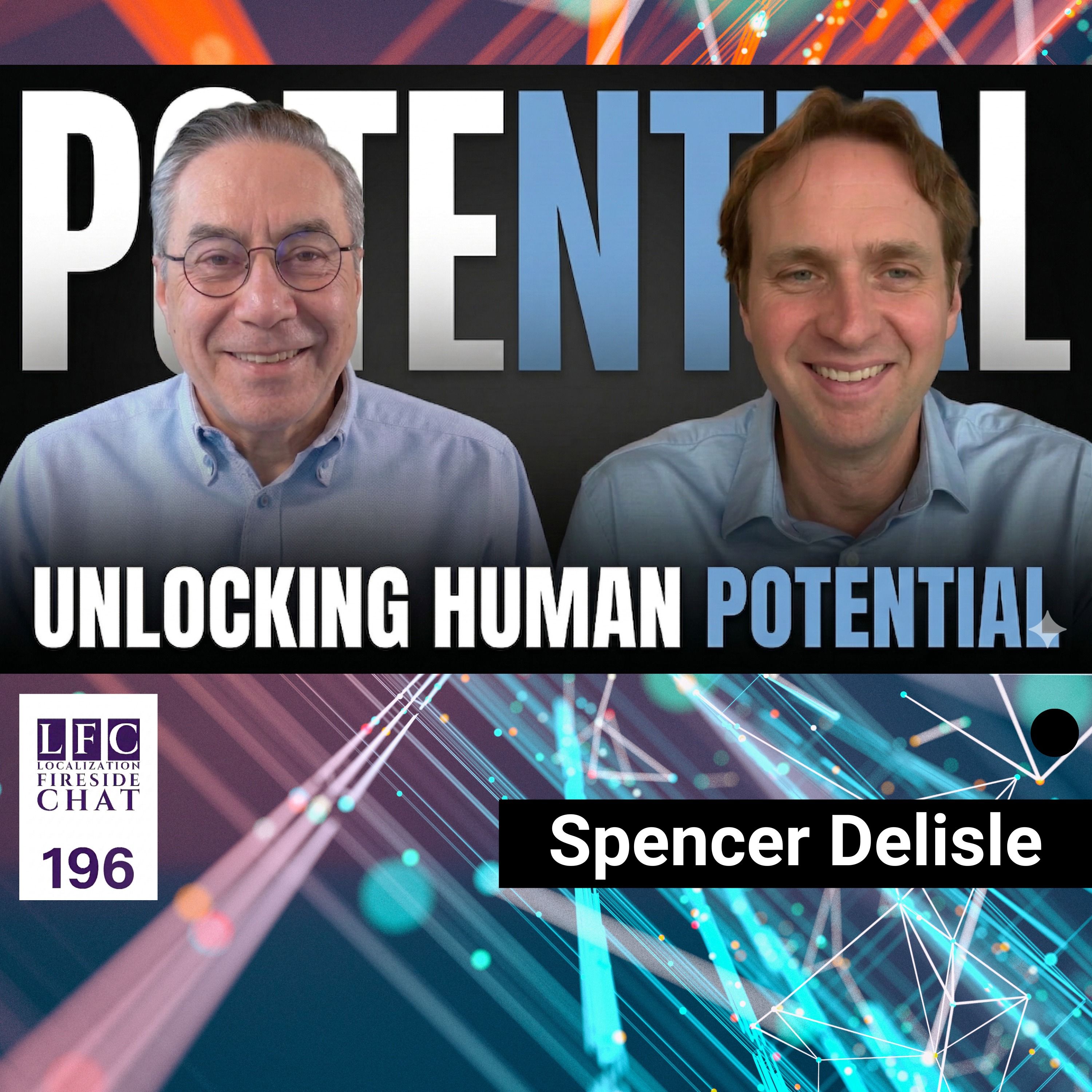
800 Million People, 186 Countries, and the Breath That's Healing Veterans, CEOs, and First Responders | Spencer Delisle
About this Episode
Spencer Delisle left a career in pharma and laboratory research to dedicate his life to something harder to measure but impossible to ignore: human potential. As President of the Art of Living Foundation Canada and VP of the TLEX Institute, he has now reached over 800 million people across 186 countries through meditation, breathwork, and self-mastery programs.
In this conversation with Robin Ayoub, Spencer walks through the moment his career stopped feeling purposeful, how a free meditation session at a university changed the entire trajectory of his life, and what the science actually says about what happens to your brain and body when you breathe with intention.
He shares a story about a military veteran who had not slept more than four hours a night in ten years since his last deployment. After one session of Sudarshan Kriya, that changed. Spencer also breaks down ongoing research with Stanford, the University of Toronto, and the London Health Sciences Centre on breathwork and PTSD reduction in veterans and first responders.
The conversation covers the TLEX corporate programs, why soft skills now determine who rises in organizations, how AI intersects with human consciousness, and what Spencer has learned about sitting with difficult emotions rather than running from them.
He closes with a personal reflection on anxiety, anger, and what he wishes someone had told him 20 years ago, and a heads up about the World Culture Festival coming to Toronto in 2027.
Watch on YouTube: https://youtu.be/Ju1aRK3OmOc Connect with Spencer on LinkedIn: https://www.linkedin.com/in/spencerdelisle/ Art of Living Foundation Canada: https://www.artofliving.org/ca-en TLEX Institute: https://www.tlexinstitute.com/ Book time with Robin: https://calendly.com/robin-ayoub/30min Read the blog: https://robinayoub.blog
Credits
Host: Robin Ayoub, Founder, Localization Fireside Chat
Connect and watch more
Website: www.L10NFiresideChat.com
Spotify: https://open.spotify.com/show/5OoURgc29R31XPGzOWL9iX
Be a guest: https://calendly.com/robin-ayoub/localization-fireside-chat-podcast-recording
LinkedIn: https://www.linkedin.com/in/robinayoub/
Support the show
Share the episode with a friend. Subscribe on YouTube and Spotify. Leave a short review.
Disclaimer
Views are for education and discussion. Apply judgment in your own context.
Tags
#L10NFiresideChat #localization #hiring #recruiting #leadership #ai
Hosted by Simplecast, an AdsWizz company. See pcm.adswizz.com for information about our collection and use of personal data for advertising.
Hosts & Guests
Transcript
Good afternoon, everybody. This is Robin and you from the localization fire site chat and welcome to another episode.
Today we are recording, I think episode 195. I want to thank the audience for being with me along the journey. We were just talking about this with my guest dancer Delil.
Spencer joins me from Quebec and I'm very excited to be talking to a fellow Canadian. He is actually, he has an office in Quebec but he is in Oakville practically my neighbor and I am a Mississauga.
So Spencer, welcome to the channel. I really appreciate your time.
Thank you so much Robin and we're just listening to your podcast hearing the incredible stories that you're able to tease out of your guests.
And just hearing a little bit about your own story, I really feel you should express it more often as a fascinating story, maybe not too many people know about.
Yeah, not many people know about this one and we were just talking about that where I tell my story over a podcast, a gentleman I met Chris Adams. He's originally from Australia but he moved to Bahrain and he opened an agency, a marketing agency specialized in the legal market, a legal sector.
And he did a podcast with me where the first time I actually went through the details of what I went through when I was a kid and how I got here and me remembering this sort of, you know, put me in a state of mind where our conversation today, hopefully it will take us to understand how people go through life journey and not equipped to deal with what life, you know, it's going to throw at them.
And then at some point, somewhere life teaches them a lesson or two and they learn it the hard way, you know, one, you know, the hindsight is 2020 as they say, right?
So looking back would say, well, you know, I've dealt with it. It's okay, but would have been better to deal with these life lessons if I was equipped to better handle it.
So as we say on this channel, let's get started with this as Spencer, everybody's got a story. What's your story? Right. Well, it all started back in Montreal, that faithful day in 1977 when I came to this earth.
Yeah, it was an interesting start because it was kind of around the time of, you know, the, you know, kind of Quebec Sovereign's movements and the starting of all that and the, you know, the kidnapping of Laporte and that whole thing that went down in Quebec, where it turned out that my dad was, was principally anglophone.
I mean, he also spoke French, but it was that kind of mass exodus of the, of the anglophones from the province. Of course, we love Quebec and much of my family is there now in Montreal and the surrounding regions. We love to speak French as well. We love our French culture, but we ended up moving outside of the province to Calgary and then after being on the west coast, coming back here.
I always had a real curiosity for life, I would say, and that got me very interested in spirituality. I was lucky enough growing up in Montreal and Toronto and Vancouver and Calgary to be surrounded by, you know, real host of multicultural friends and learns so much from, from their different cultures and religions and faiths and their practices as well.
But it was interesting because later on in my life, I got to a point where my career goals were not giving me the joy they used to in the past. That next promotion and that next level of seniority, it didn't do it for me anymore.
And suddenly my life became very dry. Like someone had just sucked the juice out of it and I just felt like I was on this merry go round and doing the same things every day and it didn't feel very purposeful or meaningful.
And so it got me asking those bigger questions, you know, who am I? What is this life? You know, why am I here? And those questions, yeah, it got me searching a lot of different paths, you know, looking into different techniques, different practices and which eventually I ended up going back to school because I couldn't figure out a good answer to see how to manage my mind and all these emotions I was feeling.
So I went back to school and in that journey, I saw a poster that said free meditation from the Art of Living Club. So I thought, okay, I'm a student, it's the right price. I'm interested in meditation. So let's give it a shot. And I experienced this guided meditation through CD from the founder of the Art of Living Guru Dev Sri Sri Ravi Shankar master of meditation from India, you'll get a meditation.
And it was incredible. I had this taste of this beautiful piece in serenity. And then I took the Art of Living part one course, eventually became a teacher.
And then I left my job in the laboratory as a biochemist working in nutritional biochemistry at McGill.
Yeah, for the past, you know, 20 odd years, I've been teaching these programs around the world and not only have they, you know, changed me tens of thousands of people have had the honor of sharing these with.
And now I'm the president of the organization for Canada. We found that. Yeah, that's it. You know, I mean, even though we're in 186 countries, we've got 40,000 teachers, we've got over 800 million people have done the programs or attended the events.
We're not so well known in Canada. So we want to get out there. And it's thanks to you that we're able to connect with some new audiences and kind of give them an idea of maybe another tool they could add to their toolbox.
Well, you know what? I hope this podcast or this blog by the time we turn it into a blog podcast and a few videos help you and spread the word and try to get to, you know, resonate with so many people out there that they need this because you look at, you know, the only way we can connect with humanity nowadays is solution.
You know, days is social media and you look on social media nowadays and you see how much we need this. You know, just from the negativity that you see out there, people have formed a bubble and they live in it and that bubble sometimes not healthy. Sometimes it is.
But sometimes it isn't, you know, exposing people to what's better. Hopefully this podcast will help a little bit. Now, you also vice president board member of T Lex. Can you explain what T Lex is as well?
Sure. Yeah. So we have different foundations, kind of sister organizations, so to speak. So art of living foundation is for the general public. T Lex Institute is which is transformational leadership for excellence. That's our organization that's for corporate programming.
So all of the programs that we do in corporations having to do with managing stress, improving teamwork, increasing focus and efficiency, you know, really, if you, if you think about it, you know, they say that, you know, you got your job with your resume, but you keep your job based on the soft skills that you have.
But if you think about it, you know, how many years have we been working to develop our resume, you know, years and years, you know, you go through all your levels of schooling into university, all the professional training and then in the end, you know, your leadership and level of seniority in the company and your level of decision making is determined not often not by those skills, but on the level of soft skills that you have your ability to lead your ability to manage your own emotions and inspire others.
So really that is the school of that we teach, we teach people how to, you know, have, you know, develop self mastery so they can manage themselves. And then when you've developed that self mastery within yourself, then, you know, only a lit candle can light other candles, you know, you become a beacon of that for your teams.
And from that, seeing how we can connect and collaborate in a more deeper and authentic way. And then from that, you know, comes very inspired, you know, purposeful work. So yeah, we're really, you know, for the past 20 years, we've been working all over the world, and we're working in about 60 countries with the corporate program.
We've had over 500,000 people we've done these trainings with and yeah, it's incredible, you know, to be able to connect with people in a domain that maybe, you know, you wouldn't think of talking about these things and learning about these things, but it's now now companies are obviously seeing the value and now we're really happy to connect with them.
So you also involve with the international association for human value, a hv.ca, I guess that's their website. Can you talk a little bit about that? You see, man, you seem to be very involved. I'm so happy to be connected with you.
Thank you so much. Yeah. So the international association for human values, you could say is our institutional programs that we do. So we do programs with police and first responders, you know, there's, there's an epidemic of stress and trauma.
I could imagine their jobs are very stressful. Exactly. Exactly. So, and that's the difficult thing, right? Like, you know, we have a difficult experience at work. And then, you know, we might, you know, be able to, you know, take a break or, or, you know, be able to take a sick leave or something like that. But often these officers, you know, it's day after day call after call crisis after crisis.
And, you know, you get, you know, into this very difficult emotional situation. And they might, you know, be in fight or flight on the first call. And then all of a sudden, they've got to come to the next call.
And I mean, we're human beings, you know, we can't just shut these things off at the flip of a switch. So obviously that can carry in to the next call. And that's where we can get all kinds of, you know, problems and issues.
But what we've noticed is that with, with first responders that practice these techniques as a team or individually, they come into the next call with a clean slate. So that's obviously better for them and their mental health and their sustainability.
But it's also great for the general public as well, because then the general public, you know, is, is, will have a much more settled calm centered first responder that's coming to aid them in this, you know, crisis situation.
So that's one side of what we do. We also work with military and veterans come back after the war and in preparation for the military activities.
And then we also work with the high schools, elementary schools, universities, students, and also the health sector with physicians as well.
Now, I've had people on the channel here with volunteer organizations and two of them, in fact, and there are a for-profit business model for these volunteering based organizations.
How does, how does it work for the art of living? Is that volunteer based? Is it for profit or is that specific programs that you're marketing that you're trying to get people to get on board with? How does that work if you don't mind?
Right, for sure. So the art of living were registered charity in Canada. So, so we're not for profit.
Basically, you know, all our resources go back into the, you know, the goal, which is to create a stress-free, violence-free world.
So, got our work cut out for us. You see that?
You've got a little bit of work to do.
Oh, that is for sure. That's for sure. So, so that's with the International Association for Human Values and Art of Living.
Yeah, we're both not for profit charities. So, so that's the way we work.
So, I just have one more question on the, on the, on what got you here, kind of thing, because this is pretty interesting.
I was reading that you worked for Novartis before in the marketing. That's right.
That's right. Sales and marketing. Yeah.
Most people go into these positions that never go out. You left. How did you do that?
Yeah, it's a great point, you know. I think that I think that over the years, I've realized that there's not just one way to solve a problem.
And, and I mean, I feel fortunate to have had experience in, you know, Pharma and healthcare on both sides, you could say, like on the sales and marketing side.
And then also on, on the laboratory side, the research, you know, in development side.
And I started, but from the research I was doing, I was also observing that there's many, you know, you could say natural alternatives that are very powerful for resolving,
or helping in the resolution of some, you know, disease states. So, you know, got me really interested in, in learning more.
And I think to a certain extent as well, I was at a point in my life where, you know, I was, I was kind of in a routine.
And I needed to break that routine in order to discover some of these incredible tools that I, that I've, that I've now learned.
And, and now actually is the, the main focus of my, of my life is to share these tools with other people.
Not just say that, you know, if you want to learn these tools that you have to quit your job and go on a totally different path, no, not at all.
I mean, these tools are really tools that you can just incorporate into your life to help your life be better.
They only take a few minutes a day and they can make a really big difference in your, in terms of the, your, your state of mind and your emotional well being.
You know, one of the things that was really impressed as I was doing my research about you, Spencer and your organization is, did I understand this correctly?
You brought these programs into organizations like Google, Deloitte, TD Bank, FIFA and even the government of Iraq and the European Parliament.
What does a sales pitch in this environment look like? And how do you get hard knows, CFOs or government ministry bureaucracy, I guess, to say yes to meditation?
Yeah, well, I think, congratulations, by the way, I wouldn't know, I don't know how you did it, but congratulations.
I think, you know, the climate has changed over the years, you know, if you would have talked about, you know, these types of practices, you know, maybe 40 years ago or 30 years ago or even 20 years ago, in some instances, you know, people wouldn't have been as open-minded.
Now, there is just a whole host of research that demonstrates the effectiveness of the states that meditation, breath work, all of these things can help you achieve.
And I mean, in the end, what is our greatest resource? You know, is it the inventory that we have in the factory? You know, is it the, you know, the price that we can get, you know, for our exchange of labor and work or service and work?
Oh, sure, those things all play a part, but, you know, what is the real value there? It's in the human capacity. And that's the thing, you know, if, if someone's, you know, completely shut down, or they're not operating as efficiently as they could, well, you're not going to get the output that you're looking for, you know, out of your teams.
And, you know, now with the level that this new generation is shifting, you know, the workplace and what they're really demanding, you know, from employers.
Employers have been really scrambling to see, you know, what kind of tangible benefits that they can provide in terms of the work environment and also in terms of the services available.
Because this new generation is very, you know, very open to learning about how they can, you know, better themselves and work more collaboratively as a team.
You know, that brings a very, I guess an observation on my side, which is probably going on in the people's mind who are listening to this podcast.
So if you were an employer and you were faced with the dilemma of, you know, I've got issues I need to fix with my staff versus replacing them.
Why would you fix the issues versus replace them?
Well, it's a great question. And the obvious answer is obviously it costs a lot to get someone up to speed into train someone.
So, you know, you've got to start at zero again with someone, they've got to learn, you know, all the company culture, they've got to learn, get up to speed on all the work that's been done, how it's been done, and then all the training that goes into that role.
So that's a massive expenditure. And, you know, I mean, I think what we've seen is that it doesn't really create, you know, that, you know, purposeful culture that that a lot of people are looking for in a workplace.
And it's, there's something to be said about someone that believes in you enough to train you and to invest in you.
And the type of loyalty and the type of inspirational work that you can, that you can draw from someone like that is just incredibly far beyond anything that you could, you know, get you'll find on a resume.
That, yeah, that investment in your people is something that in one way is very tangible because we can measure the productivity from it.
But in other ways, in those moments, those crucial moments that matter where you need that loyalty, that is something that, you know, can't be bought or hired.
That is something that needs to be built with trust. And Stephen Covey, you know, he's, I love his, his books and he has this expression from seven habits of highly effective people.
I really love where he says relationships move at the speed of trust. And I think you could say that about business, you know, business moves at the speed of trust and trust takes time to build.
And if you can invest in someone, you know, in their own state of mind, then, you know, these are tools that neither at home nor at school have we learned how to manage our mind and emotions.
You know, there's, you know, you, you get upset at the dinner table when you were a kid, you know, what did your mom or dad tell you? Well, you know, don't come down until you're in a better mood or, you know, push that emotion down.
I don't want to see it, you know, behave properly and put the genie back in the bottle. That's it. Exactly. Put that genie back in the mouth. Stuff it down.
And what does the research tell us about emotional suppression? Well, it's like shaking a can of coke and throwing it up in the air.
It's like with mentors or with no mentors.
Yeah, yeah, yeah, yeah. Extra mentors. Oh my gosh. We know that that is a recipe for disaster.
You know, what, you know, in one of the workshops, we talk about, you know, the three A's for managing, you know, emotions, you know, this awareness acceptance and action.
And typically, we live in a very distracted society. Our own lives were pulled in a million different directions. But we're not aware of how we're feeling or what emotions that just come up. We're just, we just expressed them.
And I remember I had a boss that he was brilliant scientist, but his method of communication was screaming.
That's a boss you want to have. There you go. Yeah, yeah, there you go. So, but he was brilliant.
So ever you obviously we all wanted to work with him, but that awareness of the emotion was just completely not there, you know, stuck in the amygdala, incredibly brilliant intellectually, quite immature, emotionally, emotional regulation.
And like it or not, you know, you can, you can go alone or we can go together and it's so much more powerful together.
You know, being able to be aware of that emotion is the first step. The second step is acceptance.
So being able to accept that, okay, I'm feeling angry in this moment. So I've told someone, you know, time and time again, you know, the way that we'd like it to be done and they keep doing it the other way.
Obviously frustration is going to come up. You don't get angry. It's normal. But, you know, if we can accept rather than reacting from an angry frustrated mind, what happens with acceptance and attention, up, up, up, up, up, up, the mind just settles down by just simply saying, okay, well, I'm feeling this emotion, I'm a human being, I'm going to give myself permission to feel that way.
Angry or anxious or whatever it is, in any case, this is what's happening, whether I like it or not, you know, I, who, you know, who likes to be angry? I don't know anybody. Yeah, nobody, you know, who likes to be anxious, same thing.
So, so obviously it takes a little bit of courage to be able to be present with that and just be with that, that storm of emotion, so to speak.
But the incredible aspect of that is that when you are present with that, that storm settles down and from a calm settled centered mind, you can respond instead of reacting.
And that is the value there. And I mean, I think, you know, over the past 20 odd years, we've seen so many organizations transform, you know, by being able to, you know, learn some of these, you know, laws of the mind, some of this wisdom.
And then even beyond the awareness, acceptance and action, being able to take rational intelligent intuitive action after, after your mind settles down, the techniques with the breath and the meditation are very powerful because you don't even have to use any of what I just shared eventually with time and practice of these techniques.
Your system automatically becomes more regulated and your baseline level of stress is lower. So instead of reacting and being out of control up here, well, then maybe regularly, you've regulated yourself so you're much down here and maybe in a crisis, you go up here, which is much more manageable.
Absolutely. No, you come from the research background. Have you done any research on this or have you tested the idea? What's happening in the brain at that time? What's the measurements there?
Yeah, that's a great question. You know, you're, you're going right up my alley here, Robin. You know, this is my cup of tea.
I know that I just, I'm sorry, I got to get this. Yeah, that's it.
So our living foundation, we have over a hundred plus peer reviewed studies on the techniques we teach. One of the primary techniques we teach is called Sudarshan kriya or sky breath meditation.
Sumin's proper and Sanskrit, Adarshan means vision and kriya is a purifying action. And the idea is that through doing this breathing technique, not only do I get a clearer vision of the way things are in front of me because I'm releasing the stress and the, you know, the little traumas and the negative impressions from my memory that's clouding my vision of the present.
But it gives you an opportunity to also see the essence of yourself, which is peace, which is joy, which is love, which is enthusiasm.
You know, a little baby doesn't need a reason to smile. But as we get older, men, crack a smile from a teenager. Good luck or an adult even worse.
So, so going to the research aspect. Yeah, the very interesting thing about these techniques is that typically if you look at our nervous system, which is the play field of our mind and emotions, so to speak, the autonomic nervous system is generally operating on its own, you know, pretty much independently.
And we don't have so much input into it actually, but the beauty of the breath in particular is that it can have a direct impact on the autonomic nervous system. So, for instance, autonomic nervous system has two parts.
One of them is the parasympathetic nervous system, which is kind of that rest and digest, you know, being able to step back, rejuvenate the system.
And especially in a crisis situation, this is extremely important to be able to activate this system.
Doesn't matter what type of crisis, Spencer, doesn't matter if it's emotional crisis or physical crisis or doesn't matter.
Yeah, I mean, both if we can, if we can relax and calm the system, typically if it's an emotional system or in a more stable calm centered position to make a response.
And also in a physical situation as well, because because typically the body and the brain nervous system, they don't differentiate between a physical stressor and a mental stressor.
So you may be being, you know, our nervous system is perfectly designed.
And if you're being chased by a lion, you're going to go into fight or flight, and that's fantastic, because it's going to save your life.
Nowadays, we may not being chased by lions, but because of the level of stress in our life, we start seeing everything as lions.
We go home, you know, our partner's a lion, we've got little lions barking, burying at us at home, and we become, you know, this sort of this, you know, hyper vigilant, you know, stressed out person.
And it increases our aging, you know, not only the way we look, but it actually reduces the telomere length as well.
So, so we're losing our lifespan and we're actually looking older with all of this stress.
So the beauty is that if you, if you've heard of it, the stress hormone is called cortisol, one of them anyway.
And what happens in a crisis situation is that our, you know, kind of seat of our intellectual brilliance creativity is the cerebral cortex here in the front.
And what happens in a crisis situation is that the cortisol level spikes and cortisol actually interrupts the communication between the neurons in your cerebral cortex.
So they, they cannot communicate. So what does the brain do? Well, I'm going to go back to my lizard brain, the amygdala.
And I'm going to start making my decisions from there because I can't this wizard brain or cerebral cortex is not functioning.
So back to the primitive mode of brain kind of thing, yeah.
Exactly that, exactly that. You're back to this primitive way where you're very reactionary and, you know, you're trying to put out fires everywhere.
And what happens is is that when we involve some breath work, it stimulates the vagus nerve.
And the vagus nerve is one of the principal ways that we can clear out this high level of cortisol from the cerebral cortex.
And when we do what happens, that communication is returned. And we switch back into the wizard brain or the cerebral cortex and we're able to see the forest from the trees, we're able to focus deeply as well.
And we're able to have that kind of creative intuitive insight that we wouldn't have from this confused flustered mind, but it's, it's a much more settled calm mind, almost the difference between a rushing river and a lake when you go early in the morning, right?
You haven't even, there's not even one ripple there yet, you know, obviously with time and practice, the mind can become this very calm centered, several lake of equanimity.
And at the same time, have incredible energy enthusiasm and focus power to get things done and also connect to that deeper level of intuition.
Now, the science of breath comes up and you work quite a bit that phrase. And I didn't know just for the audience, you know, I'm just reading around about this particular episode on how we're going to record it and what kind of question we're going to throw at you.
I found out that we breathe 20,000 times a day without even thinking about it. And so when we put science behind it, things tend to be a little different. And that's what you were just explaining earlier. Am I correct?
That's exactly right. And it's incredible. You know, I mean, there's this old parable of this beggar that's sitting on, you know, below this, this tree. And he goes his whole life begging for just the necessities just to get by.
And then this man is man passed away. And when, when he was passed away, they removed a little bit of dirt from underneath him to just, you know, clean the area.
And what did they find? They found an incredible treasure filled with gold and all kinds of treasures and jewels. So this person was sitting on this immense wealth, their entire life. And they didn't know and they went on begging for their entire life.
And so this is, you know, very like many of our own life, so to speak, you know, we have this incredible secrets that are within the breath, you know, something we do every moment, but we just have never been taught how to, you know, unveil these secrets and really be able to benefit because if you think about it, you know, the breath is not just a nice to have.
We have to live. I mean, yeah, exactly. Yeah, where would you be without your breath? I mean, you're, you're not going to get too far.
Right? You know, you know, and there you go. So, so that's the breath is the is one of the essences of of life. And and with, with our racing minds, you know, being either caught up in the future, worrying about what could be or stuck in the past, regretting, you know, what I had said or what I had done.
Our mind is constantly vacillating between the future in the past, future in the past. And this is incredibly exhausting for the nervous system. And, you know, with that in mind, well, many people have read the all those books, you know, about being in the present and living in the present in the power of now and all these types of, you know, readings, but the next question comes, okay, well, how?
Yeah, how do I do it? And in that sense, the breath can be a very, very, very close and powerful friend because, you know, can the breath be in a moment other than the present moment?
No, I don't think so. I mean, you can't, you can't be in the past and you can't be in the future.
Yeah, you know, can I say, okay, I breathe enough today. I'm going to take it up again on Saturday.
And no, no, it's not going to work, right? So the breath is always in the, always in the present moment. So it is an incredible, the breath in the body are fantastic tools for bringing ourselves back to the present moment.
And not only that, the breath is very much connected to our mind and emotions as well. You know, you think about it like, how do you breathe when you're happy?
Well, it's like the in breath kind of never ends. You know, the out breath is much more muted.
You feel, if you're levitating almost when you're happy, you feel like you're breathing and levitating.
That's it. Exactly. You feel just like levitated and expanded. It's incredible. You know, you don't even notice it when you're happy, but when you're sad, you're not doing so well, your energy's low.
And I'm assuming physiologically, you're not taking enough oxygen, your cells are not being replenished enough and affects your health, affects disease states, all that stuff.
Yes, 100% 100% there's two sides to who we are as people, right? So we have a gross aspect to ourselves and we have a subtle aspect to ourselves.
So I like to use this as an example, you know, this cell phone here, you know, what is the gross aspect of this cell phone? Well, you could say the case, you know, the hardware.
Yeah, yeah. So it's a gross aspect, you know, and yeah, exactly all of those things. And my grandfather back in the day would say, oh, well, I don't believe that nothing exists unless I can touch it.
But he came from a different generation where where that was the case. But now we know that no, no, no, there is a subtle aspect to everything in our world, including, you know, the cell phone.
So, you know, what's the subtle aspect to this phone? Oh, you could say the Wi-Fi, the signal, you know, the software. Can you touch the software? I mean, I'll be very impressed if you can, you know, this, this is all part of the subtle aspect of the phone.
So in the same way, we have, you know, a physical body, physical systems that work, and we also have a subtle system as well. There are many different ways that this subtle system is just described.
But this subtle energetic system, you know, in the Vedic philosophy, we call it the pranic system, pranic energy system, this flow of energy through the body, you go to other Asian modalities, they call it the the cheat.
So this movement of energy throughout the system. And what we've noticed is that not only does breathing, breathing practices, controlled breathing practices, increase your level of oxygen, decrease the level of cortisol, help you improve your immune response.
I mean, it even has an effect at the level of the DNA, and we can go into that a little bit more later, but there's also an effect on this subtle aspect of our system.
So being able to increase our level of energy, being able to help us manage those very subtle emotions and states of mind that we have.
You know, this now, the more subtle side of the system is these soft skills are becoming, you know, just as important and sometimes more important, especially as we go up the wrongs of leadership in the workplace than ever.
You know, you reminded me when you gave the story about the beggar who people found a bunch of stuff, a bunch of treasure under him when they moved the portion.
You remind me I had a, I lived in mucked it for a while, and my, I won't mention any names. So my father had a little tiny diner.
It was, and I won't mention the name, as soon as I mention any of you are going to know what I'm talking about.
There was this individual who was living on the street in the, in the city, everybody knew who without person was, and he used to come to my father's diner, my father will give him food.
And then we got to know the person a little bit. Then we, my dad sold the diner, moved on, you know, moved to another city, and then we found out through some of our friends in the city that this person has passed.
And this person always carrying in his hand, a plastic bag, they found over $200,000 in his plastic bag after the person.
So sometimes these stories based on truth, and there are, I'm sure many stories, such as the one I just, just told you about, you just reminded me of that person.
And I can still see him till today coming through the door to my father's store. These pictures will never leave my brain to be honest with you.
It's, it's, it's amazing back to what you were saying earlier. It's amazing what the human being unrealized potential is.
And unlocking that unrealized potential through the means of what you're just, what you're just mentioning earlier.
Like I know, for instance, you've worked on, you mentioned actually in your, some of your research about integrating recovery strategies, especially for athletes, for people who are under a lot of duress, under a lot of, even, even, you know, first responders, you know, military people with PTSD's.
Have you done any work with these on the research side with these types of individuals? What is the integrated recovery strategy look like?
Well, just to give you a short anecdote. So we've been doing a number of studies with veterans, military veterans around the world, but we've got, we've got studies in the US out of Stanford University of Wisconsin, a number of different academic institutions.
And here in Canada at our own University of Toronto, there's various very interesting research happening around looking at post-traumatic stress symptoms and the use of the sky breath meditation and the effects.
And we had on one of those studies, we did some, some work with University of Western Ontario as well at the London Health Science Center with veterans as well.
And I remember one of those participants, I won't name his name for confidentiality, but he was a veteran that told us he had not slept more than four hours in the past 10 years since his, his, his last deployment.
So I mean, you think about it, how would we function? How do you function when you've had four hours of sleep? I mean, typically not so well.
Yeah, from a scientific standpoint, there is only one organ in the body that doesn't cleanse itself 24 hours a day. You know which one that is?
It cleans itself. I think the brain doesn't, it's the brain. Yeah, the brain does not cleanse itself like all the other organs 24 hours a day. It only cleanses itself essentially one time, which is when we sleep.
Now there's mounting evidence that it also cleanses itself during meditation, another reason to practice the meditation. So you can imagine, you know, the mental fog and the toxins that are building up physically in that person's brain.
And this isn't over a few days, this over a number of years, a decade actually. So he came in, his head was on a swivel, he couldn't stop shaking and moving around.
And he was just saying a reason he was there is that, you know, he, his family is falling apart and along with himself.
So he did that Sudarshan Kriya sky breath meditation our first session. We did it together as a group.
And he went home. And the next day he came back and he was kind of tongue in cheek angry with us. And he said, listen, you guys are in trouble. We said, okay. Uh oh. What did we do?
Yeah. And he said, because of you, I almost missed my dentist appointment this morning, because I slept 10 hours. Wow.
That's a miracle. Incredible. You know, incredible. That this Sudarshan Kriya was able to give him that release of those negative emotions and impressions and traumas from the past.
And of course, it's not always a smooth ride. You know, we say that sometimes meditation and these breathing techniques can feel joyful and pleasant and blissful.
But they can also feel, it can be difficult. You can feel anxious. You can feel angry during these techniques. Why? Because it's coming up to come out.
Correct. Correct. And yeah, it's your shaking of that rug. Right. If you want to clean a dirty rug, what's the first thing comes out?
Big stuff. All that. Yeah. The big stuff, isn't it? All the dust and the dirt and the cake don't. And I mean, you're cleaning that rug and it's like worse.
You wish you never started because it's worse than what before you started. But with time and patience and practice, what happens?
You've got a beautiful clean rug. And it's the same with our nervous system by practicing these techniques.
You know, it's not always comfortable, but you end up free of those things. And this guy like his head wasn't on a swivel.
I mean, he was still moving around and he was still pretty jittery, but he was just after the first session.
And I mean, that's what we've seen with veterans and military personnel, particularly from a study, I believe it was studied from Stanford, that looked at these techniques, the effectiveness in reducing PTSD.
And what they found was is that there was a significant statistically significant reduction in PTSD symptoms and not only did that symptom reduction persist, but it persisted three, six, and 12 months after the course and get this.
Whether the participants did the practice, the daily practice daily or not.
Of course, this is a practice, right? It's not a one and done, you know, it's like anything, you know, you might say, okay, well, why do I have to do the practice, you know, day and day? Well, it's, you know, why do you have to brush your teeth every day?
It's part of the being, I guess, right?
Exactly. You know, we talk about dental hygiene. It's really important to us these days. And what about mental hygiene? So it's the same thing. You know, I mean, most of us are brushing our teeth, you know, once or twice a day, I hope.
Or, you know, and, and it's the same with the mind, you know, we go years without doing anything for our mind, and we wonder, you know, you repair your car.
I don't know, what is the every 50,000 kilometers? You got to do the oil change. What do we, when do we do the oil change for our mind?
It just doesn't happen. So having a practice is the ideal few minutes a day to your daily program. And the difference that you see is remarkable.
You know, not only at home and in your own life, but at work and your performance and your ability to be present, you know, whether it be the office or whether it be with your kids.
And, and that's what we've seen with the, with the veterans, a true rehabilitation. There's actually a film about this is called almost sunrise.
It's about two vets that decide to walk across the US and they didn't end up discovering this program. Yeah, actually one of them, they both did the program. One of them actually became a teacher. It's, it's really incredible story.
You know what? I have like 20 other questions. I want to ask, but probably I won't have time to ask you. But what I want to do is I want to talk about artificial intelligence for a minute. Why? Because when I last podcast, I did yesterday I recorded a podcast with one of the top surgeon neurosurgeons in the US.
He actually, and I want to thank him for doing this. Steven Flowsky. He took time out of his operation room and his operation during his or our years and came out and to do the podcast with me.
And we're talking about the use of artificial intelligence in pain management. And he was telling me about a particular invention that it is being used now where they implement a little microchip in the vertebrae fusions and that dispense a electrical current into the nerve system where it manages pain.
Therefore, improving quality of life from zero to 80% 90% in some cases, people are not feeling any pain after that. Quite and you can manage the whole thing on your, on your phone now by dialing in and out how much because it interact with your phone.
It's got a Bluetooth technology inside of it. It interacts with your phone. It tells you can tell it dial new programs to it. I upload a new programs to it if the new program becomes available in terms of managing the level of current that you're dispensing to the, to the nervous system.
So in your world, I mean, that was fascinating. And I was just listening to this and thinking, wow, where are we going with this technology? What's next? Because every day you hear something new. So how is artificial intelligence being used in your world, Spencer?
Yeah, I think there's a number of different applications. And we're, we're using it everywhere I think in day to day as everyone is, you know, in terms of, you know, brainstorming and in terms of, even, even looking at how we can, you know,
run a better organization. We actually have our own applications, the art of living app, as well as we have a new app called the SATFA app, which is a wonderful app to kind of create some consistency in terms of your meditation practice.
And I know that that app is using some AI personalizations and effectively, I think on, especially on our IT team, like that's where we're going in terms of our interactions online, you know, to the point where, you know, when you visit our website, you're not going to see the same website that I would see, you know, based on, you know, your, your web history and based on who you are and the information that you share.
And what you're interested in, you're just, you're going to be showing a website that's completely different, you know, and it's been built, you know, around, around that.
And I guess I would say that we're also interested in another type of AI revolution, which is the AI, the absolute intelligence. And we have a new institute that we've developed called the AI or the absolute intelligence institute.
And this institute is in delving into this incredible power that is our own self, our own, our own mind and beyond.
In fact, we have a program for kids called the intuition process. And this is developing these kids intuition and it's kind of seeing how they can tap into the sixth sense, so to speak.
And I mean, we've seen this in athletes all around the world where you asked them, wow, you weren't looking in that direction and you hadn't been looking in that direction.
But you passed to that person and it was right like in hockey right on their stick. I remember an interview with Greksky and they were asking, how does you know he was there? He said, you weren't looking at all in that direction. So he said, I just knew.
So that level of kind of extra sensory perception is possible in all of us, but we just have not learned how to develop it.
So, you know, if you look up the institute of the of absolute intelligence institute of AI dot AI is our is our website, you can explore, you know, some of the research that we're doing and some of these programs that we have that we have for children, particularly.
The results are pretty incredible. I mean, principally, the results that kids get is much better focus, more confidence and ability to feel less stress and be more centered in difficult situations.
But even beyond that, there's some pretty incredible skills that come up like some of the kids can read with a blindfold.
Now, from my scientific background, my first question is like, how is that even possible?
Yeah.
Tell me the mechanism for that and science is going to catch up and we're doing we're doing research on all of these different abilities right now.
But, you know, in the same way that we can now have a reading, you know, with magnet magnetic resonance imagery, you know, MRI, you know, something like that in the past, it wasn't even thought of that you could look through someone's body and be able to, you know, understand this.
So we're getting to the same level of understanding with these kids, but it's pretty incredible, you know, seeing these kids playing video games with the blindfold on some of the kids are even assisting the police with missing persons and this kind of a thing.
So, I mean, it definitely sounds kind of woo when you say it, but to see them, you know, actually being able to help the police and the police, depending on them and then finding the culprits, the proof is kind of in the pudding.
So all this to say that, you know, we are on really the cusp of some pretty incredible discoveries with the mind and the power that we have within ourselves.
Because of kids, they don't have so many concepts like we do, it's much more easy for them to learn these types of techniques, but they do have a code of contact, they can't, they can't do it for any lottery numbers or anything like that.
And it is, I find it just fascinating.
If you are interested in learning more about that, you can check out that website.
Yeah, thanks for sharing that. I really appreciate it. Now, like you snowboard, you surf, you play ultimate frisbee, your bio says, happen is it's not a goal. It's your nature. What does that actually mean? You know, on its Tuesday morning, let's say, right when something is going sideways for you.
Yeah.
I love it. Love it Robin. You know, I love how you really bring it to like brass tax and making very practical for people. And that's what we need actually.
So let's, let's put it like this, things go sideways, you know, and you're in a bad mood, your energy is low and you're, I'm telling you here that your nature is peace and love and joy.
Well, I'll tell you one thing in that situation, I don't feel any of that, you know,
it's like, I feel the opposite of all those things you just said. And if my nature is that way, then why do I not feel like that? Why do I feel terrible in this moment?
Well, my answer to that would be okay. For example, you know, in Oakville, it's a cloudy day today. But does that mean that the sun is not shining bright on the other side? Well, of course not.
The sun, the sun is still there. It's just the clouds are in the way. And the problem is is that so many different emotional baggage is we carry around.
You have a particular situation. It affects you. You know, you have some kind of little trauma or stress from that situation.
You're, it's like we're putting on these colored glasses every time we have an event. So you got the red glasses and then you put the green glasses on from this event.
And then you have a failed company and you got the purple glasses. And then we've got the yellow glasses from, you know, fight with my, you know, partner.
And then the kids are complaining in another pair of glasses. Before you know it, you know, good luck to seeing anything.
But you know, your vision is so clouded with the past and all these impressions from the past. You know, I liken it to remember in the past where you would go and get your film developed at the shop street.
Long time ago, yes, that's right. Yeah. And if you were, if it was, and you usually would take seven days, but if it was really fast, you would get it in 24 hours.
That's right. I mean, and then sometimes you have this, what do you call it, double exposure. Of course, right where I took a picture of my sister at her birthday, blowing up the candles and I have a picture of this bird.
And the double exposure is the bird is like on her nose in the photo. And obviously that didn't happen. But, you know, this is the state of our minds. It is not double exposure. It is like multiple exposure.
So we're not able to see things as they really are. And that's the reason we're, we're, we're clouded by all these impressions and stress. Okay. So now what to do. Well, with, with these very powerful breathing and meditation practices, we can clear the clouds and more and more with time and practice.
You can get an experience of that joy, that abundant infinite energy, love, peace, enthusiasm, creativity that is your nature. And it just takes a first step, you know, come, come and join us in the part one art of living program or
if you're not ready to invest in yourself yet, check out our YouTube channels or social media.
There's a lot of techniques online and it's a great start to start to put yourself in the driver's seat.
Very interesting, Pastor, like from what you're describing, you know, a lot of people out there needs this. Me included, you know, we all go through things. And, and the courageous one is the ones that they declare, yes, I need it. And the wow isn't it.
People that they're not so courageous, they probably keep it hiding. That's right. And you know, pretend things that didn't happen. But at the end of the day, we're all human, we're all suffering from the same thing.
Some people have the declaration, some people don't. It's up to people who have to take the initiative, I guess, and move forward in your life.
One of the questions I have for you, if you don't mind Spencer, is that, and I asked this question to everybody. Okay. So it's not, it's not an, it's not an unusual question.
What do you know now that you would wish somebody have told you 20 years ago?
That's a great question. Anything you would have changed today, in your way, you know, you exist, you behave, you're your, your business, et cetera, that perhaps if I would have known this 20 years ago, I would have done it completely different.
Yeah, I would say that I would just tell myself 20 years ago that it's okay to feel your emotions. Like I used to be a very anxious person, you know, and a very angry person.
I mean, what a combination, my goodness, what a treat.
But that was the reality for me, and I really thought that I was, that is the way I am, I just got to accept it, that's the way I am, and that's it.
And of course, you don't want to feel like that, you know, no one likes to feel like that.
And I think to, to be able to go back and say, hey, spends your human being, you can give yourself a permission to feel that way.
Who cares? What do you, what, like, who do we have to perform for?
Yeah.
Yeah, absolutely correct.
In any case, no one is going to know what's going on in your own head, and there is a lot of power and strength and treasure actually waiting for you when you embrace those emotions, and you be with them.
You know, sort of weather the storm.
At one of our retreat centers, we have one in Quebec, where I live with my wife there, we have another one in Boone, North Carolina, and we have a pottery studio there.
And when you make the pottery, you know, do you just, when you're finished making the pottery on the wheel, what do you do with it?
I don't know if you have any experience with that.
Now you have to take it off the wheel, probably.
Yeah, you got to take it off the wheel. There you go. That's, that's, that's right.
And then, well, if you leave it on the counter, it will dry, but it'll be very brittle and it'll break very easily. So what do you do?
You put it in the kiln.
And what, what is the temperature of the kiln?
Is it a comfortable 23 degrees?
No, they're conditioning on and off.
They're conditioning on and off at, at whim, you know?
No, absolutely not. It's 700 degrees in there.
It is not remotely close to comfortable.
There, there is a, in the yogic tradition, it's the language of yoga and of meditation and breathing techniques is Sanskrit.
And the Sanskrit word, just Sanskrit word called tiktya, which is forbearance.
And by being able to, you know, be with those emotions, become aware of them.
And forbear those emotions, what happens? They flip.
And your energy increases and you get connected with that, with that joy, that love, that peace, that creativity, that is your nature.
But it will, it will really only happen if we're able to have that patience.
And as you said, very aptly, the courage to be able to do that, it's not an easy path.
But you could say that however you think the universe of the divine, whatever you believe, doesn't give easy jobs to capable people.
And we are all one of those. So I would say if I had known that, man, it would have saved me so much grief and struggle and pain, that I wouldn't have had to go through.
I mean, I'm grateful for that as well, because it led me here on this path.
But at the same time, hey, if you can avoid it and have a better result, please.
Why not? Please do. Yeah, why not? Yeah.
You don't have to go through it. Why not?
Hey, Spencer, I want to thank you so much for this. I really appreciate it.
Fun conversation. I didn't notice the time has gone by.
I could have talked to you for another couple of hours, but for the sake of time, I think we should stop it here.
And you'll welcome back to the channel any time. I personally enjoyed this conversation.
I'm sure our audience will have fun with this one as well. And any final comments before we terminate the recording?
Well, I would say that, you know, see how we're always running around taking care of everybody,
taking care of people at work, taking care of people at home, and often one person gets left out.
Of course. That's right. That's a very important person.
And, and, you know, take the time today. You know, don't wait for tomorrow. Take the time today to do something for yourself.
Whatever that happens to be, you know, whether it's some breath, work, and meditation, or whether that's to listen to your favorite song,
or do your workout you've been wanting to do. You know, when you take that time for yourself,
it will just show up in such positive ways and every other part of your life.
And, and I would say we've got to, for all of us here in Canada, we're going to be awarded with the World Culture Festival happening next year in 2027 in GTA.
And celebrated in Toronto. It's kind of the Olympics of culture.
We're going to have one of the largest. You were the MC at one of them, wouldn't you?
You were at the MC? One of them before in India.
It was, I was, and we got carried away in all our conversations. We didn't get a chance to talk about it,
but I just wanted to take this opportunity to make everyone aware.
We're going to be having curtain razors across the country until fall of 2027.
And it's going to be celebrated here right in Toronto.
And yeah, we're really looking forward to, to celebrating cultures from all around the world and meditating everybody.
Absolutely. And for the audience, if you need to get a hold of, if you think you want to get a hold of Spencer,
and you can't find him, you connect it to me, please connect me, connect to me, let me know.
And I will connect you, point you in the right direction. I'll connect you to Spencer, a daily as well.
So what I'll do also, I will include as much links for your various websites,
spends in my, in my bot, in my bot podcast, like when I publish things.
And I will tag you on LinkedIn as well. So everything comes in all together.
And I really had fun with this episode.
I really appreciate it. Thank you.
Feel at ease. And I love your stories and anecdotes from your life as well.
It was really enriching. And yeah, I'd like to personally invite you to come for one of our part,
Art of Living part one courses. I think you'd love it.
I would love that. I would love that. Are you kidding? I'd love that. I'll be there.
Wonderful. Okay, let's stay in touch.
We'll stay in touch for sure. For the audience, thank you so much for listening in.
If you're coming on YouTube, thanks for watching us.
If you're coming on our audio channels, thanks for listening in.
And if you're reading us on the blog post, where we summarize all these conversations
into a small, consumable, three, four minute read on robinayub.blog.
Thanks for reading. And thanks for subscribing.
I really appreciate your time with me.
For this particular episode, and I'll see you at the next one.
Thanks everybody. I'll see you at the next episode.
Thanks everybody. I'll see you at the next episode.


