Loading...
sciencenaturaleducation
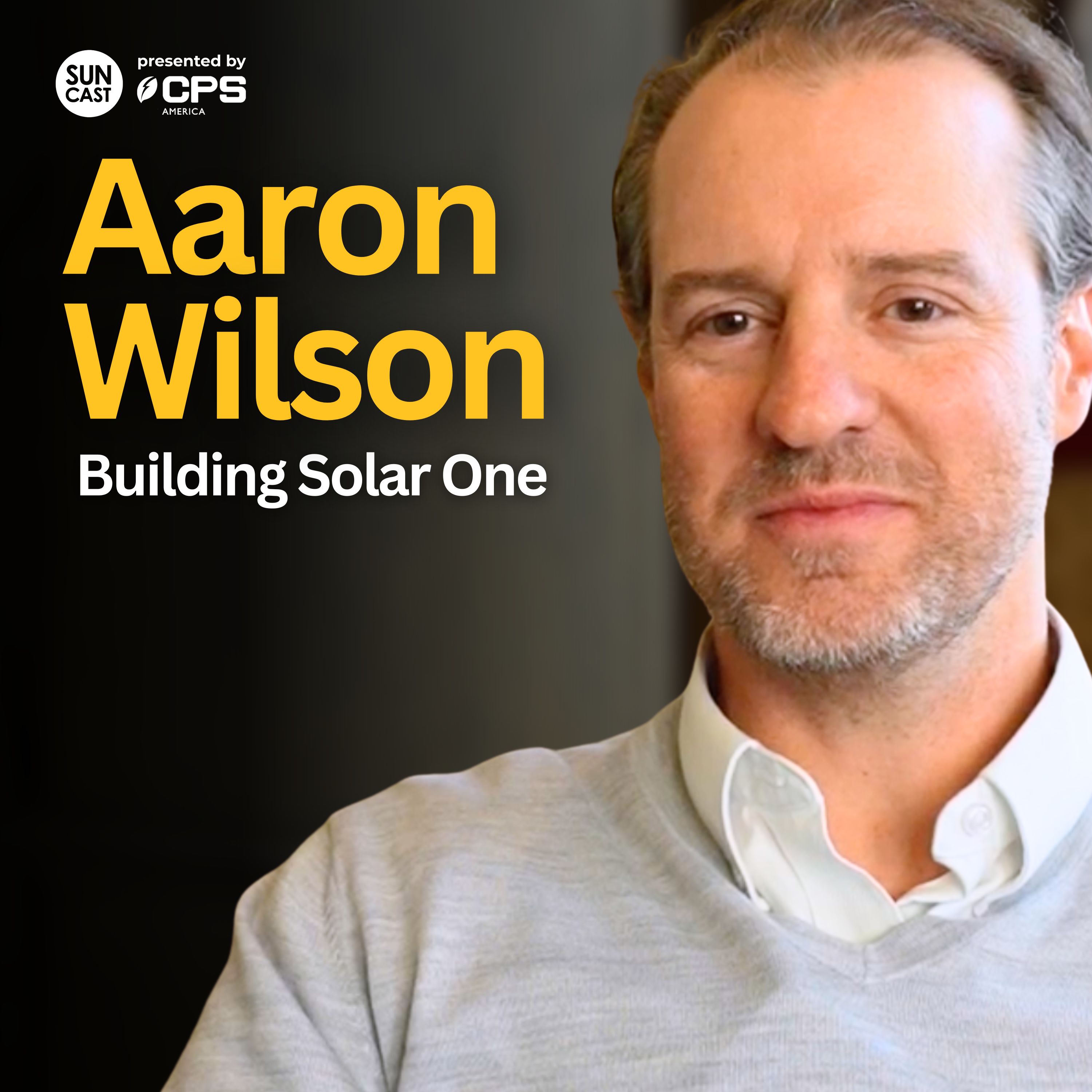
911: Why Most C&I Solar Projects Don’t Succeed (It’s Not the Solar) | Aaron Wilson, Solar One
About this Episode
Most C&I solar projects don’t fall short because of the solar itself.
They struggle because deals aren’t structured correctly, markets are misunderstood, or developers take on opportunities that were never a fit to begin with.
In this episode of SunCast, Nico Johnson sits down with Aaron Wilson, co-founder and CEO of Solar One, to unpack what actually separates projects that get built and deliver long-term value - from the ones that stall, get delayed, or fail to meet expectations.
Aaron didn’t come up through traditional solar channels. He started in commodities - trading steel and silicon across Europe and China - before moving into development and building Solar One into a vertically integrated C&I solar company operating in markets like Long Island and Texas.
Along the way, he’s:
- Built projects in markets most developers overlooked
- Helped stand up hundreds of megawatts in Texas - before the market was ready
- Made deliberate decisions to walk away from residential solar
- And developed a disciplined approach to choosing markets, customers, and deals
In this conversation, we explore:
🔹 Why Solar One chose C&I over the residential gold rush
🔹 What business owners actually need from a solar partner in an era of rising electricity costs
🔹 Why great entrepreneurs are driven by purpose, not ruled by fear
🔹 How to evaluate whether a market is actually viable (vs just “hot”)
🎧 Listen now to learn how to build C&I solar projects that actually deliver.
Are there other technologies you’ve scouted on the frontlines of the Clean Energy Revolution that you think we should be covering here on SunCast?
Hit us up - [email protected] with your feedback & recommendations.
Check out OpenSolar OS 3.0 at: https://suncast.media/opensolar
If you want to connect with today's guest, you’ll find links to their contact info in the show notes on the blog at https://suncast.media/episodes/.
Our Platinum Presenting Sponsor for SunCast is CPS America!
SunCast is also sponsored by Nextpower!
You can learn more about all the sponsors who help make this show free for you at www.suncast.media/sponsors.
Remember, you can always find resources, learn more about today’s guest and explore recommendations, book links, and more than 875 other founder stories and startup advice at www.suncast.media.
Subscribe to Valence, our weekly LinkedIn Newsletter, and learn the elements of compelling storytelling: https://www.linkedin.com/newsletters/valence-content-that-connects-7145928995363049472/
You can connect with me, Nico Johnson, on:
Hosts & Guests
Transcript
Suncast is proudly brought to you by CPS Americas.
Suncast is also brought to you by Next Power.
The fact is it's harder to build traditional energy generation resources.
It takes a lot longer and they're very expensive.
We've got to meet the moment.
We need to be prepared to shift our business case
from heavily dependent on incentives and rebates to revenue streams.
And our ability to articulate that is only going to be as good as our ability to deliver on it.
Everybody in CNI Solar says that they're chasing the best markets, but
Aaron Wilson actually built 400 megawatts in one of those best markets before it was really ready
and it almost broke him.
He's the co-founder of Solar One, a CNI developer that skipped the residential gold rush
back on a quiet feed-in tariff in Long Island from his home state of Texas
and built a business by going where there wasn't hype.
Today we'll break down how he picks markets.
Why do you think most developers look at the wrong signals?
And what it really takes to build a CNI shop that survives more than one policy cycle.
Let's get into it.
Aaron, welcome to Suncast. Good to see you again.
Good to see you as well, Nico, always.
Hey, I wonder we're coming up in the holiday season right now.
When somebody corners you inevitably at a Christmas party and says,
Hey, what do you do?
How do you explain Solar One and the problem that you solve
in language that doesn't shut them down immediately?
I think that everybody has a utility bill.
Everybody buys groceries.
Everybody experiences inflation.
And so we're seeing inflation across the board and we help provide insulation
against that for businesses.
So definitely somebody has a business.
Somebody buys electricity.
They buy energy.
They're experiencing something that we help decrease the impact of that rising costs.
And so really, it doesn't have to be just for businesses.
It's for anybody.
With that being said, we do it specifically through on a size solar,
which is a wonderful resource, very underutilized,
growing in unique ways.
Love looking forward to exploring that with you this morning.
It really, you know, kind of how we're going to pivot,
how the industry is going to pivot based on, you know, the factors that
are ever evolving that we're kind of basing our industry off of, right?
So if I'm talking to somebody I've just met,
number one, we're here to provide help.
We're here to provide support in a way that's meaningful and resilient.
So there's a lot of flash in the pan ideas you can have.
Solar, bias very nature is a resilient resource that can be relied upon
for a long period of time.
I think that we really as an industry,
you know, we've kind of chased a lot of silver mines and diamond mines.
And in reality, we're a resilient energy generation resource.
And we really got to get back to our roots on that.
Who are the kinds of customers that you really strive to serve?
What kind of facilities are we talking about?
We really strive to focus on industrial clients that have a large load.
A lot of them are predictable loads.
Some of them are not predictable.
And we're looking to make the biggest impact that we can.
Sometimes it's a portfolio approach.
Sometimes that's a large industrial group that has facilities all across the US.
They need someone who can understand the nuance between Arizona and Illinois and New York.
And all that entails.
So you really need someone who understands those nuances.
And if anybody is playing in the CNI space,
you know, not all solar is the same across different areas.
Utilities, states and regulations.
So you really need to understand that.
But a lot of our clients today,
they go our businesses who are looking at ways to
blunt the impact of the increase in cost to do business.
And so OptX is a huge part of that.
And utilities are making a bigger and bigger part.
So I think for an industry,
you know, we typically, when we're providing a proposal,
we baked in like a 2% escalator, right?
That's kind of a fair escalator.
And we're seeing some clients that are experiencing 50,
100% increase in the cost of electricity.
Yeah.
And so they're scrambling.
And as an industry, we've got to be prepared to meet that moment.
Amidst all the uncertainty that we have from policy.
And, you know, what plots can we use?
What can we not use?
What is fiat?
You know, what is that impact really mean?
We've got to be able to meet the moment and just kind of really distilled down on what
we provide, which is resiliency and energy, you know, revenues.
So there's a lot going on in a short period of time, right?
If I'm an operator,
a facility manager, someone making decisions on an OptX for a facility,
what does it look like for me, you know, three years out after I've had a successful project
with Solar One?
You know, where does it show up for me in my P&L or my operations?
In reality, it should show up and that you don't think about this solar project, right?
It's not something that you're, you're getting like weekly reports, like, hey, we had to go do this
saying our staff was busy having to fix this problem.
You shouldn't think about it.
And that's a core part of why people are engaging with us as an industry is you build it,
you commission it, and you walk away from it.
What they should be looking at is what their utility costs were from a kilowatt hour usage
perspective and what it is now and the delta between those two, you know, a lot of our clients,
they're growing their business, right?
So what their utility usage was is not what it's going to be.
And unless you provide the right kind of analytic tools,
they're never going to see a savings because their energy usage is going up, right?
So we have to have the ability to analyze their total consumption and marry that up with
what the solar is producing. So they can really see what those savings look like in the reduction
and energy consumption from the grid. So when there's an annual review by an owner operator,
right? They should be looking at what their utility costs could have been, not necessarily what
they are. And so I would encourage anybody that's in this space to be prepared to provide
those resources when you're building the project. Aaron, in your career, you've had a few different
chapters, international trade development, even worked at developer here in my home,
stated North Carolina Cypress Creek. At what point did you realize solar one or building
my own development business focus on what we've just discussed is the thing I can't not do anymore.
What clicked for you? There's a sense of purpose in what we do at solar one. And I saw that that purpose
was not matched and met in a meaningful way, not to say that there weren't businesses that were
attempting to scale in the CNI sector. But it was really that the need was not
met fully. Cypress Creek has done some fantastic work. I was really honored to be a part of that
growth, a part of a team that accomplished some really unique things in Texas. In a time when
there wasn't a lot of solar development yet in Texas, we're out kind of carving a new trail,
if you will, down here in Texas. It's been exciting to see this market from the utility sector
continue to grow by leaps and bounds over the years. It's something I've kind of from the
sidelines kind of applauded and been intrigued by. But that's not what I do. I really enjoy
working with someone who is going to directly enjoy the benefit of the service we're providing.
Where you're building utility solar farm or portfolio farms, it's going into the grid,
it's providing large-scale support. I'll never meet the people that get to enjoy the benefit of
that. It's a homeowner, it's a business owner or state. It's kind of just blended in. It's
indistinguishable to all the other resources. But when I build a solar project on a Toyota dealership
and I know the gentleman who owns that facility and I get to sit in front of him knowing that
I'm attributing value back to him and his family and to the resiliency in his business,
that's very, very rewarding to do. I always do that. I wanted to be a part of that. I saw a great
need and we try to passionately pursue that and have some authenticity in the pitch. You know what I
mean? We're a business. We're looking to do business. We're looking to make revenues. That's how we
stay in business, the service projects and provide additional services. But at the end of the day,
it's a passion of mine and of solar one to provide benefit to people. It's a lot of fun. It's
really rewarding to have a relationship with someone who's getting to benefit from the hard work
that we're putting in on our project and CNI is a really great way to kind of scratch that
itch, if you will. Well, speaking of scratching an itch, you know, oftentimes you'll hear folks
refer to that entrepreneurial bug as an itch that needed to be scratched. I want to understand
better. Did you always assume that at some point you'd work for yourself or did entrepreneurship
sneak up on you? How did you find yourself in the position that you are where you call the shots
working for yourself? You know, and sometimes you look back in hindsight and you look over your
life and say, of course, where I was supposed to arrive. I started my own business as a seven-year-old
selling peanut butter and jelly sandwiches on the street. So when I find a good thing,
Niko is very hard for me not to try to share it with others. Peanut butter and jelly sandwiches,
fantastic thing. Who would not want one of these? And in my young mind, I thought, you know,
why not package these things up and take them around to sell them. So two things,
they're one generating revenue for myself at all. So sharing something that I thought that the
world needed more of peanut butter and jelly sandwiches, right? So through college, same thing,
you know, I for the most part ran my own businesses. I had a fireworks business for years. So if
you can imagine a stand full of 18-year-olds and explosives, it was always a good time. Yeah.
How long before you realized you needed insurance? Exactly. Yeah, that was years after the fact.
So, you know, no, we were insurable at the time. You know, but I learned a lot through those
experiences of what it meant to manage a business, to run a business, to inventory materials,
to keep a team motivated, you know, with the core vision and plan. You know, I went to Baylor and
had a really wonderful time, you know, at Baylor playing on the football team, was really poured into
by a lot of very driven, you know, individuals in that program that really once again kind of built
a, and fostered an attitude of resiliency, personal resiliency, to fight through adversity,
to strengthen something that's, you know, hidden to most but found by few and you got to seek it to
get it. These are all like really great life lessons and skills that I took, carried with me.
Some of them like, I identified in the moment and then later years on, you just kind of realized
as part of your core identity. Yeah. You know, but starting a business is not for the faint of
art. I tell people that in order to start a business, you have to be ignorant. In your
and a fear, you really can't be ruled by fear and work with art of business. You have to really
be attached to purpose. And I think for some people, the purpose that they attach themselves to
as profits, which is a, which is, you know, that it's something that's got to be driven by something.
I really find that the people that are most successful in building a business are people that
find a purpose in the meaning of their operation and what they're doing. Those are the people that
can, you know, push through the most adversity. And I think that in our industry, we're kind of
at that moment. We've been kind of at that moment, you know, where the businesses who are really
here, they're really looking to solve the problems of of our society and want to be part of the
solution are going to be the businesses that that thrive through this time versus kind of retract
and kind of retreat or evaporate. So a lot of those things that, you know, kind of were the cause
for why I started solo one and have stayed in growing a business are the same kind of reasons and
character traits, if you will, that are going to have to be utilized and kind of pivot that we do
as an industry going into a post ITC world where I think the business case is changing. I would
say for the better. So we're excited to approach that. I think the other thing about entrepreneurship
is you have to be able to think creatively. You can't follow a path. You can learn from others'
mistakes and other successes, but you have to be prepared to walk your own path. And once again,
that's where our industry is right now is we're going to have to walk our own path and do a
smarter. So those are all, you know, kind of wrapped into, you know, entrepreneurship and specifically
in our industry. When you're looking at the solar market, you have to ask who is the partner you
can really trust for the long haul. That's why I hope you'll take a closer look at CPS America and
see how they are shaping the industry's next chapter. The evidence is clear. Woodback has confirmed
them as the number one market leader for string inverters in the US for eight straight years.
That's nearly a decade of sustained dominance proving their reliability and cost leadership are
unmatched. But they're not just resting on their inverter success. They've extended their
leadership into energy storage. In fact, they're fully integrated. Gonzo ESS is the best in class
platform for C and I built for maximum simplicity and revenue generation, but the real game
changer is their service. Back by one of the top rated support teams in the industry, you're
equipped with premium hardware and the people who make sure your projects stay on track season
after season. Ready to partner with the industry's most trusted provider? Visit suncast.media-forward-slash-cps
or call a55584-7168. Don't settle to CPS. Reliability you can count on.
I want to talk about some of the preparation that helped you chart your course. At some point,
you pivoted away from trading commodities and ingredients to wanting to actually build the
projects themselves. Take me back to the moment of deciding on that first real step out into
the world. What were you actually trading day to day? I'm curious when and how Silicon
actually first showed up in that world for you? Coming out of Baylor, the focus was on finding
an opportunity. I'm a young, ambitious businessman who's trying to find an opportunity.
Baylor's can't be choosers. I think a lot of entrepreneurs are going to have a similar path
where a Baylor can't be a chooser. I would also talk to someone who's thinking about building
a business. When you're getting started, you have to take the opportunities that are presented to
you. Even if it's not where your final destination, I call it lily pads. In order to get across
upon, you have to hop on multiple lily pads. Be prepared to hop on lily pads that may not
be where you want to be your final destination. You have to hop on it nonetheless. When commodities
became an opportunity for me, I hopped on that lily pad, if you will, because it was an opportunity.
In itself, there was a lot of opportunity there, and we just seized the moment. We began to
have a business with a primarily steel commodities that were very hard to source. Through sourcing
commodities that were very difficult came Silicon. I learned about Silicon. I didn't even know what
Silicon, they were referring to the rubbery stuff. What is this? We're traders of all sorts.
Found that it was Silicon for specifically for the purpose of solar energy. It really caught my
attention. Energy was something that I knew that I wanted to get into. It's a core product that we
have to have as a society. We're going to allow or society to go without it. Renewable energy
specifically, I felt like, was a good thing, an opportunity for the future. I didn't know what
that really looked like. I didn't have an expertise in it. We immediately began to focus on Silicon.
We began sourcing Silicon from semiconductor manufacturers and their byproduct of their semiconductor
manufacturing processes. Funnily enough, here in Sherman Texas, Sherman Texas is home to a lot of
semiconductor manufacturing. I had a lot of built-in relationships here locally that we levered.
To begin the sourced their IC grade byproduct worked with a lot of Chinese manufacturers at the
time who are trying to develop better processes for making more efficient solar cells between
multi-crystalline, single-crystalline. It spent a lot of time in China working with them on trying
to incorporate this byproduct, this waste from semiconductor manufacturing into solar manufacturing.
What we learned was that at the time, as solar wanted to grow, there was not like solar grade
silicon really available in any quantity. It takes a long time for that to create the refineries
and the processes for manufacturing solar grade silicon. We found a really valuable gap that we
serviced between a growing industry and having large quantities of what we call virgin polysilicons,
so it's not recycled material. We bridged this gap for a couple of years and had a fantastic time.
A lot of our product ended up in Europe, but it's manufactured in Asia. Very quickly,
we became very aware of navigating an international industry, which is where our industries really
kind of grown into, and I've really enjoyed seeing it reshored. I think that's a valuable component,
but when the solar grade silicon was available in large quantities, there wasn't a need for
our byproduct that came from semiconductor manufacturing. We identified that and immediately pivoted
into developing projects in the US. I had a really good understanding of the on a molecular level
almost of a solar cell, how it works, how to build them, how to make the most efficient,
and through a couple of different steps got into development of projects, and really kind of
leveraged my understanding of solar modules and the based technology as our kind of core skill set
in developing projects. At the time, there was a lot of feed-in-terror programs,
and those were valuable programs that we jumped in, started developing,
immediately in the CNI sector. I was just a natural place to fall with a small team. We were
able to come in, service and need, particularly on Long Island, and then grew up from there.
Were you in this trade process always doing this from the US, or was there a time where you
actually were able to kind of look at closer to your market, Europe and China?
We actually had offices and in operations in the Jiangsu province in China, so it was right
outside of Shanghai. That was where we did a lot of our processing of silicon. It's a key
manufacturing hub in China for solar module manufacturers in good operations. It's a great location,
so spent a lot of time in Asia, worked very closely with a lot of manufacturers there
with W Energy Group. I did not envision myself being in China,
spending an extensive amount of time in China. That was not what I had envisioned as my business
and what I did on a daily basis, but I saw an opportunity. I saw an opportunity in a market that I
wanted to be a part of. I didn't know the indestination, but I knew that I wanted to be a part of this.
This was something that was growing. There was a need we were facilitating and need, and I think
that's got to be a core part of anybody's why and how. I couldn't see to the end where I was
going to go. I couldn't see the stolen one yet, but at the time, I was building an expertise,
I was serving in need, and that necessitated. Same for the building expertise part.
What was that expertise as you reflect now, hindsight's 2020? What were the pattern matching
and habit stacking that you were doing at an early age? Hungry.
I was hungry for opportunity. I was hungry to create. I was hungry to be a part of something
bigger than me. I think any entrepreneur has to have that hunger. I think that's like,
if you're thinking, okay, I'm going to have a salon or I'm going to have a tree trimming
business or I'm going to have a solar company, you have to have those base kind of desires.
If you don't have it, then I would just suggest you get on board with someone else, right?
And I think that's a key part of any successes. Do you have the will to succeed?
It's not the energy. It's not the knowledge. It's not the education or the pedigree. It's
you have the will to do what it takes. Sometimes you will be asked to do some things you
should not do, and you have to have the wall to walk away from it. At that juncture in your career,
you could have done anything. You have established your entrepreneurial chops. You've broadened your
network to international markets. You are a commodities trader. You understand things about
how markets move that others don't. Why solar instead of any other industry you could have picked
at that moment? I got a phone call. Someone asking, do you have an ability to source silicon?
We're commodity skies, right? We source all sorts of materials. When I identified what the silicon
was as part of an industry that I wanted to be a part of, even though I didn't know it at the time.
I didn't know much about the industry. I just knew there was opportunity and there was growth
potential there. We jumped. It's almost like skydiving. I can't tell you the whole way down
or what it's going to be like, but we're going to jump. What did that first step look like?
The first leap, you jumped out of brokering polysilicon and into at some level developing solar
projects. How did that differ? When you started WNGs, you were in college. What did development
even mean to you at such a young stage in your entrepreneurial growth? I want you to try to help
me contextualize. When you decided to go into the solar industry, there were many choices you
could make residential versus CNI versus utility scale. Am I a developer? Am I an owner operator?
Am I going to leverage some of my manufacturing opportunities and try to create a product that I
can sell into the marketplace? I think that a logical place for where we could have grown
after silicon would have been into module manufacturing. That's kind of a progression,
if you will. We looked at that. We spent some time trying to develop a solar module. What I realized
is in order to be truly scalable at that, we needed hundreds of millions of dollars in R&D
funds. We didn't have that. We attempted to set something up and it was not something that was
sustainable. I think that that's got to be a core metric as you're identifying, is this something
worth me pursuing? Specifically, a subset of an industry or a product, is it sustainable? Can
us sustain success and actually truly grow something within this function that I'm looking to
provide? We could not sustain competing against the suntex and the first, you know,
solar as of the world. We just knew that that wasn't going to be a place where we could make a
meaningful impact. We identified that there was a lack of depth, a depth chart, if you will,
in the CNI sector. There was not a lot of players. I think Sun Edison was kind of like
the guys at the time that were doing a good job. They had a good reputation. They were getting
all these logics, but there wasn't a lot of others, let's just say, that were out there. We
identified that that was a great area that had a need. I think that's got to be a core part
also of successes. Is there a need? Sometimes people don't know they need it.
But can you assess that there's a need? We assess that there was. So, you know, jumped
straight out of Silicon directly into through module manufacturing directly into development
of projects. At that time period, some of the most economically viable projects were these
feed-in tariff projects. You know, LEDWP had a feed-in tariff out of Los Angeles, a long island,
you know, power authority. Lightboi had a feed-in tariff on Long Island. LEDWP was, there was a lot
of folks kind of playing in that space and not as many playing in the Long Island space.
And so, I went from spending a lot of my time in Shanghai to living on Long Island,
spending a lot of time on Long Island. So, kind of another home away from home. And I think
once again, you have to be willing to spend the time with people to understand the services
that you're providing to them. You can't do it just from afar. You have to be willing to kind
of roll your sleeves up and get your hands dirty. And so, we spend a lot of time literally going
from door to door, you know, trying to introduce ourselves to businesses. And one of the things I
would have loved to have told myself is you need to be prepared to answer why me.
Yeah. Why me versus somebody else. And you really need to have a philosophical depth to
understanding why you. I think we could have been much more efficient with really being prepared
to speak to that when we were very early on developing these projects in the scene of the sector.
And what I hear you saying is why choose me. Why the customers should care that you are not
going on their door versus somebody else. 100%. Why choose me versus another solar provider?
Yes. Or another roof opportunity. We're monetizing your roof. What else can you do with it?
Well, on Long Island, maybe you can put some antennas up there. There's a lot of different ways
you can monetize this. And so you have to understand that the clients are going to see that full
picture. And so be prepared to say why me specifically. Yeah. With all products, you have to know
the alternative. What is the cost of doing nothing? What is the cost of working with you versus
some other competitor? What is the cost of some other alternative that you might not know about
or haven't considered yet? One of the things in the discovery process is really important is to
better understand what the alternative choices are. I mean, the status quo is like famously the
biggest impediment to progress. I'll never forget setting with an operations manager down in
Southern California, probably early in my development career. And we had spent about a month working on
this project, which is not a long time, but just on a proposal. It's a pretty involved process,
flew my boss, myself, our PPA provider down. We sent me with this huge medical sort of concern
in Southern California. And the regional vice president was sitting with us. And at the
maybe two thirds way in the presentation, he says, wait, so how much are we saving in year one?
Like, just cut to chase. What's the? And I said, it's about $32,000. And he looks over at the
CapEx or the operator, the facility manager, kind of nonchalant. You know, certainly it was clear
to both of them what he was trying to get out of his facility manager. And he says, how much did
you miss on your projections from the last month? And the guy goes, like, meaning like, how much
do we spend extra on your projections last month? He goes $82,000. And he goes, so you see,
this is pennies. Come back when you've got something important to talk about. And that wasn't
even the kicker. I said, okay, so if we could make it more valuable, then you'd be interested. And he
goes, no, because the place that you want to put it is valuable real estate for me. And you're asking
me to sign a contract that says, I won't touch that real estate for 25 years. You got to be out of your
mind, right? He's like, I can't even, he's like, I can't even fathom the questions that will come
to me from the board about what potential future revenue opportunities like an oncology ward
could be built where that parking lot is right now. And you want me to cover that parking lot.
Maybe I want to make that a parking garage. Maybe I want to make that our ICU extension,
right? Like, so really understanding. And what I mean by that is you got to really understand
not just the opportunity, the opportunity cost, but what is their fundamental business metrics?
Like, how do they measure value within their business? Because I know like so early on,
like a lot of us in development just think, oh, well, I'm saving you kill what hours that turns your
variable cost into a fixed cost. This is a no brainer, not always. No, no, there's layers.
There's dimensions to it, right? We don't live in a one dimensional world. We live in a,
you know, a world is all sorts of different directions things can go. And you really have to
understand the fullness of the alternatives. I think that one of the key aspects of
entrepreneurship is not just what problem you're going to solve, but who is on the bus with you?
Jim Collins so often says get the right people on the bus, right? So you've gotten your
development reps in, you understand a whole lot more about the industry than perhaps others do.
You got this ish to build something durable. Who was in the room with you? What did that team
look like when you set out to attack a problem in the solar industry? The best foundation that
you can build a team on is trust. People who are trustworthy, I would encourage anybody looking
to start a team, start a business. You're looking at who you can bring in. A key, you know,
characteristic should be are they trustworthy? Yeah. And a lot of times what does that do for
businesses? That means this family members. So early on, you know, my business partner was my
dad. He's a lawyer by trade. He has a finance degree. So he brings some really great skills
operationally to the table. But he also is someone that I trust. And he trusts me. And so we
had these complimentary skill sets. I'm a sky diver by trade, right? I start businesses. I,
you know, at the, you know, philosophically, right? So I, you know, create new things,
walk into opportunities that don't exist and create them, right? So there's risks associated
with doing that. Having a lawyer who also has a finance degree is a really great complimentary
skill set to have. And so a lot of solar one successes are based on, you know, what my dad
bought to the table and that trust that we had with each other, we're not worried about a necessary
friction within the company of what is this person going to do? Where are they driven by?
So I think that's why a lot of early startups are family members or very good friends who know
each other really well. Or at least the ones that make it are usually have that. From there,
you know, one of the, one of the things that we're replacing with our product is inevitably
energy that you're buying from the grid. So very early on, I came across Terry Miller,
who is my partner at solar one. His background is in energy brokerage. So we understand
energy markets. He understands the fundamentals of those markets and kind of where prices are,
where they're going, which is not a skill set once again that I possessed. And so, you know,
we work together as two separate companies for a number of years and then we came to a realization
that we are trustworthy. We created solar one. What was the other company? What was his company
doing in the interim? Yeah, his company was doing marketing services for W Energy Group. So
I, energy group, he had elite energy partners and we'd go into meetings and I'd say, hey,
here's my business card on W Energy. He says, here's my business card on elite energy and the
people are like, who am I talking to here? Who are these? Once again, kind of like, okay,
lesson learned, like we need a streamline. The store is not caught up in my confusion before
at the hello. Right. Yep. So streamline that. So we assessed that pretty early on and we said,
hey, look, let's look at where this is going. This is going to a place where we have a business
together. We created that business and created solar one. And so, you know, he brought,
once again, a complimentary skill set that I didn't possess. We are thinking the same way,
we're driven by the same passions and kind of the in goal as my dad and I. So the three of us
have been partners in solar one since day one. And it's been a lot of fun to see solar one
grow from what it was to what it is now. And I would say that my self when I started solar one
with Terry, I would have liked to have seen growth occur much faster than it did. Yeah.
grew. We grew at the, at the bandwidth of our ability to facilitate that growth. Yeah.
So once again, I went, earlier I mentioned that I was hungry. It's kind of when my core kind of
characteristics of why started a business I'm hungry. I'm looking for opportunity. Yeah. You have
to be prepared to eat wisely. Yeah. Don't become a glutton with opportunity and make yourself sick.
And so we grew at paces that were once again sustainable. And you know, we're provided those
opportunities to grow at a sustainable pace. And we opted to grow vertically first and add
additional services that will complimentary that once again, our client needed as well. If we want
it, if I want to develop a solar project, it's got to be built. It's got to be maintained. So why
provide all of those services, not just being a developer, want to bring on our own team to build
these assets to the quality standards that we're wanting to set. And then to maintain them,
to ensure that they're resilient in their operation. Yeah. As well. Yeah. It's a full life cycle
of the project. Are you, are you guys also owning and operating those assets on behalf of your clients?
Are you guys functioning as an IPP? We are. And in some, in some situations, it's not our, it's not our
only path to business, but it is one of them. You know, around the time that you all were really digging
your hills in, learning, learning how markets like Long Island work and getting your chops,
your team ironed out and fleshed out. The residential market story was really getting, I'll call it
loud, perhaps, hot. And by some respects, what did you see in that market that made you think
out loud? We're not going to chase that market. Yeah. What we saw is we wanted to be honest and
truthful. That's got to be a core part of, of the pitch, if you will. And there's a lot of,
let's just call chatter in, in the residential sector, that we didn't feel that we could compete
against. Not to say that we didn't think about it. We didn't look at it. We most, we did. There
were times where, you know, to your point, the residential sector was growing by leaps and
balancers, mass volume being done. There was some structure around that market. Yeah. So,
structures good. Okay. That means there's some products and services that we can fit within
those, it's like mortgages, right? There's always fine services that were very structured,
makes the deal flow very easy. But at the end of the day, we didn't feel that we could compete with
the residential narrative of mass volume, push, push, push, a lack of quality and a lack of
transparency, if I'm being quite frank. And so, we just opted not to get into that space. Once
again, I'll cheer from the sidelines as a spectator. I wanted to do well. It's a direct reflection
of solar is seen as solar. You know, people are going to talk about solar as good or bad based
on what the utility sector does, what the residential sector, or the CNI sector does. You know,
we're even community solar, right? We're all lumped into one, we're like one big happy family.
We kind of get graded together. Yeah. So, I will cheer from the sidelines, but we assess that
that was not the correct type of volume that we wanted to do. And our core focus is being able
to dedicate time to building a relationship with our clients. Kind of maybe one of the things you
may see through a lot of what I'm saying is that we really want to value the client, the customer.
And if I'm building a project where my net revenues are only $4,000, how many hours of my time,
can I dedicate to that client before I'm in the red, right? And so, if we're building a
megawatt system and our revenues are substantially higher, I can dedicate that time to putting a team
on a project really facilitating in the manner that we see as valuable and the way that we want to
do business. So, it's not to say that residential is right or wrong or CNI is right or wrong, but our
approach is to building a meaningful relationship with our client. That's a core part of how we
structured our company, and the deliverable, if you will, is that there's a relationship there
of value with our client. You know, extreme weather risk is rising all across the utility
scale solar sector. And next power is responding with innovation. Proof comes from Project Developer
Desiree, which deployed next power's Hale Pro system across 2.4 Geekawatts of their solar portfolio.
When Hale storms threatened Desiree's Midwest sites, Hale Pro went to work. It automatically
rotated trackers up to 75 degrees, mitigating damage from 2-inch Hale while keeping operators online.
It's intelligent, repeatable resilience that scales. Got weather concerns? Discover how next power
reduces risk for your biggest projects at suncast.media-thord slash next power.
Hey, pardon the interruption, but I wanted to just let you know how much of an impact you
have on suncast. Yeah, you, thank you for clicking play.
Without you, this show is just me shouting into the void. But there's still people who don't
even know about suncast. I know I can hardly believe it myself. But that's where you can help me
yet again. There's a simple way that you can show some love and help others discover the show.
If you cruise over to www.ratethispodcast.com forward slash suncast, I'd love it if you would leave
a five-star rating and enthusiastic review. That's possibly the single kind of thing that you
could do for me today. So if the show has helped inspired or even entertained you at all,
I'd love it if you would head over to ratethispodcast.com forward slash suncast and give me a virtual
two thumbs up. All right, back to today's episode.
The corollary for anyone who's thinking about what sector of the market to enter is the utility
scale side. And one of the interesting things like the time scale is so different. Rezi projects
can and you know, Vivint has studies where they've sold permitted and installed a project in a day
in Hawaii. Of course, Hawaii has like 14 hour sunlight, right? So, but that which is fascinating,
you can actually sell permanent install system in one day. It doesn't happen, it doesn't work in
every market. But the time scale is such that like the folks that are doing Rezi often try to get
in a commercially, they lose their shirt because they're used to pay cycles in the weeks and
months. And commercial deals have a sales cycle that's in the months and possibly years. And
then utility scale has a development cycle that's often two to three years. Then a construction
cycle that's often one to two years, right? It goes from three to five weeks, three to five months,
three to five years. Yet there are valuable lessons one can learn in the utility scale sector
that you can't learn anywhere else. You spent a period of time with one of the one of the then elite
developers here in the America's company called Cypress Creek. And I want to pull on two threads.
One is sort of what was the motivating factor that led you to go to Cypress Creek? How much of it
was like the entrepreneurial need on the intellectual side versus the entrepreneurial need on the balance
she's side? And then the reciprocal of that, what did you learn at that scale that you couldn't
learn grinding away on your own deals? Yeah, that's a really, really good question. And the reality
is is all of the above. Starting a business is very, very tough. And anybody that's in the midst of
that can appreciate the challenge of starting a business. And definitely whenever you're selling
an asset that's valued in the millions of dollars like CNI solar, right? And this is not as,
I tell people, we don't sell people socks. Yeah, it may not like. But let's just take a flyer on.
Let's see if they work. You know, this is a, this is someone's dedicating some precious
capex towards a solar project. And there was a lot of times where the company really struggled
to succeed. I did some consulting work for Cypress Creek. I was based in Texas.
I understood solar very well. If I had a lot of relationships in Texas as well from a land
perspective. And Cypress Creek needed someone who knew that space. And so it was very mutually
beneficial. What it is, once the Cypress Creek team at the time was one of the most dynamic
exciting teams to be a part of. There was a lot of folks on that team that really were dedicated
to the mission of Cypress Creek. And it was really cool to be a part of that. And being a consultant
for them, I got to see that for some time that this is, hey, this team is not like the others.
Like there's something special happening here. And when I got the opportunity to come on board
with Cypress Creek, it was number one, hey, I think there's some things I can learn that I can
replicate later on. Here's some guys that have created something successful. I respect
that a lot. I'd love to learn more about what they're doing that maybe I'm not doing. So
once again, it's got a little bit of humility that we've got to be able to learn from others
and to be a sponge at times. And the guys that were at Cypress very much had some skills that were
valuable for me to be able to learn from. And then at the end of the day, economically speaking,
it was very beneficial to take me off the ballot sheet for solar one. So my arrangement
actually funnily enough at Cypress Creek is I work part time. So I still ran solar one,
but I also worked for Cypress Creek during that time period. And we did some exciting stuff in Texas.
And okay, so CNI solar and utility development are two different animals, right? But there's a lot
of valuable lessons that I learned while I was at Cypress Creek that I have continued to utilize
irrespective of the industry that I'm serving. May it be utility sector or CNI? So once solar
one got to the point where we had enough development and a throughput that I could come back on
full-time, that's what I did. So that's the nitty-gritty nitty-gritty of starting your own businesses.
You know, when you dreamt you're starting this business, you know, you had these visions,
right? Of what is going to look like? And reality, it doesn't usually happen that way.
And you've got to be prepared to walk that path. And for me, that meant working two jobs.
Yeah, for a time period. I'm looking for if there are material, you know, you said there are lots of
things. And I know it's sometimes it's hard to put a finger on a specific thing, even though you
know there's a lot of business benefited from in organizational knowledge. But are there one or
two things that you can put your finger on and say, like, actually, this thing I learned at Cypress
probably every developer needs to understand. And you will only learn it if you go work at a company
like that, like a next era or Cypress. The most valuable lesson that I learned was being a part
of a team that didn't refuse to give up. There was a particular project that we had down in
central Texas and a community that very much, let's just say, did not want to have it. They didn't
want to have it in there, not in my backyard. On a team's meeting with Cypress staff, and it was
identified, this was a really value. This is for from a business case, this was a project that
really needed to be built. Yeah. I told them, it's not happening. This project, like I went to
this town hall meeting, they basically wanted to string the up by the end of the meeting. As
lovable as the guys I am, right? They wanted to do nothing with me. And so we roundtable this,
and it was determined that, no, we have to make this work, Aaron. You're going to have to figure it
out. And there was a single digit percentage points of how we're going to make this work.
Very, very. These people were unbelievably clear on their perspective.
Yeah. And what I had to do is, I decided that I needed to remove the mob from themselves,
and I needed to sit down with them one at a time. There's about 26 people that I would make a trip
to their living room, and I would sit down with them, and just look at them across the coffee
table and just say, shoot me. It works your problem. What's your concern? And I found it with a path,
but had I not, and ultimately we built that project long short. We ended up building it.
And I got of 26 homeowners, I got 25 to sign a letter to the City Council saying they
supported the project. They were like screaming mad about the project initially.
It was a great, you know, in Texas, a lot of people have like, you know,
animals that they kill on, you know, deer heads and, and, um, antlers on their wall. Mine is
that project. It's the site project. That's my like bare skin, if you will. It was a lesson that
I really learned, and I would not have learned that had I not been part of a team that refused to
give up and had that kind of energy, if you will. Yeah. Like, hey, we're going to find a way,
I don't know what it looks like, but I know you can do it. They believe me. They, and they
didn't say, Aaron, hand this over. You're not capable. No, you're capable. I know you're going to
solve it. Go get them. Go figure it out. That's right. I'm not going to let you off the hook.
Yeah. I'm not going to let you, I understand you're scared. Okay. I understand you don't know how
business needs this. Let's go get this on. And there was a lot of support. Don't get me wrong.
It wasn't like, hey, just go off into the woods. And if you don't come out, you know,
shoot a flare. We'll come find you. It's like, there's a lot of support. But that was like a lesson
that really stuck with me is I was a part of a team that was willing to pay the price to make
things work. Yeah. What a win for me. And it goes, when you force yourself to be in that
uncomfortable position, and then you're successful, it creates a new neural pathway in your brain,
where there used to be a wall there that was impossible. And now it is possible. And it's impossible
for your brain not to see that in future challenging situations. And so I would attribute a lot of,
you know, the benefits that we've enjoyed, it's so the one to, like that particular lesson,
when I told that team, this project isn't happening, guys, that we as a team found a way
and built it. So, you know, that hadn't been a part of a team that understood,
let's just rip the bandaid off. Let's understand the good and the bad, the ugly, so we can solve
it immediately. Let's not beat it on the bush. It's not sugarcoat. No need to sugarcoat
things. Let's be honest. Let's be forthright. Don't give me sales projections that are like
all beefed up and and, you know, lipstick all over it, right? Let's just look at it for what it
really is. And then we know how to operate is another, you know, really valuable lesson I learned
at Cypress Creek. You know, we discussed the long island market and sort of your contrarian view
or perhaps insight into what a real market looks like. So, I want to think about how to identify
the best C&I markets. And while I don't anticipate that you'll share all your secrets because some
of your peers and competitors might actually be watching and hoping you will, I do think that you've
learned that you have a perspective on what makes a good market. And I'm sure there are times
where you hear people say, oh, this market is a good market and you sort of eye roll. So,
I'm curious, what do you think folks are usually looking at when they sort of qualify something as
as good? And what do you prioritize in a market instead? Like, how do you direct your team
to find the right place to focus the arrows? I would say a market is only good if we are capable
providing a successful project. So a market could be good for someone else, but not for us.
And so once again, you've got to be capable of identifying what markets you're not qualified
to transact in. As much as I'd love to build projects in Hawaii, for example, right?
Am I qualified? Do I understand the utility requirements and the nuance of that? The little
the if versus ors and you know, things of that nature that can make all the difference in the world.
And if we're not qualified, we need to walk away from it. And I would encourage other folks in our
space to do the same thing. We're going to win this. We're going to win the hearts and minds.
Okay, that's where we're really where we're at. As an industry, we're kind of out of crossroads.
Whether we want to be right and win an argument, or do we want to win over people?
And I know that's not the question you're asking, but it's really got to be core to
that decision of okay, what is a good market? It's like only good if you're fully capable of
performing in that market. Okay, first and foremost. So that must be a box is checked.
Hey, we know what we're doing. We can we can have an articulate conversation and walk the client
from start to finish. The other part to that is being able to understand
you know, timing challenges. We are in an area where time is of the essence, right? With
the various aspects in federal policy. And so we have to be able to navigate a market
and get a project to a point where we've unlocked a key metric. And maybe that's
you know, right now it's you know, commencing construction. Okay, through a 5% safe hardware or
physical work tests, you've got to know that you can get a project to that point in order to
for it to be good, a good market for you or a good market segment. So my suggestion to us as
an industry, this is speaking to myself as much as I'd be speaking to anybody else, is be prepared
to start with the end in mind. Can you get the project to a point of completion that you're not
exposing your client to the risk of stepping over the threshold of a key timing variable
that can alter the economic case. In some instances, maybe lose the access to the to the
investment tax credit. So go into a fully up to speed and on your game of seeing the project
to completion. And the reality, not like Rose Tena glasses, like reality and how we react as an
industry to this, you know, is how we're going to be viewed as a worthwhile member of society,
right? If we blow this moment, then I'm afraid that there can be some lasting impacts on,
you know, the on the industry, you know, like cilantro was the first like kind of black mark,
like we're like, oh, yeah, there's like meteoric rise and everybody was wanting to go
so it didn't matter if you're a cowboy wearing boots or if you're a city slicker, you know,
wearing co-hands or whatever, like everybody wanted to go solar. And then cilantro left a little
bit of a mark on on the industry. We're at another moment like that, where we don't as an industry
place ourselves and communicate wisely with our clients. We could have another black spot on
our industry that's not necessary. So let's just be smart about how we're assessing opportunities,
bending them as good, bad, or ugly, or great, better, best. However, you want to bend those
opportunities, communicate it, see it through to completion because time really matters right now.
What are you hearing in the marketplace from customers around the perception of solar in the
marketplace in certainly the last six to eight months? It's across the board. We tried to
encourage our clients to see this as very objectively minded. We're trying to stay out of
any kind of, you know, larger, you know, political affiliations or things of that nature. But
it's hard today we're living a very polarized society. Yeah. And it's hard to like by
forget those two things. It's like a core part of people. And they're entitled to those priorities.
What I try to encourage folks that may have a question of like the visibility of solar. Okay,
I get it. It's a good financial move. I get it. It's like resilient and saving energy. It's
something that I want to promote. Right. Is it something that I want to like make a big point
of discussion on. And we have got to like, it's mind boggling to me. They go that like,
like this is not something that everybody walks into a tractor supplied as a walk out with a solar
array. Yeah, right. It's like anybody that's in like a like in ranching farming rule life, I would
think by all means. So I think we miss, I think once again, kind of a humble moment, we got to
understand like, okay, we kind of miss some Mark. Yeah. He was characterized. Yeah. Yeah. So
we've all got to do our part to recalibrate the messaging around solar and stop trying to win
the argument and win the people. It's a very American ideal. And we're finding that there are
some people in the marketplace that may have some questions about, you know, how visible they
want to make this project. And so we'll have to unpack that. And so I think you're doing here
is a great platform for for approaching that narrative, right? That we've got to clean up.
Number one, are we good actors or bad actors? And if we have bad actors as an industry,
we need to kick them out. Yeah. Number two, are we being, are we really being, you know, the most
truthful about the revenues and the potential for this opportunity? And we've got to really
address that and come up with a, you know, realistic metrics in it, in it, every evolving landscape,
you know, it's not like just cut and dry. So if we can do that well, then solar will become
a massive resource for society. If we can't do it, it will be something that just
read about in the history books of, of failed energy, you know, resources. And we're not too far
gone and not too far ahead for either one of those realities to, you know, to become, you know,
possibilities become a reality, I should say. So we really, the moment is upon us,
it's exciting. I'm glad to, you know, be a part of it. I believe that there's great people.
Yeah. In this industry, I think, and in reality, I think one of the results of this policy,
come disturbance of policy and changing that is it's going to, a lot of people that we're here,
just for a quick buck, are going to, you know, be on their way out. I think that what is going to
result in is folks, possibly who are watching this, who are really looking to be part of this
solution and not just looking to do a cash grab. Right. Well, if you're in this business,
being it because you want to be here. And if you want to be here, there's an industry here that's
very resilient and really cares about the end product and the customers that we serve. So I love
that there are other CNI developers. We can't do it all at solo one. And so there's a lot of folks
that we see that are peers. We compete against them. I don't know, lose to them. I'm glad that they
exist. I'm glad that they're there. I'm glad that we get to do it together. We're going to be
stronger together than we are apart. And I think that that's an energy that's kind of in our industry
right now. That's going to be part of our ability to rise up out of some of the frustrating
developments that happened in 2025 on a policy front into the new business case that we're going
to be making in 28 and beyond. Where do you see projects fall apart most often? You gave a great
example of an early stage development project falling apart. So when it gets to city council,
where do you see CNI projects most often running in the friction? It can be in a boardroom.
There's always benefits and disadvantages to different industries, right? The benefit of a
residential project is you're going to sit in a living room of the decision maker, the CEO,
right? You're sitting in the living room with the CEO and they're making the decision,
they're signing off on it. You look them in the eye, you get to close that deal.
When you're doing a large scale CNI project, the decision is actually being made by a board
or a committee that I will never get the benefit of speaking to most of the time. Rarely,
they say, okay, Aaron, you come in and pitch this to the committee. So very early on,
we are looking for what we call our internal advocate. And that could be a C-suite person,
that could be a very motivated general manager of a facility that's in a large portfolio.
And that person has got to be up to speed and we find that that is a, if you don't identify
that internal advocate, if we don't have a strong one, then the project will fall apart very early
on before we even get the contract. So I would encourage everybody to find your internal advocate
pour into that person. Once again, have like very transparent conversations. Don't just
lipstick this thing and just pretend that, oh, it'll be great. Trust me.
Let them don't drown them but inform them. And what I call, we try to practice what we call
honest but not alarmist. Okay, we want to be honest with people about the benefits,
the disadvantages, the pros and the cons without alarming them, right? There's a relationship aspect
to that. And so we want to find our internal advocate. If we can find that person,
we have a very high success rate with getting a project to completion. If we can find our internal
advocate, build a pool with them, make sure they understand the full, the full lay of the land,
right? And can articulate it without me being in the room. That's a core part of getting to
a contract. Well, it's something gets a contract. And this kind of gets back to the question
earlier about what's a good opportunity. If I don't know how a utility assesses the viability
of our interconnection, then that could be a huge fail point. So markets that we're very heavily
involved. And we understand how that utility assesses our back feed. And we understand
they're metric for how they calculate. Are the thermal characteristics on the conductors feeding
a transport? Are they going to be capable of facilitating that back feed? Right. What
details do I not know that I would never know until the utility gives us their initial assessments?
That the client also needs to know that we don't know. Yeah. So these are really important things
that can unravel a project very quickly. Yeah. Should we get feedback from a utility that is not
optimal or it's like some form of suboptimal feedback? So prepare your clients. Make sure they
understand what variations you could get back that could affect our preferred path. Let's just say
that much. Okay. So it's kind of just prepare them for that. Yeah. People just want to be in the
know. They don't want to be surprised. And so we try to tell our guys, our clients like we don't
want to surprise. We may not always do things perfectly. But what I won't do is I won't surprise you.
Yeah. And I think that that's got to be a core part of of some resiliency and getting a project
from contemplation to completion. That hey, we're going to have a relationship. We're not going
to surprise you. Right. Permitting reform is a real thing. That's a challenge that we're doing
with. I think that when it comes to our industry's biggest challenge with permitting, that's a lot
on utility side. A lot of the HJs that we work with understand solar projects to a pretty good
degree. Yeah. Planets correct. And it's to code. And we have the correct calculations identified,
fire access and setbacks and things of that nature. We're going to have, we're going to get that
through that process. Time is a really critical part though. You need to make sure that you're
communicating how long that's going to take to the client. So you're not creating that ill-will
with them or question your proficiency because an HJ took much longer than would be typical.
Those are things that you're going to find that are like fail points that can go from zero to
a hundred miles an hour really quick if they're not correctly planned for. Yeah.
One of the things as a business owner, you have to correctly plan for is how to build a team
that can execute and as flawless away as possible. I know that you've spent a lot of time thinking
about teamwork played at an elite level by many football, certainly Texas high school and the
college football. How do you assess who is a good fit for your team? When you're hiring,
what signals tell you someone has the kind of discipline and attitude that you're looking for
that doesn't show up on a perfectly tailored resume? Yeah. That's a really good question.
And I'm learning as we grow. One of the common characteristics that I find with folks who come on
with Solar One and only stay at Solar One but become a key contributor are people who have
are high character people. I cannot train somebody how to be ethical. Either they have that in
them or they not. I can train somebody how to develop a Solar Project. I can even train them how
to design. We have team members who can train them how to design a Solar Project. We have folks who
can train them on how to build Solar Projects. I can't train you on how to be a good human being.
I think as an employer, I have a duty to make sure that possible new hire understands what they're
walking into. They're good about the ugly, what the expectation of the company is and their
growth potential. And if they're high character people, we have had a lot of success with bringing in
high character people who may not have been like on paper on a one-dimensional paper might not have
been the best fit. But there are people that had will. They wanted to succeed. They were driven
and they could operate independent of oversight in an ethical way. A high moral character.
I would encourage anybody who's looking for new staff, ask some questions that would
don't ask them flat out. Obviously, would you consider yourself a highly moral character?
Ask some questions that would lead to those types of information and learn about them.
You know, learn about some of their experiences or some tough situations you've been in. What did you
do? How did you navigate it? When you find out about, is this somebody that I can trust
on my team otherwise and you're just managing resources? I've heard folks say in this vein like
set up interview obstacles that clearly identify if someone is the kind of person who takes
extreme ownership or shifts blame. I think that's a long lines of what you're saying as well.
Can I intuit based on the way they describe a problem, how they handle problems and what
their level of teamwork looks like? That is going to start with the top. If there's unhealthy
levels of not taking ownership from the top of a company, no matter how moral someone is or
or to your point, taking ownership, if it's not the culture of the company to take ownership,
the shift blame, then it's amazing how quick someone will either leave or they would begin to
mirror the culture of the company. I think that once again, if you can be smart about who you
hire, know that they're going to look to senior leadership and how senior leadership ducks themselves.
Don't expect something out of your staff that you're not willing to give yourself. Be prepared
to take that ownership. There's some strength in having that humility. What's the decision
in the last five years that if you could replay it, you'd probably do it differently. I'm curious
how did that change the way the company operates or what changed inside the company because of that
lesson learned? I would say that one of the things that I wish we would have started doing better
is having greater control from start to finish of a project. We had great intentions
with what a project is going to do for a customer. Ultimately, we had to put the project in someone
else's hands to deliver that. When I say someone else's hands, I literally mean like another
company, an EC, a contractor, and such. Indevitably, rarely did things turn out the way that we
intended. Over the course of the last couple of years, we've endeavored to become very vertical.
I wish we would have done that much sooner. Our apprehension to doing that was because we
didn't feel like we had the skill set to do that. It comes to the point, it's like you're standing
on the diving board and you're talking to yourself, okay, I'm going to do a front flip off this
diving board. The longer you stand on the diving board, the more you think about it, the harder it is
to show. That's likely. We got to stood on the diving board a little too long. I wish we would have
jumped on that early. Not to say that we shouldn't think through the decision, but I wish we'd
done that sooner. So taking more control over some processes. It's important in the construction
business. It really is. We're building things ultimately, right? You're not just selling a service.
We're selling a product that is custom-built on-site for a client. The more like you play the
telephone game or the grapevine with the expectation, there's four hands to get to the PM that's on
the roof building it or on the ground building it. Then there is 100% certainty that that person
will miss the overall objective of why the decision was made. But if there's one, if it's our guy
is hearing directly from senior leadership of the priorities, these are the expectations.
They should sit around around table. There's literally one conversation that this project
panned off to the construction team and to the PM who will be on-site physically managing it.
You have a lesser degree of the degradation of the ultimate goal and the message of what we're
trying to achieve. Because at the end of the day, people are not experiences.
Okay. And the Solar Project is an experience out of it. Was this a good experience?
Was this a bad experience? We have not always done a perfect job of giving good experiences.
And so our duty is to learn from those lessons and to approve every time we get out the gate.
Even if we think that we didn't do anything wrong or we couldn't have done any better, I should say,
it's still our job to find out, where are some points of efficiency? How can we improve?
I think you have to be, once again, hungry for that. I want to land the plane here with what we call
a quick charge. Just some quick questions, gut answers, and we'll wrap it up. You ready?
Let's go. What's one C&I market you think most people are sleeping on right now?
The Northeast, North of Massachusetts. There are some markets that are great up there
that we've become aware of that we're all kind of sleeping on. I'll talk to
in customers and they're like, why are we talking this when we have assets in Arizona?
Yeah. So once again, our industry needs to be capable of fully forming the value proposition.
Yeah. What's a deal that you passed on and in retrospect, you're particularly glad you did.
Maybe it's a market or maybe it's a person or what's something that you reflect on? You're like,
yeah, I'm glad I said no to that. There was a particular project that required some
medium voltage upgrades like within a substation that's on site, customer owned.
We're not qualified to do that. Transaction could have been very profitable theoretically
before us, but we passed on that opportunity because we didn't have the internal skill set
to do that medium voltage upgrade set substation.
Yeah. You've got to have discipline and conviction to stick to your knitting to be able to say
no to projects like that when they come along. Absolutely. Definitely, they're very large
and similarly, very profitable. Yeah. But if you don't know what you're doing, don't do it.
Oh, man. That is such a slippery slope and especially the further away from construction,
you get where it seems like everything is figure outable. Yeah. But I think it's true in every
vertical, every business. Yeah. I think that the nuance here, Niko, we're talking about
starting a business and doing things that you haven't done before. I just said, don't do
something that you don't know what you're doing. The nuance is being able to navigate that.
Yeah. As an entrepreneur, you have to be able to navigate those two realities that are
seemingly indirect conflict with each other. Yeah. I had a mentor that said, don't experiment
on your customers done. Yeah. I don't like to be, I don't like to be the guinea pig and I'll
tell our vendors that as well like, hey, you've got a new product that's fantastic. I don't like to
be your guinea pig. Tell me it's proven out. My customers don't like to be guinea pigs either.
Yeah. Exactly. Next question. What's a metric that you track internally on a daily or weekly basis?
A metric that we track within any department is efficiency in our
or hitting whatever that internal objective is that could be like weekly, quarterly, annually.
Yeah. I'm looking at efficiency of that department. So it's not just which will ultimately
turn into net profits of the company and repeat business. But looking at inefficiencies within
each department, particularly how they interlock with departments around them. Yeah.
That's a metric. Let's just say, how well do you play with those around you as we have like
fully formed departments as opposed to siloing them? How well are you interlocking with the key
departments around you? And that efficiency or inefficiency is something that we're right now in
the stage of the company that we're in is something that we're tracking very closely.
If you could write something on a scroll and send it back through time to your 22-year-old self,
what would he unfold and see written there? Go. Go urgency. There's nothing I can tell you to
prepare you for what you about to experience. Just go. Yeah. Jump off the diving board.
Yeah. Because I think that doubt is such a dangerous thing and it's kind of getting back into
that fear versus respect. Fear causes paralysis. Respect causes pause.
Don't become paralyzed by the unknown ahead of you. It doesn't mean you don't respect it.
Don't be ignorant and just rush ahead long into it. Respect it, pause, assess it and then move
in the most prudent direction forward. And I think that where I failed in my professional career or
not done as good of a job as I could have is when I allowed fear to creep in or doubt to creep in.
So that would be something I would try to message myself as, hey, you can just do it.
You know, let go. Yeah. Move forward. What's one book or other similar resource educational
sort of material that you'd put in the hands of every young developer on your team?
There's a book called Culture Code. Yeah. And Coil. Yes. I love it. It's really written for like
senior leadership. But anybody that is in an organization that's going to be part of a team.
Right. I think needs to assess, you know, what it means to be part of a highly effective team.
And I think that he does a great job with showing real teams with real results.
You know, very transparently. I love it. I love that book. It was something that made a big
impact on me. As we wrap here, Aaron, I want us to just look out a decade.
When you look that far out, our industry will certainly have continued to evolve,
hopefully, improving on the overall impact that we've had on the energy grid.
What do you hope will be true about our industry? Let's just broadly call it the energy industry
because of the work that you're doing with solar one today.
Knowing how long it takes for us to produce a result, what we're doing at this exact moment
is going to directly impact what we're going to deliver in 10 years. So we all have to kind of
assess that, right? Like it starts now where I see is the growth that's occurring in
load in the US is going to require a lot of intelligent solutions that don't exist currently.
That's exciting to me to be part of something that doesn't exist. It's not,
we don't know exactly how it's going to happen. We play a part of that and how well we meet that
moment is going to determine are we a 1% contributor? Are we a 10% or are we a 20% or are we a 30%
contributor to meeting the moment? The fact is that energy usage is growing in the US.
The fact is it's harder to build traditional energy generation resources. It takes a lot longer
and they're very expensive. We've got to meet the moment. I think that solar is going to be more
heavily paired with batteries in order to provide a cohesive product that's more resilient in the
coming years. But we need to be prepared to shift our business case from heavily dependent on
incentives and rebates to revenue streams. Our ability to articulate that is only going to be
as good as our ability to deliver on it. We have to start with the end in mind. We've got to be
able to see our way through to that completion. I think if we do that right, solar is going to be a
very meaningful, important well-known member of our American society versus has been used to be.
I see us doing that. I see people that are going to solve that in our industry. I'm completely
confident we will. Not going to mean it's going to be easy, but we have to have the will to do it.
Indeed. We will be watching from afar as you and your team continue to champion these
onsite resources for large-scale customers around the country. Baron Wilson is co-founder and CEO
of Solar1. It's a pleasure to get a chance to take a new story. Thanks for joining us on Suncast.
Pleasure was always mine. Good to see you. All right, that's a wrap with Aaron Wilson,
co-founder and CEO of Solar1. You know what stood out for me is not just where
Aaron has built projects from long-time to Texas, but how he thinks about building a business
that can endure. We talked about being early to markets before they're ready about
walking away from residential. When the incentives and volume just didn't line up with the kind
of relationship city wanted to build. And why most C&I projects don't fail because of solar,
but because developers don't fully understand the customer's real business constraints.
I hope that one recurring thread here throughout resonates with you. Know what you're qualified to
do and have the discipline to say no to the things that you're not. That lesson can save you
years. And of yes, you want to get better at and learn new things. But I think one of the things
that I find from discipline entrepreneurs is that that muscle memory, the pattern matching to say,
and I don't think so. When the context suggests that you're just not up to the challenge or
it's just not the best place to put your resources. Speaking of resources, we'll have links and
resources mentioned in the show notes so that you can do more research if you would like,
including the book The Culture Code from Dan Coil, which came up at the end of the episode.
Again, I want to thank you for investing the one non-renewable resource you've got your time.
Our sponsors invest their hard-earned dollars into helping us keep the lights on.
They pay the bills. All I ask you to pay is attention. I am so grateful that you've done that
all the way through the end of this episode. As always, remember, you are what you listen to.
Thanks again for showing up, solar warrior. It's half the bat.