Get every episode summarized
Each time Perceived Value publishes, we email you a written briefing from the transcript — the topics, who appeared, and any specific claims, with the ad reads skipped.
Email me new episodesFree for 3 shows. No card needed.
About this episode
“I'm a 40-something-year-old woman who solo travels internationally full-time. I'm a jeweler, consultant, and like many others, I am an artist trying to make a living. From this podcast, I share the financial and logistical realities of working artists' lives.”From the transcript
In the 88th episode of Perceived Value, host Sarah Rachel Brown is in Bogotá, Colombia, in February 2025, recording from the home and studio of visual artist and ceramist María Cano. It’s the last day of Sarah’s visit to Bogotá, and she’s finally following up on an introduction made by previous Perceived Value guest Ana María Jiménez. María is a close friend of Ana’s, and Ana knew they'd have plenty to talk about. After inviting Sarah to her studio in the Chapinero neighborhood for coffee, María agreed to an interview.
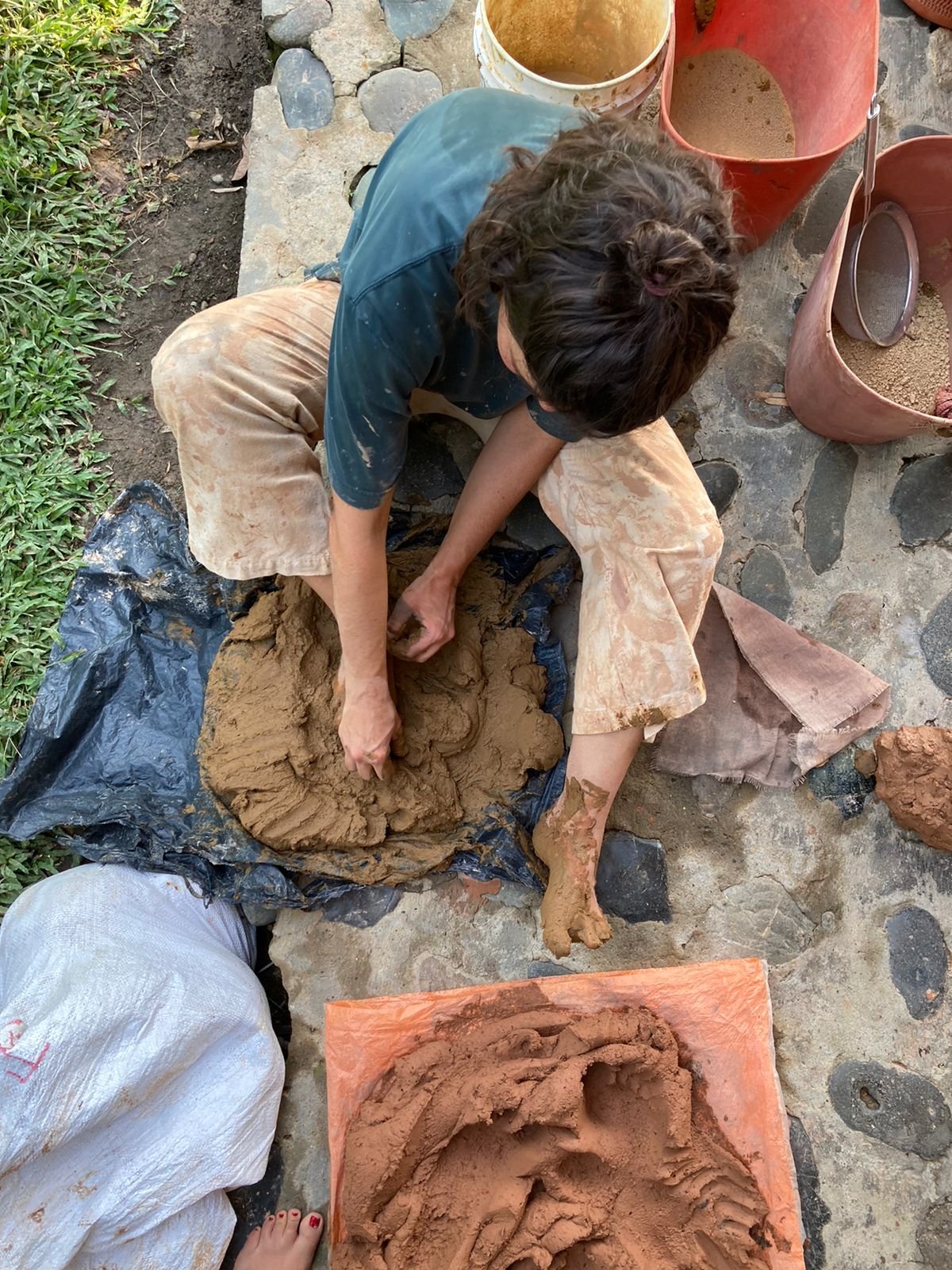
The two new acquaintances talk about María’s creative practice, Salvaje, and the commercial and artistic sides of making a living through ceramics. They discuss her interest in wild clay and its connection to landscape and place, her work with communities to learn and preserve traditional ceramic techniques, and the winding path that led her to ceramics after studying production design for film and television in London.
ABOUT OUR GUEST:
Maria Cano is a visual artist and ceramicist who develops her practice through the exploration of materials, researching their relationship with the landscape and the communities organized around it.
Through cultural exchange, Maria has been in contact with several traditional communities in Colombia, calling for the documentation and preservation of ancient ceramic techniques. She has also sought opportunities for knowledge exchange both locally and internationally.
In recent years, she has dedicated herself to researching, understanding, and building different types of kilns to transform clay into ceramics. Her studio, Salvaje, aims to create a dialogue between traditional techniques and contemporary art and design.
María’s recent publication: tinajeras de barro y río
Follow our guest: @_salvaje_
FOLLOW THE HOST: @sarahrachelbrown
FOLLOW THE SHOW: @perceivedvalue
SUPPORT THE SHOW:
Enjoying Perceived Value? Leave a rating or review, share an episode, or support the podcast financially. Every bit of support helps me keep making the show.
Pick your way to support here.
The music you hear on Perceived Value is by the Seattle group Song Sparrow Research.
All You Need to Know is from their album Sympathetic Buzz.
Find them on Spotify!
As always, thank you for listening.
Get every episode summarized
Each time Perceived Value publishes, we email you a written briefing from the transcript — the topics, who appeared, and any specific claims, with the ad reads skipped.
Email me new episodesFree for 3 shows. No card needed.
Hosts & guests
Transcript ready
810 searchable segments. Every word is indexed and playable.
Full transcript
Perceived Value — A Devotion to Service: María Cano. Machine-transcribed; use the interactive transcript above to jump the player to any line.
Hi, my name is Sarah Rachel Brown. I'm a 40-something-year-old woman who solo travels internationally full-time. I'm a jeweler, consultant, and like many others, I am an artist trying to make a living. From this podcast, I share the financial and logistical realities of working artists' lives. I speak with studio artists and musicians, educators and entrepreneurs, and anyone else attempting to combine their creative endeavors with how they get a paycheck. Before we get into today's conversation, I want to take a moment to talk about supporting perceived value. August marks nine years of the podcast. And for all of those nine years, I have primarily self-funded this project.
And the reality is that producing the show takes a significant amount of time and resources. I want perceived value to continue, and I want your support in doing so. I'm inviting listeners who value these conversations to consider financially supporting the podcast. There are several ways to do that, whether through Patreon or one time donation through PayPal or sponsorship. You can find the link to support the podcast in the bio. And as always, thank you for listening. I'm coming up on two years of full-time solo traveling, and I'm often asked about my favorite places that I've traveled to. When I try to answer that question, an impossible question in my mind, I think a place is where I felt content. You know, I could quickly establish my daily routine as boring as that sounds. But really, my favorite places have been where I felt a sense of community, where I was invited over to somebody's house
for dinner on a weekday, or had someone check in on me and make sure I got home okay. Bogota, Colombia has become one of my favorite places I've traveled to. The weather is not idealic. There are no beaches. And it's a big city, so it's dirty, gritty. But I like gritty. I lived in Philadelphia for almost 10 years. Regardless of all that, I made some wonderful friendships there, and I can't wait to go back. It's one of my favorite places. In today's episode, I'm speaking with a Bogota-based artist who is a very dear friend of my previous guest and super connector in Colombia, Ana Maria Jimenez. If you haven't listened to that episode, you should, because Ana gives insight to how she and today's guest met while studying abroad in London. And it's just that moment like that where you're like, wow, the world is so small. This interview almost didn't happen. You know how sometimes you're traveling somewhere, and your friends and family who want to make sure you have
the best time they've been there before, they send you all these recommendations of places you must see and people you must meet and food you must eat. And at some point, you just kind of zone out, and that's it. So that's kind of how I felt my first time in Bogota. Overwhelmed, I was introduced to many artists, and there just wasn't enough time to meet everyone. But I had heard so many amazing things about my guest today. So in the last days of my trip, I think that almost my last full day in Bogota, I asked my guest to coffee, and I brought along my microphones, just hoping there might be a possibility of an interview. But I was practicing non-attachment to the idea because, you know, this was all very last minute. I recorded this conversation in February of 2025, and I am excited to finally share with you. Listening back, I was struck by how much of what we discussed still resonates, and by how much of what my guest was thinking about and working towards at that time has since
come to fruition. Maria Cano is a visual artist and ceramicist who develops her practice through the exploration of materials, researching their relationship with the landscape, and the communities organized around it. Through cultural exchange, Maria has been in contact with several traditional communities in Colombia, calling for the documentation and preservation of ancient ceramic techniques. She has also sought opportunities for knowledge exchange, both locally and internationally. In recent years, she has dedicated herself to researching, understanding, and building different types of kilns to transform clay into ceramics. Her studio, Sauvahé, aims to create a dialogue between traditional techniques and contemporary art and design. So, please welcome today's guest, Maria Cano. So, it's better. I love your apartment. Oh, I just noticed the TV. That's a lot of TV.
And that's my grandfather. That's your grandfather? Yeah. Oh, wow. Is that a album cover? Yeah, they made it like a like a recopulation of songs for him. Like a tribute to him. Like a tribute to you. Oh, my God, that's amazing. Is that your grandfather's swan living with you there? I love these photos. I mean, your dad's a photographer. Did he take these photos? Because those are great. Yeah, that one he did. Yeah. Yeah. I love it's special. I mean, getting to see somebody's studio is really special because we keep keepsapes and mementas in them. And this is such an extension of your studio. Like, oh, you paint. I, yeah, I'm a frustrated painter. You're a frustrated painter. That's a great way to put it. I love that. I also like how you have your books because I did the same thing in my apartment where I color-coded them. Yeah. So, it's like the yellows
to the reds to the whites of the grays. Yeah, I don't think like a big reader would agree with that because you kind of have like mixed themes and topics. But with artists. But with visuals. So yeah. No, this whole space is really special. And I can't wait to talk about it. Thank you. Hey, listeners. I am in Bogota, Colombia. Still, again, yes. Welcome to the season all about Colombian artists. Can you introduce yourself to listeners? You're full name and what it is that you do. Yes, sure. Yeah. Thank you for having me. My name is Maria Cano. Cano Casas. I'm an artist and ceramist from Bogota. I've been working with ceramics for 10 years now. Yeah, this year will be my 10th year. And I'm very much interested in how Clay speaks about a territory
and the memory and the wisdom behind it. So I explore different parts of Colombia. I'm trying to touch this place and understand how it has moved around the landscape and how people interact with it. So I work a lot with communities around Colombia too. And I have my studio here in Bogota, which you recently met. And in the studio, I work a little bit with more commercial side of ceramics. I do a dinnerware for families and restaurants. Also work with interior designers and architects. But my exploration as an artist is more around the interconnectedness of clay and people. Yeah. And first of all, you guys, I mean, if you've been a listener of the podcast, you know,
I love a handmade mug ceramics. I walked in and was like, oh, I want to, there's a tiny cup, I think I'm going to buy. I think I can. I'm so happy that when I left Philadelphia, I put all my ceramics and storage and I miss having my good cup. And I think you're a small one. It's got like a nice thick wall to it. I think that could handle being jostled around in a suitcase on a flyer. You can wrap it in one of your t-shirts and it can definitely go around with you. Yeah, and it can hold something hot or cold. Yeah. Okay. Okay. Yeah. Because I actually really did think a lot about like, should I pack a mug? I was like, oh, it broke. So when you say the interconnectedness of the clay, you are digging up clay that is, is the right word to say like indigenous to that area? Like it's from that area. Yeah, well, we would call it more like wild clay. It's more, it has to do with it like being originally from there. I mean, clay has,
the way clay is formed is also how it has moved around the surface of the earth. Yeah. Contacting, like getting in touch with other minerals and like the habitat or on a, getting rotten and like all the connections it does with the land that it moves around. So if there's a river nearby, then the river and the water is going to draft, like move that clay around the border of the river. Right. And then it would have probably sand yeah, within its body. So that talks a lot about the territory. So where it is. So I like traveling around especially Colombia, but I've done it in other places too. And just try to get in contact with that matter and understanding what is it made of? What does it have?
What color is it's got? And depending on the color, you can understand what minerals are around the area. Yeah. And it also tells you a lot about the human activity. So it's, if it's, I don't know if it's a crop of corn or rice, corn, rice crop. Yeah, it kind of tells you a lot about the area that you're digging. Yeah, it tells a story. I mean, as somebody who dated a clay artist once a very long time ago, I know the term clay bodies. Yeah. Or just as somebody who really admires the ceramic field, understanding how different artists work with certain clay bodies. And that's very, that tells, you know, they get really attached to a specific clay body. And that's how they'll work. So when you work with more your commercial stuff, you're not digging up all that clay. Are you? No. That's crazy. Yeah. Yeah. I wish I could detach from the more industrial clay. Yeah.
Yeah. But I got to make a living. Yeah. No one wants to pay $300 for a cup. I mean, I wish. But that type of labor. Yeah. You can ever. Yeah. So I use those clays for a more special sort of work where I kind of explore my more artist side of me. Yeah. Oh, what? A working artist that has commercial work and one of a kind all combined. It's shocking. Yeah. Okay. So let's start at the beginning. You're from Bogota. You were born in Bogota. Yes. Okay. Okay. And you were raised by your parents here. Of course. Sorry. We're tired today. Were your parents artists? Were they creative? Like where did this come from? Well, my father is a photographer. And my mother, she's an educator. They both studied philosophy. Wow. That's where they met. So I guess they've always been very thoughtful. That's a way to
describe it. Yeah. Yeah. It is. And I mean, I was an artist since I was born. So they couldn't really fight against it. Right. They're like, she's going to be what she's going to be. Yeah. I mean, I've been painting my whole life. That's why I said I was a frustrated painter because yes, since I have memory, I just love getting involved with the matter and the paint and even painting with my hands. And yeah, I kind of, I think everyone assumed I was going to be an artist and study art. So they were instantly supported, supportive around about it. I mean, they studied philosophy so they couldn't really argue. Right. No, I get that. I took one philosophy class and undergrad. And I was like, nope, not for me. That's amazing. So when
we're in your, you have like, we just have to start with the house. Okay. I can't get, I keep me in like, let's talk about where she started school. And I'm like, no, we have to start with the house. This house, you guys is beautiful. Technically, you are only like a 10 minute walk from where I'm staying. So we're temporary neighbors. This house is beautiful. And this whole neighborhood, I've really fallen in love with. I think, is this Chappanero? Chappanero? Yeah. It's part of Chappanero. Chappanero is more like the district. Okay. But the neighborhood itself is called Quinta Camacho. Quinta Camacho. So it'd be kind of like Brooklyn and how Brooklyn has different, is a borough and has different neighborhoods within Brooklyn. Yes. Okay. Quinta Camacho. I really , Camacho. I really like it here. And you walk up to the house and there's so much greenery and these really cool looking sculptures outside. And then there's these beautiful glass doors that
I realized it was your house because your logo was on it. Otherwise, I would not have found it. And very much so like in this neighborhood, everything has like a front gate to it. And there's two dogs barking. Of course. Bogota called Lombia in general. Love's dogs there everywhere. So tell me about this house because it's kind of special your arrangement here. Yeah. It's a very special place. So my dad bought this house 23 years ago around that time. When my parents got divorced, my father bought this house. And it's this neighborhood is inspired in obviously British houses. And I think it's around the 40s or 50s Bogotanian architect sort of decided to yeah, probably lived in like emulates that style here. Yeah. And the house itself is pretty
it's pretty big. We've been living here well during different moments in my life. But my dad lives here. My younger sister lives here. And I live here. But we're at the apartment that we're at at the moment used to be like a warehouse. Like they used this space to store things. Right. Because my dad bought the house from a navy company. Oh, so they used to sell boats. Interesting. And this area was where they stored stuff. Okay. So it didn't have a kitchen or a bathroom or anything. Right. And when my dad bought the house, he put his office on the first floor and I had this second floor space for as a studio. And both of my sisters and I were living here with him. What age were you around that time?
I was 17, 18 years old. Okay. So in high school. So when I just started my arts college. Okay. So this is where I would paint. I would do my like projects for school. Yeah. And then I moved to London. I lived there for five years. I studied masters in production design for film and TV. I didn't know clay. I didn't know what I wanted to do with my life. But I guessed that was a good way. And when I came back to Bogota, I decided to refurbish this place. And that's when we built the kitchen and the bathroom and made it that little apartment. But then we needed to recover the money that we spent in the refurbishment. So we rented out to a friend. Yeah. He was here for like four years. And then I decided to claim it back. You wanted to live in it. I wanted to live here because I was also starting my independent artist project. Yeah. After quitting my production design for film work.
Yeah. At some overhead. You had to make sure you could cover. Yeah. I needed like a safer place. Closer to my family. Also, I share a lot of, I guess, art interest with my dad. He's a photographer. He's very sensitive to. And yeah, the space was here for that matter. So we kind of share. I live in this house. We were kind of together, but apart. Because I have this little apartment. And he lives in the big house with my sister. And in that area, he has a like in the attic of the house. He has his studio there. And my younger sister, she's a natural dye artist, eco printing and bundle dye and all those beautiful natural dyes. Yeah. Love that. And she's set up her studio in the big house on the second floor. Okay. And on the first floor, since my dad bought the house,
we decided to make it like a space for art. It's stunning. Like when I walked in, I was like, is this showroom or a gallery? It's so cool how you've curated the space too with all your objects in it. Yeah. It has changed a lot during a long time. Because like when we, when he first bought it, well, we had a living room and a dining room and a proper studio, like a house, more like a family home. Yeah. And once in a while, we decided to make exhibitions. So we used to store all the furniture in the garage where my studio is right now. Okay. We used to put all the furniture in there and just clear the whole house and rent it for artists for like new artists that didn't know, that didn't have any like galleries to show their work or that they wouldn't get support from big galleries. So we thought to support like new artists uprising. Yeah. And then when I moved to London, my dad
decided to partnership with his brother and cousin. And then they did like a more official art gallery in the house and they did all the like they changed a little bit the space of the first floor. And they used to run it as a more official gallery where they had exhibitions every three, four months. Different artists like print makers, painters, sculptures, yeah, from different disciplines. And since the pandemic, my dad decided to stop. He was like really tired. He's not, it's not his business. I mean, he's a photographer. He loves being in his studio. He doesn't, he's not a commercial. He doesn't have that commercial side of selling other people's work and it wasn't passion. No, yeah. But I like how he did it and to give something to his community in a way. Yeah, yeah, yeah. And also like sharing the space with others, you know, like because it is a
very beautiful space. Yeah. Also, it's very interesting how much bigger this house is once you walk in. Like it's almost an illusion from the front. You would think like, okay, it's just like a normal size house. But I was standing there when you were putting the dogs away and I looked up and I was like, well, first of all, you guys, her father's photography is beautiful and there's they're huge. Like there's massive framed photography around the house. And I look up and I see this beautiful portrait. And then I kept looking up and I was like, how many floors are in this house? There's like, how far does that go up there? Yeah. So that's kind of special. And you're so your sister, to give me an idea here, how old are you? I'm 40. You're 40. We're just a few months apart. I'm about to turn the big four. Oh, we excited. How old's your sister? She's 38. 38. Okay. Okay. We have an older one, which is 42. Okay. Does she live in Bogota? No, she lives in Portland,
in Oregon. What? Yeah. Oh, interesting. Have you visited her there? I was recently there. Like, I arrived on Sunday. Oh, that's so funny. Okay. You know what? She's great in the Pacific Northwest because I lived in Seattle for seven years. So I keep saying, oh, Bogota is Seattle weather. Yeah. 100%. Yeah. And the Pacific Northwest. Very similar feeling here. Yeah. How is the dynamic? So how long have you, you go to college, you come back, did your dad charge you rent for your apartment? So at the beginning, he's never accepted rent. Okay. He's like, no, no, no, I'm supposed to be like the provider, you know, like the very generous dad. But at the beginning, I used to pay like a symbolic rent. Yeah. Since the pandemic, when the pandemic hit, he was like, stop doing that. You don't need to give me money. But what I started doing from that moment was helping with refurbishing things that needed to
be fixed in the house because maintaining a house this big is a lot of work and a lot of work. And a lot of money. Yeah. So every time you have to, I don't know, there's a, how do you say when like a leak, the leak in the roof, then I would contribute to pay that. When you have to fix the garden, then I'm going to, I'm going to, I'm the one paying for that. Yeah. I obviously paid for everything that has had to be done in my studio. Yeah. And that's like an independent agreement, I guess, with my studio. Yeah. For the home, he just doesn't accept it. Right. He's super generous and super supportive. Well, that's a beautiful thing. Yes. Yes, it is. So you've lived in this apartment for about 10 years, you said? Yes. This is my 10th year. Wow. I love this space. I would live in a space like this for sure. It's just enough space. And I like, well, you know, there's the phrase of like a mother-in-law suite. Do you know that phrase? It's like a phrase people
use for apartments that they build kind of off of their house. Okay. Like common and mother-in-law suite would be like an apartment that you build on the top of a garage or something. Okay. And this idea that you'll take care of your elders and someday your mother-in-law will have to move in when she's out there. Yeah. And this, this is so totally that feeling. Yes. You know, because you go out the back door and then your five steps and you're in your front door. How has it been? I'm somebody that has a hard time living with anybody actually. Like I really value my solitude. You do have this separation, but how has the dynamic been like living with your father and sister this whole time? It's beautiful and complex at the same time. When I first arrived, the like boundaries were a lot more set. Okay. Like we didn't have the dogs. So the door to come out to the garden in my house was usually closed. Okay. So it was a bit more divided. Right. So we used to
share the entrance, but I felt a lot more independent here. Yeah. When the pandemic hit, we adopted those two dogs. We got dogs in the pandemic. Yeah. They were unique. The first weekend of quarantine. Yeah. Exactly. So many people did. I know. I know. But they actually saved us because here in Bogota, restrictions were really tough. And the only people that could go out on the streets were dogs. That's actually what Simone told me. Yeah. That because I keep commenting on it because I know this dog so much that people got dogs so they could go walk. Yeah. Yeah. And not even kids could go out. Only people with dogs. So they kind of saved us. Yeah. Yeah. So since that time, like the garden door now is completely open. And now the boundary is a little bit less clear. Yeah. And also I used to like make my own lunch and dinner here, like independent from the like dad's kitchen. Yeah.
But in the pandemic, it was absurd. I mean, my dad and my sister were right next door cooking. I wouldn't be like cooking here by myself. So we should we started sharing a lot, like the kitchen tasks. So it's been, I mean, it's been a journey. Yeah. Yeah. Yeah. Also because my sister and I, she lived in Australia for six years. Wow. Then I've been, while I moved to London for five. So we kind of grew apart. Yeah. In many ways. And then we had to kind of learn how to live together again. Yeah. As adults. Yeah. So getting to know each other in a different moment of our lives. And in the pandemic, we had to share a lot of space. Space. But also we were raising the two dogs together. We kind of share the dogs. So that kind of made it hard. But it's great. And it's
great, especially because the three of us are exploring our own arts and our own crafts. And we support each other and in discussing about them. And hey, I have this idea. What do you think about or showing our new product products or whatever new explorations we're doing? So it's pretty fun to have like, yeah, an art family around that shares interest with you. I have never experienced, like I've never encountered such a unique situation where you have this family and the supportive ecosystem kind of like the house and how you walk in. And it certainly feels like a showroom. And you see your fathers, your ceramics, your fathers framed photos, your sisters works. And then like dried flora around that I'm sure she uses in her work, but play so beautifully with your like raw clay pieces that you have sitting out. Listeners,
I'll take photos. Don't worry. But it's aesthetically stunningly beautiful. Thank you. Yeah, you get to live in such a beautiful space. Like this is incredible. Yeah, yeah, it's an honor and a privilege. I know. I feel very, I mean, I know I've been giving a lot of energy to this house too. Like, yeah, I've been like, yeah, fixing it and making it live. Yeah. And it's I like when people come here for the first time and because you kind of forget, yeah, you get to you get to see a dream. My eyes are like going, wait, what? You get to live here? Exactly. Yeah. And there's a lot of talk these days about the loneliness epidemic and how people feel so disconnected from their families. I was disconnected from my brother from years and we've kind of rekindled. And so there's the other side of that too, where it's to remember. It's like,
it's really special that you get to live with them and get them in your life so much. Yeah. Time flies. Yes. I know. Can you believe we're 40? I know. Excuse me. I feel like I'm just now like in my early 20s mentally still. Yeah, it's crazy. So when you went to was in London, was that undergrad or was that grad school? Remind that was some masters. Okay. So where did you first go to college? I went to college here in Bogota in in Lonea, where to see Adelus Andes. Oh, what? I think every single person on this podcast is one there for undergrad. It's like the top school in Columbia. Yeah. Private school. Yeah. And it's yeah, it's it's I guess there's two very good private schools. Yeah. And that one for sure is one of the best ones. Thanks. And I decided to go there because I think I didn't think it through that much. It's just like it's a great school in your backyard. And my sister was there. My older sister was studying literature there. And for me was like
yeah, I didn't really think it through. The same way I didn't think I will should I study art? No, I was definitely going to art school. Right. And definitely going there. I didn't really think it that much. Did you pay did your parents help support you with your school? They both paid my full career. Yeah. Nice. We love that. Thank you, mom and dad. Yes. Thank you very much. And so what was your degree in your undergrad? So that's they call it artesplasticos here, which is fine arts. Oh, artist, plastic. Artesplasticos. Yeah. Interesting. I would ask the arts, but it's not really. Yeah. Okay. I would like wow. I thought plastic is meant plastic. Yeah. It's everything that has to do with art drawing paintings, sculptures. It's like a general art. Yeah. Yeah. I would translate it as fine arts. Yeah. I guess. And then you could specialize either in
like in the degree I did, you could specialize in art history or how do you say, Guaraluña, like art education? Oh, like curatorials. Yeah. Yeah. Yeah. Also media arts or plastic arts. Media arts. Like what I've like gone into video or audio production and stuff. Yeah. Cool. So I specialized in painting because I wanted to be a painter. Wow. You really did go always with the frustrated painter as you like to call yourself. So when you graduated, did your parents ever say like, so what are we going to do with this degree? Like, did you think of like, were you going to be a teacher? Well, I mean, my mom has a school. So I, I do have that educator side of me very much into me. Yeah. But I, I never felt
pressure from them. Yeah. No, they were, I mean, they're, my whole life, they've been very supportive, but also very not restrictive. Like, right. Like they gave you the freedom to figure out. And the tools also like support. Yeah. Yeah. So I instantly fell apart from paint. Yeah. And obviously understood that I couldn't live out of painting. So because I was sort of struggling with being an artist, but I still felt creative and wanted to be creative. I decided maybe art direction would be like a good path to follow. Oh, interesting. Like in film. Yeah. Man, I wish I would have thought about things when I was that age. I never even thought about doing something like that. That's so cool. Yeah. It was fun. It was fun. And I enjoyed it a lot.
And I started as a assistant of an assistant of an assistant. Actually not getting paid very much in Colombia or still in Colombia. No, in Colombia. And I did that for around two or three years. And then I, yeah, I kind of started feeling curious about living away from family and being by myself and learning other things and maybe improving my English and just, you know, wondering the world. Yeah. Yeah. So I decided to move to London. I was between New York and London, but then I realized I have a Spanish passport because my grandmother, my dad's mother is Spanish. Okay. Okay. And obviously for visa situations, it was a lot easier to go to London than to go to New York. Yeah. Apparently, Colombia and the United States visas. Not great. I'm sorry.
I feel like I do a lot of apologizing on behalf of the United States to my guests, but but so the Spanish passport, I could live in London without any restrictions or any problems because it was previous to Brexit. Okay. Yeah. And I didn't know what I wanted to do there. I just knew that I wanted to move. Oh, so you just moved there. Yeah. It wasn't like you signed up for school and had it education not for the first year and a half. So I just went there and I did like short courses, like summer courses and like autumn courses on photography, event design, theater design, synography, yeah, like different courses around. Like there were like two or three months long. Okay. Just so that I figured what I wanted to do. And because you have the Spanish passport, did that mean that you could get like a job in London? Yeah. Okay. Yeah.
What did you, did you have a job in your field there? Many jobs. Not, but not in my field. No, no. Yeah. You're like coffee shop, waitress, waitress in a shop selling clothes. I worked as an opair for a year. Oh, you did. Yeah. Oh my god. You're the opair. Yeah. Wait, okay. Listeners, I don't, I think Anna Maria's episode will come out before yours when I do the season. But the reason why I'm sitting here with Maria is because Anna Maria from Medellin introduced us and tell them how you met Anna Maria because I love the story. So I decided to move to London and a very good friend of mine. She said, oh, my very good friend from Medellin, she's about to move to London too. So this friend we both have in common sort of set us up and we started talking without knowing each other and decided to find a house together when we arrived because casually we were arriving only like two weeks apart. That's crazy. It was crazy.
And then we found a room. It was actually like a much smaller than this space, one room for both of us. And we arrived there. Well, she arrived two weeks earlier than me. Okay. So she kind of had to clean the space and get it ready. Make it decent for my arrival. And she was very sweet and very generous because she even went to the airport and picked me up. Oh my gosh. Like a media best friend. Immediately. Yeah. Like I had this two massive suitcases. It was my first time living away from my family. I didn't know where the hell I was. So yeah, we kind of had to get along because we were sharing a room and it became very intimate like very quickly. Yeah. Because I mean she, she was talking to her long distance boyfriend. Now, late at night and I was now husband. Yeah.
Um, late at night and I would be like laying in bed next to her. Well, in another bed, but yeah, yeah, still. And yeah, all the like all the feelings that arise when you're moving away from home the first year. Now we get in a new country where the language finding jobs, learning how to move around in a city like London. There's also something I find really interesting too that I'm sure you connected on. But from what I remember from our interview is that she went there also looking to expand or find something else and knew she wanted to work with her hands and started taking jewelry classes here and there. So it's that parallel is really interesting too. Yeah, it's it's been well with her. It's been beautiful because I think we've both accompanied each other in our explorations and our findings. And I got to be around most of the not not in all of them, but in
in many of those moments where she kind of found a gate opening. Yeah. When she discovered this school where she was going to learn jewelry. Yeah. Or when she started the apprenticeship at a jewelry designer in London. And then many other moments when we moved back to Colombia that we've had like parallel stories with our own crafts. Her with jewelry and me with ceramics, but we've been like, yeah, partners. Yeah. And not to throw us off of our trajectory here, but I'm wearing an earring that I bought. And the most stunning little retail shop I came upon at the Museum of Modern Art and Metagene. And had no idea that it was on a Maria. I mean, I saw the the name of the artist and I was like, Oh, it's that jeweler I might get to interview for my podcast. Oh, wow. But I had no idea that she was partner in that retail space and that was hers. And I actually have pictures of
your ceramics because I remember posting an Instagram Instagram story and being like, Oh my God, the reality that I cannot buy any ceramics is truly hitting me in this moment. So that's funny that I was like a fan of both of yours before I got to meet you. That's very sweet. So your partner in that retail shop together. Yeah. That's a that's a recent move for us. It's stunning. Not but in your house. I'm like, Oh, I get it. It's very special. Yeah. Yeah. We're really we're enjoying having a space together to kind of, yeah, create and and show our work. Is it you two or is there a third one? There's four of us. There's four of you. Yeah. So there's the numbers. Yeah. Yeah. Degres Alon, which is the handbags. Okay. Yep. Those are pretty. Mm-hmm. And then Lana de Arbol, which is like the, like the, like the, yeah, clothes and like ponchos. Okay. And they're all made of wool, beautiful, handcrafted, obviously. Yeah. So it's a very special little shop that we care for a lot.
Is it because you all use craft techniques that are rooted in Colombian origin? Yeah, we kind of, so Degres Alon, which is the handbag brand, she had that shop by herself for a while. And she decided to invite other brands that are like in like in their philosophy and their ethics with working with communities or with the material itself. Okay. So she first invited Ana Maria and then they invited me. Right. And last came Lana de Arbol. Nice. And then because of this partnership, the name of it is the Tigre de Salon. The name of the shop is Uracú, which means home in Kogi, the in Naroacú, sorry, the one of the tribes of the Sierra Nevada in Santa Marta. Okay. Okay. Uracú is home. Okay. So yeah, that's beautiful. And so now that it's the four of you, so you go all
kind of like split the overhead of running the shop in this business kind of? Yeah, so because the shop was owned by, well not owned, but she had a Tigre de Salon had the lease, the lease and also like the administration of the whole thing. We're kind of attached to her management. Right. But it's not like it's not a commission. I mean, she doesn't earn a commission. We all pay rent and we all pay fixed rent and administration fees. Right. So like it's not like you sell your work, you get your, she's not taking a percentage of the sales of your work because you're all paying into it equally. Yeah. And you guys, it's such a pretty space because the museum, a modern art and metagene, I'd like the architecture to and there's kind of this like, there's the outside facade, but then there's like an
inlet inside and there's their gift shop, but the front of it is all glass and it just, it looks very lovely even at night. And the, just you all have very good taste. If you walk in and it looks like a very beautiful, the walls are this lush blue color and it's curated in a way that's really pretty. Yeah, I mean, I bought something just and I was like, I can't buy anything and I was like, I have to buy something here. I love it. Yeah. It's a beautiful space. We feel very honored to be there. Yeah. And what a wonderful friendship to get from having to navigate. I moved, when I moved to Seattle, I dropped out of college and moved within three months with a best friend of mine. And the two of us navigating that first year together of trying to find jobs, not finding jobs like me getting my wallet stolen, just having her there made us so close in a way that that's really special.
It's family. Yeah. Yeah. It's totally family. I mean, she's a sister to me. Yeah. I think even, well, I don't know what my sisters are going to think about this, but I was going to say even a bit more than my sisters because sometimes there's things with my sisters that I don't talk about. I don't know why. Like it just didn't, like we didn't grow up in that way. Yeah. And with Anna, it's like, she knows me so well and she can read me so easily. And I think I can read her too. Yeah. And we've taught each other so many things to get through difficulties or our vulnerable stages or yeah, it's like an amazing company. I've had that talk with my brother too because my brother and I both have chosen family. And I think sometimes we feel a little conflicted about how we can have people that are so close in our lives that maybe he doesn't know or whatnot. And no, I get that. Yeah. So I, okay. You haven't mentioned clay once.
When do you fall in love with clay? Like you're in because you're in London and you're still holding fast to this audio production or cinematography kind of our direction. Yeah. I did that. After I did all those short courses, I decided to start a master's degree there. And I did that for a year. And then I was called to do a TV show here in Colombia. Cool. Were you like, oh my god. It was cool, but it was very demanding because it was about Escobar. Oh wow. And by a Colombian writer, right? Because there's a lot of shows about him that I think are from perspectives of other cultures that I find a little conflicting. Well, this was a Colombian writer and it was a Colombian production, but it was intended to be like a nom nomanage. How do you say nom? A mage to him? To no, to the victims. Oh, okay, okay. The minute you just said all of this,
having just had our coffee date, I was like, what? So maybe can we start by giving insight to your connection to Pablo Escobar and why you taking this job seems so shocking to me or yeah, I can talk about that first and then start with clay. Yeah, then we start. Yeah, we got to go along here. Yeah, so my family started the newspaper in Colombia called Elis Victor. My great-great-grandfather. He started it in like early 1900s or late 1800s. I don't know how you the exact date. Yeah. And this newspaper has always had like a very free speech and search of the truth direction. Right. And my grandfather, he used to be the director of this newspaper
and when in Colombia we were having those very hard moments in the late 80s and the beginning of the 90s. He was leading that role of finding the truth behind all the corruption and all the tough situations that were going on in the country. Right. And after Pablo Escobar started working in the, as a congressman, my grandfather was the one that denounced yet, like uncovered, uncovered. He remembered that he had seen that guy in the news some years ago for a drug dealing with Marri one. So your grandfather is the one? Yeah. I mean, I hate that when I came to Colombia, there's that show Escobar on Netflix and I watched it, which I understand whenever you watch
something like that, take it with a grain of salt. But it did give me like a rough history underlining. And I do remember in the show that period where he's running and then people start trying to like be like, no, no, no, this guy's corrupt. Yeah. Yeah. So it was because my grandfather sort of did that uncovering. And since that moment, he kind of obviously became a target. Of course. Because he was every time that Escobar did anything because he had this facade where he was this very cool guy, right? And he was building, giving houses to people and many people love him because he was very careful. He was like a, I mean, it's interesting when I wasn't, sorry, I didn't mean to cut you off. But when I was in Medellin, I went on a tour and it's like a boat tour and you go past Escobar's house that he had the hippos and whatever and people go there for tours. I felt really conflicted about it because my gut reaction is that this guy's a murderer.
But my tour guide was like, you have to be careful because depending on who you talk to, he is either a hero or he is a terrorist and they feel very strongly about it. So as a gringa, just don't say anything. It's a very complex person because it was a very complex person because he, he showed himself as a very generous and very philanthropist. Philanthropist gave back to his community, loved his people. But on the other side, he was ruining the social weave and the connections and the and wanting to take care. And wanting to take over everything. Yeah, and very violent too. And I think the thing I think about is when someone's corrupt or trying to take over, the first thing they want to do is silence the press. Exactly. And free speech. Especially the one that was on top of him uncovering all his lies and all his like, yeah, undercover. And was your grandfather
and the newspaper was that your mom's father or your dad's father? My dad's father. He started threatening him. The newspaper was many times a target. We were, I mean, they were killing journalists from the newspaper, threatening all of them, threatening my family, my dad. We had to fly away from the country many times. And didn't you say they like bomb or they stepped fire? Yeah, that was after after they killed my grandfather. We decided my my uncle's family and my dad's family. They both had to take over the direction of the newspaper. My grandmother asked them to step up and take his place. And they started getting threats.
A lot of threats. So we had to move out. And we decided to stay there for a while. But things weren't getting any better here. And the rest of the family was still here. So they took that really hard decision to come back and fight for whatever reasons my grandfather was fighting for. Right. So we decided to come back and two days later they bombed the newspaper. Oh, so yeah, very. Oh my God. Like how big of a bomb? Like did it destroy the whole building? It did a pretty bad job. Yeah. Unfortunately, it was a truck. They put a bomb inside a truck and park it nearby. But fortunately, the bomb set off on a Saturday really early. So there weren't any workers around. But it did destroy the facilities a lot. Right. Yeah. Yeah. It's crazy what people go through to destroy free speech.
And when we were talking about this, listeners, we obviously spoke about this before putting it on record. I would never ask somebody to talk about this without permission. So thank you for sharing this story. I just think about as a journalist and how much I care about the freedom of free speech and to do this. And as press and free speech are under attack in the United States right now because we're kind of not kind of our democracy is under attack. And they're going after education, healthcare and the press. And I think that your grandfather was a hero. Yeah. Yeah. He definitely was. I mean, as I told you earlier in our coffee date, I think it was a devotion. So like so stuck with him. Like he didn't even doubt about it. I mean, there's an interview the
night before he was killed. Really? And a journalist was interviewing him. And he actually, he says that in that interview, he says, I don't know when, I don't know if I leave today, if I'm ever going to come back. Like he knew something was going to happen because he was getting a lot of threats. But he didn't even doubt about writing again the next day about all the atrocities that this guy was doing. And it was just something so, I mean, close to his work and his his his ethics and morality and also like in that seek of finding the truth and like giving others the possibility to know the truth because yeah, people deserve the truth. Yeah. And they were getting lies. Basically. Yeah. And telling the truth when people are threatening you is a very scary thing. Yeah.
He was super brave. Yeah. Very brave. And really brave of your father and your uncle the step up too because I can't imagine my father being murdered for that type of work. And then saying, okay, I will pick up the pieces where he left. Yeah. I think that was a very hard thing for them to do. They were also very young. My dad was 28. Oh my gosh. Yeah. And you were two. I was two. Yeah. Yeah. So it's interesting your father is a photographer. Yeah. A very journalistic aspect. And that's is that kind of where that was born out of you think maybe? Yeah. Yeah. For sure. He he started doing the philosophy degree where he met my mom. Yeah. And he instantly, well, he he started working in the newspaper as a as a photographer assistant in the lab in the laboratory because obviously it was a nanologue photography at that time. Yeah. So he was in the studio all the time developing the
films and assisting the other lab people. Yeah. And then very quickly he started getting really passionate about it and they started giving him jobs about covering news around sports news or anything. Yeah. Yeah. Yeah. He think happening and he really started enjoying it and loving it. But then like yeah, family business has its own plans. Yeah. And he started to like have to get involved with more like the more editorial side of the newspaper. Yeah. He's also an amazing writer. So I was going to say is he an amazing writer? Yeah. As somebody who's like fallen in love late in life with journalism. I'm like, I want to meet your dad. Yeah. Oh cool. He's visiting my sister now in Portland. Shoot. Oh, the back of Bob. Yeah. For sure. He's an amazing writer too. And well, he he when my grandfather was shot and he had to step up, I think it was a hard moment for him
because he kind of had to leave his dream of being a photographer. He had to be a director of a newspaper that I mean, with all the pressure and all the like expectations of stepping up on a role of somebody so big as my grandfather. Yeah. Which would be a lot no matter what. But add the level of no, this actually puts your life in danger by taking this role is a whole other level. Yeah. Wow. Your dad's incredible too. Wow. What an incredible family. Yeah. Okay. So when you get offered this position to work on this. Oh my gosh. Did you have to go to your family and say, like, did you ask them if they would be okay with it? Like, I feel like this would just bring up so much. It did. It brought a lot. But actually, one of my brother, one of my dad's brothers, not the one that had to step up with him as a director, but the younger one. He was
behind the TV show. Okay. He was sort of the one that sort of created it to do that homage to the victims of Escobar. Right. So it was sort of a way of remembering all the victims of Escobar. Right. And I think I was called because I had that family connection, of course. And to me, it was a hard decision to make, but also because I was told it was going to be an homage, I was like, instantly thinking, okay, I want to do this for my grandfather. I want people to remember him. I want like to make, yeah, I do this as a living so then I can. You didn't even think about it. Just your passion and your heart said yes, just like grandpa. Yeah, but I knew it was a hard task. And then I started reading a lot, not only the scripts, but also history and the newspapers. And I went to the archive of the newspaper and saw a lot of
pictures and started to know my grandfather, which I didn't really know because I mean, I was too when he was killed. And I knew a lot of things because he's a public figure. Right. And everybody knows about his journalist side. Yeah. But I hadn't heard much about that grandfather and that father and that husband and that, yeah, like that person behind the journalist. So I had, I remember one night I had to sit down with my dad and tell him like, okay, we need to talk. I don't want to, I need to know more. Yeah, I don't know, I don't want to know this things through a script. I want to, I want you to tell me this. Right. And it was a beautiful, hard moment of Qataris. Qataris? Yeah, Qataris. Yeah. Yeah. Where I, yeah, I felt closer to him. Also because I
obviously had to recreate his office, the newspaper. I spent a lot of time in that newspaper because it was my dad's office. So I hang around there a lot when I was a kid. Yeah. And all the big printing machines and all the little rails where the newspaper used to go. We used to play on those rails. I feel like I've seen those like montages and movies racing the newspaper moving through. I'm like, this is so cool. You got to live that. Yeah. And it was really nice to put my, my creative and like expertise in that matter. Yeah. Even in the office, I could, I, I will we kept his desk and his writing machine typewriter and typewriter and the like the painting he used to have in his office. So I kind of put all those real things in his office in his fake office for the set. So it was nice. It was, it was beautiful to, to be able to do that. But it
very quickly became clear that, that homage was turning into another thing. Right. Because obviously there's other interests and other things sell more. And they wanted it to, the show to be very popular. So they started focusing more on Escobar and less on the victims. Yeah. And I realized that. And I quit. Wow. Good for you. Yeah. It was, it was a really hard decision. But I, I understood that I, I had done my job. All the like the part of my grandfather who had been shot, had been, yeah, we were finished with those scenes. So I understood that I didn't have much left to do there. It's interesting because I am, I am a citizen of the Osage Nation and there was a movie made a few
years ago about my father's people, the Osage. And that was a big conversation where they were like, this is a very dark history. And we want to make sure that you don't make it about the darkness just to get people to watch this. Like this isn't just for you to all to just take this trauma in and make it like a profit off of that. Like you have to tell these stories of these humans that lived through this and their lives and how they were impacted. And so as you were saying that, I thought, yeah, exactly. I could see how hard that could be. If you don't have control over and it starts to go in that direction. I'm so like an off you and your maturity of being like, I'm out. Yeah, it wasn't, it wasn't easy. Yeah, but yeah, I quickly understood, well not quickly, I did, I did work for like seven, eight months. Yeah. But how was the pay? Just had to break up the tension. It's a very heavy topic. Circle back to perceived value. Did you get paid okay?
I was okay for the time, but not for the amount of work that I did. Yeah. And the emotional labor. Exactly. Yeah, put a price tag on that. Yeah, not so much. Yeah. So you quit. And then and because I had interrupted my life in London, I came back. Oh, you came back to board that. Did you leave on a Maria there? Was she still there? She, no, she had already she came back to go. Okay, she was already here. Yeah, she was already here. So I decided to go back to London to see if I could like gather my pieces. Yeah. Also, I was like in a hard emotional moment of my life because all of this had happened. Right. But I didn't really find a good job. I sort of felt that my moment had passed. And then my mom got sick. As I told you, my mom has a school. Yeah. And she needed help. She guys, her mom started a school like, your family, good God.
Yeah, they're amazing. Yeah, they're really amazing. So I'm sorry, she got sick. Yeah, it was, it was okay. I mean, she, it was a moment where she needed us and all my, my two sisters and I, we were living a way. Right. So we all decided to come back. And I actually, not only because of that, but I already felt that my time out was done. Yeah, we felt always felt very Colombian. Okay, very tropical. You guys, I've said this almost in every interview of Colombians. They love Colombia. You are, Paisas, like you're very proud of this place. And I love that about you. Yeah, I also have only been here two and a half months and never want to leave. So I get it. Yeah, I, I, I guess it's sort of like a family inheritance because yeah, well, my, my father's side with the journalism
and my mother's side with education. Yeah. So you kind of feel not a pressure, not in a bad way, pressure, but you do feel a responsibility to, to do things right for a place where injustice is very popular. Yeah, they both serve their communities in really important ways. Yeah, yeah, yeah, in an inspiration for that. Yeah. So when that happened, I came back from London and I started working in my mom's school as an art teacher in preschool. Okay. Well, first of all, that makes sense. And also I love that. Yeah, it was beautiful. Yeah, it was a very beautiful time. Because I also had the opportunity to do all the things that I missed, which was like painting and drawing and yeah, not really thinking about it, but just like connecting with your intuition and your spontaneity and kids are so rich in that, you know? Yeah, yeah. So yeah, it was beautiful to be there.
I was there for three years. And during that time, we had some materials in the classroom, yeah, paintings of all sort of types and crayons and whatever. And we had some packs of clay. Ah, yes. And I remember playing on clay time. Yes, here we are. This is where it happens. And then I thought, okay, let's use the clay. I had taken a ceramic class in college, but didn't really didn't resonate. Not the sparks didn't fly. Nothing, nothing. I don't even remember who taught it. What I did in that class, I have no idea. Okay. But then I took those packs of clay and started playing with the kids. And I was like, whoa, this is a pretty amazing material. Right. I want to get involved more with this. And then my curiosity started like flourishing. And I found a very nearby here in my house. This factory where they made dinnerware. Oh, and they were teaching pottery lessons
like wheel lessons. Always a side hustle. Small business is always have a side hustle. Yeah. Like we can make, we can cover our overhead if we do classes on the weekends. Exactly. Yeah. And yeah, I started, I always tell this story because it was so powerful and so profound that I sat down in my first class. And I instantly thought, I don't want to do anything with my life, but this, like, wow, this is what I want to do with my life. And I became very obsessed and very passionate about it. And with a certainty that I hadn't felt before with anything in my life. And I, yeah, it just started being very intense, taking classes three, four times a week, spending a lot of time in that studio, experimenting, playing because I did have the wheel lesson, but yeah, all of the rest of the process, they were like, you just go ahead and try and
yeah, just glaze this. Uh-huh. It's a glaze. We dare you. That's the glaze. You just have to put, make sure you mix it properly and go ahead. It's a very distinct chemistry process, but yeah, just give it, just give it a whirl. But I appreciate that a lot because it made me connect to the craft in a way that it's not taught or rational. It's very much an intuition. It's very much, uh, like, um, being able to understand the material through the communication with the material. Yeah. It gave me the freedom to explore. I just want to say, I love that you've had this whole life. I've talked about this with a few other people on the podcast for the season where um, as I'm 40 almost, I'm approaching 40. I feel very unsure of myself in life right now. I feel very sure and unsure at the same time where I haven't hit those milestones. A lot of people have,
I fell in love with jewelry 15 years ago, but I just sold my jewelry studio and I don't have my tools anymore and I'm pivoting and I'm changing and I've fallen. I've loved, I love podcasting. I love what I'm doing with you right in this moment. Like this is the happiest I ever am. Um, and just talk with more people who are my age and understand that you have this whole life where you have your first degree and then you do grad school and then you work on projects in your field and then you're teaching and you're doing all this and then you take a clat one clay class and you're like, well, there's no looking back from here. And you must have been in like your early 30s or mid 30s. Yeah, I was actually 30. You were actually 30. Yeah. And I just love getting to share perspectives of this because I don't know about you, but like I grew up thinking that I would pick this one career and that would be it. And I was destined to become a master of one
thing. Yeah. And I've never really felt a master. I don't even feel a master of journalism, but it's what I love. And so I just keep going for it. Yeah. Yeah. That's that's exactly how I feel with clay. Also like I never, I don't feel very um, sure about calling myself a ceramicist. Okay. Well, because yeah, because I feel it's a field that has so many paths and like it's infinite, you know, it's it has so many ways of approaching it. Either if you explore clay bodies or glazes or techniques or materials or firings, like it's it's so infinite, like the whole possibility is around it. Yeah. And yes, I've been working in this for nearly 10 years, but I feel my field is very narrow comparing to the amount of things you could approach. Right. So I'm always
very insecure of I no, no, no, no, not insecure necessarily, but feeling I'm still an apprentice. Yeah. Yeah. No, same here, sister. I just I just got the courage to put journalist on my Instagram profile. So yeah, you know, and I've I've been paid to write things and to put the podcast out. But I'm like, can I call myself a journalist? I don't know. Yeah. Yeah. I guess it's so, so our our insecurities. Yeah. So you have this beautiful studio. How long did you keep teaching after you fell in love with clay until you were like kids? Listen, teacher has to focus full time in her studio. So I started sharing work like so I had started working part time in the school and the rest of the time I was in that studio learning or exploring or playing. Yeah. And my mom used to
buy my cups and whatever I did. Thanks mom. She's yeah, she's super supportive since forever. And then I started sharing a space, a studio space with other porters and they were going to Mexico to do a not rest agency there to a ceramic place. Okay, amazing. And I was like, can I come? Yeah, can I jump on that train? And they were like, yeah, let's let's just make a project together and we can all come as a as a studio. And we did and we were there for a month and I stayed another month traveling around Mexico visiting like pottery towns. And after that trip I arrived to Bogota with a very bad 10 a night is in my left hand. I was so obsessed with the wheel that I overuse your body. Yeah, yeah, barely stopped. And my body instantly was like, hey, what are you doing? Listen, you're not 22 anymore. You need to stop. But I was so
passionate about it and so in love with it that I carried on and I decided to I decided if I I mean if at that moment I didn't stop my other responsibilities that this project was never going to rise or flourish. So I decided to quit. It was a big jump. But I always knew that I had support. I always knew that I was safe and I know the challenge it gets to take that step. Yeah, but I also am very aware that I was able to do it because I had support from my family, from yeah, the community around me. Yeah, and I think we we certainly talked about this off mic of this feeling of like, well, I've had a lot of privilege to get to do it. But you've had this support from this family and you all seem to support and hold each other up in a
beautiful way. And even when some people are supported, they don't do much. So to see you and how your family has been able to support you and how you keep going forward and doing these great things is really incredible to see. Yeah, yeah, I think I think it just makes me feel safe. And if I feel safe, I know I can connect with my creativity and with the flow, you know, and it's like, yeah, take some risks. Yeah, feeling safe to take risks is important. Yeah, for sure, for sure. So here we are, a ceramic artist before me. What can you describe? So you did in the very beginning. So you're the way that you support yourself fully now is through studio practice. Yeah. Okay. So I kind of have two paths in my studio. Okay. One of them is a lot more commercial and it
has to do with utilitarian stuff. So I do commissions for restaurants, for families. As I said, before some architects or interior designers contact me for, I don't know if they are working on a hotel or a new building and they want some nice pots for their shelves or whatever. Then I do those things sort of to earn a living. Yeah. And then probably five or six years ago, I started questioning myself a lot about what sort of material I was using and where it came from. I've always been very aware of my environment and I was very concerned and I'm still, I still am very concerned about the minery and well, Clay comes from the mountain and how many mountains.
In Colombia. Are we destroying? Yeah, you guys must get the mining industry. I worked in ethical jewelry for years and we worked with some Colombian mines because of emeralds, but there's not a lot of restrictions here. No, it's pretty bad. And I mean like with metals is a lot worse. Yeah. But still Clay comes from the mountain. It still has to dig in a mountain. So I started questioning those things and also getting very curious about other places that are more traditional in a way that approach material in a much more respectful way which they don't accumulate tons and tons of clay and process them. They take what their body can carry. When you just said that your face lit up. Okay, yes, that's different. It's very different. It's
very different. And I had the gift of visiting a community called Juana Sanchez, which is like up north by the Magdalena River, which is the main river in Colombia. And I went there in 2019 and I immediately understood the power that that place hold, held, held. You're doing great. You don't want me to speak in Spanish on this microphone. Because there is this very special technique that it's like a coil technique, but it's not like the common coil that all potters might know. Even I've heard of that, Kuehling. It's more similar to the Ongi technique in Korea. Oh, yeah, my friend Adam makes Ongi pots. It's similar to that, but it has its twist.
It's a technique that is disappearing because only four women of that town knows it and carries the tradition. There used to be a Tina Hera, that's how we call them because they make Tinahas, which are those very big vases for storing water, with that technique. But now there's only four of them left and their daughters and granddaughters are not interested in carrying the tradition. Oh, so when I visited that place for the first time, I kind of felt so grateful for having to be witness of a tradition that is still alive, but also very worried that it was... But it was... Yeah, it's disappearing. And I understood, I guess, because all my family inherited of social and community and caring for the country and caring for the more untouchable
well-entangible knowledge. I felt I had a responsibility that I was there for a reason. So, yeah, I immediately felt very connected to the place, and since that moment, I just kept going there working with them. How far away is it from here? By bus, it's like 14 hours? Yeah, I was going to say, it sounds like it's far away away. Yeah, it's a very remote place. Also, the Magdalena River in that area sort of divides in two branches, and they're inside that little island. Well, it's not so little. Is it one you said near Santa Marta? Where is this near? It's near Montpos. I didn't know if you've heard Montpos. I have, because that is a town that is 70% jewelers that specialize in filigree. I'm not going to go on a tangent, but I just want you to know. Yes, I am going there. You have to. Yeah. And then if you go there,
you can visit Tuanasanches, because it's very nearby. Maybe you, me and Ana Maria will do a trip. Okay, okay. That would be fun. And actually, Ana Maria was with me on that first trip to Tuanasanches. And I know I didn't get to talk to Ana Maria a lot about her work, but you both have, again, you have this connection. You have this common thread where you're both really interested in how these techniques that are disappearing and learning about them and keeping these traditional techniques alive and figuring them out. Is that a correct statement? Yeah, yeah, for sure. I think with Ana, she's been probably having a bit more research, having to do more research, because there are some techniques that are lost. Yes, yeah. And she's centuries back. Uncovering those lost techniques, which is amazing. For me, it's more like the remains of those traditions that are still there that are about to get lost. And I think her work and her research
has inspired me a lot to kind of be aware of the value of having that traditional life. And knowing what this is, super special, it's not lost yet. Like how, I mean, of course, like showing up and being there and then becoming familiar with the fact that you're interested in this is one thing. But how do you approach somebody outside of their family or immediate community that culture and say, will you teach me this? Like, how did you do that? Well, I guess the, like, I went there the first time with a group of people that a girl from Medin organized this trip. It was sort of like an art residency. Okay, okay. And they were accompanied by another Ceramist artist called Jose Ignacio Vélez, which he's from Medin II. And they were doing this, they do this trips around Colombia in remote places where they have a special knowledge or an expertise or
something to learn from the place. Yeah. And they had been doing another the year before they did one to a place called La Chamba, which is very popular in ceramics in Colombia because they do that black pottery. That is very popular where they serve the Sancocho, which is a typical school. I haven't had it yet. Okay. And I lost, I wasn't able to go to that residency because I was in Mexico in my residency. So the next year was Juan Asanches. And I didn't know that place existed. I had no idea. And many people from Colombia, you tell them I was in Juan Asanches and they don't know where it actually is. Okay. But I knew that I wanted to go there. And Anna was starting her research on fire on how they used to melt the metals. And this was a great opportunity to explore a little kiln for her metal melting. Yeah. So we went together to that place. Yeah.
And I think that opened a door, which was a lot easier to approach the community because I was already there with that group. They got to know me. They got to see my face. They got to see that I wasn't there just to take their technique. I was very interested in helping out and finding ways of if they wanted help. You know, that's the first thing. Do you want this preserved? Do you want it to carry on? But at the beginning, I think I didn't realize the amount of like what it meant for my research, but also like my personal craftsmanship. Because I just started coming back to the place and learning from them, but also sort of sensing what are the daily
lives and the problems and the situations and how to weave a better relationship between them and me, but also within them. And it's been a very slow process. I mean, I've been there. This is my sixth year coming there or going there. And then only now, I can understand the the amount of changes that have happened since I've come back because they started also to understand, well, there's a person from outside that is interested. Maybe we should appreciate our own work a little bit more. And that has moved also younger generations that they are not necessarily doing the tinahas, but they're curious about them. That's incredible. Which wasn't happening before. And since that, I understood that I had a very big, not only the responsibility,
but also the, because I have other channels and other means of communicating through social network through people that I know in the city connections that you, they obviously don't have. And resources you can give them. Exactly. And I am in, how do you say that? Like I in their service and you're serving them. I'm serving them. Yeah, I understand that I went there for a reason to serve the tradition and them. Yeah, it's not about you. No, yeah, you're not a part of that. I think I'm a channel. Yeah. Are you working on like a book or something about this? Like how do you then preserve this and make sure that it isn't a way
that can be passed down? Like what steps have you taken? Yeah, so this year we're publishing a book. Publishing up. Oh my god. Okay, can I just say as the great, great granddaughter of somebody who started of magazine or newspaper that you're publishing something? That's so special. Yeah, it is. It's actually a very like big task for me. Yeah. Because it gets in my, all my sensibilities. But yeah, I decided to register every time I went there, had talks with them, they told me about their pasts, how they learned, who they learned from, how was the tradition before, how is it now, how do they see the future, what do they see that is ahead of them. And with all that
information, I started like a team work with, there's like 10 authors. One of them is my dad. Okay, okay, more family connection. Oh my gosh, I'm falling in love with this family. He's gone with me five or six times to Juan Asanches. They love him around there. He's like every time I go there. And he's writing about two of the six tina heras that are still alive. There's only four of them that are actively making tina hus but other two that are still alive, which can preserve the knowledge for a way of saying. Yeah. And he's also taking most of the pictures that are going to be published in the book. Of course. And there's also an anthropologist, which he's like very into the
Magdalena River. He's probably the person that better knows the place. And he's writing about the area. And yeah, it's a team of eight or nine people that are constructing, well-building the project. That's so special. Also good on you for knowing intuitively to move your microphone away when you call someone from a family and journalist. Hello. Wow. Congratulations. Thank you. I mean, I don't really care about this answer, but I do have to ask the answer. How do you get a book published like financially? Who's paying for that? So that's another very beautiful family support. My mother's mother died two, three years ago. And my grandfather had died four years before that.
Yeah. And they sold my grandfather's apartment. And the money went split into the brothers and sisters. Yeah. And my mom, which has witnessed my work with the community for all these years, she's also been there with me. She decided to use her part of the money to finance the book. Okay, mom. Okay. What? I don't know what I was getting into at this interview. I keep wanting, I'm like choking back tears. I'm like, okay, that's cool. That's beautiful. Is that a lot of money? I mean, the podcast actually, when I first came up with Percy Value, I wanted to do a book, but I was broke and don't know how to write a book. So I talked a lot into a microphone. But I find like publishing a book seems really intimidating. It isn't. Yeah. Yeah. Wow. That could be a whole podcast episode.
So in terms of like cost, is it you're using that money from your mom to pay the writers and pay people for their labor? But then there's also like the printing and everything as well. Yeah. When you go to print, how much money are you able with the money you have, how much are you able to print the first, whatever? So we did a budget with the money that she gave us. And with that budget, we distributed obviously to pay the writers, to pay my dad for the pictures. Also, all the like the field trips that we had to do to make the interviews and to build the book with the community because we didn't want to write a book like eight people from the city writing about a place that they're not from. Yeah. And also you have to pay the people in that community that are participating. Exactly. So that money is covering all of that.
And then we still we're still working on the design and the amount of pages and like the agra mustion, the graphic design. Layout. Yeah. So we're not sure how much that is going to cost. But it depends on the amount of pages I guess and the special needs of the book. But it's a book that it's going to have a lot of drawings from the kids, a lot of photography. Also recipes like traditional recipes from the grandmothers. And I hope to use not all the money. Yeah. But I think we have enough to publish 1,000 books. Wow. If everything comes out right. And when you do let me know if they're available online. Yes, I would. That little button that says buy book. Yeah. I would love to be able to support. Thank you. Thank you so much. Yeah. Because obviously we want a percentage of that.
Sell to go to the community. Yeah. As I said. So we're building a more like an educational project. Yeah. Instead of paying directly to the Tina Hedas or their families, we're going to put that money into a fund to create some sort of school where they can teach the techniques so that the technique doesn't get lost. So it's sort of searching ways of preserving the tradition. You know, wow. Okay. Well, this is usually in the part of the interview. And I'm like, okay, we're wrapping up. What's the future? I mean, you have such a clear path and goals of what you're doing right now. It's a really beautiful thing. Thanks you. Yeah. I mean, we're both you know, at that crux of like 40 and whatever. And I know we shared these moments of like feeling uncertain because are you single? Yes. Okay. I'm with you sister. Yeah. But I think there's
something so beautiful to acknowledge that we both have these really beautiful big things in our life that may not be motherhood or may not be partnership in some ways. But good God, like you're serving this whole community and creating this whole thing. It's pretty impressive. Wow. Yeah. Yeah. Yeah, I think there's other ways of love that doesn't necessarily go as in motherhood or partnership. And yeah, I feel so much love from them when I went back the first time that I was like, this is my family, you know, and I instantly decided to it's like my grandfather's devotion to freedom of speech and of truth. Yeah. For me is service. And for me, it's like, I know I have the the ability and
also the personality of knowing how to approach people and understanding people and empathize with their needs or with their yeah, ways of being. So I kind of understand that with that ability, I have a responsibility. Yeah. And I've started to do that with other communities not as strong as this one, but that has opened doors in other places in the Amazon, in the North Coast, in La Guajida, in the desert. And I hope I can serve other communities the same way I'm serving Juan Asanches. Yeah. That's a really beautiful thing. Thank you. Real, thank you so much. This has been listeners. I was telling you know, I'm in Bogota. I've been here a week. You're my last interview and wrapping up and you were the kind of question mark. We didn't get to meet before today. I usually try to warm up to somebody and you know, so I didn't know because
this is not my typical process, but I have to tell you this conversation. I am just blown away. Thank you for everything you shared. No, thank you. Thank you for the the openness and yeah, the trust. Yeah. No, no, this is really special. Thank you. All right, listeners. This has been another episode of Perseid Value, the podcast broaching the subject of value with artists, ceramics, journalists. Until next time. Perseid value is hosted and produced by me, Sarah Rachel Brown. I support the podcast and myself through creative services for artists, small businesses, and organizations. Learn more or support the show at SarahRachelBrown.com. As always, thank you for listening.
More episodes
More from Perceived Value

A Return to Colombia: Jeweler & Author Nicolás Estrada
Perceived Value

Never Letting the Craft Go: Marcela Rozo of Please Rain
Perceived Value

Feeds the Heart: Simón Mazuera on Building a Life Through Art Jewelry
Perceived Value

Son Madrinas: Tatiana Apráez & Linda Margarita Sánchez Méndez of Materia Prima E...
Perceived Value