Loading...
artsperformingbooks
After 2 Years, the New Museum Reopens With a Makeover
About this Episode
For two years, the New Museum has been closed for major renovations. Tomorrow marks the re-opening of the downtown arts space after its multi-million dollar makeover. The museum is marking the opening with a new museum-wide exhibit, 'New Humans: Memories of the Future,' which will be free to the public on opening weekend. Museum director Lisa Phillips, who is stepping down from her role in April, and artistic director Massimiliano Gioni, discuss what to expect from the New Museum in 2026.
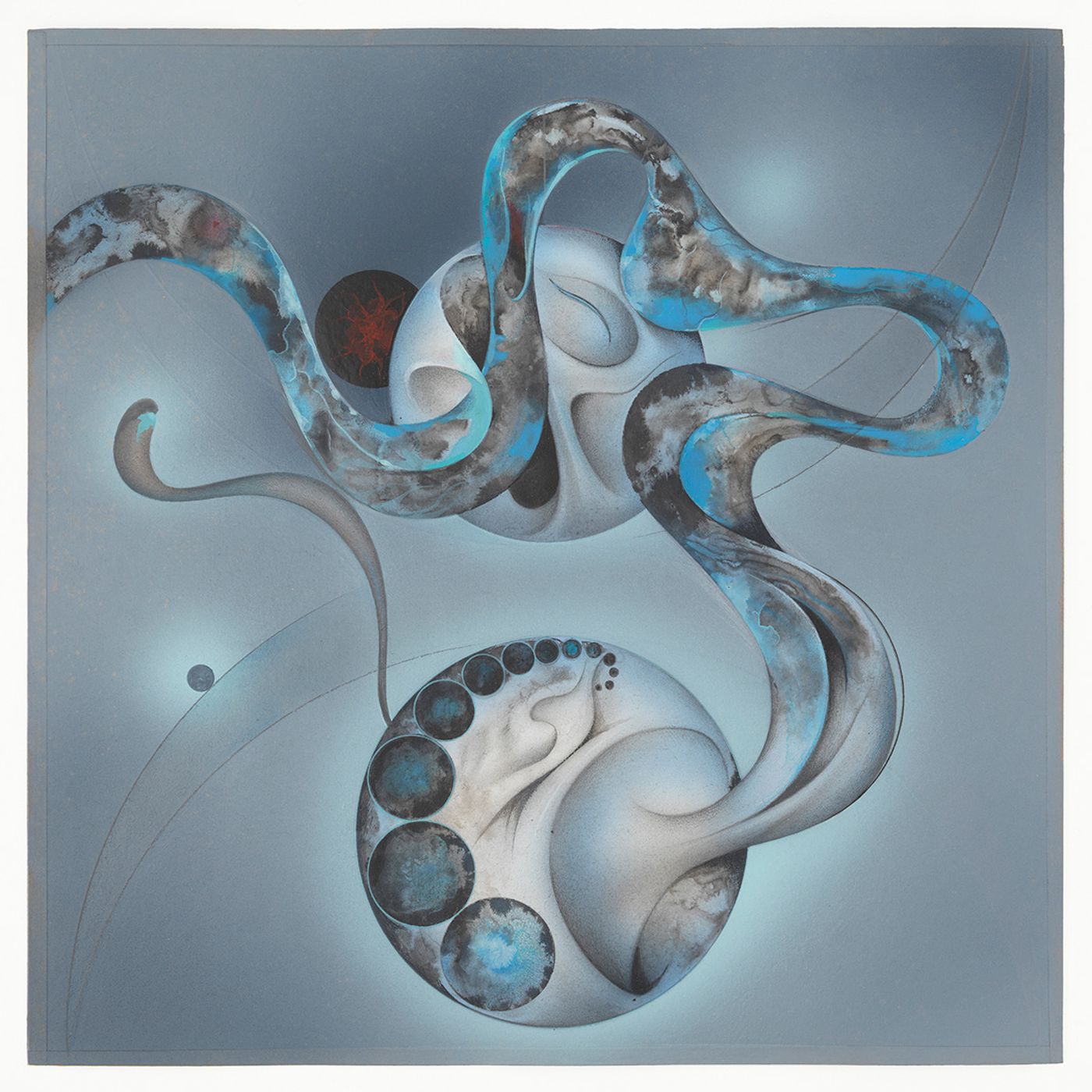
Image: Tatsuo Ikeda, BRAHMAN: Chapter 4: Helix Granular Movement-6, 1979. Acrylic on paper, 15 1/2 × 15 1/2 in (39.37 × 39.37 cm). The Rachofsky Collection, Dallas, via The New Museum
Hosts & Guests
Transcript
This is all of it on WNYC. I'm Allison Stewart. The new museum is back. After being
closed for two years, there's been an $82 million restructuring of the battery space.
And it is much, much bigger. 60,000 feet of expanded exhibition area that doubles the
museum's previous capacity. The new new museum reopens to the public tomorrow with a building-wide
exhibit that includes work from over 150 artists. The show is called New Humans Memories of
the Future, opening this weekend. And to see the show, it is free. With me now to preview
the new museum's opening and what you'll find in the expanded space is longtime director
Lisa Phillips, who has announced she's retiring in April after 27 years in charge. Hi, Lisa.
Hello. And we also have with us artistic director, Massimo Liano, Joni. Welcome back to the show.
Thank you. I'm going to ask you the basic question, Lisa. How are you feeling now that the museum is about to open?
Very excited and also relieved that it is. Finally, the day has come and it's the first day of spring.
It's a perfect day. How are you feeling now that the museum is ready for this?
Very excited, a little exhausted, like probably all of us, but we have a great show and a great
building and ready to welcome all of the viewers. Explain to us how the expansion of the building.
Why was it needed? Why did you see it as its vision?
Yes, so we have been expanding continuously over our 50-year history and this is the latest expansion
and we finally now have a space that is commensurate with our ambition and our program.
We needed more space, we needed a vertical circulation, we needed more of a horizontal flow,
and we needed production spaces to support the artists that we have in residence
and that are making new commissions that we work with on a regular basis. Tell us a little bit more
about the architecture firm. Yes, so the building is, it's really now a second building,
expanding on our first and connected to our first. We call it a new campus, multiple buildings,
but it's an unusual situation because the first building which we opened in 2007,
designed by the Japanese firm Sana, they went on to win the Pritzker Prize after that building
went up and it is a very distinctive piece of architecture and it's our flagship building.
So it was quite an assignment for OMA, who is the architect of our second building,
to build right adjacent to this architectural landmark and monument. So we did an architectural
competition 10 years ago and we selected OMA, this is their first public building in New York City.
Oh, that's interesting. And we're just thrilled about it and we chose them because
of the way they responded to this very, very specific condition of building right adjacent
to an architectural monument.
Musmoliano, what excites you about the new space in terms of what you can do as a curator?
Well, I always say the museums are a gym for the mind. You go to museums to exercise freedom
and to learn to coexist with difference and so we'll do more of that. The flow that
is created by the new staircase makes the whole experience of navigating through the space
much more exciting with incredible visitors inside and outside. But most importantly for me and
I think for the viewers and the artists we have more room for art. We'll continue doing
what we specialize in which is to give the first exhibitions to artists and that can be very
young artists or very established for different reasons haven't had the recognition they deserve
in New York City and then big thematic shows that tackle the most urgent questions of today.
The new museum from its very origin has given amazing foreshows to artists ranging from Adrian
Piper to Jeff Coons, David Mons, Anna Mendieta, John Baldassali, Faith Ringold and Judis Chicago.
You name them and we'll continue doing that and we really are a sight of productions of the
future if I need it to be very ambitious but that's really what we do. Lisa, what did you learn
from the original move in 2007 that helped you and helped to architects understand what they needed to do?
So that was our first freestanding dedicated building and it gave us a recognition in the world
and certainly within the city that we had not had previously so it really expanded our audience
and recognition for who we are at our mission and our special place in the city. We don't have a
collection at the New Museum. We're a non-collecting institution but we support the production of new works
and support new projects by living artists. This is what we do and that's a very special and
different kind of mission for most museums. How did you consider how the museum would fold into
the neighborhood as you were creating it? Yeah, that's a great question. We just migrated a few
blocks east from Broadway where we had been before over to the Bowery and the Bowery at that time
was kind of this inter-zone between neighborhoods but a place that people really weren't looking at
and we thought that was really perfect for us because it wasn't sufficiently appreciated,
recognized and active as it could be. We also always follow the artists and the artists,
of course, had been there for many years. Many artists that we knew were working, living and
working on the Bowery and we started to do an archival project called the Bowery Artist Tribute
collecting information on the hundreds of artists that have lived there since the 1950s
from every generation, from abstract expressionists to pop artists, minimalist, post-minimalists,
and on to today. That was one way that we got very familiar with the neighborhood but we've also
partnered with other organizations all around the Lower East Side and surrounding neighborhoods
of Little Italy, Chinatown. It's really cool with a new museum because the staircase
is massive and you're going of the staircase and you're going of the staircase and you're going
of the staircase and then you get to the top and there are these sky rooms up there. What is your
hope for how the top of the museum is going to be used? Well, OMA had this great idea, this great
vision. First of all, they set back at the bottom and by doing that, they actually create a plaza
at the terminus of Prince Street. Actually, if you walk straight from the studio where we are
recording, you'll meet the new plaza and OMA's office is next door. It's a beautiful downtown story.
Also, Liza is too modest but she built two buildings in downtown and by two preets get a
world-winning architects. I don't think there are any other directors in New York City and
Sana was the first building designed by a woman. The first museum designed by a woman in New
York City until the shed opened and there is a record worth celebrating. So OMA had this great idea
to slend back at the bottom, opening up a plaza where we also have commissions by new artists
and then they slanted at the top which lets the Sana building shine. I always thought of it as a
kind of controlled tower that captures all the signals of creativity from around the world
and at the top they concentrated all the activities such as education, new ink, our offices.
So they thought of the top as the brain and the site of production and intellectual and
discursive platforms and then the rest of the body is the the dream of the mind where you encounter
artists and artworks and what I hope are inspirations for artists and for our visitors.
We are previewing the reopening of the new museum following its two-year closure and an 82
million dollar renovation and expansion. The museum reopens the public tomorrow. There's a
building-wide exhibit called New Humans Memories of the Future. My guests are the new museum director
Lisa Phillips and artistic director MassMilliano Shionny. Lisa, how did you operate the museum when
it was closed for two years? We had a big construction project going on. It was very demanding.
But it also gave us an opportunity to spend a lot of time with our international
community. We have an international board. We have international supporters. We have international
partners. And so while we are very rooted in downtown New York and this city, we really have an
international profile and MassMilliano is a testament to that. We have a staff that is spending
a lot of time in the rest of the world. And we had more time over the last two years to re-engage
and interact with those partners. And we worked a lot actually in the neighbors too. You know,
the Lower East Side is, I live in the East Village in St. Mars. The Lower East Side is a very
special place in New York with a great cultural and linguistic diversity. I always say we are
a museum with an accent and that reflects not my own accent, but the accents that are spoken
in the Lower East Side, which is one of the most diverse neighborhood in New York. And while we
were closed, particularly with our education department, we did a lot of literally door-to-door work.
We have teaching artists that offer after-school programs in public housing in the Lower East Side.
We have a teen's programs that welcome now 100 teens every year. They stay with the new museum,
they learn by meeting artists, they learn making art, they learn how museums create new professions.
So there has been a lot of work behind closed doors that has also rooted us more in our neighborhood
than in the communities around us. It was an $82 million project, Lisa. I went and I looked
at the donors and I thought like, what was Lisa's pitch to these people about why they should give
to a new new museum? Well, we are always new. We have to be. It's our mission, it's our purpose,
it's our name. And so as I mentioned, it's been a long evolution over 50 years from a single
room operation with a volunteer staff of three to what we are today, which is a world-class
institution that's known throughout the world and really recognized for its outstanding program.
So our community understood, understands, and understood that we needed to keep growing.
We needed an expanded campus. We needed this second building. We already owned the building.
We had purchased it right after we opened the Santa Building. We purchased a building next door
and we had filled it with programs, but we couldn't make it publicly accessible in its form.
In the state that it was in, it had to be either renovated or rebuilt. And we concluded
ultimately that rebuilding was the best way to connect it to our existing building seamlessly
and to fulfill the civic function that we must uphold. So that's that's all good reasons.
That's all good reasons. And we had a community that really wanted to stand behind us and support us.
Including the city and the state. I was amazed at how big it was.
Going from room to room to room to where I was like, this place is huge.
It is exponentially large compared to what it was. It is twice as big as we had been previously,
but it feels three times the size. But the beautiful thing about the design of that OMA presented
is how it sets back, as MusMilliano said, from the street. When you're looking at it from the street,
it looks much smaller than the Santa Building, but in fact, it's not. It just is a much deeper floor plate.
But it gives a lot of respect to the first building. While preserving its own very unique character,
which is full of unexpected moments, like the stair. We'll talk more about the new museum
after a quick break. This is all of it.
You're listening to all of it on WNYC. I'm Alison Stewart. My guests in studio are new museum
director Lisa Phillips and artistic director MusMilliano Gianni. We're talking about the new museum
reopening to the public tomorrow in a brand new space. They have a building wide exhibit,
new humans and memories of the future. MusMilliano, what's the big idea of this show?
Well, the big idea of the show is very much inspired by the building itself. We thought we are
opening a new building, opening a new building in 2026 is a different proposition that opened the
first building in 2007, ideas of growth and whether there is even such a thing as the future
have changed in the wake of COVID. And so we thought by building a new building, we are essentially
giving a vote of confidence to the fact that there is a future. And we thought, oh, let's look at
how artists have imagined the future. And we made it then bigger by looking at throughout the 20th
century and looking at architects, writers, scientists, the couple of basket cases and other
visionaries that particularly are surveying how definitions and understanding of the human
have changed under the pressure of new technologies. So it's a show very much about the fears and
aspirations we are witnessing today because of AI and the new technologies. But it compares our
experiences today with a whole history that also proves that we've been there before. We have
confronted these fears and these myths and these hopes and fortunately we survived them and
at times that tremendous cost, but we also survived them and we are better for it.
There's a quote in the opening wall text from a check writer from 1920 that says,
nothing is stranger to humans than their own image. How does that sentiment connect to the art
you curated for the exhibit? Yes, that was very much an inspiration for the entire show. So
the word robot that we speak of every day now, we go to the point that our computers ask us to
demonstrate that we are not robot by identifying the traffic lights and zebra crossing. So we are at
the point in which machines are asking us to prove we are not machines and it's certainly a very
strange existential moment to be in. But the word robot was actually invented in 1920 by Karl
Capuch in a little play, beautiful play that I really advise everybody to read called Rossum
Universal Robots. It's a parable of fears of substitutions by machines and in that book he says,
nothing is stranger to humans than their own image and the show is essentially about that.
In a way, the show is less about technology is more about how we represent and understand
ourselves differently because of technology. So in a very simple way, you could describe it as a
show about portraiture, engaging monsters and Frankenstein, sent robots and synthetic creatures. We
have ET, the actual automaton for ET, we have alien, we have creatures from particularly the show
is based on a symmetry between 1920s and today. I hope it's not a faithful symmetry because
unfortunately terrible things happen one hundred years ago, many of them are still happening today
and so it does analyze also the conflation of totalitarian ideologies and technology.
But it does so I hope also offering a glimpse of hope again because if we have confronted
those strategies and survived them, we know we can do it again particularly with the help of
visionaries and artists seen in the exhibition. Lisa, when you think about art,
what's especially important about art during times of tremendous technological change?
Well, artists are usually among the first people to see the future and so we are a place for
investigation, exploration, discovery. This is so important and of course we bring artists together
to do that with the public and so these are conversations that are critical to have right now. We're
at the dawn of a new age at this moment. Now the new museum has had a long involvement with technology
going back over 20 years. We brought in an organization called rhizome.org as an affiliate. We started
an incubator for our technology and design 10 years ago. We have a lot of expertise in this area
on staff and we have had continual daily conversations about how these changes are taking place and
how we should be responding, greeting and how artists are responding. So it is part of our culture.
It's part of the bigger culture. It's it's key. It sounds like it's been going hand in hand
with the new museum. And as I said, it is the dawn of a new age. This exhibition is so timely
and perfect for now and I do believe that this change that we are entering into and this is
the dawn of this age is more profound than the industrial revolution. So you know there was just
a lot for us all to think about. And it's Massimo Liano said when machines are asking us if
we're machines where you know we cross the line. We cross the line. There are over 150 artists
in this show. What was your creation process like? You don't have to do this. I walk through it,
I don't know. It was a kind of sleepwalking. No, it's a show that took not that long to actually
execute. I would say maybe two years or a little more. But you know, frankness is a show I've been
thinking about for a long, long time. There are objects in there that I've seen in 1995 and I've
been dreaming to bring together. There are many objects that you know sometimes at least the way I
work, I make shows so that I can show objects and artworks that have been thinking about for a
long time. But also to answer your question about how it changes museum. You know, this exhibition is
based also on a polemical proposition in a sense that the transformation is such that maybe we need
it also to expand our notion of art and expand our notion of museum. So it's a show that includes
visual culture, popular culture, scientists, writers. So it's a big machine in itself. And
we've gone as far as asking Gemini to create a little selection of images and write its own label
scary enough. It's as good as the ones written by ourselves. And you know, it's a show that
more of sand where we have masterpieces like Salvador Dali and loans from Mama Metropolitan,
the Tate and museums all over the world. But we also have images that we literally just download
from the internet and they are out there in the public domain. So from also the aspects of how to
put a show together, it might look somewhat traditional, certain it's not because it has more
moving parts than your kitchen. Being parts overhead. Yeah, snakes and flying robots.
Flying robots. But it's also produced through that explosion and inflation of images that we
are used to. You know, I think too often we imagine the museum as a place of contemplation and
this show imagines the museum as a kind of situation room where we learn how to deal with an
inflation of images that is transformative. And towards which we need to think critically not
in any, you know, boring way, but certainly with the urgency that it's required by the times.
Did you have any sort of change in opinion or some sort of revelation after doing
this show about technology in art? That's a very good question. I don't know, you know, I think when
you, when I, if I were to generalize broadly, I think you could say that most of the artists in
the exhibitions are either using, they are very pragmatic about technology. It's beautiful to see
how they embrace throughout 100 years of history. Technology and they sabotage it to a certain
extent. They are, they are, they use it as a medium as much as they would use oil paint or a
pencil. But by doing so, they reinvent it and they glitch it, they sabotage it and they sure
circuit, you know, I, I mentioned the, the writing of Umberto Eco in, in the catalog who before
becoming the noted simulation and novelist, he was, he wrote a beautiful essay called program art.
He was writing in the 1960s about artists using computers early on and he says something beautiful,
he says, artists are mystics of arrhythmia, which means they are mystics of exceptions,
mystics of mistakes, mystics of breaking down the efficiency of the machine and that
show is full of machine. Unfortunately, literally also breaking down. It's going to be a maintenance
nightmare. We have opened for 24 hours and we are literally, this is a big shout out to, to all the
team, the, you know, machines require more taking care than humans. And, but it's beautiful to see
how the artist's wind vents, it kind of gems the machine and by doing so, discovers new possibilities
for it. We are talking about the reopening of the new museum after a two-year closure. It is
got a building-wide exhibit called New Humans, Memories of the Future. My guests are new museum
director, Lisa Phillips, an artistic director, Massimiliano Gianni. Tomorrow it is open from 11 to
7. What can people expect in terms of festivities, Lisa? Well, we are sold out this weekend. We
have a free weekend on, on offering. Members can come in. They can skip the line and come in.
So, just going to put a plug-in for membership, but they can expect lots of surprises.
Something that you would never see in another museum, and that is what we do.
There are some challenges, of course. It challenges you to think differently,
to think about the world differently. And so, it both excites and delights. And
look forward to welcoming everyone. I wanted to ask about the museum's facade. There is a piece
that people see called art lovers. Before they even go in the museum, do you tell us a little bit
about it? Yes, it is a beautiful piece by Shabbalala Self, who is a Harlem-born artist and a friend of
the museum. She had her first big break with Trigger, which was an exhibition about gender at the
new museum. And then she went even on to support an exhibition by Faith Ringel, which is so special.
You have a younger artist who can support the legendary artist, who she recognizes as an
inspiration since she was a teenager and had met Faith at an event. And so, we invited her to be
on the facade. It's part of a program that started in 2007 and has featured artists ranging from
Glenn Lygon, Chris Burden, is against and many others. And remember, when we commission works,
we don't own them because we don't have a collection. So, we gather resources, we produce the works
together with many friends. But then, after presenting them, the work also remains in the property
of the artist, which is truly genuine support. And then it goes on to have a life of its own, you know,
our wonderful rose by Isagansk and it's now planted in the garden of MoMA. And that's a perfect
metaphor of the seeds that we plant literally around the world. And so Shabbalala had the inspiration
from the building itself. We called the point where OMA, Shoshigamatsu's and Remkura's building
and Mitz, Sejima's and Nijazawa's building. We called that actually Shoi baptize that the
KISS point. And so, Shava had this beautiful idea of this black couple of lovers meeting on the
facade. Actually, we are looking for volunteers they want to propose on one of our skybridge that
are right at this KISS point. And it's just a beautiful image of, you know, not only two buildings
coming together, but people coming together. This weekend, we have some 12,000 people coming.
We still have tickets. Sure. If you want. But, you know, yes, it's a show full of puppets and
monsters and robots, but it's a show that I think also reaffirms the fact that humanity is a process
of social construction. And that means in much more simple words, it's a show about bringing
people together and people looking at people. And that I think is what Art does and what Shabbalala
telegraphs with that image. You go to museums to encounter art, but you also go to museums to be
with others. And I think that's also what our building, now two buildings say, it's two things
coming together and that's where art starts. You know, it's you can do it alone, but you need
there's two shared with. This text we got said, hi, Alison and team, really enjoying this conversation
of new museum directors. Big thanks to Lisa for all she did for the institution and creating many,
many great memories among our family's favorite was the amazing faith wringled retrospective.
That was great. Happy retirement to Lisa. What's next? We look forward to the new space. It's sort
of a bittersweet opening for you. You're retiring in April, which is just not that far away.
Made the announcement in 2025. Why was this? Why was this the right time?
Well, I've been at the museum for 27 years and have taken it this far. And I am 71 years old.
So it is time to hand it over to the next generation. It is the new museum after all.
The new museum, it should always be new, always be reinventing. And this seemed like really the perfect
moment to turn the reins over to the next generation who have been so essential to the place,
to the art that's being created today, but also to the operation of the new museum. And we have
such a fine staff and so many future leaders on our staff right now that are great colleagues
and have really made this possible and have grown up at the museum. So we've been working together
for 17 years. Yeah, 2006. So 20 years that we've been working together. I was young when I came.
It was really young. So we've been through a lot and it's been an incredible journey and we've
been able to take it to this point, which really does match the ambition of our program
and our staff and our vision. You know, we have a little mouse now as part of the exhibition.
It's a robotic mouse in the lobby by Ryan Gander. And it's, I think it's quite nice in New York City,
whereas we know the kings of the street, the rats. We celebrate a little mouse, which I think it's
it's a nice allegory of a museum that yes, it's doubling its size. It still remains small and
I think will make special the new museum. You can still see a show in a few hours. It's not a
multiplex. It's still at an art house and or maybe an art mouse and it's it's a it's a place that
it's nimble and fast and and can change and then Lisa is kept really non bureaucratic and fast
and and that are all qualities that are necessary to really capture and amplify the signals of
contemporary art. You know, and even in this moment of growth, I think it's important to remember we
we are probably the fastest museum in town and and the one that is most receptive to to change
and to difference and and I think that symbolize but the little mouse in the entrance we are not
you know we are not a limo. We are still a smart car even as we are growing.
Quickly in the last minute what are you most proud of in your 27 years?
I think the staff, the community that we've built, the board is really exceptional
and the programs that we've presented during this time are history-making. That's what we do. We
make history at the new museum. We've been so important to so many artists and they give back
in so many ways and have been incredibly generous to the institution and I'm very proud of that
and our place in the city. I know we're giving the city something amazing with these two buildings.
The new museum is open to the public starting tomorrow. My guests have been new museum director
Lisa Phillips and artistic director Musmily though. Johnny, thank you for being with us. Happy
opening. Thank you so much for having us. Break a leg. See you all there and that's all of it.


