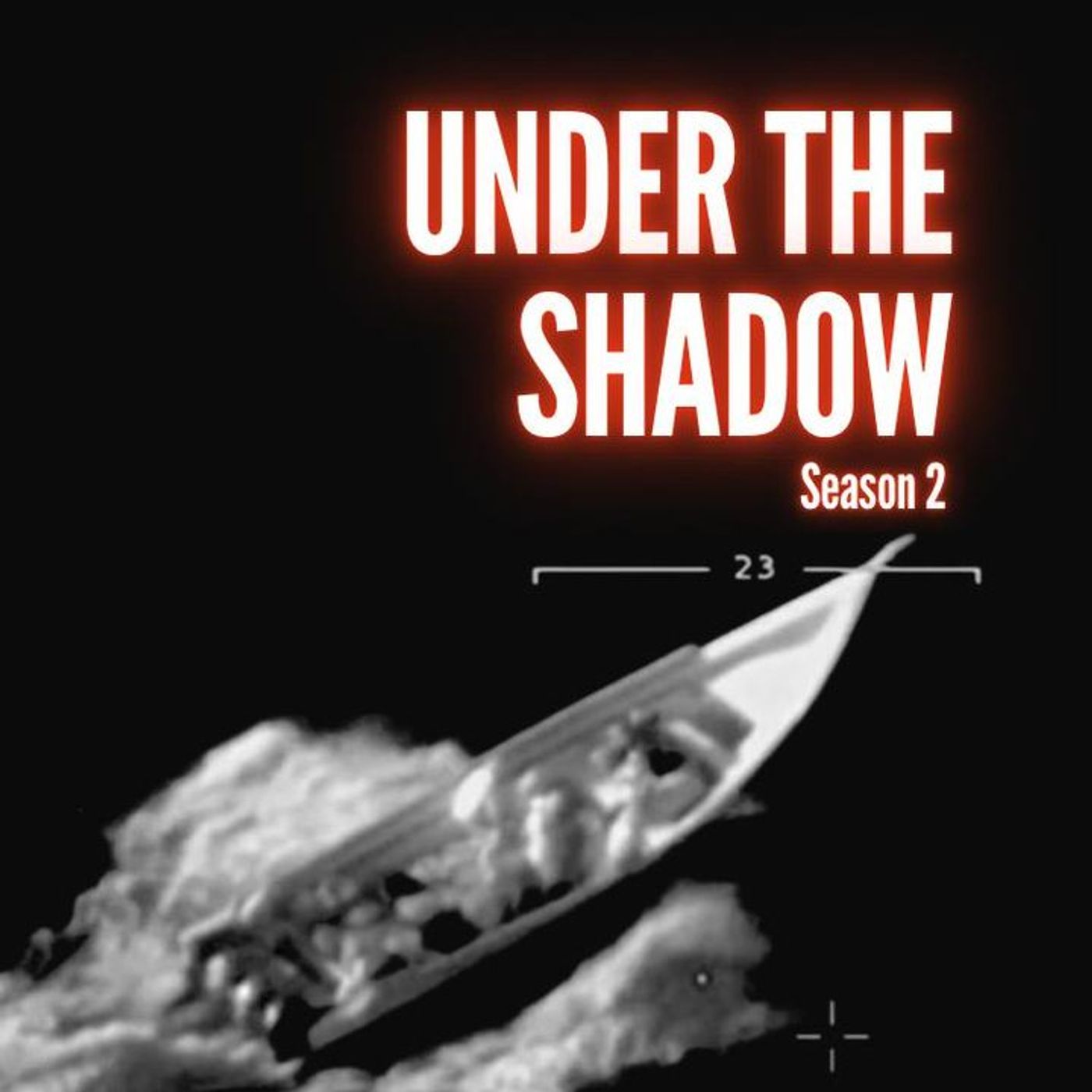
'American Dominance': Boat Strikes, Cuba, and Latin American Pushback
About this episode
The Real News Podcast is made possible by:
Meanwhile, the boat strikes have continued until today, even though Trump administration officials say they have not actually decreased the amount of drugs arriving on U.S. soil. As of this week, the U.S. government has attacked at least 68 boats over the last year, killing more than 220 people.
The Trump administration is now using his foreign policy to attack progressive opponents at home, labelling them pawns of Cuba, and "one of the single largest, most sophisticated and dangerous vectors for hostile foreign influence in modern American history."
In this episode, Michael Fox walks through the anniversary of the boat strikes. He dissects a new Cuban report published by the State Department to attack dissidents at home, and then looks at the regional resistance to Trump at the Panamerican Congress, which was held in August in Montevideo, Uruguay.
This is Episode 13 of Under the Shadow, Season 2.
Under the Shadow is an investigative narrative podcast series that walks back in time, telling the story of the past by visiting momentous places in the present. Season 2 responds in real time to the Trump administration’s onslaught on Latin America.
Follow Under the Shadow on Spotify and Apple Podcasts
Hosted by Latin America-based journalist Michael Fox.
This podcast is produced in partnership between The Real News Network and NACLA.
It is supported, in part, by Global Exchange.
Theme music by Michael Fox’s band, Monte Perdido. Monte Perdido's 2024 album Ofrenda is available on Spotify, Deezer, Apple Music, YouTube or wherever you listen to music.
Other music from Blue Dot Sessions and Epidemic Sound.
Script editing by Heather Gies.
Hosted, written, produced, mixed, and edited by Michael Fox.
Guests:
Resources:
- Belly of the Beast is a U.S-based independent media outlet, reporting from Havana.
- Many thanks for their incredible ongoing work. You can visit their site here: www.bellyofthebeastcuba.com
- Below are links to the video clips used in today’s episode:
“Helping” Cuba While Destroying Its Economyhttps://www.youtube.com/watch?v=_TRYNU9-h5A
This History Professor Graded Marco Rubio's Cuba Report. He Got an F.
https://www.youtube.com/watch?v=u8hqJI4kOWc
- Many thanks to Alex Main and Jake Johnston from the Center for Economic and Policy Research for taking the time to speak with me and for their excellent analysis and insight.
- You can visit CEPR’s Live Tracker on Latin America.
- You can check out Michael Fox’s Patreon.
- More background…
- The Beginning: Monroe and migration | Under the Shadow, Episode 1
- Panama. US Invasion. | Under the Shadow, Episode 13
- The legacy of Monroe | Under the Shadow, Bonus Episode 4
Support Under the Shadow: Please consider supporting this podcast and Michael Fox’s reporting on his Patreon account: patreon.com/mfox. There you can also see exclusive pictures, video, and interviews.
You can subscribe to Michael Fox's new free speech podcast, The Battle for Free Speech
On Spotify: https://open.spotify.com/show/033olXvh3dLzQFJc1HSd6O?si=7eda46a92fe14894
Apple Podcasts: https://podcasts.apple.com/us/podcast/the-battle-for-free-speech/id1896829044Or wherever you get your podcasts.
Become a supporter of this podcast: https://www.spreaker.com/podcast/the-real-news-podcast--2952221/support.
Help us continue producing radically independent news and in-depth analysis by following us and becoming a monthly sustainer.
Follow us on:
Bluesky: @therealnews.com
Facebook: The Real News Network
Twitter: @TheRealNews
YouTube: @therealnews
Instagram: @therealnewsnetwork
Become a member and join the Supporters Club for The Real News Podcast today!
Get every episode summarized
Each time The Real News Podcast publishes, we email you a written briefing from the transcript — the topics, who appeared, and any specific claims, with the ad reads skipped.
Email me new episodesFree for 3 shows. No card needed.
Transcript ready
424 searchable segments. Every word is indexed and playable.
Full transcript
The Real News Podcast — 'American Dominance': Boat Strikes, Cuba, and Latin American Pushback. Machine-transcribed; use the interactive transcript above to jump the player to any line.
A few weeks ago, the US State Department released this video over X. It's 1823, the map of the Americas is being redrawn. Spain has spent centuries amassing a new world empire, stretching from Patagonia to California. Now their grip was slipping fast. The video is narrated by Kevin Marino Cabrera, the US ambassador to Panama, and it's highly polished with images, map graphics, animations, and dramatic music. Manroton declared a decree to Congress, among the boldest diplomatic statements in American history. The American continents, by the free and independent condition, which they have assumed and maintained, are henceforth not to be considered as subjects for future colonization by any European powers. The text of the post reads, the Monroe doctrine has shaped US foreign policy for over two centuries.
American dominance in the Western hemisphere will never be questioned again. But these were defensive applications, keeping European powers out, not asserting American control over the hemisphere's affairs. That changed in 1895. When Secretary of State Richard Olney invoked the doctrine, declaring that the United States was practically sovereign over the Western hemisphere and demanded Britain submit to American arbitration. He had redefined the doctrine. It was no longer just a warning. It was now a claim to regional primacy. The video is remarkable because it doesn't mince words, or attempt to paint a rosy picture of the United States. In five minutes and 31 seconds, it just lays out the justification for the US imperialism that has cast a shadow over the region for the last two centuries up until today. Three years later, war would spain a rock. And when the smoke cleared,
it transformed the hemisphere. The United States expelled Spain from Cuba, seized Puerto Rico, and stepped into the world stage as a genuine imperial power with dominance over the Caribbean. Just four years later, that dominance was tested again. The British warships sailed into Venezuela in waters and blockaded its ports over unpaid debts. Roosevelt intervened and declared if a Latin American nation fell into chaos or instability, the US would step it and manage it. The doctrine has started as a shield. Roosevelt had just turned it into a mandate. This was all a good thing. The video seems to say, a natural course of history that the US should be proud of and the rest of the region should just accept. And all this backstory is a lengthy setup for the video to then make the case that Trump's actions in Latin America are nothing more than a continuation of the same model of imperialist intervention that the US has carried out
since its inception, or at least since the beginning of the 20th century, when Roosevelt declared his corollary to the Monroe doctrine. Fast forward to the modern era, where the doctrine has found its latest champion in President Trump. Through the execution of Operation Absolute Resolve, the United States seized Venezuela and dictator Nicolas Maludo, transporting him to American soil to answer for charges of narco terrorism. This calculated maneuver delivered a resident signal across the hemisphere, punctuated by President Trump's own declaration. Under our new national security strategy American dominance and the Western hemisphere will never be questioned again. It's a fascinating piece of propaganda that tries to place Trump's actions as the logical next step in the long trajectory of US imperialism in the region. Over two centuries Monroe's declaration had shaped US foreign policy across administrations and through a fundamentally different geopolitical areas.
Well, begin as a warning to European powers, evolved into a framework for regional dominance. One that remains the cornerstone of American strategy in the hemisphere today. What is extraordinary about that video is that it says what has never really been set about the Monroe doctrine by US officials, which is that the Monroe doctrine has served as a pretext for US intervention in the region and is essentially there to ensure that the US has a great deal of political influence and economic influence over the entire Latin American Caribbean. That is Alexander Main, a reached out to him to get his take on this video. He's an old friend and the director of international policy at the Center for Economic and Policy Research in Washington, D.C.
When Soviet missiles were discovered in Cuba in 1962, Kennedy didn't need to invent a new framework. He simply invoked the doctrine. The weapons had to go. This video is saying that there is such a thing as the US empire, something that most US officials have never wanted to publicly recognize. And saying that that is a good thing and that more needs to be done to ensure that the US can be an effective empire over the entire Western hemisphere. Key to this video, Alex says, is the idea that brute military force must be deployed to achieve this imperialistic doctrine. And right now, that is being done under the pretext of a new sort of war on terror. There's no clear definition of exactly who or what Narcoterrest is.
But that might be part of the point. Alex says that much like the Cold War's fight against communism, the vague image of the Narcoterrest boogie man allows US authorities and their allies to go after left-leaning opponents with force. We're seeing something similar now. And I think this is really what the US is going to be relying on under the Trump administration. They're going to be relying more and more on military action and the threat of military action in order to advance this vision of complete political domination over the region. Who is the last ruler of the world? In Brazil, high-stakes elections are coming up in October. Advisors for leftist President Luis Ignacio Lula de Silva saw the timing and content of this video as a direct threat against the president's re-election campaign.
A sign that the Trump administration has its sights on Latin America's largest country. According to Brazilian columnist Valdo Cruz, Lula's advisors compared Trump's foreign policy team led by Cuban-American Secretary of State Marco Rubio to Madagascar Penguins piloting Air Force One. It's a reference to the Madagascar cartoon. Attention, this is your captain speaking. I've got good news and bad news. The good news is we'll be landing immediately. Bad news is we're crash landing. That is where we are at, a new definitive Monroe doctrine for the Western hemisphere. And it's being fueled by brute US military force in the region as we have already seen unfold in unprecedented terms over the last year. And the Trump administration isn't just using those actions and threats abroad. They're now going after progressive individuals and groups in the United States, accusing them of being pawns of foreign nations.
People have even been subpoenaed. There's nothing organic about it. It is funded, it is organized, and Cuba is a part of that network. And in some cases, a critical part of that network. It's like something out of the McCarthy era, or the Cold War. It's a fabricated witch hunt. And as we will look at today, it's being supported by artificial intelligence. But people across Latin America are also organizing against the threats. All of that in a minute. This is under the shadow, an investigative narrative podcast series that looks at the role of the United States abroad in the past and the very present. This podcast is a co-production in partnership with the Real News and NACLA. I'm your host, Michael Fox, longtime radio reporter, editor, journalist, the producer and host of the podcast's Brazil on Fire, stories of resistance and my new series, The Battle for Free Speech.
I've spent the better part of the last 20 years in Latin America. I've seen firsthand the role of the US government abroad, and most often, sadly, it is not for the better. Invasion, coup, sanctions, support for authoritarian regimes, politically and economically. The United States has cast a long shadow over Latin America for the past 200 years. It still does. This is season two of Under the Shadow Trump's attack, episode 13, American dominance. Okay, let me just first say that I'm so excited to be diving back into the season of Under the Shadow. If you have been following this podcast, you'll know that I was largely absent this summer. I was busy cranking out my podcast about Trump's attack on free speech rights today in the United States. It's called The Battle for Free Speech. It's now out completely. You can listen wherever you get your podcasts. I'll add a link in the show notes.
In July, we shared an episode from that podcast on the Under the Shadow feed about the battle underway in Brazil right now ahead of the general election in October. I think it's really good. Before that, my last under the shadow episode was about Honduras gate back in May. So it's been a while. Today, I want to catch up on several important developments related to US intervention and the push back against it in the region, including the latest boat strikes, the State Department's War on Cuba, and the recent Pan American Congress in a little while. These all fall under the rubric of where we started at the top with the video about the Dunno doctrine and Trump's promise that American dominance in the Western hemisphere will quote never be questioned again. In this episode, a look at ways that this is unfolding, both abroad and inside the United States, and also help progressive leaders in the region are very much continuing to question American dominance and organizing against Trump's rhetoric and threats.
Okay, we begin in the abnormally warm waters of the Caribbean and Pacific oceans. These waters have been central to Trump's military attack on the region, and this week marks a sad anniversary. When you come out and when you leave the room, you'll see that we just, over the last few minutes, literally shot out a boat, carrying boat, a lot of drugs in that boat. And you'll be seeing that and you'll be reading about that just taping moments ago. On September 2nd, 2025, one year ago this week, Donald Trump announced the first air strike on a boat in the Caribbean. Trump said the boat allegedly carried drugs off the coast of Venezuela. He later posted on True Social a video of the air strike, black and white labeled unclassified. A missile hits the boat and it explodes.
The White House said without providing evidence that it killed 11 alleged narco terrorists. If you remember, this is where I began this podcast series. Because for me, it marked a clear break with the decades of US foreign policy in the region. The US attack on that boat in early September was the very first time the United States had launched a unilateral air strike or carried out a deadly military operation on its own in Latin America in nearly four decades. Not since the 1989 invasion of Panama. According to Trump's national security strategy published in December 2025, his administration was planning to ramp up US intervention in the Americas with his new Trump corollary to the Monroe Doctrine. He has made good on that promise. With the US invasion of Venezuela, the oil blockade of Cuba, the shield of the Americas initiative and the boat strikes. The administration labeled those strikes Operation Southern Spear.
Secretary of Defense Pete Hegseth joined Fox News Live to gush about the boat strike. So we've got assets in the air assets and the water assets on ships because this is a deadly serious mission for us. It won't stop with just this strike. Anyone else trafficking in those waters who we know as a designated narco terrorist will face the same fate. And it's important for the American people to protect our homeland and protect our hemisphere. Hegseth was right about one thing. That strike was just the beginning. They've been ongoing since last year. There was a two month roll, which miraculously coincided with the World Cup competition in the United States. And Trump's grand 4th of July 250th anniversary celebration. But in recent weeks, the US military has kick-started the strikes again.
This news report is from August 26th this year. The strikes groups are condemning the latest round of US military attacks on a high-speed boat in the Caribbean, which the Pentagon says killed four narco terrorists. This is now the second strike this week, as the White House targets vessels accused of transporting deadly drugs into the US for the past year. But the whole justification for the first strike last September and everyone's sense that they are fighting drug trafficking is just false. This has never been about fighting drug trafficking. Most of the cocaine trafficked into the United States doesn't come from Venezuela and it doesn't travel across the Caribbean but the Pacific. Fentanyl is the same thing. It's not made in nor trafficked from Venezuela, despite Trump's discourse. Trump's campaign has been about sending a message, even if it means carrying out extrajudicial killings in international waters against innocent people. Because it's become clear that many of the boats they've hit haven't been operated by narco terrorists, but fishermen.
And contrary to Trump and Secretary of Defense Hegset's claims, other Trump administration officials admit that the strikes haven't decreased the amount of drugs being run into the United States. In late July, the Washington Post reported that both Pentagon and DEA officials had said the boat strikes hadn't impacted the supply of cocaine in the United States. Drug traffickers just developed new strategies. They were taking different routes, bigger boats, or relying more on planes from clandestined airstrips. One DEA official who asked to remain anonymous told the post, quote, When you squeeze the balloon on one side, it always expands on the other side. They always find the weak spots and exploit them. Nevertheless, the boat strikes have continued. Welcome to the closing session hosted by the Secretary of War and Chairman of the America's Counter-Cartel Coalition, the Honorable Pete Hegseth.
spoke about this during a counter-Cartel Coalition conference in Panama City on August 12th. We have knocked the narco terrorists in the maritime domain on their heels. We forced them to adjust their tactics, techniques, and procedures, their TTPs, and operate outside of their comfort zones. We are retaking the open seas and our maritime borders. This is a bad time to get in a drug boat in the Western Hemisphere. In one year now, at least 68 publicly acknowledged strikes on alleged drug trafficking vessels, right in the Caribbean and Eastern Pacific, extra-ditionally killing over 228 civilians. Jake Johnston is Director of International Research at the Center for Economic and Policy Research in Washington. He also runs Seepers, US Escalation and Latin America Tracker, which he has updated almost daily since last year.
I just want to pause here for a moment to underscore that number. More than 228 civilians, and that is a number that's likely to only continue to grow. Just to put that into context. Before the September 11th attacks, the 1995 Oklahoma City bombing was the deadliest terror attack in the history of the United States. If it seemed like war yesterday, the reinforcements showed up tonight. At the center of it all, of course, is the bombed out shell of the Federal Office building. And in its shadow, the exhausted, who for a day and a half now, have sifted through its debris and counted its dead and seen up close, why they call it terror. 168 people were killed in that bombing on the Alfred P. Murrow Federal Building. It shocked the nation. Yet the United States has unleashed a round of terror attacks over the last year in international waters in the Caribbean and Pacific, which have killed far more people than the second most deadly terror attack in the history of the US.
In fact, the US Drug Boat Terror campaign is deadlier than both the Oklahoma City bombing and the 2016 Pulse Night Club shooting combined. Now, it might seem strange that I'm making this comparison. The US government has carried out the Boat Strikes. Individual perpetrators carried out these other attacks. But I think it's an important comparison to make. All are acts of terror. All are illegitimate uses of violence without any legal founding. The US Boat Strikes aren't operations against enemy combatants in a time of war. The US government hasn't carried out a trial against the victims or offered any proof that the people killed in these raids are actually drug traffickers. Their actions are a legal under international law. And the result in all cases is the same. The extra judicial killing of innocent people, which undermines the basis of the rule of law in the United States, the United Nations, and most democratic countries around the world.
That you are innocent until proven guilty. Check Johnston. What is this sort of takeaway after years? I mean, this is an assault on the rule of law. This is a assault on international law. And I think you can see over the course of the year how these strikes serve this broader purpose of normalizing, rationalizing, and sort of gaining at least some public acceptance of just the sort of trampling of international law. And now we have a sort of transition, or at least the US is saying they're transitioning from these boat strikes to land strikes. There, we've already seen in fact some strikes on land in Ecuador, or the hitter-gatherry farm, reports of torture of the farm workers who were there. And so you can see how this can extend and expand. You can see how the erosion of international law comes right back here to home. And you have ICE agents killing US citizens in the streets with impunity.
And these things are connected. These developments are connected. And they certainly mutually reinforce each other through this administration's policies. Ecuador has been collaborating with the US military under the counter-cartel coalition, which I looked at in episode eight of this series. And not just on that dairy farm strike. The United States has also taken some concerning actions against boats off the Ecuadorian coast. The started earlier this year, at least three fishing vessels off the coast of Ecuador, which took place in a very different manner than these other boats strikes we were talking about, where Southcom was boasting smut on the internet about them blowing up boats. These ones were totally unacknowledged. And the reports that we've had from the best of the Netherlands that have looked into it, local press in Ecuador, human rights organizations, etc. I mean, what are the boats? First off, it's still missing. And all the crew members are still missing. People from some of those boats were killed and others have been returned to the country, but that was only after being abducted on the high seas.
They went on to a non-descript boat in the middle of the ocean with gringo-looking guys with US flags on their uniforms. And they were taken to El Salvador of all places before facing your torture and abuse and then eventually being released back to Ecuador, where they faced no charges. It should be noted. And you mentioned in each of these cases, the reporting indicates that Ecuador and Coast Guard actually stopped the vessels and cleared them prior to them being bombed. And there's obviously, there's been reporting the Washington Post reported a few weeks ago that this was part of an Invest in CIA operation. The New York Times has come out with reports suggesting that the potential involvement of private military contractors, so there's tremendous questions that remain exactly about who is responsible, who is involved, why this was happening. But what seems quite clear is that, you know, US intelligence is operating out of El Salvador and CIA-based, that was quite active during the 30 wars in the 80s.
Jack here is referring to what we learned from reporting in the Washington Post in mid-August, which broke the news that a covert CIA program based in El Salvador was likely behind the Ecuadorian boat attacks. According to the post, a plane operating out of El Salvador's small Ilobango International Airport was likely responsible for the attacks. During the 1980s, this airport was also a launching pad for US operations in nearby Nicaragua. This didn't come out of nowhere, right? I mean, it is really based on the past. And a lot of the people who are involved in this are really rooted in those previous episodes of right-wing dictatorship and US interventionism in the region. And so, in a lot of ways, it is a return to that earlier period. There is another country in the region whose conflict with the United States harkens back to US intervention of the past. Cuba. So, back in episode 7, we looked in depth into the US actions against Cuba and in particular, the devastating oil blockade, which is strangling the country.
And it's still ongoing. The situation in the country has only deteriorated. It's ironic, because the United States brags about how they're sending aid to the country, and yet the US is solely to blame for the crisis. The US government could fix the problem almost overnight by just lifting the embargo, both the oil blockade and the larger embargo that the US has had in place in some shape or form for more than 65 years. Beli of the Beast is a Cuban investigative journalism outlet based in Havana. I spoke with Beli of the Beast's Liz Fernandez in my previous Cuba episode of this series. A couple of weeks ago, they released this great video report titled, Helping Cuba While Destroying Its Economy. The word Helping is in quotes. Here's a clip. It starts with Beli of the Beast journalist, Joan Rodriguez, standing on a Cuban street. What news for us here in Cuba? The United States is here to help.
Secretary of State Marco Rubio peers on screen. In Spanish, he says, I want to tell you that we in the United States offer to help you not only alleviate the current crisis, but also to build a better future. A better future, the liver, in carbon boxes. This is the first of a hundred million dollar humanitarian aid package, promised by Secretary of State Marco Rubio. The US government is donating 700 boxes of food and hygiene products. Each one is supposed to last 10 days. That's nice. Although it might be even nicer if they had simply lifted the oil bouquet. The video cuts to numerous Cubans who are suffering. They give us 20, 24 hours without electricity, says one elderly resident. It's the whole day cooking with coal, says a woman. A heaven had water for three and a half months, says another woman. The boxes of aid are welcome because people here are desperate.
If someone breaks your legs and offers your nose print, you take a nose print. But when you wear stuff, your legs are still broken. That is the state in Cuba right now, a country on life support. The United States could fix it, but it doesn't want to. It wants the people to suffer an indirect way to try and force regime change. Or at least, that has been the stated policy since the beginning of the embargo in the 1960s. And the Trump administration is blatant about its motives. On July 20th, the US State Department released a 100-page report titled Cuba, the capital of 21st century communism. It essentially accused Cuba of infiltrating the US left over the last half century and being behind a host of progressive organizing, everything from Black Lives Matter and George Floyd protests the pro-Palestine encampments on university campuses, and quote the rise of Antifa. It's incredible because it makes the United States look like it's in the crosshairs of this tiny Caribbean country.
The US, a country that is nearly 90 times larger than Cuba, and has a GDP that is more than 300 times the size of the islands. The report makes no mention of the countless US attempts to overthrow or assassinate Fidel Castro, undo the Cuban revolution and above all the decades-long US blockade on the country. Instead, the document paints the United States as the victim of a Cuban plot to overthrow US capitalism and Western society. The summary for the report reads, Cuba's assault on the United States was never at root a quarrel over economic policy or sovereignty or even ownership of a particular territory. It was a revolution against Western civilization itself, waged in part via the novel and insidious method of persuading the children of the West to turn against their own inheritance.
Let me just repeat that, persuading the children of the West to turn against their own inheritance. I'm not exactly sure what that inheritance is, but the report paints activists and leftist organizations in the United States as willing pawns in Cuba's evil plans to subvert the United States. The document reads, through its cultivation of American activists, its infiltration of American universities, its sprawling influence and espionage networks, and its position as the spiritual hub of the Third World Revolution, becoming a pilgrimage destination for generations of new left activists and intellectuals, Cuba has played an instrumental role in shaping America's radical left from the 1960s through to today. It singles out organizations like the Vensitamus Brigade, Pastris for Peace, and the Anti-War Group Code Pink as essentially Cuban front groups. It's a ridiculous claim, because these are solidarity organizations that literally carry humanitarian aid to countries harmed by US policies.
And this idea in the Cuban report assumes that everyone in the United States should just be on board with US administrations that punish other countries and peoples for not bowing to Uncle Sam. The document also accuses the New York Political Education and Community Center at the People's Forum and the National Lawyers Guild of being influenced by Cuba. The document states, from its very first years of existence, the National Lawyers Guild operated as a de facto Communist front group designed to organize and agitate for revolution in the United States. It's interesting that the document also spends three and a half pages discussing the democratic socialists of America's support for Cuba. At a time when DSA is growing and actually winning primaries ahead of the US November midterm elections, it's clear that Marco Rubio State Department is interested in doing all it can to paint that group as Cuban influenced.
The document sums up all of this by saying, quote, these groups collectively represent one of the single largest, most sophisticated and dangerous vectors for hostile foreign influence in modern American history. Too bad that statement is not only totally conspiratorial, it is also not based on reality. And it was shocking on every page to see the way in which the State Department's report was reiterating the same claims, many of them very fraudulent claims that had been leveled against American solidarity activists in the 1960s and 1970s. Billy of the Beast recently interviewed historian Tasha on Latina about this report in his 2018 book Cuban Revolution in America. Latina writes about how generations of activists in the United States have found inspiration in Cuba. But he says that if State Department officials were reading his book, they completely missed the point and blew it out of context.
But in reading Rubio's report, it was enormously clear that they were reiterating, you could almost say regurgitating the same claims and some of the same material that had been circulating in the 1960s and 1970s, the FBI and the CIA, both produced copious reports that claimed to, let's not say, prove, because they, I don't know if even they themselves would have used that. It's not terminology, but they tried to demonstrate a linkage between American solidarity movements and the Cuban Revolution. That is what they're doing now. Even before the report came out, the Trump administration was already investigating activists for traveling to Cuba in March for the Nuestra-America convoy. Their solidarity groups brought 20 tons of humanitarian aid to the Caribbean island.
In May, roughly 40 U.S. activists were subpoenaed, including progressive influencer Hassan Piker and Code Pink Founder Media Benjamin, who I've spoken with in this podcast. In the days following this Cuba reports release several groups that were mentioned in the document were also subpoenaed to testify before Congress, including the People's Forum, Breakthrough News, and the Tricontinental Inters. I'm an institute for social research. Manolo de los Santos is the director of the People's Forum. He responded to the Trump administration's allegations against his organization on MSNAL in late July. I've been moved constantly by the belief that the United States has to do better, and that we can change the reality in this country. If we were to accept what this committee is demanding from us, it essentially would be to accept that people in the United States have no right to protest, no right to organize, and express their differences with the U.S. government. The Trump administration is mirrored in a series of failures. It has been incapable of convincing the American people that deporting millions of immigrants is the right thing to do.
And therefore it goes after the people who organize the defense of immigrant families. The fact that we stand with the Palestinian people, that we say no to a blockade against Cuba. These are not fringe positions. These are the positions of majority of Americans right now. It's our consciousness that's moving us to say that these things are wrong in their society. Jake Johnston. Yeah, this is a great example of our interventionist foreign policy blowing back at home, right, and seeing these connections. I mean, this is pretty clearly for the Trump administration and part of going after its domestic opposition ahead of the term elections, and you know, consolidating its political power, but of course, at the same time, justifying its illegal blockade and siege of Cuba in doing so. Here's the thing. I read through the report shortly after it was released, and one thing stood out for me above everything else. It was like the report was grasping its straws, like it was trying to string together a random hodgepodge of people and groups to make the case that Cuba had been in the U.S.
That infiltrated the United States and was responsible for leftist descent going back decades. It seemed like it was generated with artificial intelligence. So I tested it. I ran it through some of those sites online where you can see how much a document was likely created using AI. One of the results came back with a 96% chance that it was made with artificial intelligence. ChatGTP told me the likelihood that quote, AI was substantially involved in producing or editing this report was high, roughly 80 to 90%. Now, I'm not saying that it was completely AI generated. I don't believe that, but the State Department did likely use substantial artificial intelligence in research gathering, writing and editing. Okay, you might be saying so what? A lot of people are using artificial intelligence today. Well, here's the problem. AI, we know, has the tendency not to argue with us, but to give us back what we want to hear, it helps us to find information that will support our beliefs or our objective, regardless of if they're based on fact or not.
It's called AI bias. And look, it's one thing if AI is being used to write an email to a friend or to help me pick out my clothes. I think I look good in blue. Thank you. Those have very little if any geopolitical implications. It's another entirely, however, if you're using this to develop an official government document that will guide public policy and which will be used to attack your political opponents. That is dangerous. And it means that AI is being weaponized to benefit a certain political class and silence dissent. In other words, government censorship. There has been limited discussion about the possibility that Marco Rubio's Cuba document was likely created with the help of AI. And I wanted to get a deeper sense of the implications. What does that actually mean? So I reached out to Tal Hagen. There you go. All right. Fantastic. Okay. So, Tal, this is what I'm trying to figure out today.
You might remember him from my episode about disinformation and deep fakes on Venezuela earlier this year. He is an online AI watchdog. He's now the director of Otis, which provides human run intelligence services. Anyway, he's an expert on artificial intelligence. And I wanted to get his analysis of what it means when AI is being used to develop policy like this. And let me just say that I didn't ask him specifically about the Cuba document because I wanted his objective opinion about the concerns over the use of AI in these circumstances. Because we know that it like if you go on a chat, you're chatting, which at the end you're saying, like oftentimes it's going to give you back what you want. To be the same thing in reports and documents where if you're looking for something, if you're trying to find something, the document that is produced through AI has the possibility of also giving you kind of what you're looking for because you're asking you to go out there and find stuff that would that would make your statement true.
That makes sense. Yeah, at the end of the day, something that we need to understand with AI is that AI always agrees with us. It always wants to give you a simple, fast answer, because it doesn't argue with you. Tau says that you can test this by asking AI something in two different ways. One, where you're trying to get it to agree with you about something. And the other, where you're playing a devil's advocate, and you're trying to get it to agree with you about the exact opposite thing. Depending on how you phrase your question, you can get either result. But AI almost always will give you what you want. But Tau says that doesn't necessarily make it untrue or false. For example, maybe I've collected all the evidence and then I last AI to compile that into a comprehensive report for me. It's still my information. I just asked the AI to help me build it. So it's not an AI made report. It's an AI enhanced report. So that's also complicates things because just because it was AI generated doesn't it wasn't real. It also doesn't mean that it was. For instance, Tau says it all depends on the input or information that you give the AI tool.
Sometimes it also has access to the web, but it doesn't actually understand what's true with false and especially in involving crises when things are just happening right now. Whatever is on the web, that becomes the truth and I've seen AI mess this up a lot. And so the biases from what information you even provide it in those documentation. Because when you're providing when you provide them with documentation, I will ask you how do you know this is true? How do you know this is true? Worse is from the AI doesn't ask you that. It's just assumed that everything you've given it is correct. It doesn't start refuting your sources. Tau says many officials and government departments not just in the United States are now using AI. A lot of the government agencies and individuals are using AI now to craft their official responses. We know there was some government official on Twitter who put out a post and like he accidentally left in the prompt of making it sound better. Madam Speaker, another concern relates to expectations. There was also this Canadian politician who read an AI prompt in the New Brunswick legislature.
Here's a more natural flowing version of that section that reads like legislative speech rather than a series of short points. Madam Speaker, what the US government released photos of their war room and you could see them using AI like writing different types of props. Should we be concerned about government entities that are creating policy and an increasing use of AI and what that might mean for the policies that they are creating? Even when you're writing in the trash reading and you're creating what you want or you're creating a policy decision with AI, you're creating the report. But the problem is that your critical thinking skills are diluted because you're asking AI simple questions you're asking it to do the heavy labor and if you say find a mean issue, find a mean issue and then solve that issue, you're not the one solving that issue and it's solving an issue just based on general information from the public.
The problem with AI when it's used by many different individuals is that it replaces your own critical thinking where you no longer are researching the work, you're just editing it. That's what essentially becomes you become an editor you stop being a researcher. And so instead of you looking at all these different sources trying to understand what the truth is here, what's the facts and what's the narrative being driven. You're allowing the AI to just compile a random pieces of information through its token generation and that's the result you're getting. We will make America proud again. We will make America safe again and we will make America great again. Thank you, God bless you. It's why we like things that rhyme and there's a whole reason that a lot of political slogans are rhymes is because things that sound good are right. You know, if it sounds good, it's right. It's why when you look at the comment section of a right-wing activist or a left-wing activist, all of its supporters say this sounds amazing, this is so good because they're hearing what they want to hear.
And so even though the policy that they're writing or they're talking about might be complete another bullshit, it sounds good, but it's not based on factual information. The same thing is happening with AI where it sounds good to the user, but they don't actually know what it's based on. And so they're essentially being driven by just a random algorithm. In other words, ask AI to give you a report that says Cuba has infiltrated the US left and is behind protest movements in the United States going back decades and it will do your bidding. We can't know for sure, but that likely sums up Marco Rubio's Cuba report. With or without AI, this Cuba report is a dangerous weapon that is now being deployed against progressives and opponents of the Trump administration. Jake Johnson. I mean, I think just about everybody who read it laughed, right? But it's serious because this is about justifying war crimes.
I mean, what we're doing to Cuba right now is an act of war. It is illegal and is an act of war. And yet here we are justifying it and at the same time sort of demonizing the opposition, the domestic opposition to those very actions. The opposition to Trump's policies has also been organizing abroad. On August 21st, 150 leaders from 15 countries from across the hemisphere and Europe met in Montevideo Uruguay for this year's Pan American Congress. It's an event founded three years ago with the stated goal of fostering quote, solidarity among peoples and sovereignty among nations. It's been an important event for organizing the left in the region. The first two summits were held in Colombia and Mexico, both then countries run by progressive governments. Seepers Alex Mane, who I spoke with at the top, attended the conference. You know, the bulk of the people that were there are lawmakers who are doing their best to try to push forward progressive policies despite often being the minority and despite dealing with the right.
You know, dealing with increasingly authoritarian right wing governments. So, you know, they had a lot to share. Good afternoon, everybody. I'm Congresswoman Pimilagia-Paul. I represent the great state of Washington in the United States. I'm the first Indian American woman in the United States Congress. We are here, my esteemed colleague, Chuygarcian, because we want to be very clear about two things. Number one, we oppose the Trump administration's Don Roe foreign policy doctrine. We oppose the unilateral executive actions that Donald Trump has been taking without our congressional authority for both strikes, extrajudicial killings in the Caribbean and the Pacific Ocean. We oppose the use of military might, of economic tariffs, to try to bully and coerce nations into actions that do not benefit the people of those sovereign nations.
And we oppose the election interference of the United States and other nations' elections. Talk of President Donald Trump's onslaught on the region was front and center, as we're discussions about how to push back. Uruguay and Congresswoman Ines Cortez spoke to the press. She said above all of the issue that cuts across the different workshops and debates is the current situation in which we still have the United States interfering in the local politics of each of our nations. The former Honduran minister of defense and the former presidential candidate for Honduras' leftist Liberty Party, Rixi Moncada, said they must stand for national sovereignty and a multipolar world. She said the United States is a military technological and financial power, but the world is no longer unipolar.
China, India, Brazil, Russia, the BRICS, they're all participating in defining the new international order. Multi polarity is a reality and our stance must not be to trade one form of subordination for another. The Latin American dilemma is not Washington versus Beijing. We want relations with all the nations and peoples of the planet to engage with everyone, to submit to no one. There were also discussions among progressive leaders from Trump-allied countries where democracy is being rolled back and there's a breakdown of the rule of law and respect for institutions. Alex Mayn said the meeting went a long way in helping to build solidarity between progressive leaders from across the region and leftist leaders in the United States. For instance, an Ecuador and we'll be getting to see this in Colombia and also in Honduras, both those countries, of course, are now governed by right-wing governments since by recently.
I think it was important for the US delegates to be hearing from these other countries in the region that are all impacted in different ways by the Trump administration's policy by the so-called Don Ro doctrine, which is really very heavily interventionist. They heard about US electoral interference, they heard about the US support for the expansion of militarization in the region. And this pretext of a war on so-called Narco-terrorism to, you know, in a lot of places, bend the laws or, you know, declare sort of states of emergency and, you know, deploy the military and engage in egregious violations of human rights. So, you know, there was a lot to take away for these US delegates. Alex explained that on top of the Congress people who were in attendance, you had staffers for Senator Bernie Sanders and Chicago Congressman Jonathan Jackson, as well as a number of delegates who won primaries and who will likely be elected to Congress in November.
Three of them belonging to the Democratic Socialist of America, the other one supported by the Democratic Socialist of America. I think it was very productive, but I think certainly the US delegates left Montevideo with, you know, commitments to themselves to, you know, do a lot more on Latin America that is, of course, suffering a new era of extremely aggressive interventionism from the current Trump administration. But it wasn't all about the United States. Alex says there were meetings about the impact of artificial intelligence on these countries, a session about green industrial development, multilateralism, and of course democracy, peace, and security. That is what was kind of important about these sessions is that there was, you know, a lot of information sharing, experience sharing, and, you know, people talking about various policy ideas that can be implemented sometimes at the congressional level.
But also, you know, the pendulum is bound to swing back in the other direction in spite of the best efforts of the Trump administration and some of the other more authoritarian governments in the region. What do we do in Uruguay? I absolutely came away with a sense of hope from the conference in Montevideo because one, you know, you had a lot of strong leaders from the region that despite the rise of authoritarianism everywhere are not giving up. In fact, they are optimistic about the future and about, you know, returning to power. They know it's in many cases going to be a tough process because in some instances democracy, the rule of law, and so on, have to be reestablished. So it's going to take, you know, very strong people's movements to do that. But they'd really seem up to the task and what was also very encouraging was just the amount of young leaders from the region, kind of a new generation of progressive leaders that, you know, have very big plans for their countries and for the region, and in particular for regional integration between Latin America and Caribbean.
And all of them are in the same way as the first of our Congress. The final declaration reference, Simone Bolivar's historic Panama Congress, which took place 200 years ago this year. It read, today, August 23rd, we therefore unite to combat the renewed doctrine of domination in all its forms, defending the rights and freedoms won across centuries of struggle for self-determination. Collaborate from respective legislatures to advance our own vision of hemisphere cooperation based on solidarity between peoples and sovereignty among nations. They plan to meet again in Brazil next year. Hi folks, that is all for this episode of Under the Shadow. I'm now getting back on track, and I will be bringing you much more in the coming weeks, both about Trump's shadow looming over the upcoming Brazilian elections and the shocking revelations in the wake of the arrest of Argentine right-wing election fixer Fernando Cedimedo.
If you can't wait for my reporting on Brazil, I've just released a 10-minute video from São Paulo, I'll add a link in the show notes. Also, please check out Belly of the Beasts reporting. They are so, so good at what they do. Many thanks to the team for allowing me to use clips from their footage. I've added links in the show notes. In the meantime, as always, you can find me on Patreon. That's patreon.com forward slash MFOX. There you can also support my work become a monthly sustainer or sign up to say a breast of all the latest on this podcast and my other reporting across Latin America. You can find a ton of content there exclusively for my supporters. As always, if you're looking for more information news and reporting on Trump's onslaught, both on communities within the United States and abroad, please check out the Real News and NACLA. Both of them are publishing daily indispensable reporting. The theme music is by my band Monte Perdido. You can find us on Spotify or wherever you stream music. This closing music playing right now is off our 2024 album of Frenda. I hope you check it out.
Under the shadows, a co-production of the Real News and NACLA. It's produced in partnership with Global Exchange. This episode was written, researched, reported, and produced by me, MFOX. The script was edited by Heather Geys. Thanks for listening. See you next time.
More episodes
More from The Real News Podcast

What is Free Speech? With Fara Dabhoiwala | Bonus 1
The Real News Podcast

Can Anyone “Make It” in Today’s Music Industry?
The Real News Podcast

New community museum honors the legacy of Eddie Conway and the Black Panthers
The Real News Podcast
Beyond the Wire | Boots on the Ground: Community-Led Safety Panel
The Real News Podcast