Get every episode summarized
Each time Up First from NPR publishes, we email you a written briefing from the transcript — the topics, who appeared, and any specific claims, with the ad reads skipped.
Email me new episodesFree for 3 shows. No card needed.
About this episode
Up First from NPR is made possible by:
“Under the regime of Bashar Alassad, Syria had the highest number of journalists held hostage according to a report from the non-profit organization reporters without borders. And one of the most famous hostages in Syria is American journalist Austin Tys.”From the transcript
See pcm.adswizz.com for information about our collection and use of personal data for sponsorship and to manage your podcast sponsorship preferences.
NPR Privacy Policy
Get every episode summarized
Each time Up First from NPR publishes, we email you a written briefing from the transcript — the topics, who appeared, and any specific claims, with the ad reads skipped.
Email me new episodesFree for 3 shows. No card needed.
Hosts & guests

Transcript ready
461 searchable segments. Every word is indexed and playable.
Full transcript
Up First from NPR — An American journalist missing in Syria: what happened?. Machine-transcribed; use the interactive transcript above to jump the player to any line.
I'm Aisha Roscoe and you're listening to the Sunday story. Under the regime of Bashar Alassad, Syria had the highest number of journalists held hostage according to a report from the non-profit organization reporters without borders. And one of the most famous hostages in Syria is American journalist Austin Tys. Tys' disappearance in Syria 14 years ago is considered one of the biggest unsolved missing person cases of our time. Despite the efforts of Austin Tys' family and world leaders calling for his release, little is known about what happened to him or where he might be. Over the last few years, BBC investigative journalist Josh Baker and Sarah Obadot have been following Tys' trail. During their investigation, they've discovered a complicated story of power struggles, secret
documents, and people who do not want this story to be told. Today on the Sunday story, we bring you the first episode of a new series from MPRs embedded that details Josh and Sarah's years-long journey to find answers about what happened to Austin Tys. Many of the discoveries they make in the series have never been made public before, but they help paint a picture of how the journalist disappeared and where he may have been taken. Also just a note, throughout the reporting and publishing of this investigation into an ongoing missing person case, Josh and his team have maintained regular contact with a Tys' family and kept them informed of their discoveries along the way. Today I'm handing the show over to Josh Baker and Sarah Obadot as they try to answer the question, where's Austin Tys? Their story starts back in August of 2024.
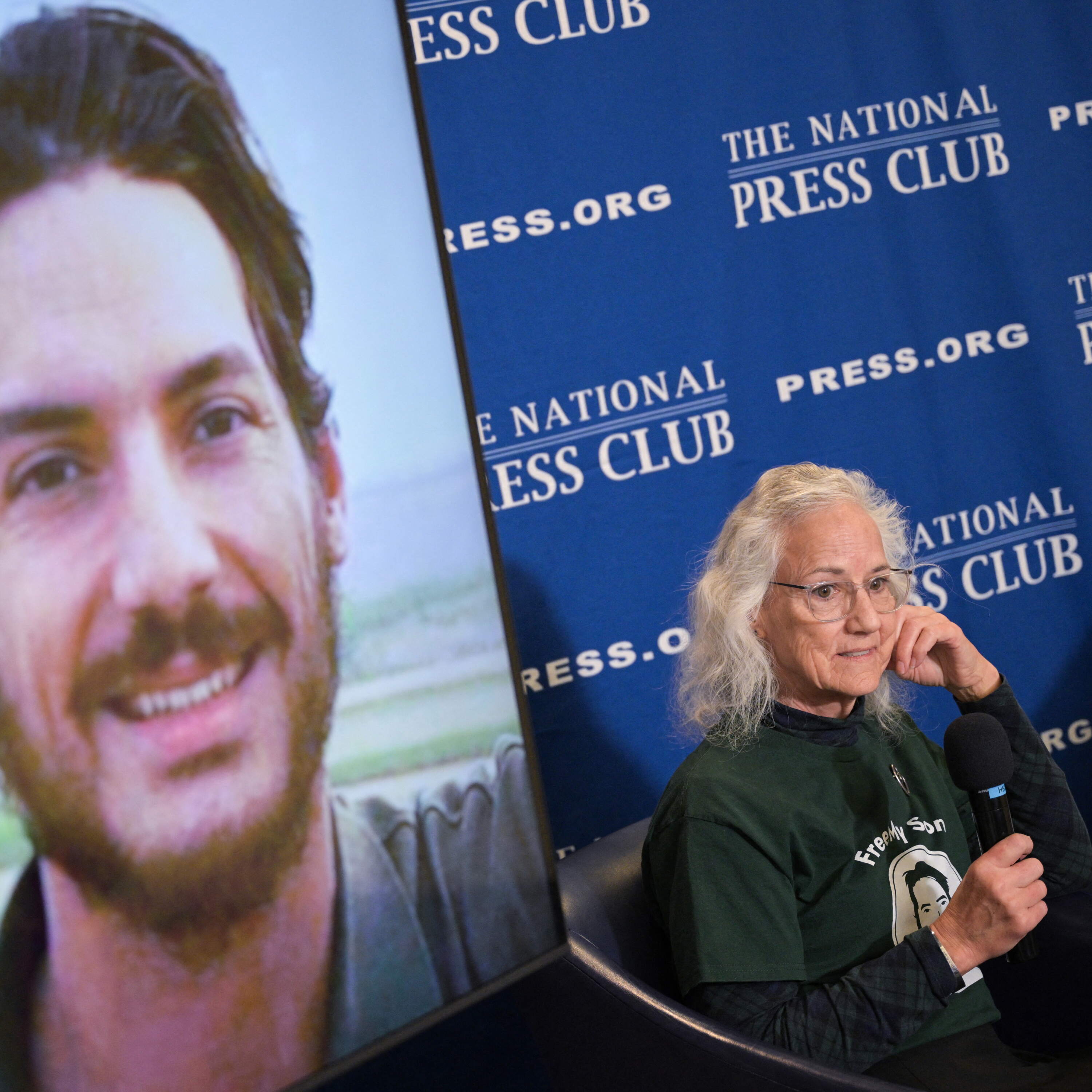
It was the first time Josh met Tys' mother. See, I need 13 people to paint. Thank you. Do you got none of this? No, I did first place of speaking when I was in middle school. It was definitely good for my mother, right? Are you ready to go? Hey, Deborah. Hey! I'm so glad you're here. Thank you. Absolutely. I really appreciate that. This is Deborah Tys. Today marks the 12th anniversary of Austin's disappearance. I'm following her down a corridor at the National Press Club in Washington, DC. We pass by a large poster of Austin. He's brought shoulder to handsome with thick dark hair and a chisel jaw. Then we enter a grand ballroom. Thank you, everyone. We're about to get started if you want to start getting to your seats.
Today we recognize a major and sobering step in the long journey home for Austin Tys. Twelve years ago today, Austin was taken in Syria where he was working as a journalist. We are joined together with Austin's friends and his family in urging the US government to bring Austin home. This is no ordinary gathering. There are FBI agents, members of the intelligence community and government officials. Because for more than a decade, every American president has paid attention to Austin's case. On a big screen, recorded messages start to play. There's the head of McClatchee, one of the news organizations that Austin worked for. Today, Mark's had another year without Austin Tys, an American journalist and veteran US Marine who has been missing in Syria for over a decade. He's followed by Donald Trump's former national security adviser.
Austin was the type of man that every day at once or Sunday grew up to be like. A US Marine, a photojournalist in combat zones. Georgetown Lawston, a great son and a terrific brother. Unfortunately. His mother Deborah is introduced. She has this long, striking silver hair and warm gentle smile. She's petite and quietly spoken, but exudes a strength that comes from years of refusing to give up on her son. She's a badass. She's a woman of faith. I know she's a huge inspiration to me and a huge inspiration to many. If you can welcome to the stage, Deborah Tys. Right now, I just want to speak to Austin publicly. Stay strong, Austin. Keep the faith. We have many good people working for you and praying for your release. You will walk free.
Again, I love you. You hang in there. The people here see Austin as an American hero who served in Iraq and Afghanistan. Who put his life on the line to report on the civil war in Syria. As the applause dies down, I look around. Faces are still. Eyes fixed on nothing. A thousand yard stare shared by many. Not least of all Deborah. Whose expression seems caught between gratitude for those who've come to honour her son. And the quiet, unrelenting weight of his absence. The next day, I meet back up with Deborah at the National Press Club. She walks over to a Grand Wooden Cabinet. It's got some of Austin's possessions on display. They have these shoes in it. His convos all stars.
It's all your war. You look really closely. Yeah. That's his report. Under his name, under his name Austin Tythrit says, if found please contact. There's a phone number. That's your home phone number. And every now and then, someone noticed it and they would dare to call. And they would say, are you really his mother? And like, I'm really his mother. He wanted to be a journalist, international reporter for MPR. That was his dream. And then, when he turned 18, he really was like, if I'm going to go to college, I'm going to Georgetown. And then he called them and said, well, if you don't accept me this semester, I'm going to apply again next semester. And if you don't accept me, I'm going to apply this semester after that. And I'm not going to any other college. I really think he only got in so that they could use their own phone occasionally.
So he's a pretty determined guy then. It's a pretty strong will, I would say. Debra Glances at the cabinet. A soft smile emerges on her face. It makes me wonder, if for a moment she feels near Austin again. When was the last time you heard from Austin? In 2012. On his first day, August 11, we had the best FaceTime. He must have already been in Damascus when we had that call. Austin had taken a break from his studies at Georgetown, one of the top law schools in the country. He wanted to pursue a dream of becoming a war correspondent. So he spends his summer reporting in Syria. And on his 31st birthday, he calls home to speak to Debra. After the call, Debra leaves for a camping trip with friends. And she has no phone signal.
So when she emerges a week later, she calls her husband Mark to check in. Mark said, I need to talk to you. Go somewhere that you'll feel strong and that's quiet. So I found a place and I called him back. And I said, so what? What is it? Well, Austin is missing. And he's been missing for almost a week. What was going on in your head? What do we do? And how do we navigate this? And then I was in the car. And then I heard Austin's interview air. There's a very real security concern. The Syrian government is notorious for exerting pressure on people by going after their families in really quite violent and atrocious ways. So just so I understand, you've just been told your son is missing. And then he comes on the radio.
Yeah, we're all listening to that and kind of... I mean, talk about dystopia. I haven't seen my son since 2018. That's the last time I hugged him. I know that my son is somewhere alive. Since the day Austin vanished in war-torn Syria, it's been debra's mission to get him home. And that means making sure he's not forgotten. And joining me now is debra's. Debra's mother debra ties. Debra's campaign has been so effective. She's attracted the attention of everyone from popes to presidents. We are not CC. We're effort to get him. We've no stone unturned in fighting Austin and bringing him home. It has disappeared off the face of the earth.
Despite all the resources and political power of the American government, nobody has been able to work out what really happened to Austin Tice. I started looking into Austin's case after I saw his mother debra on TV. She was making this heart felt plea for his return and she looked exhausted. It made me think about my own mom and how she'd feel if I disappeared. So I started digging. I'm an investigative journalist who spent almost a decade working in Syria. I've also worked to help evacuate people from conflict zones when they're in danger. And I have some experience looking for missing people. So I opened my contact book and spoke to everyone from senior officials to people gathering information on the ground in Syed Syria. And eventually I get a meeting with someone who might be able to help.
This message comes from NPR sponsor Carvana. Carvana makes Car buying easy. 100% online, prices down to the penny delivered to your door. Why make Car buying hard when it could be easy? Visit Carvana.com today. Terms may apply. This message comes from Edward Jones, where they believe Rich means opening yourself to new possibilities. That's why your dedicated financial advisor meets you where you are. Helping you move forward with confidence. Let's find your Rich Edward Jones member SIPC. This message comes from a thumbtack. Recommendations can be great. Maybe someone recommended this podcast and here you are. But home projects are different. If a podcast isn't your thing, you lose a few minutes. If you hire your cousin's neighbor to mount your TV, you might end up with a lopsided screen and wall damage. That's why thumbtack works. It matches people with top rated local pros, with photos, reviews and credentials all in one place.
For your next home project, try thumbtack. Hire the right pro today. I feel like we're walking through a pice cart. These little fences, pretty flowers, great English. Yeah, it's adorable. Can you tell that I have a cold? I mean, the voice is a little bit husky and normal. It's alright, it's a strong look. Yeah. It makes you edgy. A jeast girl in the English countryside. It's the late summer of 2024. This is Sara Ugedat. She's a Jordanian investigative journalist. We're good friends and we've worked together for a long time. And she just happens to have spent years researching the Syrian prison system. So I've asked for her help in looking into Austin's case. Together, we've come to a small village in southern England to meet a Syrian contact.
Hello. Hello. Hi. Hi. Good to see you. This is Salam. He's smartly dressed with thick, dark hair. And he has this restless energy. He's asked us not to use his full name because the work he does carries real risks. If he's identified, it could put him and others in danger. When were you in Syria? It was January 2013 when I left Syria. I served in the Syrian army for around 19 years. During the revolution, I defected from the war. In 2011, protests had swept across North Africa and the Middle East. Dictators fell in Tunisia, Egypt, and Libya. People wanted their freedom and demanded fairer societies. When the movement reached Syria, President Bashar al-Assad responded with mass imprisonment and murder, plunging the country into civil war.
That's what we're doing. That's what drove Salam to defect from the Syrian army and join rebel fighters. He went on to build a network that gathers intelligence on the Syrian regime. He even has sources inside Assad security services. And for years, he's been searching for Austin Tys. I suppose there's this big question at the moment. Austin has now been missing for 12 years. Some people believe he's alive. Others think that there's no way he could possibly survive this long. It's not going to be surprising that he's still alive after 12 years. The Assad security regime, they're smart enough to know that he's a golden egg. They are very aware of how much the Western community scares about their citizens and how big pressure they can put on the Western governments. The instructions will be to keep him alive, to protect him, to treat him better than other prisoners.
I've been told that around eight months ago, an American journalist was, he looks like Austin, a doctor visited him because he was on a hunger strike. Hoddan, you heard that Austin might be alive eight months ago. That's what I heard. That's what I heard. They think that he was in a very good situation, like he treated differently from the other prisoners. And not in the normal prisons. So if this is true, that would be the most recent time someone has seen him alive. Can you walk me through where he might be? So he was moved to branch 235, but that's time branch. No one has but time branch. So Salam has information that Austin might be alive and even a location where he could be held. An intelligence base known as 235 Palestine branch. But we can't get inside Syria.
So it's hard to verify if this is true. Hearing this made me determined to get to the truth. Because there are many stories about Austin Tyson. In some, he's held in a cell waiting to be rescued. In others, he was smuggled out of Syria and hidden away. And in the most tragic, he died long ago. But the truth is, this isn't just a missing person story. Austin's fate has become entangled in a world of covert talks, secret deals, and power struggles that are still playing out. All while his mother Deborah is left searching for answers. Following Austin's trail has taken me from the corridors of power in Washington, D.C. to the depths of Syria's most secret intelligence facilities. Along the way, I've spoken to spies, track down war criminals, and uncovered evidence that has never been made public.
And I've learned that there are people who know what happened to Austin Tyson. And some of them don't want the truth to come out. So what really happened to Austin Tyson? This message comes from NPR sponsor Carvana. Carvana believes selling your car should be easy. Get a real offer down to the penny, picked up from your driveway. You may keep waiting for a catch. There isn't one. Sell today at Carvana.com. Pick up fees may apply. This message comes from Edward Jones, where they believe rich is more than caring about the latest and greatest. It's also about taking care of what gives your life meaning. That's why your dedicated financial advisor meets you where you are, and you have the best financial strategies that help protect what matters.
So you can preserve your progress while creating a path forward. The key to being rich is knowing what counts. Let's find your rich together. Edward Jones, member SIPC. Hey, it's me, Peter Seggel, host of Weight Weight Don't Tell Me. It's leaf-peeping season. Games to help laugh about the week's news. And you can listen while you're spicing your pumpkins. Whatever people do. Listen every week to Weight Weight Don't Tell Me in the NPR app or wherever you get your podcasts. Hi, how are you? I'm very tired. I'm sure you're feeling the same. I've just been looking at everything I can't. I can't actually believe it, to be honest with you. Yeah, it was very hard to sleep, to be honest, and it's kind of surreal. It's the middle of a cold December night in 2024.
It's been a few months since I was at the anniversary of Austin's disappearance in Washington, D.C. Now, I'm on the phone with Sarah. We've been glued to our screens all night. I don't know what's going to happen yet. I haven't been able to get in contact with Deborah. But I imagine she's going through every motion on the planet right now. Yeah, yeah. And must be so hard for her. Who rebel forces have launched an offensive in Northwestern Syria taking territory from government forces for the first time in years? This hour, this second biggest city in Syria is now in the hands of rebels for the first time since the war began a decade ago. In Syria, rebel fighters are seizing government strongholds. They're taking city after city. Nobody saw this coming. Not even the country's president. Bashar al-Assad. He's losing his grip on power. Laming another significant gain driving government forces from the city of Hamam.
Rebels taking the city and freeing hundreds of those that they say were wrongfully detained in the central prison. It's the second major city the rebels have seized in their lightning offensive. As the rebels advance, prison doors are being forced open and people are walking free. Let's hope that Austin will be one of them. While this is unfolding, Deborah Tice brings her family together in Washington, D.C. Austin's six siblings are there, his father Mark and even his young niece. They stand on a stage looking out to a room full of reporters. Each of them is wearing a green t-shirt with Austin's face printed on it. Then there are the messages, simple and personal. Free my brother, free my uncle. Deborah's t-shirt says, free my son.
Today is a day full of emotions, the news that we're hearing from the Middle East is the kind of thing that unfettle a mom. I'm just so very glad that you're here. I'm so very glad that you're interested. I know there are all kinds of ways this could go, but the best thing that we want to share with you is that we have from a significant source that has already been vetted all over our government. Austin Tice is alive. Austin Tipe is treated well. There is no doubt about that. I would sincerely appreciate your most faithful prayers that we will see Austin walk free. And I just thank you so much. Deborah steps away from the podium with tears in her eyes. She says she has new evidence that Austin is alive, although she doesn't explain what that evidence is.
As Syria descends into chaos, all she can do is wait for information about her son. Then, rebels achieve what many felt was impossible. This is CNN breaking news. Breaking news coming out of Syria, rebels appear to have entered the Capitol. Statues toppling. People jumping on top of them. I have a sense of phonemes to clear that his regime is over. The country is now former leader Bashar Al Assad. Believed to have escaped to Russia. President Biden is getting ready to speak any moment now we're told from the White House on the fall of the Bashar Al Assad regime in Syria. Oh, we see the President right now. We're going to go to the White House. Along last, the Assad regime has fallen. This regime brutalized and tortured and killed literally hundreds of thousands of innocent Syrians. We're mindful that they're Americans in Syria, including those who reside there, as well as Austin Tice,
who was taken captive more than 12 years ago. We remain committed to returning him to his family. What do you guys know about where Austin has my theme of his safe? We believe he's alive. We think we can get him back, whether he has a direct evidence to that yet. The President of the United States thinks he can bring Austin home. But in the same breath, his seems to suggest there's no proof Austin is alive, contradicting what Debra told the press. It's hard to know what information about Austin is based on fact and what's based on hope. Whatever the case, the answers are in Syria. How long? Do you think it's a little bit like two hours maybe, Aaron, huh?
I think like another hour. Just 48 hours after the fall of the regime, Syria is in chaos. Airports have been abandoned, so the only way in is by road from neighbouring Lebanon. And that's where I meet up with Sada. How's your Shwala? It's delicious. Really? Yeah. It didn't hit the spot for me. That's wait until you get to the mask. Sorry, Lebanon. But it's true. Syria, there's the best show in Lebanon. I feel like you're discounting a lot of places we've worked together. As an Arab. Okay, you're playing that card. Okay, straight away. And then non-Syrian. Non-Syrian, I am admitting that Syrians make the best show in Lebanon. Just enjoy the beautiful draft. Several hours later, we finally make it to the border of Syria.
13 almost 14 years ago, this place started its revolution. Yeah. Look at this on your right. Welcome to Syria. Look. Oh, look, there's still a picture of us out. See? One side is rooftop? Yeah. It's a checkpoint, I think. Look, it's a bit... ...but it's abandoned. And it's got a smashed out window. Wow, there's an old Syrian tank right there. All of the old checkpoints have been smashed out. You notice there are no street lamps. They're not lit throughout the entire highway. As I look out into the darkness from our minivan. The aftermath of fighting is everywhere. A little fear creeps in. This is now a lawless country. There's no government, no police. And we don't know who controls the road we're on.
Then a man steps into the beam of our headlights. He's carrying a gun. Watching some fighters, I guess, search cars in front of me. I hide by microphone and look carefully around the vehicle. Flickers of light catch the edge of rifles. There are several men. Some with faces covered, all armed. Every glance from them feels like a calculation. The approach on minivan. As they shine their lights on my face, their gaze softens. Mahabar, Ki Fala, ala Britanya. Britana. Masha Allah. The men are parts of the group that is just toppled Syrian President Assad.
This is crazy. Essentially not even... Is anyone keeping track of entry? Into the country? Seamless. I've never entered this country so quickly. I've never entered any country so quickly. No one knows that I'm here. No one's checked my passport. Welcome to the Nays area. But this kind of gave me a little bit of trepidation. Things are still very new. The Nays are the most beautiful places in the world. An hour later, we're in Damascus. There we are, okay. We're in near the hotel. Despite the chaos and the lack of an actual government... Who's that entrance?
...hotels, a thankfully still operating. Thank you. Thanks. I unsit my bag and feel for a folder, triple checking. It's still hidden where I left it. So much of my reporting has been about national security and intelligence. And before I came to Damascus, a source of mine with intimate knowledge of Austin's case, reached out. I'd spent months gaining their trust. And now they had something to give me. Something important. I can't say what country this happened in in order to protect their identity. But we met outside a coffee shop. And they handed me a purple folder. Which came with a simple request. Find Austin. Now that we have a moment to catch our breath, I take the folder to Sarah's hotel room.
Hi. Can I come in? Yep. You're going to want to look at this. So... And that was somebody. And here are a list with GPS coordinates... ...of every location that Austin is possibly known to have been held up. Whoa. This is insane. For years, Western intelligence agencies have been identifying sites where Austin might be held. But they couldn't go to them because they were tightly guarded by Syrian forces. Now that the regime is gone, we can search them. If Austin's being held in a Syrian prison, this might be the best chance in more than a decade than anyone has had to find him.
That was BBC reporter Josh Baker. You can listen to the rest of the new series, Where is Austin Tyson on NPR's Embedded Podcasts in the NPR app or wherever you listen to podcasts. This episode was produced by Simon Maibin, Monika Estatiava and Lucy Burns, editing by Claire Fordham, Katie Simon and Robert Little. Fact checking by Nicolette Khan and Mary Glendonning, Mastering by Tom Brigno. The Sunday story team includes Andrew Mombo, Liana Simstrom, Jennifer Schmidt, and Sharon Machihi. I'm Aisha Roscoe and up first we'll be back tomorrow with all the news you need to start your week until then have a great rest of your weekend. This message comes from Kachava.
Sometimes flavors need a pinch of salt to unleash their full potential. Kind of like life, a little saltiness can keep things interesting and deliciously sweet. Fuel your salty sweet cravings with Kachava's new salted caramel all in one nutrition shake. Just two scoops provide protein, fiber, greens, and more. Embrace your salty side. Go to Kachava.com and use code NPR for 15% off your first order. That's k-a-c-h-a-v-a.com code NPR. This message comes from Wealth Run. No you want to invest, but don't know where to start. With Wealth Run's automated investing account, it's easy. Just answer a few questions, make it a deposit, and you're set with a diversified strategy that's designed to help you build wealth over time. Get started at Wealth Run.com. Investment Management and Advisory Services provided by Wealth Run Advisors LLC, an SEC registered investment advisor. Investing involves risk, including the possible loss of principle.
More episodes
More from Up First from NPR

News Outlets Protest Trump's Media Bans, Trump At UNGA, Paramount Merger Settlem...
Up First from NPR
UN General Assembly Week, Trump's Triumphal Arch, Air Traffic Control AI
Up First from NPR
Trump Bans Media from White House, Europe on High Alert, College Sports Bill
Up First from NPR
Kennedy Center Demolition Threat, Trump's Troubles, Poland Warns Of Russian Atta...
Up First from NPR