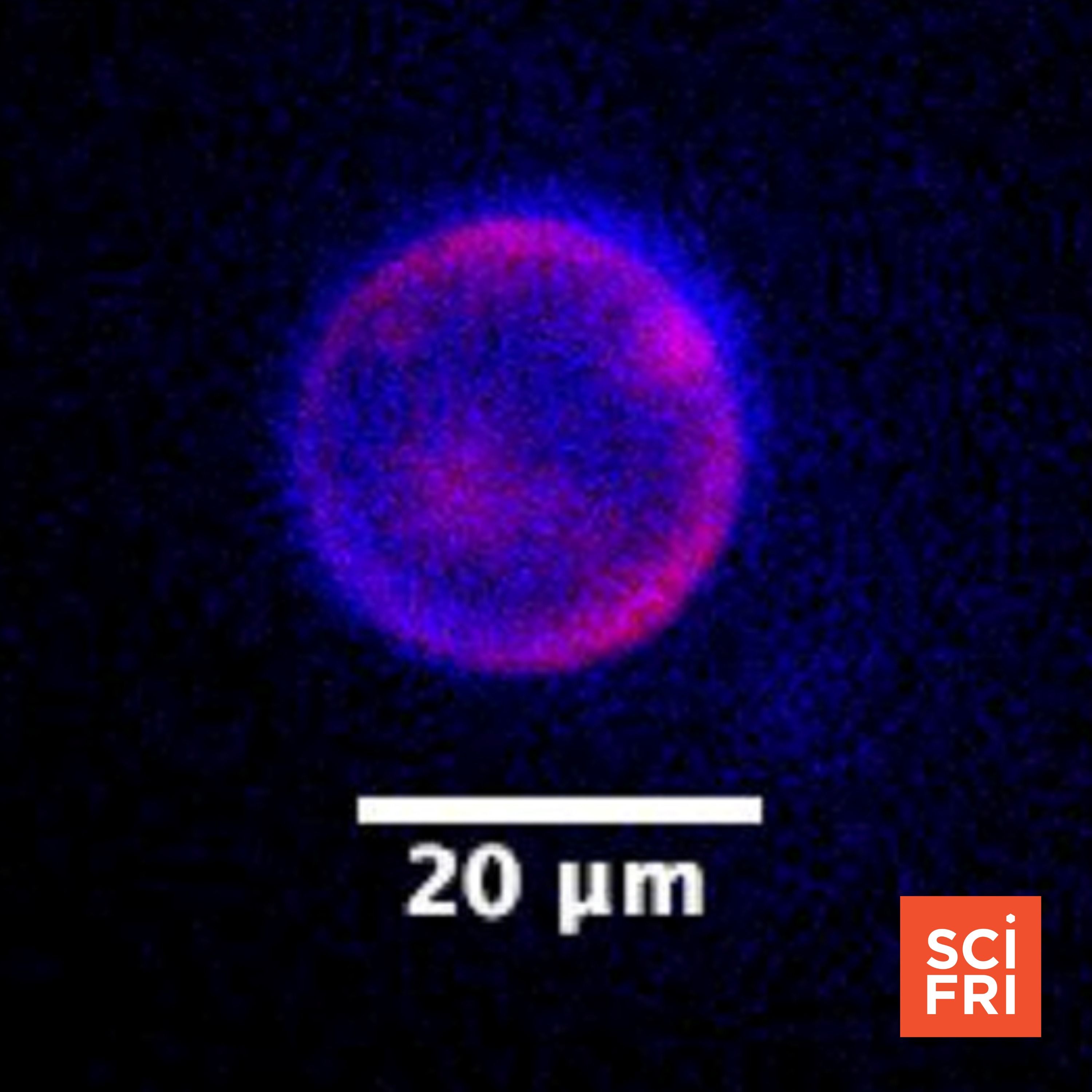
An artificial cell eats, grows, and reproduces. Is it alive?
About this episode
Researchers have engineered an artificial cell out of chemicals and biomolecules that, at a basic level, can eat, grow, duplicate its own genetic code, and reproduce itself. The cell, dubbed SpudCell, is aimed at creating a chassis that can be adapted to create biological factories for the chemicals humans rely on for modern life, from fuels to pharmaceuticals. But it also raises the question of what it means for something to be “alive.”
Synthetic biologist Kate Adamala joins Host Ira Flatow to talk about the technological advance, the possibilities for the artificial cell, and a nonprofit organization she hopes will allow the SpudCell to spark an innovation in biotechnology.
Guest:
Dr. Kate Adamala is a synthetic biologist and an associate professor of genetics, cell biology, and development at the University of Minnesota.
Transcripts for each episode are available within 1-3 days at sciencefriday.com.
Subscribe to this podcast. Follow our show on Instagram, TikTok, Facebook, and Bluesky @scifri and sign up for our newsletters. Got a science question that’s keeping you up at night? Call us: 877-472-4374
Hosted by Simplecast, an AdsWizz company. See pcm.adswizz.com for information about our collection and use of personal data for advertising.
Get every episode summarized
Each time Science Friday publishes, we email you a written briefing from the transcript — the topics, who appeared, and any specific claims, with the ad reads skipped.
Email me new episodesFree for 3 shows. No card needed.
Hosts & guests

No transcript yet
This episode has not been transcribed. Request it and it moves to the front of the queue.
More episodes
More from Science Friday

Did scientists just find a dark matter particle? Maybe
Science Friday

Why physics and philosophy need each other
Science Friday

Recall rodeo: A food safety update + Why cars are catching fire
Science Friday

Is there science behind the ‘nervous system reset’?
Science Friday