Loading...
newsdaily
Another front in the war with Iran: the Israel-Lebanon border
About this Episode
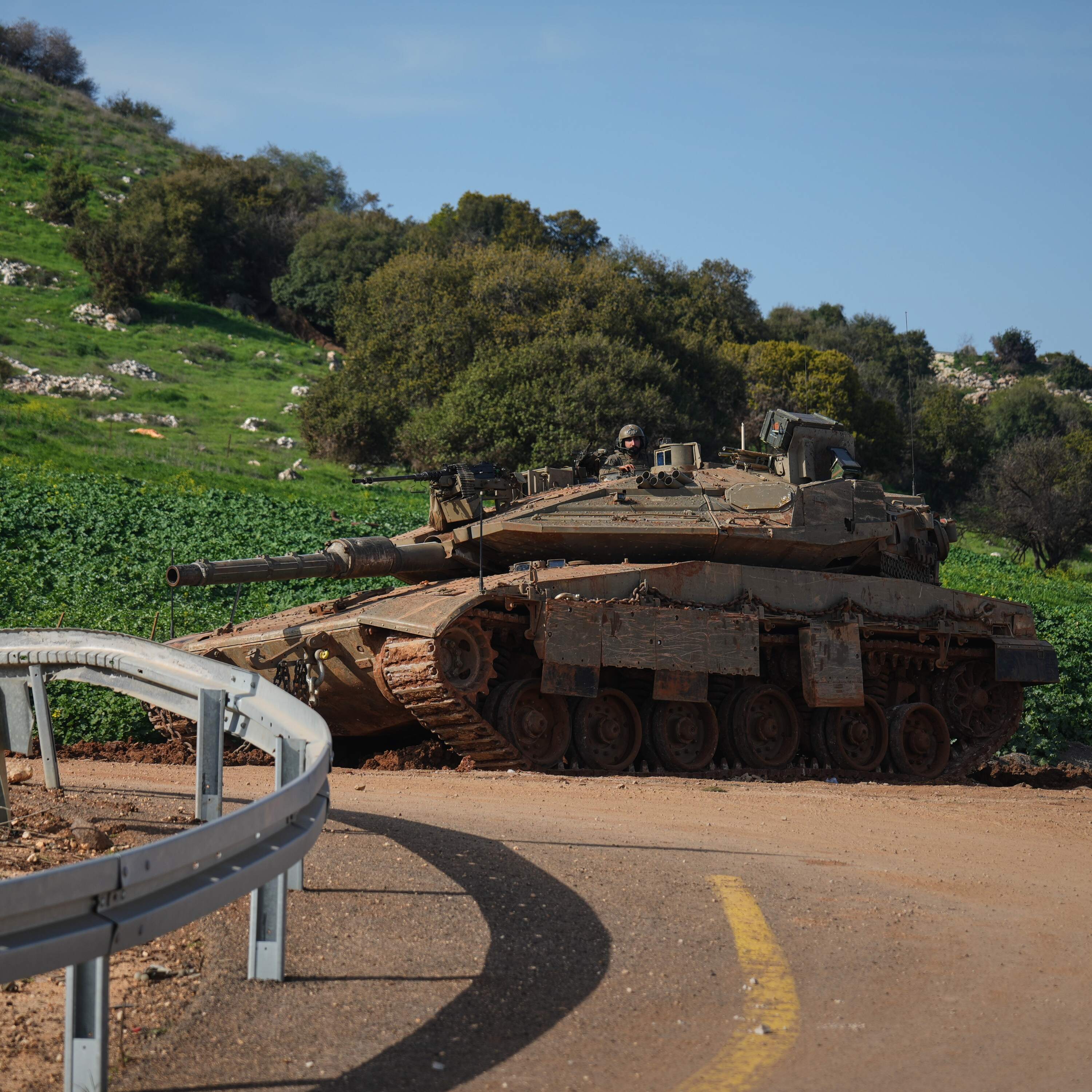
In southern Lebanon, Hezbollah militants backed by Iran have been firing rockets at Israel in retaliation for Israel’s war in Iran. And Israel has been firing back hard. Almost 700 thousand Lebanese have been displaced, mostly fleeing Israel’s strikes.
We go to both sides of this renewed conflict. In northern Israel daily rockets are keeping people on edge but also defiant. In Lebanon, Hezbollah’s wide popularity has been eroded by the fighting.
To manage podcast ad preferences, review the links below:
See pcm.adswizz.com for information about our collection and use of personal data for sponsorship and to manage your podcast sponsorship preferences.
NPR Privacy Policy
We go to both sides of this renewed conflict. In northern Israel daily rockets are keeping people on edge but also defiant. In Lebanon, Hezbollah’s wide popularity has been eroded by the fighting.
To manage podcast ad preferences, review the links below:
See pcm.adswizz.com for information about our collection and use of personal data for sponsorship and to manage your podcast sponsorship preferences.
NPR Privacy Policy
Hosts & Guests

Transcript
This message comes from total wine and more, with the largest selection,
finding a favorite cabernet or discovering a new single barrel bourbon is simple.
Shop total wine and more, in store or online.
Spirits not sold in Virginia and North Carolina, drink responsibly must be 21.
Today on State of the World, another front in the war with Iran, the Israel Lebanon border.
You're listening to State of the World from NPR. We bring you the days most vital international
stories up close where they're happening. It's Wednesday, March 11th. I'm Greg Dixon.
In Southern Lebanon, his beloved militants backed by Iran have been firing rockets at Israel.
That's in retaliation for Israel's war in Iran.
And Israel has been firing back, hard. Almost 700,000 Lebanese have been displaced, mostly fleeing
Israel's air strikes. In a few minutes, we go to Lebanon to hear how people view these attacks
by Hezbollah. First, we're going to the Israeli side of the border. Their NPR's Kerry Khan
tells us the daily rocket attacks are keeping people on edge, but also defiant.
It's a clear windy day as 71-year-old Ahuva Lippman walks her quiet neighborhood in Kirti-Atsmona.
She's lived here for more than 50 years and says she has no plans to leave.
No, I don't want to leave because I feel that my hair roots is here and I like them and do
heavy work. Oh, so what was that? Lippman doesn't even flinch as a huge boom rings out,
echoing off the green hills of the city of about 25,000, one of the largest in Israel's northern border.
You heard that, right? It's ours. It's ours, she says. So that's Israel firing into Lebanon.
If you hear boom and then it's meant it's ours. Okay, what's the other sound? When do I run?
Unlike in other Israeli cities where residents have a few minutes between the air-raid sirens
and scrambling to a bomb shelter, up here next to Lebanon, the sirens and the missiles come together,
she says. In just minutes later we are all running into a shelter.
Lippman and her husband sleep in the shelter on metal bunks but she's not complaining or leaving.
I need to decide what to do, not his bala and not Iran. We'll tell me where to live.
Where to live is only up to Israeli, she says. Her longtime neighbor Mikhail Sadia agrees.
She's at her home around the corner filled with grandchildren, the fourth generation living here.
One gets a big kiss as she serves us tea and small sandwiches.
She made 80 for the soldiers stationed nearby. Her daughter, a reservist, just got called up.
Her eldest son was killed in the second Lebanon war more than 20 years ago.
Our son is buried here, she says, and we hold commemorations for him. We can't leave.
She says the government needs to give tax breaks and other incentives so Israelis come to live here.
The entire city evacuated during the Gaza war, they just returned last March,
but nearly a third of residents never came back, according to city officials.
Mattan and Salam knows that too well. He's the only small shop owner open in the town's mall.
He sells electronics and cell phone supplies.
This isn't working. I'm only here for an hour a day, he says.
He leaves to meet a customer in the parking lot, but comes right back.
They didn't show. They called. They were too afraid to come out.
Too much missile fire back and forth across the border.
Kerry Khan, NPR News, Kierriach Mona.
To the other side of the border now, in Lebanon, their Hezbollah, the Iran-backed group
firing rockets at Israel, enjoys wide popularity. But his NPR's Hedelo Shalchi tells us,
with this new round of fighting, frustrations with the group, are mounting.
George Shibli is the owner of the comfort hotel in the Christian majority neighborhood
of Hasmiye, just outside Beirut. It was founded by his grandfather in 1958.
Today, Shibli looks exhausted and confused, and Israeli strike has turned his hotel to rubble.
He points to a mattress that belonged to his receptionist.
She was in the room at the time of the attack and died a day later.
Shibli says he doesn't want to talk politics, but he's tired of Lebanon being helpless and
not having control over its own affairs. We are a small country. And when we get our orders from
outside, he shrugs and doesn't want to elaborate. But orders from outside in Lebanon means being
told what to do by other countries, including Iran. For decades, Iran has funded the
militant group Hezbollah, which has now dragged Lebanon into another war. Lebanese leaders say
it can't afford. For decades, Hezbollah has been seen by many Lebanese as a resistance movement
to fend off Israeli aggression and occupation in the south. Today, the Lebanese government is
trying to distance itself from Hezbollah, as Iran itself is now under attack from Israel in the U.S.
One man at the forefront of this push to rid Lebanon of Hezbollah is Justice Minister Adel Nasar.
In an unprecedented move, the minister instructed security authorities to issue arrest warrants
for those who launched the rockets at Israel last week. Unfortunately, they gave this
pretext to Israel. Although we condemn, without any reservation, the reaction of Israel
it remains that we have a major problem with Hezbollah.
Also, for the first time, the minister has proposed to charge Hezbollah's leader, Naim Qasim,
with, quote, dragging Lebanon into war and tampering with security. It's the sharpest
rebuke any Lebanese government official has made against Hezbollah. Even in its own stronghold,
patience is wearing thin with the militant group.
That's a mayor from a town in southern Lebanon. The region where Hezbollah was founded runs
its military and offers civil services like health care and education. He doesn't want us to use
his name because he's afraid of repercussions for speaking out about politics.
The mayor says even his own community was shocked and angry when Hezbollah launched rockets at
Israel this time. He believes Hezbollah should only act in defense.
We won't accept Hezbollah's decision to avenge the Iranian Supreme Leader's death
or be in solidarity with Iran, he says. The mayor says the group didn't think about the
consequences for their own people and Lebanon's people overall. This mayor is among tens of
thousands of Lebanese who are now displaced. Many are forced to sleep on the streets,
huddled in makeshift tents. Iran gives at least $700 million annually to Hezbollah in Lebanon,
according to the US State Department. And this mayor says that means Iran calls the shots.
If he doesn't get involved in this battle, the Iranians will say,
what use are they to us? He says. But being at war with Israel for years,
the mayor says those in the south have no other choice but to look to Hezbollah for defense.
The resistance, meaning Hezbollah, has become a necessity and a burden on the south.
The mayor says. The Lebanese government recently banned all Hezbollah military activity.
The Lebanese political analyst Ali Riz says it's just paying lip service to the US.
To prove themselves to the Americans. But as you see, the rockets' missiles are still being fired
from south Lebanon. So Lebanese state can only do so much. It remains outgunned by Hezbollah.
And until real solutions are found, hotel owner George Shibli says it's people like him
who will continue to suffer. Hadil al-Shalci and PR news, they root.
That's the state of the world from NPR. Thanks for listening.
This message comes from Bombas. Your feet hit the ground in average of 2,000 times in a mile.
Bombas' sports socks are designed to support you every step.
Sprint to Bombas.com slash NPR and use code NPR for 20% off.
The ones you trust find a pro for your projects at angi.com. That's A-N-G-I dot com.


