
About this episode
APG 697 SHOW NOTES WITH LINKS AND PICS
00:00:00 Introduction
00:04:26 NEWS
00:04:44 Near Mid-Air Collision Near Teterboro
00:14:02 FINAL REPORT - DCA Midair Collision
00:29:02 Federal Watchdog Faults FAA Oversight of United Airlines Maintenance Practices
00:33:04 Two Airline Pilots Executed After Escaping Gun Attack at Remote Airstrip in Indonesia
00:36:01 One Hospitalized After Lithium-Ion Battery Causes Small Fire Onboard Wichita-Departing Flight
00:45:29 Bullet Holes Discovered on American Airlines Boeing 737 MAX 8 Returning from Colombia<
00:48:30 LATAM Brasil B773 at Sao Paulo on Feb 15th 2026, Rejected Takeoff Past V1
00:57:27 LATAM Brasil B773 at Milan on Jul 9th 2024, Tail Strike on Departure
01:06:28 Pilot Who Safely Landed Alaska Airlines Plane After Panel Blew Out Says Boeing Unfairly Blamed Him
01:10:25 GETTING TO KNOW US
01:27:05 FEEDBACK
01:27:13 Yehuda Moskowitz - Older Episodes, APG Syndrome, etc.
01:32:51 Sam Bolog - The Airbus A340-300 Has Always Carried a Reputation: Smooth, Reliable… but Not Exactly Overpowered
01:46:10 WRAP UP
Get every episode summarized
Each time Airline Pilot Guy - Aviation Podcast publishes, we email you a written briefing from the transcript — the topics, who appeared, and any specific claims, with the ad reads skipped.
Email me new episodesFree for 3 shows. No card needed.
Hosts & guests

Transcript ready
1,142 searchable segments. Every word is indexed and playable.
Full transcript
Airline Pilot Guy - Aviation Podcast — APG 697 - APG Gummies Edition. Machine-transcribed; use the interactive transcript above to jump the player to any line.
You'll listen to the airline pilot guide show the view from our side of the cockpit door. W-A-P-G It's the airline pilot guide. Airline pilot guide episode 697. And any sun in the sky is the airline pilot guide. Hello, you're listening to the airline pilot guide show the view from our side of the cockpit door. With your host Captain Jeff Broadcasting live from A-P-G headquarters in Roswell, Georgia. Today's show is recorded the week of February 23rd, 2026. In today's episode the NTSB assigns blame in its final report on that helicopter plane collision near Reagan National Airport.
At a burning lithium ion battery injures an airline passenger. Also ahead more news and your feedback. So get all settled in, trade tables and seat bags in the upright end lock positions, electronic devices powered on. I'm Radio Roger and Flight 697 is ready for pushback. Thank you, Radio Roger. He is an award-winning TV and radio reporter currently at the number one on news station in the nation, 10-10 wins. I'm 92-3 FM and New York City. Welcome to the airline pilot guide show. It's an aviation podcast covering the latest in aviation news and answering your great feedback. I'm Captain Jeff, former US Air Force pilot and retired Delta Airlines captain. And joining me from his garden view studio. Retired professional dog photographer, former R-A-F-R-W-A-F fighter pilot. Retired Airbus A330-A340 captain for Virgin Atlantic Airways. It's Captain Nick.
Hi there, Jeff. It is the old folk here again. It's terrible isn't it? RPG 697, well that was the number that doesn't really feature very much in aviation, not that I can find. So I looked through my logbook for the 697th hour that I flew with the Royal Air Force. And I found it was a really boring saucy with Tony Bound in the back seat flying random intercepts. So I thought, well I won't tell you about that. I'll tell you about a trip for the four trips after I got launched off Q-R-A-Woo for six hours and 15 minutes and intercepted four Soviet Russian horrible nasty bears out of the Icelandic, you know, Ferro's Iceland get. So four bare fox drops I got that day. Nice. I guess we should play the flaws, right?
Yeah. I'm fortunate I wasn't able to shoot me down. Otherwise you wouldn't be here with us today. No, no, me shooting things down. I wasn't allowed to. Somebody was mentioning that my mustache looks quite particularly white, particularly white. It's very snowy today. Yes, it does. I don't know. I'm not sure why I'm so fit. Did you wash it? Oh yeah, I washed it like once on the beach, too. Whatever it needs it or not. This was the day. Don't try smoking a few cigarettes. That would give it a nice tint. No, thank you for suggesting it. Okay, Liz is doing something. She's either telling us to move on or she's telling us that we're crazy or both. Both. Yeah. All right, so let's push through here. Move on because you're crazy. Yeah. From her studio in Toronto, Ontario, Canada. Retired financier and aviation enthusiast.
Spreadsheet master and our producer. Liz Hyper. Hi everybody. Not talking about the weather again. All right. Why not? Okay. It's probably still cool. I'm going to show you guys. Cheers Liz. All right. So. Stand by for news. All right. The first item in our new segment today is a near mid-air collision near Titoboro. joysy. Let's see. And we got this from the New York Times, a clip source. Let's see, averted mid-air collision shows importance of air safety act. Backers say, I don't know who backers is, but backers says. Let's see, the legislations advocate say a close call between two private planes near Teterborough on February 13, which is about two weeks ago or so, just under,
underscored how collision prevention technology could save lives. And we have a, let's see, I'll read a little bit more here and then I'll play the video. A recent close call between two private planes, fine near New York City, has flying near New York City, has heightened concerns about collision avoidance technology, just as federal lawmakers voted down a major aviation safety bill. Well, why did they do that? I don't know. I don't know. I think they're against safety. Yeah. Yeah. Way too sad. Okay. On the 13th of ebbe, Lerjet corporate aircraft carrying eight people was headed for Teterborough in New Jersey when its traffic alert system warned its crew to descend immediately to avoid an accident. The plane descended, narrowly avoiding a mid-air collision with a smaller plane. We saw the aircraft cross from left to right, right across the nose of our aircraft, said Derek Long, who was piloting the Lerjet and an interview with New York Times. That's really the closest you can come in an airplane without having an incident, he said, when reached by phone Monday evening. In recent days, he was saying it wasn't an incident.
He could be making a lot of it if it wasn't. Then why are we even talking about this? If it's not an incident, it was a near incident. I don't know. Let's just move on to the next time. I've had a lot of that. I've had a near incident. I'd like to have an incident, but I've only had near its incidents. Are we still talking about aviation? Sure. Okay. Let's see. Why don't we do this, Liz? I want you to play that thing up there and play this video and see what we get. I don't even think I've listened to this yet. So we're going to listen together. This is from VAS Aviation, real aviation communications. Important. Okay. This is a supplementary video to the incident. So you read, re-edited it, I think, and re-upload it. No, from a four-single-victus, I'm lapping zero six zero.
Newark approach control, I guess. Don't we're listening to? Yeah. Not a one four-single-victus, nowhere. Let's not. Somebody's not responding. I'm going to sit one echo case, pay back, new approach, new account, seven degrees, zero one four. Zero one four, a level two thousand five hundred, what I close the back. And a country road, 91 traffic, 11 o'clock, and two miles southbound, three thousand indicated there's a couple of things on the left. We're talking traffic, I'm sure there's anyone. Country road. Five ninety-three cleared the tower. Uh, like that, uh, five ninety-three, that was one ninety-five. Fifty-five, but that's five ninety-three today. If everybody's checking in, if anybody is checking in, just stand by. I know you're there. You're tied on my frequency. In Falcon, not a one four-single-victus, nowhere. In the former students, uh, uh, uh, TKS, all right. And, uh, thing that was country road, 91, uh, Roger. Main thing, three thousand when able and about. I worked one of the traffic now. That was not cool. That we're on cloud four, that's three thousand.
Country road, 91, I gave you the traffic call. I will kept getting stepped on. I just made a broadcast on my frequency for anybody that's checking in to just stand by. That's true. In the number of seven, zero, two, turn right. Right turn heading two, seven zero, seven zero, seven zero. In for Falcon, not a one four-single-victus, nowhere. Hello. Hey, I've been calling you, sir. I've been caught. I'm reached out to you. No, no, no, no. I'm not one four-single-victus. If you can't hear me, just hang in to my frequency on 23-77. We could. Very important. Really? I know it is. We could, actually. What's that? That's 23-77. Yes, sir. 23-77. 23-77. In the country road, 91, turn right heading one, five zero. If you're getting one, five zero, and make sure you pull the tape on that one, we'll get you caught. Pull the tape. Thank you, no problem, country road 91. I'll have a phone number here, surely.
Okay. But do I think they use tapes anymore? I don't think so either. All right. He called out the traffic to the Learjet. I guess both traffic both the airplanes were at 3,000 feet, which is not good. And I guess maybe the guy, the Learjet pilots, a little pissed because are upset because he didn't get any kind of an avoidance factor or something. I mean, I can kind of understand that. Although, what kind of service was he receiving? Right. I don't know. We're not air traffic controllers. Maybe an air traffic controller out there can school us on this. But I know that giving the traffic alert is the primary thing, right? And avoidance factors. I'm not sure what the responsibility is there
or the obligation or whatever. But I, in this case, I'm sure that the Learjet saw the other traffic while I'm thinking that they saw the other traffic on their, at least their t-cast display or ADS, whatever kind of traffic display that they have. And I might have said, could you give me a vector, please? You know, give me a vector to avoid the traffic or whatever. But maybe they just assumed that the controller had things under control. I don't know. Yeah, very busy frequency. So I think having a conversation with him would have been quite hard because he was trying to goal that traffic. He tried two or three times. And every time he was stepped on by another station calling or checking in. So I mean, he was pretty much on constant transmit, which is pretty common for that area when it's busy having been in there many times.
And Tidabora, you know, he's, he's dealing with the new traffic and the Tidabora traffic. That's a lot of airplanes. So, you know, that's, that's pretty much, sounded like he was at saturation. So I don't know what he else he could have done. I mean, obviously, if two aircraft are kind of come that close, he needs to forget about everybody else just for a moment and give some avoidance. Manuvers are the climb descent or it's pretty good, but a turn might have helped. Yeah, not guys. But, you know, this is the wonderful thing about T-Cas. So, you know, it works and saves lives. And we think it's fantastic. Can't wait for, you know, it to become even more sophisticated in the future, because there are obviously some limitations, particularly at low level sort of thing. Yeah, I agree. Well, it looks like we have some people in our live audience that want to volunteer
to become air traffic controllers. Neil says, we're not air traffic controllers, but how hard can it really be? The shits are very short. Yeah, so obviously nothing to it. Eyehole boxes break, break, plus a vector, plus immediately. Yeah, that's what I'm thinking, too. Yeah, very busy facility. Yeah, I've been in a similar situation before, where the traffic is called out to me, going into Birmingham, I think. And it's like, I'm looking and I'm going, well, it looks to me like, if we keep going this way and they keep going that way, that we're going to be, we're going to be a problem. And could you, and then I had to say, could you please give me a vector to avoid that traffic? And then they did. Again, I don't know what the rules are, what the legality is for all of that. So, we'll just have to hang that out there as a question mark, and maybe we can get some feedback from our
audience, including maybe some real air traffic controllers out there that may want to chime in on this. Because I think we could all learn something. All right, let's continue on with this next item, which is the final report. Yay, this is from the aviation herald reporting on the final report issued by the National Transportation Safety Board on the crash of the PSA CRJ 700 and the military helicopter, the Black Hawk helicopter in Washington, D.C. at Washington National Airport. And let's see, I'm going to scroll down and we're just going to, we were talking about this before recording the show today. And we were noting how nice the formatting is on the, on the NTSB's report, which is not normally as nice as it is. And we're going to have all this in the show notes as a link.
But honestly, the final report just basically confirmed everything that we had been discussing before today's show. And let's see, so let me read the synopsis, the federal aviation administration's placement. Okay, the probable causes of the accident were the FAA's placement of a helicopter route in close proximity to our runway approach path. They're failure to regular review, regularly, regularly review and elevate and evaluate helicopter, and evaluate helicopter routes and available data. And they're failure to act on recommendations to mitigate the risk of a mid-air collision near Ronald Reagan-Washington National Airport, DCA, as well as the air traffic systems over reliance on visual separation in order to promote efficient traffic flow without consideration for the limitations of the sea and avoid concept.
Also, causal was the lack of effective pilot-applied visual separation by the helicopter crew, which resulted in a mid-air collision. Additional causal factors, the tower's team's loss of situational awareness, and degraded performance due to the high workload of the combined helicopter and local control positions, and the absence of risk of a risk assessment process to identify and mitigate real-time operational risk factors, which resulted in misprioritization of duties. Wow, I'm not sure what. I haven't been drinking really. Misprioritization of duties might be the problem. I've probably been better. I wish there was one here. Of duties, inadequate traffic advisories in the lack of safety alerts to both flight crews. Also, causal was the Army's failure to ensure pilots were aware of the effects of error tolerances on barometric altimeters in their helicopters, which resulted in
the crew flying above the maximum published helicopter route altitude. And then they go on to list several contributing factors as well. We played that little excerpt from the Q&A that the NTSB presented a few weeks ago with the chairman asked the question about homody, homody, Jennifer Homody. And how upset she and how emotional her response was and how upset she was. And rightly so. And she kind of basically said what we just said in their final report there, that they just shouldn't have of happened in processes that should have been in place. And we're in place. We're just not analyzed and utilized most effectively, etc.
So all right. What do you think, Captain Icah? I need to stop talking because UH Black Hawk says there were thousands of near misses on this route over the years. Yeah. Yeah. Well, it happened so often that it'd become rent of the mill. And that's the problem. If you don't do about it the first few times that happens, then it sort of becomes, oh, that's, you know, we used to that. That happens all the time. Yeah. That's true. Oh, yeah. Look, Alphajullius there. You can join us anytime you'd like, sir. We'll just, you can just chime in whenever you'd like. How about now? Yeah, perfect. The NTSB, and this is Chuck in our live audience, the NTSB was unable to find any record of a review of the helicopter route as was required annually. Yeah. That was just one of many things that were kind of botched in this whole thing. Yeah. From the controllers themselves were reporting problems and getting no reaction to those.
So everyone was simply getting the too hard, too difficult bin and sort of saying, well, we've had this route for years and we've never had a problem. You know, it's the usual sort of excuse until someone dies. In this case, lots of people die and then all of a sudden, oh, we found a solution to this. It's happened in aviation so many times. I was going to say that they do mention, of course, that it would have been great if the helicopter had been broadcasting, ADSB out or had TKS on board, that sort of thing. But let's just remember, although they could have done that if they had the equipment, on this flight, because it was only a training flight, on most of their operational flights, they're going to be flying, there's a military airplane flying with the IPs on board. They're not going to want to broadcast their position. That would be a security breach that would leave them open to anything.
So they would have to, it's another reason why you shouldn't really mix this traffic up. If you're going to be not letting everyone know where you are and taking advantage of modern collision avoidance systems, you need to make sure your routes don't have any conflicts that were this might occur. Well, I think that we have to make the point that there was a traffic alert issue, like just seconds before the impact. But because of the way the TKS system is designed that below a certain altitude, it's, you don't get a, I guess there wasn't a traffic alert. It was a nonverbal alert that they never got an oral alert as far as I recall. Is that true? I mean, can anybody back me up there? I think that... I remember traffic was called to each of them. And I mean, from the controller, but I'm talking about the, like, the controls to maintain visual
separation on traffic, which they had identified. So whether they had identified the correct traffic, I didn't think the report really highlights that. Yeah, I, okay, I'll try to, I'll try to find it, but I thought that that was something that happened. Like, it was, it happened so in close proximity or time wise of the actual impact that it really wouldn't have any significant effect on the avoidance. So now that Alpha Juliet, welcome, sir, to the show. I know. Hello again. I understand the traffic in Atlanta is not very pleasant today. Well, when, you know, when you get a reasonable amount of rain, everyone decides to go 50% of their normal speed at, or less, and still managed to crash into each other everywhere. Doesn't, people, it doesn't make sense to me. What are you going to do with them? So we were talking about this near mid-air between a, I don't know, what was the airplane that
was, they were having trouble talking to what type of airplane was that? The digital airplane and the smaller airplane. Okay, well, we have the airplane. According to the, according to the screenshot or the, we're going to call it the opening thing for the YouTube video, it's an SR-22. Oh, there you go. That's an SR-20. Yeah, there you go. Look at that. So the SR-22, the Sirius, Sirius, Sirius. Called. Wow. The Sirius, SR-22, was at 3,000 feet and coming in at a, kind of, like a 90 degree, a divergent course, I mean, a convergent course with a Learjet. We're a divergent course, so we wouldn't be talking about it. It was a convergent course turning into a divergent course. Yeah. So the Learjet ended up having to respond to a resolution advisory from his T-CAS, a descend RA, because the controller was having trouble contacting the Sirius, SR-22.
But he did call out the traffic to the Learjet. And my question is this, the controller never issued an avoidance vector. And I think that maybe the Learjet pilot was waiting for that, that situation to be resolved by the air traffic controller via a divergent vector. I was saying that, well, I may have asked for one if I hadn't received one from them. But what are the, do you know what the obligations are, or the legality is, for the controller in this kind of a situation, agent? I don't know, as far as approach what they're, for the Traycon, what their rules would be in a situation. If they say they have each other in sight, that's somewhat, that kind of checks
a box. Well, I haven't had a chance to watch this video yet, so I need to do a little bit of research on this exact situation. Yeah, so this is obviously a class B, class Bravo airspace, right? So, well, they could be in it or they could be below it, looks like I've seen the video. If they're both at 3,000 feet, there's a chance that they could be below that class B airspace and in class echo, actually. Okay, okay. Yeah, so we don't have enough information then. To really figure out whether this was something that was required by the controller or not. Oh, well, okay. I'll do some research and we'll go back next episode. We'd appreciate that. Okay, thank you. A producer Liz has texted me with the information regarding the second news item, the DCA mid-air collision. The crew of Flight 5342, the PSA, received an automated traffic advisory from the airplane's
traffic alert and collision avoidance system, T-CAST system, stating traffic traffic. Yeah, I thought so. At this time, the aircraft were about 0.95 nautical miles apart and then 17 seconds before impact or radio transmission from the tower was audible on both cockpit voice recorders directing pat 25 to pass behind the CRJ. So, yeah, there was a traffic call out, a traffic traffic call out by the T-CAST system, Captain Nick, in that particular accident. So, but you know, when you're in that situation and we've talked about this ad nauseam, you know, getting close to the landing runway and you're in a turning, a final turn and you have your belly up essentially to the traffic that is going to be impacting you. There are a lot of things going against you in this situation. And the fact that you mentioned Captain Nick very clearly
and a very well-made point is the fact that we're kind of used to getting these call outs and being near military helicopter traffic in that area, especially if you're one of the regional airlines that are quite often asked to break off your approach to runway 1 and head over to the runway 33 to kind of help with the traffic situation. Now, I was going to say my anecdotal experience flying into DCA, which I did a bunch of in the 90s in the early 2000s, is that I guess because of the type of airplane I was flying, we would come in for the, if they're landing to the north, we would come in on the visual or the ILS approach to runway 1 and we would hardly ever be asked to break it off and, you know, circle to land to the other runway. But routinely the regional jets were asked to do that. I guess they're, you know,
it's better suited for that type of aircraft. Anyway, so... Ihaul boxes has a comment back on the number one item. Okay, now switching, we keep b-bopping back and forth between news item one and news item two. So try to stay with us people. Ihaul boxes says, it seems to me that as long as one of the pilots didn't acknowledge and maintain visual separation instruction that the responsibility remains with the controller. Yeah, I, I can see that. Yes, to some extent, but I mean, we have a basic rule of seeing avoid and visual conditions, right? So... Yeah. And depends on the level of services that each airplane was receiving. If the, if the bandanza wasn't on flight following or anything, they may or may not be listening. You mean the series? I'm sorry, the series. I'm sorry. I'm sorry. Don't call me Shirley. Okay. Yeah, so I think that we don't know. We're gonna have to wait for somebody really, really, really smart and knowledgeable about
this kind of thing. Anything else to say before we move on to item three in the news? Is there anyone who's loved that horse? Yeah, we did. Very, that poor horse is definitely dead. A federal watchdog faults the FAA oversight of United Airlines maintenance practices. This is a Reuters article. The FAA's oversight of United Airlines maintenance practices is hindered by low staffing, ineffective workforce training, and hurdles to accessing, accessing, air carrier data, a federal watchdog set on Friday. You know, English really is my first language. Really? It'd be hard to, to, to, to really determine the American English, the California English. Yeah. The U.S. transportation department of my gosh darn it. Somebody else take off. Well, she we're enjoying it, Jeff. This is great. Okay. The U.S. transportation department
office. Isn't that, is that right? You just, is a department of transportation? Yeah. Inspector General, Department Office of the Inspector General. There's a B missing there, I think. The U.S. Transportation Department Office of Inspector General. Oh, okay. The U.S. T.D. O.I.G. announced the audit. I think if you've got a title out of that, it ought to be able to fit on your door. Yeah. Well, if you, I think that's a little long, you can do it. You can double, you get double doors in this office, double doors. Fair enough. Anyway, that person, or that office, announced an audit of the FAA supervision of United in early 2024 and after the, after the FAA boosted oversight of the airline following a series of safety incidents. Okay. The OIG that's so much easier said Friday, the FAA's oversight is insufficient overseas safety risks and the agency has at times conducted inspections virtually rather than postponing them due to a lack of inspectors. So basically, this is the FAA getting slapped. I mean,
the FAA should have been slapping United, but now the, the OIG is slapping the FAA for shoddy work. Chuck has a question, Jim. Chuck has a question in our live audience. Did Jeff get some of those gummies donated after her research? No, but you know, I wanted to be, I wanted, because you know, when we do things on the show, we want to give, present the data as best we can and accurately, as accurately as possible. That's the best. Because, no, because I had to figure out exactly what that crew, that cabin crew was experiencing in that van going between the airport and that hotel with the gummies, you know, the THC gummies. And I, and I, you know, it's, it's my pledge to the audience to, to experience this and give you some accurate information. We appreciate your dedication, Jim. Yeah, I know you do. Okay. We should share some of that
dedication. Yeah, well, I still have some left over. Just kidding. I don't have any. I've never had one. Eight of them all. I haven't had two. I've never had any. Okay. I don't want to talk about that one. That's enough about that. Yeah. Thank you. Now, this is so highly, can I just make the point that, oh, danger mind filled. Yes, it is. They, they only had four inspectors for a fleet of 521 Boeing 737s. And that doesn't seem quite enough to my mind. Yeah, how many DNA? Well, I don't know. They had, how many, how many for their 757? Yeah, they had three for their 767 fleet, which is only 53 airplanes. So it's a bigger airplane. Oh, she's done that much bigger. I'm trying to help. Okay. Yeah. So I think they have their
inspectors quite salty. Two airline pilots executed after escaping gun attack at a remote airstrip in Indonesia, a routine domestic flight in eastern Indonesia turned deadly on February 11th, 2026. So just a few weeks ago, when a smart air sesna 208B Grand Caravan registration pop a kilo Sierra in November, Romeo was attacked moments after landing at quarter, quarter why Batu airstrip in South Papua's Boven, the Diguel Regency. I don't, I don't know. The aircraft had arrived from Tanamera at about 11.05 a.m. local time when armed gunmen open fire near the runway forcing passengers and crew to flee the aircraft in panic. According to Indonesian authorities, both pilots initially escaped into nearby forested terrain along with the passengers, as shots rang out around the airstrip. All 13 passengers, including an infant, managed to hide
and later survived the attack unharmed. The two pilots, however, were separated from the group. And then these two Captain Egon Ederwan and first officer Baskotru were pursued by the attackers captured and forcibly brought back to the airstrip where they were shot dead. Their bodies were later recovered near the runway. In Dineshans, Papua, regional police, and the Demai-Kartens Task Force, a joint military and police security operation were deployed to secure the area and evacuate the survivors. Authorities say that perpetrators have not yet been arrested, though the attack is believed to be linked to armed separatist groups active in Papua. A region that has been has seen repeated violence targeting security forces and infrastructure. So, hey, when you're thinking about how bad things are in your country, at your airport, think about how bad they really could be. I mean, talking about dangerous, I mean,
flying's dangerous in that region. But, you know, armed separatists seeking you out and executing you on the on the tarmac, that's horrible. It's scary. Absolutely, scary. And I haven't heard of them specifically targeting Elon Musk, figures of authority. But, you know, they, there's no saying what these people will do. And, you know, I would have thought that they would have been safe. I thought the passengers would have been the ones that would have been in more danger than the flight crew. But, I don't know, you don't want to what goes through these people's minds. No. Yeah. Yeah, I don't get it. All right. This was sent in by our Wichita Correspondent. Oh, yeah. Our Wichita Correspondent, Nick Kamacho sent this to us. This is from K-A-K-E.com. I wonder if they call it cake there because, I don't know,
it's making me hungry just looking at that. An Alaska Airlines flight from Wichita headed to Seattle had to make an emergency landing on Sunday afternoon after a passenger's cell phone battery pack caused a small fire in the cabin. Liana Stickler is one of 76 passengers aboard flight 2117. She says a woman was using a lithium ion battery powered charger pack to charge her phone when it caught fire. I was right next to her and it was just sitting in her lap not being played with, not being touched and it exploded, said Stickler. And I'll have to note that this lady is a Stickler for the details. She says the flame was about a foot tall and burned the woman's arms and legs before she tossed it into the aisle. Somebody threw a towel on it and it hit and I hit it with my shoe, she said. Video captured shows the flight attendants rushing in to the shoe, rushing into the shoe, and towel covered. Oh, shoe and towel covered.
It turns by. Okay, it stops too soon. I have to keep going. Don't stop, Jeff. Don't give up. I'm going to reread that. Video captured by Melissa Harris, Hadaradro, shows flight attendants rushing in to the shoe and towel covered, burned spot to stop a still smoldering. Should it be smoldering? Yeah, that's a misspelling. Maybe they were soldering on the back. Maybe there was a soldering fire. Why would they be doing that? That does seem terrible idea. It seems inappropriate to me. Quickly on an airplane. I know. Like, hey, quit slaughtering. What do you do? I did. I catch everybody on fire. That's because of your new regulation now. No soldering on the plane. I'm sorry. I was in the prohibited items. Yeah, it's interesting. I wanted an earth which you bash it with a shoe. I mean, don't we all know that that's what you do with damage. A damaged lithium ion battery because you bash it with a shoe is
to burn even fiercer. Well, you know, I don't think she's had training on extinguishing battery charge of fire. Sorry, Nick. It makes you feel any better. The high likelihood is that it was one of two kinds of shoes anyway. It was either a very furry slipper or it was one of those plastic flip flaps from the dollar store. It was sitting going to make the problem better by way. It makes you feel better anyway. You may not be helping, but it makes you feel like you're doing something. I got involved. Yeah, exactly. They had just taken off from Wichita and they just came back and landed safely. I guess there was a lot of smoke. That's right. That's why I want to talk about this especially. Yeah. So I knew you wanted to try to see says the flight had been only in the air for 15 minutes at the time. Terror. I'm like, oh my gosh, we're going to crash. And I hate flying as it is said soon. The flight intense came running back with a fire extinguisher and put it out. The smoke was so bad, I couldn't breathe. Let's see. In the video, flight attendants could be heard
telling people to cover their faces, which is a good idea or put their faces in their shirts. Okay, that's a good idea. Soon says this is because the oxygen masks only came down after the fire was fully out. A few moments later. Let me read the oxygen masks only came down after the fire was fully out. I'm thinking, wait a minute, everything, everything in my training said if there's a fire that the oxygen masks are how else are you going to keep the foot off and the towel burning? Because like the oxygen masks are there because of pressurization and to increase the partial pressure of oxygen going into your lungs to you say, stay conscious. It has nothing to do with smoke. So no, who I'd like to know if that's really true. Well, I think I did see a picture and I could see that the oxygen masks were deployed. I'm just wondering who deployed the oxygen masks? How did that happen? Who doesn't deploy the oxygen masks? Isn't that
the point? Because there wasn't a depressurization, I'm pretty sure the flight deck must have done it. That's usually the only way you can get the oxygen masks to come down to reach out and press the the emergency oxygen button. And yes, I'm with you, Jeff. We would never deploy oxygen masks in the case of a smoke that particularly if you know there's been a fire. Because despite the fact you might say, oh, it's out and everything's fine, if you introduce a hugely oxygen-risk rich environment around something that is might catch fire again. And because these things do have a tendency to leap into fire again, it's going to be 10 times as bad as it was before. So I'm most I have sympathy with the passengers who are having trouble breathing in the fumes because the fire extinguishes are very irritating for your lungs. So they're a real
irritant. And the cost of smoke at the fire would be an irritant as well. So you're just going to be uncomfortable breathing that. It will soon dissipate if you get the air conditioning running up max, max chance. But if you put oxygen in there as well, you have a real potential. Bill's calm and I think encapsulated. Yeah, an airline pilot in Y, Y, Z, Toronto says, whoops. Well said. Yeah, very well made point. And because there's another thing you have to bear in mind when you press that button is you're not going anywhere except on the ground below 10,000 feet. Because once you've deployed those oxygen masks, you cannot go anywhere. You cannot climb back up because of the danger of having a decompression. And now you don't have any option to give your passengers if you do do pressurize. So you are really stuck below 10,000
feet. And in a diversion situation, I realized they're coming back anyway, which they did, which is fine. But still, I would not have pressed that button. And a UH black hawk says oxygen masks won't help as they take it outside there. Anyway, I think what you're saying is it makes sense. There are an anemic situation. Yeah. So you're still going to have the smoke in there. You're going to have a little oxygen pure oxygen in there as well. And then Ihaul boxes says lithium ion batteries produce their own oxygen anyways. Yeah. So the only thing I can think I tried to find out more details about this incident. And I couldn't find anything. I thought that maybe we'd see this on aviation. Harold, but I couldn't find it. Is that maybe I know they did reach it up reach up to like 20,000 feet or so somewhere between 15 and 20,000 feet. Is it possible? They also had some kind of a deep pressurization kind of event. And that's why the oxygen mask came down. I don't know. I guess that's the round there. I don't know how this
to try to get some air flow through. I mean, we would do that once we got below 10. We would open the round there and get some decent air flow going through the counter trying to clear the smokers quickly as possible. We might even open a window at the front end. Because that's the last ditch. Clear the air of smoke and fumes is to open a window in the cockpit and get that blasting through. But that's pretty dire because it's difficult flying an airplane with the window over. It's not like you can stick your head out and see where you can. Yeah. Dave Ellison in our live audience as I thought the oxygen only flowed after the mask was pulled down. I think you're right about that. Is there really much extra O2 in the entire cabin? Well, probably not a heck of a lot. There's certainly not less. Yeah. It's just not something that you do. It's if they purposely ejected or whatever the proper deploy, thank you, deployed the masks
from the cockpit. To me, that just is really kind of counterintuitive. If you view it in the opposite context, they deployed the fire extinguishers when the cabin depressurized. Right. One tool for the job. Yeah, that wouldn't have made any sense either. Anyway, so I thought that was interesting. Hopefully we can find out more exactly what happened there. I thought Stickler's final comment was very useful for those who are flying. You always hear about like airplane mode and be careful with batteries. Yeah. Yeah. That's exactly right. Be careful with your batteries. Yeah. They get the yada yada is the most important part. The next one again is about the risk of the real risk of flying. Yeah. Talking about risky flying, especially if you're flying on a 737 Max 8 in Columbia. That's probably why it was shot. Yeah, that's got to be why. At American Airlines Boeing 737 Max 8 has been pulled from service
following the discovery of bullet holes on the aircraft's wing assembly. The damage was identified during a routine post-flight inspection at Miami International Airport on February 23rd, 2026 after the jet completed a regional circuit between Florida and Columbia. The aircraft involved registered as November 3-4 to Bravo Hotel for bullet holes. Just kidding. It's a Sierra X-ray. I met up. I had operated flight 923 from Miami to Medellins, Jose Maria Gordova International Airport. Before, not as not easy for me to say, on February 22nd. It remained on the ground in Columbia overnight before performing the return leg 924, which touched down in Miami at approximately 1024 a.m. the following morning. It was only after the passengers had declined. Miami that maintenance crews noticed puncture marks on the right aileron, a critical flight control surface responsible for the aircraft's role and lateral balance. While the origin of the gunfire remains
under investigation, the incident has raised immediate security concerns regarding the ground environment and metting or potential low altitude activity during the flight's arrival and or departure phases. Despite the structural damage, the flight cruised at flight level 360 during the three-hour journey over the Caribbean and the aircraft landed safely. Let's see. Following the discovery, American Airlines technicians at Miami performed temporal structural patching, temporary structural patching to stabilize the wing surface under the cover of darkness on the night of February 23rd. The flight, the plane was varied on a non-commercial flight to the under the cover of darkness. What did they say that? On the night of February 23rd, the plane was varied on a non-commercial flight to the airline's primary maintenance hub at Dallas-Fort Worth International Airport. And you can't see the sun coming through the bullet holes. There you go, it's very true. Nobody will notice. Under the cover of darkness.
So, be quick. To just be tight on the holes and wait for this thing. AirLive.net. That's just an interesting way to put that, I think. Okay, looks like... Yes, ma'am. I mean, a little more time to go, but the next one you wanted to do F and K together, because they're the two Latin. Yes, true. F and K, Jeff, F and K. Okay, watch your language list. Watch this where she says to do F and K. So, let's do this one here next from aviation herald. And there's a video too. So, let me get the video cute up. I think I already do. Okay, a Latin Brazil Boeing 737-300 registration Papa Tango Mike Uniform Hotel performing flight 8146 from Sao Paulo, Garoules, Brazil. To Lisbon, Portugal was accelerating for
takeoff from one way not runway 9 left when the crew attempted rotation. And the nose gear slightly lifted off the runway and then the takeoff was rejected about 174 knots over their ground. That's pretty fast. The aircraft slowed safely. You vacated the runway at the very end and stopped on a parallel taxiway. Emergency services responded. The passengers disembarked via stairs onto the taxiway. And they said that on the, that happened on the 15th and on the 20th, Brazil's CENIPA reported during the takeoff from the aircraft showed an above-limit temperature in the right-hand engine of GE90 and the crew rejected takeoff. Okay, so again, what that means to me is that this happened, the rejected takeoff happened after the rotate. That's, I'm wondering what V1 is in a 777 if you got 174 knots is ripping. Well, so, yep, I think the captain and I would agree
that I don't think I've ever seen a V rotate speed before V1. Have you? Because it was always V1 rotate. Yes, correct. I've never had, well, I've never had a V1 after rotate. I've had V1s before rotate. Yeah, that's where it never happened. But you're trying to get airborne. You don't try and reject at that point ever. The other question is how long is this runway? If they're even going to put 174 knots and stop safely, that's a big runway. A very long runway. I don't know the answer to that. I'm sure somebody, stop. Somebody in our live audience staff might be able to tell us. But while they're looking that up, let's watch a video, shall we? And see what this looked like. This is the latter stage of the, thank you for the sound effects. The latter stage is of the takeoff roll. And I'm going to go ahead and hit this button here. And
there we go. The camera is going to shift to the right a little bit. Okay, now watch the, it's going to rotate. Right there. And then back down. And then, exactly. That's what I would have said. Yeah. So So Okay, so So it's not stopping. Here we go. Maybe I had to the other key. Dave Ellison in our live audience says Google says triple seven V1 is 130 to 160. But I guess my point is not necessarily what what the V1 speed was is the fact that it where it was in relation
to the rotation. The rotation. Yeah. Yeah. So we're pretty sure they've rejected above V1. Yeah, which is very naughty because and if it's an overtemp, we used to, we had a series of overtemp's, particularly at high-hot airports in my aircraft when I was flying. And the company got, you know, very worried because there were some pilots who, you know, were a little bit inexperienced and they were worried that someone on one of these high-hot airports was going to try and stop above the one for an over-temperature. And over-temperature is not usually a major problem. You just, you just sit on it and let the engine burn a bit hot unless it's going absolutely mad and the engine is likely to disintegrate. And over-temperature is just, you know, it's a margin
above its maximum operating temperature. It doesn't mean the engine's going to necessarily fail or anything's even going to be wrong with it at the end of it. It might shorten the engine's life a little bit, but it's years ahead. So the next captain's problem. Exactly. So the advice was sit on your hands, complete the takeoff, and when you're safely airborne at the normal height of which you start actioning emergencies, which for us was 400 feet, you just retard the over-temping throttle until the temperature drops back within the correct range. Boom, job done. Then you can climb away. And then afterwards you can have a think about what caused the over-temper. Is it still likely to over-temper? Can you return the engine chat with the engineers, get a data dump on what happened to the engine, discuss whether it's okay to, you know, continue home with it, or would
you like us to leave it idle or what do you want us to do with it? But you don't reject, you take off above V1 for that. If it's just a simple over-temper, I'm assuming that this information here is correctly. They might have had something more serious, but I, you know, it's, Captain has emergency authority, yada, yada, yada. But, you know, as you say, it must be something very, very serious for you to after the decision speed, V1, to, you know, try to abort the situation in aisle boxes in our live audiences by definition and regulation. V1 must be less than or equal to V-R, V-Rotate. Well done, sir. Thank you. That's what I thought. I just thought it was kind of odd to see that. And the reason they stopped, because normally you'd say, well, above V1, you're not going to be able to stop for the end of the runway. Well, V1 doesn't take into account, or your
rejection, doesn't take into account use of reverse thrust. So when you do a rejection, the aircraft should stop at V1 with brakes only. And if you get the reverses in, that's a bonus. So that will shorten your stopping distance, which might be why they managed to get away with this, is it where they managed to stop before the end of the runway didn't hit the overrun. Brief search shows 3,200 meters, which is about 10,500 feet. Not short runway. No, but not that crazy long either. Yeah, but particularly if you're a heavy triple seven, and I don't know how high that airport is, I don't know, it might be elevation. I didn't look at that part. Bill in YYZ says, I like how they say, stopped safely. No, it stopped. Well, I can see that one again. Yeah. It sounds better to say,
it stopped, stopped safely. You know, it's kind of the aircraft vacated the runway on its own power and was actually handed to the maintenance. Yeah, you guys deal with it here. Please take it. Look at this comment, you could talk about the bitter end. Throwing the anchor out, there's a box. We were just talking about throwing the anchor out. Yeah, we, because we were asking ourselves before the show, before the show, what, where the, the bitter end came from. And we just discovered it's all about throwing your anchor out. And because the, the last bit of rope is from your anchor is called the bitter end because it is tied to the bit which was a ballad of the ship side that where the, the last bit of rope was for the anchor was tied to. And so hence the bitter end. There you go. There you go. That's why people, that's why people
listen to the island by the gut show for little bits of information like that. And AJ, would you please say your patented phrase that you say at the end of your show? You're welcome. Okay. And with that, we're going to move on to the sister ship of the one we just talked about. Another triple seven 300, Latam, Brazil, Papa tango, Mike uniform golf. The previous one was Mike uniform hotel. This is Mike uniform golf, performing flight 8073 from Milan to Sao Paulo with 398 people on board. That's a lot of people departed. Malpen says runway 35 left, but struck its tail onto the runway surface during rotation. The aircraft climbed out the safety, stopped the climb at 5,000 feet and are to hold later at 6,000 feet while dumping fuel. The aircraft finally returned to Milan for safe landing on runway 35 right about 75 minutes
after departure. Now I'm doing my math correctly. That's one hour and 15 minutes. And so we have some video and it's actually some security camera video, I think, and it's on somebody's screen that they are videotaping. So that's why it looks kind of fun. Video video. It's the far plane. It's the plane in the distance. It's the plane in the distance. Yeah, not the one in the foreground, but the one on the runway coming at us. So here we go. We're going to hit this. You can tell there's a line scraping its tail a long way down that runway. You can dog on the carpet. Yeah, I'm just going to say, Liz, it looks like a dog rubbing his bank side on the carpet. Yep. That's, that's not going well. Yeah, that's a long tail scrape. Well, it was only 720 meters, which is 2,362 feet. That's not far at all. That's not bad.
Shall we watch it again? Yeah, let's watch it again. Okay, all right. The question is, which one happened first? Did the tail strike happen first or the rotated 175 knots happen first? Because one of these two things happened. The guys rotated too late, 175 knots. Oh, yeah, did you see those guys in that they dragged the bail for half the runway? We're not doing that. Or, or other way around. Did you see those guys that tried to rotate at 175 knots? That's nuts. We're not doing that. Okay. Yeah, either one's possible. Just saying. That's, it's, it's, it's, it's about anything is possible. Right. But let's go ahead and see it one more time, Liz. Thank you. Yep. Come on, Jeff. All right. All right. Out, tap, tap, tap. Out, tap, tap. Wow. Yeah, that is, uh, yeah, that's pretty bad. That's pretty bad.
Um, so let's figure out. Let's figure out. Let's figure out. PT Mug. Mug. So, and then, of course, the other one was PT Mug. Um, the, let's see, the flight consisted of an instructor captain sitting in the right seat. Oh, there he goes. And the pilot flying for the leg, the captain and training as pilot monitoring in the left seat, relief captain sitting on the jump seat. Oh my gosh. There were three captains in this cockpit. Wow. That's your problem. That's your problem. Okay. We don't need to talk about it anymore. The flight data recorder data shows the following parameters entered in the takeoff ref page. Flaps five thrust 56 V1 145 VR 149 V2 156 the meter at Melpensa in the window of interest at 1120 Z reported variable winds at one not one not a few clouds 4,000 30 degrees on the ambient temperature 19 on the dew point. So nice weather. Okay. The aircraft took off at an indicated speed of 180.
Okay, where's the part where they'd say what happened here? They entered the wrong data or something, didn't they? Yeah, you've already gone past. Help me out. Help me out, man. The FDR data showed the following parameters entered in the takeoff ref page on the FMS. Flaps five 36 V1 145 VR 149 V2 156. You've said that. Yes, sorry. But at the bottom, they did the performance calculation carried out with the onboard performance tool by the operator after the event. Yeah. Considering the takeoff weight to be 328,425 kilograms and all the rest of the things. V1 was actually 173 knots. VR 181 knots and V2 186 knots. Just a little bit higher. Okay. So yeah, there was a quite a disparity in the what speeds that they entered and what speeds were more appropriate for that weight. Only like 30%. You know,
you ever had a gross error checks? Because I'm going, if you've been flying this airplane for a while and these all these three pilots sound like they're pretty experienced except perhaps the one under training. But you know, those numbers aren't even close. So I'm going, come on, guys. Does anyone scratch their head and go, these numbers look a bit low? Are we sure about that? Well, something here about the following factors contributing to the event, deviation from standard procedures by the two pilots with regard to requirement to perform individually the takeoff performance calculation. So they should have each done it on their own and compared their numbers. The lack of understanding from the flying clue of the meaning and implications of the V speeds unavailable message. So there was a there was an attempt for the technology to warn you that V speeds unavailable. You should go, wait a minute. Why? We've done something wrong here.
Why are the V speeds unavailable? Oh, in the absence of the onboard of the aircraft, automatic onboard weighing and balancing system and takeoff performance monitoring system, for which there is no regulatory requirement. Okay. If they'd had that, would have checked their numbers for them. It sounds like how many how many fleets actually have automatic onboard weighing and balancing system? I know that they're the early version of the Lockheed L1011, I believe, had that system on the one or two. You do? Really? I don't think so. If you push the tail down and it doesn't come back up. No, that's that's kind of a performance-based assistance. No, it's the balance bit. Yeah. Okay, tail down it. It's right there. I need to move a couple of eggs. That's on second. Okay. Well, I guess I could see that. Anyway,
so there's that to let them incidents and recent. No, those commenting about the tail strike. Oh, okay. Bill and Y, Y, Z, if you're going to do it, do it right. Yeah, that's a tail strike. Yeah, I mean, if you're going to, you know, not as well, really make it good. Greg Peterson, hey, Greg, they should just add tiny wheels to the tail like they did for that concord. Yeah. Yeah. Solution, a problem solved right there. And I all boxes with so much experience on the flight deck, everyone starts trusting the other guy and the other guy didn't check the first guy because of experience bias happens all the time. Yep, that's one of those things, you know, being led down the Primrose lane or whatever they call it, Primrose. What is it saying? Yeah. Anyway. My best example for how I trust my fellow human beings. I look both ways when I cross the runway street. Yeah. Yeah. You never know. And even when you go through and I've been doing this for years, you know,
the intersection, I have a green light and I know that they have a red light, but I still look because because I have been known to drive right through an intersect. This is a long time ago, but I've done it. And I look at my rear view mirror and go, oh, yeah, I think I just drove right through that intersection. I didn't even, you know, even think about stopping. I didn't even see it. Did you put your finger down after you were just trying to the guy with a helmet? No. Oh, jerk. If you wanted to, come here. Yes, I think before we finish off, if you wanted to. Yes, yes, I would love to. Well, which one? F is in Sam. Oh, yes, I thought you were saying F. I thought we already did that one. I heard F2. If that makes you feel any better. Okay. Thank you. Thank you all this. Well, I'm going to be doing some editing. Okay. So this is the last item of news that we're going to cover on today's show. We don't have a heck of a lot of feedback. So that's why we're covering a lot of news today. This is from the Washington Times.com. So you remember
Washington State out of actually, this happened out of Portland, didn't it? Or was it out of Seattle? Why don't I read this and find out? Yeah. We had some sort of an article with information right here. That's not looking yet. Okay. So this, you'll remember this Alaska Airlines 737 Max took off and the door plug fell out of or off of the fuselage on the left side and left a big giant gaping hole in the side of the fuselage and remember us talking about how great that the crew did with handling this emergency. Nobody was hurt. Nobody was killed. Nobody got sucked out the hole thankfully. Well, the Alaska Airlines pilot who has been universally praised as a hero for safely landing a jet after a door plug panel flew off shortly after takeoff is suing Boeing because he believes the plane maker wrongly tied to tried to blame him and the rest of his crew. Captain
Brandon Fisher was commended by the heads of the national transportation safety board and the federal aviation administration and even Boeing executives for helping ensure none of the 177 people aboard the flight 1282 were killed when the blowout happened at January of 2024. But Fisher's lawyer say Boeing's attempts to deflect liability and past lawsuits despite what the NTSB investigation found led to the pilot being sued. The pilot was sued by some passengers and caused him great distress. Still, experts say it's it's unusual for a pilot to sue like this. So I mean he's just going, well, yeah, people are going to sue me. I'm going to sue somebody, darn it. So, uh, yeah, go ahead. I was agreeing with you. Yeah. Okay. I'm sorry. You're going to say something. Boeing's lie infuriated Captain Fisher as well as he was being castigated for his actions as opposed to being lauded for his actions. Fisher's lawyers William Walsh and Richard Mumolo
Mumolo wrote in the lawsuit filed in an Oregon court because he had flown Boeing aircraft for the entirety of his employment with Alaska Airlines. Boeing's attempts to blame him felt like a deep personal betrayal by a company that claimed to hold its pilots in the highest regard. Four flight attendants previously sued Boeing over the incident last summer. Okay. Yeah. Wow. I've never heard of anything like this happening before. It probably has, but I just don't I have heard it. Do you think? Well, I've heard of frivolous lawsuits being taken out of about the people, but I mean, when you're the the captain of an aircraft and you manage to bring it back safely with everyone fitting well in the bank because of a manufacturer's error. And then, you know, they start to blame you to the point where the passengers think, oh, he's obviously the guy we need to sue. I think it's just awful. But there you go.
Yeah. We talked about this quite a bit. What is it? It's just safety culture. And this kind of action does not foster, you know, a just safety culture in my opinion. That's just finger pointing at its best. Yeah. All right. Wow. That was a lot of news that we covered today. Thank you, Liz, for getting all that set up for us. We still have some items remaining in our our news segment, but we're going to save them for our next show. And now we're going to do something called getting to know us. It's a time the show we'll reshare kind of a show and tell what we've been doing between shows. If anything, if you're like me, not a lot. I don't really have much to say, not a lot of all. I've been doing my singing thing and that's about it. Yeah, I guess it's my second. I have really nothing to say. Yeah. So you've been cleaning your mustache. I've been I've
been using bleach on my mustache to make it as white as I can. As the driven snow. Yeah, but no, I don't it's probably the white balance in my video. I'm using the built-in video camera from my studio display. And it's kind of giving it. Yeah, it definitely looks wider than normal. Yeah, it gives you a nice tan look as well. Yeah, a nice tan in this time of year, which is kind of weird ultra white. Yeah. All right. Well, thank you. Yours as well. Okay. Yeah, who wants to proceed with the show and tell? Well, if AJ does, then I can go on to the outlet when I have a quick look. I can do that. Yeah, not a ton. I was actually just reviewing my photos to make sure I didn't miss anything. I think we talked about Valentine's Day in the last show. So yeah, not a whole lot this week, just working and working. I did go do some some onsite professional development day for Civil Air Patrol, which was some some learning occurred. Kind of a funny, small world story.
So I ended up sitting next to a gentleman who works for the FAA in a cyber security role, basically. And it turns out that my office is his old office. Oh, 75 miles away from him. I would check for a book. It was just very check for a very small world. Cyber security, those guys you can't trust. Just say. So yeah, it's just kind of just kind of small world. Kind of cool. But yeah, other than that, just kind of working and working. That's the way February is. It's not very interesting. Well, you know, speaking of getting to know us, let's get to know Neil Landhorn. He changed his coil packs in his sob this morning. He says he thinks he's solved the misfire. Man, he lives an exciting life. Yeah, that does sound exciting to me and Liz. You know, I mean, that's not every day that you change out your coil packs. Hopefully. You're having misfires and he's got coil packs. What
does he got a rail gun in his son? Don't cut him off. What year is that, Neil? That must be an older vintage, I would imagine. Or do modern cars still have coils, too? Do they? Okay. They're not coils, coil packs. Coal packs. Oh, so that indicates a more modern one. Each one is an individual coil pack that sits on top of each spark plug. You're thinking of a coil, which will mean the spark plugs. Okay, cool. Main Marin says he passed another FAA medical this week. Second-class citizen for another year. Second-class citizen. Well, good for you. Good. Well, congratulations. Yeah, to Pulse. Good. Anyway, I'm sorry. You know, we this show is not only just the APG crew. It's the community as well. And we're kind of proving that right now. We're for catching up with everybody. Oh, we're going to we're going to get one. Tim Van Ram. I passed my FAA P-A-R this week. Was it on par? What's a P-A? I don't know. That is the
private precision approach right now. Private pilot written test base. Oh, private written. Okay. Private AVA to written. Is that what it stands for? Yeah, it's still written with an R in the US. Well, I assumed it was the American spelling of written. They're good. To Shay. Yeah, good job. Yeah, nice one. Okay, blame the Swedes. 2006. See, I thought it was an older one. Oh, yeah. 2006 is an old 1996. This is old. Years ago. Nearly a classic. Yeah. All right, enough of that. I had the roof down. Yeah, I had the roof down on mine, Neil. Yeah, how's that car running there, Captain Nick? Yeah. Yeah, that one. Well, maybe you need your coil packs. I need to check the coil packs. I don't
need to check. I'm driving home last night and all hell broke loose in my motor. I just try to count all the warnings I was getting and the steering failed. Well, he's part of the steering function failed. The automatic brakes failed. The hell start braking system failed. The tyre pressure monitoring system failed. The ECS failed. I mean, all these all fancy Audi automatic systems all failed. I mean, the car was driving, but I had red triangles with exclamation marks and I had engine monitoring. Amber lights coming on. I mean, what the heck is going on? Exactly. I thought who the hell makes a car where one little dinky 36 pound item can completely wreck my car. Anyway, I got it home and got the AA man out. That's the
alcoholics anonymous. So he stopped me from drinking. Yeah, he stopped me from drinking the entire bottle of whiskey. A lot of failure could be bad battery. Yeah, I checked the battery. And now it turned out to be a wheel speed sensor. Just one 36 pound wheel speed sensor. Well, I could see that because that's that's what's feeding all of the information. Yeah, it's like it's like you losing your speed sensor in the auto. Well, exactly. I mean, the spoiler came up and then it refused to go anywhere and it said, spoiler failed. And I'm going, well, the hell is the spoiler come out. You know, it's it's it's based on a speed. It is, it is based on you know, quite right. Anything based on a speed. Chuck Scott and nasty comment, but Chuck Keller says if a retired airline captain is overwhelmed by the number of warning lights in a car, that's a lot of lights. And that reminds me of the time that I almost commanded a bailout in the T-37 back in my pilot
training instructor days. And it was one cannon plug. I think it was like a 96 pin plug that got something in it and it shorted. And I had both engines given me an overheat warning at the same time. Oh, a cabin. I mean, a cockpit. What do you call it? What do you call that thing that goes over here on the canopy? Canopy unlocked warning light on the hat. Well, not that the thing in the airplane with its glass, a plexiglass. He also had his hat on under his helmet. Yeah. Yeah. So anyway, all these things happening and the very first thing that happened was smoke. So we immediately went to 100% oxygen. So I just assumed that that smoke I was smelling was engine smoke because I have the over here lights on. I was wrong. Turns out that that was an accurate kind of smell, an accurate smoke, which is electrical. And finally, before I, before thankfully, I said bailout or eject. I said, wait a minute. How can all this happen at the same time? Something
must be then I looked at all the breakers over there on the side that were all open. You know, we normally say popped, but I think the more accurate verb is open breakers. And I went, okay, don't go anywhere. But the handle is down. Let's don't project. Anyway, oh, and did I mention that we were flying formation in the weather and my wingman went lost wingman at the exact moment that everything started going off in my car. That was probably the rain. It was exciting. It was the most exciting flight of my life. Anyway. May Marin has a question. Was your weight on wheelswitch engaged? Captain Nick? Well, I've just gone over a humpback bridge. So momentarily, yes. Now, I've got it to get it to this garage and see if that's actually what's wrong. But the A.A. man seemed quite convinced. Well, I hope that the Audi F1 car doesn't have that same kind of,
I'm sure it has an identical system to my TT, but there you go. Yeah. What else did we get on this thing? We've, yeah, lots of put onking. Weather's been fantastic. I have the roof down on the car, blah, blah. Took pictures to annoy Liz because it's been so warm and gorgeous. We've had as much positive degrees centigrade as she's had negative. So she's had a bad time. I've had a good time. How was it that plays a Patonk with you that wears the really tight shorts? Was he out there doing this thing again? Luckily it wasn't wear less when it's warm. Speed up. Speed up when it's warm. Speed up. God forbid. Yeah, he's worried that one. I was in hospital this morning getting my eyes poked. So I heard my comment. Yeah, exactly. And I was counting the flashing dots in the little machine.
That's all very strange. And I'm going to Funeral tomorrow as well, Jeff. Would you like me to say hello to anyone at my funeral? I'm going to your funeral? I'm not going to my funeral. I'm going to a funeral. I hope I'm not going to my, I'm singing out of Funeral. I hope it's not mine. Oh, okay. Fair enough. Well, I'm going to, the thing about being involved with lawn bowls is that a lot of the people you know die because lawn bowls are a very dangerous sport. It's probably, it probably accounts for more deaths than any other sport in the world, lawn bowls. Anyway, someone, one of the, the, the people that have causation. No, no, it's the stress. One of the dear people who I used to play with has passed away in the age of about 19, five or six years. Oh, really impressive, really impressive. And she was still playing. Well, that's good. What else is going on? Not a lot. That's about it. Really,
I can't see it. Yeah, cover up. Yep. Last week, let's have another thing about this. Where's my little cover heart note? I've got to get rid of the calendar first of all. First thing I'm going to find the cursor, which is so small. Right. Curse the cursor. Suggestions were Taxiway V1 Winter Olympics. Oh, wow, a feeling dancing under ceiling. Seven that is having hangered dance. Troublesome Taxiway Tom Foolery. That was a lovely bit of a litteration, but now we, because we had Martin with us who worked for, for flight and we had been talking about an aircraft that tried to get airborne on a taxiway and how clever it was that nowadays you can get a sort of moving map display of the airfield and you can look, see your aircraft going down the taxiways,
you know, it's one of those systems that visually helps you to identify exactly where you are on the airfield and possibly avoid lining up on the taxiway instead of the runway. So hence we have a airplane roaring down the taxiway beside the runway and the show title is for thought, because, you know, for armed, for warned, sorry, is for armed, so you can use your full thought or something like that anyway. I like it. Can you go back to the big picture? Wow, that is a very congested airport and runway. Not a lot of space. A space on either side of the runway. And the other thing I was wondering about is the runway or the markings on the aprons or that red. Someone didn't have a, they got some pretty cheap
contractors to fill in. The Singapore TFC dummies, I think. I mean, some of the yellow lines looked like they might have missed their mark just a little bit. It's a day, for sure. I mean, I don't know, you're supposed to park on in that red squiggly area. Like going on there. Like going on. Okay, there is. It's an interesting AI script. Anyway, if you look on the right hand side, if you're looking for the show number, actually, it does look like the number of the beast, doesn't it? But it's not. It's 696 was on that roof of that building. That was on one side of the airport. On the other side of the airport, there you go. The penguin, our jackass is sprouting out of the R of four. And finally, the logo is in amongst those white lines down there at the bottom. Like mess up all the other lines, but when it comes to our logo, it's just beautiful.
Oh, I think I don't know human nature. It's amazing. Considering that that's actually about 21 layers of different items together. Oh, you're kidding me. Pitching done. Yeah, that airplane didn't exist in the original. And there's actually two. Go back to the big one. To give it the impression that it's moving, the building is actually two airplanes there. So I'm saying that that J number on that guy is pretty high. Yeah, he was 145 knots, I think. Well, it was 126. Someone had that. Pretty impressive. It doesn't matter. Probably beat yours. So that was the artwork for last week. Nice. It looked to if you got any of those items. Very nice. All right. Tim, Tim has an interesting question here. The covering on airplanes. What does he say? Oh, yeah, we're not going to do that. I'm sorry, I just read it myself. Thank you, Tim. The covering on airplanes. Okay.
And if you want to contribute to the show, we have this thing called the coffee bar club, the coffee fund. And I guess we don't really need to do the whole segment. Yeah. Okay, there's the slide. airlinepilotguy.com slash coffee is just the way to find out how you can join all these fine folks who contribute to our show. Because we've only got two feedback items to cover. So, okay. Well, no need to rush. She says, okay, I'll take my time. I think what I'll do is just start counting those beans in the in the slide. One, two, three, four, no, it's too fast to load out too fast. Okay. Yeah. Anyway. So if you have the financial resources to consider it, please head over to airlinepilotguy.com. A couple different ways. One is the coffee fund classic method, basically a PayPal donation page. And then the other way is to become a patron of the show via patreon.com. So take a look. And if you decide to become a member, you'll be glad you
did. And we will too. All right. This from Yehuda musk of it's old episodes. Good evening, Captain Jeff. This is Yehuda from Philadelphia. Just started listening to your APG podcast a week or two ago and it started from the very beginning. Oh, yeah, you know what that means. APG syndrome is suffering from APG syndrome. APG syndrome. Yeah. All right. I'm currently, this is Yehuda again. I'm currently up to episode 25. I got a good laugh in episode 24 when as you were apologizing for the long delay in posting, although the reason for the delay was no laughing matter. You said, and I'm paraphrasing here, quote, if you're listening any year, a year from now, two years from now, or even 10 years from now, although I can't imagine anyone would be
listening beyond that time. Yeah. Well, they're not listening. Well, we're recording. They're not listening. Listening to the episodes. Okay. I can tell you that you have an avid listener listening beyond that time. And although it's from 14 plus years ago, I still find it informative and relevant. I would also like to mention that you began the episode saying you were in Philadelphia. I moved here a few years ago and have been several times to the unofficial P Philadelphia observation at the airport observation site at Fort Mifflin. I find it fascinating watching airplanes on their final approach and have begun to discern the minor adjustments that are made as the plane approaches the runway. I plan on being all caught up on your podcast by the end of the year. Wow. That's that's highly highly ambitious. Yeah. Very ambitious. And I hope to hear this mention. Yeah. Well, not only you're going to hear that mention Yehuda, but we're mentioning your
quite lofty goal of listening to all of them before the end of the year. And we're very impressed. Anyway, if not, I do at the very least look forward to your reply. And I reply to him personally. And I mentioned that I would talk or talk to him. Yeah, because you know, eventually you're going to have done another 600 shows before he gets to the current 600 show. Yeah, that's true. And so we'll see other shows to listen to. So the vicious cycle. Yeah. Yes. Question. Yes. Yes. What is one associated with Dunder Mifflin? I have no idea. Probably not. Yeah, I don't think so. Liz is asking if Fort Mifflin is that associated in some way with the paper company and Syracuse Dunder Mifflin. It's not. It's not. You're right. Some of his name, I guess, because it's in all ways. Thank you. Dunder Mifflin is the paper company from the U.S. version of the office.
Yeah. In Scranton P.A. You're right. I mean, I was tonight. I didn't watch that. I checked with. I do. I do. You watch the you watch the UK version with Ricky Gervais? I've watched some of them. Yeah. Not that many of them. It wasn't a very long. I wasn't. I wasn't that. Yeah. And I'm it with the office, but yeah. I think the U.S. version is pretty funny. Anyway. Glad to have you hood on board. Yes. Thank you, Yohuda, for sending in the feedback and letting us know that you're going to that you're suffering from the syndrome. And yeah, you can tell the treatment if you want. Dr. Staples. Yeah. Okay. I'm in the injection treatment right now. Well, hello there. My name is Miami Hick. And I'm here to talk to you today about an embarrassing subject that no one likes to talk about. APG syndrome. Do you have a constant pain in your neck from always looking up at airplanes? Have you tried to grow your own Captain Jeff Mustache?
Do you think of Miami Rick every time you hear a cricket? Think of Captain Nick when you hear a frog crow? Think of Dana whenever you eat Boston baked beans? Do you think of Dr. Steph whenever you get stuck with a needle? If you answered yes to any of these questions, then you are suffering from APG syndrome. We'll suffer no more. Introducing Go Around the Sillon with only 36 daily doses of an easy to swallow pill. You can be free of your symptoms with Go Around the Sillon. Talk to your doctor today and find out if Go Around the Sillon is right for you. Like all medicine, Go Around the Sillon has effects which include headache, nausea, tummy, stomach bleeding, bleeding from the ears, nose and eyes, lung control diarrhea, stomach cramps, your lungs are the teeth, hair and toenails, or hair loss, dry mouth, constipation and stomach cramps. What's great about that is he mentioned stomach cramps three times. Miami Rick also known as Brent Wright who used to give us all kinds of
great comedy bits on the show. We had several people that would give us very funny things in the earlier days. They've all moved on apparently but that was a lot of fun. Any of you out there that think that they can come up with some funny things like that, please send them in because we're always very receptive for that kind of thing on the show. We love it. Yeah. Hi. Okay. Our second and last piece of feedback. Okay. Last and definitely not least Sam Bolog who is with us in our live audience. I think isn't he? Yeah. Okay. Yeah. He sends us in. Oh, okay. This is going to be a good one actually. The Airbus A340-300 has always carried a reputation smooth reliable but not exactly overpowered. So Sam says and he gives us a link to an Instagram post. He says hello crew. Is this situation possible? You know what? Okay.
Let me let me play the video just so the you know what he's talking about. So if you'll pop that up there, Liz. Okay. I think they call that the Pogo departure. Okay. Sorry. It's so loud. Okay. Is it in the manual? Is the Pogo departure? So first of all, I think there was when we when I first saw this video, this is in months ago, I think we we had. I don't know if we actually did we did we even cover it? I mean, I think it may have been one of those things. I think it was one of those things that we had in our news lineup and we never got around to it and then finally Liz deleted it. And I think that there were some I tried to do a little bit more research on that video clip and there was some discussion that that was not real that that was like AI or video or something like a video game or something like that.
I don't know. I'm not sure it or flights him. Yeah, something like that. But basically if you're listening to the audio only and you don't feel like you know, click on the link to see the Instagram post with the video in it. It's a a 343 100 that's taking off and it rotates and gets airborne. And then shortly after it's airborne, nose is over as if to like make sure it continues to accelerate and not stall. And then in doing so, it kind of gets back down heading back down toward the runway, settling down. And I don't know if it actually touches the main wheels. It looked like you left bogey actually left bogey actually touches. And then they finally start going up again. And so that's the reference video that we're talking about in Sam's. It seemed pretty abrupt to put the nose down like that. Yeah, well, so let me set up a little bit more and then we're going to hear from the expert. So so Sam said the site. What I'm sorry,
what did he do? Well, then we're then we'll just make up something and we'll say that Captain Nick told us to say this. So Sam says, how is the situation possible? The website says it's because the A340 is very underpowered. I have a hard time believing that. I cannot tell from the view, but are the flaps in the correct position? And yes, according to that video that we just watched, they looked like they're going to take off flap position to me. And he said, I'm guessing Captain Nick can set me straight. Again, that's sand bowl luck. Okay, so the site mentions the Airbus A340 300 has always carried a reputation smooth, reliable, but not exactly overpowered. And yes, Captain Nick has told us that many times. In fact, what is it that you like to say, Captain Nick that is fired powered by four hair dryers? No, no, I think smooth, reliable, but not exactly the power. Is that what you say? That was a quote from you. Yeah, that's exactly what I'll say. Yeah, okay. So anyway, so it goes on to talking about, you know, the power of the engines and that
kind of thing with the 340-300, which Nick flew a few times, but mostly the 600, which you flew, which had much more powerful engines. But I don't think in this situation, and I'll shut up after I say this, this situation, I don't think has anything to do with whether it's underpowered or overpowered or anything else. I think this has more to do. If this is real, I think this has more to do with the fact that again, we have a situation where people probably miscalculated speeds for takeoff and rotation and maybe rotated the aircraft before it was really at the proper speed to do that. And then they tried to nose it over to gain a little bit more speed. And then let's try this again, but I could be completely wrong, but I stand to be corrected. I, yeah, you stand to be correct. I am standing. I'm standing, I think. That's why I sit down all the time. You can't correct me. The 340-300, we went through two types of engines on that.
We started off with the C2 variant, the CFM56-C2, and they were the least powerful, and then we actually moved on to re-engine the aircraft with CFM56C4s, and they were much, much better. Not as good of a course as the 600 variant, which had Trent 500, which were brilliant. We could outline the wing without that was brilliant. When you look at the flaps, by the way, yeah, they look about right. Funny old thing, when you're sitting in the flight day, you have no idea what the flaps look like from the outside, because you never see them. There were two flaps, settings used to take off. Flap 2 was normal. Flap 1 plus F was the setting
in certain performance situations. We didn't do that so much. I would say in this situation, it looks like he rotated at the right angle. That looks good. We rotated about three degrees second, and we left the nose up to, I think, 12 degrees, and then you climb away then at V2 plus 10. So the V2 speed is your one-engine out safety speed, and if you rotated it about right, and all the performance was correctly calculated, the speed would settle at V2 plus 10, and that's the speed you initially climbed out at. Of course, if you rotate too fast, you can end up a little bit below that ideal climb-away speed, and it was possible, of course, to rotate so slowly that you
got too fast, in which case, you know, you would actually have to reduce speed to get to climb a bit steeper. If he had the wrong speed in, or he, you know, just bought the nose up a little too high, he's got the tail quite close to the ground, but he did, that got very close. It is possible that he settled at a speed that was perhaps a little below the V2, that single one-engine out safety speed, in which case, he might want to flatten his climb for a little bit to recover that speed, because if you lose an engine and you're below V2, you're not in a good situation, you know, you've got to be at V2 to climb out on if you've lost an engine. It looks like he over-controlled, so I would say he might have gone, oh, we're a bit slow, I'll check forward, and you know, he might have checked just because it's not an usual maneuver to
check forward at that stage. I think he over-controlled, and then got himself in a little bit of a PIO, so he dropped the nose too much, he instead of just flattening his climb, he actually descended back down towards the runway, realized what he was doing, pitch back up again, and there's a bit of a wobble while he panicked, and you know, you can thrash that stick around very easily, the airplane takes a long time to respond at the sort of speeds they are, but you can see the elevator, sorry, the tailplane, and the elevators, the back of the tailplane, flapping around, so you can see he's trying to control the airplane, and he's in direct law now, so there's no all of panic there to help him out, he's actually got to fly the airplane, he's not doing a brilliant job of it, but as you can see from the subsequent climb away, which is very positive, he's doing all right, but the interesting factor as me is they haven't started raising the gear, so in order to raise the gear, you've got to pitch the airplane up, get clear, have positive
redder climb on at least two indicators, and then you can raise the gear, I think the gear wasn't called for because the pilot flying it was going, oh, we're not quite at the right speed and then he started to struggle with actually pitching, selecting the right attitude and holding it, he didn't do a very good job of that, so he forgot completely about calling for the gear, which is a good job because if you're called for the gear and then pitched down, he came so close to and I would have been dancing the ground the runway again, he might have actually landed, if the gear had been traveling, he could have whacked the gear in transit and damaged it or he could even hit the back of the fuselage on the ground, so that's my feeling. Captain Nick, do you think that this was a real video? Yeah, it looks pretty real, okay, and more I watch it, the more real it looks to me, so yeah, the background is kind of what gives me the clues because it looks like there's
other actual things happening, not like flights and standard things happening, okay, don't have less Bill has a couple of comments, Bill in Yankee Yankee Zulu, YYZ, nothing like a good stick trashing, does he mean trashing? Trashing, yeah, thrashing, yeah, so I think the pilot probably did need a good thrashing afterwards and maybe a trashing too, and indeed he almost certainly was staring the pot. Yeah, the problem is at those speeds, the flight control don't feel very responsive because you're barely at flying speed and as he checked forward, he might have gone checked forward, oh nothing's happened, pushed it a bit hard, oh I've pushed it too much now, oik it back and that's kind of what it looks like to me. For the unannotated, could you just explain what a PIO is? PIO, yeah, there's a pilot induced oscillation, so if you make a control movement
and you can get out of phase with the input and the reaction of the aircraft, so if the aircraft reacts a little slowly, you can put an input in, you don't realize, well the input doesn't seem to have an effect, so you double the input and now all of a sudden all that input comes at one go, so you go, well that's too much, you pull back, so now you might, depending upon the effectiveness of the controls, get yourself an API out, it's because of the lag between you selecting an attitude and the aircraft actually responding and you can anticipate by trying to change that too quickly and you end up out of phase, so while you're pulling back, the nose can be going down, so you pull back more, then all of a sudden, all that input happens and the nose starts coming up quite steeply, so you check forward, nothing much happens, so you check forward a bit harder and then the
nose suddenly reacts and starts coming down and in that way you build up an oscillation, that becomes more and more severe until you pull the wings off, now I mean checking, don't really pull the wings off, but that's what a PIO is, and the best thing you can do at that point is to select a mean attitude and almost let go of the stick and let the airplane oscillations settle themselves out and then you grab hold of it and carry on flying, but PIOs usually only happen when the aircraft is not being particularly responsive, very good, and main merits was Jimmy Buffett said it best, changes in attitude or changes in attitude, no changes in attitude, but the second line, the next line after that is important because that only works if you're going north south, you can't do that east west because it's also changes in latitude and longitude, yeah, see, yeah, oh he's got excuses now, he's got excuses for his bad grammar,
he's got main merit, I'm driving, oh okay, he's driving, that's my fault, excuse me, all right, it's time to wrap it up, thank goodness, airlinepilotguide.com, that's our website, where you'll find information about the crew, the community, which is the most important part of all of this, a calendar, a community calendar, we have merchandise, we have a library, I don't know why, but we do and our librarian Tiffany is lovely and she manages that for us, we also have a special page to cover the plaintails and more detailed information about each of those, and you can also on that page figure out how to subscribe to plaintails as it's as a separate feed, so if you don't want to hear us talk about news and feedback and what we've been doing between shows, then yeah, hear me yak on and on and on about stuff, you can just listen to Captain Nick's wonderful voice and very highly produced segments of the plaintail, just that, you know, so check it out,
other stuff there on the website as well, but we're also on social media, and one of these fine co-hosts is going to tackle this for you, or for me, maybe, okay, I got a bit, I think AJ did it last time, okay, all right, if you're a Facebook aficionado, facebook.com forward slash airline pilot guy, and that's all one word, and if you are ex Twitter, haha, if you're ex Twitter and you're on ex, then we're at APG Crew, on the Insta's where the artwork now goes, and I've even remembered to usually to tag APG Crew, which is our handle on Instagram, APG Crew all one word, and finally, where the sausage is made, all's million horrible, youtube.com, where the sausage is made,
forward slash airline pilot guy, get all one word, yes, did you just say our show was million horrible? Yes, we have a very smelly and horrible show, yeah, but we look good doing it though, that's for sure, that's the important thing, all right, and of course, we are also on Slack, someone else who's smelly and horrible, not anymore, hello, can you tell us about Slack? Almost didn't get that out, that's what she said, okay, let's see, which come all on over here and tell us all about the slacks, sir. APG listeners, please join us on our Slack team, Slack is a communication, coordination and sharing platform that works on your mobile laptop or browser. On Slack, we share news and ideas, we suggest episode and plane tails topics, we plan events and meetups. To get into the Slack team, please email me at slack at airlinepilotguy.com, that's S-L-A-C-K, Sierra Lima Alpha Charlie Kilo at airlinepilotguy.com, or send me a tweet with your preferred email address
to atll, and I'll send you an invitation, that's ll spelled hotel india 11 echo 1 and see you in Slack. Thanks a lot, hel'l, tell your wife I said hi. Uh-huh, okay, uh, and let's see, this is an ice, yes. In, uh, lovely red, Canadian color. Oh, look at there, there's a producer, thank you so much to Liz, our producer, Liz Piper, who does all the work behind the scenes. She's great, the best in aviation podcasting. Thank you very much, Liz, and then we have the best audience for sure, come on, look at these people. I mean, they're great. Thank you for being there each and every week to help us with our facts or help entertain us and all that kind of stuff, we do appreciate you. And, uh, now we say, wishing you clear skies on lead, but invisibility and tailwinds, talent stuggles.
Fish off for now, you're welcome. See you next time. Yeah, he's up in the sky. It's the airline pilot guy. Good day. I used to be such a good, good pilot till I started APG. I opened doors for little old ladies. I helped them to their seats. Airline pilot guy. I fly. Oh, let's go. Oh, airline pilot guy. He can't let it be for.
I got no friends because I'm always flying. I just don't have the time. Yeah, but I can land this old plate. I can't land it just fine. Airline pilot guy. I fly. Oh, let's go. Oh, airline pilot guy. He can't let it be for. Oh, yeah. I'm a guy. I am a dog. Oh, oh, oh, yeah. I'm a guy. He can't let it be for. Oh, yeah.
More episodes
More from Airline Pilot Guy - Aviation Podcast
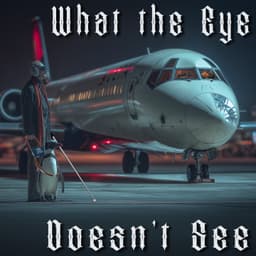
APG 699 - What the Eye Doesn't See
Airline Pilot Guy - Aviation Podcast

APG 698 - Miracle on the Hoochie Coochie
Airline Pilot Guy - Aviation Podcast

APG 696 - ForeThought
Airline Pilot Guy - Aviation Podcast

APG 695 - The Baguette Hunt
Airline Pilot Guy - Aviation Podcast