Loading...
About this Episode
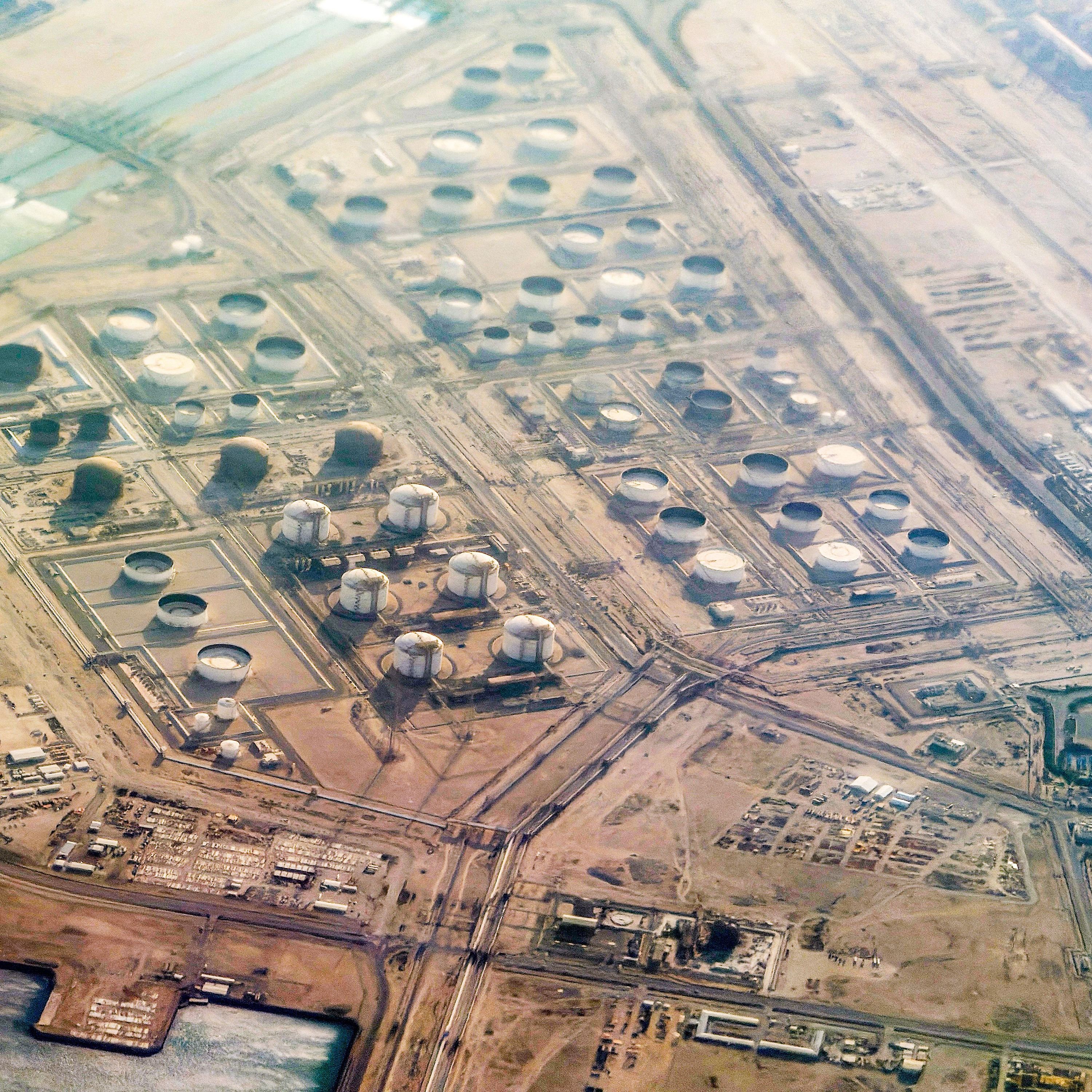
Since the war in Iran began, President Trump has insisted that rising energy prices would be temporary. But strikes on natural gas facilities in the Persian Gulf last week have made the prospect of a quick recovery seem less and less likely.
Patricia Cohen, the global economics correspondent for The New York Times, explains why the impacts may be felt for years.
Guest: Patricia Cohen, the global economics correspondent for The New York Times.
Background reading:
- Energy attacks in the war in Iran could turn economic shock into long-term damage.
- Here is why Iran’s attack on an energy hub in Qatar spooked investors.
Photo: Hannibal Hanschke/EPA, via Shutterstock
For more information on today’s episode, visit nytimes.com/thedaily. Transcripts of each episode will be made available by the next workday.
Subscribe today at nytimes.com/podcasts or on Apple Podcasts and Spotify. You can also subscribe via your favorite podcast app here https://www.nytimes.com/activate-access/audio?source=podcatcher. For more podcasts and narrated articles, download The New York Times app at nytimes.com/app.
Hosted by Simplecast, an AdsWizz company. See pcm.adswizz.com for information about our collection and use of personal data for advertising.


Transcript
Welcome back to Your Wallet Just Fainted!
The next challenge, dialing for discounts.
Enough is enough.
Don't lose another second.
Save time by letting Experian negotiate rates on your bills.
The best part, you keep 100% of your savings.
That sound you hear?
It's your old internet bill finally admitting defeat.
Get started in the Experian app and see how much you could save.
There's also very not all bills eligible, savings not guaranteed, available with eligible
paid memberships.
See Experian.com for details.
Experian!
From the New York Times, I'm Rachel Abrams, and this is The Daily.
Since the war with Iran began, President Trump has insisted that rising energy prices
would be temporary.
But the strikes last week on important natural gas facilities in Qatar and elsewhere
in the Gulf have made the prospect of a quick recovery seem less and less likely.
Today, my colleague Patricia Cohen explains why the economic impacts may be felt for years.
It's Wednesday, March 25th.
Hi, Patty Cohen.
Hey, Rachel.
You are a first-time guest, I think?
Yes, first-time guest.
Long time listener.
That's what we like to hear.
So, Patty, at the beginning of the war, so much of the conversation about energy prices
focused on the straight of Hormuz, getting oil and gas out of the Persian Gulf.
And because the straight of Hormuz has been closed, oil prices spiked super quickly because
the uncertainty about when the straight would actually open again, that is still a huge
issue.
But it seems like in the last few days, the energy situation has expanded beyond the
straight.
So tell us what's been going on.
So I would say that the attacks that we saw last week on some of the energy infrastructure
really moved the war into another phase.
In terms of both energy supplies and the global economy, instead of talking about the impact
in terms of days and weeks, now we're talking about it in terms of months and years.
And why is that?
What you had is that the production capacity, the ability to supply one of the world's
really important energy supplies, which is liquefied natural gas, those facilities were
bombed.
You're talking about different attacks, right?
You're talking about the Israel attacks on the Iran energy infrastructure and the Iranian
attacks on infrastructure in Qatar, right?
Right.
Israel hit a major Iranian gas complex on Wednesdays.
So the Israelis attacked Iran's infrastructure.
Prompting Iran to strike another major facility in Qatar.
And then Iran retaliated.
The world's biggest liquefied natural gas facility, Qatar's Rassafan, was damaged by an Iranian
missile strike.
And attacked the gas fields in Qatar.
The attacks, quote, fundamentally reshaped the global energy outlook.
And that was a big deal, because Qatar is a big producer of liquefied natural gas.
I mean, so before we were looking at basically a transportation issue, when the straight
was closed, now we're looking at something that's longer lasting, which is the ability
to produce liquefied natural gas or LNG.
Let's refer to it as that.
It's a little bit easier.
Yes.
Yes, for sure.
So what exactly was struck in Qatar?
So what was destroyed were two LNG trains.
And they're not really trains.
What they are are plants that process and convert natural gas into a liquid.
And trains feel a little misleading.
Yeah, I know.
Yeah, it's a facility.
I know.
It's a kind of a weird word, but it's kind of a facility.
And it's a very expensive facility, and it takes a long time to build.
And what happens is that you take gas and you freeze it to 240 or 260 degrees below zero.
And then you compress it.
And so it takes up 600 times less space than gas, because you turn it into a liquid.
And so that's complicated.
And then you have to transport it in the same specialized container so that you can bring
it somewhere else.
It's not as simple as oil it sounds like.
Right.
I mean, oil is a lot easier to store and transport.
And that's what makes this particularly worrisome, because it's hard to store and transport
LNG.
And now you've just taken capacity offline.
So in total, whatever was destroyed in Qatar, what percentage of the global supply of
LNG is this?
So Qatar is the world's largest producer of LNG.
It supplies about 20% of the world's liquefied natural gas.
It's one of the biggest exporters.
So what happened at the beginning of the war, because trans it was halted, basically it
suspended its production, because it just had no place to put it, the storage facilities
are only so big.
So that's obviously a temporary problem.
What happened last week was that because of Iran's attack, nearly 20% of Qatar's ability
to produce LNG was destroyed.
And that will take several years to fix.
Maybe as many as five.
And the reason why we're talking about all of this is that unlike the Strait of Hormuz
that could theoretically be opened or closed relatively easily, we are talking about
damage to infrastructure, oil and gas infrastructure, that is a much longer term
disturbance into the oil market and to the global supply, et cetera.
Exactly.
So let's say the war ends tomorrow.
You can open up the Strait of Hormuz and traffic would start flowing again.
But Qatar is not immediately going to be able to restart.
Start pair and start producing that LNG again.
I'm sure a lot of people have heard of LNG, but just tell us what is it actually used
for?
Basically, it's a source of energy, right?
So you've got oil, you've got natural gas, you've got coal, you've got solar power, some
places, you've got wind power, some places, you've got nuclear power, some places.
And these are all energy supplies that countries use to different degrees.
Okay, so LNG, a lot of countries switch to it from coal because coal is really dirty.
So that's one of the reasons, particularly in Asia, Korea and Japan, switch from using
coal to liquefied natural gas.
It's also much cleaner than oil, it's about 30% cleaner than oil.
And so countries were diversifying their energy supplies because you didn't want to put
all your eggs in one basket, right?
So you had oil, you had coal, you had natural gas, a lot of countries of course are trying
now to increase renewables their use of solar and wind.
But it's safe to say that for a lot of countries, particularly in some of these countries in
Asia, liquefied natural gas is the main source of energy that people use for their homes.
I wouldn't say it's a main source of energy, but it's an important source of energy.
So Japan, for instance, decreased its dependence on nuclear power and coal and increased its
use of LNG.
So now LNG makes up about 21% of Japan's total energy supply.
But it's used to generate 30% of its electricity.
So that's how you power your cell phone, your laptop, your hair dryer, your oven, your
washing machine.
It's how big factories and industry use to power and run their machines and such.
Korea, LNG makes up about 20% of its total energy supply.
And it generates about 25% of its electricity.
And Korea is an interesting example because that's a country that in the last 25 years
has increased its use of LNG by more than 200%.
So you can understand why all of this is so disruptive to some of these countries.
Exactly.
And on top of that, there's a lot of other byproducts that are really important in industrial
production.
So one of them is NAPTA, which is probably something you've never heard of, but it's really
important in making plastics and other gas products.
Helium is really important for making semiconductors.
And then there's nitrogen-based fertilizers, which are crucial to the world's food supply
and fertilizer prices have soared.
And farmers are really worried, one, can they even afford to buy fertilizer?
And two, will it even be available for them to use?
This is what we hear when we hear people talk about fears about rising food costs.
I feel like fertilizers are the thing that is cited the most right now.
Exactly.
Exactly.
So how has the world felt the impact of this LNG shortage so far?
What does that look like for some of these countries that you mentioned or other countries
that are so reliant on this source of energy?
So remember, we're in the middle of an energy shock.
Already we're dealing with higher prices of oil and that this oil can't get to where
it needs to go.
And so for countries that also use a lot of LNG, it's like a double whammy because now
prices of that are going up.
And so for poor countries, it's really hard because they have trouble affording even the
energy supply that's available.
The fallout from the war is reaching South Asia and millions of lives.
fragile economies particularly are a trouble which is in Pakistan, skyrocketing fuel prices
has been accompanied with power shortages.
We've seen in places like Sri Lanka and Pakistan, schools are being closed, government offices
are being closed.
And Thailand is ordering government workers to save energy by suspending overseas trips
and working from home.
But in Thailand, we're asking people to take the stairs instead of elevators, work weeks
are being shortened to four days.
These are countries who are taking extreme measures because their fuel if the conflict
goes on, they're going to be in a dangerous, dangerous situation.
But rich countries are having an impact as well.
South Korea is imposing a fuel cap for the first time in 30 years as it seeks alternative
sources of energy beyond the street of Harmoos.
In South Korea, they've started this energy savings campaign urging people to take shorter
showers to ride bicycles.
The price of gas in Europe is more than double the level seen before the conflict began.
And you're seeing effects in other rich countries too, like in Europe, which also uses LNG, although
it's not quite as dependent as Asia, prices have gone up a lot.
So what you've seen in a lot of countries are leaders talking about trying to help consumers
afford heating bills so they've cut taxes on some of their energy.
We should remember energy prices in Europe were already more expensive to begin with before
the war in Ukraine.
And that only made it even more expensive.
So if people didn't need to heat particular rooms in their homes or businesses, they might
not.
Exactly.
So I just happened to look at the price of gas in Britain, for instance.
I live in London.
And, oh my god, natural gas prices have increased in Britain by 40 percent.
Wow.
Just since Iran was started.
I want to turn to the United States because the headlines here about how people are going
to be affected are pretty dire.
So talk to us about how Americans are feeling these shortages or might feel these shortages
of LNG.
Well, you know, I think it can be confusing for Americans because we know that the United
States is actually the biggest producer of oil and it also produces a lot of LNG.
In fact, Europe buys a lot of its LNG for the United States.
But what you have to remember is that the price of energy is set on a global market.
And so when that's going up, that's going to affect everything.
But there's something more that I think is important to remember.
And that is not only the direct effects of price increases, but there's also going to
be other indirect effects, knock on effects down the road that are very important.
We'll be right back.
This podcast is supported by Better Medicare Alliance.
More than 35 million seniors rely on Medicare Advantage for coordinated care, lower costs,
and benefits traditional Medicare doesn't offer.
Right now, federal payment decisions are being made that will directly affect what seniors
pay and the coverage they receive.
Flat funding isn't neutral.
When rates don't keep pace with rising costs, seniors pay the price.
With higher out-of-pocket costs, fewer benefits and plan closures, especially in rural communities.
On TikTok, teens get over 50 built-in protections from the start.
But for parents, further visibility and control of content can help create the right environment.
That's where family pairing comes in.
Teens under 18 have a 60-minute screen time reminder in place.
And with family pairing, parents can set their own screen time limits or even set restricted
times based on what works best for their family.
Family pairing lets parents link accounts to see their teens followers and who they follow
and help restrict content that's not right for them.
When safety comes first, discovery can follow.
Learn more at TikTok.com-sash-guardians-guide.
Investing with Schwab is like spending a Saturday at a great farmer's market.
You can fill your reusable tote with a bit of everything.
Maybe you go for some free range, self-directed investing,
or perhaps you pick up a few farm-fresh trades will you prove.
You can even get help from a dedicated advisor.
That's full service wealth management.
Mix, match, and change your mind whenever you want.
Because at Schwab, you can invest your way.
No matter your goals or appetite for investing,
Schwab has everything you need all in one place.
Visit Schwab.com to learn more.
Patty, you mentioned that there are some indirect effects of all of this energy disruption.
Tell us what some of those are.
All right, so let me start with one which is the idea of safety and trust.
So the increase in the price of energy and LNG
is not just affected by what was destroyed, that very physical damage.
But it's also set a precedent.
The Persian Gulf has been this magnet for investment,
for people to move to.
It's been seen as a really safe place to both live and work in and invest in.
And now there's a rumbling underneath.
Is it really as safe as we thought?
What you're describing, this instability, this risk, this lack of safety,
all of this is basically the worst nightmare for these Gulf states, right?
Because they have been spending years trying to attract foreign investment.
Exactly.
And so another knock on effect.
Remember, we're talking about energy prices increasing,
which increases prices of everything.
Because it's not just the cost of growing in avocado.
It's not just the cost of producing a pair of sneakers.
You got to transport that, that's becoming much more expensive.
What does that mean?
That means inflation or the possibility of inflation and prices,
not just of energy rising, but prices of everything across the board rising.
And one response to increasing inflation is that central banks
might be more likely to raise interest rates.
And that causes a whole other set of economic problems.
Right. How much it costs to borrow money, for example.
Exactly.
Let's talk about AI, right?
What does artificial intelligence have to do with any of this?
Yeah, what does it have to do with any of this?
So think about it.
So number one, what we know is that data centers,
which they're building, use an enormous amount of energy.
Okay.
So now the cost of energy is going up.
But secondly, they also require huge amounts of loans to build.
They're really expensive.
Just building these data centers.
Just building up the energy centers.
Exactly. And so if interest rates go up,
that means that the cost of borrowing money to build them goes up.
And what's some Wall Street analysts have told me is that building these AI data centers,
that's something that's very sensitive to interest rates increases.
And at least for Americans, remember, AI,
these data centers have been driving the US economy.
Right. They've been propping up the stock market.
They've been propping up the stock market.
Exactly.
Are we kind of talking around the R word recession?
No.
And I think it's important to take a moment and say,
you know, we're talking about the future.
And we are in an incredibly volatile period.
Things are so unpredictable.
And it's really hard to know what's going to happen next.
I should also add, it's bad for business.
Because when consumers are worried about what's happening,
they don't want to spend as much.
And remember, the US economy is really driven by consumer spending 70% of it.
Secondly, it also means that businesses are reluctant to invest
because they don't know what's happening in the future.
So there's a crisis of confidence a little bit.
But what I will say is, if energy prices stay high,
if oil, let's say, goes up to $180 a barrel or higher,
then it's going to be very difficult to avoid a recession.
So I don't think we're there yet.
But, you know, we're in this world of uncertainty.
There's a lot we don't know.
How much longer is this war going to last?
Are there going to be more attacks on energy infrastructure?
What if there aren't, Petty?
What if the war literally ends tomorrow?
No more strikes on energy infrastructure.
I know you told us at the top of this conversation
that people are saying just based on what's already happened.
It will take months, if not years, to rebuild
some of the facilities.
But given all of that, if there were no more strikes,
how long would it take for things to go back to normal?
Right.
Well, you know, I guess one question is,
what is normal?
But let's, let's start about price-price.
Pre-Iran war prices.
So, so yesterday, the head of the international energy agency
said that he thought it would take at least six months,
even if the war were to end tomorrow,
just to get production up to where it was.
Why is that?
That's because a lot of the production
stopped when the war started.
So, even though the facilities were intact,
they turned it off.
And that's going to keep prices high for a while.
And then there is all these other uncertainties
that are going into energy prices,
and how long is that going to last?
Given all of that, are there other levers to pull
to use the LNG shortage?
Are there other solves here?
Well, I mean, the U.S. has already released
more supplies from its petroleum reserves,
and the international energy agency has done that as well
to ease supply.
One other thing that has happened
is that President Trump has lifted the sanctions on Russia,
which a lot of countries in Europe are against
and is very disturbing, obviously,
to President Zelensky and of Ukraine.
Because this is, of course,
funding Russia's war effort if Ukraine.
Exactly.
So, Russian oil had been selling at a discounted price,
probably about $60 a barrel before,
and now it's about $90 a barrel.
And also, this sounds crazy,
but the U.S. has lifted sanctions on Iran's exports of oil,
right? This is basically a multi-billion dollar war
with Iran to buy oil from Iran.
Exactly.
I mean, the one thing, obviously,
that would go a long way in terms of helping this problem
as well as others is the development
of alternative energy sources,
particularly renewable energy sources.
That's a huge investment up front,
but actually the cost,
once you do that investment of solar and wind
is really much lower.
And so, I think that you will see that.
There will be more development,
maybe not in the United States,
because it's such a political issue here,
but other places, development of solar, wind,
and I do think nuclear power.
And just to be clear, what you're saying is that
those renewable sources of energy would help
because it would decrease the dependence
on natural gas, LNG, and oil.
So anything that you do to increase the supply of energy
is going to help both in terms of diversification of supply,
as well as bringing down the cost.
But the world is an interconnected place,
and it's just going to remain that way.
In other words, you can diversify your energy supply,
you could try to come up with your own energy,
independent, and strategies,
but at the end of the day, we are living in a global economy
and that will not insulate you completely from future.
I mean, look at this is just like we were talking
about the United States.
It's one of the biggest producers of energy in the world,
but it's still subject to global prices.
Patty Trump had threatened to attack Iran's energy infrastructure
and so far he's put a pause on those threats,
but if we did see that,
the folks that you talked to every day,
the industry experts, the analysts,
what are they telling you that they are concerned about
in that scenario?
I think one of the surprises of this war
has been how effective Iran's responses have been.
I mean, it's so much weaker relative to the United States
in Israel, and yet it's been able to exert enormous leverage
over the global economy.
It does speak to the changing nature of warfare.
One guy on a speedboat with a bomb
in the state of Hormuz could screw up
all international shipping.
Exactly.
I mean, we've just talked about this one attack
that happened last week and how that could have an impact
a few years down the road.
What happens if there's more damage to cutters gas fields
and to other processing facilities in the region,
not only in Qatar, but in Saudi Arabia and other places?
So that's a big worry.
And we talked a lot on the show
about how the Iranian regime, perhaps out of desperation,
is willing to do anything it can to stay in power.
So it doesn't seem like what you're talking about
is super far-fetched in terms of escalation.
Right, I mean, there does seem to be a seeming miscalculation
on the part of the administration.
The Trump administration.
Yeah, and I think what's been overlooked
in terms of decision making is that the people in control
of Iran now see this as an existential threat.
And so it is their survival
and therefore they are willing to do anything it takes.
And I think the other thing that people
didn't really think about was just how far
the ripple effects could go.
I mean, you have three countries, the US and Israel,
at war with Iran and Iran responding.
And meanwhile, you're feeling the effects
halfway around the world.
I mean, every country, every spot around the globe
is feeling the impact of this.
I mean, we're only in the fourth week of the war
and already the head of the International Energy Agency
has called this the greatest global energy security
threat in history.
I mean, we just don't know exactly how things are going
to play out.
And so it's a scary time.
So it's a scary time.
Petticohn, thank you so much.
Thank you, Rachel.
We'll be right back.
This podcast is supported by Pharma.
America leads the world in medicine development.
It matters.
We get new medicines first,
nearly three years faster.
Five million Americans go to work
because we make medicines here at home
and not relying on other countries keeps us safe.
But China is racing to overtake us.
Will we let them or will we choose to stay ahead?
When America leads, America cures.
Let's tell Washington to keep us in the lead.
Learn how at AmericaCures.com.
Support for this podcast comes from Northwestern Medicine.
It's not often that one has an opportunity
to do something in medicine that's both novel and has
so much potential to extend and improve
the quality of a patient's life.
That's Dr. Zachary Deach, a Transplant Surgeon
at Northwestern Medicine, and part of the team
that performed a new liver transplant technique designed
to extend the lives of patients with advanced colorectal cancer
that is spread to the liver.
The patients that we're talking about treating only about 10%
can expect to be alive five years later
using conventional therapies, but liver transplant
for these patients offers the potential for cure.
Transplant surgery is a relatively new discipline,
but Northwestern Medicine is at the forefront,
leading the next chapter of innovation.
We've got the right team, we've got the right expertise,
we work in the right environment
to be able to do something like this.
Now these patients can plan for the future.
For more information, visit nm.org slashbreakthroughs.
That's nm.org slashbreakthroughs.
With its two juicy beef patties and three slices
of melted cheese topped with tangy big arch sauce,
the big arch is what happens when you start making
a McDonald's burger and never stop.
The big arch, the most McDonald's McDonald's burger yet
for limited time.
Here's what else you need to know today.
The Trump administration has sent Iran a 15 point plan
for ending the war, reflecting a desire to find an off-ramp
to a conflict that has deeply rattled the global economy.
President Trump said on Tuesday
that negotiations to end the war had begun
and that the Iranians would like to quote make a deal.
Iran has maintained publicly that no negotiations
have been underway.
At the same time, the Pentagon has ordered about 2,000
airborne soldiers to deploy to the region.
It's unclear where exactly the paratroopers would go,
but officials said they'd be within striking distance
of Iran.
And a preliminary investigation into the deadly runway
collision at LaGuardia Airport on Sunday
suggests both technical and staffing errors were to blame.
The fire truck that collided with an air candidate jet
didn't have a transponder, which made it difficult
for the airport's warning systems to track its location.
And investigators say the two air controllers on duty
had more responsibilities than they might have had
with more staffing.
Today's episode was produced by Mochis Aiti, Diana Wynn,
and Nurekina Betski.
It was edited by MJ Davis-Lynn, Page Cowat,
and Patricia Willens.
Contains music by Marion Luzano and Pat McCusker.
Our theme music is by Wonder Lee.
This episode was engineered by Chris Wood.
That's it for the daily.
I'm Rachel Abrams.
See you tomorrow.
This podcast is supported by Pharma.
America leads the world in medicine development.
It matters.
We get new medicines first, nearly three years faster.
Five million Americans go to work
because we make medicines here at home.
And not relying on other countries keeps us safe.
But China is racing to overtake us.
Will we let them or will we choose to stay ahead?
When America leads, America cures.
Let's tell Washington to keep us in the lead.
Learn how at AmericaCures.com.


