You said:
Podcast description for:
ATP Weekly: Indian Wells review | Where are we at with the Sinner-Alcaraz rivalry? Is Medvedev back? Tien or Fonseca: How do they compare? How good was Draper-Djokovic?
Loading...
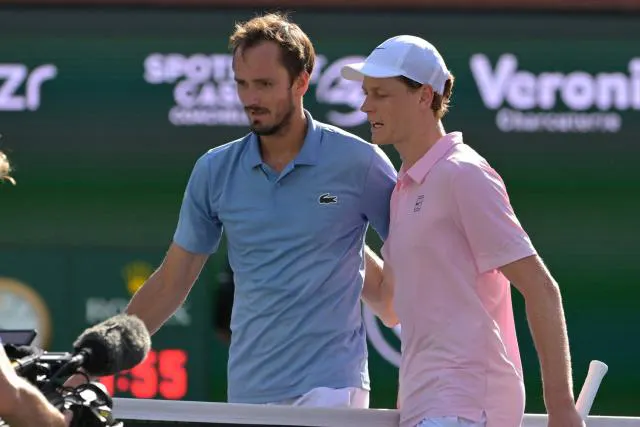
In this week’s episode of ATP Weekly, we break down everything from Indian Wells and what it tells us about the current state of the men’s tour.
We start with a full Indian Wells review—the standout performances, surprises, and what the tournament revealed about the ATP landscape. Then we dive into the evolving Sinner–Alcaraz rivalry: where does it stand right now, and is it shaping up to define this era of men’s tennis?
We also discuss Daniil Medvedev’s form and whether his recent level signals a true return to his best tennis. On the rising-stars front, we compare two of the most exciting young prospects on tour: Learner Tien and João Fonseca—how their games differ, their ceilings, and who might break through first.
Finally, we analyze one of the most compelling matches of the tournament: Jack Draper vs. Novak Djokovic. How high was the level? What did it show about Draper’s potential—and about Djokovic’s current position in the field?
All that and more on this week’s episode of ATP Weekly.
Baseball is back, and the first pitch is on Netflix.
The New York Yankees, led by seven-time all-star Aaron Judge, head to the San Francisco Bay
to take on Raphael Devar's San Francisco Giants.
This season kicks off with one exclusive opening night game.
Watch MLB opening night, the New York Yankees versus the San Francisco Giants live on Netflix.
Tonight at 8 p.m. Eastern, 5 p.m. Pacific.
5 p.m. I'm up with a crisp Celsius energy drink, running 12 miles today.
Grab a green juice, quick change, and head to work.
Meetings, workshops, one more Celsius, no slowing down.
Working late, but obviously still meeting the girls for a little dancing.
Celsius, live, fit, go.
Grab a cold, refreshing Celsius at your local retailer or locate now at Celsius.com.
President Barack Obama.
Virginia, we are counting on you.
Republicans want to steal enough seats in Congress to raid the next election and wield unchecked
power for two more years.
But you can stop them by voting yes by April 21st.
Help put our elections back on a level playing field and let voters decide not politicians.
Vote yes by April 21st.
Paid for by Virginians for Fair Elections.
My name is Clara Towson and I'm a friend of the show.
Boom.
I have a Francisco Georges and I'm a friend of the show.
Perfect.
Hi, my name is Susan Lamont and I'm a friend of the show.
Boom.
My name is Zane of Summers and I'm a friend of the show.
Boom.
Hey, guys, my name is Sasha Vickery and I'm a friend of the show.
Boom.
Hi, my name is Lloyd Harris and I'm a friend of the show.
Perfect.
Hi, my name is Jan Faria and I'm a friend of the show.
Boom.
Yes, take one.
Well done.
Hi, my name is Jasmine Paulini and I'm a friend of the show.
Wow, Jasmine.
You got it in one turn.
Ready.
Play.
Good afternoon.
Good evening.
Good morning.
Nordrt.
Hi, good morning guys.
I'm EverTime it is in the world wherever you are tuning in from.
I'm in Germany.
I believe you're in Turkey right.
Istanbul Turkey.
Yes, Istanbul.
Um.
The.
It must be us.
I don't know.
Is this just normal for you one minute,
you in the US.
The next minute, you are in Scandinavia and next president.
And is it tiring? Do you ever think that you're living a kind of abnormal life compared to, you know, Joe Average who goes to work and comes home?
Yes, it's very abnormal compared to Joe Average yet.
Now, I did get to spend about a two and a half months period in the US with my daughter.
Uh-huh.
And that felt great and at the same time kind of unusual, but great.
And I think I'm going to do more of that if possible in the near future.
But yes, it's a, it's an abnormal life. It's not, I mean, just look at it this way, John.
If you were to take, and this is not vacation by any means, but if you were to take constant vacations throughout the year, even for pleasure, right?
And then you, you traveled 30 weeks out of the year all over the globe, just for vacation and pleasure.
I would think that after a while, even that would get a little bit tedious.
Yeah, for sure. It does. I mean, does, does your situation get tedious or just, because I mean, it is kind of, because of their abnormality of it.
I guess it doesn't feel tedious that often. I don't know.
Yeah, it's, it gets, it gets tedious or during the, during the weeks, it's not tedious. It's fun.
And it's challenging. It's disappointing at times, depending on how your player does.
It's joyful at others, but you don't, it's not tedious. It's not boring, but it's usually the return flights.
You know, once you're done at a tournament and you're returning, that you start feeling the tediousness, take over you and you start wishing that you could just get to where you're going and drop yourself into into bed or just into some type of real relaxation mode and wish that it lasted longer than a day or two or a week at the most.
I don't need to tell me, of course, that you are in Istanbul because we see the curtains and that means you're back in Istanbul.
We've also just been back once again to, on the tennis tour, at least to Indian Wells and we've seen Yannick Sinner create a bit more history in terms of the fact that I think he's won all the hard court masters now.
And I even think the sort of remarkable thing is he's not far away winning them all.
I think he's got to go Rome where he's been in the final before. He's got to add Monte Carlo where he's not been to the final in the past.
And I think Madrid as well, where I think he's not been passed the quarter fastest. Those three clay court ones that he's either missed through injury or suspension to some extent.
So, you know, he may well have won one of those last year, for example, but what of a remarkable feat these guys, because I'm including Al-Qaaz in particular with these new stats that these guys are breaking at their age.
You know, we are, we might just on this tournament alone, because of what what the Nile Medvedev has accomplished and the earlier stories like draper's a resurgence, so to speak.
We may overlook that fact, you know, what you just mentioned, especially considering that they've talked, they've those two guys have kind of turned it into norm.
So we've come to expect that, and it doesn't become a talking point a lot, unless they end up winning the tournament, you know, at the very end of the tournament.
We speak of stats of this kind, but it's phenomenal what what these two guys are doing and what sinner has done in this tournament is also phenomenal.
Indeed, let's hone in on the final.
Did you enjoy it?
Because I was very tired, and I think maybe because I was so tired, I ended up sort of maybe just having my own personal things going on rather than because I,
but there is another thing as I, maybe I don't enjoy serve dominated tennis quite as much as, you know, a break fest, for example, maybe I don't appreciate some of the qualities that the lines being painted.
I'd rather see chaotic tennis and I don't even mind seeing bad tennis sometimes if it brings the drama, maybe that's just a personal thing.
But I also think, you know, if sinner goes an entire match, doesn't get a break point on his serve.
I don't think he even went to juice, if I'm honest, and never dev.
Yes, he had a couple of love thirties in the first set, I think, which he got out of.
But it, and then we get the tie break and we have 12 points, all one on seven, a row.
There is one point that I want to speak to about in a moment, but, but yeah, just in terms of this sort of tennis.
Does it, does it excite you, maybe more than excites me?
John, it does excite me, but I will let me just say this right away that you're making a very good argument for from your perspective.
There are plenty of people who approach tennis viewing with the same criteria as you do, and I completely understand why, why this wouldn't be such an appealing final to you guys.
And it's just, it's just a different perspective. I don't mean that in a derogatory way whatsoever.
And I do agree that it was a baseline battle.
It was a kind of a one dimensional bottle, but I personally enjoyed it because I like looking at baseline patterns.
And what the players do, how the players adjust and how they respond to what the opponent is doing so well.
And these kind of X's and O's and nuts and bolts interest me.
So for me, for me, it was, it was a pleasure to watch and, and I actually thought that the level of play was quite high to for for for what they were offering.
And therefore I enjoyed it, but, but you do make a good point and let me, let me kind of say one thing to to support your point.
So at the point where we reached the quarter finals in this tournament on the man's side, 73% of points were ending after the first shot.
Oh wow.
That's that that's the serve basically.
Okay, that's quite high.
And the average shots hit during points was the shortest in the last eight years, if I remember reading the stat correctly.
Okay, so yes, it was, it was, you know, it was a lot faster, a lot quicker points.
And just like you said, and I'm quoting you, I think is the serve dominated 73% of points ending after the first shot is very high.
You know, and we're not talking one match here, although it's the quarter finals.
I don't know if that average changed after the quarter finals, I doubt it.
But it might have I didn't look it up.
But yeah, this supports your point and the, of course, you know, the court was faster, you know, and the 0.8 points faster in the CPI index.
That played into it also, but, you know, I don't know if Indian Wellesers to be the slowest hard court.
And among the among the 1000s and, or even among hard courts outside, of course, I don't, I don't think it is now and I don't know how much it moved up.
But it's a considerable difference, you know, 0.8.
But on the other hand, balls are, are different story. I mean, balls, a fluff up very quickly also.
I wonder if these, these adjustments, so they changed the surface a year ago.
So it mirrors the same surface in the US open, although I don't know if it made a big difference last year.
But for whatever reason this year, maybe also just being hotter, a lot more hotter days this year.
So even just having different weather one year to the other can, can maybe have an effect on, on that.
And certainly never did reference the speed in his speech afterwards.
But I just wonder if what was looking like an eager and Carlos show in terms of Indian Welles for a few years, until last year.
Might this, these, these changes that we refer into might have just made it less.
We don't normally, do we normally see a tournament's court speeds change that dramatically over 10 or 15 years.
I mean, we generally turn up in Madrid and go, OK, keep an eye out for the, the big serves and the fact that obviously got an altitude and altitude is not going to change.
I don't think too much, although who knows.
But, but it's unusual for a tournament to change that much in a short space of time, I would suggest.
Yes, it's a big change. I think it's, some of it may have to do with the fact that for years and years, Indian Welles surface being slow has been a talking point.
Yeah, so maybe they felt like they needed to do, to do something about it.
And, and the Indian Welles is, you know, geographically, so it's kind of in the, in the, in the, in the middle of a desert and the, and therefore the air is dry and the balls are moving, the balls go a little bit faster.
And, and most of the matches are being played during the day, there's not a huge night session there.
So, don't know all those conditions make it a little bit faster too, but then when you add the court speed onto it, or being being, you know, faster now, it does, it does favor.
Attacking style of play and, and, and big serves, which the stats obviously show.
So, I don't do it on a good point regarding the baseline exchanges, you know, pretty much dictating a lot of the match, and yet I would argue.
Yes, sorry to interrupt you want one more thing, you know, and also the narrative for the, for the last really year, year and a half, not before.
But just for the last year and a half year and a half has been, has shifted from court speed, because court speed was a big point talking for a few years after COVID.
Courts being slower, faster, et cetera, et cetera.
To, to, has shit, the talking points I have shifted from that to the strings and the balls.
And now with this change at Indian Wells, we have to kind of, you know, put put it into perspective that court speed still doesn't matter quite a lot.
So I just want to get that point in.
That's enough. I'm regarding the balls. They changed this year, right? I think they want to download.
Yeah, from Penn.
Yes.
And do you think that may have also had an effect on some of the things we're talking about?
Yes, the, the, the, the download, download balls.
Well, it may have had an effect in the sense that I think Medvedev talked about this. He's the only one who talked about it.
I don't know if this is the general consensus.
That that pen balls were somehow losing their roundness, you know, after, after, after, after you play, after a few games,
whereas download balls, yes, they fluffed up, but they didn't lose their roundness. So therefore you didn't get many bad balances.
Now, you know, look, you just put up a photo there for those who are, you know, who are looking at this on YouTube.
I was at a, at a W 50 ITW 50 tournament in, in Helsinki last week.
And I'm holding two balls there on my hand, John. And this is the download ATP tour balls. They played the, a women's tournament with them.
I don't know why, but that's okay.
You know, these were the chosen balls.
But this is when, you know, when we went out to practice here, I'm holding two balls that the one on top is a brand new ball.
You know, we started practice out with four balls. Okay.
And, and the one on top is a brand new one hasn't been hit yet. The one at the bottom is after the first rally in practice.
In other words, you open up the can, you start practicing the very first rally that, that the two players hit, where it's just a warm up anyway.
So they're not really hitting the ball that hard either at that point.
And this is what that ball is like after the first rally. And that first rally was about 25 30 shots rally. Okay.
And that's what that it turned to. So it wears out very quickly. And I don't know if you have the, the, the, the next picture because I, there are three of these photos.
Okay.
That's that I took. But if you look at the, if you, when you bring up the next one, what we will see is yes. For example, that photo right there.
And I had the, and I had my notes wrong on that one. It's actually not after about seven or eight minutes. This was after about five minutes. Okay.
That the, that the ball, that balls turned this way. Look how much they fluffed up. Okay.
And then if you showed the, the third photo in the, you know, below that one, what, what you will see is a ball that's been hit after 12 minutes. Wow.
This is into practice. And this is, you know, bring this to the professional tour. I guess new balls are, I think every seven games, right.
So seven and nine.
Seven, sorry, second, seven then.
Seven and then nine. And you know, nine games can, can last. Nine games sometimes can last an hour or 45 minutes, you know.
Yeah.
So yeah, they might well be expected. And I would assume they would get hit even harder.
Harder, but less. Of course, in practice, you know, there are a lot more. These are two women at W 50 tournament, you know, practicing.
And they, yes, you, the ball gets hit a lot more because it's, you know, 12 minutes of practice versus 12 minutes of, or 30 minutes.
But just like you say in a match, the ball gets hit a lot harder at an ATP tournament.
And, and, and it's not after 12 minutes. The ball may become like this. Maybe not after 12 minutes, but it's going to get hit a lot after 30 minutes.
And by the time they change balls, you know, after seven games or nine games, those last couple of games, that's how the balls look or even worse.
Well, Mr. Melvedev in his speech at the end was pleased to say how the courts were a little bit quicker this year, and it certainly helped him.
What didn't help him though was one point in particular that I want to hone in on because you mentioned how the match was served.
That's what we mentioned how it served dominated, but also a baseline battle and that didn't surprise us, bearing in mind the strengths and weaknesses of these two players. Well,
Daniel Melvedev, I think 150% of his points at the net, and I think Sinner won 100%. I might be a couple of percent out there, but it's pretty much on.
And 50% of the net is obviously not great, but actually, I wonder if they included, I bet they didn't in this step because it probably doesn't count as a net point.
He approaches the net at five all in the tie break.
Five all in his.
I think if I, if I, if I, if I, if I, if I, if I, if I, if I, if I, if I, if I, if I, if I, if I, yeah.
And he has a, and seven and a half out of 10 volley put away, I would say it wasn't super easy.
There was some work to be done and given Sinner's athleticism, he might well have chased it down, and then he'd add another perhaps very easy volley, which could have been a nine and a half out of 10.
But you get the point.
However, he lets it go, and I think I wonder, and I'm thinking about this from an amateur perspective, admittedly, but I wonder if his lack of confidence at the net was also part of the reason when he went, you know what?
You know, we're tennis players are thinking about this in a second. I know, and I'm thinking about it in a second, too, in a way.
I'm wondering if this, this one second process, which is basically, I've got a seven and a half out of 10 ball coming at me.
I think there's an eight out of 10 chance it goes out.
And therefore he lets it go, but of course it drops in and he sort of bangs his head with a racket at that point.
That would have probably won the set, given how surf dominated the match had been, given how surf dominated the tie break had been.
What are your thoughts on that little moment?
No, you explained it perfectly.
You kind of were being modest saying, you know, from an amateur look, but everything.
But I think Medvedev himself would agree with you from judging from his reaction after the point.
And I think with a larger point, you're trying to make and I 100% agree with you is that because he's not used to that kind of, it's not his comfort zone, so to speak, being at the net.
He's not that one second, half a second of decision making doesn't come naturally to him.
You know, I would bet that if it was Alcrest at the, you know, at the net at that point, he would have put that volley away.
It was not that hard a volley to put away many feet. Alcrest was on the corner of the court.
It was not a low ball.
So he would have had to kind of, you know, block it down downwards to the open court.
It would have been an easy put away volley in my opinion for his level.
But, but just like you said, he's not, he's not used to it.
And, and this also brings me to another point that I wanted to make is what, you know, one of the biggest differences in the match.
Because, because it was a very tight match, it was decided on small things.
And one of the largest factors out of those small things was how uncomfortable Medvedev is at the net.
Yeah.
I'm surprised he won 50% I didn't, I didn't count. I'm surprised he won 50%.
But I also don't know how they counted them and are they counting?
For example, if a player hits an approach shot and comes to the net, but the past, but the ball never comes back.
Is that count as a point?
No.
Because this point is a loss of a point at the net in a way, but they might not count it because I don't know if I'm asking you.
When I'm working on this stuff with my players, I usually count that.
I hold stats sometimes during the matches or afterwards when, when we look at the tape.
And for me, if you hit the ball with the intention of coming to the net, you're transitioning to the net.
And the ball that you hit there is hit with that intention.
And hitting a ball with the intention of just staying back, you hit it differently.
Then when you, when your intent is to come to the net, you take more risks because you're coming to the net.
So for me, if you hit it, if you had an approach shot, you're coming to the net.
The other player hits it hits the passing shot attempt into the net or misses it or doesn't even get to that point.
For me, that's a point one at the net.
I mean, that's the way I counted.
I'm surprised that Medvedev has 150% because this is high as that.
Yes.
Because to me, like any time he decided to come to the net, he looked very uncomfortable.
There was a point late in the match where he had a short backhand on top of the net.
He nailed it down the line.
Okay, center, guess the right side.
So he stayed there and it hits the forehand.
And it's, it's kind of a low forehand volley for Medvedev.
And he doesn't do enough with it.
And I think he gets lobbed or passed down the line.
I can't remember.
He loses the point.
He doesn't put that ball away because he, because he wasn't ready for it to come back.
And a couple of other times center floats the ball up in the air.
And Medvedev, most of the time doesn't take those in the air anyway.
But the couple of times he decided to take them in the air in this match.
He was hesitant.
And he moved in a little bit late.
And he ended up hitting the swing volley, the drive volley,
lower at a lower spot than he should have.
So he couldn't really smack it away.
And he missed one of them.
And he didn't put the other one away.
And it's just, you know, that was a big difference.
You know, what Medvedev could accomplish on the points that he,
that he decided to transition to the net.
And I feel like, you know, if, if he was more comfortable with that,
if he got to the comfort level of someone like, say, Alkaras,
then he could, you know, decide to come to the net more,
be more confident, make better decisions, and actually turn it into a situation
where his opponents fear dropping the ball short on their shots
because they know he's going to jump on top of them.
Sure.
And his opponents don't have that fear yet.
Even when Medvedev is getting ready to hit a volley,
they're ready for the next shot, thinking, OK, I may have a chance at this
because they may not put it away.
Yeah, absolutely.
And this hurts them at the end.
And it was one of the big factors in this match, too.
Yeah, I've just had another look at the ATP website, at least.
The web, the stats I got yesterday that said 50%.
I'm pretty sure it was dead on 50.
It was one that popped up on the screen at the end of the match.
And I know that they do tend to use the same data.
But for whatever reason, the ATP website has 45%,
but it is still pretty similar.
That's 45% that one, that one's one for Danille and 100% for,
yeah, I'm excited.
Yeah, quite possibly.
That was the difference.
I'm the second step.
Wasn't that point here?
The point that you brought up, five, four in the hybrid.
Wasn't that the case where Medvedev did wait a little bit too long
to come in on the floater and then ended up hitting a swing volley low
and couldn't really put it away in their shots.
You had a chance to come into the net earlier.
Yeah, I think he might well have done.
And there was, there was a few, there was another point as well where
he sort of retreated and I don't really like to see tennis players
which, and by the way, he played an eye on perfect tournament really.
So we are nitpicking.
Sure.
Sure.
I mean, we're nitpicking.
That's, that's not that.
No, exactly.
Yeah, yeah.
And I'm sure he's nitpicking too.
So.
But yeah, there was, there was a couple of retreats.
Probably, I've seen him retreat.
I remember that Australian at the final of 2022 against Nadar
was a classic example when he'd been no man standing.
He was picking up half-ballies, a volley sub between the service line
and the baseline in that match a few times.
And that's just, you just don't want to see your player anywhere near that area.
But yeah, there was certainly some hesitancy there.
It makes sense.
Regarding Yannick though, I mean, well, let's just take someone
a bit of one more time.
He is kind of back in a way in that, that I think he's been written off
a few times in the last three years.
I spoke about this yesterday that there's some lines in the sand with Daniel.
One of them is that Australian open final love 40 on the dial serving the third set.
That's a line in the sand.
And some people sort of say he was never quite the same player again.
Some people look at Rome 23 as being, I think, his last title for a long time.
I think a couple of years anyway, which for someone of his quality is a long time.
That's another sort of line in the sand.
But there's another line in the sand where he changes coach last year.
Windsor tournament in Almaty, his first one for a couple of years.
He then obviously has a good little run recently with winning that 8 to 500 on the eve of this tournament.
And then racing across the planet to get Indian Wells miraculously.
And then goes on beaten in the desert until the final.
But that's three finals in the row.
But he's kind of back in a way.
And now we go, oh, he could win Miami where was probably for the last three years.
We haven't thought that.
Yes.
And let me draw another line in the sand just to kind of support what you were saying is.
He now has eight wins against the number one players in his career.
And that's quite high.
That's quite high.
If you consider that some of the greats of the sport have usually between 10 and 15 wins against number once.
I mean, Joe coverage throughout his career beat 14 times the number one player.
Okay.
Now, the Federer has 10 wins against number once.
Now, you might say, well, that's because they were number one themselves.
But, but, but then again, you have to put it, you have to nuance it.
There were number ones themselves for a large chunks of chunks of time.
Yes.
But for also large chunks of time, they were not.
So they, you know, these are guys that have had 20 years.
Plus careers.
And then Medvedev is not even at say full 10 years of a career at the, at the top of the ATP level.
And yet he has already eight wins against the number one players.
And even you go back all the way to the 80s and 90s.
And usually the greats of the game there between 10 and 15 in terms of how many wins against number once they've had.
And once again, you know, the fact that Joe coach has 14 and Federer has 10.
And Medvedev has eight.
You again, you might say, well, Joe coach and Federer were number one a lot.
But they were also not not number one a lot for a short, long time.
So, you know, I would Medvedev in just a matter of eight, nine years, you know, at the, at, at, at a level where he can challenge the top players.
He already has eight.
He also has eight losses.
So he's eight and eight, which if you want to reduce it to number terms.
You know, he's got a 50, 50 chance of beating a world number one when he goes out to play on the court.
And that's quite impressive.
That's quite impressive.
By the way, for those who are curious, not that Rafa is way ahead of everyone else.
He's got 23 wins against number once, but he's way ahead. He's a total outlier.
Yeah, it's because of the clays factor.
And it's the fact that he spent the least amount of time at number one by some distance compared to no fact.
Sure, sure.
And he's beaten Federer and Joe coach a ton of times on clay.
So, yeah, no, you're right.
That was just a side note.
Let's get him back to Medvedev.
So you have to, you have to admire the fact that he's able to go out on the court and play fearlessly.
And, you know, has a good chance of beaten top top top players.
One, one other thing also is that he did this tournament.
But by the way, I agree with your general point.
I think he's back at the top of his game.
In fact, I call his match against Alcarus one of the best matches.
If not some have called it the best match he's played.
For me, his best match.
If I want to call recall one version of Medvedev that I've seen on top of everything is his first two sets against Yonic Sinner in the Australian Open Final.
Okay.
In 2024.
2024.
You know, well, that was a five setter and he ended up losing that match.
But, you know, based on two out of three, you know, the two sets that he played against Alcarus were phenomenal.
Probably his second best ever.
But his best ever was when he when he, you know, he played those first two sets against Sinner at the Australian Open where he was actually playing an old court game.
He was approaching the net a lot.
He was taking chances.
And when he needed to, he also outplayed the center from the baseline.
He just couldn't keep it up for for five sets.
But, but, but, but the, you know, against Alcarus, for example, you saw a Medvedev that was on top of the baseline or just a little bit behind the baseline, taking balls early, not necessarily whacking them like crazy.
I mean, he was not playing out of control aggressive type of type of game, but he was keeping Alcarus on the run.
And when Alcarus plays Medvedev, you kind of imagine a match where Alcarus is running Medvedev ragged Medvedev parks by the backdrops, you know, like five meters behind the baseline just runs left and right and gets everything back and tries to frustrate Alcarus and it's not enough at the end Alcarus ends up winning because he's got too many weapons.
We saw the reverse of that in that semi final match, you know, he was a Medvedev was the one running Alcarus like crazy and Carlos himself says something about that too.
Okay.
Looking now at sinner.
Is he back? He was never away, right? Just because he loses two matches against Mensik and Novak.
The panic button that was being pressed was probably just unjustified, right?
One second. I couldn't hear you.
Don't worry. Can you hear me now?
Yeah, I can hear you now. Yeah.
Great. The panic button that was probably being pressed for Yannick Sinner in terms of his two losses this year against Novak Djokovic and Yakov Mensik.
I think that was somewhat premature and I think this backs it up. Also, I think there was a take and don't get me wrong.
It wasn't a widespread take, but I saw a few people who, by the way, they weren't crazy people.
They weren't, you know, bots on Twitter or anything like this. They were.
There were people that I listened to and someone suggesting that there was a bit of a gap growing between Yannick and Carlos after those defeats and Carlos is unbeaten run.
I prefer to take a sort of, let's just wait and see how the sunshine double goes and goes and even.
Even as far as I'd even wait until Bobby Post wimble them before saying,
ah, OK, you know, Yannick's losing a few more matches. Carlos is still unbeaten, always still on a run.
Then, then maybe I would agree with that. And I also wanted to see them.
I want to see them play each other as well because the last time they played each other, Yannick Sinner won the match.
So I do think that those takes were premature and also with Carlos losing to Danil and now, obviously, Yannick taking the title.
It's very much game on once again.
This is, yeah, this is once again, the center and the Alcarus sitting the bar so high.
And we internalize it as a, as the norm.
So therefore, when there's the, the smallest.
Shocked to the system, so to speak, you know, Yannick losing to Novak and then now, you know,
losing in Doha, I believe, right?
It's not.
Is it Doha? Yes.
Middle East.
I often say, do you know what I do?
Because I get confused between the tournaments in the Middle East.
I just go all the Middle East or the ATP 500 just on the.
Right. So he's, he's lost twice, right?
I mean, yeah, it's in the last place. So all of a sudden, we're thinking there's a gap and et cetera.
But, yeah, I agree with you. Let's, let's wait and see if this turns into a long term pattern before we,
before we make such call.
And I, and I'd also caution against.
You know, saying, okay, here we go.
Daniel is back.
So now, now he's going to be that third guy who's going to, you know, let's wait and see what happens in the,
in the, in the, on the play court season in the next couple of majors.
And then, and then we can speak from there.
But one, one, one thing that this showed again is, and this was also proven during the big three era,
is that it's, it's super tough to be two elite players in a row in one tournament.
And Medvedev just had a taste of that.
Yeah, to be them back to back as it was.
All right, let's move on to some of the other runners and riders in the tournament.
Yeah, well, we're just mentioning Carlos Alcaras.
That's two Indian Wells now in a vote where he's only made the semi-finals.
But I was feeling, like I said earlier, we've got any against Fiontech.
I was feeling until last year that this was going to be the ideal tournament.
And these guys, we're going to win, for example, in Alcaras case, you know, five, six, seven of these tournaments.
And of course, he still will still may well achieve that feat.
But maybe it's not quite as much his domain as I, as I previously thought.
But also, was it just a case, do you, do you, as a coach, do you just tell your player, look, he played lights out.
Maybe you were slightly off on a few points, but it's no big deal and we move on.
Or would you rather hone in on, okay, I think we do need to just think about this Medvedev rivalry in particular.
Because it was one that for Alcaras for large spells of his career so far has been a very like,
oh, it's Daniel Webbedev, no problem.
You know, except for that US Open semi final, there was a long stretch of wins for Carlos.
And they often looked not quite the same, but often quite similar.
The serve volley, obviously, been a huge characteristically.
He would bring to both Indian Wells, but also Wimbledon.
Yeah, how do you, how do you approach this?
The former that option that you mentioned, you know, well, look, you know, he just had a great day.
And you might have been off a little bit here and there.
But, you know, let's let's let's find good tournament anyway, you know, you're doing well.
You're having a good year, but I would, but I would just stay short of saying at the end.
Let's move on.
Okay.
You just say all that minus the let's move on.
And then later on the next day, you know, that evening or the next day.
Then you sit down and say, hey, you know, here's the tape of the match.
Let's sit down and watch together and let's see what we could have done better or where,
where we might have gone wrong or where we might have done the right things.
But it's just that our opponent also did the right things and had soft to him.
But you know, at least let's see where we can still work on small things and improve.
But that that's why that's how I would have approached it.
And I would have also given.
I think Carlos Alcarez needs to be given a break here.
He said, he said a tremendous year so far, you know, playing very well.
And I feel like against Medvedev.
He went out onto the court, perhaps not expecting this kind of resistance and this kind of high level of play by Medvedev.
And, and, and he was a little bit.
Flabbergasted, you know, by, by hitting his usual shots and seeing them come back.
Not only just come back, but, you know, come back with, with interest sometimes.
And where he had to do a lot of the running.
And he was in a, and he was out of his comfort zone, you know, Alcarez was pushed out of his comfort zone a lot.
And add to that fact that I felt that Carlos's footwork was not where it has been.
I don't know if it's because because of fatigue, you know, because so many matches or, or, you know, just already an early season with a lot of success wearing thin.
You know, mentally, I don't, I don't know what it was, but, but I could see that Carlos Alcarez's footwork and energy level was not necessarily at the, at its top.
And I specifically saw this, John, in the shots after the serve, you know, Carla one of one of his biggest strengths is a surplus one, the one to punch, so to speak.
And he was serving, and a lot of times when, when Medvedev returned hard down to his feet, or even just simply returned hard, he wasn't ready for the next shot.
He missed a lot of surplus one shots.
He missed them, you know, trying to run away from the ball and miss, missed the forehand.
He even missed hit some of them, which tells you that he didn't really get into position in terms of his footwork.
And some short balls that Medvedev hit, he wasn't that hit that first explosive step towards the ball so that he can nail it and perhaps follow it up to the net wasn't there.
He kind of let it drop a little bit and hit a solid top spin ball back.
So I felt like there were small signs where his footwork to me didn't feel like he was totally on top of it.
But he was not mentally as dialed in as as he usually is, which kind of reflected on his footwork.
This is not to take anything away from Medvedev. He still played a phenomenal match and might have beaten Alcarus anyway, if even if Alcarus's footwork was at the top of its level.
But this is why I'm saying let's wait and see because, you know, we saw Medvedev's best version here, certainly one of his top versions.
And he still had a tight match against Alcarus. He still had to save two set points and the second set.
And then he loses to center in a close match, albeit, but but he ends up losing.
So I still I still see that these two guys as being ahead of the pack.
Right. Someone who is definitely not ahead of the pack, but did reach the semifinals.
Alexander's Vettiv. It's the furthest he's ever been in Indian Wells.
But then the manner of the lost to Yannick Sinner, four and two.
And maybe, you know, not having to play either of those two before the semis.
Obviously he's a highly ranked player, but I do remember him playing Alcarus in the quarter finals, for example, in 2024.
He's alive on the court.
The don't feel really I can't get quite where we're at with with Alexander at the moment.
In terms of should we be positive? Well, it's probably not quite as bad as this time last year when he'd had that, that horrible spell in South America, where I don't know if he was that keen on being there.
And then he didn't have a great Indian Wells as well, going out to Greeks or early on.
So I guess we're in a better place now.
But the gap between him and the elite feels as far away as ever.
So I remember during the Djokovic Draper match.
I was watching that and I was going, of course, we'll come to that in a moment.
But I was going, you know what? There are five or six players on the ATP tour where we might go, this could be the guy.
This could be the guy. And I mentioned Artifice, Holgeruna, Jack Draper.
He's the guy, but he's we're talking about, you know, obviously top two and then others.
Who, but but Holgeruna as well.
Who am I missing really? Oh, Jalfon Secker, because of what I'd seen against Yannick, but also just knowing.
And I'm not saying they will be the guy, but there's reasons to believe.
I find it very difficult to find reasons to believe that Alexander Zvedev now will be the guy to just have a year.
It just, just a year of where he's, you know, winning a slam and exchanging great battles with these, these two players.
And we go, you know what?
Zvedev had that year where he got his slam and he exchanged wins and losses with Yannick and Karls.
I don't see that now. I find it very difficult to see anyway.
Well, I think your key phrase, key sentence and all that you said, all, all very valid points was earlier, a little bit earlier.
You said something like a, if I remember the exact words, I don't know where we're at with Zvedev.
Okay.
And my answer to that, John, would be if you knew where he was at last year or in 2022 or 2020 or in 2018 or 19.
Well, that's where he's at.
He's still at that same point.
Yeah.
He hasn't added, he hasn't added much.
And he's just staying at that plateau level.
Is he accomplishing great things?
Yes.
Okay. Let's, let's not, let's, you know, let's not dramatize one way or the other.
I mean, he's, I think he's the, I noted down that he's apparently become just the fifth player to reach the semi-finals at each of the nine current ATP Masters 1000 events.
After Novak Djokovic, Rafael Nadal, Roger Federer and Andy Murray.
Okay.
So that's, that's a huge accomplishment.
Okay.
In and out of, you know, he's the only guy to do other than the big four, so to speak.
So he's having a great career.
Okay.
He's adding to his career in terms of numbers and durability.
But if we're looking at where he's at, you know, in terms of his, his game and the,
and what, what is to come for him?
He's at the same point now that he was in the last five, six, seven years.
If you were to ask the same question.
So that would be my, my short answer to that.
And really, I don't see a long version to that answer either.
It's just kind of a, there's not much to elaborate on that.
Right. Indeed.
Well, you never know.
He might go on and win Miami and maybe even win a grand slam this year.
He's revising this conversation then for now.
I think the second one, the major, he needs to win a major for, for, for to, to revise this conversation.
Yeah.
Otherwise, unless, unless he goes on a run of first round exits, so which he also doesn't want,
then that becomes a conversation again, you know, and that's possibly where we're at with.
Maybe sits a pass, for example, that's the, the next level to drop to, but I'm.
Or he needs to, here's one thing that might be helpful to him.
Maybe won't change the revise the, the picture, like we're in the terms of what we're speaking now.
But for him, it might make a difference.
If you were to, for example, and I go to Miami and defeat.
I'll cross and center and win the tournament.
You know, that might do something to him.
Confidence wise and then maybe prop him up for a, for a, for a major title.
But that's, that's what would have to happen.
I'm moving on to some of the other runners and riders.
Yes. So when I was watching this jock of its draper match, because I think now we can sort of go in on this.
And I think, obviously that took a huge amount out of draper.
I remember making a preview for, for draper versus Medvedev.
And I couldn't decide where, which way to fall on this one.
And it was just simply, do I go with level?
Do I go with, with draper in the desert?
Do I go with, with potential and possibilities?
Or do I go with, I don't know if draper can replicate that.
I don't know if draper physically is going to be okay, bearing in mind he's been such a long time.
It was basically level versus versus physicality and level of, of, of health.
And I actually went with draper to beat Medvedev in the end, because I just thought he's got it.
And, and it was a two and a half hour match against jock of its, but it was grueling.
Because although you mentioned that start about serves and serve plus ones and dominating serves.
That was a match with some epic, epic rallies.
I mean, jock of it, even talked about in his post match, press conference,
about how he won one point, but it actually cost him the, the game.
I mean, I knew what he meant.
That point was, it was, it was a, he had to run, it wasn't just a left to the right type of running point, right?
He had to run forward, back and all kinds of directions.
Just a quick thing on this, because again, I was watching this live.
And this is my subjective take on, on epic points.
I like to see them with a winner and with a winner.
So if it's a, it doesn't, the number of shots doesn't matter.
Of course, the more shots adds weight to it.
But of course, what you want most is just epic defense, epic attack, lines being painted.
You know, as you say, going forward and back side to side, which we had all of that.
There were two things, though, that as a, as someone who just wants to see the point of the year or the perfect point in a way,
is there was a net cord in there right near the end, which made draper's job even harder.
If by the way, the net cord happens, and then with point carries on for another five or 10 shots, then, okay, that can add to it, perhaps.
But also, I just want to see it with a winner.
And if draper had just managed to drop that one in or, or if jock of it should want it with a clean winner on the previous shot,
then that elevates it to, to an even higher legendary state.
But that's just my fussiness, perhaps.
No, no, you're right.
That's the, that's the icing on the cake, right?
You already have a great cake in front of it that you're eating by watching that point.
And then you want that icing on top of it too.
And, and when it's not a winner at the end, it's not there.
I see exactly what you mean.
And some languages, I think they use the expression.
So in English, obviously, icing on the cake.
And I think Spanish and maybe some other languages, they say cherry on the cake.
Yeah, no, that's, that's used in English too, cherry.
We use cherry as well.
Yeah, yeah.
I'm not a big fan of cherries.
So I'm, I don't really like, but I like the expression here.
Anyway, this, this situation draper jock of it, which I think these are two players that we can talk about in so many ways.
I actually think, certainly, let's talk about draper anyway.
I think for him, this is a great tick to know that the level is still there.
Maybe I, the side to side defense in this, from him, in this match was just wow.
Just wow for someone that big as well to move that well.
And to get down to some of those balls was just off the charts.
And also, of course, hitting it really good defense that the ball comes back deep.
Which was sensational as well.
Don't be wrong.
I mean, they both were and both had chances.
And the other thing with draper.
Oh, yeah, here's the thing that I took as well from this.
If I think that single match can potentially do more for his career than winning the Indoor Wells title last year,
than winning in Stuttgart.
I think it was a year or two ago to, you know, taking a set off Novak Wimbledon and other great moments in his, in his career so far.
Because of the manner of it, because it looked like it was going to turn into a horrible choke serving for it.
And I don't, I think there's a lot of factors.
Sometimes you can lose yourself serving out of match and it's not a choke.
The other guy just returned brilliantly.
You were unlucky or you serve really well, but something happened.
But that felt like a choke and it felt like it was being carried into the next couple of games at times in terms of some of the tightness of the shots.
And then to go down, I think, a mini break in the, oh, actually, I think he went up a mini break, he went up a mini break in the tie break, lost that mini break.
And then joke of it was up the mini break.
And it just felt like a five full Novak that, but he hit a great backhand down the line.
It was attackable, but took a lot of guts.
He did the same thing on match point, by the way, but clip the net.
Just, I think it just touched the net.
And that's when Novak then puts his backhand into the net.
But still to dig that deep.
Sean, you, you painted a very good picture there and you added the details to the necessary details, which is what happened during the points.
And yes, that's, that's a big win for him because, well, let's just rewind back a little bit.
He was, I missed an out there.
I was trying to look at it, but, but let's rewind back a little bit.
I mean, he missed a long time, you know, trying to recover from his injury.
And, and he's coming back in his own his way back.
Okay, you know, when you come back, you need first of all to find your footing.
You need a week, two, three, maybe a few months of continuous play, practice tournament type of play.
So that you can get back into the groove of, of, of tournament play.
And then furthermore, once you get to that stage and you kind of feel confident now that your footwork and everything is back.
And the, and you left the, the, the, the, the, the general traces of the injury behind you, mentally and physically, although small traces of it will still remain there.
But if it's only your one big injury, then, you know, it goes away quicker than a repeat injury, right?
So he, so then once you get to that stage and you're starting to play competitive tennis, you're starting to get back to your, to your level.
The big question becomes, can I be where I was when I got, when I got the injury at my top level right before the injury.
And this win is confirmation to him, just like you said, that yes, he can get back to his, to his best level, you know, if he, because of the person that, that he just defeated.
It may, it doesn't matter what version of Jokovic he was playing, whether it was a great Jokovic mid, mid level Jokovic or a Jokovic on a bad day.
But the fact that he had to play Jokovic, who's been in those tight situations for his a monster of that, in fact, I mean, he's, he's, he's one of the greatest ever to get himself out of tough situations or, or close matches.
And he knows exactly what to do in those types of situations, like you and I know how to eat eggs and breakfast, I guess, but, but that's, you know, that's how good it Jokovic is.
So to overcome that kind of challenge in that tighter match, after blowing chances, there's no doubt that, that this year, at least on his comeback trail, this may turn out to be the key match if he gets back to his top level.
I think he doesn't fail to serve an out against anyone else of the Novak Jokovic.
I think even perhaps Sin or Alcovass, he serves that out, Alcovass.
Great point.
I think it's just because actually Novak doesn't do a huge amount in that return game. In fact, Novak set up a listen, rarely players sort of, but I think what he didn't use the word choke, but he just said he, I think he said he had a whole service game or.
You know, he wasted some chances or something like that, and, and then I'm sure he moved on with his answer to, to be very, but, you know, there's just no way you could hide, you can't hide that and masquerade that's anything else other than a, than a, than a horrible service game for him, and I don't think that happens against anyone else other than Novak Jokovic.
And that's just presence, that's just history, that's just, that's just watching this guy do what he does, and I think Novak knows it too.
And of course he, yeah, I'm sure he likes that element to it.
Well, it's part of your profile, I mean, it's part of his profile at this point, you know.
Yeah, it's your resume that you've built over over 20 years, and yeah, he serves that the exact same match could happen against pretty much anyone else on tour, maybe even anyone else on tour.
Certainly on tour right now anyway, and yeah, Jack just serves that out one way or another.
And we go down and we think, wow, the other guy put up a great fight, but in the end Jack Draper was just too good, a great match.
It was, he really pushed Jack, whoever that X player was, but this one, even, even if that player does break draper and gets to 5-0, draper still tackles the next few games without the thought, oh God, here we go with this guy.
There's no way I'm getting out of this now.
I guess it's a great win, but it doesn't have quite the drama, but yeah, so that also made the fact that he comes down comes from behind in the tie break as well, even more special.
Yeah, just a great match.
I think I enjoyed it more than any other tennis match this year, but I understand why people might put a lot of stock in those two matches at the Australian Open the Semifinals.
The Alcaras is very much at the Australian Open with the cramping of Alcaras and the choke possibly from Svedev and we've seen it before and when it's very dramatic.
Yeah, dramatic, but I think I would probably put this one ahead.
It's always difficult to compare five sets, three sets. I guess I can understand a lot of people with how crazy the Djokovic Sin of Match fell in so many respects as well and a great quality and a sort of final flow of potentially for the Djokovic, although we might get one more who knows.
There was a lot of, like, yeah, a lot of a lot of fondness, I guess, for those two matches in particular, the Sin of Djokovic, but this was up there.
John, what did you think? Did you, did you, I don't know if you got to watch it? What did you think of the center of Fonseca match?
I did see it. Yeah, I did see it. It's one of those high level two.
Oh, my goodness me. We could talk about shower bit actually because I think, you know, there's certain people that will come out of this tournament with having sort of negative feelings for it.
Because that didn't win the tournament or didn't even necessarily go super deep but come out with positive feelings and shower is definitely one of them who said, showers had, of course, a rough start to the year undermined, I think, a little bit by the back injury.
He didn't highlight it too much in the first six weeks of the year, but he did touch upon it at this tournament where he says the fresh as he felt, I felt an intensity and a conviction from shower against Tommy Paul in the previous round, which felt made me feel very good about his chances in anything.
Well, but also going forward, I saw that, by the way, talking of intensity, the jock of which one I would draper the first four games, I was like, Oh, jock of which means business tonight.
So, whereas I've seen him in Indian Wells over the last few years, where I haven't felt like he meant business, botched, found his answer with Lucanardi, those losses.
But this first four games night session as well, I think the Lucanardi loss was at night as well, but still, I think he does prefer that.
And I think actually we saw some of the best matches in India as a current night, the Fonseca cinema also was up there.
And yeah, I feel great about joules chances and I include him in that conversation of, because he's done it in his late teens, he's shown that he can compete with with the annex cinema, which 98% of the tour have shown they can't.
Well, whatever they are. So, yeah, high, high level straight sets, he had a chance six three first set in the title.
I prefer, I think somebody said to me in this like 24 hours later, or maybe Jowl regrets those chances, I think for me.
I think only one of them, there was only one point that I felt maybe he could have won, but, but I thought Senator trauma with the goods there.
Yeah, which one was that? Can you remember the point? I think it was a six five point. I'm not sure, but I think so.
But otherwise, yeah, and he's, I thought he played very well too. And I'm curious to see how he's going to do at the Miami tournaments.
But one other thing that I wanted to add, John, I know I'm shifting that all of a sudden, but I should have mentioned this in the semi final in finals talk.
But I don't know why, for example, in the very beginning of the program, you know, we talked about how much you maybe did not enjoy this match or how much I may have enjoyed it and so forth.
But we, we each brought up the nuances and the layers why we felt that way.
I brought up the, you know, patterns during the rallies, et cetera. And the one, the one thing I forgot to mention, and we can go back to whatever you want to talk about that after, but I feel like this needs to be mentioned.
Medvedev's favorite pattern by far in rallying is the is to engage in a relentless back at cross court rally.
The way he holds the racket is grip and the way he wraps the, you know, his arms around his body and then he takes the ball in front and it's just more.
It's conducive to hitting the back at cross court and most of his back hands when the opponent comes to the net, you know, his first choice of passing shots cross court too.
And I don't know why both Alcarus and sinner engaged in so many back at cross court rallies with Medvedev, which I found surprising.
And they didn't win many of those points either, you know, when once we go past three, four, five, six cross court backhand shots, those types of rallies Medvedev ended up winning most of those.
I don't know why they didn't switch after the first or second shot, you know, just just don't get into that cross court back at rally with Medvedev and there was, there was a point for example at four in the first set against center in the final where Medvedev was a five four center serving and center goes down love 15.
He loses the first four goes down love 15 and in that point, he hit it back at cross court made that I've hit it back cross court and then center nailed the ball to the middle of the court and and Medvedev had to come to the middle of the court and hit a forehand and missed it.
And I thought, oh, okay, you know, sinner's going to stop doing it now, but he didn't he kept going for that and no, that's just one minor question that that I had in my mind.
All like this is just my mind bouncing around, but with Carlos, maybe there was an element of overconfidence, maybe he was just like I can play you at whatever game you want enough to win.
Maybe and also when when Medvedev would do this against Carlos, after two or three times Medvedev would find the angle and hit it even harder to get back at cross court and Carlos would stretch out and slice that back.
And one of the things that worked against Carlos is Medvedev was not bothered by all crosses slice at all.
He would just for a tall guy, he bends his knees well and uses his wrist, uses his knees well, uses his wrist to, you know, to brush the ball up.
I'm sorry, I didn't use it.
No, no, it's fine.
It used to be attacking against many slice.
Right.
Dominic.
Yeah, you're so open.
The conversation with him is evolved more into the sort of, you know, so volley him basically since then, but I think it's also because he deals with the slice much better now than never before.
Yeah, I don't know, maybe Carlos, this is just, this is a question for Carlos and maybe the answer's not the case, but maybe he just like felt so good with the unbeaten start to the year with the titles this year with the comfort with which he's beaten most players on the table.
Including Medvedev in the past, maybe he just thought, you know, we can play whatever game you want Daniel and I'm still winning this and that obviously turned out not to be the case on Saturday because both him and Yanick can change directions that will be great effect.
So it's not like certain players that find that that changed direction a little bit more difficult to pull off.
I'm thinking maybe someone like a cast of food isn't quite so adept at it.
Or you know, I'll cross the center center, especially may wear very well think, hey, I win these cross court back and my back and my back and a second to none and I can win them and just engage, but I just think that it puts Medvedev into such a rhythm to engage these in these back and cross court
rails and when there's an extended back and cross court rally, even after changing the direction Medvedev is very dialed in in that point at that moment.
You know, if that change comes on the 12th or 13th shot, even if the pattern changes, you can bet that Medvedev is 100% in that rally right there and is not going to give you an easy point.
Whereas you do it in the beginning before before the rally extends, which Medvedev likes extended rallies.
You know, before the rally extends, maybe you don't let him get into into that kind of rhythm, but that's just, you know, me talking from the chair that I'm sitting here, so.
Just one more player, I think I wanted to speak about I could speak about hundreds of players like to talk about our to feasts easing his way back onto the tour in a semi-spec tag.
Well, him and drape, I think, have done really good jobs of spending a lengthy lengthy spell of the tour six, seven, eight months.
I think are to try or both actually tried to come back during the North American swing and probably rush things a little bit and then spent more time on the sidelines and both maybe smartly skipping Australia when it must be very tempting to rush back and yet both have come back and come back very close to the level they showed before and I think over the next few weeks and months that they will prove that they are back in its entirety.
I think one player that I just want to speak about before we end is learn at the end, maybe that surprises you.
I just think that there's a lot to talk about with him and a lot of a lot of conjecture and conversations that we see surrounding him and they try to compare him with Jalf on second and they show where learner is in the rankings and where Jow is out but then Jow will say or fans of Jow will show where they're head to head is out and also where Jow ceilings out arguably.
But positives and maybe slightly negatives in terms of the manner of his loss, Yannick Sinai, I think is a whole match up for learner and it was one and two loss very similar to their final in Beijing, I think it was last year, which was two and two.
And it's just a match up that from health of for learner because he just doesn't do anything quite as well as Yannick and I think the things that he can produce that bother other people.
I think his service underrated, I don't think it's elite but I think it's underrated but that doesn't bother Yannick at all.
I mean, Yannick can serve the best returners in the world of return the best returners service on the world of the court.
Also the durability, well, durability long term, but durability in the first hour hour and a half of a match not going to bother Yannick in terms of lengthy rallies backhand to backhand.
Whatever the dynamic is, it's not good for learner, but where do you see learner Tien as a player going forward?
If you asked me this 12, 16 months ago, I would have put a question mark on, okay, he's very good, he's obviously improving fast.
But what does he have in his game that possibly can push him past a certain level of ranking and into the top 10, top 5 and maybe have a chance to beat elite players, etc.
I would have put a question mark on that, but what I've noticed though, and I haven't watched all of his matches, but I watched quite a few in the last, say, seven to eight months, what I did notice though is he has improved in the last seven or eight months in those very critical points that people mentioned 12 months ago.
For example, they said, well, he's kind of a one-dimensional baseline player, he'd say everything back at a certain rhythm.
I heard someone say he's a Gil Simon part two, things of that nature, and I don't think he is now.
He's certainly creating angles with his forehand and hitting winners.
So he's producing power, he's improved in that sense, he's served as gotten a lot better, and he's got great anticipation.
I don't want to say he's super fast, but it looks like he's super fast because he's got great anticipation, he can read the rally well and he's got high IQ.
So yes, I do see him move up, and I think between if we're going to have to compare him to Fonseca, I'd say let's wait about a year and see and have a better idea about just the progress of those two, because there's going to kind of time, and this happens with almost every player, where they plateau for about a year or two.
They reach a certain level, and because you can't continuously improve at the rate that they're improving in terms of rankings and play throughout your career, it's just simply not realistic to expect that.
But let's wait and see what happens in about a year and where they are, are they having to deal with injuries, which is another outside factor, that's quite important.
And then we can have a better idea, but I don't, I will say this, I see potential in learner team, whereas 12 or 16 months ago, I would have had question marks, I'm not saying I would not have seen it, but I would have had question marks, but not those question marks for me, they're gone.
The guy is able to, he's playing a good left-handed game, he's created, he's creating chances.
We just spoke about Draper, Draper before he got injured at his top level, I still felt like he didn't use his left-handed weapon, so to speak, as well as he could.
He doesn't, he doesn't create, you know, super angles on during rallies, he just kind of, he's a great rallyer, hard hitter, he doesn't do enough short angles I felt on his back end to the opponent's forehand.
But learner team does that, and the way he hits his forehand, it's hard to read where he's hitting it, he can very well hit it down the line or cross-court or angle.
The head-to-head count for me, it's fun, it's a fun topic between the fans of the two players, but I don't think you can measure someone's progress with the head-to-head count against a single player.
No, there's a, there may be a match-up issue there, there may be other things, but, you know, this is, I mean, I don't know how to explain this, but how you do against a one specific player does, is not a principle measure of success on your improvement.
It's kind of like in football, or the way we say soccer in the United States, like in the German league, there may be a team who beats, they may be team A, who beats team B in both matches during the league, or they may even face each other during the cup, and the team B might eliminate team A again, but yet team A wins the championships at the Bundesliga at the end of the year, and who are you going to say is the best team?
Of course, that's why I wouldn't personally get stuck on the head-to-head count much.
The, just one thing on TN, which is basically kind of saying the same is what you said in a way, is that I think a year, 16 months ago, people would have said, I think, you know, maybe someone said, I think London's got top 10 potential.
Oh, really?
Yeah, top 20, yeah, top 30, and yeah, he's already 21 in the world.
I do think Clay is going to be an issue for him, and maybe he's going to have to get some results on Clay before he gets in the top 10.
But, yeah, why not?
You only need to probably string from where he is right now, six good weeks of tennis together, and he'd be knocking at that door.
And his match with David Hsikina, by the way, was a fun match, but also one other characteristic that learner has in his locker is an incredible mental strength.
And David Hsikina, I think I saw a stat during the tournament that was highlighted on both the tennis channel and by Miles David, that, yeah, 13 match points.
And the match point up, David Hsikina has gone on to lose the match.
And, yeah, Paul Alejandro, I mean, obviously not winning a title as well, and maybe the most famous example of that is obviously winning as a championship point against, against demon all last year.
And, yeah, I felt bad for him, but.
Yeah, you feel bad because that's what people talk about, and blemishes his career, and it's not a bad career at all.
Yeah, big thanks for joining me today, mate.
Thank you, John.
And, that was a reflection on Indian Wells, seeing Yannick Sinner take his first title.
Daniel Mevadev, forever the bridesmaid in the desert, three time runner up.
And, we had questions and hopefully some answers regarding Alexander's Vedev, Carlos Alcoa's Learner TN, Jalfonsecker, Novak Djokovic, Jack Draper, and many, many more.
Thanks for joining, and you know the drill.
If you enjoyed this video, make sure you hit that like button.
Don't forget to subscribe and click that notification bell so you don't miss out on all things tennis.
Hey, mate.
What it's like to be a football manager, search the managers and listen wherever you get your podcasts.
Talking Tennis


