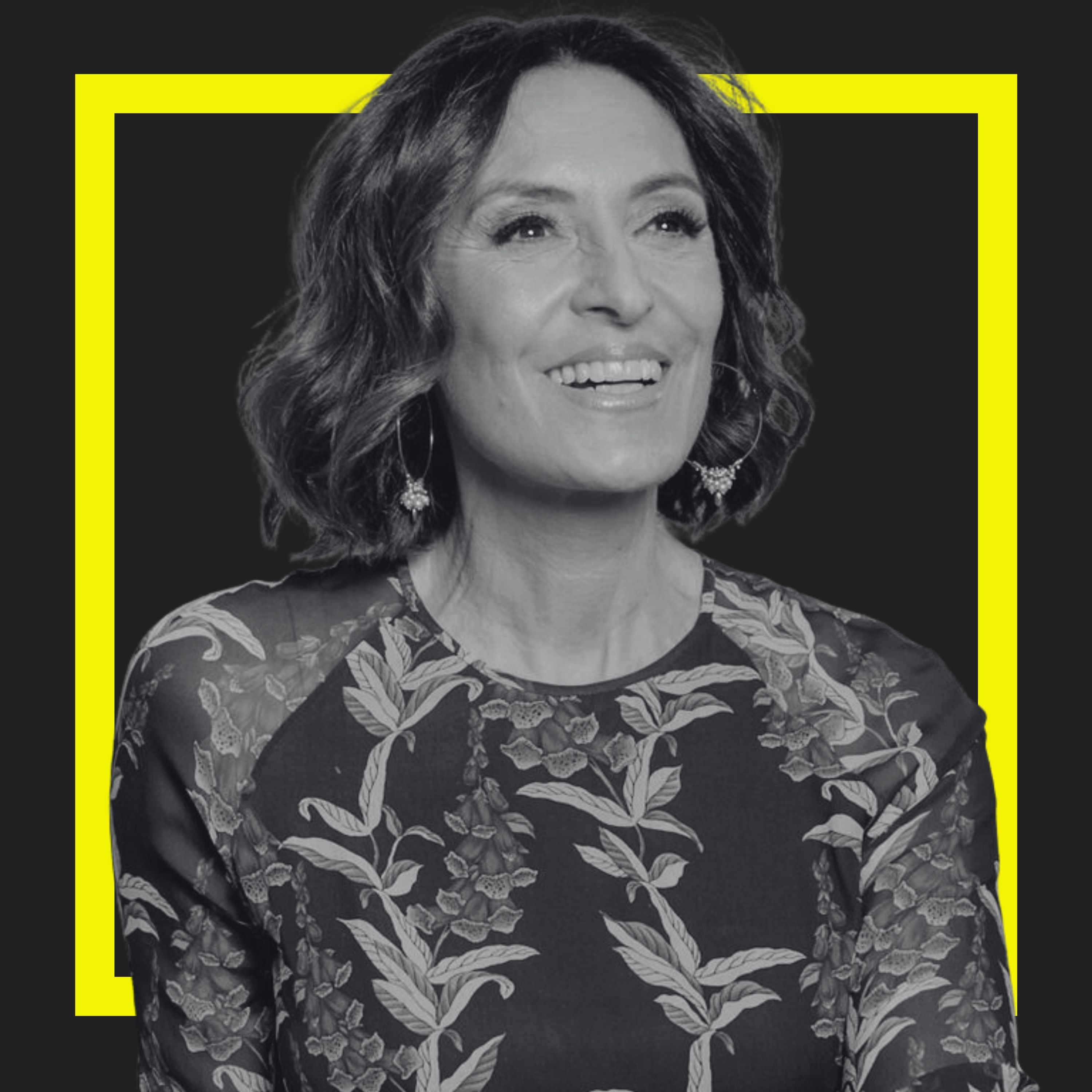
Suzy Welch: When Your Values and Your Job Stop Matching, Performance Tanks
About this episode
Burnout might be the cost of living someone else’s values instead of your own.
Cait sits down with Suzy Welch, creator of the Values Bridge and author of Becoming You, to explore why so much burnout at work stems from misalignment rather than effort. Cait shares the realization that shifted her path: she built thriving one-on-one practices and helped thousands, yet still felt drained because her core drive for broad impact did not match the intimate service model she was operating in. How often do we mistake competence for alignment? How often do we stay loyal to workplace values that quietly clash with our own?
Suzy breaks down why this disconnect is so common. We edit our values to look acceptable within our workplace culture or family system. We amplify what sounds admirable and silence what feels risky to admit. The Values Bridge reveals what actually motivates you and highlights the gap between your personal values at work and the life you are living. You can care deeply about people without centering your identity around caretaking. You can hold strong leadership values without organizing your life around constant achievement. Values are not moral badges. They are choices about how you want to direct your time and energy.
The conversation also moves beyond values into natural aptitudes and economically viable interests. What does your brain do with ease? What kinds of roles exist outside the narrow paths most of us were shown? When your workplace values, your wiring, and real-world opportunity line up, energy builds instead of drains. When they do not, burnout at work follows. The real question becomes this: are you living in alignment with your own values, or are you performing someone else’s version of success?
Episode Breakdown:
00:00 Introduction To The Values Bridge And Burnout At Work
05:39 Why Values Misalignment Causes Exhaustion And Low Fulfillment
13:27 Values At Work, Workplace Culture, And Leadership Alignment
24:26 Family, Achievement, And The Truth About Workplace Values
30:02 Aptitudes, Career Fit, And Economically Viable Interests
Connect with Suzy Welch:
Cait Donovan is a keynote speaker, author, and host of FRIED: The Burnout Podcast, specializing in burnout, mismatch, and sustainable performance at work. She partners with corporate leaders, teams, and professional associations through keynotes, workshops, and leadership sessions that treat burnout as data, not failure, to help organizations reduce burnout without blame or shame and build healthier, high performing cultures.
To bring Cait to your organization or event, book an inquiry call here: https://bit.ly/bookcait
Get every episode summarized
Each time FRIED. The Burnout Podcast publishes, we email you a written briefing from the transcript — the topics, who appeared, and any specific claims, with the ad reads skipped.
Email me new episodesFree for 3 shows. No card needed.
Hosts & guests
Transcript ready
916 searchable segments. Every word is indexed and playable.
Full transcript
FRIED. The Burnout Podcast — Suzy Welch: When Your Values and Your Job Stop Matching, Performance Tanks. Machine-transcribed; use the interactive transcript above to jump the player to any line.
Welcome to Friday, the burnout podcast. I'm your host, Kate Dunnevin, burnout expert, keynote speaker, and author focused on burnout as a match issue at work. Friday looks at burnout as information, not failure. When people, roles, expectations, leadership behaviors, and systems fall out of alignment, burnout is often the signal. Seasons one through ten of Friday focused primarily on individual burnout and recovery, and those episodes are still available. You can use the fried episode finder to find the conversations that best match what you're dealing with right now. Starting in season 11, the focus shifts to the workplace. The conversation center on how leaders and organizations can improve match and get rid of burnout in realistic, sustainable ways. I also work directly with companies and events through burnout and emotional intelligence keynotes, workshops, and longer-term advisory work. If burnout has been getting your attention, this podcast will help you understand what
it's pointing to and how to find a better match. Over the past maybe five or six episodes, you have heard me talk about the values bridge exercise. Sarah and I talked about it in our episode where we decided that our business was going to shift, and now I'm here solo again as I was in the beginning, and a lot of that came down to the work that we did because of the values bridge exercise. And today we get to talk to Susie Welch, who created the values bridge, and who is also an award-winning NYU Stern School of Business professor, acclaimed researcher, and three time New York Times best-selling author, most recently with, and please just go by this
book immediately, becoming you a proven method for crafting your authentic life and career, which is also a number one bestseller on Amazon. A graduate of Harvard University and Harvard Business School, NBD, Dr. Welch is a frequent guest of the Today Show and an op-ed contributor to the Wall Street Journal. She serves on the boards of public and private companies and is the director of the NYU Stern Initiative on Purpose and Flourishing, which is last year where we met for the first time. Yeah. And where I stumbled into that totally, almost by accident, a previous patient from my Prague days when I was living in Europe, wrote to me and said, Kate, I, you know, my daughter and I are going to go to this thing, why don't you meet up with us? I think you'd like it. And I sat there the whole day like in rapture. So Susie, thank you for all the things. Thank you. I'm so glad you were there and that our paths crossed. And I can't wait for you to come to the next conference for the Initiative on Purpose and Flourishing.
I'm excited too. I'm so excited. And I've, since then, I've had Jerry Collin on the podcast. I talked to Zach Mercurio a couple of weeks ago. I'm talking to Vijay Pandakir pretty soon. So just fantastic, all the, all the good things. So I want to jump right in because I'm going to, and I'm going to start with, a little tiny personal story, which is not typical, but I love a personal story. But the values bridge really changed how I've been treating myself since I took it. Okay. Because I have a very low non-sibby score. I didn't realize that because my whole life, I thought I want to help people. And then I went into a helping profession. I worked as a waitress in bartender during college. I went into a helping profession. I kept ending up burnt out. I kept not understanding what was going on. And I have a radius score that's off the charts.
And a non-sibby score. That's really minimal. And so folks, for those of you that don't know the terminology just yet, the radius means I want to have a big impact and I want to use my voice change the world. I loved the, in the book, you described it as like how big of a crater do you want to leave behind when you leave this earth? Like I, I want half the world to be gone, not in a good way. So that, that was important. But the non-sibby is how much you want to help people on a one-on-one basis. That's right. This internal judgment that I've had around the work that I was doing, not being fulfilling for me, has been holding me back for years. Because I was very good at acupuncture. I was very successful at it. I built two incredibly successful practices in two different countries. I had patients made bracelets that said what would Kate say on them. I mean, I, I, I was good at this. Yeah. But it wasn't working for me.
Mm-hmm. Oh, my God. I mean, I, I, I can diagnosis in a hot second. Look, keep going, keep going. Yeah, no, go ahead. Jump in. I mean, look, these people think that radius. Again, this is the value that reflects how much we want to change the world, how big a crater we want to leave, how much systemic change we want. Does not always. And in fact, pretty often does not track with the value of non-city, which is Latin for not for oneself, which is the, it's a very intimate thing. It's like you're in the supermarket and somebody can't reach something on the top shelf. High non-city is like you're going to get that on the top shelf. Non-city is like you want to stop with the person with the flat tire. It's, you know, nurses, as we have this research, nurses tend to have very high non-city. They want to be in the trenches, you know, helping people on an individual basis. But it just, it doesn't always go together. You know, you want to, if you want to change the world, it doesn't necessarily mean you want to get something for somebody off the top shelf or help somebody on an intimate basis. And in fact, you, you have bigger battles you want to fight.
And it's actually kind of, it can feel very tedious to you to help somebody one-on-one because it's slowing you down from helping 1,000. And so a lot of times people who have high radius go into jobs that just are non-city and they get burnt out. And by, by contrast, people who have high non-city, sometimes are drawn to organizations that are radius type organizations, you know, they want to go work for some company, some nonprofit, like save the children or something, some organization that fights poverty. And they get overwhelmed by the things that come with radius changing the world. The fact that you feel like you never, ever, ever are going to do it. And so these are very separate values. And they present separate ways and people make so many mistakes that just can really screw up their lives if they don't understand that differently. So yeah, and I think what it, what I took from it and what I see so frequently. So even though I've learned now that one-on-one work is not my best place,
I have done, I've done over 30,000 acupuncture treatments, I've had over a thousand coaching clients, I mean, I've done plenty of it. And one of the things that I see all the time is this, I was interested because when I was reading my own gap around this and sort of what to do about it, it wasn't like, oh, there's a friction between your two values. It was, you're just worried what people are going to think about that. So get over it kind of. Well, there can be a friction. There can be. They're not necessarily in conflict, but sometimes people like you are really mystified why if they want to change the world, their job helping people is not fulfilling to them. And it's exactly this sort of, you know, you're scaricist resources, your energy. And if what your real strong value is is to change the world and you are doing one-on-one work, it can feel really like you wonder, like why isn't this feeling good to me?
This is the case with all of the values. It's what ones you actually have and how much are you living them? You know, that's the thing about the bridge is to test both of those. So you have high radius, you probably were not fulfilling it nearly as much as you wanted to. You were low on Cibi and you were certainly overexpressing it. A hundred percent. And so the thing that I see most often in other people is this same exact problem. This idea that the values that they truly have are not the ones that they deem societally acceptable or morally correct or rights. And I see that all the time. Yes. This is why the values bridge. I had a lot of exercises when I started to teach the becoming a methodology, which was is the purpose-finding methodology that gave rise to the values bridge. When I first started teaching that methodology at NYU, I had a bunch of reflective exercises that were designed to help students fared out their values. And I discovered incredibly quickly, like in one semester, that nobody wanted to confess their true values to the world.
Like these were very well designed exercises. I still use some of them. They are sort of loosen up your muscles to help you identify your values. But people would come up with their list of values based on these exercises. And then literally, they'd manually manipulate them. Like they'd erase something that was down at number seven and they'd move it up to number one and they'd erase something at number two and move it down to number eight. Because they say, oh, wait, for instance, take the value of family centrism, which is having family as your organizing principle. And for some people, we do all the exercises. Oops, family would show up at number 15. And then they would think, oh my god, one of my mother ever saw this. And they like literally would like cross it out and move it up to number one, even though it wasn't their authentic value. So the values bridge, which is a digital tool, which is incredibly carefully constructed by psychometricians and so forth, was constructed so that you could finally stare face to face with the true rank ordering of your values. And nobody's going to see it, but you, you know, nobody's going to see the data about what those true values are. And also the data, unless you'd like to share it, the data of like, how much you're actually living it.
What's in the gap? Because I see all the time people come in and their number one value is, say, voice, which is authentic self expression, not for everybody, but for many people. And they'll have a 99% authenticity gap, meaning they're not living it at all. And they stare at it and they say, I think you've just summed up my life. And I say, that's what the tools supposed to do. And then it's, you know, then the next step is figuring out what to do about that. Yeah. And so the, I love this, especially for the burnt out crowd in general, because one of the things, another thing that you said in the book was that, a lot of times, this was when you were talking about interests, but it still connects together. You were saying, sometimes when people don't know what that they have, but like, I'm not interested in anything anymore. I just have nothing. I've not interested screw the world. I can't. It's just on we, right? Interesting. We where people are like, nothing's calling me. Yeah. Yeah. And that sometimes that's a result of burnt out. And I think that's anxiety. Yeah. Right. Yeah. And so I think that sometimes there's this crossover between that and the not knowing
your values and the do think that that's the beauty of the exercise that you created. It's just right there. Right. It just is, this is the journey of our life is to find out this data about ourselves and almost everything stands in the way of it. I say, I call them the four horsemen of values, destruction. The first one is economic security and everybody wants to believe me. Nobody doesn't want economic security. But the problem is that voice can get very loud in our head. And we stop listening to what we really want because we think basically I need money. And I get it. But some, you know, when we now that we have data from 120,000 people have taken the values bridge in the past six months, and actually, as it falls out, affluence or the drive for money is the top motivation is, is number 11 out of 16 overalls different for different generations. And for, you know, we could cut this data every which way. But in general, we assume that money should be our top value or that it is a top value. But at the end of the day, it's actually not as high as most people would think. And so economic security is a number one is a very loud voice in our head that
gets in the way of us hearing what our real values are. And then there's expectations. We, you know, but my family would expect what society would expect. I, you know, a student who said to me, like, oh, look, everything that we're doing says I should be a rooma teacher. I had a, how does this methodology know that I love rooma so much? And, you know, my thought was, well, you keep on telling it in one way or the other. And then at the end, she said, I can't do this because I'm an MBA. And, you know, this was sort of the culmination of the expectations of her family and her, and her upbringing and on and society and like MBAs don't become rooma teachers. And then there's, are we talking about the vacuum or the exercise exercise? Zumba. Zumba. Oh, I keep on calling you. It shows you that I do. It shows you that I use neither. Use neither. Zumba. I love it. I've said that I could call you on that one because I literally have told that story before. And I'm sure everybody in the audience is thinking, she's talking about Zumba. And then there's expedience when we don't follow our values because it's just, it's so hard. And life is hard enough already. So then if we have to also follow, follow our values and usually, you know,
what the hard part is is telling somebody else what they are. Like somebody's going to be mad or we're going to have to move. We'll have to go back to school. And it's just too hard. Yeah. And then, you know, events get in the way, you know, we're going to live our values. We're going to do X, Y and Z. And then, oh, we get laid off or somebody gets sick or kid goes off the rails. And all the big dreams you had to live your values get swept away in events. And all three, all four of those things conspire against us living our values. And then you add the other layer of the fact that we have no tool to actually identify and rank order our values. And you end up having a lot of people who just let life happen to them. And when I teach becoming you in the intensive sessions that we have for the open enrollment at NYU, people come around the world to do it. It's a beautiful thing. They come for three days. I teach the whole methodology in the course of three days. The number one thing people say to explain what they're doing there is. My life just happened to me and I want to figure out if I if I should change direction. And I mean, I guilty is charged.
I mean, for many, many years, that was me. You do your best. You you live by default. It comes at you and you kind of do your best with it. But you're not living by design, which is the alternative. And you know, if burnout is what you do not want, the best your best, you know, the best defense is always a good offense. And the good offense is living a life of design, a life that's built around your, your values and your attitudes and your interests. When we do you do this at a scale, like within a company as much as, because I know that there's the becoming you weekends. And I know that there's the individual work. But is are you doing this work also like at an organization? The problem with doing it in an organization is most organizations do not want me coming in because when I leave, every time he wants to quit. And so I do it here and there for very enlightened organizations. And typically the CEO has come to one of the becoming you weekends and then says, come do this for people in my company because I only want the people there who want
to be there. So we'll go to 100 or 200 people. And then I, you know, I go and I do it for people who invite me like retreats or, you know, at conferences and so forth. And so, but we are, and then, you know, we have coaching certification programs. So when a lot of the work is being done by the coaches who are now certified and they, by NYU and they go out and do it in the wild as we say. Yeah. So this is the, this is where I feel like gosh, I wish there was more enlightened. Hmm. Leaders pulling you into or the coaches or whoever it is pulling you into do this work because when there's alignment there, when there's match between the person that you've hired and the job that they're supposed to do and the values of the company that they work for when, when there's alignment there, your profitability goes up. Right. And you know, I think it is, but it does take an enlightened leader. It does take an enlightened leader who says, I don't want people here. I want to be people here by design. I want them here by choice and I want to be able to talk to my people about values.
Our organization's values and yours are aligned. Isn't that marvelous? And I think that it's just a matter of time before it is more in organizations because everybody who's coming to the, you know, comes to the three day immersive 90% of them, 99% of them work in organizations. Yeah. And they bring it back to their companies. I mean, a lot, you know, every single time we have one of these people come and say, you know, my coworker came or my boss came and I wanted to, so it's a matter of time. Right now, you know, we're early days. We've only really been out there, been doing this. I've only been doing it five years. And so I think it will, I think it will end up in organizations because it needs to. And well, yeah, it has to and there's 42 years of research that say that values misalignments are one of the top six factors of burnout in the workplace. Right. Like we know that it's not, this is not new information. And not only is that research, that research, which I was part of a team that replicated it because good research gets replicated, not only is that research old and established,
the, it is so the factor analysis is so high. It's like, it's not like, yeah, a little bit. You should be aligned with values with the organization. No, it's like so much you should be aligned. It is the number one driver of work satisfaction. And so folks listening, my fried people out there or my leaders who are trying to not fry people. Being able to jump into work like this and do it with intention and do it with transparency. And it's honestly a little scary. It's scary to say out loud that Nansabi is not high for me, but that's scary to me. I want to say this. Can I interrupt you to say this? Yeah. The values bridge and all of the work of becoming you is values agnostic. It believes. Yeah, exactly. It believes there are no good or bad values.
If you're not hurting anybody, your values are your values to live and fully express. And that's an important clause if you're not hurting anybody. But like somebody like you who is high radius, you want to change the world and lower Nansabi. Meaning you want to do it through systemic change and not necessarily through one-on-one, you know, hand-to-hand combat. You're not hurting anybody. You're helping people. You're not in any way, in any way hurting anyone. Those are your values. Lean into them. Celebrate them. And by all means, talk about them openly because I think the beautiful thing to me. Well, there's so many beautiful things about the values bridge because it's like my baby that I love so much. But I would say that it gives us a language to talk about values that is nonachronomious, that is non-judgmental. I mean, I have different values from my own. I have four adult children and they're wonderful spouses. And you got to believe we don't have the same values. They were raised at a different time. They're totally different people than me. I love them more than a mother can love any. I mean, I adore my children. They're my best friends. I love them in every way. Their values are different than mine. I have much higher value of say achievement, which is seen success, success, other people can see.
And work centrism, which is work for the sake of work. You just love work. Okay. They are generationally very aligned in that they do not have work centrism and achievement as high as I do. They have it higher than many of their peers, but not as high as I have it, because I have it off the chart. And in step of us having conversations where you say things like mom's a workaholic and mom says, you're just lazy. You don't know the value of work. We could literally have conversations. It sounds like that's like, well, my work centrism is kicking in today. And I'm going to be working on Saturday. And you enjoy, I said this over Christmas, you enjoy your sledding. I'm enjoying my work centrism over here. And we just like have these wonderful conversations about what's going on with our motivations, with that pointing fingers, with that kind of hating on each other. Everybody has to live their values truly for their own sense of authenticity and fulfillment. Well, let's stop judging each other. Now look, it's important to point out that values are not virtues. With virtues, I can be quite judgy. Okay, virtues are things like fairness, decency, kindness.
Virtues are our social and cultural constructs that we all agree are good. And if you don't like kindness, I don't want to know you. And if you don't have kindness, I'm perfectly comfortable saying that's bad. Okay, but when it comes to values, which are how we want to show up in the world in terms of like choices, their choices around how much we work, how much we organize our lives around helping people or around. You know, we don't have to stop judging people. They people are not built the same. Each one of us is different. But virtues, you know, I don't want like integrity is a virtue. Honesty is a virtue. I don't think these are choices. And so I want to be very, very clear. I'm not like, live and let live about everything. No, I think everyone should be honest and everyone should be kind and everyone should have integrity and so forth. So, but how much you work, as long as you're willing to accept the consequences of it, it's fine. Your choice. Yeah. You know, how would you care about radius, as long as you're able to accept the consequences of it, your choice.
Yeah. And so this is one of the things that I actually love about the work the most is that that is constantly repeated in the work over and over and over again. That there is no morality attached to this. There's no better or worse. There just is or there isn't and they're just with value specifically. And so I really like that part. That doesn't change the fact that facing it can be. Yeah. Can be a little, well, maybe I'll speak in eye sentences. Okay. It was difficult for me for a moment. And then it gave me freedom. Yes. That's, that is the common experience. I'll never forget when a friend of mine got her results back. And her number one value was luminance, which is fame. Okay. How famous you want to be. It's her number one value. I mean, and at the other end of the continuum is if you are very low luminance, you kind of want to live off the grid all the way until you want to be so famous, you can't go outside. Everyone would recognize you. And she had this her number one value. She had a authenticity gap of 94% because she's not famous at all. And she threw down her results and she said, this test is terrible.
It's completely inaccurate. And I knew her really. I know her very, very well. And I said, hmm, why don't you just ponder that for a little while? Let's talk in 20 minutes. Okay. Because I, first of all, we have 94% efficacy. We know this test work, but works because we've tested it so many times. But beyond that, I knew, knew her very well. And I knew exactly what her true values work. And she said, well, you know, if you're a doctor for many years, 20 minutes, 25 minutes later, she comes back. And I said, I want to talk and she said, you're right. This is my number one value. And I have so much pain around the fact that I never had the courage to chase it the way I wanted to. And it was a painful moment. I mean, speaking in eye terms, she would be if she was talking. She would say, I had agony facing into the true number one value for me that I never was able even to admit to myself. I was very liberating for her once she knew it to be able to talk about every decision she'd made along the way that she'd regret around that she'd blamed other people for her sadness about certain things she had done. And I mean, I think that it's changed her life to finally know the truth about herself.
It is liberating once you are once you come to terms with the, with the, the rag ordering of them. Yeah. Yes. And so the rank ordering of them. And then I want to jump into some other parts of the, of the becoming your methodology. The ordering of them. You made a post a couple of weeks ago on LinkedIn. We're recording this at the end of January. I think it was, it might have been in November, December. And it got a lot of people were up and down about it. It was really, it was really interesting. It was the one where you said right now, according to the people that are taking the values for assessment now, only 11% of people have family centrism as a top value. That's right. And the internet exploded. Yes. And a lot of that was because that was because I wrote a piece about for the Wall Street Journal, where I often put, where I often published my data. And it was explosive. I knew it would be because they accepted the piece so quickly. I always know how, you know, how, how explosive a piece is when I send it to them in five minutes later, they say, we'll take it. I think, oh, they know I'm going to be killed.
They love that. So look, this is what the data shows. You know, we have now 120,000 people have taken the values bridge. So we have the values. I mean, this is the cleanest, richest data set of its kind in the world. We don't know another one like it. When Gallup does a testing on values, they have 2,000 people. We have 120,000 data points. And so we, I thought, well, Thanksgiving's coming. I thought, let's see how people actually feel about family because everybody's going to kill themselves to get back to their family. And then everybody's going to like feel like, you know, like Thanksgiving's complicated. All holidays are complicated. So let's see how Americans actually feel about family centrism. So we looked at all of the data and look, it's different for different incomes, for genders, for age groups. But if you look at an aggregate for the entire US population, that family centrism comes 11th out of 16. And, but the, the most sort of more shocking data was that, that, that people say families the number one value, they do. But it's only 9% of Americans, 9% that actually have, actually have family centrism as their number one value.
And it's only 40% that have it in their top five values. Okay. So for all the lip service that we give to family and for all the regular mold we go to to get back to our families on the holidays and for all the, that really, when you ask, when you separate identity and you separate everything out, only 9% truly are operating with families. They're central organizing principle and under half are having it in their top five values. And people, you know, there were people who said, thank God somebody is saying this. It allows me to sort of feel not alone and no wonder the holidays are hard for me. And I love my family, but, you know, it has its, you know, I'm not living for them, but I love them. That's whatever if you're not hurting anybody, that's fine. I think that, you know, it, it felt like a stick in the eye to other people who, who were very invested in this value. And I get it. And I mean, I think that there was a lot of, I happen to be a very faithful person myself, but there was a response from the faith community that was like, you know, families, the foundation of society.
And this data is dangerous because it says nobody has families there as their number one value. And I have a long response to that, which I will not get into here, but this data about what true values are is always explosive. I have found. Yeah. And so I wanted to bring that one out because I think that people get stuck on that one. Often. And don't give themselves permission to live the lives they want because of a value that is not truly theirs because they think it should be because culture says because religion says because. Yes, etc. And when you were, when you made the post, the, when you posted the article and made the video on LinkedIn, the thing that I, that hit me. That you said, you know, this has absolutely nothing to do with how much you love your family. It's about how you want to organize the minutes of your day. And I mean, I love my children more than you know, I love them desperately, but I was a working mother because I they were, I didn't want to organize.
I love them, but I'm not going to organize my entire life around them. That's it. But there are power to the people who decide to do that. Sure. They got a different rank order of values and everything worked out great. I'm happy to say thank goodness for it. And so look, your values are your values. And when you're not living them, you tend to be in a lot of pain, emotional and psychic pain. You know, the other value besides family centrism that people have a real war with self about is achievement. Okay, because there's a lot of received information that we get about. It's important to be ambitious. It's important to, to, to want to be successful. And if you look at Gen Z achievement is not a value. And not only is it, it's a very, very low value, but not only is it a very low value. They have a negative variance on it. And I'll just sort of cut through the data to say that basically what that says is that it's a low value. And they wish it was even lower. And, and you go to the older generations and achievement is not as high as you would think, which would suggest that people been lying about achievement for a long time. But it's definitely higher. And the friction you feel between parents and kids and employers and employees
is that there's different feelings around this value of achievement. And it used to be thought that's the American way. But now there's you to look at the data. It's not. And I'm actually just about to start a gigantic research study with the my alma mater for my PhD, the University of Bristol in England, to be taking a look at the values bridge in five different countries so that we can get the data on all of these different values in China, India, the UK, France and Indonesia. And it will be very interesting to see where achievement comes in. And I think there's geopolitical consequences. Actually, if we see achievement is number one in India and China and its number, you know, 13 in the United States, that we have to plan around that. Yeah, absolutely. And it's one of my top five achievement is one of my top five. And I'm overdoing it a little bit. There is my mom. Do you have a negative variance? Uh-huh. Oh, okay. Yeah. Maybe you are overdoing a little bit. But you can't take your value out of you. You have it. No, no. And I actually really enjoy achievement. And I always have. And so I'm really, that didn't, I was, I was really okay with that one.
I was like, yeah, that makes sense. I also have high achievement. I think, you know, I, maybe all podcasts have high achievement. It is possible. It is possible. So the. I want to just before we move to the next part, just do this reminder that there's no morality attached to these. There's, there's so judgment. Yeah. I mean, these are not virtues. We're not talking about the great virtues of honesty, kindness, fairness. These are something that everybody should have more of. Values are decisions about how we negotiate the world, how we organize our time. And you should not be hurting anybody with your values. I want to be clear about that. I mean, if your family's centrism and where it is, is hurting your children, that's a totally different conversation. In as much as you're not hurting people with your values, your values are your values to live. I love that. And then I was so obsessed with the values bridge when I bought the book. So I had already done the values bridge and I was reading through the book and I was getting in depth on to the different. And I know there's one extra popped up in the meantime, but there was 15 when you wrote the book.
There's 16 values now. And then. I was when I read through the book and you were like, well, and then you have to figure out your aptitudes and then you have to figure out your. You know, economic viable interests. Right. And I looked at that and I was like, okay, she created this like slam dunk assessment, slam dunk assessment. And even she knows it's not a full picture. Yes. In fact, I think it's dangerous just to try to figure out your life just based on your values because there's other information you've got to get like what you're good at. Those are aptitudes like what you're good at emotionally and cognitively like your personality and your brain wiring. That's aptitude. So we have four tests for that. Yeah. And then your interests, your economically viable interests, which is the stuff that you want to do that can pay you what you want and need to be paid. And so there's three legs to our stool. And that's why it's a methodology and not a silver bullet. And you know, I, it's very interesting. Any of the data that you get from the methodology is so interesting and informative and can be life expanding.
But there, I always say they're all tiles in the mosaic of the portrait that we're painting this portrait of you standing still so that you know which way to go when you start running again. And all the tiles matter. So both all your values. Great. You got to get those now. It's easy because the values bridge exists in 22 minutes. You can get them to 22 to 25 minutes. And then you've got to do the work to figure out your aptitudes. And the world wants to tell you what your aptitudes are also. They want to tell you what you're good at. But we can test for that. And so we do. And I want to talk about you in the book when you talked about the aptitudes. You were like people always fill this in wrong to start. When people are doing it without an assessment, they're like, well, I'm good at, you know, writing a bicycle. And you're like, that's not what I'm talking about. Yeah. Can you explain to people what you mean by aptitude in in the becoming you methodology? Because I think it's a really special specification. Well, it's a social science specification of it. I mean, I think people like to mix up. And it's very natural and very normal to mix up aptitudes with skills, which you can learn. Or areas of expertise, which you can learn. But aptitudes are our underlying propensities.
So like if you can think about it this way, if you were to pick up a pen and write it your name with your dominant hand. It would be easy. And you could do it all day long. But if you have to switch the pen into your other hand, it's awkward and ugly. And if you, but say you broke your dominant hand and you had to spend the rest of your life writing with your non-dominant hand. And eventually you get better at it. My premise is that it's better to spend your life doing the stuff that you're naturally good at. Now, you may disagree. And in fact, you may have values that would drive you to do the stuff that you're not naturally good at. But go into it with your eyes open. For me, the sort of ideal place to be is at the overlap, the intersection of your values, your aptitudes, the stuff you're naturally good at, and your economically viable interests. So we do a lot of work to figure out what you're naturally good at. And we do that with a bunch of different tests. We have a test called the Career Trades Compass, which tells you on this continuum from individual contributor to leader, where do you fall? And we have a test that allows the world to tell you how you're being experienced in terms of how you act with people, and how many ideas you have, and how well you get stuff done.
Because execution is a very important skill to have, and so a very important aptitude to have. And so it's important to know, because if you're just, if you just love doing it and it matches your values and you're terrible at it, I'm going to suggest the word hobby, enter your mind. And that it's really, but what really, really you should seek, in my opinion, and the becoming you methodologies premise is the stuff that you want to do, because it's a value, what you can do really well, because it's an aptitude, and what you should do, because it's interesting to you, and it's in an economic sphere that's growing. When, when I was reading through that aptitude section, it was, I was reading through one part of it, and I thought, oh, okay, I get it. Like one in, for example, folks that are listening, one of the things that happens really naturally in my brain is I form really quick patterns and synthesis of information. I can read five research studies in like 12 minutes, because my brain just goes bing, bing, bing, bing, bing, and pulls them all together into something that I can give to you clearly, which is why the straight from K episodes on the podcast.
Get so much attention compared to some of the other episodes, because you know that I can do that for you. So, so that that's when that's an aptitude. It's inductive reasoning. It's a very specific attitude, and the people who are at the other end of that continuum are tend to be sort of much more in the details and the process and the fact checking. And they're very gifted at other things, but they're not. I love that. Right. I love them, because I need them, because I can't survive without them, because I cannot do what they do right now in the president of the National Speakers Association in New York City. And we keep having that our admin keeps sending us emails to check out to check before they get sent out. And I keep writing back and being like, yeah, looks good. And then somebody writes back like, there's a typo. And I'm like, oops. Right. I mean, whenever I'm on a board and they say does everybody read the meetings, the minutes of the last meeting, I'm like, I hope somebody does that. I mean, that's just not my, you know, it's not about time. It's just about aptitude. You know, and usually what happens is the people who are the lawyers in the room go, yes, I noticed on page 17 that there's missing a clause about blah, blah, blah.
And I'm like, oh, my God. But they're in the details and the world needs them and people who are inductive reasoners like you and I are desperately need them and are on our team and by our side. And so it's, but it's super important to understand are you a generalist or a specialist? Are you a future focuser or a present focuser? Are you inductive reasoner or a fact checker to understand how your brain is wired to do it. Best work. This is some of the most powerful data you'll ever have about yourself and you, you've got to own it. You've got to know it guessing is not good enough. Yeah. And it's again, there's not a better or worse. Absolutely. Again, we're back in this idea that it's, that it's neutral. It's, it's neutral. It's just information about how your brain functions. But it's better or worse for different types of jobs and different. Sure. For sure. Like, you know, woe be to the, to the, to the future focuser inductive reasoner who becomes a contract lawyer. I mean, it's like. It's shooting out. Right. I mean, then they're being asked to do something that is not natural to their brain every single day.
And I have so many stories from students who are smart, smart, smart. Oh, they could do anything and then they go do a job. And it's a specialist job and they're generalists and they're crawling out of their skin every day. They're like, why can't I be good at this? I was good at everything in school. And the answer is because you're not playing to you. You know, and frankly, if they stayed out of for a couple of years, they don't get fired. Eventually, they could get better at it. But why not go do what you're naturally good at? Why not? Yeah. Yes. This was one of the other things in the acupuncture world got keeping soap notes for patients. Don't can't do. Oh, I can't do it. Yeah. I can't do it. Because you're general. I'm sure you're a generalist and keeping notes on things. Are you kidding me? I can't do. Yeah. Can't do it. And then the last part, which is this is something that came up a lot in our family a few years ago. This sort of interest that are economically viable, the EVI, right? You call them in the book. Yes. My niece was going to college and she decided she was going to study psychology.
And my father-in-law has a lot of weird ideas about the world. But he decided that psychology, when she went to school, this was seven years ago or so, that we're not going to need psychologists by the time you graduate. That's not viable. We're just. Okay, sir, but whatever. Okay. Right. And at the time I sat down with her and I had been, I was doing an online course about how to run a business online. So I was just sort of opening this world for myself. This is 2016, maybe 2015. I realized while I was doing that, there was a shit ton more jobs that I never knew existed. Yes. That people were living perfectly good lives doing. And I thought to myself, how small is my vision of what is economically viable? Am I just doing the whole like Dr. Lawyer engineer thing? Absolutely. Right. Because you would like everyone else gets on the conveyor belt. And there's research that shows that when kids graduate from high school, they can only list five jobs,
two of which are their parents. And then they graduate from college. You think, oh, now their aperture is opened and they'll know about all the different jobs in the world. It's not taught in any college class. You know, your college, you could learn about the history of Argentina. But you're not going to learn what kind of businesses and jobs are out there. It gets even worse in graduate school. The conveyor belts get very noisy. You get right on to one of them. I play industry bingo with my students so that they can learn about the 135 industries. And then I teach mega trends so they can understand about the 12 identified mega trends, although I think it's going to be 13 next semester. And you know, there's just, you have to rying open your aperture for what kind of work exists, what kind of roles exist. It's not a natural act. People are trying to close down that aperture so they can start figuring out what they should do before they even open it all the way. There are types of work and jobs. Now, of course, AI is throwing everything into disruption and disarray. And so better all the more to know what your values and aptitudes are so that you can figure out where you fit into this new world. But like people just don't look around because it's hard to, it's noisy.
How do you make sense of it? Yeah. And I was just at, as a speaker, I work with a lot of associations. And I was just at the association of airport consultants or the airport consultant council. Maybe it was called, I think it was an ACC, which I was confused with the lawyer one that I also work with the association of corporate. No, the association of corporate council is also an ACC one that's, but anyway, not important. I was in that room and they said, our biggest industry issue right now is that kids don't know that we exist and nobody is choosing this as a career path. We have, there is so much money here. There's so much money to be made. It's insane. That's right. All of us have way too many projects that we cannot finish. We are dying for bodies and nobody knows we exist. 100%. This is totally confirmed by everything I've encountered. And this, I wrote a piece for the Wall Street Journal about this called Hello MBA. It's me industry because my MBAs are like, there are three industries. Those industries are a fine hands consulting and and tech.
Yeah. And I was like, wait a minute. There's also like tree and nut farming. You know, there's like, there is aviation. There's shipbuilding. There is mining. There's airport consultants. You know, there's graphic facilitators. That's an exploding field. And they're like blinders on, which is very natural. One of the reasons it's natural is because the consulting and banking people are sitting on campus saying, hey, come on over here. The weather is wonderful. And they make it very, very easy. And you have to show a lot of initiative. And you have to do a little bit of digging. And you have to look around. And it's hard. And you've got, again, in my case, many of my students have debt. And they'll like get me a job right away, where it's harder to get those jobs out there. But you, this is a true, true dynamic that you, and that's why part of the becoming your methodologies to force open your aperture and say, okay, where are the jobs you're not looking at? What are you not seeing? And where can you apply these values and aptitudes and ways that you might not have even considered or thought of before? But it's out there.
It's ready. It's here. It's available. There's a job that's waiting for you that really aligns with everything that you need that you don't even know exists. I know. I mean, when we find, so we actually created a tool that takes all of the data that you gathered becoming you, your values, your aptitudes, and your interests. And it's called career catalyst. You dump all that data in and it tells you three jobs that are at the intersection of all of that data. And people are like, I never would have thought of this. And it's like, that's right. You wouldn't have, because it's a really hard, unnatural act to think of it. But you, but it's there for you. And then it's very, it's very exciting to see what happens. Yeah. And I think that's also true. Like if you're values, if you have a scope as a high value, you might be a little more in tune to other things that are available because you're in tune to other things that are out there. Right. Right. But the number of people with high scope is quite limited. It's my number one. Is it really? Oh, I don't meet somebody like you very often. It's only 11% have it at number one. Yeah. I mean, I have one of my favorite students had it. Number one in her state scope, by the way, is the value for your listeners scope is the value of wanting to have a very big world with a lot of stimulation with a lot of learning with a lot of adventure.
It's like you and at the other end of that continue, no better or worse, lower scope is people who would like a lot of psychological safety, a lot of visibility, a lot of predictability. You do not want chaos, whereas high scope people like about like both of us are like bring the chaos. I like the excitement and that's just those are just choices. If you're not hurting anybody fabulous, but you're right, high scope people do tend to do cast their nets wider. That's for sure. Yeah. Yeah. All right. Folks, that was a lot of information at once, but please know that Susie has organized this information in various places. She has a book. There is the website. Once you do one thing, you'll have links and access to other things. The appendices in her book link to literally every single test and thing that she talked about today that it's all in there. It's all also on becoming you labs.com. That's our website of our actual work and all of the tests are there as well. And I want us to be clear that with values bridge, there's a free version which gives you your top three or four values.
That's a paid version, which is $30 for the whole the whole kit and caboodle. So I want to be so worth it. It's very, very worth it. It's pay the 30 bucks, get the full assessment, see where the gaps are. Like it's it's very, very, very worth it. It's my literally my favorite thing, my favorite test that I've done in probably a decade. And I've done them. Oh, well, I really also love predictive index. Oh, I've got to check that one out. Yeah, I like predictive index. Okay. It helps to figure out how well things are matching in your current job. Oh, interesting. It's really interesting. I like the predictive index people, but, but this is my favorite work. So I am so grateful that we cross paths. I'm so grateful that you agreed to come speak to my fried listeners. And I'm, I'm so excited to see where you take this work further because I know you're not done. And I know that whatever you create next, I'm going to be excited about. So thank you so much. Do you have any last things that you're like, all right, people, but don't forget this part.
Well, don't forget. All right, don't forget that it's better to, I've got two things. Can I say? Of course, it's better than it's better to be the author of your life than the editor. That took me 50 or 60 years to figure out. And, you know, the day I figured it out, I'm, I literally, I threw my head back. And I was like, I'm going to, I'm going to write the rest of the story myself. And I know no shade on editors. I was an editor myself, but I was tired of having everybody edit Susie. And so I think it's better to be the author. And it, it couples beautifully with my favorite quote, it's from Emily Dickinson in the poet, but it's actually not in, it's actually not in a poem. It was in a letter that she wrote. And it says, we grow not older with the years, but newer every day. And I feel newer every day. I want to be newer every day. I am getting older. I know it. And I'm not afraid of it. And I'm not embarrassed of it or anything like that. But I, I like being new. Also, you can get old and new. And that's, I love it. And it's open and it's available to everybody. In addition to that, folks, the initiative for purpose and flourishing, flourishing and purpose,
purpose and flourishing, what order does it go? And purpose, I said it's right the first time. What date is that this year? It's coming in May. We've got a conference. May. I think it might be. Okay. But I think that we've got a conference. You can go to the initiative, the purpose and flourishing at NYU. We've got a website. Yeah. We do have a couple of NYU. We do have a couple of becoming you three day intensives coming up. You can check out Suzy Welch dot com to find those. I think the next one is in May. Still as a few spaces. And I, if you are intrigued by any of this, I'm begging you to dive in. Because there is, when I did the finally did the values assessment, just, I'm just going to tell all of you guys, my gap is only 18. So I'm pretty close to living there. That's a life that I want. I'm, I'm pretty close. And the one thing that's off is scope, the, the biggest. And I think that's because of COVID. Yes. COVID really made things a lot smaller. And I have not rebuilt my life after outside of it. And, but you know, we have a move coming up probably.
So it's all going to happen anyway. That's right. Good. You'll get your scope back. I'll get my scope back. This provides so much clarity and freedom and space to breathe within your own body. That if, if you've been just, if you're a little inclined, please, please, please dive in. Not just for you, but because every time somebody does this work, it branches out and helps other people around them. You're great. Thank you so much. Thank you so much. I so appreciate it. Thank you. I know what you're doing. Your listeners are so lucky to have you. I'm lucky to have them. All right. Fried fam. Until next time. Welcome to fry the burnout podcast. I'm your host Kate Dunnevin, burnout expert keynote speaker and author focused on burnout as a match issue at work. Fried looks at burnout as information, not failure. When people, roles, expectations, leadership behaviors and systems fall out of alignment.
Burnout is often the signal. Seasons one through 10 are fried, focused primarily on individual burnout and recovery. And those episodes are still available. You can use the fried episode finder to find the conversations that best match what you're dealing with right now. Starting in season 11, the focus shifts to the workplace. The conversation center on how leaders and organizations can improve match and get rid of burnout in realistic, sustainable ways. I also work directly with companies and events through burnout and emotional intelligence keynotes, workshops and longer term advisory work. If burnout has been getting your attention, this podcast will help you understand what it's pointing to and how to find a better match. Ain't gonna burn ourselves out no more. Ain't gonna burn ourselves out no more. Got each other on our side plus all the folks at fry the burnout podcast.
More episodes
More from FRIED. The Burnout Podcast

How a Leader’s Ego Can Burn Out Their Team with Ewa Błaszczak
FRIED. The Burnout Podcast
What Employee Engagement Surveys Really Tell You a #straightfromcait episode
FRIED. The Burnout Podcast
CEO Burnout: Why a Great Leader Was Burning Out in a Healthy Organization, a #st...
FRIED. The Burnout Podcast
The $322 Billion Business Case for Employee Wellbeing, with Bhushan Sethi
FRIED. The Burnout Podcast