
About this episode
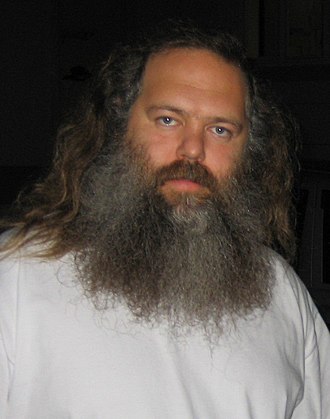
Whatever type of music you love, Rick Rubin has probably left his mark on it. Rubin, a founder of Def Jam Recordings and a former co-chairman of Columbia Records, might be the most influential music producer alive. A very partial roll call of the artists he’s worked with: Johnny Cash, Jay-Z, Run-DMC, Eminem, Beastie Boys, Slayer, The Red Hot Chili Peppers, Kanye West, Neil Diamond, Brandi Carlile and Adele.
We recorded this in 2023, after Rubin released a fascinating, unusual book, “The Creative Act: A Way of Being.” I’d expected stories of late-night sessions with famous musicians, but instead it read like a spiritual tract. Rubin was offering a guide to how to cultivate the mind states that lead to real creativity. And that’s what this conversation was about, too: how to open yourself up more to the world, and learn to trust your own taste.
Rubin’s advice feels more relevant with each passing year, as technology gets ever better at hacking our attention and the world fills with A.I. slop. So I wanted to share this episode again.
Mentioned:
The Tao Te-Ching by Lao Tzu, translated by Stephen Mitchell
“American Recordings” by Johnny Cash
“Pulses” by Steve Reich and Erik Hall
“Music for Wobbling. Music Versus Gravity.” by F.S. Blumm and Nils Frahm
Album recommendations:
“Forever Changes” by Love
“The Beatles” by The Beatles
“Ramones” by Ramones
Thoughts? Guest suggestions? Email us at [email protected].
You can find transcripts (posted midday) and more episodes of “The Ezra Klein Show” at nytimes.com/ezra-klein-podcast, and you can find Ezra on X @ezraklein. Book recommendations from all our guests are listed at https://www.nytimes.com/article/ezra-klein-show-book-recs.
This episode of “The Ezra Klein Show” is produced by Annie Galvin. Fact-checking by Michelle Harris. Our senior engineer is Jeff Geld. Our recording engineer is Aman Sahota. Cinematography by Marina King. Our executive producer is Claire Gordon. The show’s production team also includes Marie Cascione, Rollin Hu, Kristin Lin, Emma Kehlbeck, Jack McCordick and Jan Kobal. Original music by Pat McCusker. Audience strategy by Shannon Busta. The director of New York Times Opinion Shows is Annie-Rose Strasser. Special thanks to Jon Caramanica, Dan Charnas, Jack Hamilton, Felix Grimm, Carole Sabouraud and Kristina Samulewski.
Subscribe today at nytimes.com/podcasts or on Apple Podcasts and Spotify. You can also subscribe via your favorite podcast app here https://www.nytimes.com/activate-access/audio?source=podcatcher. For more podcasts and narrated articles, download The New York Times app at nytimes.com/app.
Hosted by Simplecast, an AdsWizz company. See pcm.adswizz.com for information about our collection and use of personal data for advertising.
Get every episode summarized
Each time The Ezra Klein Show publishes, we email you a written briefing from the transcript — the topics, who appeared, and any specific claims, with the ad reads skipped.
Email me new episodesFree for 3 shows. No card needed.
Hosts & guests
Transcript ready
1,198 searchable segments. Every word is indexed and playable.
Full transcript
The Ezra Klein Show — Best Of: The Tao of Rick Rubin. Machine-transcribed; use the interactive transcript above to jump the player to any line.
Hi, it's Alexa Weibel from New York Times Cooking. We've got tons of easy weeknight recipes, and today I'm making my five ingredient, creamy miso pasta. You just take your starchy pasta water, whisk it together with a little bit of miso and butter until it's creamy. Add your noodles and a little bit of cheese. It's like a grown up box of mac and cheese that feels like a restaurant quality dish. New York Times Cooking has you covered with easy dishes for busy weeknights. You can find more at nytcooking.com. We're off this week, but we wanted a repost, really nice conversation for Labor Day, which is my 2023 conversation with the legendary music producer, Rick Rubin. Hope you enjoy. I'm Ezra Klein, this is the Ezra Klein Show. Hi, I'm Ezra Klein, this is the Ezra Klein Show. I'm Ezra Klein, this is the Ezra Klein Show. I'm Ezra Klein, this is the Ezra Klein Show. I'm Ezra Klein, this is the Ezra Klein Show. I'm Ezra Klein, this is the Ezra Klein Show.
How do you introduce a podcast with Rick Rubin? So he may be the most influential music producer alive, and it seems like a fair statement. He holds nine Grammys. He co-founded Deaf Jam Recordings. He was a co-chair of Columbia Records. And he has just worked with the most stunning array of artists, just a very, very partial roll call. If you have a girl, problems out there for you son, the Beastie Boys, Run DMC, Slayer, Slipknot, Neil Diamond, Johnny Cash, M&M, the Red Hot Chili Peppers, Kanye West, Brandy Carlyle, Adele. It is a lot of very different kinds of artists who trust him, who seek him out. So what does he have to offer them? What is he giving them? Rubin just came out with this really fascinating and usual book called The Creative Act, A Way of Being. I expected stories of late nights in the studio with fame musicians,
but it is not that at all. This is a spiritual tract. It's a guide, finding and cultivating and inhabiting states mind that foster creativity, but not just a kind of creativity that leads to art. You don't have to be an artist to get a lot out of this. How to really listen to another person, how to deepen your openness to the world, and then also deepen your discernment in it, your judgments about it, your taste, how to know when something is for you good, how to know and trust yourself when it's not good enough or not done yet. There's a funny way in which the conversation ended up playing out themes of the book. We did two versions of it because the first one didn't quite find the right level. And then as we began, and this is a conversation about a book, I'll have had achieving more open states from which to listen, Rubin's suggestion was we get ourselves closer to that state by taking a few deep breaths and sink. And so we did.
And I left that in the audio because it may open your taste and it may change your experience of the conversation too. As always, my email is or client show at NY Times dot com. www.courtes.com Rick Rubin, welcome to the show. Thank you, sir. So this can be a conversation about finding the states of mind that help you listen, that help you discern, that help you create. And so as we start it, how should we find the right state of mind for this? Well, we can do maybe five slow deep breaths together to get us rolling. And on the inhale, think about the inhale. And on the exhale, when I say think, maybe that's not the right word. Maybe say, say to yourself, cue yourself, inhale. As you're inhaling, we're inhaling. And then when you exhale, focus on the exhale. We're exhaling now. And nothing else. Let's do it.
So assuming you're about to take about the same amount of time as mine, where are you that you weren't a minute ago? We had a little technical issue before we started, which created some energy in my body that was like a rattle. And by the second breath, it felt like that settled. And by the, I don't know, towards the end, I realized I don't know how many breaths I've done because I'm feeling very relaxed. And that felt really good. That's what it did for me. And I also felt like, and I don't know this, but it tuned us to each other but now we're starting, at least on a closer wavelength than before that happened.
I think that's right. So I normally think it's cliche to begin by asking anybody about the title of their book. But I do think there's an interesting interaction for you between the title and sub-pedal, the creative act, and a way of being. So tell me about the way of being side of this. The way of being is really what the book is about. The creative act is what I started out wanting to write. And through the process of looking at what were the decisions made to make things to the best of our ability, it came back to a way of being. And that right now, regardless of what else is going on in my life, the most important thing in the world to me is this conversation that we're having. This is what we're doing now. And as long as it takes us as long as it takes and if it went all day, I would go all day. And that's the way of being in the world.
It's a combination of paying attention and commitment to doing whatever it takes to do your best, whatever that is. You and I have talked a bit about your love of Stephen Mitchell's translation of the Dau Tei Chang. This struck me very much as a dauist book, not just in content but in form. I think when I saw this book coming, I expected to read a lot of recollections of Rick Rubin's history with various artists and times in the production room and in the studio. And it reads very dauously. It's very poetic. It's very spare. There's not a lot of eye. It's very comfortable with paradox, intention, and contradiction. So that was intentional. Absolutely. Absolutely. It would have been much easier to do the book that you described. But it was never interesting to me from the beginning. And when I first set out to work on this seven or eight years
ago, I met with a handful of publishers at that time and told them about what I wanted the book to be. And all of them had the same reactions. Like, well, yeah, but you're going to tell your stories from the studio and you're going to tell the stories of all the great people you've worked with. I said, no, no, no, that's not what it is. That makes it a smaller book. This is a timeless book. This is about a way of looking at things. And I wanted to be very clear in talking about the book. This is not a book about me. There's not one story about me in the recording studio. There's not one story about any artist I've ever worked with. That's not what this book is. It's more of a philosophical work thinking about how we make beautiful things. Let's talk about that philosophy. And I want to start with something you say very early in the book that seems very important to me, which is you frame artists and really you frame all of us as translators, as picking up signals from the world around them that many here but ignore, or maybe many never even hear.
And so you write then that the best artists tend to be the people with the most sensitive antenna. Give me some examples of that to make that grounded. Okay. The first example that comes to mind is recent. I just made a new album with Neil Young. And it's called World Record. And the way that that came about was he was hiking in Colorado on a daily basis. And he noticed that he was whistling. And he doesn't whistle much and he doesn't whistle well. But he noticed that he was whistling. And he noticed what he was whistling was interesting. And it wasn't the song he knew. And he decided to record on his little flip phone because he had a, he has an ancient flip phone. The whistling and he did this every day. And he collected 10 or so of these whistling melodies that if you asked him, he would say he did not write. They just, he essentially channeled them.
They just happened. And he was aware enough to capture them. And then aware enough when he had a handful of them to say, you know, I think I could make this into an album. This is interesting. I like these melodies and they're unlike any melodies that I normally write. So that's the basis of this album. It came from something outside of himself. We laughed a lot in the studio about, I'd love to meet the guy who wrote these songs. You know, who is this guy? They don't sound like Neil Young's songs. And then when he sat down to write the words, he wrote the lyrics to all of the songs in two days without changing any words. It just sort of happened. And he said, that's never happened to him before either. So from the beginning, and this is someone who's been making albums for 50 years, he found an entirely new way to work, not based on him deciding to find a new way to work, not on an intellectual choice he made,
but on noticing these whistling pieces are coming through. First step is I'll collect them. And then looking back, it's like, I feel like these are good. This is the beginning of something. So that's an example of being open to what comes. We recognize, we'll overhear something that someone says that's just the phrase we're looking for. One dimension of this for you is a view that the out there of art and ideas of zeitgeist of energy is real. That creativity isn't just something we summon from inside ourselves, but something that we are being able to pull from the world around us. And it creates a sort of sense of ideas as having their own volition. You write that if you have an idea you're excited about, and you don't bring it to life, it's not uncommon for the idea to find its voice through another maker. This isn't because the other artist stole your idea, but because the idea's time has come.
Yes. You call it, also, a great unfolding. Tell me a bit about that idea of ideas as having almost their own life. We see it happen in movements of art, where there'll be one artist somewhere in the world who starts working in a particular way. And then someone in far off reach, unconnected, a similar thing starts happening, sometimes two, sometimes three, sometimes five. And they're not imitating each other. It's like a bubbling up of, this is what's next. Now, maybe the less mystical version of it would be if all of these things came before, this is the natural reaction to all the things that came before. You could make that argument. You could say that punk rock was a reaction to the complexities of progressive rock, maybe, I don't know.
But the fact that the Ramones sprung up in New York and the clash sprung up in the UK, and didn't really know about each other at the beginning of that. It's interesting that these movements happen, and we see it again in painting all the time, where you'll see a style appear and it changes. All of abstract expressionism isn't a copy of the first abstract expressionist. It happened. The time was right. And it seems like we see big ideas change in the world and we see things happen where possibility is unlocked. Is it purely that the mental block of believing it's not impossible is what allows us to do it? Maybe so, I don't know. But belief is a very, very powerful thing. I talk about it in the book. And the beauty of belief is it doesn't matter
whether the thing you believe is true or not. It's your belief in it that gives it its power. It's not the truth in it that gives it its power. It's your belief in it. So belief is a really powerful force in the universe and a great one to have on your side. I talk also in the book about how you have to believe that something that doesn't exist can exist to bring it into the world. If you start with the idea that it's impossible, then it's impossible. We believe our way into things, allowing them to come into being in the world. And it is, for me, I have to say it's magic because that's my experience of it. I imagine something outlandish and it somehow finds a way to come together. I think this would be interesting to me. I haven't seen anything like this.
What would that be like? How can I bring that into the world and see how does it make me feel? So there's a belief and a suspension of disbelief that goes into all of the creation of art. If you want to make something new, there's no template to follow. We're really going out on a limb all the time. And we crash and burn a lot. We crash and burn a lot in the process just hopefully not too often on a grand stage. But the beauty of it is when we're making things, we're making them for us. And then it's up to us to say, OK, this is something I want to share with other people. Or this is something that not only do I not want to share with other people, this is telling me I want to go in this completely different direction because I found this is more of a dead end than I expected. I want to hold then on this idea, though, of the translator and needing a sensitive antenna to pick up on what signals you're hearing. From the people you've worked with from yourself, how do you make that antenna more sensitive?
If you want to be better at listening, not just to other people, but to the world, to what is maybe out there waiting to be born, out there waiting to be woven into a single thread, how do you become more sensitive to that? It seems the awareness practices and meditation are probably the best way to get there. And once you have an awareness practice, expanding it from the meditation cushion into the world, to where you're living in a constant state of awareness, the beauty of the awareness practice in meditation is you get the tools to learn how to do it. Once you have the tools, it can't help but change the way you see the world. It happens organically. If you want to use it as a tool in your creative work, it becomes an obsession. And you're always looking for opportunities.
You become Sherlock Holmes. You're always looking for clues. You're always seeing why is this color, this color? Why did this tree decide to grow in this spot instead of on the other side of the road? Did someone plant it or did it happen naturally? If it happened naturally, why? But I would say it's a daily practice out in the world. And I'm giving examples from nature, but it's also you can find it in literature. You can find it in a movies. You can find it listening to people. It's everywhere you go. There is so much information that's being offered up. And we only collect small pieces, but the more open we are to taking it in and looking for what's interesting. Why is something interesting to us? What are we keying in on? What are we noticing that no one else is noticing? If you become aware of it, you start seeing it everywhere. Right now, I'm sitting in a room, I've sat in many times, and I'm noticing that there's a piece of wood
that makes up a beam. And I can see that there is a red streak in the wood. I've sat in this position many, many times. I've never noticed this red streak before. I see red streak. And I see some chips in the wood. And now that I notice that, I start looking at every beam in the room. How is this one different? Why is this one like this? How come I never noticed it before? It just happens we're talking about noticing things and I'm looking up, first thing I notice, like, hmm, never saw that before. It's interesting. So it's like living in a constant questioning with everything you see, everything you hear, everything you do, just looking for what's interesting and why, what's different and why, what changed and why. One thing you say in your section on awareness, is it awareness is not a state you force. And I wanna say as an unaligned person,
that that doesn't often feel true. The distraction is not a state I force. And that awareness, you mentioned the constant practice of it that awareness takes a tremendous amount of energy and practice and patience. And yet I read enough Buddhist literature to know that it is supposed to be a state of rest and openness. So tell me a bit for yourself, but also because you're working with a lot of people and I'll get to this in a sec who I think do have a lot of distraction in their lives. How do you navigate the actual difficulty of awareness that getting to this non-force state? Sometimes takes a lot of force, a lot of changes in context, a lot of work. It takes a lot of work, it takes a lot of dedication, it takes a lot of practice, but ultimately if you're forcing it, it isn't what it is. The reason we say it's not something you can force is because it really isn't something you can force.
And if you're forcing it, that isn't it. Do you know what I'm saying? You may force yourself to practice, but eventually you get to the point where you're there. It's like learning a habit. It's like learning to ride a bicycle. There's a lot of work to learning to ride a bicycle, but once you learn to ride a bicycle, you ride the bicycle and it's fairly effortless in terms of how to ride the bicycle. Maybe it's work in pedaling and steering, but the idea of getting the bicycle to balance once you have that ability, you have that ability. Awareness is a bit like that. When you meditate and I will say, it's a whole that gets deeper and deeper forever. So once you get the feeling for it, I would say if you were to meditate every day, twice a day for 40 days, at the end of 40 days, I'd be surprised if you didn't feel like a different person than the person who started.
Now, to get to the point where you feel like you feel at the end of 40 days all the time, is probably a lifetime of dedicated practice. You say that awareness is a practice maintained by rituals. We've talked a bit about meditation here, but tell me about some of the other rituals you've seen and particularly things that maybe somebody from the outside wouldn't realize as a ritual. What are the artists you've worked with or the people you've learned from? Have you seen as a ritual of awareness that might, to someone else, simply look like living or habit or routine? The first one that comes to mind is not one of awareness. It's of connection and it was right before we started this together. I did a ritual for us, where I imagined my higher self I envisioned my higher self floating above me
and I envisioned you and I envisioned your higher self floating above you and then my higher self and your higher self embraced and agreed that we would work together to bring forth the best information that would be helpful to others. Now, you didn't know about that when we started, but that was something I did for myself with the idea of that's the outcome that I'm hoping for and that little ritual probably had some impact on me. It may have had impact on you, I can't say, I don't know. But I know that it's like setting an intention. When you set an intention like belief, it has power. So I come in feeling, I come into this conversation with a sense of connection with you, an imaginary sense of connection with you
in the hopes that that'll be beneficial to what we're doing together today. That's one example of a ritual. I'll tell you another, a different kind of a ritual that was one of the teachers who I love is Jack Cornfield, who's a Buddhist scholar and he talks about doing work with gang members and how communication is very difficult for them, both in terms of being able to share how they feel, but even wanting to open up and speak at all. And he finds that something a ritual as simple as lighting a candle in the room changes the energy of the room. When the people sitting around the table, if you're sitting around a table with a group of people, and there's some sort of anxiety or energy, if you light a candle and everyone sees you like the candle and everyone can see that the candle is burning on the table, it changes the whole energy of the conversation.
That reminds me of Carlos Santana. When Carlos Santana plays guitar in the studio, I didn't know this until I got to work with him. Whenever he's playing, there's a little music stand in front of him turned on its side to be a table with several trinkets of meaning to him, a picture of a guru that speaks to him and he lights a candle and he burns incense. And if he's playing guitar, there's a candle burning and there's incense in front of him and there's a picture of his guru. And I will say, having been in the room with him playing guitar, it's unlike anyone else I've ever experienced playing guitar, it's otherworldly. Now, I can't say it's because of those things, but for him, that's his ritual. And it clearly works like I get to see it work,
I get to see it work in real life. So I think the burning of candle could be a really nice one for pretty easy for us to try that one. When you're in a scenario where you want to change the energy of the space or create an intention of going in deeper, try lighting a candle, see what happens. A lot of your advice and thinking about awareness in the book, it's very spiritual, it's very meditative. And it got me thinking about whether you actually see that in many of the artists you work with, because when I follow some of the people on Instagram or elsewhere who are on your production discography, I see the mother phones all the time, I see them obsessed with self-image, constantly grabbing, much more so than I would ever do, dwelling on slight surrounded by a lot of people, a lot of posses, they don't always seem to be people on the far edge of cultivating presence and awareness.
They often seem particularly desperate in a way for distraction. So when you think about the people you work with in scene, what am I missing in noticing that tension? That may be the case, that may be the case. And I think one of the reasons that they seek out working with me or spending time with me is they very much like the piece of the way I approach things. And when they come to the studio in Malibu, for example, Shangri-la or our place in Italy, or when we've worked in Costa Rica, or in Hawaii, we tend to work in beautiful places that don't have televisions, don't have mirrors, often at the end of a stay of an artist coming to one of the places that I work, they talk about like going back into the real world, coming out of these environments. And they don't often don't want to. You know, they really like the piece and the tranquility
and the beauty and the simplicity of the places that we get to work in together. Do you think social media and the modern culture we have of attention and the business of buying and selling attention are a hindrance to creativity and awareness? Do you think that as almost as a species, or at least the digital part of our species, that we are structurally in a worse place for receptivity than we were say 50 years ago? It's certainly different. I don't know that I could say if I think it's better or worse. It's different. It's more foreign to me being a grown-up. Often with technology, we see it happen in two directions. We lose something but we gain something. And maybe we're losing something on the awareness side, but gaining something on the amount and availability of content.
I know that when I was young, the things that I liked were hard for me to learn about, find out about, or participate in. So I had to go to great lengths to learn about things I was interested in, whether that was in the early days of punk rock or being a magician, having to drive a long distance to go to a magic store and spend time with the other budding magicians. Or whatever it was that I was interested in, it was always difficult to get access. And in terms of punk rock, I didn't really have any punk rock friends. Known in my high school was a punk rock, or I was the only one. So it was alone in the existence. And now, if there's a new movement of any kind, you can find a community of like-minded people all over the world and share ideas with them. And it seems like that's a very good thing. And I don't know if that tradeoff is balanced,
but I think they're always good and bad that come with all these changes. I think that's certainly right. One of the things that I wonder a bit about, to go back to your story of being young and having really to work, to get access to things you wanted, or to see things you hadn't already known, is it it did cultivate a different kind of attention when you got the thing? Like when I saved up money and I bought a CD, that was a big deal for me. I got a CD now. And if I didn't instantly like it, I was much more likely to do the work to figure out how to like it, or really figure out why I didn't like it. The same is maybe even true of books. When I had to go get a book from the bookstore, buy it or check it out from the library, and I didn't have this unlimited kindle selection that I'm often looking at now, not liking something, I would give it more time.
And now, because the problem we all face is how to filter between all of the content we're being served. I find I'm much quicker to say, I'll use music here as a example, I'm much quicker to note the sound of something, see my immediate reaction to it, and discard it if my internal meter doesn't flow into pleasure instantly. And I wonder if something's lost by that, and I wonder about the practices needed to be appreciative and aware, and to treat as precious things that don't immediately appeal. The things that will be of value to you seem like they would eventually break through, one way or another. Maybe you pass by something. Now, I'm then someone will recommend something,
you'll read a great review somewhere, something will happen that will impel you to go back. And I know even when it was difficult, and even when I was buying CDs, if I didn't like something, it was hard for me to give it time, and it really would be more based on the, there would have to be an outside reason for me to go back, and it would happen, and it would definitely happen, where things that I initially didn't like, I grew to love, but it wasn't because I worked on them, it was because the conditions around me allowed it to happen. It wasn't forcing myself to try to like something I didn't like. You know, I still to this day, I still don't really like mushrooms. I never worked to force myself to like mushrooms. I still don't like them. Are you saying the food or the psychedelic here? The food. No, I'm saying the food. I've never done the psychedelics, but the food mushrooms I've never, I've never liked the taste. I've never liked the consistency of mushrooms. I tend not to use any drugs, but maybe the reason,
particularly I haven't taken mushrooms, because the idea of psychedelics are interesting to me, maybe the fact that I don't like eating mushrooms has some psychological feeling of this is not for me. I recently we asked about how you share your New York Times account, and you had a lot to say about New York Times games. I need my own New York Times login, because my sister is so much worse at the crossword than I am. I discovered that he's already finished connections that day, and I'm like, Jonah, it was my day. It doesn't let us play the same game since each other. I play the stoku. I do the crossword. I do the spelling bee.
I do the wordle. Please help. My kids want to be able to play wordle, but with the wordlebot. We would love to be able to have our own puzzles. I love New York Times games. I want to be able to play my own games. Listeners, we heard you. It's why we created the New York Times Games family subscription. One subscription, up to four separate logins, and your existing stats and streaks come with you. Find out more at nytimes.com slash family. If I were to watch you, listening to something new, maybe it's an artist who's going to be working with, maybe it's just something that has been recommended to you by three friends. But you want to listen. You want to be there with it. What would I see happen? Are you in a dark room? Are you wearing headphones? Are your eyes open or closed?
What is a practice of listening when the listening really matters to you? Look like. My eyes are closed. I'm in a space with complete silence. That could be a room in my home with speakers. It could be in the car. It could be in the recording studio. Those, I say, would be probably the main places where that would happen. And I would sit quietly. If I was listening with the idea of I really want to know where I am with this, I would be careful about when I listen to it. So if for any reason, I felt any level of anxiety, any level of stress. If I was wrestling with some sort of a problem, mentally, if I was in a terrible mood, I would not listen.
I might listen to other things. But if I'm listening with the idea of really being with something, the state that I'm in plays a role in that. If I'm sick, I probably wouldn't do it. I think those are the descriptive elements of what it would look like. I would be sitting with my eyes closed. I might be laying down with my eyes closed. Depends on whatever is comfortable, really. And I would close my eyes and I would play it. And just be with it. And I would start with the idea of, I'm turning off, you mentioned the phrase from the book earlier about listening and suspending disbelief. Now, if I'm suspending disbelief, I'm not judging it. The aspect of myself that's the judgment aspect is turned off. I just want to be with the music
and see what's happening in my body when it's playing. Feel it. Try not to think. Anything I can do not to think about it would be good. I might have a thought along the way as I go, this reminds me of something else. That's not so helpful. I'm hoping that doesn't happen. Or if it does happen, it would be like being in a meditation where in my practice, I'm focused on my mantra. And the thought pops up. Happens all the time. In meditation practice, we let the thought pop up. We don't avoid it or engage with it. We think of it almost like a bubble, like a bubble floats up. And we just let it float away. And we go back to our mantra. So in the case of listening to music, the music would function as the mantra. And if a thought popped up, I would try using the practice,
what I learned through the practice of meditation, of letting the thoughts just not engage, not push them away, but not engage, so that I can really be with whatever's happening. Tell me about what you call the vessel and the filter. The vessel is the part of us that holds everything that we've seen over the course of our lives. And the vessel contains things that we collect. And things that get in there without us knowing. So we may have learned a lesson from a teacher or an adult when we were young. And that got stored in the vessel. And it may be accurate and it may be not accurate. And what's in us, what's stuck in us, there are definitely things that we've collected that we loved. Everything we love is in the vessel. But there's also a bunch of stuff that just got in there through living life. And the filter is when things are coming from the outside world,
how we interpret them and how we see them, that's our filter. So we can experience the same thing and have a very different reaction to the thing that we see. I'll tell you a story. This is interesting. I'm thinking about this because I'm currently listening to Quentin Tarantino's new book, which I love. And he talks a lot about very violent movies. And I tend not to like violent movies. And it reminded me I was living in Boston in the summer between my junior and senior years of high school. And I went to a movie theater in the Harvard yard. There was a midnight movie a lot of kids were going and I thought, okay, I'll go. But I had no, I never liked horror movies or anything like that. And the movie started. And in the very first scene, you see a person who's a zombie, but he's a person through the scope of a rifle.
And then you see this person's head explode. And it was horrible. It made me nauseous seeing this. And I'm in a theater full of other young people, all pretty much on my age, who jumped up and screamed like, yay, like they were seeing what they came to see. And then over the course of the movie, this happened thousands of times. And over the course of the movie, my sensitization of it making me nauseous by the end of the movie, it didn't make me nauseous anymore. Not because it wasn't disgusting, but the way humans are, I imagine, is the way it is for people at Pugot War. You find a way to compensate or calibrate yourself to, this is how it is now. And this is not that it's okay, but that somehow we adapt, we adapt to this new condition.
And I remember thinking after seeing this movie, it's like, I don't feel like this is good. I don't want to be adapted just seeing people's heads blow up and feeling like it's okay to cheer. It's wild. It was just such a surreal moment. So my filter rejected that first atrocity, seeing that atrocity on, yet everyone else in the theater, through their filter, that was what action was. That's what excitement was. That was an adrenalizing experience. And I can't say mine's right, there's wrong. And that different experiences are filtered on the world. Because we were all watching the same movie, but how it affected us was different. I'm interested to hear that story of your youth because it conflicts with a suspicion I had about you. Okay. So I was looking over all the work you've produced or all the work that I could find that you produced to prepare for this. And one thing I noticed was that early in your
career, the first 10, 15, 20 years of production, the work you were attracted to or seem to be working on was really quite aggressive. It was more aggressive forms of a rap and hip hop and metal. It was a lot of production of Andrew Dice Clay's stand-up albums. And there are a lot of issues with Andrew Dice Clay, but one thing I think everybody can agree on is he's got a very aggressive form of comedy. And that seems a lot less true for your recent productions. And your book is very notably gentle and your demeanor is very notably gentle. So I was going to ask if you felt that your filter, your taste, your temperament had changed in that way. But it sounds like there was something there at the beginning too in terms of what you did and didn't like. So tell me what I'm seeing there in the shift of what you've worked on. I think it's just more a question of what's going on in the culture and age. Those two things are playing a role in it. I like outlaw elements. I like things that seem like they go too far.
I've always liked that. I still like that. I like being shocked. I like the extremes. But maybe now I might like the extreme in a very quiet way instead of in a very loud way. But I think that might just be a function of age. I still am capable of finding the aggression in a piece of music and helping support that. And maybe when I was younger, I don't know if I would have been as good at the more delicate side of things. I don't know. But I think that the my taste is the same. I just probably spend more time in a mellower world. But then again, I've been meditating since I was 14. Like I always seek peace in my life. I like to be by myself. I like to be in quiet spaces. I've always lived a bit of a monk like life even when
producing very aggressive music. What's the work you find moving or interesting for the extremeness of its quiet? The first one that comes up, there's a song we did with the Chili Peppers that was so delicate and quiet and beautiful. But one of the techniques that has appeared in the studio is if we're looking for very, very quiet delicate performance, making the headphones that the musicians are hearing very loud, so loud that if they play at normal level, it's deafening. And it forces everyone to play so delicately, like almost as if you know, you just touch a guitar string and it's really loud. It creates a whole different feeling. You can make a louder guitar sound quiet based on turning a fader down or you can make
a quiet guitar sound loud based on turning a fader up. But when someone's playing very, very delicately and you mic it well and you can hear it loud, but you can feel the touch being so careful. It creates an energy that's really beautiful to hear. So you look back early in your career and you're a producer of a really remarkable series of hip-hop recordings. You co-founded Def Jam Recordings when the early hip-hop record labels. And then there's this period when you begin to expand. And among other things, you begin working with Johnny Cash on these really now legendary recordings, the American recordings. But at that point, his career had really stalled. So when you walked into that studio and you begin talking to him, what did you see there? What did you think was there that you were trying to bring out? Well, we'll start with, I worked on hip-hop music, did I work on other kinds of music? I worked on
heavy metal, rock music. I don't think I'd done anything within the country genre. But I'm doing the same thing in all the cases. And it has very little to do with what kind of music it is. It has more to do with just how it feels. And after having success, doing hip-hop and hard rock and heavy metal, I realized most of the artists I worked with were young, almost all of them. Almost all of them, it was their first project, maybe their second project. So I had this thought because I've only worked with young artists, what would it be like to work with a grown-up artist? I wonder if whatever this is that we're doing would work with a grown-up artist. And I thought about who's the grown-up artist, who has the potential to be great or who has been great over the course of their life, but maybe isn't doing their best work now. And that was a key to it because it wasn't finding someone who was doing the best work of their lives and working with them on more of that.
It really was a who's someone who's proven that they could do it, but who hasn't been doing it for a long time. And the first person I thought it was Johnny Cash. And it had nothing to do with him being a country artist had nothing to do. It had to do with him being in my mind an iconic figure, and someone whose best work I think everyone would say, including him, was long behind him. So it was more of an experiment. And as you walked into that room though, what did you see in him? I mean beyond that his best work had been behind him, when you met him and you tried to open yourself to what he was and what he could be, what was it you noticed and then how did you guide him there if that's how you would describe what you did? I felt a very deep soulful human being. He seemed like someone who had essentially given up on
themselves. He was a huge star on Sun Records, along with Elvis Presley. Then in the 70s, he was the biggest artist on Columbia Records, and then over time got dropped by that label. He was playing it in their theaters. And I don't think he thought of himself seriously as a current recording artist. I think he saw himself as someone who's passed their prime and now was getting to sing the old songs in front of the audience who's interested. And we met at a dinner theater in Orange County. I watched his show and I thought he sang great and I thought it was a great experience other than the sadness of seeing this iconic figure singing in room of maybe 150 or 200 people who were eating dinner. As he's singing, I was curious to know what would a great new Johnny Cash album sound like.
And I had no idea what that was. And usually with the artists I work with, I have no idea going in what it's going to be. And I met him backstage and I liked him very much and we didn't speak very much. We sat together for a while, but I would say he's quiet and shy. I'm quiet and shy. And we just were in each other's presence for a while, set a few words to each other. But I would say there was some sense of connection. And he may have said, so I understand you want to record me. And I said, yes. And he said, well, why would you want to do that? Or what would you do different than anyone else has done? And I said, I really don't know. I'd be curious to see what happens if we got together and you just sang me songs on acoustic guitar and played songs for me that you like over the course of your life to give me an idea of who you are. So I understand your taste. And then once we do that, we'll figure out what to try to do.
And he agreed to do it, but he didn't agree to do it enthusiastically. It was more of a why does this person, it's funny. He said, he didn't know who I was. He's like, why is this guy want to work with me? Doesn't make sense. So he thought if I cared enough to want to do it, he would see where it went, but with zero expectations. And then we did that and he would start coming to my house and we would, he would sit on the couch and he'd play me songs on his guitar. And they were, I learned so much from him because he had this wealth of history of music. He knew so many songs. He didn't know many modern songs, but he knew songs from the past and he knew songs from his childhood or from before he was born that I'd never heard before and he would sing me these beautiful songs. And I recorded the songs not with the idea of anyone ever hearing them. I recorded
them more as a reference to the same way that we make notes in the studio. It's like, I'll record these songs so that we have a reference of all the songs that you play me. And then if there's a question between which songs to do, we could listen back and decide if, you know, comes down to choosing between two songs, we could listen to the original time that you played them for me and decide what to do. So it was purely to document the experience for us. And we did this over time, over and over again. And then it got to where we had, okay, here's a handful of songs that we think it's time to record. And then we booked studio time and went in with different musicians. And we did this several times with different musicians, great musicians. And over time, it became clear to me that none of the experiments we did were better than what happened on the couch. And that actually the solo acoustic performance on the couch was the most interesting thing that happened. Even though
when it was happening, I had no idea that it would ever be record. I just thought we're looking for songs. This was just part of the process to find the songs. And then I remember calling them and saying, I feel like these are like listening back. This is the most interesting stuff. What do you think? He's like, well, it makes me nervous, but I've always wanted to do like a late and alone kind of album, but I never had the confidence to do it. But listening to these, if you think these are better than when the band's playing, I'm willing to try what you want to do. And that was how it happened. And then and then we did a show at the Viper Room, which is a club owned by Johnny Depp. And Johnny Depp brought Johnny Cash out on stage. And it was beautiful. And I don't know if it holds 100 people, 120 people, tiny club. And the house was packed with musicians and people who just love Johnny Cash. And this was sort of a loud, rowdy club. If you've ever been to this club, it's kind of a
loud, it has a bar and they usually have loud music. And it was kind of a loud rock and roll club. And from the moment Johnny Cash stepped on stage, you could hear a pin drop in the room. It was dead silent in the room. And Johnny started playing the first song. And I could tell he was uncomfortable and afraid. And he told me he's uncomfortable and afraid every show, every show with his band has been over the course of his life, terrified, would sometimes throw up before shows, even after doing it for 50 years. And here was the first time he was ever doing it solo. Came out solo. The once was a man. And he couldn't cry. And cried for years and for years. After about the third song, he got in the groove and just was feeling comfortable. And the love
after every song, even the first where he was uncomfortable, the love in the audience was so profound. And the cheers were so strong that I think the acceptance of the people in the room gave him the confidence to continue the show. And it was a beautiful, beautiful moment. And I think after that show, he was convinced for himself that maybe this is okay to put this out as a record. Deel you. Deel you all my life. Like just because we went into the studio with great musicians, we went into studio with members of the chili peppers, amazing musicians. If that's not better than Johnny by himself, why would we put out the one that's not the best one that we have? Even if it's not what we thought it was
going to be. That story reminded me actually of a way, very indirectly influenced the music I listened to over the past couple of years because I listened to an interview you did with Andre 3000 who I revere. And you asked him what he was listening to. And he said he was listening to Steve Reich who I knew nothing about. But is one of the great minimalist composers of I mean, he's still working today, but of the 20th century. And he said that he was listening to him, that Andre 3000 said he was listening to him because he'd been more interested in music recently, the created space in which he could think. And I immediately thought, well, anybody he's listening to and describing the way I want to listen to. And his kind of sent me on a whole different musical journey. And I've gone to see Steve Reich, music live. And I really, really adore his work. But I'm curious about that idea of music that creates space in which you think and how you
approach that. It's interesting because Steve Reich is a great example of extreme music. And when you're 15 years old, maybe the extreme music that speaks to you is slayer. And when you're 40 years old, the extreme music that speaks to you is Steve Reich. It's a great way of putting that. Yeah, explain what's extreme about him. It's very repetitive. In a way, you could say it's non-musical. It seems to be more almost algorithmic, even though it's not. It's like hearing a cycle over and over and over again. Sometimes overlapping with another of a similar cycle, sometimes changing in very small ways. And they could be very long pieces. And often the instrumentation is interesting. Might be a group of players playing just percussion instruments or the instrumentation seems to often be as
interesting as composition itself. Well, one thing that always strikes me about his music is that he's able to make human beings sound like machines. When I think of pulses, which is one of his great works, I always describe it to people that it's like being inside an air conditioner in a really good way. But it has this remarkable quality of, I've now seen it live, so I really know that it's done by instrumentation. But it is the most machine sounding music I've ever heard, much more so than most electronic music. And that transmutation of people as you put it, something that feels mechanical algorithmic, but still beautiful. It's a really quite remarkable production. His music is very beautiful. What's beautiful about it is when we think of classical music,
classical music is written and performed in a very structured way. Where jazz music might be rooted in the same elements, it might use the same language of classical at times, but it's often played in a more free improvisational way. There's very little improvisation in classical music. It doesn't really work in classical music to have improvisation. And I'm going to send you an album that I love because I've never heard anything like it before, where it feels rooted in classical music, but it's as loose and improvisational as jazz. It sparks something in my mind. It's from the album, Music for Wobbling, Music versus Gravity, FS Blum and Nils Fram. This is the first track.
So tell me what moves you or captures you in that? Well, it breaks my understanding of genre. So there's clearly, you hear the sophistication of the playing where it's classically trained music by a classically trained player. And whenever I hear classically trained music by a classically trained player, it stays on one course. And this starts like that. And then it feels more like a jazz improvisation. And I've never heard classical music looking for the next idea, allowing the next thing to unfold, allowing the improvisation to happen. And then, all of a sudden, something happens that seems electronic. There's an electronic intervention, which is completely unexpected in this acoustic classical framing that takes it to a whole other place. And the whole album, it's soothing to
me and creates a question in my mind. I always want to know what's going to happen next. It forces me to pay attention because it breaks all of the conventions that I've grown to understand to be the way it always works. So this is different than all the other ones like it. It's thrilling to me. So it reminds me of something in your book about the relationship between imperfection and perfection, because one thing I hear when I listen to that. So I love Nils Fram's music. And one thing about a lot of it is it is gentle and perfect. And the sounds are very rich. And he manipulates pianos in a remarkable way. And on that particular song, he and the other artist, there's distinct imperfection. There's something they're doing there with the instruments that is making them sound off, that is making them sound jarring, that is almost like it is mistriking in the chord. That forces a lot of
attention. But I'm curious how you how you hear that because in a way I feel like that songs built not to be soothing. It's soothing based on the instrumentation and then those mistakes or those seeming mistakes force you to pay attention. They re-engage you again. Sometimes it's the mistake that re-engage you. Sometimes it's the change in direction. There are musical direction changes that are not always expected. Because I don't know. I'm not sure that these pieces were composed or if they're improvised. I'm imagining they're improvised, but I don't know. That's another thing that I love about it is hearing it. I'm not sure how this was made. And I know that you could listen to this piece and learn this piece and play it back with the mistakes. And that's how that piece would go. And that, you know, someone like John Cage would have the mistakes in if there were mistakes. Those would be part of the piece. And it would be written out with those clonks in there. Again, I don't
know how it was made. But I love it. I love it. And it makes me want to listen more. It makes me want to know it's going to and I'm always I never fall into the pattern of it. It never gets old. It's always new. I think it's a really lovely bridge to another section and very important section in me of your book, which is alongside the openness, you have quite a bit on developing taste, developing discernment, developing judgment. You talk about what it takes to quote, level up your taste. One of the opportunities for developing taste right now, but also one of the difficulties with it is the unbelievable abundance of what you can absorb, right? You can at any moment really have access to a lot of the best start humanity has ever produced in a way that definitely was not true for me when I was sitting in my room and I was 14. On the other hand, there is this unbelievable flattening, this overwhelming, this everything is the same,
everything is just another line on the screen, everything is just another entry in the playlist. So yeah, what does it mean to develop taste? What is if you wanted to spend six months a year leveling up your taste? How do you go about that? I would seek out whatever is considered the greatest works in history in whatever area you're in and maybe beyond whatever area you're in. I listen to a beautiful podcast called Poetry Unbound where I hear beautiful poetry every week. And I love that podcast. If you are a filmmaker studying painting, it's not a bad idea. If you're a musician studying filmmaking or films, it's not a bad idea. I mean, so many great, great songs were written about great movies over the course of our lives. I probably watch more old movies. There's a, the two places that I find the movies I watch are the criterion collection
app, which is fantastic and movie, M U B I that are mostly art house movies, the most beautiful movies in the world. The inspiration can come from any direction, seeing great works of architecture, traveling to see them, not just looking at pictures of paintings on your laptop, but going in the museum and getting up close and seeing how the paint was applied, seeing the thickness of the paint on the canvas. So many things don't translate. I would say, if you see a sunset and it takes your breath away, and if you take a photograph of it, the photograph doesn't have that same quality. And that's true with looking at art online. We can, we can get a sense of it, but you don't really see Gernica when you look at a photograph in a small image of this giant magnificent painting.
Go outside of your normal taste in music and maybe do a deep dive into the historically greatest country at albums ever made or country songs ever made or the historically greatest jazz recordings if you're, if you've never really listened to jazz. And listen enough, and what I, we talked earlier about, it's hard to stay with something if you don't like it. But if you know that some things in the canon of stood the test of time for the last 50 years, this is considered the best in this genre. It's a genre I don't understand, but I'm interested in folk music, going deep into folk music. I've gone through phases where I listen to one kind of music for a really long time and then I move on to a new phase. At the moment, I'm interested in, I don't know if you would call it Moroccan or maybe it's Arabic music, but traditional Arabic spiritual music.
I heard it on the on a radio several years ago. There was a radio station in a country that I was in and I heard this incredible music that was unlike anything I've ever heard before because it sounded like folk music, but it was from a different place. It was in language I didn't understand, it was from a different place, and it was so beautiful. And since then, I've been searching for more of that. There's also interesting a great app called radio, whoa, whoa, whoa, whoa, and radio, whoa, whoa. Is that O's or woes? O's. Letter O's, radio, uh, radio. It's the word radio, but with a lot of us. Radio. And that shows a map of the world, a globe, and you can pick any country in the world and you could pick any decade. So you can say, uh, Spain, 1940s, and you'll hear
what was playing on the radio in Spain in the 1940s or Russia in the 1970s. It's wild. It's like being in a time machine where you're showing up to these places and turning on a car radio. That sort of feels like to me like it's truly transported to another dimension listening to this. And I find it very inspiring and it's fun just to hunt around the world and to pick decades and move what's it like in the 90s? And then what was it like in the 1930s? And maybe even chart the progress through the different decades in the different places. It's so cool. And how different two countries next to each other, let's say Italy and France, how radically different the music on the radio in those two places where even though you could drive right over the line and be right there, it's that close. It's a radical fun trip and opens your mind to possibilities. Really, uh, it makes me
excited about music again when I when I play with that. You write about loving up your taste, quote, this applies to every choice we make, not just with art, but with the friends we choose, the conversations we have, even the thoughts we reflect on. All of these aspects affect our ability to distinguish the good from the very good, very good from great. Give me some examples of what you mean by that. Yeah, that's heavy. At different points in your life, we have relationships with people or friendships with people that make sense at that point in our lives and we're seeing the world in somewhat of a similar way. And over time, we might find they grow in a way that we don't, or we grow in a way that they don't. And also sometimes the opposite is true too. I will say, sometimes having people around you who have very different ideas is really helpful and more true
to what it's like being in the world. And I'm suggesting pay attention to your network of friends, the things that you read, everything that you take in, what you watch, are you being true to yourself today? Are you being true to who you were when that relationship started or when that interest started? I'll tell you honestly, at the time that the formation of hip-hop, the early days of hip-hop, I listened pretty exclusively to hip-hop music for a long time. I grew out of my hip-hop phase, and now I listen to hip-hop when either someone recommends something great or I come across something just out in the world that excites me and engages me and gets me back interested for a period of time. But I don't listen to hip-hop music all the time, but I spend a lot of my life listening to hip-hop music. I don't listen to new heavy metal. I listen to that at a certain point in my life,
and I continue to allow whatever is interesting to me in that moment. And whatever is interesting to me in the moment usually has other things with it. It may impact what I'm reading. It may impact the people I'm talking to. I try my best to stay true to who I am in the world today, and doing my best to support who that is. And when I change, those things change, and I may go very deeply into something for a while and then grow out of it and then move on to something new. And as a creative person, having those different chapters in my life, they all bring something. All of that is in the vessel. Do you know what I'm saying? It's like, while I don't listen to the same aggressive music I used to listen to, I have a whole vocabulary of aggressive music in me that's never going to go away.
I'm Jonathan Knight and I'm the general manager of New York Times Games. If you play our games, you probably know there's something a bit different about them. Just like there are writers behind the articles you read in the Times, there are creators behind our daily puzzles. Tracy Bennett curates the day's wordless solution to keep it lively and varied. When Aloo creates each connections board, including all those categories that try to stump you. Samazersky comes through every last letter, word, and pangram and spelling be so that loyal players of all skill levels enjoy it. Our puzzles are human made every day with the standards you'd expect from the New York Times. And this matters because when you choose to spend time with our games, it should be time well spent, solving puzzles that are challenging, surprising, and joyful. Puzzles handcrafted for you. We think that's something worth investing in and something worth paying for.
Beauty. And you write quote of all the great works that we can experience. Nature is the most absolute and enduring. Say more. Well, it seems to me that all man-made art is a reflection back to our first energetic feelings of what's stimulating to us. So our mother's face when we're an infant, our mother's face is the first thing that we recognize. And that's the first thing that's we're connected to. And then it might be a family, it might be the home that we grow up in. It consistently broadens out over time. And nature is the one where you know the first time you see the ocean, paying attention to the stars at night. If you live in a place that's flat, the first time you get to see mountains, if you live in a mountain range, the first time you get to see planes.
All of these things that from our experience seem like this is how it always is. I grew up, I grew up in a small beach community, it was flat. And the world that I grew up in, it was a small town. The ocean was on one side of the Little Island, six blocks away, the bay was on the other side of the Little Island, there was a boardwalk. When I would go to Manhattan, it was mind-blowing to me, the difference between what Manhattan was like and what the place that I lived in was like and what the place that I was born in was like. And experiencing those changes, the thing that ultimately led to me feeling less comfortable staying in New York after imagining, this is the place I'm going to live my whole life, it was my dream to live in New York, had to do with nature. I found that spending my life looking up at the sky and seeing a small sliver of sky between two
buildings wasn't satisfying to me after I don't know seven, ten years, how many years it was. And I felt like I need to see the horizon, I need to see the horizon every day. I can't just look between buildings, it doesn't feel right to me, I need the horizon. One thing I've noticed is that when artists seem blocked, novelists, painters and musicians in particular, it's a very common move to decamp to somewhere more natural for a period of time, to do their work out of a hut in Rovermont. Can you tell me about an example where you saw that that move to nature have a profound effect on the direction of someone's work? I'll say what's interesting about that is that I think the magic in those things is the move more than the move to nature. The idea of changing your life for a period of time, going to a new environment, experiencing a different way of living has to impact your work,
it has to unlock something. There are new things to notice, there are new feelings to be had, and it could be if you're a city dweller going to nature can unlock you, and if you live in nature, going to a city can unlock you. I think the idea of going somewhere to make something, it takes you out of your daily life, it takes you out of the responsibilities of your life. When you go to a remote place to focus on work, all there is is that work, and it can help an artist really get in tune with themselves. I can tell you one from personal experience where it ended up not negatively impacting the work, causing a bit of an explosion. When Trent Resner had finished, I think he had finished the downward spiral album, and we talked about maybe working together, and he was very much in it. I suggested that he rent a house in Big Sur and go live in Big Sur,
and see what happens there, because it's a different kind of a place. For him, at that time, in his mental state, it did the opposite of what was hoped. He felt, again, I've not really talked to him about this because he vanished after this for a while, but he went inside of himself, and then started, I believe, drinking, and kind of went stark-raising, and it didn't lead to the result, the hope results in that case. It really does have to do with the person and the timing, and there's not a one remedy for all. We all do have to find our own way and find our own path, and I suggest often in the book is try to open yourself to another way than the way that you think is the way, and see, just experiment if you're used to working dark work light,
if you're used to working loud, works soft, if you're used to working high work low, whatever it is, see what happens on the other end of the seesaw, and even if all it yields is you getting better at being on the side you're always on, that's fine. You've no more, you'll get a new perspective. I think this speaks very deeply to your perception of the artist as a contextual creature, as a translating person. I grew up in Southern California in Irvine, and then I went as a political journalist to Washington DC, and I lived there for 14 years, and then I moved to the Bay area about four years ago, and my work changed much more in that move than I expected it to. I knew California, I went to college at UC Santa Cruz, I just thought it was a place I liked, and I lived in urban environments this whole time, right? I didn't live out in rural California or out in Big Sur,
and the amount of difference in what I think about and how I see things and what feels resonant to me was really big, even though I would not think of Washington DC and Bay Area, California as dramatically different places, but they're different enough that the signal I was pulling in became very different, and then what I began putting out, and I'm not, you know, but a lot of it, I would not classify as artists reporting and analysis and other things, but it really became quite different. It's been a quite profound lesson to me. Tell me more about the differences, both in your work and the places, was it difference in the community, or was it different in the place? What? Tell me everything. Both. So for me it began that we actually took a, before we made this move, we took a 10-week book leave in Half Moon Bay, not actually that far from Big Sur, and I thought
that was going to be a very quiet period, and this little hut near the beach, and I was really struck by how expansive it was with so much less to do because spatially I wasn't near a lot to do, and I didn't know anybody in Half Moon Bay, and it's a bit of a hike to get into the city into SF. The quiet, and I didn't have kids at this point, so it was a little bit different. The quiet was, I had almost never felt bigger when I expected to feel very small. So that was one pretty transformational period, and that led to the actual move, which we didn't live in Half Moon Bay, we lived in Oakland, and then in San Francisco. And I mean, among other things to talk about the political side of my work, maybe, the problems of California are different than the problems of national politics. You're dealing here with a state run by Democrats. You have to focus in on what is not going well in Democratic governance. You've netted out a lot of Republican influence,
and so where that is, the cause for me, in my view, of a lot of problems at the national level, that's really not the cause of the main problems at the California level. So you have to begin thinking about a different set of dynamics and players and problems, and my work is profoundly shifted off of that. And then what people think about and take seriously in the Bay Area is just different. I mean, I do think there is now and has been for a long time. People call it the California ideology, or California consciousness, or, but there is a tilted axis of more interest in things like meditation and psychedelics and technology, and this sort of weird locus of things that affect consciousness that is just much more constantly present here than it is in a place like DC. Relationships are different. I think there's much more gender
experimentation out here than what is in DC. That's actually a much bigger part of what is changing here than I had realized before I came. So just all of it is different enough that what I began thinking about and taking seriously and giving my attention to and being aware of was really different and has been very invigorating. Sounds great. I think if you look at the history of cults, many more cults have started in California than have started in DC. Well, that's if you don't assume the whole Constitution and Constitutional culture is a cult. Oh yeah. That's true, but that's just one. It seems like that's what. There's all kinds of interesting ones in California. You talked about living in a quiet place and how profound that is, and that also brings up the idea of boredom. You talked about when you lived in DC, there was a lot to do all the time. And when you were in half moon bay, there was less to do. So I had enough you didn't use the word bored, but that is a
part of it is this feeling of, well, what am I going to do now? Like what am I supposed to do now? I know that in DC, this would be what I would do. And that feeling of, I see artists have this when they come off the road. If an artist has been on the road for a really long time, it can even happen honestly to me if I've been in the studio for a long time. When I finish a project, they get home and during the day, when I would normally be engaged in this creative function in the studio, I have a real sense of what am I supposed to be doing now? Like what do I do? You know, what do I do? I'm, this is what I do all day every day and I'm not doing it. What do I do? And that is one of the great things that comes up when you go to a new location. All of the normal rhythms of the day get upset and it becomes truly about one thing. I want to pick up on what you said about boredom because it reminds me of something I found striking in the book. You write quote, the artist
actively works to experience life slowly. Why? I think when we're, when we're moving slow, we're stopping to experience each part. I know if I go to the beach for my morning walk and I go myself, I walk at the pace that I walk, I get my heart rate up, stay consistent, listen to my podcast or audiobook and pay attention to the things around me. I might stop and capture an image or make a note if something occurs to me. But if I were to do that same walk with my son, that will not be the cadence of the walk. My son will stop anywhere. There is anything interesting to him and he'll stop for a long time. He'll find a shell, a stone, a piece of wood, whatever it is, he'll stop and just engage fully. And I'm living on schedule trying to get my
steps in and he's living in the world really as an artist as a creative being, engaging in the world, stopping for what catches his attention. He's got no other agenda other than whatever's right in front of him that's holding his interest. So if we can get back to that childlike, the schedule doesn't matter, what I'm trying to accomplish doesn't matter, I'm here in this moment present with what's going on and I'm going to give attention to whatever it is that calls me. That's the practice. I want to pick up on one of the things you said about time. That struck me, which is that quote, discipline and freedom seem like opposites. In reality, they are partners. Discipline is not a lack of freedom. It's a harmonious relationship with time. A harmonious relationship with time. I really like that line, but tell me what it means.
An example would be I don't have time to meditate because it's going to take me 20 minutes or 30 minutes, two times a day. That's an hour that I'm taking away from my work, from my play, from whatever it is that I'm doing. So I don't have time. And what you come to learn when you do meditate is that even though you've used 30 minutes, two times a day, not engaged in the thing that you're hoping to accomplish, that you end up having more time. Doesn't make sense. You're trying to save time by not meditating yet. When you meditate, you have more time. It's one of the things with time that's interesting. It also goes to the idea of shortcuts. We live in a society of looking for shortcuts. It's the same. It's like there are no shortcuts. The shortcut you're missing, the synopsis isn't the article. Do you know the headline
isn't the story? We miss all of the nuance and all of the depth when we're just living on the surface with the bare amount of information, thinking we know what's going on. And that's where the discipline comes in. The discipline is the commitment. The discipline is the thing that allows us to get to where we want to go. And we think a discipline is something that gets in the way. And it's the exact opposite. It allows our dreams to come true. I think that is a lovely place to end. Okay, so let me do a twist on what is often our final question, which is, what are three albums that have changed you that you would recommend to the audience? Love, forever, changes, are through and love, beautiful album, the white album of Beatles. And I'll say the remones for a stop.
Recruven, thank you very much. Thank you. The Ezra Clang has produced by MF Ogao, and he galvaned Jeff Geld where she karma and Kristen Lynn, fact checking by Michelle Harris, mixing by Sony Herrero, original music by Isaac Jones, audience strategy by Shannon Busta. The executive producer of New York Times' opinion audio is annual stressor, special thanks to John Caramonica, Dan Charnes, Jack Hamilton, Felix Grimm, Carol Saburo, and Christina Samuelowski.
More episodes
More from The Ezra Klein Show

Why I Can't Stop Thinking About 'The End of History'
The Ezra Klein Show
What ‘Hyperpolitics’ Explains About This Era
The Ezra Klein Show
Trump vs. the Bond Market
The Ezra Klein Show
This Is Why People Hate the Government
The Ezra Klein Show