Loading...
educationlanguagelearning
BONUS : East Turkistan, with FM Salih Hudayar.
About this Episode
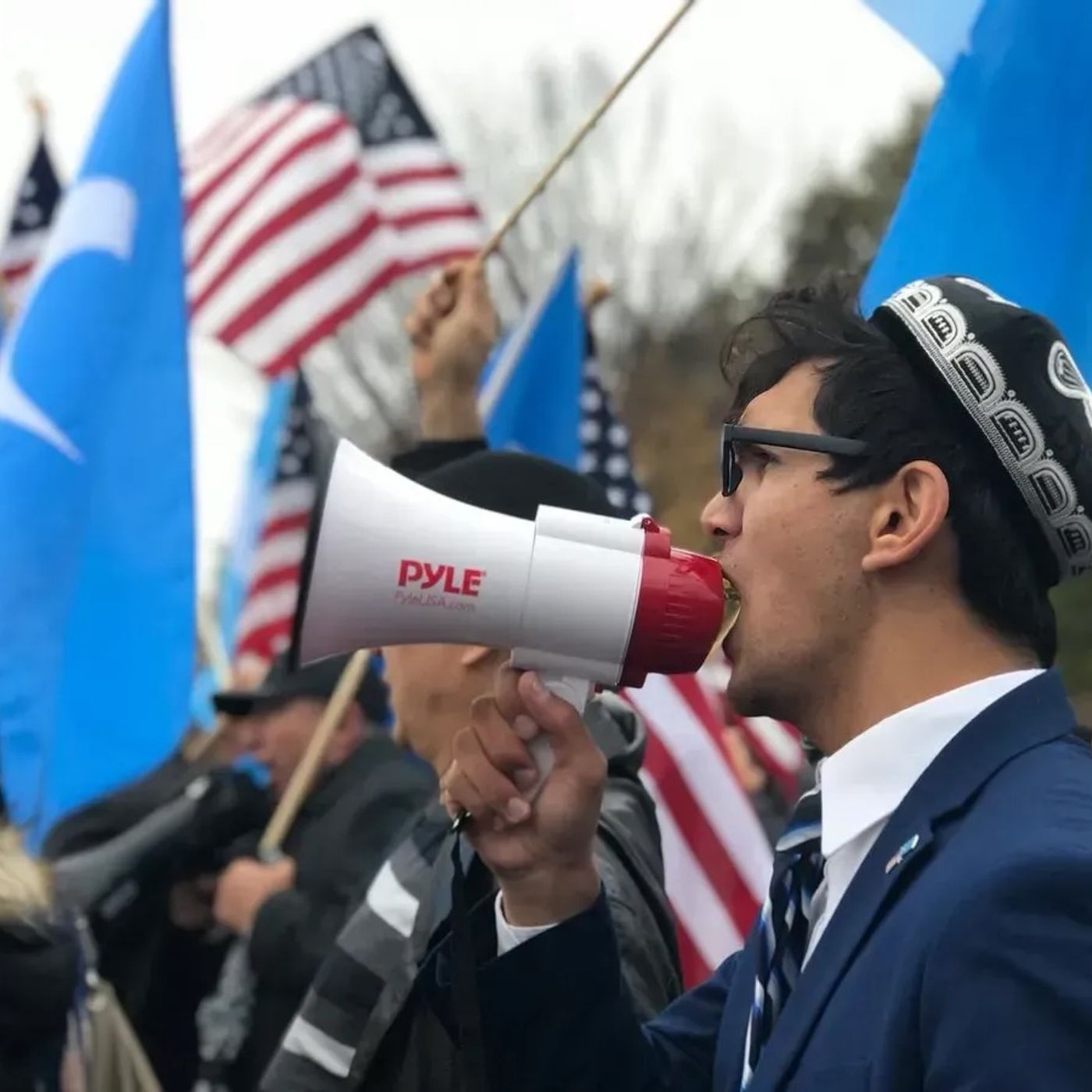
Stephen talks to Salih Hudayar, Uyghur politician and the Foreign Minister of the East Turkistan Government-in-Exile.
www.send7.org
www.send7.org
Hosts & Guests
Transcript
What's up, baby? It's Brettzki.
And I'm here to tell you that SpinQuest.com is giving out free sweeps coins.
All you got to do is purchase a $10 coin pack.
And guess what? They're going to give you the coins from a $30 coin pack.
That lets you play all your favorite games like Blackjack,
Wanted Dead or Wild, and we're talking real cash prizes, baby.
SpinQuest.com
SpinQuest is a free-to-play social casino.
Boidware prohibited. Visit SpinQuest.com for more details.
Hi, this is Steven. Today, we have a special bonus episode,
different from our normal seven-minute news episodes.
Today, I'm talking to Sally Houdayo, the foreign minister and former prime minister
of the East Turkestan government in exile.
East Turkestan is an unrecognized state and former state,
which today forms the Chinese region of Xinjiang.
And it borders Mongolia, Russia, Kazakhstan,
Kyrgyzstan, Tajikistan, Afghanistan, Pakistan, India, and China.
This region became a particular focus of attention
since around 2015, when there were widespread allegations
that China was repressing the Turkic people,
particularly Uyghur Muslims, who are the biggest ethnic group.
There were many reports, including from the United Nations,
that China may have been committing crimes against humanity,
against Uyghur people,
through detaining them without reason, forced labor,
forced sterilization, or preventing births,
indoctrination, and suppression of religion,
among other crimes.
China denies these allegations and has said that it has been fighting extremism
and separatism, and that its camps have provided various forms of education.
This podcast is free, but it exists because of our incredible supporters,
who also have access to the transcripts of every episode,
including this one, as well as vocabulary lists,
weekly worksheets, and a weekly world news quiz.
You can become a supporter at send7.org.
Now, here is Foreign Minister of the East Turkestan Government in exile,
Sally Hudaer.
I'm talking to Sally Hudaer. Sally, thank you for joining me.
Thank you for having me.
We're going to be talking about East Turkestan
and the movement for independence of East Turkestan today,
and your role in the East Turkestan Government in exile.
But before we start that, maybe you can just give us a little bit of an idea of your
background, your childhood, your family, stuff like that.
Yeah, so I was actually originally born in East Turkestan,
which is currently occupied by China, and is officially described by the Chinese government
as the Xinjiang Uyghur Autonomous Region.
I was born in the city of Atush, which is about 45 kilometers northwest of Kashgar,
which is the historic capital and cultural capital of the Uyghur people.
I arrived in the United States as a child at the age of seven, following my father,
fleeing the country in the late 90s to the United States as a political refugee,
so we joined him as political refugees in the United States.
I grew up in Oklahoma, which is in the Bible belt of the United States.
It's in central part of the United States, so it's more like one of the most
American places that you can possibly be in in the United States.
I got involved in East Turkestan's independence movement,
while partially the fact that my father was previously involved and also because
the changes that were happening in East Turkestan and geopolitically,
in this respect, by the end of 2016, we started losing all contact with our relatives in East Turkestan
because China began its mass internment campaign, and so I initially founded the East Turkestan
National Movement with like-minded Uyghurs and Kazakhs from East Turkestan who grew up
in the United States like myself to advocate for our political and human rights,
specifically to advocate for recognition of the genocide, to advocate for meaningful action
and to end the genocide as well as support for our self-determination.
Our my earlier successes ended up, you know, putting me into the spotlight within our global
diaspora, and in 2019 I ended up becoming involved with the East Turkestan government exile,
which has been around since 2004, and right now I serve as the foreign minister of the East Turkestan
government exile, and I continue to advocate for our people's political and human rights,
specifically for decolonization and the restoration of our independence.
Excellent. Okay, we will move on to the role of the East Turkestan government in exile a bit later,
but just so that we can locate or help everybody in the world, locate exactly the place that we're
talking about right now. Let's go into the geography a little bit. What exactly is East Turkestan,
and is there a difference between East Turkestan and the region of China known as Xinjiang?
Yes, so East Turkestan is the historic homeland of Uyghurs, Kazakhs, and other Turkic peoples,
historically throughout history since at least the 5th century it's been known as Turkestan,
meaning the land of the Turks or the country of the Turks, at the time referring to the Turkic
Kaganate that used to rule over East Turkestan, then gradually this term began to, you know,
referred to pretty much all of Central Asia, and then in the 17th century is when it began to become
more distinguished between East and West Turkestan, essentially as a geographic label to distinguish
the areas East of the Palmer Mountains versus West of the Palmer Mountains, and it became more
politicized in the 18th century, especially after the Russian Empire began to conquer what was
historically West Turkestan, now the present-day independent nations of Kazakhstan, Kyrgyzstan,
Uzbekistan, and so forth, and East Turkestan briefly, you know, at the time maintained its independence
until the Qing occupation, and so the the difference between East Turkestan and the Chinese
terminology Xinjiang is essentially political, you know, it refers to the same geographic
area, but the term Xinjiang is the Chinese term which translates as the new territory or the
colony, signifying that it's new to China or that they newly occupied this area, and it was first
imposed on East Turkestan in 1884, and when was the last time that East Turkestan existed as an
free independent nation? East Turkestan regained its independence as the East Turkestan Republic
in 1933, but it was overthrown due to Soviet intervention in 1934, so that was very short lived.
A decade later in 1944, we re-established our independence as the East Turkestan Republic once more,
and maintained it until December 22, 1949, when the newly established People's Republic of China
under the Chinese Communist Party invaded East Turkestan and then overthrew our government and annexed
it as Xinjiang, and then in 1955, formally designated East Turkestan as the so-called Xinjiang
Uyghur Autonomous Region. Right, right, so there was about a year in the 1930s and about a year in
the 1940s, about five years from 1944 till 1945. Okay, yeah, five years then. Okay, I think a lot of
people, when they hear the word Xinjiang now, especially people who were following the news a lot,
maybe around five to seven years ago, something like that, a lot of people will be familiar with the
Xinjiang because of the repression or perceived repression of the Uyghur people. I'm not going to say
in such a beautiful pronunciation as you've given the word Uyghur there, but could you just tell us
a bit about the Uyghur people and who they are and are they the main people in East Turkestan,
stuff like that? Yes, so the Uyghurs are the native inhabitants of East Turkestan, and in fact,
both archeological and DNA research shows that Uyghurs are the direct descendants of the ancient
peoples that were inhabiting East Turkestan since the end of the ice age, so about nine, 10,000
years ago, and they gradually intermixed as well with other peoples, specifically the
Hun Turkic peoples, so Uyghurs are predominantly like an Indo-European and Turkic
admixture. Their language today is primarily Turkic, so they are the largest ethnic group in
East Turkestan, but the term Uyghur was actually revived by the Soviet Union in 1921, prior to that
the local population we would call ourselves Turks turkeys or by whatever local
toponym, in the endonym, so for example, if you were from Kashkari internally you were a Kashkari,
and then externally you were a Turk or a Turkey. And I've seen that because it's a Turkic language,
it's most similar to Uzbek, can you actually understand Uzbek and could you understand even Turkish,
for example? Yes, Uzbek is about actually 80 to at least 90 percent, at least 80 to 90 percent
similar to Uyghur. It's the Karloch branch of the Turkic, you know, language family, so we both fall
under that branch of that Turkic family, so Uzbek and Uyghur is very similar, we can understand
each other without any problems. As it comes to Turkish, it's a bit more different, we can understand
about 40 to maybe 50 percent, but not as easily understood as Uzbek.
Okay, well, right, you said something a minute ago, you said that around 2016 you lost connection
to your family who is still in East Turkstan. What happened there?
So this is shortly after a couple of years after China launched its so-called strike hard campaign
or its people's war against terrorism, that's the official policy that or campaign that it
unveiled what many governments have recognized as a crime of genocide. Initially the first two years,
they targeted men mostly between the ages of 15 and 45 on the basis that they were prone to
become radicalized and rebel against the state, etc. And when the international community,
of course China said we're fighting against terrorism, so when the international community
gave a green light and said, okay, we understand China expanded this to pretty much our entire
population. So anyone who had any relations with anyone overseas, so if you had relatives who
were living in a foreign country, if you yourself had ever traveled abroad, if you believed in any
form of religion, if you were a young man and you had facial hair, you were not shaving,
if you were a young man and you were going to the gym, you were working out, if you refused
to drink alcohol, if you refused to consume cigarettes, if you refused to eat pork, you were deemed
as an extremist, as a terrorist, and you were sent to so-called reeducation camps, that's the
official term that the Chinese government called it, reeducation camps, then they re-changed it to
vocational training facilities, but essentially concentration camps. This is after they sent
roughly 1.2 million Chinese officials to live in our homes with us, you know, in East
Pakistan, to visit our homes as, you know, so-called relatives under the Relatives Pairing Program,
where they would monitor you and assess your loyalty, so if you had a score lower than 90,
they would grade you from 0 to 90 to 100, if you had score lower than 90, you were deemed unreliable,
and you had to be, quote, reeducated, so in this process, you know, they visit our homes,
they live with us, you know, they'll, we're a Muslim population, so they'll bring us pork,
and they'll be like, eat this, if you object, and if you say, no, I can't eat this, they're like,
okay, sky has extremist tendency, or this family has extremist tendency, and they'll mark that down,
you just lost 10 points right there, if they, after you, you know, they bring you alcohol and they're
like, let's drink together, if you refuse, the same thing, if you, you know, they're like, let's,
you know, smoke together, the same thing, they're pretty much trying to find any excuse to
send you into these internment facilities, and so they had 56 official excuses, you know,
right, as some of them I mentioned earlier, you know, from owning, you know, from working out at
the gym to owning any gym equipment, to owning tent, to having, you know, any types of, you know,
and other than that one knife that each family is allotted, you're only allowed to have one
knife, and it's changed to your kitchen wall, and it has a barcode etched onto it, and that
barcode contains your entire family's data, so if that knife were to be found anywhere else
at a potential crime scene, your whole entire family is going to be held responsible, so this is
the level of, you know, surveillance, the level of, you know, harassment, the level of, you know,
atrocities that China was, you know, undertaking, like we haven't discussed what's happening in
the, in the campsite in itself, but this was the official program, and because of that, you know,
many people like, for example, my relatives, they were all, many of them were taken into the camps,
the last person I remember speaking to was my grandfather, who told me, do not call us anymore,
we'd have no connections to you, leave us alone, I'm too old to go to school, and school is the
euphemism for that reeducation camp, the internment concentration camp, so it was not just me,
everyone across our diaspora, we all started around the same time, losing contact with our relatives,
and, you know, in the 21st century, you'd think that nothing like this would happen, you know,
you can easily call someone in any part of the world and, you know, communicate with them,
but with us, we weren't able to do that. Are you saying that your grandfather and some other
members of your family were taken into these camps and you were never able to speak to them again?
Yes, we were able to confirm through other relatives in neighboring countries,
like Kregistan, Kazakhstan, who were able to, you know, communicate through others,
that many of our relatives were taken into the concentration camps, many of them were actually
given also prison sentences, especially ones that they deemed were more closer to us
for so-called separatism, extremism, etc. From what I know, four have been
confirmed, killed in the camps and prisons, the others, we don't know if they're alive,
they're dead, we have no information, even our relatives in those countries, they started in
the other countries, they started, you know, avoiding us as well, like, they're no longer,
haven't been in contact with them in years as well, especially after we filed our case
against Chinese officials for genocide at the International Criminal Court, you know,
we began to lose all contacts with even our relatives in those neighboring countries.
I hope you don't mind me pressing on the personal, difficult story here, but would you
like to tell us a bit about the four members of your family who you believe were killed in the
concentration camps? Well, they were, you know, extended members of my family, it's not that I had
really deep ties and there were like cousins of mine, but again, it was individuals that the
Chinese government deemed had some form of connection to me, that they could tie, whether it was,
you know, passed in the past, whether I had spoken to them on the phone or something,
like that, this was, you know, something that they could connect to to be like, oh, you know,
these people actually had, you know, ties to this, you know, because in the eyes of the Chinese
government, I'm a so-called separatist or a terrorist or whatever, you know, allies that they
like to, you know, demonize us with. And do you believe that they were charged in a court and
executed because of their sentence of separatism, something like that? No, none of them were officially
executed. They were sentenced, you know, in the, in the, the two of them died in the camp,
in the concentration camps. So that's, it's extra-deditial. You're not, nobody there is actually
sentenced to anything. You don't know when you're going to get out, you know, they're quote,
re-educating you, that's the official term that they use. So it's completely extra-deditial.
Whereas the ones that have been sentenced, you know, they charge you with an official crime.
For example, they'll charge you with, you know, plotting to overthrow the state or promoting
separatism or invoking, you know, ethnic hatred, stuff like that. These are the actual charges
or engaging in religious activity, in extremist religious activities, stuff like that. Those are the
official charges that they'll charge you with. Whereas the ones inside the camps, it's just the
ones that, you know, under the, when they sent those Chinese officials to grade them,
they filled, you know, they scored lower than 90s, so they were deemed unreliable and sent.
And so in both cases, they died from, you know, the conditions in those facilities,
most likely through torture is the, is the, is how they died, not because of them being officially
executed. Do you think that's possible that some other members of your family don't want to
have any more connection with you because they're scared? Oh, absolutely. I mean, as I just said,
forget about the ones inside Eastern because I'm talking about the ones outside in other countries
like Kazakhstan, Kyrgyzstan, you know, other places, even they don't want to have any connection
to me because of the intense pressure and surveillance and even the pressure from those
governments in those countries as well because all of them have security and so-called security
and intelligence cooperation with China. Many of these countries actually deported thousands
of our people and handed them over to China, knowing that they were going to be thrown into these
camps. So, absolutely, like it's, it's not a secret and I told them the same thing too, you know,
I said, all right, I'm not going to, you know, I'm not, I can't stop what I'm doing, you know,
this is not something that I'm going to stop, you know, because of this pressure. Just say that
you guys disowned me and that'll be that. And I said, hopefully one day, you know, when all of this
is resolved, we can, you know, communicate again, but until then, if this is what it's going to have
to be, then let it be. Right. Well, presumably, China, the Chinese state would say that you're lying
and a lot of the stories that you're saying are lies. They generally claim that the camps are
reeducation centers and ways of dealing with Islamist terrorism and even teaching people
Mandarin and other job skills and fighting poverty and things like that. Do you think that all
of those things are lies? Absolutely. The reason it's lies is because if it was really about, you
know, we have a terrorism threat. Imagine this is their own records, by the way, their own white
paper from September 2020 stated that they sent 1.29 million people per year to reeducation and
vocational training that they were providing them with job training and that they were, you know,
teaching them to become, you know, better loyal Chinese citizens, et cetera, et cetera.
That's what they stated in that. Or roughly 7.8 million people from 2014 till 2019, the end of 2019.
That's their own white paper stating this. Yet, there's leaked documents that say that the real
problem and leaked documents from speeches from Xi Jinping to, you know, other senior Chinese
officials saying we need to root out these people. We need to uproot them from their roots,
from their origins. We need to kill those that need to be killed and slave those that need to be
enslaved and, you know, ensure that they have no connection to their past to their roots and that
they become completely subservient. We need to show absolutely no mercy. We need to treat them like
as if we are spraying, you know, weeds, you know, and destroying ideological virus. The same speech
in, in there, one of these Chinese officials who was the, Chinchuan Guo, he was the Chinese
Communist Party Secretary at the time in 2017. In one of his speeches, he states that the real
problem is that millions of people have been infected by pro-independence thinking that needs to
be corrected. That is the real problem. The terrorism, all of that is excuses. In fact,
they planned for this long before they launched this campaign. In 2009, in November of 2009,
at a, the real reason they're doing this is at a lecture at China's National Defense University.
There was a three hour, almost three hour seminar on the future war between the United States and
China, which they speculated was going to happen in 2030. And in that, the lecture, who later
became the head of China's National Defense University, he said, the biggest problem we have,
that's preventing us from taking over Taiwan, is the East Turkestan problem. And he said,
this might come, this is a surprise to many of you, but this is the real issue. Because he said,
if we were to launch any invasion of Taiwan right now, the US could easily arm 300,000 to
half a million U.S. over night, and they would cut off our West-to-East pipelines. And we would
not be able to sustain that war. And we would lose. This is why we need to resolve this problem
immediately. And he specifically states it. This is not a conspiracy theory. It's publicly available.
It's on YouTube as well. It's in Chinese. And he states, we're going to project this as counterterrorism
because this is what's going to be the most believable. But of course, we know that's not the truth.
And so this was in 2009. In 2010, if you look at the imagery, if you go on to Google Earth and
look at the coordinates, the imagery, you can find the concentration camps or the so-called reeducation
camps as China calls it. And if you start looking at it, the excavation start as early as 2010.
They start excavating the land to build these concentration camps as early as 2010.
Even after China claimed that they shut them down in 2020, that's what they claimed. That these
camps have closed. You know, these people have graduated. The only thing that has changed
is that they removed the watch towers in these concentration camps. That's the only thing that
has changed. No more watch towers. And in fact, if you look at the satellite imagery right now,
as of 2025, many of these camps have actually expanded in size. And around them, they built massive
industrial complexes, industrial parks, factories. So now this is why China continues. Even
as of 2026, the United Nations, about two, three weeks ago, warned that China was
continuing to mass enslave. We worked through so-called forced labor transfer programs.
And between 2020 to 2021 to 2025, about 13.7 million forced labor transfer had occurred
in East Turkestan alone. And that this constituted as- that this may constitute as both mass
enslavement and crimes against humanity. So, of course, China is lying. It's still ongoing.
The only thing that has changed is the optics. You know, the world is not paying attention
as much as anymore. And China has removed the, you know, the change in the language from
these are concentration reeducation camps to these are vocational training centers to now
calling them vocational training colleges. I was just about to ask you about the change in
attention, actually, because I remember about five years ago, maybe a little bit more,
this was quite a big story. I remember seeing it in the news quite often, you know,
something coming out every month or or something like that about a possible genocide in the Xinjiang
region of China, East Turkestan. But today, I just don't see anything about it at all. What do
you think has changed? And why do you think that the rest of the world is not paying attention
in the same way as they were maybe five years ago? Well, one is it all shifted after
Russia's invasion of Ukraine. So that became the major, you know, international crisis of the time.
So our issue was becoming, you know, gaining some spotlight, gaining some traction, and then
another international crisis erupted. And of course, China itself began its propaganda campaign
claiming that, you know, again, these camps don't exist or that they've shut them down,
that these people have graduated, you know, things are returning to normal. All these types of
propaganda, secondly, governments, you know, because of, you know, and I'm talking about western
governments like the United States, Canada, France, you know, even the United Kingdom,
which was very vocal at that time against, you know, the genocide of our people, both domestically
and on the international stage, they became to become silent because again, there again, the issue
of Russia's invasion of Ukraine left them kind of reliable on China, looking up the China, hoping
that China will pressure Russia to stop its invasion, which is foolish because why else, what
China would never do that? In fact, right before the invasion was launched, she met with Putin and,
you know, highlighted that they had a, they had a strong friendship and that their cooperation
was, you know, was going to continue and that nothing could stop their friendship.
And in effect, Xi Jinping gave the green light for, you know, Putin to launch them saying,
I got your back. And this allowed China to, you know, remove this massive weight, this massive
pressure upon itself with another conflict. Secondly, economically, a lot of countries are
very economically intertwined with China, unfortunately. This is why even the UK Prime Minister recently,
when he visited China with a trade delegation, there was no, no talk about human rights, nothing
of that sort. In fact, you know, talking about how they were going to continue expanding cooperation
and trade and whatnot. Unfortunately, corporations have a key role in this genocide, in the sense
that they are profiting from it. And so they can't, you know, they can't continue to profit from
something if, you know, their governments are, you know, pushing policies that are against it. So
this is why everything has been toned down. It's China's political and economic weight that's
turning the international community to, you know, turn a blind eye, despite all the promises of
never again, despite all the, you know, recognitions and condemnations, no meaningful action has been done.
One thing that I have noticed is that even though we were talking about some problems with the
representation from Western governments today, about again, about five years ago, six years ago,
a bunch of countries used the word genocide, either their parliaments or their governments declared
that there was a genocide going on in Xinjiang, East Turkstan, the United States, Canada,
France, the Netherlands, Lithuania, Taiwan, used this term genocide. But some countries that
really are standing out in their absence from this list is Muslim countries, Muslim majority
countries, many of which actually seem to be siding with China. Why does it seem to be that most
of the Muslim world doesn't seem to support Uyghur Muslims, East Turkstan, in the way that we would
expect. Even the president of Palestine, Mahmoud Abbas, you know, who obviously would
claim that there's a genocide of his people going on, has declared his support for China's position
on Xinjiang. So how can you explain all of this, this lack of support from the Muslim world?
Well, I mean, the easiest way to answer this is because of self-interest, every power,
whether it's a government, state, organization, even an individual, they act in what they believe
is their own best self-interest. And unfortunately, many of these Muslim majority countries are
benefactors or beneficiaries of China's Belt and Road Initiative, of massive Chinese
investments, loans, etc. Many of them have deep economic and political ties to China. In fact,
the reason why Palestine or the Palestinian Authority did this is the fact that China has long
been supporting, even if symbolically the Palestinian people's plight as part of its greater strategy
in the Middle East, while supporting the plight of the Palestinians, China also urges those
governments. I will support Palestine in exchange, we want you to ignore what's happening,
and East Turkestan, you're never going to talk about this, you're going to support my position
on that. And many countries go along with that, they exchange with that, they get economic,
political, and other types of support from China. Whereas, unfortunately, we don't have anything
tangible to give to those countries at this very moment, because our country is occupied.
If we were an independent nation, yeah, we'd have strong economic, political, etc. relations,
but right now, we have nothing to offer them, other than the fact that we are your Muslim brothers,
you have a duty both Islamically and both humanitarianly to support us. But at the end of the day,
religion, religious duty, all of that, is nothing compared to the self-interest of those
governments, its movements, etc. They overturn all of that, overlook all of that just to pursue
their own interests. At Amika Insurance, we know you'll always find ways to look out for the people you
love, and with Amika Life Insurance, we'll help build a plan to make sure you always can. We're
here to help protect the life you've built. Amika Empathy is our best policy. Visit Amika.com
and get a quote today. I'm here with SpinQuest, where you can play and win from the comfort of your own
home, with hundreds of slot games, and all of the table games you love with real cash prizes.
Right now, $30 coin packs are on sale for $10. For new users, it's all at SpinQuest.com.
That's S-P-I-N-H-U-E-S-T dot com. SpinQuest is a free to play social casino.
Boydware prohibited. Visit SpinQuest.com for more details.
You're having a good time. You're out drinking with the boys. Now it's time to pay the tab.
$11,352.47. Wait, what?
Well, there are court costs, attorney fees, higher insurance costs,
damage to your car, do you why fines? Not to mention the damage to your social life.
Plan a sober ride or pay the price. Drinking and driving costs more than your drinks.
It could cost a life. Learn more at what'sthedamage.org.
Brought to you by Virginia DMV.
You are the foreign minister of the East Turkstand government in exile,
and you were previously the prime minister of the East Turkstand government in exile.
What does the East Turkstand government in exile do and what does it want?
The East Turkstand government in exile was established in September of 2004
to advocate for the to represent and advocate for the restoration of East Turkstand's independence
and national sovereignty. We see ourselves as a continuation of the second East Turkstand
republic. In fact, our predecessors, our founders were some of them were former military and political
officials of the second East Turkstand republic. So our pretty much goal, our basic goal is to
end Chinese colonization and occupation of our country to secure international recognition and
support of our right to national self-determination, including our right to independence and to
re-establish our independence as a pluralistic republic like our predecessors. And most of our
activities is engaging in diplomatic outreach, advocacy raising awareness internationally.
So we regularly engage with, you know,
parliaments, if not governments across the world, mostly Western countries, because again,
they're the most likely to, at the very least, hear and support some of our plight,
some of our asks given that, you know, they have principles of supporting national self-determination,
principles of opposing genocide, colonization, et cetera. So that's many of the things that
we do on a daily basis is engaging in diplomatic outreach, advocacy, and then raising awareness,
and keeping the idea of an independent East Turkstand alive, keeping our people's desire for
a national self-determination and independence alive and represented on the international stage.
For the weakers and the other minorities in East Turkstand, do you know what level of support
independence has today? And how do you know that? Well, in terms of our diaspora, we've conducted
numerous polls and assessments, and over 90 percent, in fact, over 92 percent of thousands of
people, in fact, in one case, with the petition to the White House over 100, 10,000 members of our
diaspora, calling for recognition of the genocide, calling for supporting our right to independence
and sovereignty and self-determination recognition of our country was achieved. So the overwhelming
majority over 92 percent of our diaspora support independence. Inside our country, we believe it's
equally as much given the fact that, again, if you look at China's own leaked documents and
higher level statements, they state that the real issue is that millions of people have been
infected by so-called pro-independence thinking. And that was the real problem. In fact,
our people have persistently resisted against Chinese occupation and colonization over the past
decades, even when China gave us, you know, the so-called autonomy in 1955. Our people rejected that.
In 1957, our leaders, including the leaders of the so-called autonomous region, because at that time,
we still, even today's day, they gave us, you know, puppet autonomy. We have some fake positions
where we're essentially puppets in the Chinese colonial administration. But even our leaders at that
time, they rejected it. In 1957, they said, we're done with this, you know, autonomy. Like,
this is not what we wanted. We want our right to national self-determination. We want to restore
the East Turkestan Republic. And none of that has changed. In fact, there has been, you know, periodic
demonstrations, uprisings in East Turkestan over the past seven decades. And this is why
China is fear. The reason, like, for example, why would you have to fear that the US or some other
country would arm 300,000 to half a million people? And, you know, if there wasn't something,
you know, really there to fear, obviously our people want independence. And this is the reason why
one, the fear that, you know, we will push for independence is what has been driving their
campaign of genocide, but also irregardless of whether we advocated for independence or accepted
autonomy. The, the premising policy would have never changed because even as in 1950, the Chinese
general who was sent to occupy East Turkestan Wang Zhen, he stated he wrote back to Beijing in
Mao stating that, you know, allow me to wipe these people out. Like, these are troublemaking people
allow me to wipe them out. And Mao is like, no, you said, it's not time right now. There's still
the majority. The Soviets will intervene. Just buy your time. Just try to, you know, manage things
and just buy your time. And now seven decades later, China became a global superpower. Nobody's
going to oppose it. And they seized this as the opportunity to fully implement their overall
objective. Because in 1949, and again, this is according to Mao himself, there were seven million
and correction nine million Turkic peoples in East Turkestan. At that time, after the Chinese
occupied us in December 1949, the Chinese did not even make up two to three percent of the population
in East Turkestan. We wore casax, kribis and other Turkic peoples. We made up over 95 percent of
the population. There was two to three hundred thousand Chinese. And that was the two hundred
thousand Chinese soldiers and about a hundred thousand Chinese civilians and others that they had
sent to administer East Turkestan. Today, look at the demographic shift that has happened today.
Today, as according to the latest Chinese statistics, which was from 2020,
the Chinese population has grown to over 41 percent of East Turkestan. Whereas the Uyghur population
has dropped down to 44 percent or 45 percent. Combined with the other Turkic populations,
we barely make up 57-58 percent of our own country's population. This is the reality,
systematic campaign of colonization that has now reached its pinnacle point where genocide is
that was the ultimate goal and now they have the power to facilitate and engage that ultimate goal
that they had planned out since the 1950s. Is it a problem for your independence movement that
now, as you've just said, 40 percent or more of the population is Chinese?
I mean, at the current moment, yes, it is a problem, but it's not an irreversible problem.
It only becomes irreversible if this continues. If this genocidal campaign and colonial campaign
continues into the next coming decades, in the next 10-15 years, and there is no
change whatsoever, then it will become irreversible to the point where we will end up becoming
that so-called minority and ultimately we will become completely eradicated because what's
happening is in addition to the millions of our people being enslaved in the so-called
reeducation centers, concentration camps, and the so-called factories. In addition to the
millions that are being enslaved there, in addition to the, according to the Chinese government,
over 570, 8,000 of our people have been given sentences, prison sentences from anywhere from
5 years up to life in prison. Despite the fact that we make up the total population of
East Turkestan makes up less than 2 percent of the total population of all the territories under
the control of the People's Republic of China, our ethnic group alone has over 33 percent of
their prison population. Out of 1.4 billion people, 33 percent of their prison population is just
our ethnic group alone. So this is that side reality. Our children, over a million of our children,
have been forcibly separated from our families and put up into state-run orphanages and boarding
schools. Officially that's what they're called, but if you look at the satellite imagery, again,
it's internment camps, high walls, watchtower, the same thing. No one can go in, no one can enter out.
You can't see your family, you can't, you know, once your children are there, that's it.
You have no access to them whatsoever. They are being sent there to become raised as so-called
loyal Chinese citizens, erased from their identity culture, etc. Hundreds of thousands of our women,
over 300,000 of our women have been forcibly sterilized. The Chinese government's own data,
not us, their own data that they put out there. They stated that they prevented the so-called
illegal birds of 3.7 million of our babies over the past three decades. So they've killed 3.5,
the over 3.7 million of our babies alone. If this continues, if this campaign continues,
not only will we become that so-called minority that they have been long trying to portray us as,
because we're still the majority in our country right now, we will cease to exist as a people
within like 50 years. So we have a very limited window of opportunity to be able to reverse this,
you know, to secure our independence. And again, this is not going to be something that we are
going to be able to do on our own alone, unfortunately. China is extremely powerful. And as you
mentioned earlier, they have these trade relations with basically every country in the world,
very important ones that most other countries want to maintain. And they have even more power
internally. In China, I would say than most other governments have, or they use it anyway.
They have complete control over the media. And it's effectively a kind of dictatorship,
top-down ruling system where there are no elections or not meaningful elections anyway.
It's just a small group of people that decide everything. And it's just immensely powerful.
I mean, my question is, is it realistic to see an independent state of East Turkestan being formed?
Yes. You know, in 1987, when the Estonian National Independence Movement was, you know,
resurfacing and they were publicly pushing further independence from the Soviet Union or the Soviet
Empire, Western journalists, Western policymakers, experts, they all sought the same thing. But they
were saying, you know, this seems completely unrealistic. You know, Soviet Union is a massive
empire. It can never be defeated. It's never going to fall when reality, two, three years later,
it fell. And so it's just a matter of time. For us, of course, it's going to depend on, you know,
both international pressure, internal developments within China itself. We're already seeing that.
You know, there's internal power struggles that are happening within the Chinese
leadership. There is a lot of corruption and other issues involving their key leaders and military
personnel. Their generals, for example, the most latest information is that she has purged
essentially all of the top generals because she doesn't believe that they're loyal to him.
So there are internal shifts taking place. China's people itself, they're becoming, you know,
they've grown into a more middle class and, you know, despite how China portrays it on the
outside, there is political and there is political and economic challenges that are happening within
China. So it all depends on these developments and regional geopolitics. You know, more and more
countries are becoming more worried about China or wary of China and recognizing that, you know,
China is not, you know, out for the better, you know, China is now out there to improve the,
you know, the global community. It's out there to only dominate it. And so
all of this combined, I think, is going to, you know, lead to some form of major geopolitical
shift in the, hopefully in the next coming, you know, a few years and next decade to where
that opportunity to us to reestablish our independence will come. And until then, we just have
to focus on keeping our people alive, keeping our, you know, cause and our movement are, you know,
right for self-determination and struggle for independence on the international agenda to
when that time does, when that opportunity does arrive, we are able to act upon it rather than,
you know, miss out. You were quite young when you left East Turkestan, but can you tell us any
happy memories of your childhoods, maybe a bit of the culture or festivals or
food, anything like that? Yeah. For example, right now, we are in the month of Ramadan.
In East Turkestan, we can't, our people are not allowed to even, you know, worship freely.
Islam has been pretty much banned for our people, even though China claims that, you know,
they're protecting Muslims and that, you know, Muslims can pray and they'll point to the
Chinese Muslims, the ways, the ethnically Chinese Muslims, and be like, see Muslims are free to
practice. For them, that's not a problem, but for us, our religion, our identity, our culture,
everything is suppressed and prohibited. So during Ramadan, you know, growing up in East Turkestan,
I would remember, you know, gathering with our relatives for iftar, we'd have, you know,
large iftar dinners or we'd go to another relatives or another friends, you know, family friends,
iftar dinners, like we'd be hosting this. A lot of people would come. It was very joyful.
Even though I was not really fasting at that time, my grandparents, you know, would wake me up,
you know, in the morning for so hard, the pre-dawn meal, and I would spend that time, you know,
eating with them, enjoying them, all of these things that we cannot do right now.
Forget about being able to even covertly, you know, try to fast the Chinese government has rules
to where you have to send video of yourself every single day at a certain time in the middle of
the day to your, you know, local official that oversees the community and showing them that you're
eating your, you know, drinking that you're not fasting. This is one thing, and then you, again,
have your Chinese quote relatives, Chinese officials who could randomly come to your house again
for those that are still outside the camps and be like, hey, I brought some pork. Let's eat it
together. If you refuse, you're going to go into the camp again if you already came out. So our
everything is suppressed. This is back when I was in East Pakistan, it wasn't as bad as it is
today. 30 years ago, you know, 20, 30 years ago, it wasn't as bad as today. Our culture, we'd still
was able to maintain some of our culture, some of our history and some of our, you know, religious
practices. Now everything is gone and that's what, you know, makes me very
anguished and sad is the fact that all of that is being erased and it's very difficult watching
your people being essentially wiped out in front of you. Everything, all aspects of your people
and your culture being wiped out in front of you. Yeah, it is also clearly keeping you very motivated
to keep up the fight as well. Are you fasting for Ramadan right now? Yes. Yeah, will you have an
East Turkestanish or East Turkic meal for Eftar tonight? Yes, yes. In fact, I just hosted a dinner
with our members of our community here last night so it was good to get together.
Okay, would you like to point anybody to information on East Turkestan or to yourself or where would
you like to leave people? Yes, anyone who would like to learn more about East Turkestan, our government
in exile, our people struggle and the ongoing genocide, they can visit us at our website at East-Turkestan
with an i.net or they can follow us on social media like X Facebook at ETXLgov. If anyone wants to
volunteer, if there are students that would like to, you know, do internships, we have those
opportunities as well. Foreign Minister Salihudayar, thank you for joining me. Thank you for having.
At Amika Insurance, your time and peace of mind matter. Bundle your auto and home coverage with us
and enjoy savings that make life a little easier. As a mutual insurance company, we're built for our
customers. We prioritize your needs and are here for you when you need us. Amika, empathy is our
best policy. Visit amika.com and get a quote today.
Forget everything you had planned for this weekend because you are sitting on your couch
and winning from the comfort of your own home. I'm here with SpinQuest where you could play
hundreds of slot games, all of the table games you love, and you could even win real cash prizes.
New users, $30 coin packs are on sale for 10 at SpinQuest.com. SpinQuest is a free to play
social casino. Boyed where prohibited, visit SpinQuest.com for more details.
Dog grooming genius here. Most people see a busy dog salon, but I see operational excellence.
Thanks to genius from global payments. Scheduling, personalized, checkouts, instant,
absolutely genius. From game day crowds to every groomer in this shop, genius keeps everything
flowing seamlessly. Flawless execution. Big league reliability for any business. That's genius.
