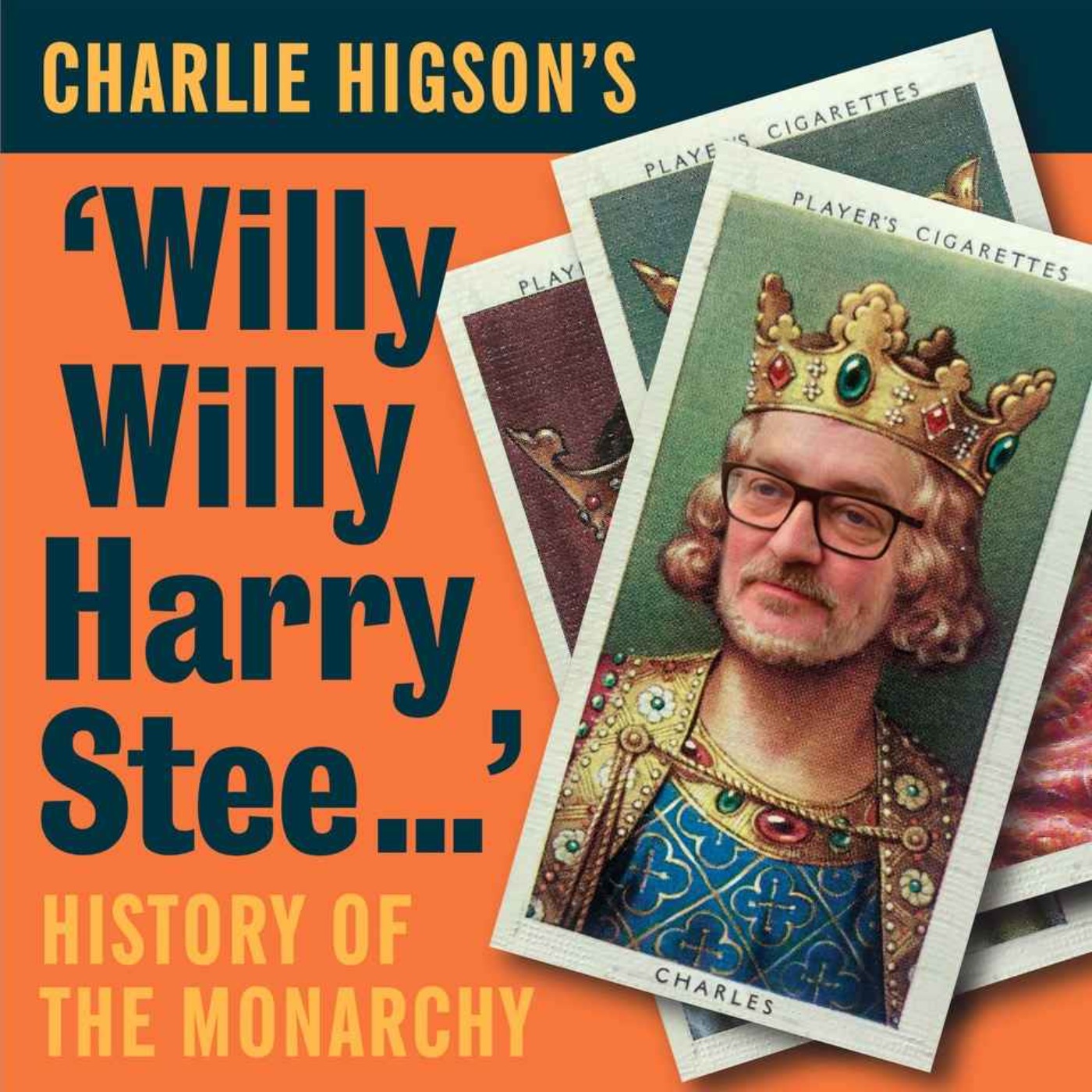
About this episode
Willy Willy Harry Stee, Harry Dick John Harry Three, One Two Three Neds, Richard Two, Henry's Four Five Six.........then who? Edward Four Five...Dick The Bad!
Yes, Charlie Higson lands on Richard III.
Was he Dick The Bad or should we celebrate him as one of the good ones?
Here to argue his case is the Chairman of the Richard the Third society, Matt Lewis.
Also don't forget that Charlie's book of this podcast, Willie Willie Harry Stee is out now, with illustrations by Jim Moir, or Vic Reeves as you may know him.
https://www.amazon.co.uk/Willie-Harry-Stee-brand-new-hilarious/dp/0008741050
Hosted on Acast. See acast.com/privacy for more information.
Get every episode summarized
Each time Willy Willy Harry Stee... publishes, we email you a written briefing from the transcript — the topics, who appeared, and any specific claims, with the ad reads skipped.
Email me new episodesFree for 3 shows. No card needed.
Hosts & guests


Transcript ready
781 searchable segments. Every word is indexed and playable.
Full transcript
Willy Willy Harry Stee... — Book Companion - Richard III. Machine-transcribed; use the interactive transcript above to jump the player to any line.
Hey, this is Adam Grant, host of Ted's podcast, rethinking with Adam Grant. If you heard of Bill, it's the intelligent finance platform that uses AI to help you avoid costly errors and optimize cash flow. In fact, Bill reports that over 90 of the top 100 US accounting firms trust them to manage, move, and maximize money, proven by over $1 trillion in secure transactions. Eliminate the friction and start scaling with the proven choice. Visit bill.com slash proven to talk with an expert about automating your business finances and get a $250 gift card as the thank you. That's bill.com slash proven. Turns and conditions applies to offer page for details. With its two juicy beef patties, three slices of melted cheese and tangy big-oats sauce, the big-oats is what happens when you start making a McDonald's burger and never stop the big-oats. The most McDonald's McDonald's burger yet for a limited time. That's pure automotive joy. I'm Peter, the owner of Muscle Car Junior. It started as a hobby, then I started posting about it.
Before I knew it, I built the business for storing muscle cars on Facebook Marketplace and the community of car lovers on Instagram. Today, new customers send me what's at messages from all over. Not bad for a hobby. Learn how meta helps over 35 million American businesses, like Peter's Grow, at meta.com slash community. Hello, Charlie Hicks in here. Once again, with Willie, Willie, Harry, Steve, the podcast. A project I began when King Charles III was crowned and which has now become Willie, Willie, Harry, Steve, the book. Available now in all good bookshops and it's all beautifully illustrated by my old friend, Jim Moyer, aka Vic Reeves, Britain's greatest light entertainer. So a treat for the eyes just as this podcast is a treat for the ears. So buy your copy now or several copies if you're feeling flush. And while you do, enjoy this.
Another chance to hear the original podcast series in order. Starting with Willie and going all the way through to Charlie III. I hope you enjoy it. MUSIC Willie, Willie, Harry, Steve, Harry, Dick John, Harry, one, two, three neds, Richard two, Henry's four, five, six, then who? Edward's four, five, Dick the bad. Yes, we've come to Dick the bad. King Richard the third. And the Willie-Willy Harry Steve rhyme is pretty unequivocal in its view of him. And history has indeed remembered him as Dick the bad. Although in recent years there have been
moves to re-evaluate him, driven particularly by a group who call themselves the Ricardians who want to unsully his reputation, claiming that he was unfairly maligned by Tudor historians for propaganda purposes. To support the cause of the man who deposed him, Henry Tudor, Henry the seventh and subsequent Tudors such as Henry's son Henry the eighth. Well, maybe at the end of this episode you could make up your own mind. Was he Dick the bad or was he the victim of propaganda smears? Now Richard has already appeared in a podcast. He started out as the unassuming younger brother of Edward the fourth, when the wars of the roses started he was too young to be involved at all and he didn't seem to be that central to the story certainly to begin with. But we've seen how he slowly moved center stage and in the previous episode about Edward the fifth he finally made his move
striking fast and hard like a rattlesnake. And that made quite an impact. He announced that his nephew Edward the fifth was illegitimate and therefore not entitled to rule and he stole the crown from him. Now we'll come onto that in a minute as we need to start at the beginning of Richard's life. It was born in 1452 and he died in 1485. He was only 33 when he died. In productions of the Shakespeare play he's often played by a much older actor and we can lose sight of just how young he was when he took the throne. And he only actually reigned from about two and a half years. After Lady Jane Grey and Edward the fifth this was the third shortest reign of any English monarch. And yet he managed to really make his mark on history. How much of that is down to Shakespeare? I don't know I mean it you know the more successful
and popular Shakespeare plays mean that the subjects of those plays stay in our popular consciousness. Richard was the last of the House of York and he also had the dubious honour of being the last Plantagenet King. This line that had started right back with Henry II, the son of Jeffrey of Anju and for over 300 years the Plantagenets or the Angivins as they were actually probably more commonly known at the time had held the throne. But as I say it's Richard who finally loses it to Henry Tudor and the next episode will launch the Tudor dynasty. The Battle of Bosworth Field when Richard was killed he's often seen as the end of the Middle Ages in England as we move from the Medieval into the Tudor era. So Richard was a really important king and played a pivotal role in English history even though his actual reign was so short.
His father was another Richard Richard Duke of York who had fought so hard to take the throne from his close relative Henry VI and after Richard of York was killed in 1460 the Battle of Wakefield the fight was taken up by his son Edward who was Richard III's big brother. Richard's mother was Cessli Neville. Now the Neville's as I'm sure you'll remember because we've talked about them a lot before with this powerful northern family the Lords of the North who held the Scottish marches as a bulwark to deter the Scots from invading England and back in 1396 a guy called Ralph Neville married into the royal family. He got himself hitched to one of the daughters of John of Gaunt from his second marriage Joan Beaufort on the Lancastrian side of the family and they have about 10 children and now don't worry I won't go into them all here but one of them
is their daughter Cessli who as I say married Richard of York and they had 12 children among them Edward IV flaky George the Duke of Clarence and our current subject Richard of Gloucester who becomes King Richard III. Now if you all indulge me for a moment I'm going to briefly jump back to Ralph Neville and Joan Beaufort as I said they had 10 children including Cessli and a son called yep he's another Richard and now this is Richard Neville the fifth Earl of Solsbury who was the father of Warwick the Kingmaker which makes Warwick the Kingmaker the first cousin of both Edward IV and Richard III I wish I could draw a diagram for you here but I hope you can just tell that there's this complicated mayors nest of marriage and intermingling and it doesn't stop there oh no no it just gets more tangled as Warwick the Kingmaker carries on with
this tactic of trying to make political marriages for his kids but we'll come onto that in a minute if you didn't follow all that don't worry all you really need to know is that our featured monarch Richard of Gloucester was the 11th of the 12 children of Richard of York and Cessli and when the wars of the roses kicked off he was still a child he was only eight when his father an older brother Edmund were killed at the Battle of Wakefield and young Richard was sent across the channel for safety in the low countries then after the Lankastrians were defeated at the Battle of Toughton a year later Richard returned and he was there for the coronation of his oldest surviving brother Edward in 1461 when he became Edward IV and it was at this point that young Richard became Duke of Gloucester after first being knighted and he spent some part of his early years being looked after by Warwick the Kingmaker at his castle in Wensleydale before Warwick and
Edward fell out Warwick helped train Richard as a knight and Edward actually gave substantial sums of money to Warwick for the boys upbringing and whilst he was there in Warwick the Kingmaker's household he would have got to know Warwick's family including his daughter and Neville now while he was still young Richard developed Scoliosis a curvature of the spine when his skeleton was discovered under a car park in Leicester in 2012 experts examined the bones and deduced that the curvature wasn't actually that pronounced one of Richard's shoulders might possibly have been a little higher than the other but anything else would have been easily hidden under his clothing so it was nothing particularly dramatic he was by no means the twisted crook back that he was later personified as as if physical abnormalities somehow automatically make you an evil person
which is absolute nonsense of course and certainly nobody seems to have commented on his physique at the time and he seems to have been a popular and well-adjusted young man Hey this is Adam Grant host of Ted's podcast rethinking with Adam Grant let me share with you why smart finance leaders turned a bill they know that clarity isn't just helpful it's strategic as the intelligent finance platform bill uses AI to automate the busy work for nearly half a million businesses so they can focus on intentional growth eliminate the friction and start scaling with the proven choice visit bill.com slash proven to talk with an expert about automating your business finances and get a $250 gift card as a thank you that's bill.com slash proven turns in conditions apply see offer page for details with its two juicy beef patties three slices of melted cheese and tangy big-oats sauce the big-oats is what happens when you start making a McDonald's burger and never stop the big-oats the most McDonald's McDonald's burger yet for a limited time
but his life got totally disrupted when his big brother Edward IV fell out with their cousin Warwick the Kingmaker they both wanted to be in charge and Edward as the king considered that he was probably the best man for the job so Warwick temporarily switched his allegiance to Edward's younger brother flaky George Duke of Clarence and married one of his daughters Isabella to him big mistake George is rubbish his plans to take over the throne come to nothing and Warwick has to flee to France where he he tried to make this unlikely and frankly bizarre alliance with Margaret of all you his deadliest enemy in the fallon hope that they might get Henry the sixth back on the throne and Warwick could be sort of Kingmaker again and at this point to cement the deal Warwick married another of his daughters Anne and Neville to Margaret and Henry's
son Edward Prince of Wales the heir to the throne and then with help from the French Warwick and his new allies got back to England and managed to briefly depose Edward and put Henry back on the throne at which point Edward and Richard fled to Burgundy where there was something of an embarrassment at the Burgundian court who didn't really know what to do with him but back home Warwick the Kingmaker was becoming increasingly unpopular King Henry the sixth was a pathetic figure and everybody knew that Warwick was really the man in charge so Edward didn't stay long in France he rallied his forces returned to England and defeated Warwick's army at the battle of Barnett during which Warwick was killed and Edward then goes on to finally defeat the Lankastrians at Chuxbury killing young Prince Edward in the process and Henry the sixth was murdered soon
after now that he was a teenager Richard of Gloucester is now able to be Edward's right hand man in these battles and proved himself an effective general he'd become a man he'd won his spurs and the death of Prince Edward meant that Anne Neville Warwick the Kingmaker's daughter was a widow and Richard quickly married her now this caused some problems in the family he's older brother Flaky George Duke of Clarence as we saw before had already married Anne's older sister Isabelle and was hoping to inherit all of Warwick's estates now it looked like he would have to share this inheritance with his younger brother Richard so Richard had to sign a prenup allowing George to take most of the land and titles but he still had to get permission from the Pope to marry Anne as the two of them were so closely related but bad blood persisted between
the brothers and an angry King Edward had to step in and pronounce that everything should be shared equally and from this point Edward began to favor Richard over George and eventually lost all patience with George George kept scheming against his brother and causing problems and Edward took the bold step of having him executed which is one way to deal with a brother you don't get on with and from this point Edward increasingly gives lands titles and power to Richard he made him Lord of Ireland and also effectively Lord of the North setting him up in York and almost splitting the rule of England into two the idea was to keep the northern as happy and stop the scots from having ideas about invading there were growing tensions with Scotland through this period and there was a sort of a quasi war with the scots but they were too disorganized and Edward never
fully engaged so it was down to Richard to hold things together and there were some sort of fairly ineffectual military maneuvering and this new Scottish threat didn't really amount to anything in the end but then in 1483 King Edward unexpectedly died and Richard became Lord protector of the realm everybody seems to be happy with this including it seems all of Edward's closest advisors and his chief advisor Baron Hastings but now we see Richard turn we see a new site to his character that that has not been in evidence before and the question is did he change or had he always been this character playing the long game had he always had half an eye on the throne and we saw in the previous episode how King Edward the fourths son and heir Prince Edward now
became King Edward the fifth and was brought to London by his mother's relatives including his uncle Earl Rivers and Richard intercepted them at Northampton and after whining and dining the men he had them arrested on trump top charges of plotting to take over the throne Richard cleverly accused them of doing exactly what he intended to do but he kept quiet about it at this point and everybody was still thinking that he was trying to protect Edward and that there was no self interest in any of this and he then escorted young King Edward to London and installed him in the Tower of London for his own safekeeping and started planning for Edward's coronation and sometimes in potted histories and perhaps I implied in the last episode that events then move really quickly and one thing instantly leads to another it is a little drawn out it kind of takes
a few months and perhaps at this point Richard was still planning to have Edward coronated and have this anointing ceremony where he already is King of England but in the coronation ceremony when you get anointed you're anointed by God you become this divinely appointed figure and become something extra special and perhaps he was just trying to remove what was a potential threat from Elizabeth Woodville's branch of the family who may have wanted to have a complete power grab and oust anyone who might be a threat to Edward but one of the things that Richard does is to accuse Hastings and the other remaining supporters of his older brother King Edward IV of plotting with the Woodville's to murder him several prominent men were arrested and Hastings was taken to the Tower of London where his head was cut off now we looked at all this in some detail in the
previous episode but I'll repeat it here for those of you who haven't diligently been listening to every episode so Edward the Fifth's mother Edward the Fourth's widow Elizabeth Woodville is taking refuge in Westminster Abbey with her other son Richard her brother has been arrested her husband's supporters have been arrested she does not trust her brother-in-law Richard of Gloucester at which point Richard gets a couple of his pet clerics to persuade Elizabeth that everything was fine and that Richard was planning the coronation of Edward the Fifth and that he was just being very careful and she somewhat reluctantly allowed her other son Edward's younger brother Richard to join him in the Tower so that they could prepare for the coronation ceremony together but she was right not to trust Richard of Gloucester because he eventually executed her brother and then produced a legal document claiming that Edward's marriage to
Elizabeth was unlawful as he'd been betrothed to someone else thus making her two boys illegitimate and as they were illegitimate they were not the rightful heirs to the throne so he declared himself king and the two boys were never seen again the fact that until the moment when he took the throne from his nephew Edward nobody had really thought that he had any designs on being king is interesting and it was one of the reasons why he was able to to get away with it because when he did reveal his outrageous and audacious plan he acted extremely quickly so nobody had a chance to do it and he's like whoa what just happened oh my god I didn't see that one coming that's extraordinary that they didn't see it coming and you know maybe as I say maybe it was only at this point where he thought hang about maybe I should just become king maybe he thought that as long
as Edward was on the throne as a boy king there would be discontent there would be insecurity that these the walls of the roses might might rekindle and drag on maybe he genuinely thought it would be better for England if he was in charge and he basically drew a line under Edward's family one version of these events claimed that Richard originally had planned to declare that his brother Edward himself had been illegitimate but he decided quite wisely not to pursue that line in case he got caught up in all these sort of claims of legitimacy and illegitimacy and he came up with his alternative idea where he got a priest Robert Stillington to claim that he had indeed been involved in making a pre-contract for brother Edward to marry this woman Dame Eleanor Butler but that Elizabeth Woodville and her mother had used witchcraft to beguile Edward and dump Eleanor
so there he is Richard III is on the throne and despite his very thorough and decisive actions removing all of the supporters of Edward IV he was not fully safe on the throne and was by no means unopposed he wasn't able to arrest or wipe out all of Elizabeth Woodville's family or the Beaufort branch of the family who fairly quickly launched a rebellion which ended up being organized by the Duke of Buckingham and originally the rebels announced that they were trying to put the rightful air back on the throne Edward V but at this point it must have become clear that Edward V was dead now no body was produced and it was never officially announced that he was dead he just wasn't there anymore so at this point we have to assume as everybody at the time did that Edward V was dead and the rebels switched their alliance to another claimant to the throne
Henry Tudor and the Tudor family have been allied by marriage to the Beaufort branch but we'll look at all that and how the Tudors fit into this story in the next episode so we're stick with Richard so an afterist coronation Richard had set off on a progress around the country which ended with him entering York in triumph at the end of August but in July news reached him that there had been an attempt to rescue the two princes from the Tower of London the attempt had failed but this was what probably led to the prince's death was too risky for Richard to leave them there and to leave them alive and certainly everybody at the time now thought okay that's it the princes are dead but Buckingham's rebellion this first attempt to to put Henry Tudor on the throne failed
Henry had been exiled in France and when he tried to get over to England there were storms and yet again a great undertaking was thwarted by bad weather in the channel and Buckingham's own ships were also caught up in the same storm and soon after that his army deserted him when King Richard's the third army confronted them Buckingham was captured and beheaded so this rebellion came to nothing but Richard now made the mistake that many previous monarchs had made he started trying to install favourites into positions of power he needed to bolster his regime he needed to get rid of any support for his brother Edward and therefore his nephew Edward V he felt that his hold on the throne was shaky which it was so particularly in the north he started putting in his new men into positions of power which didn't go down well with the
old guard and with the ordinary people so there was a lot of dissent and and there and there was a lot of support for Henry Tudor but Henry Tudor hadn't given up two years after his first thwarted invasion he tried again this time with the full backing of the French who supplied him with funds and troops and any opportunity to have a go at the English king the French were up for and Henry successfully invaded across the channel and marched north to where Richard's stronghold was in the north and the two armies met at the Battle of Bosworth Field now Henry's forces were considerably outnumbered probably by about 8000 to 5000 so 8000 on Richard's side and 5000 on Henry's side so it should have been a foregone conclusion but I think I use the analogy in a previous episode of playing risk anybody who's had the awful frustration of trying to launch a big
battle in risk will know what I'm talking about where it looks like you have unbeatable odds on your side and within a few throws of the dice you've been completely wiped out and this is what happened to the unfortunate Richard and a big part in this change of fortunes was down to the actions of three men one of the Persis Henry Percy and two brothers of the Stanley family Lord William Stanley and Thomas Stanley now they were both big players at the royal court hangovers from Edward's time two popular and two powerful for Richard to just get rid of he was hoping they would support him against Henry but didn't fully trust them he'd taken William's son George Lord Strange as a hostage to make sure that Stanley kept on side at first the two brothers didn't get directly involved in the battle they hung back waiting to see which way things would go and things started well for Richard he was you know
he was a brave man he was a good soldier and a good general leading his army mounted on his great white charger and now in the heat of the battle he decides to risk a big throw of the dice to try to end it all quickly and decisively another rattlesnake strike and he leads a cavalry charge into Henry's ranks to try and get at Henry and kill him he did pretty well he cut his way through several famous knights he killed King Henry's standard bearer and he got actually got close enough to Henry to kill him himself he was in swords reach as it were but has he overreached the Stanley's certainly think so they finally make their move they come in to support Henry at which point Henry Percy who led a substantial number of men switched sides now it's a big gamble for the Stanley's because if Richard wins they'll be executed along with
Williamson George they obviously figured that actually Henry was more popular and if they supported Henry he would win and they would then be on the winning side so they made this tactical gamble and this is one the odds in Henry's favour and Richard suddenly found himself surrounded by the Stanley's men and he was brutally cut down and when the experts studied King Richard's body when it was disinterred in Leicester they found that he was covered in wounds he had 11 wounds eight of which were to the skull and he had clearly got them fighting in a battle they weren't post-mortem and it seems that he must have lost his helmet and he took several blows to the head from various different weapons so he was attacked by all sides and hacked down and there was a
massive sword cut that that chopped off the back of his skull so that was the end of Richard at least he had a brave end dying in battle he didn't die from an exploding stomach or a red hot poker up the arse or being starved to death in a castle somewhere he died as a valiant young man leading an army into battle as I say he was the last of the Yorkists the last of the plantagenets and he was the last English king to be killed in battle and Henry VII came to the throne and started the chewed identity which we will pick up within the next episode after the battle Richard's naked body was tied to the back of a horse and brought into Leicester it was probably displayed in public for a while before being quickly buried in Greyfriars church in Leicester and Henry didn't want to make a big deal about this he wanted it sort of kept quiet in some
way so he didn't want any sort of cult growing up around the dead Richard but over the following hundreds of years Greyfriars church essentially disappeared they had been fires it been burnt down redeveloped eventually pulled down in the reformation and built over but by 2012 a group of archaeologists based in Leicester had deduced where they thought the site of the church was and where they thought King Richard's grave might be and they got permission to dig up this car park and amazing the first dig with this digger they found this body in a coffin it had mild scoliosis it had these wounds particularly to the skull which were documented at the time of the battle and through DNA testing they managed to track down his closest possible surviving relative I think the guy was a carpenter they got a reasonably good DNA match and so they announced this was King Richard the
third body and he was re-buried with some ceremony and given a proper tomb and a proper memorial so over those 400 years his reputation has wavered certainly during the Tudor period he was painted in very dark colours because the Tudors needed to justify killing Richard and taking his throne but then in later years people questioned this saying well this obviously was propaganda Richard was a better man than the Tudors would have us believe and certainly you know before he came to the throne he was a respected politician he was quite respected in the north he had helped Edward to try and restore some kind of sense of order to the country he had done quite a lot to improve the conditions of the ordinary people in the north by keeping peace and imposing strict law and order and a strong clear judicial system he opened up the sale of printed books which had
been greatly restricted he tried to get the English laws and statutes all translated from the French into English he was trying to democratize a government make it more accessible to the ordinary English people but despite all this I have to say that I am not fully on the Ricardians side the Ricardians being these modern day supporters of Richard I'm sorry if you are Ricardian and you are listening to this hoping that I will say actually Richard was a really great bloke people like to believe that they are cleverer than the experts that they know more that they have the proper inside knowledge this secret and special knowledge but to me the sensible thing to do is to look at the facts and to look at the most likely unrational explanations for what happened is a recorded fact that the first thing that Richard did when he rode ostensibly to look after
the young king Edward V was to arrest and execute his uncle Earl Rivers and various other members of his family he then effectively locked Edward and his younger brother Richard up in the tower now who is the person that most benefited from killing these two boys it is Richard he is there in Westminster he is ready and poised to take the throne the Ricardians claim that it was Henry the seventh himself who somehow managed to kill the boys or have the boys killed even though Henry at this time is hiding out in France and is nowhere to be seen there's a very famous portrait of Richard in the newly revamped national portrait gallery which is well worth a visit and the Ricardians look at this painting and they say this is the face of a kind, intelligent and gentle man look at the way he's charmingly fiddling with his
signet ring which is actually something that King Charles III does he's famous for fiddling with his ring and other people will look at this very same portrait and say this is clearly the face of a killer an evil, wily, scheming man look at the way he's anxiously fiddling with his ring you can read into that face whatever you want but it's the face of our last Plantagenet King hi everyone this is Karine the voice of Simon Fairchild from the Magnus Arkys and today I want to talk to you about boost mobile some things quietly drain you like an expensive phone bill trapping your money month after month here's a quick money tip stop paying a carry attack when you bring your own phone and switch to boost mobile's $25 unlimited forever plan you can unlock up to $600 in savings that's money that belongs in your life not trapped in a phone bill reclaim those savings for something you're actually into an EMF meter a thermal camera or whatever strange corner of the universe you're currently exploring visit boostmobile.com
to unlock your savings and take back control after 30 gigabytes customers may experience slower customers pay $25 per month as long as they remain active on the boost mobile unlimited plan boost mobile January 2026 survey comparing average annual payments of AT&T, Ryzen and T-Mobile customers to 12 months on the boost mobile unlimited plan for full offer details visit boostmobile.com with its two juicy beef patties three slices of melted cheese and tangy big-art sauce the big arch is what happens when you start making a McDonald's burger and never stop the big arcs the most McDonald's McDonald's burger yet for a limited time and I have the perfect guest on today to talk about Richard III it's Matt Lewis who is the chair of the Richard III Society I am and can you just talk through what is the Richard III Society? The Richard III Society is now in its 99th year so next year we're celebrating our centenary and it began in 1923 as something called the Fellowship of the White Boer which was essentially a group
of people led by a man named Dr. Saxon Barton who was a surgeon from Liverpool who were just fascinated by Richard III and so they started getting together and having chats about it meeting at each other's houses and it sort of blossomed into this fellowship of the White Boer the group kind of went into a bay and it's a little bit during the Second World War for probably fairly obvious reasons re-emerged then as something called the Richard III Society and really has gone from strength to strength since then you know we do a great deal of academic research and we provide a forum for people who are just interested in Richard III in the story of the Wars of the Roses yeah it's really a group that's aimed at getting as close to the truth about Richard III as we can so lots of people I think will see us as people who want to whitewash Richard's reputation that's not necessarily what we're trying to do at all we're trying to get closer to the truth well David Mitchell has just published his own history of the English monarchy
called Unruly and I had him on as a guest to talk about Edward V and he asked who was coming on to talk about Richard and I said well it's Matt Lewis the chair of the Richard III Society and he said oh well you won't get an unbiased opinion from him but but but I'm sure that as a historian whilst you will have an opinion it will be a considered one I mean essentially you're dealing with the facts the same as any other historian it's just how we look at them absolutely I try to be as objective as I can I never deny that I have a more positive view of Richard than most historians would probably subscribe to but I like to believe that it's always based on the evidence that we have and one of the issues around Richard III is that we have such limited evidence that you can get so far and then you have to take a leap and it will be a leap in one direction or another which will be based on your subjective view of Richard and the period and everything that's gone on around it yeah I mean you know it's interesting you're
talking about sifting through the evidence in 1990 the crime writers association voted Joseph in Tay's novel daughter of time as the greatest crime novel ever written and it's interesting because it's about her police inspector Alan Grant and he's in hospital recovering and someone shows him the famous portrait of Richard III and he looks at it and he thinks you know what he looks like quite a nice guy actually I'm going to investigate this and from his hospital bed he does a complete sort of police detective investigation of Richard III and comes to the conclusion that he wasn't guilty but you know it is fascinating that this will always remain an unsolved mystery and the other fascinating thing is we posted a little clip of David Mitchell talking about Richard and it caused a Twitter spat not exactly a storm but you know quite a lot of people saying oh come on David I thought you're an intelligent person surely you're not going to really believe
that Richard III was guilty it's fascinating that something that happened 500 years ago people are still arguing about and I'm still passionate about Richard ruled for just over two years more than 500 years ago yet people are still passionately interested in that period today and there are these little pockets of history that I think if you move through it and you aren't aware of them they're like little landmines that can go off under your feet aren't they you you stray into an area you mention something and all of a sudden it explodes and your leg is flying across the room and you're not quite sure what happened and you've just wondered into one of these history minefields and taken a wrong step and said something that someone really really objects to well the great thing about these unsolved mysteries of sort of areas where we don't have all the facts is it means people can impose whatever meaning they want onto it and bring their own facts and prejudices to it which I guess is why people then get quite passionate about it it is and then you fall back because you're lacking historical evidence to back up any argument further than a certain
point you are falling back on your own subjective views and life experiences and what you think people are capable of and how you believe people might ask in certain situations and and that will be different for almost every person you know you and I will have a completely different view on how someone might react in a given situation like a lot of people in the country I was absolutely hooked by the traitors the reality TV show where three people were randomly assigned to be the bad guys and what was so fascinating about that is nobody had a clue how to read anybody else and it was all like what she's a really nice person so she couldn't possibly have done this and you know they didn't take on board the fact that they were randomly allocated it weren't that they were evil from birth but you know there was an ex-police woman there who said well I'm an ex-police woman so I'm used to this kind of thing and you think well we've seen time and time again the police jumping to the wrong conclusion so yes our idea that we know anyone is self delusional and the fact that we think perhaps we can know about Richard III based on the fact that someone
looks at the picture and thinks he looks like a nice bloke someone else can look at that picture and think oh he looks like quite an evil bastard yeah absolutely but you've gone way beyond any kind of knee-jerk reaction you've written extensively about the middle ages and the wars of the roses and you're obviously someone who's passionate about history and passionate about getting it out there and well I mean it's not it teaching people it's it's sharing that love and that interest and you've written a lot about Richard most recently in 2018 with Richard III loyalty binds me yeah that's my like cradle to the grave biography of Richard so right it's a bit of a doorstep of a book I'm afraid but well no don't apologize people like big books but if you don't like big books get hold of Matt's medieval Britain in a hundred facts a great little book with a fun fact on every page now Matt as well as writing these books you are also the senior presenter on history hit which is well I guess you could describe it as as an online history channel we try
and put out an original history documentary that we've made every single week on some period of history alongside that there are a suite of podcasts as well so I co-host the Gone Medieval podcast which covers all things medieval in what I describe as the greatest millennium in human history so far as well as you know our flagship dance nose history hits a daily podcast with with all kinds of fascinating stuff from across history and we are about to publish our first book too so the history hit miscellany will be out at the end of September just in time to be the ideal Christmas present packed with interesting snippets and facts and figures from across history which people I hope will find very enjoyable and informative and entertaining excellent so to get back to Richard are there any other British monarchs who have their own society is there this kind of interest in anyone else I don't I don't think there is at all I think there is an element of interest in Charles the first potentially but nothing like the Richard the third society around
that I guess the closest you might get to it is the kind of Jack the Ripper community that are fascinated by the Ripper murders but then he wasn't a monarch or was he and I guess one of your core aims is to is to reevaluate the entrenched idea that Richard was dick the bad and he was actually the victim of Tudor propaganda so obviously Richard is killed in 1485 the Tudors come to the throne and at that point I think Henry VII has to position himself as the hero he can't just say you know what I've invaded the country and killed the king who was actually quite a good guy Richard the third has to become a villain so that Henry VII can be the hero and it's interesting that the Tudor era ends with the death of Elizabeth the first right at the beginning of the 17th century by 1617 you've got a man named Sir George Buck who is putting together
is what is essentially the the first defense of Richard the third and he pulls together all of these manuscripts sources lots of which have been lost to a synth so we can't actually even see these manuscripts now they've been lost in fires and all kinds of things and so he pulls all of this together and concludes he concludes similar to Alan Grant in the novel you know that Richard the third wasn't actually that bad a guy and he probably didn't murder his nephews and he's seen evidence that we don't have the chance to examine today and then you get people like Horace Walpole you know writing his historic doubts about Richard the third and Jane Austin in her history of the kings of England says that she's inclined to think that Richard the third was actually quite a nice man so there has always been this idea that Richard was somehow given this dreadful reputation to balance out the fact that the Tudors needed a reason to have come you know the the only reason that Henry the South could have to invade the country was that Richard was a terrible guy who needed to be removed and I think that the movement
around recording is my guess is a a reaction to that and maybe there's something in in us wanting to rehabilitate someone who is something of an underdog you know this guy has had his reputation trashed in the press and he's not here to answer for himself so perhaps we want to look at that reputation and think does it actually stack up against the facts I mean David Mitchell made an interesting point saying okay he was obviously a nicer guy than he was painted by the Tudors and that traditionally he was thought of he said okay maybe he was a nice guy maybe he was a good king maybe he was sort of things out that doesn't mean that he didn't then think actually to keep things stable to keep things safe the best thing to do is to get the princes out of the way so you know it's like saying it's all or nothing oh he's a nice guy and therefore we didn't do any of these bad things I mean I know David Mitchell mentioned the idea of Occam's razor you know the the simplest explanation will normally be the right one and I always feel a bit like Occam's razor is in historical terms incredibly lazy it's basically saying I can't be bothered to it was
actually me he said Occam's real okay I think that's a bit of a cop out because you know it's like Agatha Christie writing a mystery novel and having Poirot walk into the room and go no it was probably you the end there is so much more but that's what he does really he takes Occam's razor to it and he removes all the stuff you couldn't have done it because of this yet couldn't have done that therefore we're left with the obvious choice which is you to certainly sent Poirot is using Occam's razor but we don't have the evidence to do what Poirot does in this case because we can't say it wasn't you and this didn't happen because we simply don't have the evidence so people then use Occam's razor to essentially leap to a conclusion that isn't backed up by the evidence which I don't think is what Poirot does but I would argue that there are there are many ways to look at what happened and I never ever deny the possibility that Richard III murdered his nephews because I don't know that he didn't do it I simply believe that there are plenty of other options that fit better with him so when Richard becomes king in 1483 he's a 30 year old man
and we know a lot about him we know what he's been doing for the past dozen or so years of his political life we know what he's interested in we know the ways that he behaves and that man that monster in 1483 who you know comes out of his coronation and is kind of today are mostly murder in children and just decides you know there's no other way out of this but to kill some kids that man just doesn't exist anywhere before 1483 and one of the important things he's already killed Earl Riverson John Gray executed I mean they're judicial executions and if Richard III comes to the throne with the judicial executions of Rivers Gray and Hastings how does that compare to the way that many other kings have come to the throne you think about his brother Edward the fourth comes to the throne wading through blood at places like battle of touton where thousands of people have died is three people really so bad I'd guess if you're members of their family you'd be bit upset but three politically active men who are who are accused of things is different to two small children
who are his nephews who have never done anything in their own right and to some extent yeah but if they kept alive then he's knows that he's never going to be secure on the throne yeah and I can argue against my own case in this point because the issue with the boys really is what they represent it's not what they've done or who they are it's what they represent in terms of a threat to Richard I would never buy the idea that because they're declared illegitimate they're no longer a threat and Richard doesn't have to worry about them they absolutely are a threat but there are examples of how you can deal with so the perfect example in 1399 when Richard the second is deposed from the throne and Henry the fourth his face with the situation where he's got two small children who most people believe have a better claim to the throne than he does and who will be a threat to him but he doesn't kill them what he does is takes them into initially fairly loose custody they're abducted with the idea of putting Edmund on the throne they're quickly recovered and then they're hidden much more secretly and they emerge in 1413 when Henry the fifth becomes king and they are
utterly loyal to the House of Lancaster for the rest of their lives so something about the way that they're brought up has meant that they haven't actually rebelled and that was Henry the fourth dealing with two little boys who weren't close relatives of his so I find it difficult to believe that Richard wouldn't have thought in 1483 I've got an option here that I can try maybe it won't work but surely it's got to be preferable to murdering the two small sons of my brother who I loved and who I have been loyal to for his entire life wouldn't he wanted to try that option but he was also originally planning to get his brother declared illegitimate what I don't buy that at all so that that story okay no so the the sermons in 1483 were about the illegitimacy of Edward the fourth children because he he'd married bigamously yes there is one source from an Italian who spoke no English who talks about Richard trying to say that Edward the fourth was illegitimate
and that the key point about him it's Mancini the key point about him is that he reports back to the French court and at the French court the illegitimacy of Edward the fourth was a running joke it was Louis the eleventh's favorite joke that he used to make people tell him all the time all right so I think he conflates the story he hears there's something about illegitimacy going on and so he plays to this French audience who will know the story of Edward the fourth illegitimacy but he's the only one that says it's about that everyone else says it's about the bigamy of Edward the fourth marriage now it's almost impossible to have a discussion about Richard the third that doesn't within about 30 seconds come back to the princes in the tower and that mystery and his death at Bosworth Field are pretty much all that's discussed about his reign but he did do other stuff I mean can we just talk about that I mean I guess he did most of his sort of ruling up in the north before he was king because he was on the throne for such a short time but how good a ruler was he from that time before he came to the throne and after yeah so essentially from
about 1471 onwards he rules in the north of England for his brother Edward the fourth so he's based at Midland Castle and York at this point is still you know probably the second city in the kingdom and he has really close ties and connections to York the north has always been somewhere that's been beyond the reach of kings really and so for Edward the fourth it's a real boon to have this loyal brother up there doing a great job of of ruling that part of the country on his behalf and Richard builds networks of connections and an infinity that is is utterly loyal to him people generally love him up there obviously not universally there are people in York who can play in that Richard sticks his nose into city business that he ought to keep out of but that's the way the world is isn't it nobody is loved by everybody so I mean it is a sort of equivalent of of leveling up it's like please pay attention to what we're doing up here we're important and so an important person is sent up and it's like oh great someone's gonna listen
to us yeah and for the region having the king's brother there is a real boon so they have issues this this sounds really obscure and weird they have an issue with something called fish guards which are essentially industrial fishing weas across rivers and so you have to have you have to own land and you have to be wealthy enough to build one of these weas so they're owned and operated by the church and the gentry and the nobility but what they effectively do is hugely reduce the catch down river for other people who want to fish and they also hamper navigation of rivers at the time when the rivers are the medieval motorway network you know this is how people get about and so the north complained to Richard and and are in a position where he can go to his brother and say can we ban fish guards and Edward says yeah go on then ban fish guards and the north have been trying to deal with this for for decades well yeah I mean that they're mentioned in the Magna Carta aren't they I remember talking to Nicholas Vincent about that and jokingly I said well you know the Magna Carta is supposed to be this great political document and there's a load of
stuff in there about fishing rights and removing fish traps on rivers and he said no no no no that's absolutely that's that's a really big important thing this is like 400 years later this is obviously the problem wasn't solved that's it so centuries later Richard is actually delivering so he bans fifth fish guards and what he does is he comes back and he writes to all of the tenants and and managers of his own lands and tells them to remove all the fish guards first so that then he can go to everyone else and say look I've done this now I expect you to do it so there is no element of what we quite often see with medieval nobleman of him being very much do as I say and not as I do he's leading by example and the issue is one of the important things I think about Richard during this period Anders King is when he does something like this who is he benefiting the common man the normal man the man he wants to get about on the river and he wants to catch some fish to feed his family with who is he hurting rich landowners who have been making a lot of money off
those fish guards and now being told they can't do that anymore how do you build and maintain power in medieval England you don't do it by making yourself popular with the common man because they simply don't have the power to keep you where you are you do it by cultivating the nobility and the gentry and the kind of shia knights they're the people who will keep you in office and he seems to have this genuine interest in the lot of the common man which continues into his time as king and his parliament that sits in 1484 is something that is frequently overlooked or considered unimportant but it does some things that people if they think about it people say that his parliament was a bid for popularity and a desperate effort to keep himself on the throne but what he does in parliament is very similar to what he does in the north so he reforms bail law some people still say that Richard III invented bail he definitely didn't bail existed before then but he reforms bail law so that previously you could be arrested all of your goods could be seized
at the point that you're accused and if you're found innocent and released there was no obligation to give you those goods back and that could be the tools of your trade or how you feed your family and everything so Richard changes the law to say that you you can't have your good seas until you're found guilty he changes jury composition laws to do away with a lot of the corruption and bribery that goes on in juries and like the fish guards my question here is who's benefiting the people benefiting are those at the bottom of the social ladder he introduces the first version of legal aid that we have in this country the court of common please which allows people who can't afford legal representation to have their cases heard who is he benefiting he's benefiting the the very lowest rungs of the political social ladders but they're not the people who can keep you on your throne as king they absolutely cannot in order to give them rights he has to take them away from people further up the social ladder the gentry and the nobility who are the people that can keep you on your throne so when we're looking at why people turn against Richard
and decide they might not want him to be their king anymore i think it's important to look at the rights that he is taking away from some people to be able to give them to other people so he was doing good things and helping the ordinary people of England but we'll never know if he would have gone on to be a great king will we a great ruler because his reign was cut so short there is always an argument to be made for any king that lives the rules for more than a couple of decades will end up being a bad king they just live long enough to fail yeah so Richard a lot like Henry the fifth you can make the argument that their reign being cut short actually helped to make their reputation because they simply didn't have long enough to fail i think you can make a case for Richard potentially being a good king the ultimate thing that we have to allow is that Richard is a terrible failed king he he dies he loses his throne without an heir he ends the plantation at dynasty you know after three hundred and thirty one years and so he hasn't bought
the country with him and i think a lot of the reforms that he tries to make he tries to make too hard and too fast and he alienates too much of society and he's clumsy and naive in the ways that he does that so there are definitely huge issues with Richard as a king i had to take to make the comparison but when you think about people like Jeremy Corbyn and the way they wanted to radically alter politics and then they get rounded on by certain elements of the establishment it's it's not dissimilar to that yes and and the same thing i guess you could say happened with Liz trust she tried to be too radical too quickly and um she had her own battle of boss with field with a lettuce so the first sort of big uprising against him is what became known as Buckingham's rebellion and i've slightly skirted around Buckingham because it's a lot of complication because what sort of family faction does Buckingham represent i've been trying not to call people things like Buckingham and Coventry and Ipswich or whatever and use their actual names because i think people find it really confusing you know you've got so many bloody warrikes for instance
down the centuries i've just said oh well Buckingham had this rebellion but what family was he from so he is Henry Stafford he's from the Stafford family who have been Earls of Stafford in previous generations and have become dukes of Buckingham the Buckingham Rebellion was often viewed for years it was viewed as an effort to put Henry Tudor on the throne that this was the first bid that Henry made to become king but i think that was about Buckingham trying to take the throne for himself so Buckingham has a perfectly good claim to the throne of England he's descended three times over from Edward III he has a better bow foot claim than Henry Tudor does and so i think the october rebellion is about Buckingham trying to win the throne for himself i think Henry Tudor is is involved in it as a supporter of it and with the plan that he will come back to England and be able to be Earl of Richmond the problem with Buckingham is that we know so little about him my issue with him then is that makes him the unpredictable unknown element in 1483 Richard is not the unknown unpredictable
element it's Buckingham so if someone is doing something utterly radical and unheard of like murdering children Buckingham for me is a stronger candidate to have behaved in that manner than Richard is right now i think it's time Matt to round up the usual suspects who killed the princes in the tower you're putting Buckingham into the line up and recently Lady Margaret has become a suspect plotting to get her son Henry onto the throne so is she implicated in this uprising this this rebellion yes absolutely she is tried for treason in parliament in 1484 but is she but is she supporting Stafford or ultimately her son so my my take on Margaret Beaufort is that what she really wants is Henry home she wants her son Henry Tudor to come home he's been in exile for 13 14 years by the time he comes over at Bosworth she's made this agreement just
before Edward the fourth dies she gets this agreement from him that Henry Tudor can come home and potentially marry one of Edward's daughters Edward dies before he signs that document we know that Margaret Beaufort meets with Richard the day before his coronation to discuss some Beaufort debts and some financial stuff we don't have evidence of it but i find it hard to believe that Margaret wouldn't have said to Richard are you going to honor your brother's agreement that my son can come home and i think Richard probably has to say no at this point we have all kinds of issues going on a succession crisis now is not the time to be bringing home exiled attainted rebels i think at this point Margaret has had enough of waiting this is where her patient snaps so i think she she and and Bishop Morton the future Archbishop of Canterbury kind of egg bucking him on to rebel and i think part of Margaret's arrangement for that she financially backs this uprising she
politically backs it she gets her son involved in it and i think her arrangement with Buckingham will surely be you can be king my son can come home and be Earl of Richmond because it's when Buckingham's rebellion collapses and fails Buckingham is caught and he's executed and it's a few days after that we get the first ever reference of Henry the seventh as a contender for the throne so it's almost like Buckingham has to be removed for that to happen so i think Margaret is absolutely up to her neck in conspiracies against Richard for reasons that i think she would consider utterly legitimate she's just had enough okay so i'm not sure if that means that Margaret was a suspect or not so so let's maybe try and wrap this up i think it's time for you to share your theory of what happened to the princes in the tower and there's a clue in the title of the book you published before your biography of Richard which is called the survival of the princes in the tower murder mystery and myth
and you got the word survival in the title kind of gives it away doesn't it yeah okay so talk us talk us through your your theory i used to introduce talking about this book by saying that it was about the ideas that the princes didn't die at all and then someone pointed out they probably are dead by now so it's not a book about zombie princes you know haunting London streets today this was really an epic book there is a good book in that actually yeah um this is a book about all of the ideas that i'd come across that get mentioned in little snippets and sentences that they weren't murdered in 1483 by anybody and that they could have survived so undoubtedly the the prevailing theories that Richard III killed his nephews and i will never say that that didn't happen i don't know it's entirely possible it would have been out of character but people in stressful situations behave out of character he could have done it fucking him could have killed the princes in the tower Margaret Beaufort being involved is is quite a modern phenomenon
probably born out of particularly philippa Gregory's writing around the white queen and the white princess things like that so we get that source that i mentioned from the early 17th century so George he says that he saw a document that says Margaret Beaufort poisoned the princes in the tower but then it goes quiet for kind of almost 400 years until philippa Gregory creates the idea that Margaret Beaufort might have been behind it so there's no real evidence of Margaret being involved i think the most likely suspects if they were murdered in 1483 a rich of the third and did you could bucking him you know richer than third is king he's controlling the tower he's got his people there i mean it's hard to one of these other people to somehow get people in there to kill the princes hide the bodies and get out again without anyone noticing absolutely but people also forget that the the tower of london isn't just a jail at this point it's a working royal palace there are hundreds of people in and out of there all day it's a menagerie it's a mint it's an armory it's a palace as well as being a prison although i mean as far as i
know nobody else from outside ever managed to secretly assassinate anyone being held there i mean might say my theory if i'm pushed the book is an exploration of several different ideas but my version of this i don't think rich of the third ever planned to kill his nephews i don't think they were ever in any danger from him i think he might have known that they could be a threat in the future but if they come back as 18 year old men and face him on the battlefield he can deal with and justify their deaths at that point i think he separates them so these boys have been brought up completely separately they barely knew each other so country to all that Victorian portraiture of them clinging onto each other just waiting to be murdered they barely knew each other so i think Richard would have sent Edward the fifth up to the council of the north so to the the place that Richard has been for a dozen years to castles that are a filled with men who are utterly loyal to him where he can rely on them being kept secret so that part of that Henry the fourth
plan that we talked about before the bit that didn't work was when everyone knew where they were and they could be targets for abduction so if you wanted to refine that plan you remove that part and you go straight to the bit where no one knows where they're being kept and they can't be targeted so he's following the Henry the fourth playbook i think so but refining the the process slightly to remove the risky bit so Edward's gone to the north where's Richard i think Richard could have gone over to Richard the third sister Margaret who is the dowager Duchess of Burgundy at this point we have a couple of accounts of money almost a year's worth of exchequer revenue being sent over to the continent with Sir James Tyrell and we don't know where that goes or what purpose it was to serve it's possible that it has something to do with military problems in Brittany but it's equally possible that that was a payment to Margaret for the care at least one of the princes in the tower to provide for their care and it is Tyrell the guy who is often accused of smothering them yeah so Tyrell is the man that Thomas Moore says is behind
the murder of the princes in the tower which is built upon by Shakespeare and I think most successful lies are built around a kernel of truth so if James Tyrell was involved in the continued existence of the princes in the tower and he he was around them it's great to build a lie around that that he was then involved in their deaths okay so Richard Richard goes to Burgundy and then what happens so I think they ever come back into history when Richard loses the battle of Bosworth when Richard the third loses the battle of Bosworth we get a mad dash to Yorkshire so Henry the seventh sends men straight up to York that's definitely about recovering the Earl of Warwick who is another Yorkist threat and it's definitely about recovering Elizabeth of York who he's going to marry but I wonder whether there were rumors that Edward the fifth might have been there too excuse me okay if that was the case and I'm always going to say if before all of this because I can't prove what I'm saying this is my theory it's a good story if Edward was there the natural place for him to go is to shoot across west to Ireland which is a Yorkist stronghold
Ireland has always loved the house of York and then we get this emergence of a plot in 1487 which is remembered in history as the Lambert similar affair and history tells us that are you going to tell me that that could be Edward yeah that's what I'm going to tell you okay so history tells us that that's a plot in favor of the Earl of Warwick who was a prisoner in the Tower of London so it's a joke it's an absolute joke that how could it possibly hope to succeed what history tells us is that a 10 year old boy pretended to be the 12 year old Earl of Warwick who was a prisoner in London in the tower at the time and Henry was able to make a joke of this by wheeling Warwick out and showing him to everybody there are things about that Lambert similar affair that don't make sense to me that makes sense if you just allow for a moment that it could have been an uprising in favor of Edward the fifth so they invade and we get the Battle of Stoke in June 1487 when that happened Edward the fifth if he's still alive would have been 16 and a half years old that's exactly
the same age as the Black Prince is at Cressy it's exactly the same age as Henry the fifth is at the Battle of Shrewsbury it's only a few months younger than his father was when he started his glittering military career in the Wars of the Roses so if you're going to follow someone into battle is it going to be a 10 year old he's pretending to be a 12 year old would you follow a 12 year old probably not would you follow the 16 and a half year old son of the greatest warrior king in living memory well you just might do that when he's he's emulating the Black Prince and Henry the fifth so I think the Lambert similar affair could have been an uprising in favor of Edward the fifth not the Url of Warwick I think maybe that was smoke and mirrors okay interesting but I mean but my take on all this is that Simnall was just a puppet a stooge and the real leader of the uprising was John De La Pole King Richard's nephew with the backing of once again Margaret of York over in Burgundy and Simnall was just a kind of useful banner to march behind I mean for your version to work Matt Simnall would have had to have been what 15 not not the 10 year old
boy we know from history so the boy that history remembers as Lambert Simnall that then goes into the kitchens wasn't the boy that was leading that rebellion I believe he's just a patsy picked up off the battlefield and you know offered a cushy life in the royal kitchens if you'll pretend to be who he says he was and and so following on from that are you saying that Perkin Warwick is is Richard Edward's brother yes I believe that I again I can't prove it but I think there is so much evidence that points to the idea that he could have been genuine the people that believed in him the people that were willing to die and if nothing else I think it's striking how many people are willing to to risk their lives by the 1490s in the absolute belief that at least the princes could still be alive were often told that they were dead Richard had killed them and everybody knew it but in 1495 William Stanley so the man that led the charge at Bosworth that killed Richard he's executed in 1495 for his part in Warbex uprisings yeah so he goes literally puts his neck
on the block and loses his head in the belief that at least one of Edward the fourth sons could well still be alive in 1495 so if he believed that and he died in that belief how can we be so sure now that they were dead by 1483 well I mean that you know that it that is really interesting and you know it just proves what have fascinating this whole thing is and stories that come out of it and ways that you can look at it you know I wish we could talk about this for another hour but I think our listeners would probably start looking for a shorter podcast to listen to thank you so much for coming on thank you for having me Charlie it's been a pleasure I I'm very happy to talk about the princes in town Richard for as many hours as people will listen so thank you for having me and just remind us what you've got coming up yeah you can tune into got medieval podcasts every Tuesday and Friday yeah obviously in between listening to Charlie's and the history hit miscellany will be on the shelves on the 28th of September fantastic thank you very much Matt
thank you so that was Matt Lewis chair of the Richard III Society and the author of an excellent biography of Richard and I'll leave it to you listeners to make your own minds up as to what happened to the princes in the tower my next episode is going to be another supplementary episode rather than jumping straight in on Henry the 7th I'm going to backtrack a little and look at the early history of the tutors with Tracy Bourman where they came from when they entered history and how they got involved in the unholy mess of the wars of the roses it's a great and often unlikely story about how this actually pretty insignificant family ended up booting out the mighty plantagenets and taking over the throne of England follow or subscribe to the podcast now so you don't miss it when it drops willy willy harry ste was written and presented by me Charlie Hickson with music by Tom Jenkins and production by Mark jeeves willy willy
harry ste the podcast is the copyright of Charlie Hickson 2023 hi everyone this is kareen the voice of sermon fairchild from the magnus archives and today I want to talk to you about boost mobile some things quietly drain you like an expensive phone bill trapping your money month after month here's a quick money tip stop paying a carry attack when you bring your own phone and switch to boost mobiles twenty five dollar unlimited forever plan you can unlock up to six hundred dollars in savings that's money that belongs in your life not trapped in a phone reclaim most savings for something you're actually into an EMF meter a thermal camera or whatever
strange corner of the universe you're currently exploring visit boost mobile dot com to unlock your savings and take back control after thirty gigabytes customers may experience slower speeds customers pay twenty five dollars per month as long as they remain active on the boost mobile unlimited plan boost mobile January twenty twenty six survey comparing average annual payments of AT&T rise in anti mobile customers to twelve months on the boost mobile unlimited plan for full offer details visit boost mobile dot com with its two juicy beef patties three slices of melted cheese and tangy big art sauce the big arch is what happens when you start making a McDonald's burger and never stop the big arch the most McDonald's McDonald's burger yet for a limited time hey this is Adam Grant host of Ted's podcast rethinking with Adam Grant if you heard of bill it's the intelligent finance platform that uses AI to help you avoid costly errors and optimize cash in fact bill reports that over ninety of the top one hundred us accounting firms trust them to manage move and maximize money proven by over a trillion dollars in secure transactions eliminate the friction and start scaling with the proven choice visit bill dot com slash proven to talk
with an expert about automating your business finances and get a two hundred fifty dollar gift card is the thank you that's bill dot com slash proven turns and conditions applies to offer page for details
More episodes
More from Willy Willy Harry Stee...

Book Companion - George V
Willy Willy Harry Stee...
Book Companion - Edward VII
Willy Willy Harry Stee...
Book Companion - Victoria
Willy Willy Harry Stee...
Book Companion - William IV
Willy Willy Harry Stee...