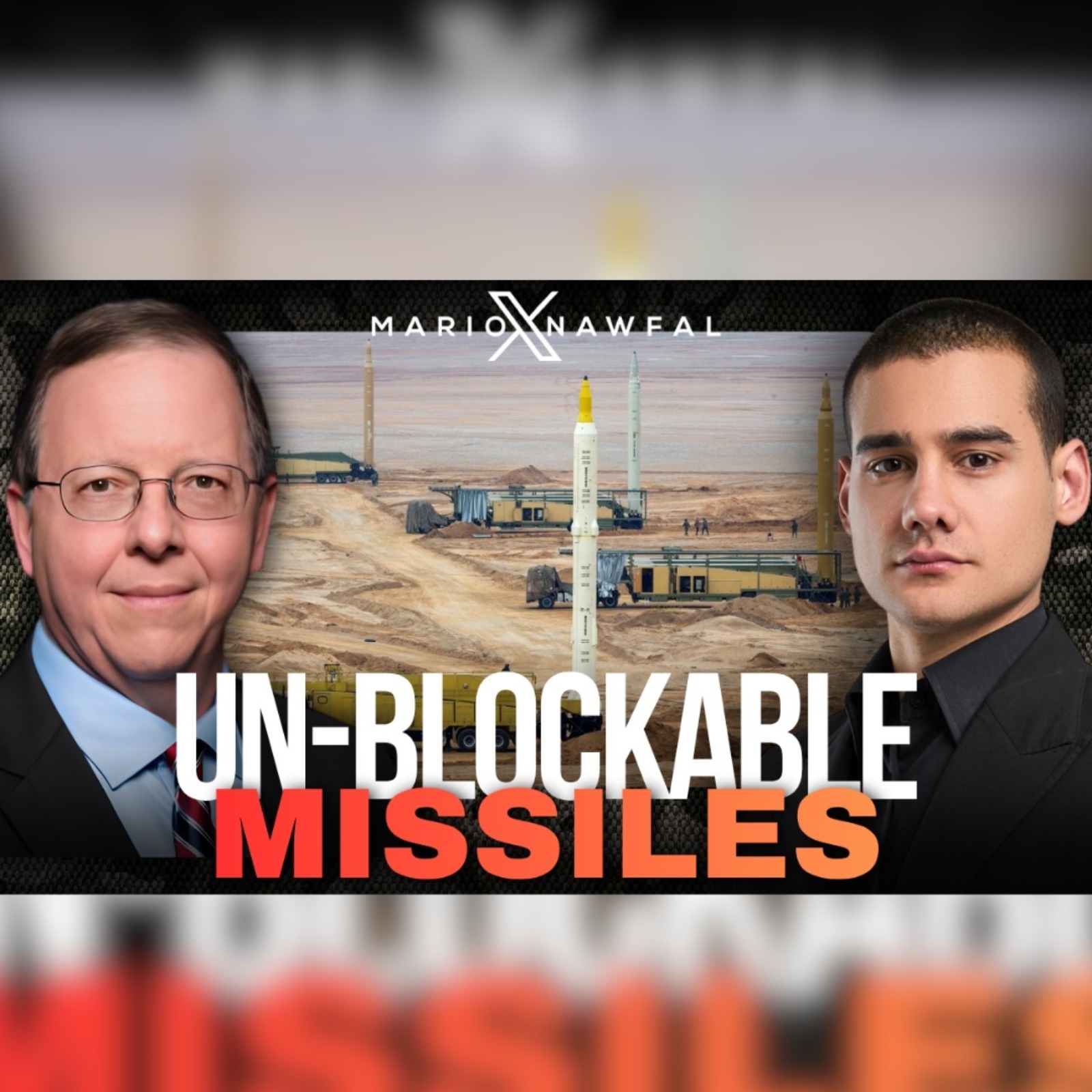
BREAKING: IRAN THREATENS NEW ADVANCED MISSILES IF U.S. KEEPS BLOCKADE – w/ Prof. Robert Pape
About this episode
Mario Nawfal is the host of the largest show on X, with regular guests including Elon Musk, Hunter Biden, Prime Minister Imran Khan, President Bolsonaro, President Milei, President Lukashenko, FM Lavrov, Presidential Candidate Robert F. Kennedy, Trump Allies including Vivek Ramaswamy and Roger Stone, various US senators, business leaders such as Marc Andreessen, Marc Cuban, Bill Ackman and David Sacks.
Mario’s known as the largest and most trusted, unbiased coverage of all world events.
He is also the CEO of the Attention Company, a conglomerate of crypto, AI and longevity incubators, consisting of over 700 portfolio companies.
Get every episode summarized
Each time Mario Nawfal publishes, we email you a written briefing from the transcript — the topics, who appeared, and any specific claims, with the ad reads skipped.
Email me new episodesFree for 3 shows. No card needed.
Hosts & guests
Transcript ready
470 searchable segments. Every word is indexed and playable.
Full transcript
Mario Nawfal — BREAKING: IRAN THREATENS NEW ADVANCED MISSILES IF U.S. KEEPS BLOCKADE – w/ Prof. Robert Pape. Machine-transcribed; use the interactive transcript above to jump the player to any line.
Dave Roberts here. There you are surrounded by fans, sharing wings, sharing drinks, high-fiving random strangers. Everybody remembers the game. Nobody remembers the guy coughing behind you until a few days later. At 2am, you wake up with a fever and your throats on fire. Now what? Urgent care, clothes, ER, slam, telehealth, maybe, but the pharmacy's clothes. You needed a medical emergency kit. These aren't first aid kits. They contain essential prescriptions used for over 30 common conditions. Sinus and ear infection, UTIs, stomach bug, travelers diarrhea, and more. On hand before you need them. Use your doctor-developed guidebook to select the right prescription or call their telemedicine doctor standing by. It's like an urgent care and drug store at home. When you're sick, traveling, or stranded, you'll wish you ordered a medical emergency kit. Order online in minutes and it's shipped to your door and say $45 with my promo code blue at urgentcarekit.com slash blue. That's promo code blue at urgentcarekit.com slash blue.
I just was taken for a tour there so it's really something and my wife has joined me for the last couple of days so we actually enjoyed Brussels and never been here before. It was very nice actually. That's nice. So when you speak to the European Parliament, tell them to get their act together, because they're becoming insignificant on the global stage and it's sad to see, it's given me a bit of a snap, give them a wake up. I'm going to get my slap, get moving here, stand up to Russia. Tell them this is the trap of insignificance that they're falling into, the trap of insignificance. Oh, let them know. The insignificance trap. Exactly. Exactly. If it's title of your next book, I would like a percentage of the royalties the insignificance. Okay, I'll keep that in mind. It's actually interesting. I'm getting a number of recommendations about the title. It's one of the nice things about having a wider audience,
smart people giving smart titles and asking for royalties. That's it. That's it. That's it. Professor, so I'll just kind of give you a very brief overview of the developments in the last 24 hours and then the mic is yours to kind of put it, give us the full picture. Very briefly, the IRGC has, so the Secretary of the Supreme National Security Council, Mossev, as either, probably the main guy after the Supreme Leader, he said the following and that sums up most of what happened in the last few days in the last week or so. In recent days, Washington has received a clear warning from Iran's new missiles. They fired a new missile, the Kassam something, they fired it at the aircraft carrier at the Navy. Most likely as a warning shot just above the the warships, economic warfare will be met by a maritime exclusion zone across the Persian Gulf to the blockade perimeter. The operational posture toward US warships and bases has been
fundamentally recalibrated. In other words, they're going to expand their area of control in the straight of a Mous target, more ships across a greater area. That's in response to the American blockade. We always said the Iranians will be more comfortable in escalating because they feel like they have the upper hand militarily and this is what they're doing. As we're going live, the IRGC Navy announced that it ambushed and captured America's most advanced and classified unmanned underwater vessel, like a submarine in the straight of a Mous. From the unmanned submarine, it contains the most advanced and new technology and was only delivered to the US Navy a year ago. That's developed by Adurro. The one that's the Oculus Founder launched a military company. That's a very advanced and they're going to display it on TV, on national TV for the Iranians to see. That's just a kind of a micro-development in the last few minutes. It's part of the bigger picture which you're going to explain to us, Professor. The Iranians are, they're escalating. They're responding to Iran's two America's new strategy.
So what Iran is doing here is they clearly are keeping the United States trapped in the escalation trap where we lose whether we escalate or not. So that's what I've been explaining. We're on the horns of this dilemma and they're clearly exploiting that. But what they're really doing is they're not waiting until after the midterms to inflict a still bigger defeat on the United States. What you see is they are moving and they're escalating to control more power. They're taking the initiative. They've been taking the initiative since the middle of July. They're escalating to take power. This is not about building peace. This is about gaining power and they clearly want to wreck the Trump administration politically by the midterms to do that. They have to increase the price of oil. They're doing that. But they're doing more than that. They're also
want to embarrass the United States strategically. And that is what is happening, what's been happening in the last few days with the increasing strikes on carriers. So the strikes on the carriers are very notable. They're notable because for months Iran has been attacking the land bases in the Persian Gulf and also of course Jordan. So not only the Persian Gulf narrowly understood. But now what you see is they're not satisfied with simply disabling the land bases, especially in the front line part of the Gulf States. They are now knocking back in a serious way or aiming to knock back the naval power of the United States. That's another threshold of increasing their control of the Persian Gulf militarily. And that's something they have not
done since I would say the opening couple weeks. I think in March you saw a bit of this. But you really haven't seen much of this lately. And this I think is likely to grow over time. Now there's a second thing I want to say that's the goal. The goal is to physically evict American power out of the Persian Gulf. And to evict is much of that power out by the midterms. Not after the midterms, not in January sometime. Got about 60 days to go here. So a couple months you could expect. And why they wouldn't want to have this as a goal is as I think I explained last time. So my book bombing to win explains how coercion works amongst states. At least my theories of it. And it shows a powerful evidence that it's not just you don't get a state to change its behavior by simply inflicting costs on the state. You want to show that it is militarily impede. It is weak militarily.
I call this a denial. It's not just punishment. It's denial. And what Iran is doing is they're pushing on the cause side, but they're pushing on the denial side here in a serious way. And that makes sense if you really want to keep America back, not just temporarily, but in a major way over a period of time. Now there's a second point I want to make. So the first point was on what is Iran's goal here? It's to kick us out. To kick them out by showing the weak not only the economic costs of the Americans of doing what they're doing in the region, but the military limitations of it, the military limitation and weaknesses of having the bases across the region. We had a win-based strategy that's been thwarted. Now we have a naval base strategy. They're looking to not just nick it, but to put literally holes in that naval base strategy. Now the new missile, the new missiles, an example of that, that new missile that is very difficult, if not impossible to intercept,
shows a big sweep is within the Navy. That's right. But it's more than just the single new missile. So this happened as the second volley, essentially. And so what you saw in September 5th was a precursor to this. And what they're doing, Mario, is they're taking a page out of Tom Schelling's book, Arms and Influence. They are in this last few days. This is almost textbook risk manipulation. All Tom is showing in Arms and Influence. So it's important to know that Herman Khan was the guy in 1965 that invented the term escalation dominance. An escalation dominance is a concept we've been talking quite a bit about here for months and months. But now it's time to get up to speed on this, a little bit more sophisticated. Call it graduate class. That's what I did this week in the sub-stack. I'm laying out more graduate seminar on what's occurring here with Iran strategically. So the concept
of escalation dominance is a concept as Herman Khan laid it out where the stronger power exudes the dominance in the escalation ladder. That was Herman Khan's example of it. And that's why when people have used escalation dominance with Iran, some of the people who know what I'm talking about scratch their heads and say, well, wait a minute, that's not what the concept meant. What Iran is doing is putting their own spin on it the way Tom is showing it in Arms and Influence. So again, I'm laying out the core concepts here where the real roots are. And if your listeners want to go, they can bone up on this and find out more. So what Schelling explained is a weaker side can play this game too. It's not just the stronger side. Okay. And so in Schelling lays out that the way the weaker side plays this game is by making threats, even though they're weaker, that leaves something to
chance. He called it the threat that leaves something to chance. And I've been getting to watch you and Brandon debate since I've been here in my hotel room here and I have jet lag now in the middle of the night and I wake up. What do I want? He's winning the debate. Well, here's what you're going to be frustrated by. You're both right in some ways because this is what Schelling is trying to explain. What they are doing, the means to this goal of kicking America out, is not to certainly hit the carrier or certainly miss the carrier. It's to play Russian roulette with the carrier. Okay. So what they're doing is they are launching attacks and if the carrier maneuvers the wrong way, which can happen, or if the missile doesn't quite operate perfectly according to the whiteboard
engineering dynamics, guess what happens? Smash. That is Russian roulette. And that's why you and Brandon, I think, are having a hard time. You can't decide that they want to hit it, that they not, that they not. It's Schelling. Schelling is the key to understanding this. Schelling is going beyond escalation dominance 101 to graduate school where he's explaining you can play the game of escalation dominance, even when you're the weaker side, if you're willing to take a risk, he calls it the manipulation of risk. And it's a risk where it's a true risk to you. You don't fully control the outcome. So you do something. And this is what I think they're doing, especially with the, whatever it is, the mock tent. I can't keep count of the mocks we're up to. Use me five. Model 10 to 12, which is crazy. Yeah, I keep watching because every time I watch you, it's another mock.
So, but my point is that what's happening here, Mario? Dave Roberts here. There you are surrounded by fans, sharing wings, sharing drinks, high-fiving random strangers. Everybody remembers the game. Nobody remembers the guy coughing behind you until a few days later at 2 a.m. you wake up with the fever and your throats on fire. Now what? Urgent care, close, ER, slam, telehealth, maybe, but the pharmacy's close. You needed a medical emergency kit. These aren't first aid kits. They contain essential prescriptions used for over 30 common conditions, sinus and ear infection, UTIs, stomach bug, travelers diarrhea, and more. On hand before you need them. Use your doctor develop guidebook to select the right prescription or call their telemedicine doctor standing by. It's like an urgent care and drugstore at home. When you're sick, traveling, or stranded, you'll wish you ordered a medical emergency kit. Order online in minutes and it's shipped to your door and say $45 with my promo code blue at urgentcarekit.com slash blue. That's promo code blue at urgentcarekit.com slash blue.
Is that the the risk here is real for both parties? And now another way to understand this, a great analogy that shelling used and is a twist on the idea of the game of chicken. So you know about this here and I'm sure you do where the idea and international politics is sometimes called a game of chicken where it's like two teenagers on a road are are racing against each other headlong in daring the other to swerve. That's the game of chicken. Well shelling went to have a twist on to try to explain this idea of the threat that we've something chance. He said imagine you have the game of chicken where the two teenagers are in cars heading right toward each other and one of the teenagers throws the steering wheel out of the car literally throws the steering wheel out of the car. Now that guy has no steering wheel and has no control but the car is still barreling ahead one
into the other car. Who's going to swerve here? Well there's only one party that can swerve now. And so there's a real risk this manipulation of risk. This is a true risk for both sides. It's not where wink, wink I get to win and you lose all the time. No this is what shelling is explaining. When you're the when you're when you don't have the clear escalation dominance you can still win this game of escalation dominance. When you play it with a threat that leaves something to chance and that is what you see with the Ron you see and and their leaders here are talking about if the missile were to hit a ship 300 dead Americans that's probably a real number. You know that's not a just a made up number. They're probably that's a probably a genuine assessment here that I think would would hold up to the best experts. So it doesn't mean they will certainly sink a
ship or hit the not hit maybe they'll hit a destroyer instead of a carrier but the bottom line is they are manipulating risk the way Thomas Shaoing explained how to manipulate risk. And this is something that's very this is a they're going to graduate school on Osmariah. We're we're still coming out of we're not even in the in the undergraduate school when it comes to strategy and they're already going to the graduate level where they're understanding they want to manipulate risk and this is a real choice for the Trump administration because the Trump administration can keep its ships in the Gulf of Oman in which case they may play the game of Russian roulette again fire another one sooner or later in Russian roulette what's going to happen you're going to hit the bullet with the chamber with the bullet right the same thing here and what that does is it puts a lot of pressure on the Trump administration because they're the ones that that that can swore you see what
I mean and this is where they are really rubbing their noses in for as we head up to the midterms that it's a run that's in strategic control and it's not just the costs are going up they are planning it right in our face they're in control and we they and they'll play it both ways they're going to they're what they're signaling to us is that if the United States wants to keep going they're going to kill those 300 sailors they may not do it the very next round it may be again the game of Russian roulette but it's and then America is going to have to decide what are they going to do for real are they going to take car guidelines are they going to escalate in some other way so what they're doing is they're truly truly playing a sophisticated strategy game here and we're just we're being run around in circles here Mario it's it's really really something to watch it's kind of hard for me to watch this because it's it's so I want I'm very pro-American
okay I mean I'm an American I don't want to see as embarrassed like this on the world stage but that's what's happening yeah this is like the perfect formula for the escalation trap yeah Russian roulette is is almost like the kind of definition of escalation trap where if that missile hits the ship and the US's force Trump is forced to retaliate disproportionately he can't downplay a missile striking a ship killing sailors so that's what you are really seeing here there is no that as well what you are really seeing here are tell tale signs of deep thinking about strategy understanding that strategy is not just about tactical military action you want to influence the enemy's politics that's what closuits is key point was politics by other means most people know the one liner they've never studied the book to really understand what he's talking about and that's the nationalism so I'm just trying to point out Mario that what you were what I am seeing
here are tell tale signs of actions and strategies that we normally used to think would come out of the Vulcan's in the White House the true black belts in American strategy that would come out of the Kennedy School that would come out of you know the University of Chicago the best schools in the world and and what you are seeing is is is that caliber but but unfortunately we're not we're not we're we're playing like the we're the JV's we're playing it's like they're an NFL team and we're and we're and we're a JV team or or or or a college team what options do the Americans have on the table as is it just walking away or escalating or well what strategies do they have available for them yeah the real the real issue here is and I've said this before but maybe now it will have a little more more punch is that we've got to change the time frame here so when you're in
a no win scenario you've got to change the scenario there's no way to win a no win scenario except to change the scenario and what we're doing is we're not changing the scenario we're we're still in we're we're doing all the old tactics uh best since D-Day plan is just warmed over uh you know blockade plus I mean this is this is not new it's it's uh victory rhetoric meets escalation reality there's we're not actually changing the dynamics in any meaningful way now what would change the dynamics is if we developed uh say a three-year plan to bring true stability to the Persian Gulf um by um um uh burden shifting more to local partners over the three-year period then um trying to keep all of this under America's full control the way we're doing now now you'd have a much more complicated
problem for Iran it would be a problem that um would be something that uh present Trump could start he might not even be able to bring uh to uh fruition in three years doing because he's only got two and a half years left and he's going to become the weakest president probably uh that we've had since Lyndon Johnson in a few months but the bottom line is that by sticking with this short time horizon between now and the midterms are now in January uh present Trump's and the administration is just playing right into Iran's hands they're playing they're literally playing the no win scenario with the time horizon and they're um uh and and it all works to Iran's advantage the only way you're going to change this um is if you literally change the time horizon but what that means is uh present Trump has to give up the hope that he's gonna pull uh rabbit out of his hat and get it even a symbolic
victory between now and um say January um he's um uh he's really uh this this would be a fundamental shift this would be something in between it's called off real offshore balancing as opposed to just serrent offshore balancing as surrender it would be a third-way approach Mario in between Jo Ken's idea of just walk away and in between um you know where Trump usually wants to go which is in your face punishment as the strategy so there there are approaches here Mario but they're not approaches that are very satisfying politically to because those who want to end the war they want to end the war tomorrow and they want to believe that they can just end the war tomorrow that's just not going to happen because uh Iran just won't let it happen and then there's others who want to win the war tomorrow and that's not going to happen because Iran is not going to let it happen so so this is the real problem here the politically um you know all the big big political payoffs where you you get
the big brownie points politically that's just simply not gonna not gonna be uh of the way you've got to pursue regional stability this is this is uh long term this is over several years um you've got to set it up so that um and by the way this is one of the big things that happened with the second bush administration so notice that when the bush administration went into a rock it was a total disaster and then uh finally finally finally they uh changed horses they got rid of rumsfeld they got rid of wolf wits um they got rid of Colin Powell and then the second bush administration came in and they were much more dedicated to uh stability and then who got the glory for that mostly Barack Obama mostly Barack Obama but this is I worked a lot with the bush administration in these years on this so I know quite a bit about what I'm talking about here not just from reading history I was very much uh uh again I advised every White House from 2001 to 2004 that includes
this bush administration on this war many times and uh it really was a real issue trying to change the time horizon trying to you know we and that's how Patreus came in so the the and bar awakening all of these policies um uh changed once we got a better time horizon for how to create uh uh stability and stop trying to uh defeat quote the bad guy you know by next month so change a time horizon means not try to achieve the objective next week or next month but have a multi-planned achieve that objective and start to implement it in baby steps this is how we beat ISIS so for his insane with the Obama administration so tape's been involved what what is the just to give uh I won't say too Dave Roberts here there you are surrounded by fans sharing wings sharing drinks high fiving random strangers everybody remembers the game nobody remembers the guy coughing behind you
until a few days later at 2 a.m. you wake up with the fever and your throats on fire now what urgent care close ER slam telehealth maybe but the pharmacies close you needed a medical emergency kit these aren't first aid kits they contain essential prescriptions used for over 30 common conditions sinus and ear infection UTIs stomach bug travelers diarrhea and more on hand before you need them use your doctor develop guidebook to select the right prescription or call their telemedicine doctor standing by it's like an urgent care and drugstore at home when you're sick traveling or stranded you wish you ordered a medical emergency kit order online in minutes and it's shipped to your door and say 45 dollars with my promo code blue at urgent care kit dot com slash blue that's promo code blue at urgent care kit dot com slash blue too much more but just say with the the policy for ISIS ISIS in spring 2014 took Mosul a million person city in a SUNY city
and then this was a shock the world and very few people at the time thought ISIS could be beat well I came I I pushed for strategy called it offshore balancing I I pushed for this in Washington and then also published it in January 2015 in foreign affairs which was a longer term strategy American air power plus local ground power allies and that was going to take time and nobody except three people in Washington fortunately they were the right three people thought that was going to work the Pentagon thought it was a horrible idea I know because I was discussing this and so what happened was the reason they didn't like it Mario was because it took nine months to develop those ground ally options it wasn't until October 2015 that those real arrangements started to happen and that's when you actually started to have some success against
ISIS and then what happened is Obama finished off about two thirds of ISIS and and Trump finished off the final third and what does Trump always say the only he beat ISIS no it's not true he just took the same strategy that Obama had and he extended it another year and it was literally the same strategy it was already working and but it but by having a more extensive you know a time horizon that didn't mean you were going to win tomorrow and understanding the how you actually could build a coalition over time you were able to bring some stability did that solve every problem no but it was a real policy called offshore balancing which is what my so we don't talk much about what's actually in my voice Mario because we spend a lot of time on the news but these are these are what is
if you look at dying to win the conclusion cutting the fuse you'll see deeper discussions of what this policy looks like what this strategy looks like and and it's important Mario because the it really is another approach and it's an approach however that leaves the the pull especially the political sides going at each other who either want to get out instantly or win instantly they're both unhappy because it means you actually need a couple years to to bring some stability it's not just good enough to walk away okay so if we walk away Mario and Abu Dhabi falls in a year I don't think you're going to be too happy because you like to live in Dubai I'm pretty sure so so this idea of Joe kid we're just going to walk away it's all going to be fine yes I said this like I want to have so many questions for you just one point I made this today Smith as well in a debate
I was hosting and I said because he was advocating for just walking away and I said I was against the war before it started but now that this mess was created it's very easy and it's pretty cool to say let's just walk away and let's just leave things as they are do you get a lot of bonus points from the democrats exactly but it's not but what people don't understand is a cool thing to say is good way get attention I'm not saying that's why Joe says it I think Joe no no no no no no no no no no no no yes but my position is that it's just a lot more complicated than this these are allies that depend on American security there's behind the scenes agreements they hold a lot of US treasuries there's the US the trust in the US alliances if you've got it exactly so Joe and I have had hours of discussion on this I brought them on my sub stack we've done it publicly we've done it in person we've done it over coffee so he and I have we we understand each other's positions and so forth I've got a respect for Joe so I'm not this isn't about again a lot of times people come out this
ad hominem if you disagree it must be your smart they're not no no no got a lot of smart people we're all trying to figure this out okay and what I think is that you're basically this position here is it's and this is why so some people want to what they call offshore balancing is just walking away from the middle east and then go fight China or go counterbalance China that's not going to work and the reason it's not going to work is because if you leave the middle east and like a pop you're going to leave it so unstable you're going to get sucked right back in and that's the that's why offshore balancing is got to be more than just walking away it's got to be build regional stability and by the way we did that with with ISIS notice that ISIS hasn't come back anytime recently okay so it took a while it took us over a year it took us six months to actually understand the strategy then it took us a year to implement even the beginnings of the strategy and then it actually
has worked pretty well so this idea of a building um uh it regional stability is a very important concept and I really believe that come January I think it's hard right now Mario to get Washington uh and even you know social media to really think about a two or three year strategy I think come January this might be a little different because right now people are still hoping even though they might say they know it's a long war what I hear is the quiet part of the voice which is saying I know it's a long war but it's still going to be over tomorrow yeah see he that Joe Kent professor pipe saying go wrong Joe Joe wrong Joe Kent you're turned to respond to the professor okay professor tuned out if froze horrible time to freeze professor I was just trying to get a fight between you I don't know if you can hear me at least I checked the professor's connection I'm trying to get a fight going between the professor and Joe Kent good for the clicks between them um but the the question I'm gonna ask I don't know if you can hear me professor while
I asked the question for the audience is um I know the question is so I was um I was talking to someone very closely administration extremely close to Trump and his inner circle and very involved in coming up with a strategy as well and I said this on the show already I think I said it in one of the discussions between me and Brandon about a week or two ago and there is a strategy in place for the Trump administration moving forward and that's and we're we're kind of seeing it play out so the goal is I'm trying to remember all the details involved but the goal is to weaken Iran by instead of targeting Iran directly because obviously that failed with this war targeting the access to resistance the alliance networks they have we're seeing that with the Hussies the Saudis are backing the prosadhi groups in Yemen the other Yemeni government and there is clashes right now and have been for days in Yemen we'll talk about it on on the shows later I'll I'll go through it in my daily news recap with Brandon in a bit but there's daily clashes in Yemen right now between the Hussies and the Yemeni government that's internationally recognized and there's claims from each
side that they're having progress on the ground but also the Hussies fired probably the most extensive attack on Saudi in years so that also happened last night so there is a strategy to weaken the Houthis which is Iran's ability to control the babyland of strait where the the alternative routes to the strait of hummus go through the Yanbu pipeline the Saudi one then we have has Balas so the Americas are working with the Lebanese government and the Israelis as a trilateral agreement there to D to D militarize southern Lebanon and the Samhiz Balah and I'm not saying these strategies will work I'm saying these are the strategies in place and that's in progress we're seeing it happen in Lebanon Israel's escalating their strikes in the Lebanese territory Brandon will go through this with the Elijah in a few minutes when they're live and we're seeing and his balas not responding Iran is not retaliating their red lines Beirut but I think Iran would get involved in Hasbalah will get a lot more aggressive if the disarmament process begins so they're trying to disarm has Balah which
I'm really worried about trying to weaken the Houthis maybe even the pose of the Houthis I don't think that will work that's been tried before we'll see how far they go and then on Syria trying to bring Syria closer to the western block because a lot of the pipelines going through away from the strait of hummus to the Mediterranean are going through Syria so by having Syria and obviously taking Syria away from Israel but from Iran by with the coup against Assad Bashar Assad so that's you got Syria moving away from Iran you've got the Houthis are trying to move away from Iran you've got Hasbalah trying to move away from Iran and then you've got the Iraqi militias that are very aligned with Iran and we know that the Iraqi government which will taste in a way controlled by the Americans because a lot of the Iraqi oil money goes through American financial system and they're coercing the Iraqi government to disarm the pro-Iranian militias in Iraq so the strategy from what I've been told is to get rid of kind of the tentacles of the octopus of the
Iran octopus and to weaken Iran economically we're seeing that with the sanctions the professors about to join I just checked the message from my producers and well a lot of news is happening meanwhile Iran just shut down a drone so they captured the submarine the unmanned submarine as me and the professor were going live and I'll be talking about this in an hour with Brandon and now they shot another drone they got they shot about the quarter of the Reaper drones more than a quarter of the American Reaper drones and there's another report by the way there's so much news happening in Brandon will go through there's a report by financial times that the US is considering abandoning some of the bases that were destroyed in the war there it is by CNN the US military intelligence officials held in informal discussions about reducing the American footprint in the Middle East the talks come as the war exposed deep vulnerabilities in US bases with Iranian attacks causing significant damage to installations behind Qatar Saudi Qawaii and Jordan
and that goes to the other point as part of the strategy so what the professor said in the discussion is the the US should delegate the security responsibilities to countries within the region making it more domestic make it their responsibility instead of all of it being on America's back and this is part of the strategy that was shared with me in that discussion where the Trump administration is working with the Gulf and they welcome things like the Mecca alliance as what I've been told they welcome alliances like the Mecca alliance the defense alliance between Turkey Pakistan Saudi and more countries to join and we're going to see other similar alliances form there's a lot of similar discussions and because that's the countries in the region buying American weapons there's a report after report of Gulf countries buying American weapons they're also diversifying to other suppliers outside the US like South Korea Africa sorry Europe South Korea and Israel but therefore the responsibilities for the US in order in in terms of taking care of responsibilities taking care of security responsibilities that have been diminished while they
also weaken the the Iranian access of resistance so professor I think you were connecting to you couldn't he me I was just sharing with the audience the strategies that was shared with me by someone extremely close to the Trump administration after the inner circle that comes up with these strategies for the region and they were explaining to me how the strategy right now is instead of directly attacking Iran it's weakening Iran by weakening or attacking the alliance network has by done with Israel Lebanon doing an agreement who thieves with the Saudis the Iraqi militias with the Iraqi government trying to disarm them Syria with getting al-Shawar closer to the western alliances and economic system so that would weaken Iran economically and then isolating them with sanctions and the blockade but I don't know if the blockade will last and that wasn't mentioned to me but mainly the sanctions and doing what you proposed early in the conversation getting countries in the region to take care of their own security now I'm not sure whether they're doing this out of strategy out of necessity because they have no choice but this is the strategy at least the one
proposed to me now that is being discussed in those in the Trump administration so what I would say yeah so what I would say is this is the strategy I'm proposing trying to blend it into the current plan and have which makes which which you could see would make sense so a lot of times practitioners will evolve their current plans and there's good political reasons why they've stuck with their current plans Mario it's not just strategic reasons which means getting them to move to a better strategy is a process and so what you're describing here I would say is having the outside part yes that makes some sense here but the the hole in the donut the middle is really the critical element of this but this is this would be this is a workable evolution is what I would say and
maybe what you're seeing here is movements in this more in this better direction which is going to take some time to to evolve and it also by the way with the Bush administration what I always said to the Bush administration was they don't need to announce a strategy change they just need to do it and it will take time anyway and over time the benefits will be will come so getting the administration's Mario to stand up and say yep I was dumb I did this dumb thing over here this is not happened this just isn't you know these are presidents of the United States these are these are senior people they're not gonna stand up and do that for it so what but that doesn't mean evolution can happen and I've seen it and I think that that's that's what we what we need here is we we need to get beyond the decision that this is all about hating Trump loving Trump hating
Democrats loving Democrats and actually about regional stability that's the issue it's hard to do that in all of these wars Mario it's hard to do it because we live in a political context it's just the case it's a policy you know strategy doesn't happen in a political vacuum it happens in politics I've been working with this for that you know 35 years I've worked with you know chiefs of staff of the Air Force again well every West Wing since 2001 and the bottom line is it is possible I have seen it for real movement and improvement to happen but it doesn't happen the way um that makes sense on table a five on CNN where it's all about a political food fight you see this this is actual how are you gonna really move the super tanker to a better position and um I I'm hopeful that this can happen I'm I'm still I want us to have a more stable outcome it's good
for the region it's good for the world and it's good for America and that's what I am I'm very pro-American you're not and that's why people can't tell what party I'm not coming at this from a party I'm not looking for a job here I'm I'm looking to try to help us with better strategic decisions yeah I just got a report he is unconfirmed or maybe he's confirmed but I haven't seen the confirmation yet that the economic outcast the new strategy the sanctions has now targeting every civilian Iranian a- every Iranian civilian airline um so that just came in as well yeah this is not a good yeah I would say this is not a good so this is these this is punishment punishment backfires um and you know we've had this conversation a lot but you know I've been studying punishment strategies for 30 years you can use punishment or pressure is it punishment or pressure oh it's the oh no no this is punishment because what you're doing is you're taking you're trying to when you go after airlines you're trying to hurt the economy you're trying to hurt business you're
trying to hurt specific businesses you're also trying to hurt uh uh uh the economy and more blunt way that if that's just isn't that a pressure tactic though you're hurting an economy well they're all pressure tactics they're all pressure tactics so pressure just means coercion but this is a way where you're you're literally imposing costs you're not um uh you're not changing their calculation of the probability of success of their strategy so so there's punishment there's leadership decapitation where you literally try to change the government there's punishment where you increase the cost on your opponent uh for what they're doing and then there's denial where you try to persuade them that their probability of success is zilch and that's those are the three big choices in coercion they're all pressure strategies mario all of those are pressure strategies uh the question is uh where are you um putting your emphasis
is it is it on uh wrecking the probability of success so Iran is winning uh here because they're not just inflicting costs they are inflicting costs but they're also persuading the world that uh the trump administration has no successful strategy that the probability of success of trump strategies is virtually zilch that is what is demoralizing americans that's what demoralizes the US military um and that is um uh why uh ron is is gaining the has been gaining the upper hand what i'm describing is changing that over time not in a day not in a month but over time and that is how you truly could build stability where the goal is not to get a trump on mat rush more the goal is stability you say and that's a problem because no matter how many times people say they want
they they want xy or z often what there is is uh uh that no they really just want a victory for maga they really or they want to they want to defeat for maga in in in in american politics you see i'm just not coming at this from that way that perspective so briefly professed a rap pop as a final question d i don't know it's a question that alone needs a couple of hours but just very briefly superficially hearing what i said earlier focusing on the tentacles of ron while pressuring ron could that strategy as a long term plan if the goal is to weaken ron further uh and to break their influence in the region uh not just not a problem no it won't work not the way you're describing it without when i'm also adding into the mix so and the reason is because um ron thinks they have a winning strategy uh the fact that it might cost more you're inflicting some more cost they'll just
accept the cost and they will not be you won't really be weakening um ron in a series in a serious way the um that there is a what i would say is that strategy is what i call hoping to win your hoping that you are going to weaken these tentacles enough that uh you'll magically just this is the sky best an idea that in two years or moves will be in you know not matter to the rest of the world it's just uh it's just almost 99% unlikely to happen that way if you really want to um um uh weaken ron you've got to uh build stability uh here and if you keep focusing on the outside guess who's going to fill the power vacuum in the middle ron guess what they're going to do in the next year while we're trying to weaken hezbollah they're going to topple Abu Dhabi they're going to look to replace mbs in rea they're going to look for Kuwait city to somehow have a different
settle leaders so this is 2027 i don't mean 2030 i mean 2027 here the next stage of this is political instability and i don't mean in Lebanon okay because look at where what what this naturally means you you want to build your sphere of influence around your economic base what's the economic base for ron it is hormones and how do you build and protect that base you build that by having more political influence in the governments around that base and that's called a sphere of influence and has been great power politics for hundreds and hundreds of years why is if if mbs wants to topple the government of a ron why isn't the government of a ron thinking about toppling mbs i mean this is just a n- this is just great power politics what a way to end it professor
well thank you very much for the most viral clip okay we might have wanted to topple ron ron will topple the Gulf thank you for your time that's it that's that's the risk okay always thank you oh absolutely bye bye all right guys so Elijah Magniere will be talking to Brandon who's he's a regular on the show in three minutes focusing on the developments in Lebanon and how could that could force ron to get involved in strike Israel so that will be in three minutes and that me and Brandon right after that will be giving the daily news recap then after that i have a kernel macroeagle becoming on larry johnson matt does wow okay pretty killer lineup martin Armstrong's back he like lifting and peter Alexander my producers are the best we have the best guests on youtube well done producers well done lees and everyone else guys i'll see you and make two minutes with Brandon and Elijah and me you'll see me yet in an hour hope you enjoyed the discussion with professor pay bye
Dave Roberts here there you are surrounded by fans sharing wings sharing drinks high-fiving random strangers everybody remembers the game nobody remembers the guy coughing behind you until a few days later at 2 a.m you wake up with the fever and your throats on fire now what urgent care close ER slam telehealth maybe but the pharmacies close you needed a medical emergency kit these aren't first aid kits they contain essential prescriptions used for over 30 common conditions sinus and ear infection uti stomach bug travelers diarrhea and more on hand before you need them user doctor develop guidebook to select the right prescription or call their telemedicine doctor standing by it's like an urgent care and drugstore at home when you're sick traveling or stranded you wish you ordered a medical emergency kit order online in minutes and it's shipped to your door and say forty five dollars with my promo code blue at urgent care kit dot com slash blue that's promo code blue at urgent care kit dot com slash blue
More episodes
More from Mario Nawfal
CHINA'S OIL LIFELINE IS 40% GONE – w/ Peter Alexander
Mario Nawfal

IRAN FIRES 40+ MISSILES AT U.S. BASES AFTER STRIKES ON 5 IRANIAN TANKERS – w/ El...
Mario Nawfal

TWELVE COUNTRIES MOVE TO BAN TRADE WITH ISRAELI SETTLEMENTS – w/ Matt Duss
Mario Nawfal
BREAKING: U.S. AIRSTRIKES NEAR KHARG ISLAND, TANKERS STRUCK – w/ Fmr. CIA Larry...
Mario Nawfal