Loading...
About this Episode
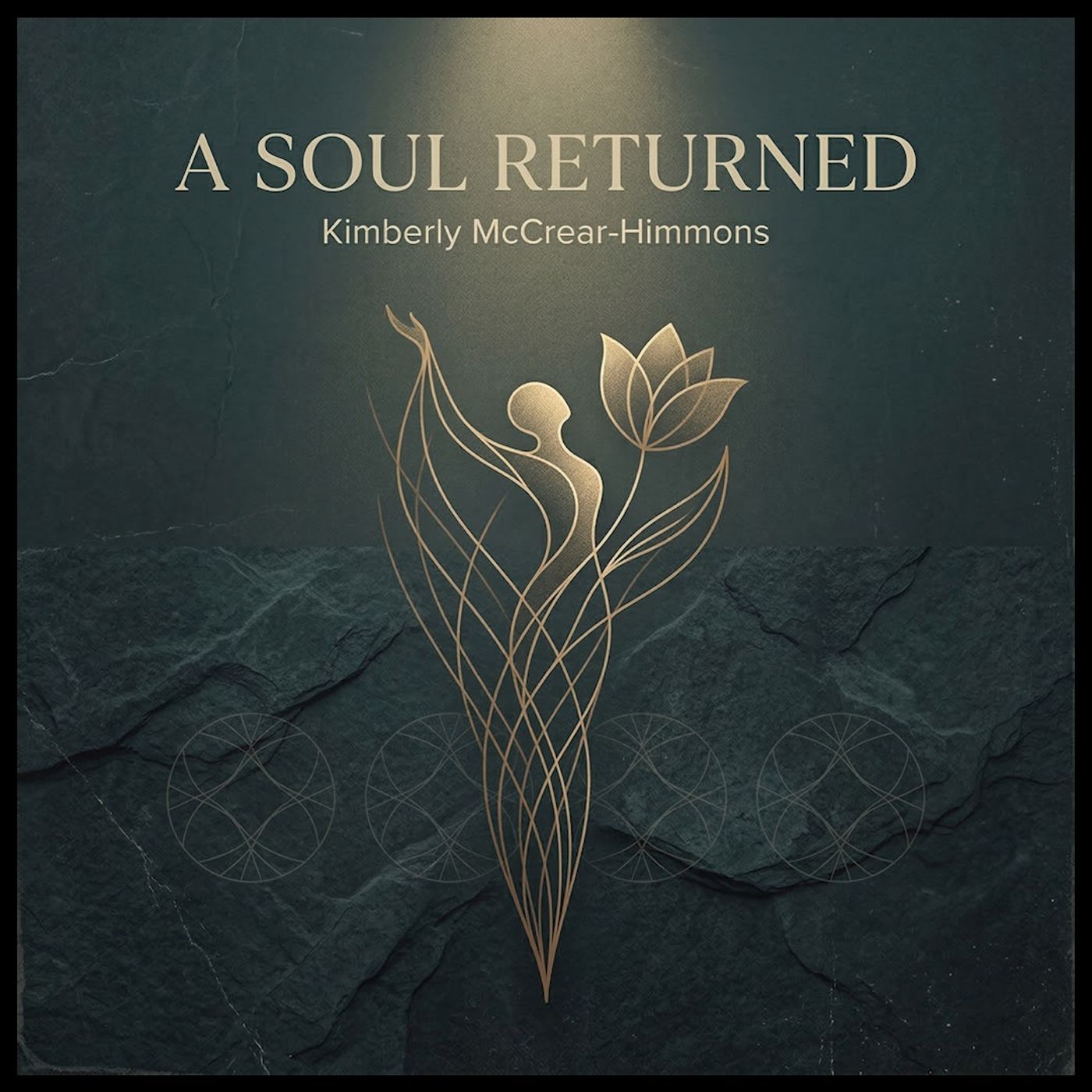
What happens when you finally realize you deserve better? Author Kimberly McCree-Himmons sits down with us to share the raw, unfiltered story behind her book A Soul Returned—a lifeline for anyone trapped in the suffocating grip of domestic abuse. This isn't just about physical violence; it's about financial control, psychological erosion, and the quiet destruction of self-worth that happens behind closed doors. If you've ever stayed too long hoping things would change, this episode will shake you to your core.
Hosts & Guests

Transcript
The American Express Corporate Program is more than a card. It's a complete solution. Apply for the
right card for your employees. From everyday spenders to frequent travelers. Issue virtual cards
to suppliers or project teams for added security and flexibility. Simplify accounts payable
with American Express 1AP. Helping your company automate supplier payments. The American
Corporate Card Program grows with you. Terms apply. Enrollment required and fees may apply,
including an auto renewing monthly platform access fee. Suppliers must be enrolled and
located in the United States. Access to affordable credit helps me pay my employees,
but I don't really need it. Infliction is killing me. But who cares? Big retailers
and making record profits. That's why we support the Durban Marshall credit card bill.
See, banks and credit unions help small businesses make payroll. This bill would cut the vital
resources they need. While increasing mega store profits. They deserve it. Don't they?
Tell Congress, stop the Durban Marshall money grab for corporate megastores.
Paid for it by the Electronic Payments Coalition.
Hey, it's Benji Cole, son of Al Cole from CBS Radio and host of the syndicated talk show
People of Distinction. Talk gives you an in-depth view of some of the most dynamic,
intelligent and successful people on the planet. Run to our website Al Cole Enterprises.com
for more info. Email me through Benji at Al Cole Enterprises.com if you'd like to get involved
with what we have going, and as always, please continue to like and follow our broadcasts.
People of Distinction is internationally syndicated solely due to the love and support
that you all continue to give. We're available across all major distributors,
and as long as you keep following, we're gonna continue to put out the content.
Now sit back and strap in, because on the line with us today,
we have the impressive Kimberly MacKrayer Himmins.
And we're gonna be discussing her amazing book, A Soul Returned. It's Amazon,
it's Barnes & Noble. It's a lot of other places, man, but most importantly,
check out her personal website. That's KimMCHemmins.com.
There, gather more information on her, on her book, hyperlink setups that take you to the
purchasing pages. Listen, man, I'm sorry, just do yourself a favor and head to the site.
All right, again, it's KimMCHemmins.com. And listen, people, it is an absolute pleasure to have
Kim here on the line. Yeah, listen, let me ask you all the quick, have you ever stayed in a situation
just a little too long and not only stayed in a situation just a little too long, but you stayed
there because you kept hoping the situation would get better. Now, we're just walking through the
door. We're gonna go a lot deeper than that. But first and foremost, just that question alone,
I know a lot of you have been there. I know a lot of you right now are going through the roller
decks and memories you're driving down that memory lane right now. You're like, yeah, Benji,
I remember there was this one relationship, there was this one. Oh my goodness, I choose to forget
that one, but I remember him too. Yeah, we've all been there. I got that. Now we're gonna go even
further because I'm adding levity to the conversation, but I promise you, people, there is nothing
funny about what we're about to speak about. We're gonna be talking about domestic abuse today. And
yeah, okay, I like to add levity into conversations a lot. I think it makes it a little more palatable,
but also I'm not shying away from a difficult conversation. And neither is Kim. This is a book that
needs to be added to your shelf because when we're talking about domestic abuse, my goodness,
it's something we need to talk about. Now according to the national domestic violence hotline,
one in three women and more than one in every four men will experience domestic abuse in their
lifetime. With numbers that high, why do we shy away from it? Why do we feel such guilt? Why do we
feel such shame? Now, I'm asking the question, but of course it's rhetorical. I get it, but we need
to stop pretending that abuse always leaves a black eye. Like sometimes it leaves, I was going to
say a woman and that's going to be from the perspective that we're going to be speaking from today,
but again, I just listed the statistics. It goes both ways. It happens to women more frequently,
but domestic abuse, man, it leaves people sometimes questioning their own reality, their own worth,
their own sanity. And because of this, I am absolutely delighted to have Kimberly here on the line.
Her book, a soul-returned man, it's a lifeline. It is an inspiration. It is an absolute godsend.
We're going to uncover a lot of the nuance found within her book, but trust and believe me,
we're only going to scratch the surface. By the time we've concluded, it's going to be up to you
to head on over and purchase your copies. And I don't even necessarily need to worry about it,
because I know you're going to do just that. This is something that needs to be added to your shelf.
This is going to be a book that hopefully will help spark a conversation with you and those around
you. Sit back, strap in. Let's get ready. Kim, first and foremost, welcome to the network. And thank
you very much for being a guest. How are you doing today? Oh, wow. I'm doing great. And thank you for
that introduction. You get it. I'm sitting here listening to you saying, thank you, you actually
get it. And I really do appreciate it. It's such a tough topic to talk about. Yeah. Well, Kim,
listen, I thank you for the praise I'm going to pass it right back to you. You had to create this
masterpiece for us to have you on the network and to discuss it. And again, it's something that I
I look at and I feel very disheartened by how large of a population of people are affected by this.
And I think it's, you know, I'm an optimist naturally. So I do think that maybe we can't eradicate
it, but I do think that we can help bring those numbers down if we just spoke about things more.
And listen, for one reason or another, and I'm definitely not casting any aspersions, I understand
why people stay quiet, but hopefully my, my, the optimist in me believes fully in books like this,
in stories like yours. And if we can just utilize our platform as a microphone to showcase it,
to even one more person, man, we're doing some things. Okay. So thank you for writing it. Thank you
for being here. Kim, let's jump right into the book. I know that this is a fictional narrative
based upon real events. So let's just jump right into the book. We got a lot of things to talk
about, but tell us a little bit more about your book, a soul returned. Wow. I actually wrote a
soul returned over 20 years ago. And actually the title wasn't a soul returned. It was called
another lease on life. I had gone through many situations with domestic violence. Now as I look
back over my life, I realized that it just didn't start with the fighting. It started with my childhood,
it started with how I grew up and the things that I saw around me. I would always tell people that
I felt like the post a child for domestic violence, because I was pretty naive. And I was always
considered to be book smart and not street smart. And I was searching for love. I had my mom and dad
in the house with me. They took care of us the best that they could. My dad, he had another
relationship. I know people aren't supposed to share that, but he was in another relationship. He
always took care of our home. He took care of our building. He took care of us. But as I grew older,
I noticed that there was a, my mom and I, our relationship wasn't as close because I couldn't
understand how she was okay with the other lifestyle and how she reminded us that there wasn't
anything that we can say about it. So my perception on life was already skewed from a younger age.
And then as I became a teenager and you get into relationships and you meet guys and you don't
necessarily understand what a good guy is, you know, because I was never taught that. I was more
sheltered. I didn't always have the best relationships. I stayed in relationships because I needed
that stability. I was afraid to venture out on my own. And so finally, I just said, you know what,
I'm going to get out from under my household under my mom and dad and move in with my
then boyfriend who turned out to be my abuser. The one thing I want to make clear is that
it didn't start with the abuse. It started with so many other things in terms of just not knowing
who I was. I left New York because right now I'm here in Georgia, but I left New York and came
down here with a job and he wasn't going to come, but at the very last minute, he was coming to
and I just didn't know how to say no, you know, so he came down here with me. I can honestly say
through all the counseling and therapy that I've gone through, I realized that there was that
part of me that just didn't understand who I was and who I should have what where I should have
gone in life. You know, I didn't understand that. I've gotten bits and pieces as I've gotten older
and I'm going through different types of counseling, but even at the age of 57 now, I'm just now
really learning who I am. I'm learning to realize that my life was not a mistake. I'm learning to
realize that my steps have been ordered to get me to this point and that everything that I've gone
through in life made me who I am. It hasn't changed the core of me, of one who's loving and giving
and forgiving, but it's allowed me to learn how to build boundaries around myself, but not to
the point where I split myself from having relationships. I had to learn how to trust not just
those around me, but I had to learn how to trust myself and trust in God.
Kim, thank you very much for that. And man, listen, there's so many different aspects that
we can go into. Let's first and foremost, let's talk about inspiration, okay? Because this book is
of course very, it's deeply personal to you and to your journey. And although I'm very grateful for
the fact that you've created the book, and I instantly can see the value it possesses,
let's call a spade a spade, you didn't have to put it out for the public. So when you were writing
this, talk to us about that writing journey. And when it shifted, because I know you mentioned
to me on the pre-screen and call, and we can go in a little bit more depth with it,
this started off as almost a cathartic or even therapeutic experience for you. So when did it
switch from being that quote unquote therapy to now being wisdom and guidance for others?
Access to affordable credit helps me pay my employees that I don't really need it.
Infliction is killing me. But who cares? Big retailers are making record profits.
That's why we support the Durban Marshall credit card bill.
See, things in credit unions help small businesses make payroll. This bill would cut the
vital resources they need. While increasing Megastore profits. They deserve it. Don't they?
Tell Congress, stop the Durban Marshall Money Grab for corporate Megastores,
paid for by the Electronic Payments Coalition.
I'm caught up in the game. My attention is on every play and every whistle,
but what I'm missing is a signal coming from my kidneys. That signal isn't like a ref's whistle.
It's more of a silent SOS, which could be warning me of an increased risk for events
like heart attack or stroke. And a way I can catch that signal? A simple urine test called
UACR. If you have type 2 diabetes or high blood pressure, talk to your doctor about the UACR test.
Detect the SOS. Visit DetectTheSOS.com to learn more.
I keep going back to 20 years ago. And when I actually wrote the book, it was cathartic.
I needed to make sense of what was going on in my life. I had, as I said, I moved down here to
Georgia and then we ended up getting a house here in 1999. And I was working and I was taking care
of my oldest son and things like that. And I like what's going on. Everybody had problems,
but it wasn't anything that you couldn't get through. Fast forward to when the abuse got really bad,
I ended up leaving and living with my sister for two years, but still maintaining a household
on this end. And then finally, I was tired one day and I said, Lord, I can't keep traveling
in an hour way to come back to work, which is only 10 minutes from my house.
Like, I was just living my life where just didn't even make sense anymore.
You know, and I said, no, I'm going to go back to the house. And he is going to have to leave.
And if I have to go to court to do it, and I'll go to court to do it, it was just so many different
events. So either way, I ended up back in the house and because he had to leave. And I was going
through counseling. I went through the domestic violence hotline and was going through counseling.
I did that for a year, but to show how your mind doesn't change. He was dropping me off at the
domestic violence counseling meeting, which was like, when I look back over my life,
it's like, are you kidding me? He would wait in the car and I would go to my meeting. And then
I would come on home, you know? And I found out there were other people, other women that
were going through the same thing. So we were in the counseling meeting for over a year.
And I was still living life, not really feeling. And then finally, we did break up because he ended
up going to, he ended up going to jail or whatever. And I ended up going to church. And I was
in church and going to church every day and just, just coming back to God. I felt like I was healed
as they say, you know, you're in church. I ended up joining the domestic violence ministry.
I was an intake person talking to other women and I was feeling like I was healed enough to say
because we had another son that my son needs to see his dad. So we tried again. Like I'm talking
about six years later, we ended up trying again. And it just didn't work. I was so different.
I was so different because I had seen something different, you know? And once you leave out the
situation and you actually live your life where you're able to breathe a little bit, you see things
differently, but that doesn't necessarily mean that that person may see things differently.
So this time when we ended our relationship, I'm like, this is just not working. We have to
separate. This is just so completely out of order. And he at that time was like, no, it's not
going to happen. So the bottom line was we ended up separating. And I live, like I said, I live
with my sister and then I ended up coming back home, maybe two years later to this house.
And I was living in here, but I wasn't living. If that makes sense, I was paying all the bills,
I was paying them all the responsibilities, taking care of the kids, but I hadn't touched
living. I was in one room, the boys went to other rooms. It was just a different situation for me,
but I was I was making it as a mom, you know? And then finally, I said, you know,
my God, because I learned that one of the writing classes that I just heard that your writing is
a form of prayer. And I realized that the time that I wasn't even praying anymore, you know,
that it's like I was just I was just living life. So I ended up writing. And I would literally
just sit down and say, God, I know this is not how life is supposed to be. I know you have
so much more for me and so much more for others. And that's when I was able to start
developing the characters. I looked at myself when I was a teenager. I looked at myself even
though I wasn't married at the time. I looked at myself as if I was in a relationship with
my spouse in an elevated relationship wasn't the best one. I looked at myself as the police officers,
even police officer used to come to the house. It's like God allowed me to envision what everyone
was thinking. And I also looked at myself as the actual abuser, which most of the time we hit
at once but once someone abused someone, they're never going to change. But God showed me something
different. Maybe it was just my imagination. Maybe it was just my hopes and dreams. But I realized
that when God comes into anything, anything is possible. And that's how I was able to develop
the characters. Kim, I love it, man. And I'm so I'm so happy for you. And listen, as we start to
close out, I want to ask something because listen, I think this is such a crucial conversation.
And yes, we're talking about your specific experience, but you've you've hit on a lot of things
that are universal. And there's so many others out there are feeling women and men alike.
Anybody that has been a victim of domestic abuse. And you know, I mentioned this in my in my
opening. I think the most common thing and I feel like probably one of the most destructive things
when it comes to dismantling the domestic abuse that we see when it comes to building a shelter,
a safe place for people is like there's the there's such a dangerous myth out there that it's like,
Oh, well, at least he didn't hit me as if that is the only abuse.
Let me tell you something. It's the call my I'm a be I'm a be of chance parent as I can.
My mom said that to me. She would never even read my book. And I know she marketed it. Oh,
yes, she sold it with no problem. But she would not read it. And I was angry at one point like,
well, I want to read this. I want to read this. And I can honestly say right before she passed,
I was at the hospital with her. And remember, my dad had another life, you know, and he took care
of us and everything. But my mom spent most of her time watching TV like she had.
TV was her thing like the price is right. And all those other shows, real fortune and stuff.
And right before she passed, I was able to be in there with her that that week. And right before
she passed, she's okay. You get TV. I'll see us about the family. She's okay. You can get ready
to go. Go ahead and turn the TV off. And I was like, kind of TV off your will. A fortune's
getting ready. Come on. She said, turn the TV off. I know. I don't like TV. And that's things that
would mean so long because I was sold. I could not understand why my mom stayed through everything
that she went through. But I saw how it attached to me. And when she said, turn the TV off.
I don't like TV. That let me know how prevalent it was. And how sometimes we use other things to
fool us, you know, in the moment. And I looked at her completely different. But that was one of
the things that actually broke me because I didn't really know her like I thought I did. But when it
comes to the safe haven, and let me tell you something, God, all is our steps because after I finished
writing the book, back in the day, you can go to different places in Atlanta and go into houses.
Like you couldn't do that up in New York. And I was in one house with my cousin, the same cousin
and my cousin vet that did my makeup and everything for the book cover. And when we went in there,
this was the house I had written about. And then we heard a noise downstairs. And it turns out
that it was the builder of the house. And we were like, oh my God, this is so sorry, we're in here.
And he was like, no, no, no, it's okay. And he had given me his card. And I said, one day, you're
going to build my house for me. And it just had enough rooms in it. It was if I didn't want to go
to a shelter. I understood that I did not want to go to a shelter. I have friends that went to
shelters and there's nothing wrong with that. I wanted to be in a home. I didn't want to disrupt my
kids because back then it was hard when you had boys and girls when you had different siblings
with getting placement. I really don't know how it is now. I wanted it to be a place where
you felt like you were in a palace or a big house where you can sit back and you can learn and
take classes and work. And your children can learn. Remember, I'm a teacher. You know what I'm saying?
And it will provide a safe haven because sometimes whether it's physical abuse or
financial abuse and neglect, sometimes you need to rest. And I just want to be able to have
places where people can come and rest regardless of the situation. And to be able to, as I was
finding on my information for city of books and to run across the email that I never sent off to him,
you know, it was still in my pocket when you don't send it off my draft to run into this email
over 20 years later. Let me know that this is nothing but God. My dream is to have homes.
You don't have to worry about going back to school. You don't have to worry about getting a
different career. You don't have to worry about your children. They're going to be taken care of.
You are going to be taken care of, but I need you to get back to who you are and who God made
you to be. This is something I'm really, really passionate about. And yeah, I'm just excited
about the whole journey. Listen, we are excited to be here and watch the journey. And listen,
people, I'm going to say it again, trust and believe me, we just scratched the surface.
There is so much left to be discovered. So I'm going to say it first and foremost to say
Amazon is Barnes and Noble. It's Kim MC hymns.com. Pick up your copies of a soul returned today. And
like, man, we've discussed a lot during the discussion. But if you take one thing away from this
conversation, let it be this. If your relationship is eroding your sense of self, your financial
independence or your right to your own reality, people, that is abuse full stop. All right. There's
no areas that know that's that's abuse full stop. And you know, it's interesting, man. Like my wife
and I, when we started dating all those years ago, I remember we had a conversation, not about
domestic abuse was something else entirely, but it fits. She was telling me about how it took her
a lot of time. Like she heard something from somewhere from someone. And it was basically
no is a complete sentence. And I remember when she said that, like it was yesterday, man,
and when we were talking about it. And again, it's, I'm not, I'm not trying to make this a gender
thing. We've already acknowledged this happens on both sides. But we also understand that it happens
more often to women. So viewing it from that perspective, how many women, and listen, I was raised
in a family with some of the strongest women I have ever had the honor of being around my mother
being the one leading it full force. But to know that there are a lot of women out there that even
feel the need to have to explain their decisions. Like, nah, man, no is a is a complete sentence. I
don't owe you a damn thing. And if I say no, guess what? That's what it is. Now we get it. It's not
so black and white. And in the real world, it doesn't happen that way. But this book is the
inspiration to a, let you know that you are not alone. There are other people that have gone
through this that are going through this, find peace and strength in their story and understand
that Kimberly's work is a testament to the fact that you can rebuild. Even when you've been
torn down, you can get back up. It's not easy. It's not going to happen overnight. Like she said,
this is something that happened decades ago and still is journeying through that. And that's okay.
Bottom line is is she's still fighting and she's still persevering. So don't sit in silence, man.
Share this episode with someone who needs to hear it and someone that needs to understand that
their pain is valid because that's another thing. Like so often, like I mentioned, there are a lot
of people like she said, there were some people that came up to us. She would never have assumed
that they were involved in that type of relationship because the way that they carried themselves,
I also want to listen more power to them women and I love the fact that they were able to find
the strength to do that. But I also want to make sure that conversations like this can become
comfortable where women and men alike that have faced abuse can come out. They can have the
confidence and the strength to discuss it and allow this if people of distinction is one of a
myriad of places, man, let this platform be that safe place. And again, this book is a fantastic
place to start, man. Head on over, purchase your copies today. Kimberly, this has been an
absolute honor. I really do mean that. Keep up the fantastic work. And once again, thank you for
being a guest on People of Distinction. Thank you so much, Mr. Carl. I appreciate this so much.