Loading...
kidsfamilyparenting
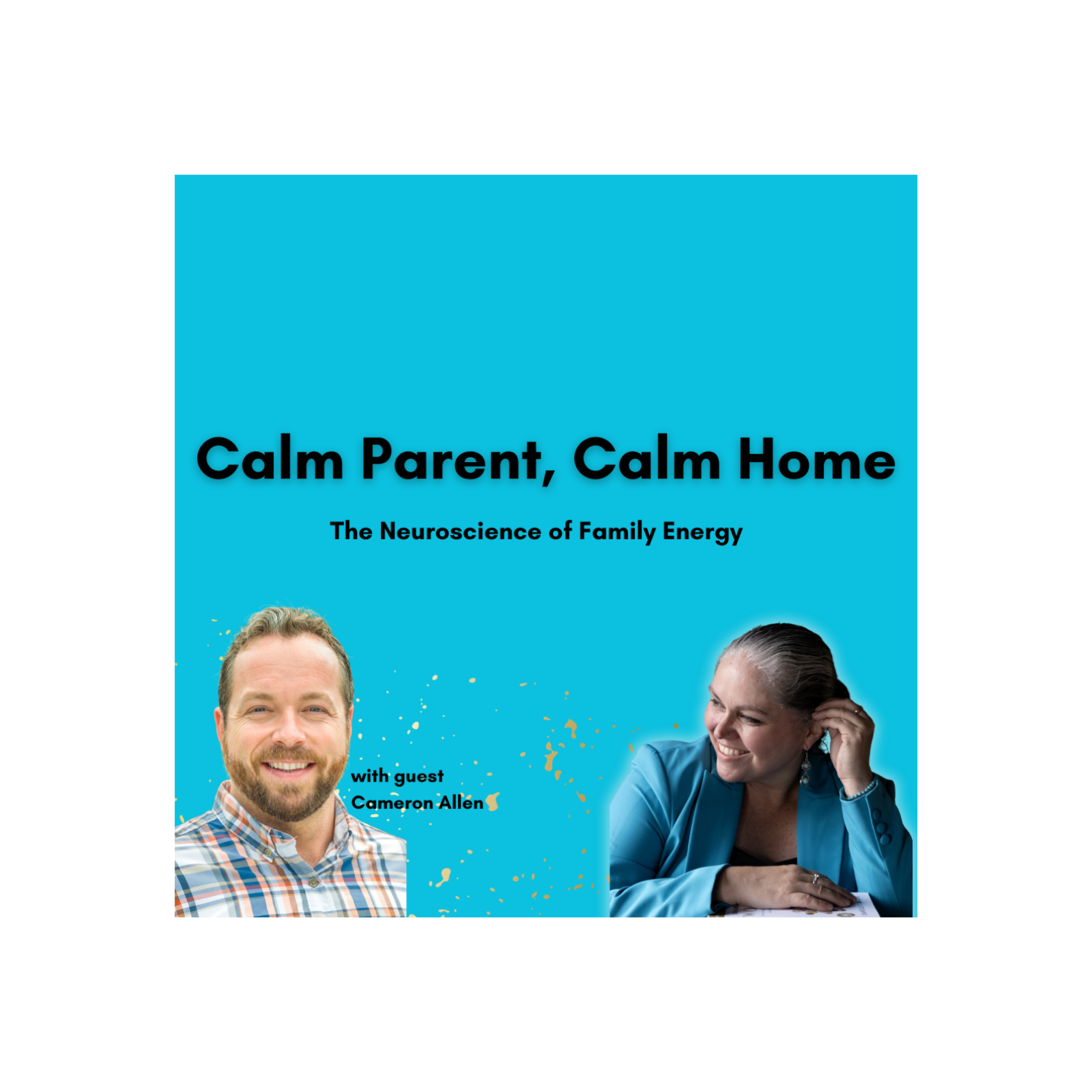
Calm Parent, Calm Home: The Neuroscience of Family Energy with Cameron Allen
About this Episode
In this episode, Cameron Allen brings a powerful neuroscience approach to helping families navigate physical and mental health challenges.
By making complex medical scans accessible to everyone and easy to understand, he helps parents gain clearer insight into what may be happening in their child’s brain so they can make informed decisions about their care and support.
We talk on how parents can override stress responses in their nervous system, practice self-compassion during difficult parenting moments, and maintain healthy communication with each other. When parents remain calm and connected, the positive impact on children can be profound.
This conversation offers practical insight for parents who want to create more harmony at home while supporting their child through challenges. If you would like to know more about Cameron's work, visit:
and
https://immersive.neuroprogeny.com
#Parenting #Neuroscience #FamilyWellbeing #EmotionalRegulation #TalkToDanielle
Hosts & Guests
Transcript
Yes, here we go, all right. Well, hello, everybody. Welcome to the talk to Danielle Podcast. I am your host Danielle C Baker. And before we get started, be sure to like follow and subscribe to whichever channel you're listening or watching from. And of course, this is season four. So I do invite you to have a look at the three previous seasons. There may be some topics there that we relate. You may relate to a bit more.
There are timeless. So I'm sure there's something that I can help you as well. We're going to jump right in for some reason. I'm struggling with my speech today, but
Cameron helped me a little bit. I'm an amazing guest today. And I just love this topic because it brings in the science with our realities of parenting today. So I'm not going to
Too much information, but I will put the spotlight on you have Cameron Allen with me today. Thank you so much for joining me. I'm really excited to have you on.
Absolutely. Thank you for having me. I'm really excited to be here with you.
We had I think for those who are listening, we had probably a good whole other episode going on.
This would be this will be a fun one because we're all warmed up. That's right. That's right.
Before we get started on, you know, you know, you're a science fighting biofeedback. All of that. I'd like you to kind of talk to us a little bit about yourself and how you got to where you are today.
Sure. Absolutely. So my name is Cameron Allen and I am a father of four and we've got a blended family that's a lot of fun. And I've got some younger kiddos and a couple older kiddos. And I'm also a neuroscience technologist, which really just means that I get the opportunity to study a lot of the things that we're really interested in. A lot of people are interested in kind of understanding how we take him. How what kind of drives us?
What what's going on in our minds are brain or nervous system that you know contributes to the life we're living it. And why is it that we do the thing the things we do experience the things we experience.
So the I've spent the last 20 plus years in neuroscience and have reviewed over 8,000 brain scans and have had the opportunity to research and publish with a lot of really cool.
Hi, neuroscientists, neurosurgeons, geneticists, all kinds of folks. And you know, my background and kind of what got me into all of this. I was heading more towards aeronautical engineering, a love flight, a love aviation.
And I had a really personal experience with my family where my brother had kind of developed depression after a series of head injuries.
I experienced a lot of suicidal ideation, attempted suicide a number of times.
And my my family had tried everything. We had tried in a medication. We tried traditional therapy, all kinds of stuff with little windows of like over a
pre even in lessening of the symptoms, but it really wasn't until we we went through this neuro therapy program that I really looked at doing brain mapping looked at, you know, addressing all aspects of the nervous system, not just what's happening in the brain.
And all this on the lights came on for him. And our family was able to kind of reconnect reunite a lot of the, you know, overwhelmed that he had been experiencing that caused a lot of chaos in the household.
Like all just subsided and we were all able to kind of come back together and and, you know, it was through that experience that I really realize that, you know, this needs to be out there through education through making the technology more available and, you know, making it less expensive. It was extremely expensive.
And so it's been a mission of mine just to be able to make neuroscience in general more accessible and and really being able to translate it to
from the complex hard science into how do we actually use it in our lives? Why is it important to us?
And then to be able to make some technologies that are able to be used at home so that people can get a lot of the benefits of what a $30,000 program could cost in a clinic that they can have that for, you know, little to nothing at home. And so, yeah.
So my, my goal really kind of big, big dream here is to be able to positively impact 50 million lives over the next 10 years through education, neuroscience and technology.
So that's kind of what's driving me.
I love that. And it's so needed because it's something, especially when we're talking about neuroscience.
We automatically think this is just a little too inaccessible for me, you know, your big machinery, a lot of doctors appointments and all of that.
And so I think, yeah, you're probably one of the first ones that I know that is say, okay, how do we make that accessible to everybody?
100% needed. It's so needed because especially when you're dealing with those said it is a reality for families.
And I work with various neurodivergent children, but it could be a physical injury or it could be something else.
It does have an impact on the entire family. And your work brings in everybody.
It's not just we're focusing on the child or we're going to focus on the parents are on their own.
They have to figure it out on their own.
You're bringing it on.
Can you talk to us a little bit?
Oh, go ahead. I was well, just just off of that.
I think it's really interesting, you know, when we look at, you know, anybody that we're working with, whether they're dealing with a head injury or they've got some really cool neurodivergence that's coming out and that there's that they're experiencing the world in a very different way.
The entire family system is impacted and the entire family system is all coming together to kind of lock in certain behaviors.
And also today, and when somebody begins to shift, it's an impact on the entire family.
And even if it's a positive shift and things are really opening up and you've got a kiddo that's going from being nonverbal to actually able to learn some words and to start communicating in a different way, it changes the impact on the entire family.
And even though it's positive, it still is different.
The stressor and the whole system has to adjust, so I'm glad you bring that piece into it and how much you focus on that it's huge.
Yeah, it is because we see, we know, you know, concussions and we know if there's seizures or anything like this, it does affect the brain, the neurodivergence world is still a little blurry in certain cases, but you work really, really brings it all in.
And if you could maybe talk to us before we get into how can families get started into helping or feeling a bit more harmonious in the way that they're every day is working.
And if you talk to us a little bit about what that looks like in your practice and what you do and how you bring it to the families.
Sure, sure.
So my focus really is on kind of the translational neuroscience of taking all of the hard science and then saying, okay, what are the tools out there that we can actually use.
And so here in Asheville, North Carolina at Sensorium Neurowellness, which is a clinic I've got here, we really are focusing on doing a full nervous system assessment for everybody who walks through the door, whether it's for neurodivergence all the way up through you know Parkinson's even into some dimensions and that kind of thing where if it's 80 to 80 to 80 anxiety and anything that is coming out of the brain will take a look at and work with.
And so we start with, you know, doing a full brain map, taking a look at what's happening actually in the brain, you know, it's interesting because mental health and kind of developmental health is one of the only industries where you're not actually getting a picture of what you're working with most of the time, you know, if you get a broken arm, you're going to take an x-ray.
But when it comes to brain health, we oftentimes just rely on the downstream symptoms, so we really want to get a good clear picture with a brain map, we also want to evaluate, you know, some of those early primitive reflexes those things that should integrate by about two years of age, and if they don't, they're constantly sending signals to the brain that caused the brain to feel like there's a threat coming at it and just every so often and it breaks up all of the resources that we have, we really want to look at the cranial nerves.
How the brain in the body are communicating the sensory system of how the individual is experiencing the world around them and handing that information to the brain, and then we really want to be able to dive in and look at other functions like ocular motor function, how much is our visual system actually taking in information, are we missing certain cues, and all the way along with any of these pieces, and of course, we want to look at heart rate variability or people on the tree to evaluate, what's the stress level of the nervous system?
Because everybody's experiencing a different stress level, and if you're elevated in your stress, you're not going to learn, you're not going to change, you're not going to grow, you're not going to heal, and that could be for parents, that could be for the kiddos, that could be for anybody.
And one of the things that's really interesting in the assessment and why we're starting there is that if any aspect of our nervous system, any of those layers are not sending information appropriately to the brain, our brain is a predictive machine.
All it's able to do is take the information it's getting, and then make decisions based off of that.
So if it's getting half the information, then it now has to guess how to show up, how to operate.
So that can then express as hyper-emotionality, hyper-cognition, overthinking, rumination, fear response, trauma response, all kinds of things, or just distraction, focus attention issues, that kind of thing.
So really being able to see where in the nervous system, some of this stuff is happening, is really useful to then say, okay, you're not broken, there's nothing that can't be changed here, that let's just start at this layer of development.
Build the scaffolding there by using tools like neurofeedback, biofeedback, vestibular and proprioceptive therapies like being on a vibe plate or a balance board, or doing ocular motor exercises, strengthening those muscles by tracking certain things, being able to use virtual reality biofeedback to be able to help strengthen the feedback loop between the brain and the body, and help the individual really regulate and calm, and notice a lot of those internal narratives and patterns.
Or, you know, here we're using hyperbaric oxygen therapy, we're using contrast therapy with cold plunge and sauna, red light therapy bed, but really at its core, most people don't need all of that, and so really it's a matter of doing the assessment, figuring out what what levels are going to are out of out of sync, and then being able to just target those areas with really meaningful exercises,
that then can actually build the scaffolding, so the rest of the nervous system can calm down, and individuals aren't just in kind of that reaction to their symptoms anymore, there's more space, there's more freedom to choose rather than react, so yeah.
I love that this is what I find interesting is that it takes the guesswork there's no guessing there you you see where it is not a hit or miss it's just this is where we're at let's start from here in this moment.
Absolutely it's such a more gent I personally find it's more of a gentle approach to it because it allows you to say like you say you're not broken we can fix this we just need to know where we need to we need to start so.
Absolutely there's a quote I really love that the your nervous systems never made a mistake it's just solving problems that may not exist anymore and so there's our nervous system is constantly just trying to help us out but if if we're no longer in that place or develop not only we don't need that anymore it actually becomes an issue it becomes a symptom and so.
And you know one of the other things in that I love about neuroscience and this approach in general is that it really puts the control in the in the authority back in the hands of the people that are actually dealing with this and this idea of democratizing health care where it's a like we all know what's going on within us we know what's happening with our children we know something's off.
And through just the right information and asking the right questions we can then say okay I have enough information that's apparent for me to say okay this is something that resonates this is something that's going to be useful and and so often we are just relying on the professionals to say yep I've done this assessment now I see what's happening i'm going to go ahead and prescribe this i'm going to go ahead and do this rather than really helping parents truly understand I can't tell you how many times.
Many people come in that it had a brain scan or a spec scan of some sort or something else like I have no idea what this means the doctor just told me that this is what I need to do now and well let's get into that truly understand what's happening so you can make the best decision for yourself and for your family and I think that's so important.
I know there's nothing worse than feeling helpless when it comes to your child's health or even yours or your aging parents you know there's like a white spectrum there that we're working with and it's there's a lot of background noise there's a lot of misinformation you don't know if you're getting the right one you want to stay away from doctor Google.
Right yes it's just to know that there is something out there and this is why it's so important to have these conversations is that there is a way for parents to feel solid in the journey they're about to take whether it's for themselves or their children I love that.
I think for parents as well with that the idea of you know I love the you mentioned that there's just so much noise out there and for parent to you know they're in the throes of it they're constantly.
They're constantly trying to make the best decisions for their kiddos and there's a lot of pressure behind that you know there's a lot of weight that we carry as parents of am I getting it right am I doing it right and then on top of that we you have that stress of just caring for our kiddos and then all of a sudden we don't show up the way we want to we're reactive or we're you know we're not present or we're so focused on providing or caring for that we're just not in the relationship and then all of those internal narratives that we take care of.
The internal narratives that we take on as parents and the things that we we turn towards ourselves which then just build stress even further and build stress even further and then we're just in in fog as a parent and so then to try and make those kind of decisions about like what is best I have no idea but I'm hopeful that there's something and so I'm willing to try it's in parenting's hard it's difficult in that way.
Everything you just described you're hijacking your nervous system so you can 100% you can't I love that the fog to we ever have that fog it's even harder to make a decision because you're just piling on even more and that's part of your work as well I wanted to kind of get into that where you're going into the self compassion.
Oh parenting how do you work with all of that can you walk us through if a parent is really going through it and heard it and I was like oh my god this is exactly where I am right now I can walk us through a little bit on practical applications of how they could get started or how to notice it and absolutely absolutely yeah so I think the first thing that's really important is to recognize that parenting is hard for everybody that we're all in it and very often we're not actually.
I'm communicating vulnerably parent to parent we're seeing the highlight reels on Facebook or we're seeing the you know all of the things that are like other families best moments and we're sitting here being like oh I just got reactive with my kid and so we're constantly in this point of comparison so there is that piece of it and so just having some awareness around that may be useful and then really looking at the fact that you know when we're parenting one of the biggest things we can bring to our kids.
Is oxytocin so oxytocin is bonding connection just feeling present with them and the really cool thing about parenting and kind of this idea of self compassion and parenting is that you know we're going to get it right you know 20 30% of the time maybe you know some of us in some other areas may get it right in other ways but.
The cool thing about oxytocin is when we come back and we actually recognize that we're doing what we need to be doing we're aware of what we're doing and just through awareness we're actually releasing oxytocin within ourselves if we're not going into beating ourselves up about it and then going and actually repairing with our kids and going back to them and like hey you know I didn't show up the way that I wanted to I want to do this differently can I can we restart this and modeling that.
For our kiddos that actually releases a far more oxytocin almost 300% more oxytocin to be in repair than it does just to be in connection consistently and for our kiddos to be able to see that pattern as well allows them to kind of ground and re engage and opens up for more co regulation the ability to win their feeling escalated whether it's sensory integration stuff whether it's just emotional overwhelm natural growing whatever it is.
That for us to be able to drop in to that vulnerability and authenticity that that actually invites them in in the neuroscient shows that when we're in that state our brain waves begin to sync up our heart rate actually begins to sync up and we can actually model how they can regulate and so being able to take that intensity of parenting and really use it as a gift as a reminder of like oh cool I get this opportunity to bring this into relationship rather than beating.
So that's one one area that I think for a lot of parents being able to do that and is important and then another area that a lot of a lot of parents and we'll talk with me about and you've probably heard this a whole lot is that when you show up and when you're in a stressful relationship or stressful kind of parenting relationship and then your spouse is also trying to figure it out and there's not a lot of clear community.
Communication now we feel judged by our other and by the other spouse and so now there's a lot more pressure to perform in the parenting relationship and so as co parents and being able to kind of show up together being able to definitely hold accountable and say like you know what I see that that behavior was pretty disconnecting between you and the kiddo and I know that you want connection and so this looks like something that you're doing that's getting in the way of what you actually want and not
saying like totally fine get reactive with the kid go avoid go work instead of like facing the fact that parenting is difficult whatever actually being able to say like I know that you really are wanting connection I'm seeing that this thing caused disconnection come on back show up just go and and sit down and be close to your kiddo go play for a second go ask for forgiveness and actually repair and in that then they
other is the other parent isn't enabling those behaviors that end up continuing to spin out and then the parents together have more safety and more oxy toast in between them there's not as much performative pressure and we can then build better relationships and stronger relationships with our kiddos and so I think those are a couple things a self compassion and giving yourself space to get it wrong and show back up and then
to have empathetic you know accountability between partners rather than judgment and that those two things are some of the biggest pieces that I see when that shifts kids behavior changes is considerably because kids are picking up on all of that tension and their nervous system is going to spike and whenever your nervous system is turned up that turns up the dial on every other behavior that we have and all of our behaviors are just communicating
and they're just asking for something that we need and so if a kiddo is getting really de escalated and kind of getting or having more sneaky behaviors or more you know whatever types of behaviors that's just because their nervous system is amping up it needs something so if we can just together come into it with bring your nervous systems into a place where there's more openness more freedom less pressure to perform
than our kiddos actually are able to show up in a much different way so I could continue rambling about those things forever but we can go on forever with that one because that is big as well just because the children are piggybacking off of our nervous system so if we're at their automatically amping up if we're ignoring there because that's a it's a it's a language in itself the way their behaviors is telling us something has nothing to do with the behavior so if we're in reactive mode we're not seeing is
we're reacting when the thing that really just the bells that went off when you were talking was imagine speaking to your partner or the co-parents and them not be because if you're all hyped up and you're all you're in it and then your partner or the co-parents says you need to calm down
right when you're in this when you are in that state where you were able to to see it you you were able to forgive yourself this okay this is normal this happens I need to show up
and show my kids how to self regulate and then to to know that you can openly talk to your partner or the co-parent and not get a reactant from there that is huge it all sounds like a fairytale but it is possible because you do it all the time and so I love that there's there's so
much there we could talk about and all of this I'm just a I mean I am a human as well I am a parent that gets it wrong and gets it right every now and again and that this is something that I've had to learn with with my spouse as well and that
and she and I you know constantly are having these conversations and it takes practice it doesn't initially feel safe it doesn't
initially feel accessible but then showing up and recognizing at the core that we really want the same things we want connection we want everybody to feel good to feel safe to
be able to be as successful as they want to be and that it's only when we begin to forget that and we in that then there's competition and we're
no longer in open true communication hearing one another and not taking everything personally that the other person is saying
but authentically being able to say okay I hear where you're coming from and being able to recognize you know we're two different people
figuring out how to communicate and just to actively listen to the other person without judgment without coming up with
a way of responding to them or reacting to them but just hearing where each other is coming from
and just taking it at face value and not projecting any other of our emotions on it it's so hard to do
but it's something that with practice it becomes something that's accessible and but it does feel
fairytale-ish when you first start and it feels weird and odd and vulnerable and kind of cringey and
but when you when you step into it it then begins to unfold and that when there's those glimpses of
safety and those symptoms or those glimpses of connection it expands quickly it really does because
that's what we are brain in our body our nervous system is designed for connection and for community
and it's only when our nervous system is amped up that we go into self-protection and we start
creating all these stories of how this person's trying to do something to me or how I can't actually
vulnerable and open with this person so and yeah so by regulating ourselves we have a lot more
openness to receive that that caring compassion and empathy from others yeah and a bonus on that too
is as you're doing all this and working that new muscle your children are watching you and they're
learning so you're already giving them a a head start on for them later on in life so I think it's
it's wonderful and I would even take it to the extended family because of course if you're going
through something where it doesn't even have to be a severe physical or neurological situation but
when the family starts stepping in and helps you to set those boundaries because now you're
know exactly what it is that you need you're not reacting and you're on the same team with your
partner or the co-parent and so it's yeah it's absolutely I mean that you've been doing this for
so many years and you see the results so it's yeah we just have to we do stop to jump in and do it
we've got to jump in and just try it I think the I'm glad you brought up the boundaries pieces as
well because there's so often boundaries are considered like this cage this in this thing that
we're trying to contain a behavior and so we're going to give our kids boundaries but really for
each of us and our kiddos to be able to clearly name our preferences our desires and our boundaries
and saying hey this is this is the line that ends up creating so much freedom for a nervous system
because it takes the guess workout and especially if we've got kiddos who are anxious or we've
got kiddos who are you know have sensory integration stuff that there's some kind of on the autism
spectrum even or even just for ourselves and our spouses to be able to clearly state what it is
that we prefer what we don't and hold those boundaries really consistently it creates so much
freedom for people to feel like okay I know where I stand I can show up now and I can I know exactly
where the line is when we have passive communication or we have even manipulative communication
or we're just not vulnerable and open then we end up going into a place where we're constantly
having to guess and we're always like that's what sets up the the framework for walking on eggshells
or feeling like there's emotional landmines everywhere but to be very very clear and consistent
with those boundaries it's it's amazing and if ever you cross a boundary that's a great opportunity
for repair and modeling repair and if there's ever a time that your kiddo crosses a boundary
that's a great time to actually drop in and have a conversation and to be able to connect with
them around that and so it really does just open up so many opportunities for freedom in the
relationship rather than caging and controlling and I think you can reframing how we feel about
boundaries and that way is really important it really is and for the kids to this I think this
was a major part of the conversation we had before we recorded was just how the younger generations
now may be struggling with you know values or boundaries because they're being bombarded from
every every direction with also and it's ever evolving it's changing so quickly that they don't
have time to sit down and say this this sit right with me right absolutely doing it from the start
at the core in the home it really sets them up for success later on which I think is is really
needed right now so totally agree totally agree yeah I think it's so hard for kids to that
you know in this age where there is just constant stimuli coming at them that idea we were talking
about that there's just no foundational state of just sitting with yourself like we did as
our kids to have that sense of like what actually feels good what actually feels grounding what
actually allows me to feel connected with myself so I know myself and then when somebody's
asking me to do something or when I am impulsive about something like I don't know the difference I
can't without having that foundation it's so hard to know the difference and so those boundaries
really do create that opportunity to allow them to connect and to know what's meaningful what's
real so there is a place where values can land and so we can actually communicate you know why we
why we have these boundaries why there are these rules in the house why are these things that I
prefer why respect is important and reciprocity and relationship is important that without having
that internal sense of one thing feeling different than another something feels better than another
thing there's really no place for those lessons and those morals and those values to land and to
actually take root and I think that's and I see that a lot with parents these days that they're
they're just like I don't understand why my kids just don't value when I was growing up we didn't
talk back to adults we didn't do whatever like there was just all these things but there's just
not a lot of fertile ground for these types of lessons to land because there's just so much noise
in the nervous system so we have to regulate and drop in inviting them into that space holding
that container with those boundaries so that there can be space for a lot of those values and lessons
to land that's so true we need that reference point that that then to be able to see where where am I
if you don't know when you're starting off you then you're where am I absolutely so important I
really like that we there was so much that we could talk about mentioning that to before we
started recording is because it allows us we had to by being bored or having to find something to
do or knowing what the consequences were going to be if we were at a line but it was grounding
ourselves but as a parent because we were mentioning that as well as being able to to come down and
get into your child's world so really discover your child and release bond and show up as a parent
the way that you want to you can't do that if your nervous system is is hijacked because you're just
you're up here and your child is down there so to come down into your child's world even if it's
just to sit down this is how I used to do it especially in preschools it's just get on the floor
with the kids and see their worlds at their eye level changes the whole perspective of what they're
doing and so it but you can't do that if you haven't done that that work to say okay let's
now let's turn it down there's no dinosaurs in my house all right right so let's see that's
how fun absolutely as you're as you were talking about that it's it is this interesting thing where
we think as parents we have to create the environment for our kids we have to create the
opportunity for our kids but I would argue that our kiddos are constantly creating the
opportunity and the invite invitation for us to ground and us to drop in they are constantly
creating these magical worlds where they're playing and that play is where they learn and so
you know as as kids or even it's adults play we actually learn 400 times faster when we're playing
then when we're in wrote learning mode and all of that and said to be able to just have the
perspective of it is okay for me to drop the work it's okay for the laundry to wait a little
longer it's okay for the dishes to be dirty it's okay for you know this stain to be in the shirt
I am going to just drop in and just be in this moment because my kiddo is inviting me and I would
I would guess that every parent can relate to the fact that kids are constantly saying mommy daddy
hey look at this see this what's this what's that and if you take that time to drop in and I think
research shows that it actually only takes seven minutes a day per kid that you've got to be one
on one and directly connected with them for their nervous system to stay regulated and ground it's
seven minutes like that's it's not that long in in our minds when we're thinking about survival of
our family or all of the things that have to get done that feels like an eternity and and when we
sit down to play if and if you're like my mind has been historically the clock starts and it's like
okay the first couple minutes I'm good I'm present then it's like oh oh oh oh oh and then I'm
getting pulled out and so constantly allowing yourself to have the gift of being there and
experiencing the connection that we all want with our kids but we rarely ever actually feel because
we're constantly saying these conditions have to be met before I can be present we need the money
we need the clothes to be done we need the dishes don't we need the house to be clean we've got
around these errands we've got and then I'll have time up to all the days done and I was frustrated
by the end of the day that's not how I wanted to end it and so and just taking that invitation of
our kiddos saying like hey look at this hey and just let them go in the theater of their mind
and just go on that journey with them and see what that feels like if you like it great if you
don't don't do it again but you know it's explore with them experiment with them I love that
that's the core of my work is through play and and there's such a there's still a bit of a misunderstanding
with that child led play because we're still planning the play and as soon as we're putting in rules
then it's not child led anymore they're not they're not themselves anymore so just to let the child
I mean yes the the boundaries again you know you you have to set the limits but within those
limits the child gets and they they come up with such great I didn't you wouldn't even think of
so you don't even have to think about what can I do to keep them entertained they will entertain you
if you let them so it's it's and play is so important even for us and I'm not going to I'm not
going to get into it because we can do it on their episode all this so they will have to wrap it up
but I working with being a sandwich generation I started integrating play with my mom again
just because she's the big kid at heart too yeah to work for the bone density and stuff you know
jumping is a good thing so I started playing pop scotch with her again and amazing a hula hoop champion
so we started that awesome like this is better than physio right now but absolutely as well to
read yes she was a single mother in the army there was no it was like shut that that everything had to
be done before yeah so it's it that would be a whole other episode but I just wanted to mention
that it goes beyond that if as a parent if you're listening to this or anybody listening to this
it starts with you but then it just radiates out so I think it's it's wonderful
absolutely thank you so again I could talk to you forever but I know we'll do it again
sometimes absolutely anytime can you share with us maybe if people want to know more about your work
and the actual services that you do offer because you have a whole virtual reality thing that is so
cool that I absolutely I'm going to get into today no yeah that's good but can you share with us maybe
your website or any programs that you're working on right now you have some cohorts with with
groups or individuals give us a bit of information on that absolutely so the so since orium
neuro.com is the clinic here if you just want resources there's some free downloads and things to
kind of explore and then hi the other one is immersive.neroprogeny.com and that's this virtual
reality biofeedback system where we're actually in groups of folks so we have online
community where everybody gets the headset at home we'll send it to you the arm band to measure
your heart rate variability and it actually trains the brain to go into more of that relaxed resting
state it tones down the nervous system helps us become more aware of our narratives and stories
so that there's less pressure less fog internally so we can show up in a more present aware way
that allows us to have a lot more freedom and self-compassion in relationships and so
that piece of it is the neuro progeny immersive mastermind and if anybody has any questions about
that happy to answer any questions and feel free to reach out and yeah i'm just so grateful that
you had me on here and that we're able to connect and love having conversations with you
it was great though i just love that this is i love a science is my first love so
to be able to to connect is again with with child development brain development it just goes
all together so i just love it i'll be sure to put all the information in the description box
so people can have a look revert back to it to find your websites and that way they can
find out more i think it's great thank you so much before we wrap up i do have that one question
i ask all of my guests so i'm gonna throw it at you because i know you're gonna want to play along
with you when you grow up man so when i grow up i want to be a pilot and i want to
i really would love to actually have a or be part of or help support a retreat facility that has
a runway has hangar homes has the ability for people to come in and do neuroscience intensive
and to have an educational facility where people can come and its whole purpose is to help people
have access to learning whatever it is that they want to know about nervous system functioning
come in and be able to do some of the tools that help re-regulate and if we could offer that through
a nonprofit setting that would be ideal and so when i grow up i would love to foster a project like
that i love that oh i guess you bring him back your childhood love of oh yeah
aerospace it absolutely it's all got to come together now come together that's the work that i do is
actually just uh what did it would i work with adults is okay what was what was your main interest
when you were a little because we always come back to that i love it uh absolutely i'm on board with
that one for sure let me know fantastic thank you again catman anytime you want to come on
if you got anything you coming up but i do invite everybody to go check out your website and see
the work that you do thank you there's so much and it brings it all together which is great
because more traditional ways is it separates everything and it's all integrated and so yeah and
i just so appreciate the work that you're doing to be able to get this out there and to provide these
resources for folks it's so important thank you so much and we'll definitely have you back on thank
you wonderful and i can't wait to see what's coming up next for you it's going to be exciting thank
you so much thank you for everybody watching don't forget to like follow and subscribe to which
every channel we were listening are watching from don't forget to go check out camera's websites as
well to get more information and until next time stay safe stay awesome and we'll talk soon
More from Talk To Danielle
View all episodes →
Lightening The Load Of Loss: Where Compassion & Mediumship Help To Heal with Bar...
Talk To Danielle
Apr 30, 2026·48:32·failed
Stepping Up As A Family: Creating Connection & Finding Your Place As A Stepparen...
Talk To Danielle
Apr 23, 2026·21:02·failed