About this episode
Wheel Bearings is made possible by:
This week Robbie finally gets his hands on the new Honda Prelude and Sam drives the Land Rover Discovery.
Links
The Isuzu V8-Powered Chevy Feretta Was GM's Forbidden Camaro-Killer
New Ford Mustang Fox Body: ‘80s Icon Reborn! | 4K - YouTube
The World’s EV Capital Doesn’t Need Fast Chargers Everywhere
Hyundai Dealer Set EV Charging Rates That Led to a $418 Bill - Autoblog
Scout Motors Reveals Two Distinct Expressions of the Scout® Traveler™ SUV
Mitsubishi Motors Unveils the All-New Pajero Cross-Country SUV
Ford Wants To Sell 100,000 Fathom Electric Pickups In Year One. That’s A Huge Goal
Hyundai's Latest Cost-Cutting Trick Is To Remove The Instrument Cluster - Autoblog
Claims of Savings From Gutting Fuel Economy Rules Are a Lie
Advertising Inquiries: https://redcircle.com/brands
Privacy & Opt-Out: https://redcircle.com/privacy
Get every episode summarized
Each time Wheel Bearings publishes, we email you a written briefing from the transcript — the topics, who appeared, and any specific claims, with the ad reads skipped.
Email me new episodesFree for 3 shows. No card needed.
Transcript ready
1,768 searchable segments. Every word is indexed and playable.
Full transcript
Wheel Bearings — Can They Sell 100K. Machine-transcribed; use the interactive transcript above to jump the player to any line.
This is episode 469 of Wheel Bearings. I am Sam Wubuels from Telemetry. And I'm Roberto Balder from SAE and International. And I'm a child. Well, you know, if you can't act like a child once in a while. No, it's all the time, stood by. What's the point? This is, I live like a 17 year old. That could be worse. I, yeah, I don't have kids. I don't, yeah, I live like I'm still in college. I'm just like, I mean, you have just bumbling through life like an idiot. You, you have animals and, you know, you have a wife and they're all surviving. So yeah, but my life is also bad. We're both hard school people. So there you go. There's the, there's the rub. It's all hard school stuff all the time. All right, well, what have you been driving this week? So this week, I drove the Honda Prelude, the, the car that angered the internet.
So I remember the Honda announces it, to tell you what it is, everyone loses their minds. They look at the specs. They're like, why isn't this, you know, a BRZ? Why is it? Well, first of all, the Prelude was never that. It was always sporty. It was never a sports car. So there's that. Having driven it, this is a, okay. So I have my BRZ. Now, to me, the Prelude is like a grown-ups BRZ. It's, it's more comfortable. It gets incredibly, you know, it's incredibly efficient. Let's get like 42, 43 miles per gallon driving around in a Prelude. I drove it to Monoray and back. I went to the IndyCar race this, this past weekend. And it was, I was, my back didn't hurt. Like I had a nice, it was nice to drive. Like that Hummer, that Hummer, after like 45 minutes. I was just like, oh, my back, no problems in the Prelude.
Just the, there's a nice experience. You could put in GT mode, you put in comfort mode. Nice, you know, cruising down the freeway, getting really great with gas mileage. I drove all the way to Monoray and back, drove it around before I had to get gas. Just a really nice like drive, like just regular day to day driving experience. So then today, yesterday I wasn't feeling well. So I didn't get to take it up into the mountains and do all twisties. But I got to do that today, right before this podcast. And that's that that that type R, you know, they just threw the type R like suspension, and tuning, and chassis, and all that fun stuff. Just they just threw it on the Prelude. And it's fantastic. It does, it corners so well. It's still front wheel drive. You still feel the pull, so they have the push. But you can also trail break it into corners. Yes. And so, but it is very, it's a wizardry magic sacrifice.
I don't know what they did at Honda. And I remember with the type R, like eight years ago, or whatever, when the type R came out, they're like, yeah, we virtually eliminated, eliminated oversteer. I'm like, yeah, whatever. And then I got that car and I tried to oversteer it. So it's like, you really had to do some crazy stuff to get that thing to oversteer. It's the same thing with this. Like things where I thought I was when I hit, like notice them oversteer, nope. It's just, it's, it is such a well engineered vehicle. It is such a grown up like enthusiast car. So this is a car now. It's not a, it's not a Miata. It's not real drive. It's not a BRZ or a GRE, you know, it's not it. It's not any of those cars. It's not an S2000. It's none of that. It's front wheel drive. It does not have a manual transmission. That's the biggest hit to this vehicle. Is the fact that it does not have a manual transmission and Honda makes an amazing manual transmission. That's the, that's the worst part. If it didn't have a manual transmission and like the automaker was just bad at making manual
transmission, you'd be like, well, it doesn't have it to be nice, but whatever. Honda makes an amazing manual transmission and it's not in this car. Instead, they have this S Plus, which is like Sport Plus, Super Plus, I don't know what it stands for. But you could use its paddle shifters and it recreates the driving a manual transmission sort of. Like you can hear the engine. It's kind of like what Honda does on the Ionic 5N. Yeah, it's like, it's a hybrid version of the Ionic 5N. It's very fun. It's a lot more fun than just drive. I took it out. I drove it up, used the S Plus. It, I took it out of that, did it? It was more fun with the fake, you know, sort of shifting bits. It's got two hybrid motors, it's got a gasp. It is a engineering marvel. It is very comfortable, but it is what enthusiast graduate to, I think, when you're just, when you're spying and you're kidneys and your body,
you just can't like just fall into a car anymore. You can't handle the const that you have to, you need a car, maybe it's your second car, but it's the car you drive every day, then you have to go to work and you got to sit in traffic and you're left knee sore to start and give you some problems. And maybe your ankle sort of like tired of dealing with the clutch and you're just like, every clam, plam, plam, plam, plam, plam, plam, plam, plam, plam, plam, plam, plam, plam, it's, it is, you're like, you know what? Maybe I should tell the BRZ and get a prayer. Maybe I should sell the Miata and get a prayer. Maybe I should, and I don't want to say this to the people who give up. I think this is the people who are just like, okay, here's the reality of the situation. My, the way I drive this vehicle or how I drive this vehicle is not that of a 20 year old enthusiast. I drive this as an adult and I just need to get around, but I still want a really fun car to drive. It's very fun when you can get, you know,
you can still take it on the back roads. It's still, you know, it's, you could toss it around. I was, I was very impressed at how well it handled. It is not a fast car. I think it does zero to 60 and six something. It's slower than the BRZ. It's quick enough. It's quick enough. It's a, it's a, what do you call it a momentum car? Yes. Yeah, you just keep moving. But, and again, my only issue with it is it doesn't have a clutch. You know, it doesn't have that third, it doesn't have that third pedal, but, and that is because Honda makes an amazing transmission that they're slowly take it out of cars because people do not buy manual transmissions. So this is a very, they know they're not going to sell a lot of these. I don't know if the decision to not put a manual transition was a good idea or not. I think there was probably some complexities when it came to the hybrid system. Blah, blah, blah. There's all these things you can, you can sit there and justify for not having it in there. The, you know, it's, I have this, I've always said that every prelude is a good prelude.
Like a first-genera, every generation prelude as had is like, what it's good at or what, or it's, it's a fun car. It's, it's never been, you know, it's never been the Supra. It's never been, you know, the Miata, like I said, it's never been a sports car. It's not, you know, they have the S2000. We had that for a while. Now it's gone. Let's all keep crying about that. But it's like a, it's like a type R for, like it's an adult type R. There we go. That's what I think it is. It's an adult type R or, you know, you're graduating up or you just don't want to drive a manual transmission. Which I understand. Some people just, they, they don't know how, which I understand, if your parents never taught you a manual transmission and they've been giving you a guff about it, you know, that's their fault to be honest. Yeah. I mean, I commuted daily to jobs for 30 years in cars with manual transmissions. And, you know, and a fair amount of that driving was, you know, in stop and go traffic. So, you know, I, you know, I'm 60 years old now.
So I, I understand, you know, why, you know, if you need something as a daily driver, you might not want that to be a car with a manual transmission after you've been doing it for a long time. Yeah. Yeah. I mean, if it was, if it was me, I wouldn't mind having a prelude in the garage and also having my Miata that I take out. Miata is, is my toy. You know, I take it out once, twice a week, you know, and go out, bomb around for a while. And, you know, I take it out on Sunday, drove around for about two and a half hours, you know, going nowhere in particular and then, you know, stopped off on the way home at a farm market and bought some, but, you know, half a dozen years of corn and some side of corn. So I'd learn that. And to be honest, because it wouldn't fit in a little trunk. But, you know, you got, yeah. I filled the trunk with my Miata with a half a dozen donuts and some corn. No, I mean, I could easily get a couple dozen years of corn and make this fun. Okay, there you go. And since I was driving by myself, I could also use the passenger seat. Oh, passenger seat.
That's extra, yeah. People never think about that. Yeah. You know, like, how are you going to get your guitar to the space? Well, no one's in the car with me. I just put it in the passenger seat. Ta-da. You know, I do that with my paddle board sometimes, you know, and have the, have the, or, you know, the paddle and the board, you know, sitting in there. No problem at all. I put an eight foot long tube I choose into my two of them, into my BRZ. And I drove them home from the hardware store. I did this head all the way from the back, all the way out the side. So they were like snug in between the passenger side mirror. Thing is, like, I live now. I did that. I haven't done that with me on it, but I did that with the Mustang. Yeah. So it was like I was jousting on the way home. Exactly. Yeah. Fold down the back seat, you know, so stick it back all the way back into the trunk, you know, and have, you know, a few feet sticking out the window. No problem. Civic hybrid is way to go. Still more fun and way more practical. Yes, he's the thing is I don't care about practicality because I don't have other people with me.
You know, Adam makes it less so. So Adam says in the chat, the prelude is great, but 50 pony shy enough power, which I think it's 400 and 400 pounds too heavy. I would like it to have a little bit more power. Sometimes on the freeway, and I felt like I didn't get the, I didn't have the oomph that I wanted in order to pass. And then I feel like more people are saving. I prayed hybrids is the way to go. Still fun and way more practical. The, I still think that, but that type of suspension makes it a lot more fun. Yeah. If you live somewhere, where you have the difference is the suspension and the brakes on the prelude. Yeah, the suspension and brakes are outstanding. The power is, and it's fine. I mean, I totally agree with Adam that, you know, the Civic hybrid is fantastic. And, you know, if you've got, you know, one or two young kids that, you know, still car seats, you know, or even if they're not in car seats, you know, booster seats, whatever, you know, that you also need to shuttle around.
The, yeah, absolutely go for the Civic hybrid. But, you know, if you don't have to carry anybody, but you're partner around, then go for the prelude. It's great. It is a great second car. How's that? I think that's it. Yeah. The Civic hybrid and the prelude, or, you know, the Ridge line in the prelude, I guess most people would just get the CRV, which is why we don't have the fit anymore. Yeah, exactly. Which I, the, the, for the, for the Honda fit. And, and the thing is, you know, because the, the prelude already has type R suspension, type R brakes on it. My guess is that come November, when Seema rolls around, I would be shot, and you can go to Honda, they sell type R, crate engines. You can buy a type R engine, transmission, electronics. And it'll drop right in there. And I would be shocked if there isn't somebody at Seema this year that has a prelude
with a type R powertrain, and it with a six-speed manual and everything. Yeah, yeah, I could say that. I mean, it's, here's the Honda's, they're so easy to work on. It's so easy to do engines swap. There's a reason why the Civic, and, you know, was, you know, people were just throwing gigantic engines, you know, Ks and K engines into the, because it was just easy. Like you could just, like me and my friends could swap an engine, like, you know, in a course of a day, because we were goofing around most of the time. Yeah, and, you know, they're not, you know, they're aluminum, so they're not that heavy. I mean, you know, all you need is some chains and a, you know, four by four, you know, to, if you don't have an engine, cherry picker, cherry picker. Yeah, that's what the engine loves. Engine thing. Yeah, we thought I'm cherry pickers when I was a kid, I remember with the arm. There's a real name, engine, lifter thing. Yeah. But you can get those from Harbor Frank for like, you know, not very much money. And if he cuts the Honda, he's very lucky. Yeah, but you know what? I think I would be more trusting
with a couple of friends of mine lifting the engine out than using a Harbor freight crane. I bought a Harbor freight crane for, when we had to swap the engine on my Civic, or on my DelSault, one of them had it. Both of them ended up, no, the DelSault needed a new engine, a engine blue. And I bought one, it was like a hundred bucks. And then when I was done, I just left it at the person's house. I'm like, Merry Christmas. I just wanted to go. I just wanted to go. I did go back and take the engine because the engine was still there like a month later. And I went and took the engine and I disposed of it at some place and it takes engines, I don't know. I guess it junkyard. I don't know. It was a very long time ago. But yeah, so, okay. But here's the deal, is they pray looters, is a pricey car. It's not, it's, yeah, it's, you know, it starts at $42,000. Wolf, so that's where you're like, okay, what am I, you're paying for that type of all those type of our bits thrown on there?
Right, well, that's what you're paying for. At 42,000, it is roughly about halfway between the price of a type R and a Civic hybrid sport touring. So, you know, the Civic hybrid sport touring, it's about $36,000, $37,000, $42 for the pray loot. You know, so you get the hybrid powertrain, but you get the type R suspension and brakes and that body design. And then, you know, if you wanna go all the way, you know, if they sold a pray loot type R, you know, it's gonna be closer to 50,000 than 40,000 anyway. Yeah. So, you know, at 42, you know, you're right, it's not cheap, but it's not, it's not a horrible deal. It's like a goldie lock, and you're getting a, and again, you're getting a Honda. That's at the end of the day when, you know, Honda has, you know, they have this reputation for reliability and great engineering.
And they, yeah, they continue to say, yeah, well, you know, you get in the car, you close the door, you're like, yep, I'm in a Honda, so you close that door. You get that, you're like, yeah, yeah. And, you know, just fold down that vestigial back seat, and you got a big cargo area back there. That's seat. It's as useful as the BRG seat. It's completely worthless. At least, you know, I mean, at least you look at the seat on a BRG, and it's usually got a little nicer a poultry on it than the back seat in the pray loot. You know, clearly, they, you know, they looked at it and it's like, why are we spending a lot of money on the poultry for this? People are just gonna fold it down and use it for cargo space. So just put the cheap stuff on there. Yeah, the back seat is just like, what is, it's to keep stuff from sliding from the trunk into the front. That's what it's for. It's to keep stuff from hitting you in the back of the head in case of an accident. Yeah, so yeah, so yeah, so, you know, as a two liter, four cylinder, paddle shifters, it's a fun car. It's a lot more fun than I anticipated.
It's a lot more comfortable than I anticipated. I really, the comfort part was, you know, it is still, you know, sports-style car. So, you know, you're sitting low, you know, you have the sports seats. I typically am more comfortable in sports seats than other seats. I don't know why. And the same was here, you know, I had a, you know, again, seats are a completely unique individual thing. You get into the car, drive it around, really, you know, smush your body in there to see if you're, if you're gonna be happy with those seats. But yeah, you know, the climate controls are knobs. They can turn hot cold, hot cold, you know, audio, hot, louder quiet, louder quiet. A lot of buttons, it does have, you know, it's infotainment system, which has, along the side, it has like, you know, the hop has a, like a home button and a back button. And those are actual buttons. They're not like a passive touch, like they actually move. You would you depress them, which is nice. So yeah, overall, it's, it doesn't, it has an electric,
e-brakes, but also, you know, you have to do trouble. It's not a, so again, so does everything else today though. It's not a, it's not a BRZ. That's it. That's what I'm trying to tell you. It's like, if you want to BRZ, definitely get a BRZ. If you want a Z, get a Z. If you want, but if you want to be a little bit more comfortable, you still want 40 plus my, I like this style. And get 40, like 40. So their, so their EPA field economy is combined, is 44, city is 46, highway is 41. It went into EV mode, like whenever I was just cruising around, it was like an EV mode, which is really nice. It's nice and quiet and smooth. The transition from EV to gas was very smooth as well. And you don't have that, you know, that you're getting what the geodes is. So it's, it's, it's a very composed, fun little car that you can toss around in the mountains and then drive to work and spend like, you know, however much it costs to gallon the gas for you.
I hear it's like, I think it's hitting six, it's almost six dollars. I paid six 15 because I went on vacation last week and we were way, way, way up North and middle of nowhere. And we paid six 15 a gallon, which is, but you don't use very many gallons when you drive it up. Well, I wasn't driving that, we were driving a price to Pacifica. Oh, okay. No, wait, we paid five 95, we skipped the six 15 a gallon. So we paid five nine five. We got the cheap stuff. We got the cheap stuff. But yeah, and it came in as the boost blue, which is beautiful. That's a great color. Yeah, it's, it's, it's, so, you know, I, I, I can understand, I understand how people were like, boo, but not really. That's never what the, the prayloud was. I think it's like, the prayloud has had the same issue that the NSX had. Like everyone thought, you know, the NSX came out and it was so crazy to us as kids, because it was a super car from Japan. And I remember like they had an ad about how, and even the save weight, they drilled holes in the break,
in the break pedal, and we were like, that's crazy. Like it wasn't that crazy. But it was like to us, it was like amazing. And the new NSX comes out and they're like, well, it's not a, it's not of that. It's not, you know, it doesn't have the, the, the, the throaty sound of another super car. But also like when I drove it, it had like 1600 miles, which for a super car, that miles will be a hundred thousand miles, and it drove great. And if anything broke, I could take you to an accurate deal. Yeah. Or a Honda dealer or whatever Honda, Jason dealer was nearby. I guess, hey, can you fix my antisex? Yeah, I'm so okay. We can just order the parts. Meanwhile, well, so the story about the NSX real quick, we were shooting video of the NSX, and these two guys were buying like billion dollar bicycles, and they stopped and they came over and they're like, oh, this is my gas, new NSX. Yeah, we both have Ferraris. My friends, his has been in Italy for 18 months. Mine on the other hand, I need to get an oil change, but there's a nine month wait. I was like, well, you could just get this,
and then you would have saved money, and you'd be able to drive it. They were like, wow, that's pretty cool. So that's the, yeah. And you know what else? You can fit a standup pedalboard in the trunk of the NSX. See, this is all the things. This is why this is the most important podcast about cars, is our standup paddleboard inflatable paddleboard content. Yeah. And random interactions with individuals who own Ferraris. All right. So that's the, that's the prelude. I agree, I like the new prelude. I like it a lot. All right, if you've been putting off car shopping because it sounds like a whole thing, buying your car online on auto trader makes it way easier. Like almost easier than ordering your coffee easier. Really, you can shop tons of cars online,
compare prices, check financing and trade in options, all from wherever you are. And if you want to start online and still go to the dealership for a test drive, you can do that too. Really, what I like is the flexibility. Start online, finish at the dealer, or the other way around. Your info stays with you, so you're not starting from scratch. Plus, you're working with local dealer listings, so there are real people behind the scenes. And when you're ready, you can pick it up or have it delivered. So whether you know exactly what you want or you're still scrolling, trying to figure it out, auto traders got options that fit how you want to buy. Buy your car online on auto trader, really. Did you know you can support wheel bearings directly? Head to patreon.com slash wheel bearings media, and you can become a patron today. Your contributions will help fund the platforms and tools we use to bring the podcast to you. And exclusives and improvements are already on the way, thanks to your generosity.
So if you want to be part of an automotive podcast, like no other, head to patreon.com slash wheel bearings media. We've updated the wheel bearings merch store, and now there's a whole bunch of new choices, new colors, new styles, t-shirts, sweatshirts, hoodies, hats, mugs, travel mugs, stickers, aprons, tote bags, you name it, you can get your wheel bearings merch at shop.wheelbearing.media. You go check it out, that's shop.wheelbearing.media. So I had the 2026 Land Rover Discovery Gemini edition. And so this is kind of the little brother to the Range Rover, it's not as fancy as a Range Rover. It's not as the current generation discovery is not kind of the, not quite as hardcore and off-roader
as the defender or old school discoveries were. But it's a nice balance for a lot of people. If you like Land Rover's, Land Rover slash Range Rovers, you want a little more room, a little more comfort than a defender, you don't necessarily need to go all the places that a defender might be able to go. The currently comes only with a three-liter inline six mild hybrid, which has 48 volt, belted starter generator, and it's also got an electric supercharger on there. Very much like the configuration on the experimental grand Cherokee that we saw month or so ago at a Stalantis event, where SRT is working on a system like this that a whole bunch of other automakers have already had in production for years.
But anyway, in the discovery, this soul set up with an H speed automatic, makes 355 horsepower, 369 pound-feet of torque. So not as powerful as the Stalantis Hurricane 6 cylinder, even though it's the same size, but still more than adequate. It's got plenty of performance, the mild hybrid works. It does the whole auto stop start thing, but because of 48 volt system, the start ups are a lot quicker, a lot smoother, and the engine stays off longer at intersections. I mean, when you have a car that's just a 12 volt system with an auto stop start, a lot of times, in during the span of, when you're sitting at a red light, especially if it's warmer and you get the AC on or heat on, the engine's gonna fire back up before the light turns green,
and when you've got your foot on the brake pedal, that's when you really feel it, start up. If you've managed to get all the way through the light cycle before it starts up, you lift your foot off the brake pedal, you generally don't feel it on most modern cars. But when your foot's on the pedal, then you've got that reaction force going working against the engine, that's when you hear it shake. So the 48 volt mild hybrid system stays off longer. You basically never feel the engine coming back on. You might hear it a little bit, but you're not gonna feel it. And, you know, the design of the current generation of the current generation discovery is definitely different, from all of the previous, this is the sixth generation discovery. It doesn't have that boxy look of the classic discoveries. So it's a very different look.
And it looks fine, but it doesn't really have the classic Land Rover look to it. And this is something that a lot of fans of the discovery haven't really cared for all that much. You know, I'm fine with the design. I like the Sedona red paint that was honest on this one, especially before it got all dirty when I took it down some dirt roads when it was raining. Then it looked more like what you would expect to Land Rover to look like. But the interior of the discovery, of the current generation discovery, something I was less enthused about. You know, it's mostly touch controls. The infotainment system is okay. It's a little slow. Is it slow? Or this is my thing with the JLR infotainment system is you touch it and then it's sort of like fades to the next thing.
Yeah. And so you're never like, is this slow or a feature? Well, I think I think they do that. They do those slow animations to kind of hide the fact that it's actually kind of slow. It has latency. Yeah. You know, and then you've got the, you do have a couple of big knobs for the, for the temperature controls. Got a wireless charging pad. There is a knob on the center console for, to choose the drive modes. It does have a two-speed transfer case. So there is a four-wheel drive low in addition to four high and all-wheel drive and two-wheel drive. You know, so with the tires, you know, the all-season tires that were on this one, you know, it doesn't, it's not necessarily gonna have the traction that you would want for a true off-roader. But, you know, it's got, if you were to replace those tires with some proper all-terrain tires on smaller wheels,
get rid of the 22-inch wheels, you know, go to, you know, something like an 18 with all-terrain tires on there. It's actually got some serious off-road capability. But the reality is that the people, usually, especially the people who buy these new, they don't take them off-road. They don't care on it. It's usually like the third or fourth owner who will take one of these. In a gravel parking lot, at a high-end farmer's market. Like the cheeses are all from goats. Yeah. Everything has the word heirloom in front of it. Yeah. Like a tizanol. Like a bodega bay. Yeah, like artisanal. Yeah. Something like everything. Yeah, the artisanal farmer's market. Exactly. Here's a tomato for $12. Yeah. Ooh. I was surprised to learn that this is actually a seven-seater. Yeah, because when I... Well, so the rear seats, this one,
has electric-fold third row seats. When I opened up the cargo area, it was a big rubber mat in there, covering the whole cargo area, which was nice because it went to the lake. Got some sand in there. It wasn't easy enough to take out the rubber mat and shake it off. And then when I looked over on the side, I saw the switches. So to, in order to put up the third row seats, you have to take out the rubber mat, leave that at home. And then you also have to take out the cargo cover. So there's a cargo cover that you can pull out. So you have to take that out because otherwise the third row seats can't go up all the way. And then there's some switches in the back on the left-hand side of the cargo area that you can use to lift up the third row seats. And I put them up. And there's actually a decent amount of legroom back there. So... Good job. They're actually usable.
You don't have a whole lot of cargo space left behind the third row seat. I think most people will probably just use this as a five-seater, as a two-row. Like you all met at the farmer's market and now you're going to the very fancy like wine bar down the street. Yeah. It's all getting to discoveries. Yeah. Head on down to the wine bar, get a little boost up, and then we'll come back and I'll drop you all off and you can get your individual cars in drive home. There you go. Yeah. Do some wine tasting. Have some cheese, have some more artisanal cheese, some sharp cuterie, and then you can go home. So the discovery, since it's a land rover, not inexpensive, starts at 70,800 for the Gemini edition, which I actually was not even able to find on the Land Rover USA website.
Yeah, I looked it up, I couldn't find it. Yeah, so I think they might have actually already switched over to 2027 models on the website so they don't have the Gemini edition anymore. Glad they said to you. The closest one they had was the Landmark, which also starts at 70,800. So I think they just rebranded it. They don't actually have the model years on the Land Rover website, so not entirely sure. But you got a multi-zone climate control system, this one have the advanced off-road capability pack for $2,400 that gets you the two-speed transfer case, and the all-terrain progress control, which is their fancy off-road traction control system. Also had the 22-inch wheels for 1,650 bucks. Again, if you're gonna spend $2,400 on the off-road pack, don't spend $2,200 on 22-inch wheels.
Yeah, you kind of know. It does have a 20... Like I put the turbo on my car, but then I put winter tires on it for the summer. You're like, what? It does have, this one also had a 22-inch full-size spare tire, which is nice, nice, nice treat to have. Had the cold climate pack so that when you look through to windshield, if you look real carefully, you'll see the little zigzag wires running up all the way through the windshield to defrost it, which is, that system works really well when you're driving in the snow and ice. And a few other things. Grand total, $83,195. How much is a defender? Defenders, I think start about 60 grand now. Yeah, I see. So here's, I think I know people who have land rovers.
And then I think I know someone who has a discovery. And when they, their LR, I think it was three or four, was aging out. Like, where should I get? And I told them a couple things and they got a land rover. They were gonna get a land rover no matter what. So they just got the discovery. That's a bit like Subaru people and Jaguar people. They're just, I'm just gonna get it. Well, no, I'm not. They're not gonna listen to like, you know, well, Land Rover has a little wish, you know, no, don't doesn't have. They love their land rovers. Yeah, Jaguar people, they love their Jaguars. Don't listen. If you, you know, you went into the relationship understanding what the limitations were. What was going to happen? And if you're happy with that, if you're happy with your Land Rover, more power to you. You have a second car. Awesome. Get a better. Get the civic hybrid. Yeah. The hybrid and the Land Rover Discovery is perfect to car garage if you're a fan of Land Rover, but really should have gotten a defender.
Well, the, the discovery is rated at 17 city 23 highway, 19 combined. I did my like 45, 50 mile test loop that I do with most vehicles. And it's a combination of highway and city and suburban and rural driving. And it averaged 22 miles per gallon. So, you know, it actually didn't do terribly. Pretty good. For, for a three row SUV, you know, that is fairly hefty. You know, that's, you know, that's competitive. You know, it's not, let's just say, it's not embarrassing. Yeah, let's, we got a Land Rover. What's a, well, the defender 90, which is the one you should get, but no one's going to get that because it's only, two, it's only a two door. How much of this thing started? Oh, if I got to scroll, I'm already angry. Is it, is one of the things we have to click on, build your own before they tell me? Just look at this. I'm just wasting time now in the podcast.
Shop now, let's see. Build and reserve defender. Oh my god, it's scrolled down. The defender 90 starts at $61,000. All right. Yeah, that's, that's pretty nice. The, the 110 starts at 65. So that's the four doors. Oh, yeah, there you go. So if you're weird like me and you want a two door, you'll save a little bit of cash. Yeah, just get the, get the stele's, you know, boom. Yeah, get a set of stele's with some, birchstone, Kale, Kale threes. And you can go just about anywhere. But when you get to 18 inch stele's, the white wheels, yeah. Or, or you could go with the defender octave. Yeah, which has the BMW twin turbo V8 in it. Oh, it does have the BMW. That's the best part of it. And that, you know, that one's only $158,000. Never mind. I mean, there's a reason why people use BMW engines though.
Yeah. All right. Let's, let's carry on. So remember back in late 2024, it was all news that Honda and Nissan were going to merge. Oh, yeah. And they started having a bunch of discussions. And when Nissan started, or when Honda started looking at Nissan's books, I said, yeah, I don't think so. I think we can, we can do this on our own. And then, you know, things started turn itself for Honda last year as the whole EV things started blowing up in their face. And they ended up canceling most of their EV projects and writing out in America. They're very quick to say, hey, we, of course, you have JV. We have joint ventures in China. We're still doing EVs in Europe. It's America. Yeah. I think at the end of the day, like, we don't want to deal with America. So much, all right. Fine. I guess that SUV looks really nice, but fine.
Yeah. So, you know, so they wrote off, I don't know, like $12, $15 billion. $12 billion. Yeah. Yeah. But part of that EV project was an all new electrical architecture and a new software platform. So they had a zonal E, E architecture for their EVs. And they had a new software platform. We don't, you know, we don't know if that's actually going to be used going forward. But Nissan and Honda a few days ago announced that they have signed a joint development agreement for next generation software defined vehicles, the new E architecture and a software platform that they're going to work on together. I reached out to both Nissan and to Honda and they both said, we're not saying anything right now about what we're doing. Yeah. But which software, which electronics we're going to use, but they're going to have common electronics, common ECUs between the two companies.
And my guess is it's probably going to be based on the stuff from the zero series. Yeah. With the Osimo OS. And the first, the first products using that going to be coming out in fiscal year 2029, which is the Japanese all start their fiscal year on April 1st. Trying to remember. Well, here it is now. Yeah, I think it's 26. It was. So three years from now. Well, it might be two. These fiscal year, 2029. So that would be starting April 29. Okay. So yeah, it won't be till 2029. Right. So sometime in starting in 2029, we'll start seeing products from Nissan and Honda that use this new common software platform and electronic architecture.
So it'll be interesting. I'm very interested to see how what Honda does to return to the US with EVs. Because I've talked to them and it's it's. I think there's something there. They're going to keep doing EVs elsewhere. I'm curious. But I know they're still working on their solid state battery. They're still working on that. Nissan has its own like process for doing so. They're completely different. They're just bonkers different like how both of our doing solid state batteries. So it'll I wonder and this is this is wild, wild, after top in the back of my head. This will probably never happen. If Honda is waiting until it figures out solid state to come back to the US and just be like, look what we did. Look at that. Because it can continue to do all this development for EVs for other countries, which it's, you know, it sells vehicles all over the world. And other things. I saw two boiler compactos at the race this weekend, by the way. People are just riding them around like a man and a son or a man and a random child,
he found either way. So he had an extra model compact and said, hey, kid, let's come for a ride. I'm a man and a happy child. So I'm yeah, because you know, STVs, typically those are EVs. They talk about carbon neutrality in here. Nissan's still working, you know, working with their EVs. They have the leaf. They stop the leaf. They have Sakura, which you know, is doing well in Japan for them. So, you know, they they are a little bit more working towards EVs just because and it helps that they have like, you know, the lineage of the leaf for X amount decades. And they still sell the the area in Japan and other markets. They just they only discontinued it in North America. Yeah. So I think it's it's a Honda's extremely conservative company. That's that's they're super smart. They're super they're they're engineering and saying their quality is great, but they're also very safe. Anytime there's something weird come down to Honda, it is you should be,
you should you should lose your mind because it took a long time for that to get like the prelude, the Honda E, like the Honda E, the the the the the brass did not want that vehicle to get sold. They did not like that vehicle at all. And the the the person who the project lead like there was an interview with a gadget where he was like, it's hard to build a car when you know your boss has hated. And the reason that car didn't come to US is for because of one person. And that's all I can say. About that. But yeah, it's it's but like any sort of weird fun things that come out of Honda, there's a lot of like, mm, let me think. I don't wonder how they managed to get the motor compact bill built. Yeah, it's and I really think it's just like, well, let's look at the numbers. Let's figure it out. And then maybe every once in a while, there's like a day, you know how they have those movies, the purge were once a year, you can break all the laws or whatever. I think they have that sort of situation at Honda were once a year, everyone pitches the most insane ideas and Honda has to do one of them.
They have to allow one. And I think that's what happens. They have some sort of like idea purge. Is it the motor compacto? Not going to cost us very much. Okay, fine. Do it. Do that. It'll be fine and goofy. We're not we're not going to sell that many. But it'll be a fun goofy saying. Come on. Okay. Fair enough. We got generators. We make it we make planes. We're going to make a little screw. They're making rockets now. They're making rockets. Well, you know, and last fall at the Japan mobility show, one of the things that they unveiled was the zero alpha, which looks, you know, has the same kind of styling as the zero SUV that they were going to build for North America, except it was a little bit smaller. You know, it was about like, you know, seven eighth scale version of the zero alpha or the zero SUV. And it was in but it also used cheaper technology than what was supposed to go into the North American zero series cars. Yeah. And the zero alpha was meant for markets like India.
So I wonder if we might see them bring that to North America at some point in the future. I'm sure they're looking at slate. They're looking at the bolt because the bolt was selling really well before I got taken off the market. I think they're looking and they're seeing that people are like, you know, and they're looking at the inexpensive truck, you know, because slate, now everyone's coming out with an inexpensive pickup because the Maverick and slate, let's just say those two vehicles, one's gas. And so, you know, you have Toyota, Toyota's supposed to be coming out with something. I guess Dodge isn't doing rampage. They're doing something else anyway. But yeah, I think they're keeping an eye on the inexpensive EV market. And I think they're, I think, and I continue to say that I think one of the problems was that everyone thought that an EV needed to be a space car with a billion screens and all this other stuff. And the reality is people just want a car. Yeah. They don't, it doesn't need to be designed, you know, the interior doesn't need to be like a spaceship. It doesn't need to be Star Trek themed.
It doesn't, I mean, well, if it was Star Trek themed, it would sell really well. But it doesn't. But, you know, it can just be a car. You could just make a Honda Civic that was an EV and people would be like, oh, yeah, that's fine. I'll buy it because I know people who, you know, the prologue was this people who like, oh, it's got a Honda badge on it. Now I'm going to buy an EV. Yeah. So I think they, they, they, and you know, maybe, maybe they'll, you know, keep an eye on, you know, the fathom is another one. Yeah, the fathom, I think is, is a big, is it going to be something they're going to really keep an eye on? Which is a great segue to some more of the news. Yeah. So, you know, the, they've four drops and more pictures of the prototype fathoms driving around, including some shots in Las Vegas. And Jim Farley said they want to build, they want to sell 100,000 fathoms in the first year. This is how they got in trouble with the F-150 light. You, you know, a lot's going to depend on, you know, whether, you know, they can actually keep the price down.
Yeah. If they, if they can do that, you know, if they can, if they can actually sell them, you know, for 30 to 35,000 dollars. Yeah. Then I think I think it could do well. Oh, yeah. I think they can do well and they got to execute on the software. They can't screw up the software. Yeah. Yeah. And that's, that's where I feel like slate has the advantage because the software is like, well, we have a BMS. The end, we don't have to do anything else. Yeah. The BMS is done. What about this? No, we got it. We got an app. We could update it over the phone. And you don't even need the app to drive the car. Like, you really like, no, you don't have to call back home. We have to do it. We have a telematics kit for fleets, but, you know, we have the app. That's it. We're not to deal with the software. It is a start for 20 minutes. Oh, you're driving down the car, driving down the road. If they can actually do that, if they can sell anywhere near 100,000 fathoms in the first year, that would make it the,
by far, the best selling EV in North America after, um, Tesla, after the model three and the whole. Oh, yeah. Because nothing, nothing has come close to that for any one name plate. I get $30,000 for Ford, which, you know, I, you know, like I think I said, before we're slate, you know, well, people are like, we should be able to get more for that 25,000. I'm like, first of all, they don't have the purchasing power or the scale or the ability to manufacture. They don't have that, they don't, they don't, and they don't have the F one 50, the big pile of money that comes in with the F one 50 every year. They are a startup. This is the best you're going to get for 25,000 dollars from a, from a company like this, whereas Ford, they could make this car $25,000 and still have it, you know, with more, uh, better equipped than the slate, but, you know, they, look, we want to do a little extra and we want to make some money. We have shareholders, which is something slate doesn't have to deal with right now, that we have to deal with. So yeah, if you could get, if they could hit 30,000 and stick with it,
don't pull them out of our con us, don't, don't, don't tell us, you know, later on, it's like, oh, yeah, now the starting price is 40% more. Just stick with it. Yeah. Everyone's going to buy them 35,000 dollar one anyway, but stick with that stick with that number because that news stays with you. That stays forever. That again, that's the silver, uh, Silverado Chevy had the, the, the opposite problem with the Silverado because it came out and everyone's like, it's a $100,000 truck. And now forever in the, in the general populace mind is this truck starts at $100,000. You can buy it for 60. But that's, that's not how regular people see that truck. I've had people come up to me. You know, it was truck costs $100,000. I'm like, okay, let me tell you a little story about, about bad marketing. Yes. Yeah, they, you know, GM made a big mistake, you know, launching just the work truck only for fleets and then the RST for a hundred grand, you know, and then bringing up cheaper models.
But even even the cheaper models are still not that cheap. Yeah, they started like 60 grand. But then again, that's the price of most trucks now. Yeah, that's how much a truck cost anyway. So 60 grand is like, oh, all right. So if this is like half the price, it has, you know, room, you know, has four doors, which people love. I again, I will, for me, my personal life, don't need four doors. Yeah. We have, we have, we have a car with four doors for the dogs. Speaking of Ford, while we're with Ford, the Fox body mustangs. Oh, yeah. I bought, I bought one in 1990 when I graduated from college, about a five liter LX. I paid $13,000 for it. Eight years later, with like 90,000 miles on it, I sold it for five grand.
That's pretty good. Can you imagine paying $280,000 for a Fox body Mustang? I cannot, because I felt like these things were everywhere. They were just, the world was silly with Fox bodies. Because they, you could, you could do a, you could peel out of them. You could do a donut in them because they had the live axle. So it, you know, it was like, oh, I know. It just, yeah. You could, you could just look at that thing funny and it would spin. Exactly. It was like the easiest car on the planet. You hit a, you hit a pebble mid corner. Boom, the back end is hanging up. Yes, yeah. It's, it wasn't a great, like, it wasn't a great cornering car. It was not, it was not sophisticated. No, no, it was, it was, it was very fast. Yeah. And, you know, my, my parents had friends who had a shop and they just fixed up Fox bodies. Like, that's like their main thing was people bring in. They do engine work on them. They do body work on them.
And it was just like the Fox, like I went down there once because they had purchased something for me at cost. And it was just like Fox bodies. Just as far as the, I could see. And the idea that this, how much is this thing again? $279,000. I don't like in the description as says the world's first and only for Mustang Fox body restomod. Because that, that cannot be true. No, it's, but by no means is this the first, not even close to the first restomod Fox body. Yeah, that's not so many of these things were built. I mean, you know, the Fox body, the Fox body Mustang was introduced in 1979 and was built until 1993. It was just, yeah. And they built a ton of these things. And they were cop cars. Yeah. Yeah. But, you know, this one, this one is kind of interesting. Like, they, you know, they have, they built a new frame that they bolt to the bottom of the body to stiffen it up. You know, because, you know, the Fox bodies, although, you know, the notchback Fox bodies, which is what I had, I had a notchback.
You know, we're quite a bit stiffer than the hatchbacks. The hatchbacks, you know, they were, they were a little flexible. And then the convertibles will have, there was no structural integrity at all to the convertibles. And just like, woo! The notchbacks were actually pretty good. But, you know, they, you know, so this one, the first one they built, you know, they've got a, an extra frame bolted to the bottom of the body. They've got a modified coyote V8 in this thing. Bigger brakes, you know, suspension's been all redone. And the interior's been all redone. It, you know, it, it's, it's both modern, but it still looks like, you know, late 80s, early 90s. It's a cool looking car. I never, I always like the look of the Fox body. I just never wanted one because I drove to the mountains most of the time. And I was just like, this is a death trap. Yeah. In the mountains, this is, this is not drive the way I want to drive.
Yeah. But I always like the look of the Fox body. I thought it was like a cool looking Mustang. Yeah. Like I said, you know, I had one, I had a notch back 1991, five liter LX. And I love that car. And, you know, every once in a while, I look online, you know, to see, you know, how much it would cut. I mean, even, even just a basic one now would cost like, you know, in decent shape, would cost like 20 grand, which is insane. I can't imagine that, I can't imagine that, that car costing 20 grand, you know, 40 years later. Oh, no. That's, that's the crazy. It's the Gen X. We all have a little bit more money. Well, I mean, everyone who didn't become riders, everyone else who's Gen X. We have a little less money as riders. But, you know, it's like the, the, the, I bought my 90 Honda Civic and 1991 for $5,000 from, from, from the school counselor. Yeah. And I got a really great deal on it. I sold it to a friend in the mid 2000s because he was, he had hit hard times.
He didn't have a car. Like, he didn't really, he didn't have a job. And I sold it to him for $300 as, for, to be nice. That person ended up like, you know, being a jerk to me later on. Well, thanks a lot, buddy. Anyway, now, if I'm looking for these, they're like 12,000 bucks for a 90 Honda Civic catchback. It's just like, you know, you want this? Yeah. Well, you're going to have to pay through the nose. Every once in a while, see just a regular person driving one. It's got a few little dance. It's a little rested. But it's still going. And I'm always like, I always want to go out to him like, hey, I'll give you a 12,000 bucks for your car. And see if they bite. Well, this, this insanely expensive Mustang comes from a company in Florida called Velocity Restorations. And they, you know, they do all these rest on mods. You know, and so they do first generation Ford Broncos. They do F series like going from the 16, 67 F 100 or F 150.
And then like the 67 to 70s, mid 70s F 250s and 350s. They do the 67, 68 Mustang fast backs and convertibles. And the Fox bodies, which are new, they do Chevy CK pickups, K5 Blazers, and also Scout Toos, 71 to 80 Scout Toos. So, you know, if you're, you know, if you've got a hanker for, you know, something that looks classic, but, you know, is insanely expensive. And, you know, undoubtedly far better than the original. Oh, yeah. Yeah, especially when you work on that, when they do the chassis work on any of these things. Yeah, I don't think people realize how many cars were just like bonkers bad at cornering and. Yeah, it's like, we, you know, the suspensions on the Broncos and the Scouts, you know, are way more sophisticated, you know, than what they had back in the 60s.
Yeah, they just. This is flowing around as a car is going. So, yeah, check out velocity restorations if you've got some money to spend. Let's see. What else? Oh, Scout, speak of Scout. They last week showed off the two more variations of the traveler, their SUV. And, you know, because they got to do something before they eventually finally start building these things, maybe someday. They're getting close to pulling a ditty buzz. They need to get, they need to put these things on the market. Yeah, and it's still, it's still a good year away from volume production. I know, I know. And again, this is a company that's, you know, it's a Volkswagen company. Yeah. And while Slate shows up like a year and a half ago, and then they're, you know, they have the pre-production cars that people are riding in now.
There's supposed to have production by the end of the year. I'm like, that doesn't, you know, I think there's a, there's a time where you have to like, you know, wait before you tell everyone about your car. Because you end up with, you know, like I said, the ID buzz issue where you're like, everyone's excited about the buzz. And then seven years later, the buzz came to market. Yeah. And you're just like, and maybe like, eh, whatever. Well, I think the EV9 was out and you're like, well, I can just get an EV9 for the same price. It's a vastly superior vehicle. I think, I think it's Scott's case, you know, probably the biggest problem is they're trying to figure out how to make the e-rev thing work and still maintain some towing capability with these things. But the two concepts that they showed last week are the mountain side, which is, you know, that's, this is more, you know, for the Range Rover customer, you know, who's going to drive it up to, you know, up to their cabin and Aspen, you know, to go skiing, or, you know, drive it down road, day of drive.
But it's never actually going to really go off road. And then they have the, what they call this other one here. And they showed these off at the jazz Aspen snowmass Liberty experience last week. Let's see the other one. Yeah, okay, so it doesn't actually have a name. Wait, what's the name? It's mountainside. So the trail ready concept, you know, it's got big all terrain tires, you know, got some good rich, let's see, mud terrain, TAs, roof rack, you know, all the goodies on there. You know, for some, from true offroading, you know, 35 inch on 18 inch beadlock wheels. Yeah, so all the fun stuff. So I get I like the way this counts. Look. Yeah, I think they're, they're, they're the trail ready one. I liked that they are pro buttons in the car and knobs. They're like, you know, there's so much about them that I like. And there's, you know, e-revs, sure. Why not? You know, people are going to want e-revs.
I like that, you know, if you can get the, that's the mountainside. Yeah. But you got it, you got to come to market, man. Yeah, eventually. Got it. Entry model pricing expected to start under 60. Cool. Initial production targeted for 2027. Yeah. So to say early, doesn't say middle, doesn't say late, just as 2027. But you're not, you're, you're not going to get that e-rev for 60 grand. Oh, no, you're definitely not going to, you're going to get something else. But yeah, if you can. And then the, I'm going to be careful. Someone's, because I feel like someone's going to cut someone else's that I come in. I mean, Rivian, that's who's coming in. And yeah, you got it. You got it. I mean, they've been shipping our twos all summer. I've got one coming in a week and a half. So for there are, there are SUVs that actually are coming to market.
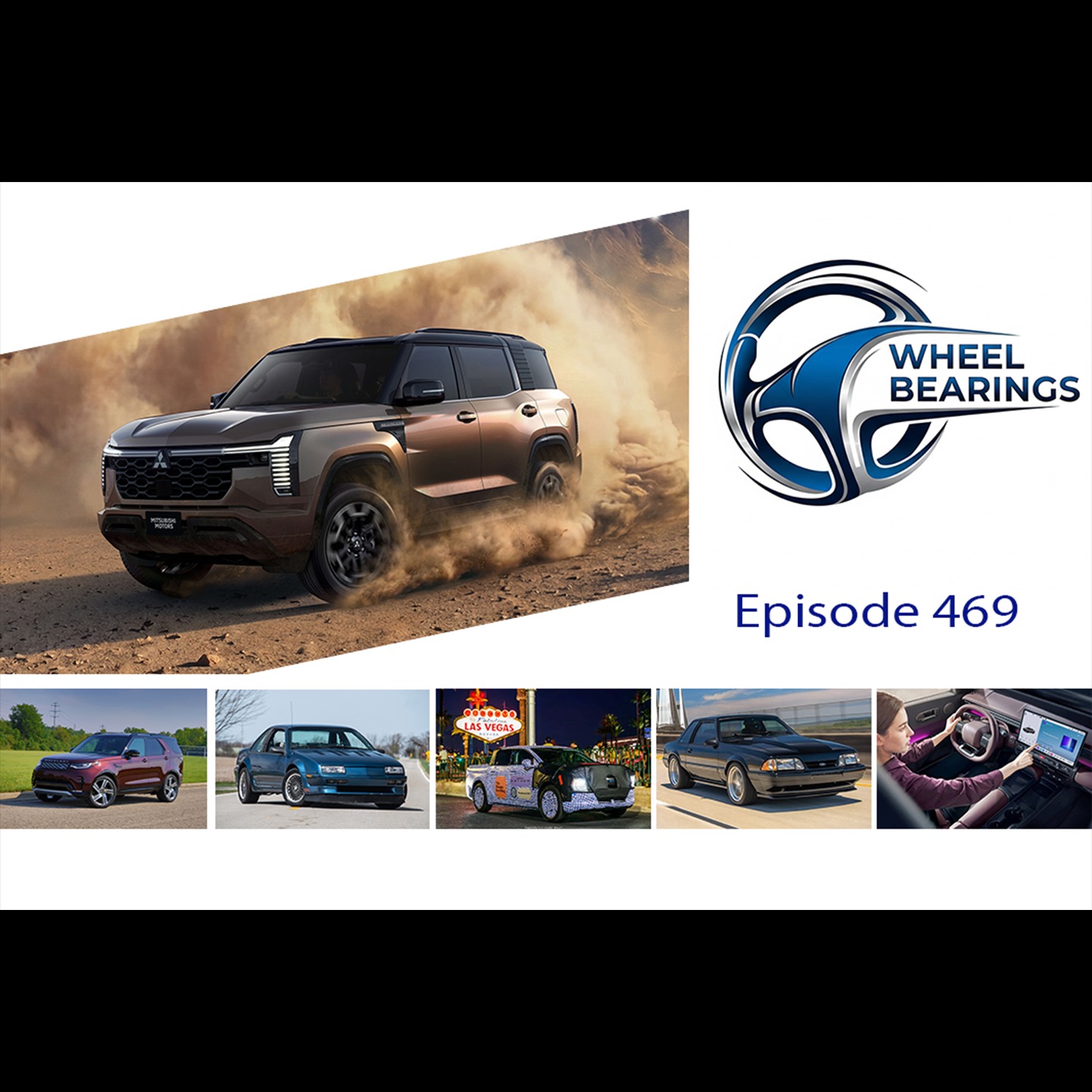
And we'll probably be here almost certainly before this go. Including the new Mitsubishi Pajero, which they unveiled last week in Asia in Tokyo. And this is going to be built at their factory in Thailand. It's a new body on frame SUV. And it looks, looks pretty cool. It looks very angry. Yeah. I don't know what I did to Mitsubishi, but I'm sorry. Yeah, it's been a while since they built a Pajero, but it's back. And if it's anything like the old Pajeros, it'll have some serious off road capabilities. But the one they showed as a diesel engine. So if and when it comes to North America, it will definitely not have that engine in it. Yeah. It looks very Hyundai coated.
Yeah. What do you think of this interior? I'm looking at the close ups of the, I mean, there are butt in some. It's a little rocket or rollers, which I would rather have a knob, to be honest. So yeah, well, you know, I would like more buttons, but it's Mitsubishi. So we should just be happy that they're doing something. I'm not fair. Mitsubishi says a lot of like other types of vehicles. They're not just like, it's just because they're not really here. Yeah, they sell a ton of vehicles and other markets. Yeah, they're not big in North America. They're doing fine. They're doing fine everywhere else. Like they're, but the outlander P have was like the number one P have in Europe for a while. Yeah. So this, you know, this is probably, you know, we may get the Pagerro.
They haven't confirmed it. We may get the Pagerro, you know, or they might call it a Monteiro for North America. Yeah, I don't know. Monteiro. But, you know, they're, you know, they've got other products coming to that. You know, they said that they're going to have something new every year from now through 2030. So, you know, they just launched the clip Sportback, which is just a rebatched leaf. But they've got a pickup truck based on the Nissan Frontier. They've got a couple more SUVs, including probably a version of this for North America, as well as one that's based on the new Nissan Xtera. It's coming in 2028. So they're going to have a bunch of additional product in their lineup. So. Yeah, well, that's good. I mean, if they make it here, let me see what they got. Let's see what they got. What some cool cars. It's, that's a, what some cool European cars that we could get from Mitsubishi that might never come here. But maybe if they start doing well here, no, no, no, no, no.
I'm not sure what they saw. Yeah. I think they mostly are just selling SUVs and crossovers now. And some Vans, like KVans. So we had some pictures recently of the new Hyundai Alontera. But there's an interesting detail about the Alontera, at least overseas. And for the entry level versions of the Alontera, Hyundai is going to offer it without an instrument cluster. They'll have just a center screen. How much could it in someone cluster cost? I don't know. This is ridiculous. They're also doing this on the Ionic, Ionic 3. 3. Yeah. I mean, come on. How much is it? I bought like a 15 inch screen, just a digital screen for, as a second display for an iPad.
And it was like $50. And I bought one. I'm not buying them at cost. I'm not buying. Like how much could some wiring? And you know, they got the molding, just used the molding from another vehicle. Like how much could that all cost? Especially if it's just the base layer, the base model. Well, and you know, if you look at the way Hyundai and Kia build their vehicles, you know, the display setups are usually common across a whole bunch of different models. Yeah. Like you look at the Tucson, the Santa Cruz, the Santa Fe, you know, they've got this big module that's got 212.3 inch displays in it that they put on half a dozen different vehicles. And it's the same part. Boop. Boop. It's a partspin. Yeah. Like put a, put a speedometer there, something. Yeah. And I think that the idea that you have to like, I think that the University of Ohio maybe
did some research where having your display to the right instead of in front of you actually was, you know, it takes you longer to look and see what's going on. I don't have to look it up. But come on. So, even a little speedo, just a circle. This is how fast you're going. Let's talk about charging a little bit. So, recently, here in Michigan, this guy rented a Chevy Bolt and he was driving a friend to the airport. And on his way home, I'm starting to run a little low, decide to need to stop and charge. No problem. Pulled out the EVGO app, looked for public charging station nearby, found one in Macomb Township, which is north west of Detroit. And pulled in there and he made a mistake that we're going to warn you all not to do.
Before you ever plug into a public charging station, find out how much they actually charge you. How much, how much they're going to bill you for the electricity? This particular charger was a charge point charger and EVGO and charge point have a roaming agreement. So, EVGO chargers show up in the charge point app, charge point chargers show up in the EVGO app. They each have their own back ends to handle billing and everything. And charge point has kind of a unique business model for charging. So what they do is they build and sell the chargers to site hosts and then they run the back end service. You know, they run the software and do all the billing and authentication and everything when you plug in. And the site hosts, they determine what to charge. So a lot of times you can go to like a grocery store or something and they will be some charge point chargers there. There's no charge.
It's just a nice amenity they provide for customers. Washington Community College nearby here. They have a half a dozen charge point, level two chargers in their parking garage. They're free to use. This particular charger that this gentleman used was at Elder Hyundai in Macomb township. Elder Hyundai had this one marked as a public charger. But they did not actually want the public to use this charger. They wanted it to be for their staff, you know, for charging their vehicles that they that they're dealing with and for their customers, but not for members of the general public. But rather than just making it private, what they did was they set the rate for this charger. So when you use a public charger, Robbie, how much do you typically pay? So it depends. It's let's say about 56 cents per kilowatt hour. That's about like that's like the EA EVGO.
I know I own this cheaper. I know Tesla is more expensive. But like in the middle, let's just say 56 cents per kilowatt hour. So this this Sunday dealer set the rate at $5 per kilowatt hour and $5 per minute. So a session fee and charging fee. And this guy, you know, this guy unfortunate guy plugged in, plugged in the bolt for 44 minutes to charge it up as you would got a bill for $418 to charge the bolt. So so this is so with with charge point. So this happened to me, not like this, by the way, not as much. There is a there there is a is a library. It's something. And I think it's like a it's something and they have three charge points in front of their their building and they're closed on the weekend. So I've gone there and used the charger for I went there and used it for a video.
I'm like, no one's around. I need something I can plug it just plug in and plug unplug to show the video. Well, the way they have it set up is when you plug in, there is a $15 charge just to plug in and then they charge the usual per kilowatt hour. So I don't ever go there because I've got paid $18 for like five minutes. And what did that what they do is that this is like at at SAE headquarters, we have we have a we have a charge point chargers, but they're for the staff. Right. You know, they're private and you have a lot of businesses use charge point chargers, you know, for workplace charging, things like that. So your account is associated like the person who runs those chargers in the building, like what's your account and you tell them and then they unlock it for you. So these businesses like this, they unlock it for, you know, individual accounts. So if he had so I'm sure all the the person, the people who work at this dealership are using the same, you know, Hyundai dealership account, where doesn't cost them anything, but
anyone else who plugs in gets ho yeah, because the chargers all have RFID readers. And you can get RFID cards and tags, you know, so they probably have, you know, all the staff probably have an RFID tag tag for these chargers. Yeah. It's just that charge of anything. So that's yeah, that's the that's the weird, the charge point. I'm always a little because of that $18. Every time you come up to a charge point, I'm always like, okay, what's the, how much does it cost the plug in? Like you got to like really, you know, fortunately, most of the time because of that, I don't use charge point. Yeah. Well, fortunately, you know, in the in the charge point app, it'll it'll show you what the rates are. And also on the display, it'll tell you on the display. Yeah. Most chargers will, you know, whatever, whatever network you're using, except for Tesla because they have no displays. So you just have to look in the app to see how much it's going to be. But for, you know, for others, it's typically, you know, shown on the display. Here's what the rate is going to be, you know, for your normal rate.
And here's what it is. If you have like, you know, the subscription, you pay like seven or 10 bucks a month or whatever, and you get a discounted rates. So fortunately, you know, for for this gentleman, you know, he he called up the one of the local TV stations in Detroit and, you know, they did a report on this. And he also contacted Evie Goal, you know, because they were the one, you know, Evie Goal, even though they don't own this charger, they guided him towards this charger. And so they gave him a good, well refund of like, all but like $13 and change, you know, what's the regular typical rate for charging that car. Yeah. That's, I mean, that's good. And that's the thing is that I have an Evie Go charger amounted to the fence in my house. So I like Evie Go stuff. And I lied. I do use the Evie Go charger. There's one into hatch, be at the denies. And it charges like 60 something kilowatts. So it's perfect for going in and like, because I always hang out with one of my friends. At the denies into hatch B when I go and visit because the only thing is open late and
I can charge whatever car. Usually it's either my car or some sort of Evie that I'm testing. And I can charge, I can plug it in and it'll charge for like an hour or two while I eat my dinner. So it's a nice little like, oh, I like this because it's not charging it. 350 kilowatts. And now I'm going to move my car. It's like, hey, you want to just charge here while you eat? Cool. I mean, it's, but it has the pricing and the pricing is just regular pricing. Yeah. So yeah, bottom line, before you plug into a public charger, make sure you check the prices. And if it's not listed, then you know, find another charger. And I looked, I looked on the alternative fuels data center map. And this charger has since since this happened, this charger has been marked as private. So it's no longer listed as public. And there was, you know, there was a couple of other DC fast chargers like within two miles of this one. So unless you're like, you know, stone cold dead, you know, I feel bad because this person
was probably like, this person was probably like, you know what, I don't need a charge at 350 because I have a Chevy bolt. This one's only one, you know, 200. But I don't like go here. So they're trying to be a good person. Yeah. And they got hose. And the money doesn't go to Evie go like, right, it goes to charge money. It goes. It's just a few minutes ago to charge point. It goes to the dealership. Yeah. The other one's getting the $400 and something. Yeah. I mean, charge point gets a percentage of that. But yeah, most of it goes to the dealer. Yeah. So the, you know, on the flip side of that, you know, Norway, you know, Norway, which has been leading the world in adoption of EVs. You know, there's like something like nine, almost 99% of new vehicle sales in Norway are electric now. Yeah. And Norway also has amazing charging infrastructure. And most of it is not DC fast charging. They recently statistics Norway published some data that the city of Oslo, the capital,
now has 4,519 public charging points just within one city. And of those, 78% of those were rated between, their level two chargers are rated between 3.6 and 43 kilowatts. So, you know, and then another 611 were rated between 50 and 250 kilowatts and 376 were rated above 300 kilowatts. So this, you know, they have curbside charging everywhere in Oslo. And you know, it's the way it should be. You know, wherever, wherever there's places to park, they should have these posts. You know, and the way, the way they do it there is the cable is not permanently connected to the charging post. You know, they just, you just have electricity running to the charging post. You bring your own cable in the car. There's a standard connector on there. You plug it in, plug it into your car. When you're done, you'll unplug, put the cable, sort of the cable back in your trunk.
And, you know, next time you park somewhere, you plug it in there. And it's amazing to bring your own cable. I've done it in Germany. And so, like, you know, the one of the issues with cables, like just hanging there is the people have been stealing them. And also, if it's like on a public walkway, now you just got a cable. Yeah. That's, you know, someone doesn't put it up. Someone knocks it over. Someone vandalized it. Now it's in the walkway. Or if it falls on the roadway. Yeah, it's a great. It's a great, yeah. So, to bring your own cable model, I do not understand why the United States is not, like, no one, everyone's like, oh, we're going to put cables on a giant thing that lowers it down to, like, we're over engineering a very simple problem. Now, it's just, bring your own cable. That's it. I've used it in Germany. Whenever I go, I've been in Norway and I'm like, this is the, this is amazing. This is the, why? It's because they're just, if you look at, if you look at them, they're just boxes. Yeah. It's just, here's a box. It's just like a baller, bunk. With a plus. Everyone has the cable in their car. It comes with your car.
Well, in some cars, like, I think it's the Fiat Panda. It has the cable in the front. Oh, it's got that. Actually, when you, it's like a, it's coiled, like, you know, like an air hose. It's like an vacuum cleaner. Yeah. Yeah. So, it's coiled up, you know, and you open the flap, you pull the cable out, plug it into the post, you're good to go. No, it's like, bring your own cables. It's super smart. It's super easy because at that point, you, you're not going to cut into this cable to steal it because there's electricity going through it. Yeah. So, to bring your own cable, I don't, I, I, I, I, it's been years of me complaining about it and I will continue to, to, to shout it from the rooftops. Bring your own cable is the right way to do AC charging. And there are, there are a few companies here in the US, like, it's electric that are doing this now. You know, and they've got deployments in several cities now. Including in Detroit. You know, and where they have a, you know, they're, they're set up, you know, they have
a post. And so they work with building owners to, you know, and so all they got to do is run like a small little narrow trench through the sidewalk to run a power line into the building. And it runs out to the post. You can go to the it's electric website. You can get a cable from them, keep it in your car. If you live somewhere where there's its electric, electric chargers and you have an account when you plug in, charges your account. And you know, the, the money from that is split between the, the building owner and its electric. I think I have, I have a video where I have, I use bring your own cable, but I don't know if it's about bring your own cable. So I'm going to look it out because if it is, then you can see just how ridiculous and easy it is. And it's, it, it, it bought again, it makes me so angry that we. All right.
And then, do you remember the Chevy Beretta? I do remember the Beretta. I remember the Beretta because I was, I was still an engineering co-op student. I was going to GMI, I was working at GM Canada when the Beretta came out. And you know, the plant that I worked at in St. Catharines, we built the engines, the V6 engines that they used in the Beretta's. So it had like the two, you know, the same 2.8 liter V6 or an updated version of the 2.8 liter V6 that originally came out in the citation in like 1980. By that time we were doing fuel injected versions and they were later, you know, different variations of it a 3.1 and a 3.5 liter. Well, Chevy wanted to do a more powerful version of the Beretta in the late 80s, early 90s because like Ford, they thought, you know, we need to move away from the big V8 powered Camaro's, you know, just like Ford was saying about, yeah, we need to, we need to have
something more, a more fuel efficient replacement for the Mustang. And Ford, you know, saw the error of their ways and decided, yeah, this, this, this Mazda based vehicle that we were going to sell as a new front wheel drive Mustang, that's going to be, that's going to be the Ford probe. So that became the probe and they kept building rear wheel drive Mustangs up until this day. But, you know, GM had their own idea about this and they took a version, they took a Beretta and built a prototype and they decided to put a V8 in it. And you know, at that time, GM still owned a big stake in a Susu and Susu had a little 3.2 liter V8 engine or 3.5 liter V8 engine that they, they dropped it in there, they put it, they put it into this Beretta and they called it the Feretta.
Not sure exactly why, but you can see, you know, if you're watching the video, lots of events in the hood to cool this thing. And had this little V8 mounted transversely in the Beretta, I can just imagine the torque steer from this car. So every time you put your foot on the accelerator, it's like, whoa, they hold on tight, it was one of those hold on tight cars. Oh, yeah, very much so. So they, you know, they obviously never put this into production, but they did keep the prototype around in the GM Heritage Center for a number of years until 2009 when GM was going through his bankruptcy. And you know, in order to raise some cash, they sold off a bunch of the cars from the Heritage Center. And this was one of them. So the Feretta says GM called it is in the hands of private owners.
So it's out there somewhere. I think it's currently owned by some guy in Florida. It's never, you know, it's never really been modified, you know, or restored because there's no parts for it. Yeah, you can't get any parts for this engine because it was never put into production. Oh, I know. So that's the, the V8 Feretta. The Feretta. It's very weird when you're like, yeah, we got to make some money. Let's sell off these cars. I really don't feel like those cars make enough money for them to make even a dent in like any issues that they're having. It's probably more like we need to free up, let's get rid of this building. Yeah. So we have to sell these cars because we don't have anywhere to put these vehicles. Free up some space. Yeah, let's, let's get rid of those. And then finally, last week, Secretary of Energy, Sean Duffy had a speech because the Trump administration is finalizing its new corporate average fuel economy regulations.
Basically rolling it back from, you know, what was going to be, what was targeted, you know, under the Biden administration, they were targeting 50.4 miles per gallon fleet average by 2031, which is a long way. Yeah. And they're rolling it back to 34 and a half miles per gallon. But you know, Duffy was claiming that, you know, this is going to reduce the price of new cars by $930. What? No. Oh, how? It's, it's, it's the thing I'm, I don't, I don't think he knows how cars, hard manufacturing works. Well, the thing is, you know, okay, even, even if they, you know, were able to get rid of some stuff, you know, and, you know, that make the cars less fuel efficient and make them cheaper, it's actually still going to cost you more to buy that cheap, that slightly
cheaper car. You know, and that's assuming that any manufacturer actually reduced the price of the car, which they won't. You know, and I, you know, I wrote, I wrote an article for the telemetry blog about this, you know, the claims of savings are a lie. You know, because what's, what would end up happening is if they did reduce the average, and the thing to keep in mind about the corporate average fuel economy numbers, these are based on the original two cycle tests, the original city and highway drive cycles, unadjusted numbers. So these are the tests that they came up with back in the 1970s, and they still have those tests, but these are not the numbers that the car can actually do or that goes on the window sticker. So the 50 mile per gallon, 50 miles per gallon actually comes out to, I think it was about 30 some, yeah, no, let's see.
It's about 30, 34 or 36 miles per gallon, roughly. So if your car was getting 50 miles per gallon according to cafe, it would actually be somewhere in the mid 30s. Yeah. On the sticker. So when you go and you look at the car, it says it gets 36 miles per gallon. You're like, oh, cool. That's a good. And there's lots of cars out there that do that today. Like I just threw on a pretty loot. It was getting like 42 or something. So based on four miles per gallon, or $4 per gallon gas, which is way cheaper than you can actually get in California, if you, the car in the national average is 410 a gallon, you would be paying about $650 a year more for just for gas. So even if you saved 930 bucks, after 18 months, less than 18 months, you would already be paying more and you would continue paying more and more and more for as long as you
drove that car. I don't really understand. It's like, hey, everybody, stop working on what you're doing. That's the, but at the end of the day, everyone's still like, we're going to keep putting hybrids and things because people like saving money on gas. Yeah. That's the other thing. Obviously the market is spoken. The market wants better gas mileage. Even if you never want to drive an EV, you probably want to drive a hybrid. Yeah. And there are people who are like, I will never drive a higher bed because I don't know why. But really, the average person just, they want their car and they would like it to get better gas mileage because gas is expensive. And even when gas isn't really expensive and it's just sort of expensive, they still would like to save money. Yeah. And the price premium for hybrids now has shrunk so much. It's typically, in a lot of cases, it's less than $2,000. Yeah. It's a nearly parity. It's like EV versus gas is nearly parity as well.
We're getting to a point where it's like, well, there's so much money. I'm like, not really. But not a money you're going to save over the lifetime of your vehicle is way more than what you're going to save buying your vehicle. So yeah, I don't, and I still don't understand where they get this number of, just, they made it up. It's such a weird, they made it up like they do everything. Yeah. I don't, I don't know. I get, I get department of energy press releases like three times a day and every time I'm just like, what is the, what are we doing? So, so I found a video about me and curbside parking. I never edited it together because I had another Porsche video that was doing at the same time and it was with a Porsche. So maybe I'll edit that together sometime over the next week or two before I start traveling again. And then we can, there's a video of me just plug in a car in, in Germany with to bring your own cable. And it was a Porsche. So it's a purple Porsche. So it looks cool.
Oh, perfect. Was that when you drove the, the Tecon Crest or is it? Yeah. Yeah, yeah. Yeah, when I was driving around Germany. And I talked to the, the head of powertrain who taught, who told me about how they made it better and stuff. And yeah, really nice guy. Cool. Smart guy too. All right. Well, I think that's all we've got for this week. We'll talk to you all next time. Bye. Bye. Doot. Doot. Doot.
More episodes