
About this episode
Welcome to The Georgia Politics Podcast! On this episode, we sit down with State Rep. Betsy Holland for an in-depth conversation about the experiences and values that shaped her path to public service.
Rep. Holland shares stories from her upbringing and the influences that helped shape her worldview, as well as how her professional career prepared her for a role in the Georgia General Assembly. We talk about what first sparked her interest in politics and the challenges and lessons that came with campaigning and serving in the legislature.
The conversation also dives into the issues she is most passionate about and the policy areas she is focused on during the current legislative session. From the priorities she's working to advance at the Capitol to the concerns she hears most often from constituents back home, Rep. Holland explains what drives her work under the Gold Dome and what she hopes to accomplish during her time in office.
It's a wide-ranging discussion about leadership, public service, and the realities of serving in state government in Georgia.
Connect with The Georgia Politics Podcast on Twitter @gapoliticspod
Hans Appen on Twitter @hansappen
Craig Kidd on Twitter @CraigKidd1
Lyndsey Coates on Instagram @list_with_lyndsey
Proud member of the Appen Podcast Network.
#gapol
Get every episode summarized
Each time The Georgia Politics Podcast publishes, we email you a written briefing from the transcript — the topics, who appeared, and any specific claims, with the ad reads skipped.
Email me new episodesFree for 3 shows. No card needed.
Hosts & guests

Transcript ready
1,048 searchable segments. Every word is indexed and playable.
Full transcript
The Georgia Politics Podcast — Candidate Profile: Rep. Betsy Holland. Machine-transcribed; use the interactive transcript above to jump the player to any line.
Georgia politics moves fast, and now there's a new place to keep up. App and Media Group proudly announces the launch of GeorgiaPress.com, a new statewide news website focused on Georgia politics, power and policy, serving every corner of the peach state. From the gold dome to your hometown, GeorgiaPress.com delivers in-depth reporting, accountability journalism, and the story's shaping Georgia's future. And now it's officially the home of the Georgia Politics Podcast, Georgia's number one political commentary podcast since 2019. Smart analysis, trusted voices, real journalism. Visit GeorgiaPress.com today. Hi, everyone, and welcome to App and Media's Georgia Politics Podcast. I am Lindsay Coates. And today we are being welcomed or we are welcoming Representative Betsy Holland of Georgia House District 54. Hi, Betsy, thanks for joining us.
Hello, Lindsay, thanks for having me. Excellent, excellent. Well, we are glad you are here today to go through kind of what's happening in the legislature, your history as well. I kind of want to see where you came from and hear about that. And then kind of get into matters that are affecting Georgians today, and currently on a lighter note, just to kick things off. What's your favorite dinosaur? Oh, try serratops, I think. Okay, that's incredible. When you don't hang out with six-year-olds, you don't get enough of that question. It's your second or third favorite dinosaur. He's frankly what a six-year-old wants to know. That's right, that's right. It's great to bring it back to the little ones every year and there. Okay, so to get us started, describe the geography of your district. Sure, so I had a colleague who used to describe his district as God's country. I describe mine as God's shopping malls. I have Buckhead, the northern part of Atlanta, going up into southern Sandy Springs. So if you know where fits and Lennox are,
that's sort of the center of my district. And then it goes all the way up to 285, where you would find Northside Hospital in St. Joseph's. So to middle of Buckhead, all the way up to that perimeter. Excellent. So you grew up in Huntington, New York, part of Long Island. And what brought your family to Georgia? And what was that transition like? Like how over you? I was still in elementary school when we moved. And I have clear memories of my mother crying for three days because my father's employer was moving us from New York where she had grown up in Metro New York to the south, which she knew nothing about. And she was convinced her children would grow up without any kind of culture or sort of diversity. And my father's employer promised in three years they would bring them back to New York. It was a short-term gig. That was 42 years ago. And they are still in the same house that they moved into and they came down. They fell in love with Georgia, just the affordability, the culture, their access to things in Atlanta
that they hadn't believed existed, like wonderful sports and theater and music. And so they became converts and so did I. So the culture shock was there, but we're all very quickly. And it was different. Now it certainly grew up in a very diverse, particularly religiously diverse. My father was a pastor when I was much younger. It's sort of a very New York kind of suburban atmosphere. And we moved to Cobb County when Cobb County was still as far away as you could possibly live from the city of Atlanta and still commute every day. So it was different. There were horses that lived across the street from where our subdivision, our brand new subdivision was. So it was different. And I went through high school thinking all I wanted to do was get out of the south and experience something else. And I went to New England to go to college. And it snowed for four years. And I came immediately back. I realized I missed the pace and the weather being back in Georgia. Yes, speaking of. So you went to Smith College. It's a historically all women's liberal art college. I looked at that gorgeous campus.
How did that environment shape? How you see your role in politics today, especially as a woman, male dominated assembly? So how did that help shape you? I loved going to a women's college. And I came from a long line of my mother, my grandmother, my great-grandmother, all went to all women's colleges. So that was not an unusual thing for me to pursue when I was graduating high school. But something about spending four years, A, being able to be the loudest voice in the room, I had certainly grown up in an era where all the science showed the boys got called on before girls did that they tended to have the opinions that got heard more when there were no young men in the classroom to be competing against. Suddenly, your voice mattered a lot more and it carried a lot further. But the other thing was that it was an environment where you really looked at all topics, economics, history, politics, English, from the lens of how did these things impact both women and men, where I think they tend to be taught through the lens of men first.
And so it gave you a much more inclusive way of thinking about the impacts of things. And I talk a lot even in politics about the unintended consequences or sometimes the most dangerous things about the legislation that we pass because we think about how it's going to impact us and our own lived experiences. And if we don't have enough exposure to other people's lived experiences, we don't realize sometimes how negative things can be. So I think it made a huge difference and perspective for me growing up. Sounds that way. And it is. It's that whole, we heard it. We know it now. And it is when you're able to be in that room, not worrying about the boys and not having them being overshadowing us as women, it makes a huge difference. And so very, it just completely, a world that I had not have much experience and it's so foreign to me when I started looking into I was like, that sounds really awesome, quite frankly. You're degree. You got it in American government and women's studies. So were you always kind of, did you have politics in the back your head
or was there something that wasn't really what you imagined? Oh, I loved politics from an early age. I liked current events. I liked reading about them. Again, I liked being outspoken and talking about them. I was talking about it a lot at home, right? Yes, yeah, absolutely. I certainly had parents who were always very civically and community involved and made sure that I was talking about that stuff. And my junior and senior years in college, I interned for the Democratic Party of Georgia and did not have the world's best experience and suddenly said, oh no, I've made a terrible mistake. This is not at all what I want to do. I don't think I can work in politics. And I went and got a corporate job doing a corporate function that I loved very much. I completely put any kind of politics out of my head for the next 20 years until I was approached to run for the seat. And I thought, well, I guess I could run, but not hide from the idea of getting involved in politics. So I tried. I tried to act. And it found you still speaking up. So you were a Turner broadcasting for 20 years
and a couple of decades. And then Warner Media as well. During that time, both iconic Atlanta institution. So what drew you there initially? And what did that career teach you about how organizations actually were kind of from the inside? Absolutely. Well, I grew up in Metro Atlanta. At the time when Ted Turner was just a local hero. He was a hero when he was a sailboat racer before he became the founder of this whole media empire. It was still the era when the Braves and the Hawks and the Thrasher's were all part of Turner. And so when I came back to town looking for a job and deciding I wasn't going to work in politics, I still had this drive that I wanted to do something that would benefit the community. That would benefit sort of making the role to better place. I was 21 and wildly optimistic. And Turner had just opened up a department that would do that. There was their community relations department and it was the group that would decide how to make grants on behalf of the company, looking at some of our content and making sure we were being socially responsible, organizing volunteers, organizing pro bono services.
And for the most of the 26 years I was there, Turner and then Warner Media and then Warner Brothers Discovery, which were all the same company, just different names. That was the kind of work for the most part that I was doing. And I loved doing that. I loved our properties. I mean, that included working with HBO and working with Warner Brothers. It was a really, really neat environment to kind of come up and learn about just the workings of a company and how things go. Yeah, I mean, it really shows that you were kind of in a position where you're bridging the gap between this corporate power, this huge hefty thing, and especially in media as well. And then also down to the community level, like you're bridging that. Do you think corporate America is like, do you think that they have the ability to truly move the needle on social issues? Do you feel like you made and not just you specifically, because I'm sure you accomplished quite a bit that you do feel comfortable about. But in today's present day,
society, let's talk about that and the weight that corporations can hold and the heft that they can move. It's becoming a thorny issue for corporate America. And it doesn't look like the corporate America. I started working in the 90s, either. There was something about working at Turner, especially under Ted Turner's guidance where CNN was practically his philanthropic baby. I recognize the network has to make money, but everybody else could make money so that CNN could lose money because it was so important to Turner that you have quality journalism on television. The Goodwill Games was a big thing that Ted had promoted about giving an opportunity for there to be real competition between athletes and the world outside of the Olympics. So he had a lot of those philanthropic things that he invested in. And I think as a media company, we had a lot of responsibility to think about what we were airing either on film or television. And the influence it was gonna have over people watching it. And so the old example was how often we would not allow smoking on film because that's the oldest one
that the film companies came to an agreement on unless it was historically necessary. You just didn't show tobacco use on screen if you could avoid it. That was being responsible. The flip side is we live in a capitalist society and the number one job of any company is to make money for its owner or its shareholders. And so when you have really good leadership that believes in finding the balance of investing in community work, that's great. Sometimes you have leadership who does not see the value in doing that. Doesn't see how it protects your reputation. Doesn't see how it better serves your customers. And that's a whole nother and where the pendulum's playing us. And so that was one of the more difficult things for me about leaving that world. As I loved the company and the people I worked with, but I'd had about enough of corporate mergers and depending on who the leader was, feeling like whether they were being ethical in the way they were leaving the company. Yeah. And there's so many, the millennium that millennials and younger down are looking for those corporations now. Like they want to work at companies that are contributing positively.
And so it's the ones that I think are going to find that path that are going to hopefully we'll see. In the end, trial. But that's my take on it at least. What was there a moment at during this time during your tenure, like a decision made from above? You touched on it a little bit, like it kind of depended, but a policy that you couldn't change that was kind of like, okay, I'm ready. Like was there a moment or was it was just like you just kept seeing the change and change and change? And it was a lot of merger after merger. And so you know, you would merge and you would have huge layoffs. You would have a new corporate mandate for how you were supposed to do things. Sometimes it was great. Sometimes our budget would explode with new leadership because there was a great commitment to being able to do work in the community. Other times you'd get a leader who said, why is this even a department? Why do we care about what we're doing for people? And there came a point under leadership one of these times
around where I was talking to my boss about something. And both of us he had been at HBO for as long as I had been a Turner. So we had we grown up together. And I without even meaning to you, I set out loud. I said, I'm just not even sure I want this to be my job anymore. And it's not something you can build your boss probably. Yeah. Wait a minute. But he was very kind and say, let me see if I can find you a runway out of here so you can go find something that you can do that you're more passionate about. And that was a great opportunity. I could not have bought the lessons and that I got out of working at that company. But I was sort of done this time. It was time. Yeah, you would run it. So in 2018, you ran a three-way Democratic primary and you won with over 60% of the vote and then unceded a Republican incumbent. And so what do you think you did differently to win at what most would call a long shot? Like what do you think that there was something in the pudding other than just you being you? I love this question
because I was approached to run. I didn't come up with this idea on my own to run. And apparently women have to be asked seven times every time a man has to be asked once to run for office. So it took some convincing to do. And I had the reaction. You might expect us to. I live in Buckhead. There's not going to be a Democrat elected district. You've got to be out of your mind. But it was midterm season after Donald Trump's first presidency. And so I think there was a lot of hope that there might be some momentum. I had done the work in the community. People knew who I was because I had done all of this work with nonprofits and schools and government agencies on behalf of a company. I was hugely active in my church, which is a very socially social justice-minded congregation. So I was engaged in a lot of things from there. And I had served at the Georgia Chamber of Commerce on their board. So I kind of had a policy perspective from there. I did not expect anyone else to run in that primary. And then the next thing you know, two more people showed up. But I think I had a real focus on
here realistically the things that we could be doing differently in our community. And I knew all the people who'd been doing it. It wasn't all entirely surface knowledge. That's not to say I didn't have to learn miles of policy area that I'd had no interaction with. But I wasn't somebody who had just moved to town and decided to eat us. I was someone who'd been around who was a PTA mom. You know, who had just been part of this community for a long time. And I had done the work. Was there a little bit of an ego check as your campaigning? Because it's such a different like to go from this corporate world and you know, you've got expense accounts and whatever and then you're going begging for money from other people. And I know that it's always raising money for candidates as always. It could be a little it's one of the hardest things ever. I know it was for me myself. But so was it a little bit of an ego check to have to go and do that? Or did you find it kind of naturally? Oh, no, absolutely. I had I hate asking for money. I hate asking for money to this day. That part was by far and away the worse.
And the other lesson I learned is that you are always the candidate, no matter what time of day it is. So if you choose to go to the grocery store and sweat some no makeup, you will run into somebody who knows that you're running for that office or now knows that I hold the office. But the part of it I loved and loved to this day is I did always like going to living room meetings. Like going to meetings where you'd have 10, 15, 20 people who were interested and excited about how government impacts their lives and having conversations with them. That I found really, really energizing and especially starting with that three way primary race was kind of excited by the momentum that that gave me that, you know, I would speak to one group of 15 people and then a handful of them would say, well, I'm going to have a living room meeting too. Come to my house and talk to a group of people. To this day, those are my favorite ways to either campaign or give updates to people about what's happening in government. That's the part of the community piece that I just really, really love. It really does. Even if you're an introvert, some of those things because it is a smaller setting, it does provide you energy and talking with people
and getting to hear what's happening regularly. Your district is a fluent, right? It's highly educated. How do you make sure to balance representing the interest of your district with the whole of Georgia? So usually what's best for the whole of Georgia is also good for my district. It's explaining that to the people who live in my district that that's the case. And it is difficult. There was a movement a couple of years ago to annex the Buckhead neighborhood out of the city of Atlanta because there was this feeling of Buckheadians were paying so much more in taxes and not necessarily receiving more services from the city of Atlanta. Shouldn't they be able to put up essentially a gated city to keep all their own tax money and their own influence? And so it's sometimes reminding folks that while, for example, they have some great hospitals. So they're within driving distance of their home. So hospital closures doesn't seem to strike fear and then, but the more hospital closures we get around the state
because we're not funding health care appropriately. The bigger of an impact that's going to have on their ability to access health care. We don't have enough nurses. We don't have enough new doctors graduating from medical school that choose to stay in the state of Georgia. Yeah, we don't have hospital facilities and so many of our rural counties which means those populations are coming to Metro Atlanta to utilize our medical resources. So the things that we're going to make economic development and job readiness and higher education that impact all of the communities of Georgia, they're also good for Atlanta. It's just a matter of having to kind of see the bigger picture. The biggest example I give is when people have concerns about public safety and they say, well, we're worried about the car break ins that are happening in our neighborhood. And I point out that it's mayor and city council has to worry about that problem happening today. I have to worry about whether that problem is going to be happening in 15 to 20 years. Are these folks getting a good elementary middle high school education? Are they getting the opportunity to pursue secondary education to be able to find a job? Is there a job that is here
that is going to pay well that's going to give them access to being able to find a home to live in, being able to provide for a family? Are they coming from a food and secure home or they're not having to worry about food? Are there medical cares being addressed because they have access to medical care? So all of that makes for a safer and more productive society. I just have to take the long view of getting us there. Your municipal government has to worry about the car break in that happened last night. Yeah, that's a good separation of hour, courtesy. The legislator, you are in the middle of session right now. It is a 40 day session in Georgia, which is one of the shortest in the country. So with this compressed schedule and calendar, what is it really like inside the capital during these 40 days give us a little sneak peek at how the pace is and what you're facing on a day-to-day? This is a terrible way to run back from being perfectly honest. We shoved it into a three-month period. We were very, very fast.
And you have to remember for the majority of people in the legislature, this is not home for them. So they are leaving home on a Sunday night, living in an apartment or a hotel for the week and then driving home to Savannah or Veldosta or Columbus on the weekends. And so we move really, really slowly at the beginning because you have to go through a certain process to get bills to vote on. So you have a very quiet January. You have a very building, frenetic, February. And then you have a march that is essentially a full-time job. And unfortunately, what happens is you don't always get the deliberative time that you want to introduce bills, to work on making them better, to make sure that whatever hits the floor of the House and Senate is the best version of what it to possibly be. You are very, very dependent on other advocates, lobbyists, legislative counsel to help you find the cracks and concerns that you have with bills. And the good news is, I mean, we vote overwhelming majority on probably 90% of the bills that come through the House. And so most of what we're working on
we're collaboratively working on because we think it's good for all Georgians. But unfortunately, there are some things that are sticky. Like I mentioned before, things that have unintended consequences that look really good on the surface. And we wind up having to come back two years later to fix those bills because we didn't have enough time to really deliberate with them in the first place. I'm giving you an example. We literally just had to fix a typo in a bill, but not necessarily. But there was one that we did in higher ed where we were trying to create a bridge for seniors in college who had some sort of financial misfortune and needed a small grant to be able to get them across the finish line to graduation. We were trying to keep a busted muffler or an illness from keeping someone from finishing when they were almost done. And we wrote the bill saying as long as you had completed 80% of your coursework towards graduation, you were eligible for this help. Well, school years aren't divided that way. They're divided by four. What we needed to do was say 75% of your way to graduation. And essentially, that would cover the first three years of college.
We're here to help you in the fourth year. None of us on higher ed caught that 80% was a terrible number to use. Nobody on the floor of the House caught the 80% was a terrible number to use. The grants were in place for a year before the university system came back to us and said, you know what would help? See if you guys actually thought about 75% of a college experience being three years. And so we had to go back and fix it. Again, we were all well-meaning and intention in the way that we did it. But we accidentally knocked out a tremendous number of the students we were hoping to help. Yeah, that's interesting. I hadn't thought about it. Yeah, it's just one of those little things that this, you don't see. You serve on several committees, higher education, small business development, creative arts and entertainment, and intra-governmental coordination. Out of these committees, or one that you might not serve on, what work, what committee work gets the least public attention but almost matters more. That's a great question.
Because I probably enjoy my higher ed committee work the most because you do find we're all working towards a common goal. We want to prepare well-educated workforce. We want as many people as possible that access to secondary education. There are certainly things we fight over but that's sort of the place where we can get some really good things done. Hope scholarship discussions. You know, that sort of thing. Intrigue of our mental coordination is the one that no one understands what it is. Yeah, I'm gonna say it's a new play now. But it actually winds up having huge implications. So any bill that we pass that's considered local legislation so it's only going to impact one municipality or one county goes through intra-governmental coordination. So when we're deciding how much you're going to pay your city council members or how many judges are gonna be on a municipal court or you know, can they raise the sales tax for your county or your municipality. All of that has to flow through intra-governmental coordination. The thing is each of those bills only impacts a tiny part of the state
but the impact can be really big in that tiny part of the state if we're not being thoughtful about what's going through. So that's the one that no one talks about but actually has more of an impact on your day today. So is it typically like for a municipality if they're gonna change something that's listed in their chart? I mean, you mentioned sales tax. So Rosswell, if they decided to raise the sales tax that still goes through this. It depends on how they're planning on raising it and what the rate is gonna be but there are certain things where you have to be enabled by the state in order to be able to do it. The length of, I mean, to your point, the charter if you have a service system, your charter for your city council members so if they were serving two year terms and you wanted to change them to four year terms, literally the pay for the mayor of Rosswell needs to go through local electric work and be approved. So it's, yeah, it's little bits like that where legislators have to go sort of put out bills on behalf of their municipality or their county.
That's a deep little outfit. I didn't realize that because I knew we had to go through the state if we were gonna change the charter in some way, like to move to district dead city council seats, but didn't. Anyway, that's it. Thank you. There's one little committee that just does that. Yes. And handling it out. You are in the minority party. I don't think that's surprising anybody. Practically speaking though, what power does the minority power have actually have and how are you able to utilize that currently? It's sometimes it feels like we have absolutely none. That's not entirely true. So there's a few ways. One is, and this surprises people, your Georgia General Assembly is not as divisive as what you're seeing at the US Congress. And so there's a lot more bipartisan work happening behind the scenes in the Georgia General Assembly. So you're not gonna see my name at the top of very many bills sponsoring them because the minority party's not carrying very many bills. Instead, you're gonna find me in a Republican's office saying,
hey, we both have districts that are facing this issue. Let's work together on crafting the language. Let's work together on finding support among our colleagues to be able to pass the bill. So some of it's about relationship building. The other piece of it that is a numbers game is that there are certain pieces of legislation that cannot pass unless they get two thirds of a majority vote. Now, the Democrats don't have 50%, but we have enough to be able to throw off a two thirds majority vote. So on certain things that are constitutional amendments, we are able to exercise and leverage some influence in ways that we can't necessarily for something that only requires majority rule. And then the final thing is that sometimes we're the subject matter experts on things that our colleagues are not. And so we get pulled into conversations because we can provide some of the context that's necessary to be able to work our way through some of the issues that we're working on. Excellent. Cross over day as a sweet. I think that's not earlier. And that is the deadline for bills to pass from one chamber to the other, from the House to the Senate and vice versa.
What bills are you watching most closely right now? And what do you think is going to make it through that you'd be proud of? Or is there one that you're potentially and or? Is there one you're potentially alarmed by? I'll start with the one I'm alarmed by because the one I'm excited about is big. But the one I'm alarmed by right now is that we are talking about the speaker's bill that would eliminate property tax in the state of Georgia. Which sounds great on its face. It sounds like it's going to contribute to home affordability and home ownership. It sounds like it's going to be lifting what is often a really difficult tax, particularly on seniors. The problem is we don't have a great plan in place for how we're going to replace that five billion dollars of revenue that funds our police departments and our fire department and our parks and recreation and our schools. So I think a lot more work needs to be done on that bill and I'm hoping we'll take it back and work on it as opposed to push it forward for a vote on the floor. And we've got to a Friday to find out how that's going to happen. Yeah, so it's fingers crossed.
One I'm really excited about is that we just passed the amended budget for the state and for the first time ever, it includes money for a needs-based college scholarship in the state of Georgia. We are one of only two states in the country that does not offer needs-based assistance for Georgia citizens that want to go to college or technical college. And that bill, so now there needs to be a bill on how we're going to spend that money. I am going to my higher ed committee meeting after this call and we're going to start parsing out how do we distribute a needs-based scholarship in Georgia? I was graduating high school when the Hope and the Zell Miller were introduced and I remember how transformative that was for this state for the merit scholarships to be in place. It exploded UGA. I mean, it's used to joke about how easy it was to get into UGA. Now nobody can get into UGA. I mean, it really rose. It really brought up the talent that was going to our schools and it made the schools themselves better. This is an opportunity to reach out to kids who maybe don't qualify for the Hope or Zell Miller, but are bright, who are hard workers,
who want to stay in the state of Georgia and not have to chase scholarship money outside the state and then potentially stay outside the state when they become productive employees. And this is a really, really huge opportunity for us. So I'm excited for us to get that out of committee and then I'm really hoping we get it over the finish line by Friday. As someone who needed hope and Pell scholarships and things like that from the federal, like that's huge. This is really exciting and I had not heard about it yet. So thank you for championing. I'm excited about that. In switching gears to something that's not in place, term limits. If you could change this tomorrow, would you? And what would that look like? So I find this question fascinating and I feel like it's a little bit different at say a national level where someone serving in Congress is working a full-time job where that is 100% of their time should be dedicated to serving their citizens who voted for them. And then you have state government
where none of us are here full-time. As you noted, this is a 40 day a year job. We are not given any kind of competitive salary. We're given $22,000 a year. So most of us, including me, balance another full-time job or another way of earning income on top of being here. It also means you don't have anywhere near as much time to build up expertise and influence while you're here because you're only here for 40 days. And so I'm not sure what I would do about term limits here because I find some of our most valuable legislators on both sides of the aisle are ones who have some tenure who have been here six, eight, ten years and kind of figure out how the system works. But the flip side of that is the way that the maps are drawn for districts in the state of Georgia is that if you are a Democrat and you are elected in a very blue district, you're going to keep being the Democrat in that district as long as you keep running because you're the incumbent. And same thing is true in a deep red district. So I am open to this idea that maybe we don't let people stay here forever in service. But I'm figuring out what that timeline would be. I think it would be longer at a state level
than I would probably advocate 40 U.S. level. I think that makes sense and provides a little insight into that because you're right at the 40 day mark. And you don't want to go losing that institutional knowledge every couple of years. Like you do need to be there longer in your right with a shorter session. You can only after six or eight years really start to get the feel of it. I would imagine. I mean, this is the end of my eighth. This will be the end of my eighth session. Just now kind of figured out some of the ins and outs have had to get things done around here. The other thing we don't talk about enough I mean, I just jokingly complained about our pay. But more importantly, we get almost no money for office expenses. So we are each allocated $7,000 a year to pay for all of our office expenses. That includes the cost of staff. So if you think about what that means for how we can surround ourselves with experts who can help us do research on bills or research on legislation in other states or constituent concerns just even being able to answer someone's question about getting their unemployment benefits
or being able to access something on a road that's a state road. We have next to no resources to do that. And so one of the things I advocate for a lot is not necessarily that we have to be here longer or get paid more. But boy, do I wish we were better staffed and had a better way to be able to respond over the course of a year. It always feels like it's the system itself in Georgia is ripe for reform and the way that we go about the whole thing. Well, it's coming from this good old boy society like back in the day and you didn't want to spend if you're in office and you're legislating, you're spending money and we don't want to do that. I don't know. It just feels very antiquated and kind of outdated at this point. Absolutely. Well, it was all structured to serve farmers. That's why we do this in January, February and March because those are the three months that the farmers around the state could leave their farms to be able to do some governing. It's not a practical way to serve. When you have folks like me who have a nine to five normal job
that are figuring out how to balance all of that as well. And the joke we always said was you're either going to draw in people who are so wealthy that they don't need the money so they can come and serve in legislature or people who are so hard up for money that making $20,000 a year is a good deal and they'll come to the legislature. And chances are the actual representation you want is falling somewhere between those parties. And so how do you make sure that it's accessible for those folks? So we're going to wrap this up here in another couple of questions but what's something that you have changed your mind on? Oh, that's a great question. Oh, and I'll go to a really, really specific issue that I'm in trouble. I imagine with some of my voters but something that has come up year over year over year has been whether we legalize sports betting in the state of Georgia. And I was firmly anti-bringing any kind of gambling into the state. I did not like the idea of building brick and mortar casinos. I was really opposed to the idea of any kind of horse or dog racing and then you sort of rolled mobile sports betting into that.
I spent enough time with colleagues who were working on the bills to be able to present mobile sports betting as an option for the state but I got very much on board with mobile sports betting. And then I had my sports obsessed child who was almost 15 years old get very interested in mobile sports betting. And all of the sudden the pendulum swung the other way and I started to understand the concerns the parents had about what that was going to do with their children. So I mean, just an example of one thing where I came in, I'm 100% anti-gambling, then had several years where I said, this seems like a really good way to generate some revenue for the state and then swinging the other way saying, oh, we've got to pull a lot more guard real on this than I thought that we had to. Because again, my lived experience is now living with someone who's going to be vulnerable to being abused by the system. So you learn a lot about stuff around here that you just never knew anything about before and it really broadens the way you think about things. Well, and it's good that you have that mindset that you're able to change. Like, we need that in our elected leaders to be able, like, okay, maybe I wasn't so right on this and I can change on that.
Absolutely. So last question, Ed, before a little lightning round, but when this chapter of your career is over and someone's writing the sentence that sums up, what Betsy Holland did in the Georgia House? What do you want that to say? What do you hope your legacy is? So the first thing that came to mind is not what it actually is. I have a colleague here who says, the subtitle on my autobiography will be just because I'm being quiet, doesn't mean I'm not silently judging you. That was always his impression of me sitting at any meeting at all. But I think sort of being a quiet worker is going to be the legacy I lead. I am not interested in having my picture on the front page of the AJC. I'm not particularly interested in a higher office. I'm interested in being here and seeing the work get done. And so hopefully when I am done here, people will say, you know, I was always willing to chip in. I was always willing to stay at the table and talk it out a little bit longer. I was always willing to show up at that neighborhood meeting and hear what was concerning people. Doing that actual boots on the ground work
is the part that I find really rewarding and I'm hoping people will remember that's what I tried to do. Excellent, excellent. All right, couple quick fast lightning round questions. For your best bill, you ever voted against your party on or have you and why? I'm not going to remember the bill number but you don't you don't find a lot of Democrats that will support issues of charter schools and I spent a lot of time working with a charter school that serves refugee children. I sat on their board for nine years and I see the value of having some form of school choice that is not always a popular topic within the Democratic Party. So I walk that line on charter schools. That's very good. One thing that you think Republicans got right. Ooh. No, it's investment in some of the secondary education. So they're about to open a medical college at UGA
and they're opening an optometry college. I think I'm gonna say Georgia Southern but this idea of investing in having some graduate schools particularly for areas where we seem to have a lack of pipeline talent. I think they're doing beautifully and that's a great investment in our future. Excellent. Biggest myth about how state government works. Like I said before, the fact that people think we're constantly at each other's throats that were so entrenched in our own beliefs that we're fighting over every bill. Like I said, more than 90% of the time you see nothing but green names on the voting board. We are mostly united in what we're trying to do. You just hear about the stuff that we disagree on. And where can we find you? What are you doing on the weekends to relax and unwind? This 14, almost 15 year old I have in my household is obsessed with baseball. So starting in April, every weekend you will find me at a baseball travel tournament somewhere in the state of Georgia or Florida in my camp chair with my cooler full of cold drinks watching teenagers play baseball.
I know that life. It's just soccer for me, but I get awesome. I really appreciate you being here today. Thank you so much. And I'm going to let you get back to it because I know it's a busy week for you. But thank you again for being here and thank you all for joining us and listening in on this episode of Georgia Politics podcast. Thanks so much. Thank you Lindsey. This is great fun.
More episodes
More from The Georgia Politics Podcast

Inside South Fulton County Politics with Steven Dingle
The Georgia Politics Podcast

Candidate Profile: Dr. Michelle Schreiner and Michael Garza
The Georgia Politics Podcast
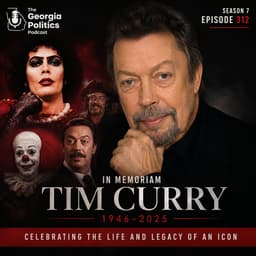
Remembering Tim Curry
The Georgia Politics Podcast

RE-RELEASE: The Rocky Horror Picture Show (and RIP Dolly Parton)
The Georgia Politics Podcast