About this episode
Get every episode summarized
Each time Today, Explained publishes, we email you a written briefing from the transcript — the topics, who appeared, and any specific claims, with the ad reads skipped.
Email me new episodesFree for 3 shows. No card needed.
Hosts & guests
Transcript ready
565 searchable segments. Every word is indexed and playable.
Full transcript
Today, Explained — China is winning. Machine-transcribed; use the interactive transcript above to jump the player to any line.
It's 2026, and Trump's got a lot of America's traditional adversaries on the ropes. Venezuela isn't in a position to demand much of anything right now. Cuba is trying to figure out if it's gonna get matured, and now Trump's threatening to bomb Iran, where massive protests have the regime teetering on the brink. The leaders of Iran call they want a negation. I think they're trying to beat up by the United States. But you know who's on their front foot? China. China went toe-to-toe with Trump in the trade war over the last year and won. And on top of that, China's culture has been having a moment. Maybe you gifted a LaBouboo last year? I don't think LaBouboo's going away anytime soon. Potmart is gonna keep cranking out these strange, ugly, cute dolls. China's surprisingly good 2025, and what it means for the future. Coming up on today explained from Vox. This show is brought to you by South by Southwest.
Ready for seven days of discovery, South by Southwest is the premier destination for creative professionals from around the world. Experience old storage handling, thrilling life performances, cutting-edge innovations, and so much more at the South by Southwest conferences and festivals, this March 12th through the 18th in Austin, Texas. Expect the unexpected at South by Southwest, driven by Rivian. Unlock at 10% discount on your innovation badge when you use code Vox10 and S-X-S-W dot com slash vox. Discount on badge price only, not combinable, terms apply. So good, so good, so good. New mark downs up to 70% off are at Nordstrom Rack stores now. And that means so many new reasons to rack because I always find something amazing. Just so many good brands. Cause there's always something new. Join the Nordic club to unlock exclusive discounts, shop new arrivals first and more, plus buy online and pick up at your favorite rack store
for free. Great brands, great prices. That's why you rack. This is today explained. I'm Miles Bryan, guest hosting today explained. John Zin has been studying China for close to 20 years. He's with the Brookings Institution now, but he started out working for the CIA under George W. Bush and was the China director at the National Security Council for a few years in the Biden administration. Recently, John wrote a piece for foreign affairs called How She, as in Xi Jinping, China's leader, played Trump. I started by asking him for his elevator pitch. We've basically come full circle at the end of this straight war, right? We are back to status quo anti. We're basically in the same position, more or less, where we were with China a year ago. And I think what the Chinese have successfully done over time is whittled down the conversation with the Trump administration
so that we are talking instead about the trade imbalances, instead of over China's overcapacity. Never mind a whole suite of security issues like South China Sea and Taiwan. We are narrowly scoped and focused on particular sectors and particular firms like TikTok or particular products like soybeans. And I think all of that is kind of a win for China. That puts them in a comfortable place right now in their discussions with the Trump administration. Okay, spicy. So if the first year of Trump too in China ends with China getting a lot of what it wants and the US getting some soybean sales and maybe not much else, where does the story start? What did our relationship with China look like at the end of Biden's term? The relationship was at a relative high point for this period over the last 10 years or so of more overt and intense competition, right? The two presidents met in Peru. And so in our two countries, we cannot let any of these companies in the very end of conflict. There was some limited cooperation underway
on issues like fentanyl, which of course is a concern of the Trump administration. We agreed that fentanyl as precursors will be curbs substantially. And the pill presses, that's a big, that's a big moment. I think the big picture here is that it shows there are areas where the US and China can agree. And then what we saw is we got past election day and rounding the corner into the inauguration was the Biden administration kind of tying up some loose ends and tightening some of the export controls and technology controls on China that were and these were pretty significant muscle movements. The Biden administration reportedly set to announce a new set of last-minute, expansive chip export restrictions today. Washington says the aim is to prevent Beijing using the most advanced semiconductors for its military modernization. And what we saw from the Chinese side was not just them responding, I think, more briskly than they had responded earlier in the administration, but more substantively as well. And I think what they were trying to do was gear up for the return of the Trump administration
and for Trump 2.0. And what do you think China will do with Trump 2.0? And what do you think China wanted out of their first year with Trump 2? What were their goals and how do those fit into their bigger plans? Yeah, I think their primary objective was to get the Trump administration to back off. And I think what China really wants from us is for us to get out of their way and to not slow down their own growth and development. So then Trump takes office again and this comes back on to my radar as a general interest journalist really last April on Liberation Day. I mean, I'm sure you remember everybody remembers. I always say tariffs is the most beautiful word to me in the dictionary. Trump slapped tariffs on nearly every country. It was this huge economic maelstrom. And I remember at the time in that spring doing research for today explained and just reading because I was curious and thinking like, okay, this is going to be another economic cold war. It's going to change everything. And now, you know, fast forward eight months and doesn't feel like that much changed.
Like, I'm still buying my daughter a lot of cheap toys from China. What happened? Yeah, and Liberation Day was very striking. I actually was in China when the tariff dropped for Liberation Day. And what was really striking to me talking to both, you know, senior Chinese officials and to the business community across China's that they seemed emotionally prepared for this. There wasn't really kind of the anger or anxiety that I had expected to see and feel. And we were there just as, you know, as things were ratcheting up and we ended up in a place where there was a de facto embargo on Chinese goods because the tariffs were so high. I think what's interesting about the Trump approach is that they started off really trying to clobber China with these tariffs and this period of escalation. These numbers just keep changing as you know. And what we've just confirmed from the White House is that the new total rate against China is now 145% tariff so far this term that's added to anything that was in place before President Trump took office. President Trump threatening a 100% tariff on China over and above any tariff that they are currently paying
starting November 1st. Now you may be confused about what the tariff rates are and if you are, then you're certainly not alone. And I think what happened in especially once China started to impose export controls on rare earth elements, right, which is kind of this esoteric wonky thing that we've all had to become experts on now. Right, these are basically elements that go in everything from some high-end military kit to your automobile to a basic consumer electronics, right? So these are a loose threat in the supply chain. If you start to pull on it, it can unravel a lot of different industries all at once. And this reflects what the Chinese had did in the previous five years as they were going back to the gym and preparing for a second trade war, trying to identify tools and countermeasures they could use. And I think they proved to be more effective than Beijing realized. So you kind of had the seesaw effect from the Trump administration. They came in wanting to clobber China. And then I think they had to back down, right, in the wake of that. Today, Treasury Secretary Scott Benson says
the US has reached a substantial framework of a trade deal with China. Trump said US tariffs on China would be lowered to 47% from 57%. So the Trump administration had walked back its own export controls on China, which I think many in the national security community and I think many in across both parties and especially alumni from the Biden administration. So I was really consequential to our long-term competition with China, right? Basically keeping our most advanced technologies out of the hands of China. And that has gradually been whittled away by the Trump administration. I think that is a huge win for China. One thing I thought about Trump and his administration coming in in 2025 is that they were really serious about decoupling economically from China. This felt like the culmination of a swell of intellectual sentiment and debate that had been building for a long time.
Did they have a change of heart? What do you think? I think what Trump really wanted, even with all the storm and drong and hostility in the bilateral relationship, I think he ultimately, he wants some kind of deal, right? This is what animates him. Because it is a core part of his political personas that he's a deal maker. And I think, you know, the kind of ultimate concretization of that in this administration was the line that they had in the national security strategy that said they want to get to a mutually beneficial relationship with China. Wow. Would you have expected to see that when you were working for Biden or President George W. Bush? Well, so that's what's interesting is that in some ways it's a departure, but in some ways it feels like back to the future. This is something that could have been said in the Clinton administration, frankly, before China was joining the WTO or in the Bush administration, or even for large swaths of the Obama administration, that there are challenges in the relationship, right? But there is mutual benefit in these economic engagements, and so we need to find ways
to figure those out and resolve them. You pointed out earlier, you know, China's oriented towards the long game. They think big. One lesson that seems like China has taken out of the last year is that being aggressive and sticking to its guns is a smart strategy against the Trump administration. How do you think that's going to play out over the next year, a couple of years longer? Yeah. I think that's right. And I think, you know, just as a starting point too, you know, I noted that deal-making is such an important part of Trump's political persona, but as somebody who's followed Xi Jinping for a long time, it's occurred to me it's not an important part of Xi's political persona. But he's a very tough negotiator. That's not good. Right, he's not really interested in making a deal. He is kind of playing the longer game, right? And thinking about how do they accrue advantage over time? And I think what they've learned from the past year, and I think it's really unfortunate from a US perspective, is that they have, in fact, accrue a lot of leverage. And so I find that really worrisome
as we go into 2026, because if you look at what a lot of Chinese commentators and analysts are saying, they not only feel that they had a lot of leverage this past year and they exercised it to tremendous effect. I think better than they had expected, but that their position is actually improving this year. They are very much mindful of the upcoming midterm elections. And so my theory about this for a while has been that they are working backwards from that. What they want to do is keep Trump invested in the diplomatic process. I think on the premise that the closer we get to the midterm elections, the more leverage the Chinese side is going to have, because Trump is going to want some kind of bigger deal. He's going to want something to show for all of his efforts. So it's not that the Chinese think in terms of centuries or imperial cycles, they just pulled up outlook calendar, I think, and realized one year from now it's going to be the midterm election and Trump's not going to want to have this fall apart. They're just like us, you know, brain poison journalists in America,
thinking about the two-year cycle. That's fine. Exactly. What am I going to be doing from one year from now? Johnson, China analyst at Brookings. Coming up, China's soft power is on the rise too. Support for today explains it comes from 1-800 flowers reminding you that Valentine's Day is almost upon us. And if you're looking for a perfect gift for your loved one, you might want to check out 1-800 flowers. 1-800 flowers says they deliver high quality stunning bouquets on time every time. 1-800 flowers have been creating beautiful arrangements for over 50 years. They say they source roses from the best high altitude farms that produce bigger blooms, richer colors, flowers that last this year. They're making it even better with an exclusive offer by one dozen roses, and they'll double it to two dozen for no extra charge. Plus, 1-800 flowers says they're seven-day
freshness guarantee backs up the quality, so your flowers will look amazing and keep looking amazing. Here's Patty Diaz. On the side, I loved how much variety there was. Of course, they have for, you know, different occasions, whether it's celebratory or a briefment. What's a great variety? I like that there was a little bit something for everyone. You don't have to wait until it's too late to get your double blooms offered by one dozen and get another dozen free. You can go to 1-800-Flowers.com such explain that's 1-800-Flowers.com such explained to double your roses for free. The all new 2026 Toyota RAV4 is here, building on everything drivers know and love about Toyota. With a redesigned look and modern tech that makes life behind the wheel easier than ever, the new RAV4 comes standard as a hybrid, providing smooth, efficient performance for both city streets and longer journeys. Enjoy the legendary reliability Toyota is known for, in the all new 2026 RAV4. Learn and shop more at toyota.com. Toyota, let's go places.
Support for this show comes from Shine. While banking fees are no fun regardless of the circumstances, unexpected ones can really take a toll. Shine can help. Shine says they're not another banking app. They want to unlock banking for everyday people by getting rid of overdraft fees, minimum fees, and monthly fees. Shine makes her everyday spending work harder by delivering real rewards and financial progress. Shine says it's not just smarter banking. It's the most rewarding way to bank. You can join the millions who are already banking fee-free today. You can head to Shine.com slash explained. That's Shine.com slash explained. It only takes a few minutes to sign up and today explain listeners can earn up to an extra $350. Shine is a financial technology company, not a bank. Banking services, a secured Shine Visa credit card, and my pay line of credit provided by the bank or bank NA, or Scribe Bank NA. My pay eligibility requirements apply, and credit limit ranges $20 to $500. Optional services and products may have fees or charges. See Shine.com slash fees info, advertised annual percentage yield with Shine Plus status only.
Otherwise, 1.00% APY applies. No mean balance required. Shine.com payment history may have a positive impact on your credit score. Results may vary. See Shine.com for details and applicable terms. You are listening to today's point. I'm Don Weinland. I'm the economist China Business and Finance Editor. I'm based in Shanghai. OK, Don. In the first half of the show, we talked about China's hard power over the last year. You wrote for the economist about China's seeing an uptick in its cultural exports and growing soft power. How would you define that soft power? Well, I mean, the first thing to say is that China massively under punches on its cultural exports, right? I mean, this is the world's second biggest economy. An incredible manufacturing power. An unparalleled elsewhere. And yet on cultural exports, it's really not doing very well on that front, I would say.
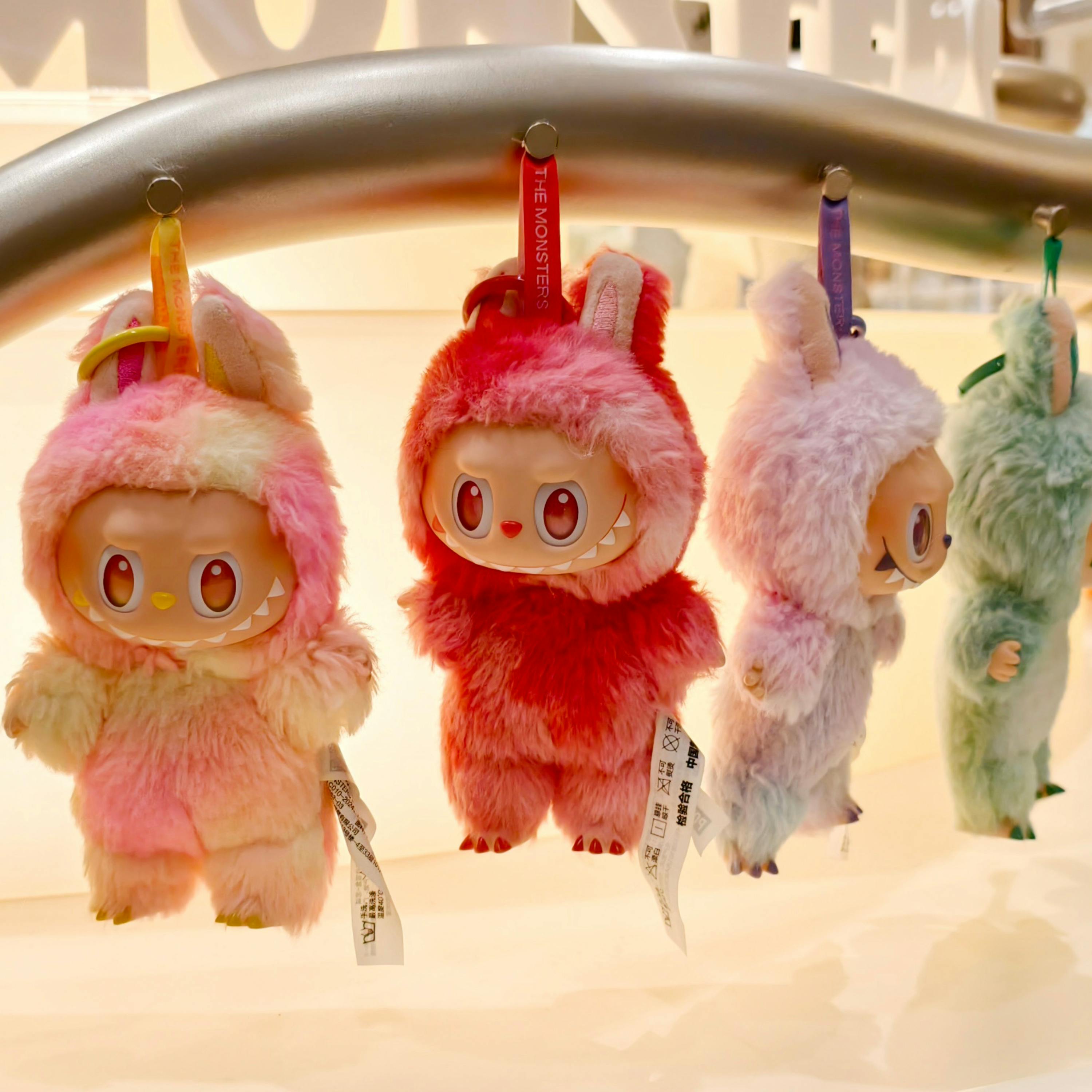
You know, I could read a list of Chinese films that came out this year. And I mean, the vast majority of them, you would not know the names of them if I read them to you. Have you ever heard of the movie Detective Chinatown 1900? No. I have not. Or dead to rights. And there are a couple other things that happen in 2025 that may have caught your attention. So have you heard of Labubu before or Popmart? I have heard of Labubus. I have the one and only 24-karat gold Labubu. Yeah. So this is something that's actually changing. You know, for many years, I don't think you would have known most of the sitcoms or movies or video games or toys that are being made in China, especially not by name. But China did much better on cultural exports in 2025
than it has in previous years. Okay. So China's cultural exports are breaking through a little bit. Maybe we can run through the areas that that's happening. I feel like we should start with Labubu. I don't have any Labubus. To be honest, I'm not super Labubu curious, but I do see them everywhere. And I was surprised to learn and researching for the story that they originated in China. Are you a Labubu guy? I'm not really a Labubu guy per se, but I am very interested in Paul Palmatta or Popmart, the company that makes Labubus. So yeah, we can start with Labubu. It really started getting a lot of attention in 2024. And then in 25, it just blew up. All right. There's three of the hottest dolls right now that are attached to purses. I'm a Labubus. Yes, yes. Kitty, you got girls with a Labubus. If you haven't seen one, they're often described as being ugly, cute.
And they come in these things called blind boxes. So it's a box. You don't know what Labubu you're going to get. 24 per gold. And when you open it up, you can discover, you know, which one it is, and they're collectors items. It's kind of like baseball cards in a way. You don't know what baseball cards you're getting. And you know, you might get like a rare card or something like that, right? I finally got my hands on Labubu. My first Labubu. No. Labubu, no. She got the secret! I told her to be so. Labubu, Labubu! So what else? You mentioned movies? Yeah, not job two. Really blew up at the beginning of 2025. It's an animated film. It tells a traditional Chinese myth story. You face ninja, Prince of Rise!
I slay demons for their crimes! It's the highest grossing animated film ever. So, I mean, that's quite amazing in itself. And most of that happened domestically. But I know people in the US that have seen it as well. Chinese films don't get a lot of screen time in the US traditionally, but this one seems like it did break through in some places. Absolutely, yes, go see it. It is undoubtedly one of the best films of the year. The animation in Najatu should make Hollywood sweat. The origin country and where it comes from just kind of falls away and it becomes really pure cinema. You know, what was really fascinating to me about this is last year you would hear senior leaders citing Najatu, which is very odd, you know, to hear them referencing this animated film. And you know, really they were pointing to what they see as a success,
a cultural success. So that kind of tells you something about how important this movie was. You also mentioned video games. I was looking into one game that looks like it broke through a black myth Wukong. I don't get a chance to play video games much anymore, but I used to and it looked like it got a lot of hype online. Can you tell me a bit about that? Yeah, also incredibly popular within China, but also overseas. I think it's one of the most popular video games of this style ever. This is so cinematic, dude. Wow, it looks so good. It's also based on a traditional Chinese myth, massively popular starting at the end of 2024. It was so popular that the areas in China that it takes place in started getting a bunch of tourists visiting them. So this type of cultural product can generate economic growth,
not just in the selling of the product itself, but also in areas like tourism. So what do these products have in common that contributed to their breaking out of China as cultural exports in the last year? What do you think is happening here that's different? So I've kind of narrowed it down to two really important things. One is that a lot of the creators behind these things are in their late 30s or early 40s. And they're people that went to university in China just as the education system was changing. A lot more students were going to school at the time. And crucially, it's a time when the internet was relatively free. It was quite easy to get online and look at foreign websites. So it's a group of people that had access to a lot of foreign ideas. I think they absorbed a lot of foreign culture.
That's one thing. Another thing is that these types of products are being funded quite a bit better than in the past. So the Communist Party has its priorities. You know, it wants to be strong in manufacturing. It wants to be strong in areas like electric vehicles and batteries, solar power. It hasn't really focused that much on its cultural products and its soft power. And we can kind of see that changing in areas like animated film or video games. So it's a lot easier for these types of companies to get funding now. And that just means that it's going to reach a lot more people in China, but also overseas. But I mean, I think there's another factor that has really held back cultural exports in China. And that's just rules and regulations here that make it very, very difficult to make raunchy, sexy entertainment. You know, the type of stuff that we're used to in the US.
You know, sometimes even broaching the topic of divorce is difficult in sitcoms. The regulations are very, very strict. You can't even really have like haunted houses in Chinese entertainment because the Communist Party doesn't like superstition. And they view this as kind of a form of superstition. So it's very, very strict in many ways. So there's this one really striking example of this pop band where one of the band members had a public breakup with his girlfriend. And he got a lot of bad press. And if you watch the videos of this band now, you can see the band playing and everything looks normal. Except when the camera gets to this one specific member, he's been fogged out. So he's just kind of this puff of fog on stage. He's literally been kind of erased from the video.
You can see his hands playing the piano, but you can't see the rest of his body. It's very, very odd. Who disappeared him? Well, basically he was kind of state-canceled. And I think the companies that host these videos were required to basically erase him. So there's a lot of companies that just don't want to take risks on culture because pop artists can get scrubbed from videos or dramas can get outright canceled if one of the actors does something bad in real life. What's your bet on the next big Chinese cultural export? I think we're getting a Labubu 2.0 in 2026. I don't think Labubu is going away anytime soon. Potmart is going to keep cranking out these strange ugly cute dolls. But I would say one area that American consumers might see in 2026 is...
They might see more Chinese products, well-made products popping up in America. There are a lot of Chinese tea brands like Bubble Tea Chains that are setting up in America right now. We've been talking about entertainment, but products have a big impact on soft power as well, right? So if you start buying well-made Chinese products, it could change your mind about China. It does seem like China's making progress on entertainment and cultural products that are more geared towards children. So Nujatu is an animated film. Adults love it, but it's definitely something that kids can watch. Labubu is also not just for kids, but kids seem to be buying a lot of these. I think that's kind of a safe space for Chinese cultural exports. You don't need things like violence and sex and the kind of the raunchier bits of entertainment in this space, obviously.
And yeah, that might make it easier for more of these types of kind of youth-focused things to reach people outside of China. Don Wyland, economist magazine, not a Labubu guy. Our show today was produced by Ariana Aspru, edited by Jolly Myers, engineered by David Tatashore and Patrick Boyd, and fact-checked by Andrea Lopez Crusado. I'm Miles Bryan, and it's today explained. Rinse knows that greatness takes time, but so does laundry. So rinse will take your laundry and hand-deliver it to your door, expertly cleaned.
And you can take the time pursuing your passions. Time one spent sorting and waiting, folding and queuing, now spent challenging and innovating and pushing your way to greatness. So pick up the Irish flute or those calligraphy pens or that daunting beef Wellington recipe card, and leave the laundry to us. Rinse, it's time to be great.
More episodes


