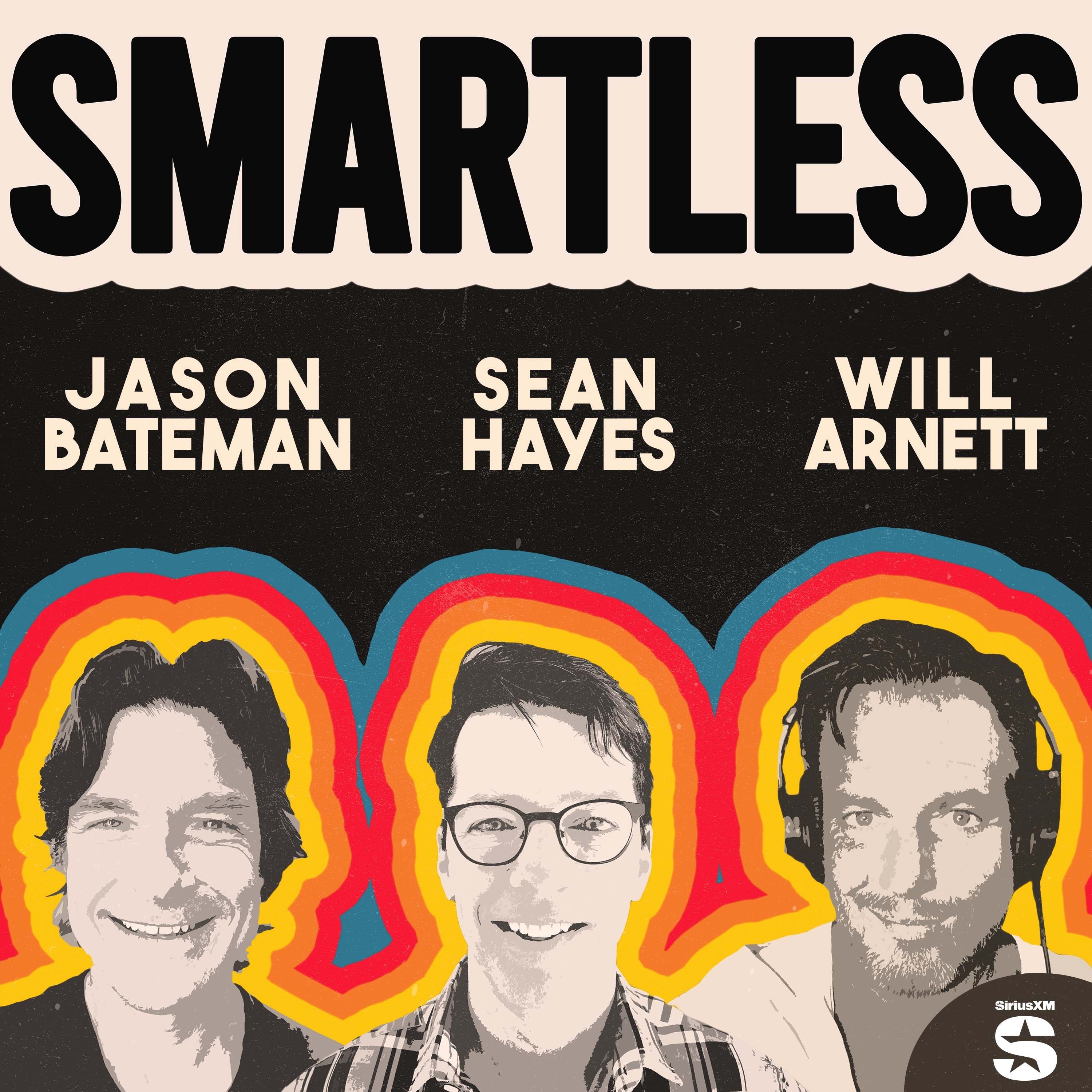
About this episode
Heat up your pizza-pocket: it’s Cillian Murphy. We talk law, rock n’ roll, instinct, energy over perfection, and making ends MEAT. Welcome to The Circus Of The Unemployable …on an all-new SmartLess.
Subscribe to SiriusXM Podcasts+ to listen to new episodes of SmartLess ad-free and a whole week early.
Start a free trial now on Apple Podcasts or by visiting siriusxm.com/podcastsplus.
Hosted by Simplecast, an AdsWizz company. See pcm.adswizz.com for information about our collection and use of personal data for advertising.
Get every episode summarized
Each time SmartLess publishes, we email you a written briefing from the transcript — the topics, who appeared, and any specific claims, with the ad reads skipped.
Email me new episodesFree for 3 shows. No card needed.
Hosts & guests


Transcript ready
791 searchable segments. Every word is indexed and playable.
Full transcript
SmartLess — "Cillian Murphy". Machine-transcribed; use the interactive transcript above to jump the player to any line.
Listener, are you running? Are you gunning? Are you maxing out your energy and just trying to figure out how to keep your tanks filled? Well, I'm with you. And for me, that usually means nourishment. Cliffbar is an energy bar design for sustained energy and fuel that you can reach for when running, hiking, riding, or pushing through workouts and longer days. Cliffbar delivers fast acting and long-lasting energy to help fuel performance before and during activity. It is baked and tastes great. Made with organic rolled oats and includes nine to 11 grams of protein, depending on the flavor. Cliffbar is built for active lifestyles and for people who challenge themselves. Raise your bar with Cliffbar. The autographed journey credit card from Wells Fargo is built for travel. You can earn rewards wherever you book your favorite hotel site, your go-to airline, and more.
You get five times points with hotels, four times with airlines, three times on restaurants and other travel, and one point on other purchases. Whether it's a big vacation or a quick getaway from booking your stay to that first meal when you arrive, you're turning your trips into rewards with the autographed journey card from Wells Fargo. Learn more at Wells Fargo.com slash autographed journey, Terms Apply. This episode of Smart List is sponsored by Allstate. Checking Allstate first could save you hundreds on car insurance. That's smart. Not checking the day's weather forecast before breaking out new suede shoes. Big oops. Confidence started high, but that fashion optimism dissolved fast into a wet reality. Yeah, checking first is smart. So check Allstate first for a quote that could save you hundreds. You're in good hands with Allstate. Potential savings vary subject to terms, conditions, and availability. Allstate North American
insurance company and affiliates Northbrook, Illinois. Hi everybody. Welcome to the cold open of this episode of Smart List. I am for reason. You know, be great if our net was here to warm this cold open up a little. I don't think he's available. No, he's not available. We should just start. Let's just start. Oh god, look at all these goosies on my arm. Welcome to Smart List. Guess what I just finished watching. Moments ago. A pizza pocket heat up in the microwave. Oh, wait. Now let me try. Yeah. It's something with Scotty. I don't have it yet.
You're zipper on your pants. Not be able to close. Oh wait, I know what it is. It's the top button on your trousers flying across the room and breaking the light bulb. No, I just watched the first literally 10 minutes ago finished watching a DCF St. Louis, the first episode. Let me tell you, it is so good. It is right up my alley. And Jay, another incredible character by you. Like really, like so different. Really quick question. Did you say it's a ride up your alley? To ride up your alley. Try to ride it. I think it's going wrong for years. No, don't stop him now. No, it's right up my alley. Oh wait, it's shot. And of course, performed. You're brilliant. It's so good, Jay. You're so good in it. Rider director. I mean, that swing. There's the shot of the swing. That's all I'll say. I mean, that's so smart. It's so cool. We get real, real, real, real, real crazy. It's yeah. And the ending of the first episode. Wow. It's really good. You're sweet, man. It's so good. You're so good. Do you, I don't know if I've ever admitted this
on this show before, but speaking of saying things wrong for years. Yeah. Oh shit. And this is, I'll attribute this to not reading a lot. You know, I'm allergic to books, and I'm not proud of that because I feel if I had I seen this written, I wouldn't have made the mistake all these years, but I've always thought that when you say the phrase, I'm just trying to make ends meet. I thought that was a phrase that one would say when they're saying, listen, I'm just trying to get by with just the bare minimum. I'm I I'm not being greedy. I'm not entitled. I'm just trying to make ends meet, meaning I'm just looking for the part of the cow that doesn't cost a lot. I just need sustenance. I need some food. I'm looking for ends meet like NEAT, the end of the cow, the ass, which is not going to cost you a lot. This is what my stupid head. This is what you're working on right now. I'm 57. And this was this was probably a couple
years ago. I was 55 until I realized that it is it is ends of, you know, strings or whatever, creating a circle. But you want these ends to meet and create a whole thing, and which can can mean something similar to I'm just trying to make it all come together for myself. You're trying to make you well, you're trying to you're trying to you're trying to be able to afford stuff. You're trying to make ends meet. You're trying to do stuff within your budget. Yeah, it wasn't a proud moment for me. But I'm not just trying to be on admitting my my my my my flaws. I'm just trying to think of like the gotcha headlines in the various social media stuff about this. Oh, no, this will be cut. No, this is just for you, you me and and your guest. Well, we can't cut this. Speaking of what kind of cut is that at the end of the cow that you're talking about, are you talking about legs? Well, the flank is it's often it's often called the flank where we're at the end. That's not the end. That's the end. That's the end. That's the end. That's the end. Wait, but you know, you know, that like I love, you know, that member that I love like sayings and they're originate or origination. What do you call stupid ass? Yeah.
This is where they originate. Or originate from day five. Go ahead. And where they originated from, you know what I mean? And so, remember, I did the saved by the bell. I told you guys about saved by the bell. You did an episode or an arc. No, no, no, where that saying comes from. Oh, remember the guy, people used to get buried. Remember I told you, or they used to get married, buried alive. And they didn't know it at the time because people like were unconscious. They just thought they were dead. So they'd bury them in these coffins. Then they dig them back up to reuse the coffins and they saw these scratch marks. So they're like, oh my god, we've been burying people alive. So they bury people alive. They tie a string to their toe. They put it through this ground and tie it to a bell and you're saved by the bell if the bell goes off. And the person who had to sit there and wait to see if the bell went off, worked with the graveyard shift. Wow. Okay. And this, so this is what you thought saved by the bell was for years. No, that is what it is. It's not. It's a botany thing. No, evidently it originated with this, JB. That's right. Really? Yes. That's what telling you. Wait,
so hang on. So we'll, you're taking that's news to you and you're going with Sean. That's, that's, that's news to me. I do vaguely remember Sean mentioning this before. Yeah. Well, that doesn't make it true. He's just repeating insane. I mean, we can, I'm sure people can just look it up as they're listening to this right now. I don't know why we would. That's where it comes from. We're going to, we're going to have our fact checkers get on that while we're, while we're at checkers now. Yeah. Yeah. So let's have to do that. We'll go ahead and introduce your guest and let's get on with it. Oh, shoot. Jason. Jason is a little runner that I've been having, trying to get Will panic. Did you think, did I ever get panicked about it? No, I don't think it worked. It's my guest and I'm so excited. And Willie, I think you're going to be excited too. I think I remember, I think it was you telling me that you're just a cookie fan for this fella. And I don't blame you because I am too. Gentlemen, I'm not going to care. No, no, great. Let's start. Let's start. It's going to be a great hour for you, Sean.
No, you will. Everybody, everybody freaks on this guy for very good reason. Have you searched for the answer to the age old question, what should I do after pursuing rock stardom and being a lawyer? Well, our guest this week has the answer. You become one of the finest actors on the planet. You go out there, you work with the best directors in the world, you turn in some of the most powerful and moving performances ever. And then you grab yourself an armful of awards, including the little gold guy named Oscar. He's done three careers worth of work already in his 30 years of performing. And it's been theater and film and television. But one of those television projects, projects is now a film. And he's here to talk to us about that gentleman. Please welcome Tommy Shelby himself, Mr. Killian Murphy. Oh, my God. Yeah. Here with us today. Wow. How's it going? Oh, Killian. How cool. So nice to meet you. Hey, man. Nice to meet you. That was a lovely introduction. Thank you. Right. I worked on it for minutes. Where, what time is it for you today now? It's like nearly six PM in London.
All right. Now, does that, if you're like me, you're about an hour away from sleep. Are you, are you in, are you in pumpy socks? Are you getting ready to, to get horizontal? Or are you about to start your night? I do start thinking about beds from, yeah, about half past five. That is that is true. So we're keeping you up right now. Yeah. No, I mean, I'm just thinking about it. Yeah. But I will be approaching. I'll be a bed bed like half nine. Right. And you're good. You're good. We're all in the same. Yeah. I think with the four of us are very good at relaxing and taking it easy. Now, is that because we're of a certain age or is it because we've all really been good at getting after it? And we're kind of, we're kind of done with that. Yeah. Right? I did it. And now I want to enjoy the relaxation of wisdom and age. I don't, I mean, what do you guys think? Let's put what's your, well, I'm 100% agree with Jason, although I'm just going to ask you
killing is like the having, I'm doing theater right now. And I know you've done a lot of theater. And it's like all of a sudden you have to retrain your brain to be have the most energy at eight p.m. Yeah. Yeah. You know, and it's like of the whole day, you have to have most, most of your energy at eight p.m. And boy, it's rough. Are you going on stage tonight? Uh, and tomorrow, my quote unquote week starts Wednesdays. And he's doing a one man show killing. And I think you've done, you've done one of those. Have I? I certainly have. Yeah. Wow. Good man. It's a lot. It's like the fucking Everest of acting. That's what I got. It's pretty right. Did you ever have, well, Shawnee, I haven't asked you. I'll ask you both at the same time. Has there been a wipe out yet? Like a total like, that's my fear. Like there's no net. There's no, there's no actor. You can find the eyes of and sort of communicates silently. I have no idea what I'm supposed to say next, throw me a line. Yeah. My line the other night was, um, uh, he tells me the line is he tells me
two kids came forward to confess to it. It was an accident. That's the line. And three show, three or four shows ago, literally on stage. He tells, uh, uh, oh, no, he, uh, yeah. Just a panic. It's just unbelievable. I mean, you feel like it's 20 minutes long, and I'd go teenagers, brand their car into them, killed them. And then I just, by the way, I'm sure the audience probably did not know. No, I know. But and for you, it seemed like interminable. Like, yeah, yeah, yeah, yeah. But isn't, isn't the line you have forgotten linked to the line that follows it? And so you can't just improvise the line. You can't remember, because that doesn't shine any light on the next thing you're supposed to say. But, but you do know the kind of the context. You just kind of forget the word order. So then you pair of phrase until you get back on the train. Yeah, you get back. So you got right back on and it was all right. Yeah, yeah. It was fine. But Killian, any, any, any, any nightmare like that? Yeah. You know what, you know, the way, when you're doing theater, it's like the, you got like the left
hand side and the right hand side. You've got to sort of stage manage your side of your brain, and you got the acting side of your brain, right? So you got the stage manager side going, right? You drop the prop back there. So you got to go back and pick up the prop while you're saying the line. That's right. And they're acting similar. They're running parallel. So you got this kind of management in your head going, right? You got to fix this. And then the other side is talking. Exactly. So I did probably, but I was, it was like, I quite liked not having to rely on the, you know, the terrified eyes across the stage to some other actor, like saying, can you pick up the fucking knife that was not supposed to? So I quite enjoyed it. But what I did find, and I don't know about you, Sean, I could not sleep after it. I could not sleep. It's been right. Really? Yeah. Just wired. Yeah. Absolutely. It was like being thrown out of a helicopter. I could not sleep. How are you about, about the folks coming backstage and wanting to congratulate you and, and talk a little bit like, are you? I would imagine that. I'm obsessed with this.
I know. Because I don't want to be fucking bothered for the most part at any point in the day. This will keep you from doing Broadway. This will, this very thing will keep you from doing Broadway. I'm with you though, Jay. But I just feel like I, I would feel, I would feel burdened to make the person feel comfortable, right backstage. And, and, and I would just feel their awkwardness. And I would feel like I, I need to host them now. And I need to, just because I want, I don't want people to feel uncomfortable. So I, like, I'm still working. I'm still on. And, and do you, do you feel that either one of you guys with that moment? Killian? Um, I, yeah, I would be, I think when I was younger, I would, I would always be up for the, like, come back to the dressing room and we'll have a drink and we'll go out. But then as I got older, I just couldn't fake it. I think any longer. Yeah. Just, and then, and then, but I, but equally I couldn't sleep. So I didn't know what to do. Like, I didn't go for a long walk.
Have a good day of adrenaline, you mean? Still? Yeah. I then go to the pub. I didn't want to go to the pub, sit alone drinking. Not a good idea. So what do you, like, what do you do? I don't know, what, especially in the town. I didn't know what to do. Yeah. So what can I ask you? This, this is another thing I'm fascinated with. And you guys, plug yours. You've heard me twat on about this before. But, uh, is, is, is it the same practice overseas there that it is apparently in New York, where if you are famous, even pseudo famous, you are obligated. You are obligated to go backstage and pay your respects and say, hi, even if the actor, even if you don't know the actor, any of the actors, and they don't know that you're there. Like, is that a pair of, what I've heard is that it's very rude to just watch the show and leave if you're of any sort of, uh, notoriety. Is that, is that the same thing in over there? Do you guys go back? Do you guys go back sometimes? I'm, my other half makes me go back. So you prefer not to, but you sometimes,
there, there is, there is a practice. There is a tradition. There's an obligation. There is. Yeah. There's like a little pressure. Like if they know you're in the audience, because the stage manager comes up and says, I'd love to say hi. Or we, yeah, we do that. And of course, then you do that. That's just, that's just courteous. But if, but if you don't know the person, and they haven't made that connection, I think you're well within your right to just sort of, yeah, I mean, I've got people that don't, that don't come back. I don't pick anything about even if they've, they're not in house seats or anything like that. So there's no way for them to assume that you know that they're there. I went to see, I went to see Sean in preview. I went to see Sean in previews that intel, and I just left. I didn't even go and say, I don't, it wasn't until we all went together that I went backstage. Not true, Sean. Not true. So killing, it's same thing overseas as far as the practice. I mean, I can't it people, people, people do. I remember once I was in, I was doing a show in New York, and I had a night off like you have Sean. And at the time, John Hurt was doing Crap's last tape. And I went to see the play and it was
unbelievable. And it was, you know, it was John Hurt. And the stage manager came up and said, would you like to go back and meet Mr. Hurt? And I went, I was doing a show at the same time, and I told, would I like, right? John Hurt came back to see me. No, I wasn't comparing myself to John Hurt, but I went, you know what? I think he's probably a bit tired. I'm going to just leave. So I just left. And then afterwards I went, you fucking idiot, why didn't you talk about getting me John Hurt? He's like one of my acting heroes. But I didn't because I felt he might be a little tired. And it's like, you're famous. I'm famous. So I thought I'd come back and say, hi, that's, that's the thing that sort of cringes me out about it. But I, but I hear that it's actually the opposite that it's, it's, it's, you should bring it up more often, Jay. Yeah. I don't know. Wait, I want to hear about Julian's musical career. I didn't know this about you. Can you expand on that a little bit? Yeah. Well, it seems to be, excuse me, it seems to be quite common, doesn't it? There's a lot of frustrated musicians in acting. I've
kind of had lots of them. And yeah, it's initially what I'm sure there's probably some of you guys are among them. But I, I, I, I think that's all I wanted to do from the very beginning was play music. And when I saw you, Jason, was at the radio head show. Yeah, yeah, yeah. But and then obviously it's in workout. And so I kind of moved into theater. I think for to try and get that live experience, you know, that, that connection with an audience that got when you play music. And then, and then I just that, that just became the main thing. But it was always music. And I was, and I'm still obsessed with this. And it's my first love. I didn't know what, are you in a band? I'm, I'm sorry, forgive me. No, I mean, why would you? He was my brother. And, and, and, and is it true? Is the story is, this is Wikipedia fact. So forgive our, our rigorous journalism skills. But you guys were, you guys had a band together. And then there was a record label that wanted
you to sign. But you were like, this smells like maybe an overreach. And so let's not sign. And then things kind of transitioned into theater. And that became your passion. Was that kind of the way it went? More or less. Yeah. And more or less. Like it was, my brother was still in, he was playing keys in the band. And he was, he was only 16 or something when we're on for the record. And so my parents, that said, absolutely verboten. You're not like ruining your life. You, they, they said to me, I can ruin my life. But then we just didn't have to protect. Yeah. So we, it just all kind of fell apart. Yeah. And then I'd never been to the theater before that. And then after that, I saw a play in Cork City where I'm from, which was exactly, yeah. And it was a, a promenade version of that play in absolutely, absolutely, like, I just, it was the greatest thing I've ever seen. Had you seen the film before that? Not at that. It was banned in Ireland. Oh,
wow. That was banned in Ireland for the first time I saw it was I bought a VHS copy of it in Canada. Wow. Yeah. Yeah. That's why my grandpa's from being Canada. We love it. My, my grandfather's from Dingle. My grandmother is really from County Kerry. Yeah. Oh, man, I mean, I spent a lot of time in Dingle and around. It's beautiful, right? It's like my favorite place in the world. Oh, beautiful. Have you been over there? Yeah. Just once. It's just apps to ding, I mean, to Ireland a couple times, but to Dingle just once, I still have a, I still have cousins like distant cousins. I think that's still live there. Oh, man. But yeah, it's really. They're going to sell a sweatshirt that says, uh, I got this single berry. Uh, so you, so the first, so the first time you really experienced the theaters when you saw a clockwork orange on stage, yeah, is that what you're, is that what your testimony is? Is that we have your answer right? Yeah. Well, how did that, how did that, how did that
moment go? Because your, your, your parents are both educators, yes? Correct. Yeah. And so this, this, this conversation of, hey, I, I've got, I've got good news and, and, and, and even better news. Uh, I'm, I'm stopping my, my pursuit of rock and roll and I'm, uh, and I'm going into theater. Was that, was that, were they, were they, were they booed by that? Or were they like, no, killing and, uh, were, were they all right with it? I think like, I was, you mentioned, I had a very short, uh, flirtation with like law, law. I did like a year, uh, if a law degree and I failed, like, abysmely, and then I try to get the repeats and then I got the repeats and then I got a part of the play. So I think by that stage, Dave kind of, like, whatever, just, he's gonna do, he's gonna do his thing. You know, I was, I was 20 then. So it's, that's when you're meant to make mistakes, isn't it? Of course. Yeah, sort
of, and declare I'm not really sure, but I'm following some instincts and, uh, those are going to change. Listen, killing, I'm continuing making mistakes and I'm 55. Uh, but, but, uh, right, uh, I, I am, uh, as I said the other day, I am firmly in the student section in life. I've finally come to that realization that I'm like, it's okay. Well, your tan in the ceiling fan looks like you're, you're doing it right now. Yeah, it is. I know it's really going. I'm sorry about that. I had to walk around and find the best place to get internet. I'm not getting checking out what I had the best comments right here. You've got a monkey on a wheel. All right. You know, this is keeping the, the Wi-Fi going. But I'm curious about, I'm curious about you getting your deciding to, to try to get a lot of agree, like that, that decision. And then while you're doing that, thinking the whole time, wait a second, I'd rather be doing theater, like, I've been affected by this, I've got this thought. Is that kind of, how did that all kind of transpire? Uh, I think I just had that natural inclination to perform, which I'm sure you guys are familiar with. You know,
just from the very early age, I just, I'm quite a shy person, but I really enjoy getting at my stage. I hate getting at my stages myself, but I love getting up at the stage as someone else for playing music. Isn't that a weird thing where, you know, I think all four of us are, you know, proudly private people. We don't, we're not, we're not shy per se because of what we do. But like, isn't it, isn't an interesting thing where we'll sit there in front of the camera and be exposed to millions of millions of people, you know, wanting, hoping in a perfect world, millions of people are going to watch what I am doing. Yet we sort of shy away from being, you know, the center of attention often when we, when we go out or, or even when we go out to promote that thing that we want people to see, we're sort of like, I mean, I'll speak for myself. I was just like, I gotta go out and talk about it over here and over there and kind of light my hair on fire. It is sort of,
the two things are kind of at odds with one another. The one's controlled and one isn't. Yeah. That's a very good point. That's true. That's true. What's your, what's your, what's your favorite way of killing to interact with fans? Like, when is it, when is it comfortable for you? I think, I think I know what my answer would be, but tell me yours, because tell me yours. I feel, if it's one on one and them, us talking is not going to cause a larger sort of spectacle and cause a scene. Like, I don't want to embarrass myself, my kids, them, you know, create a, so like in an elevator. If it's just me and one person, Ed, you know, Ed, we can have a little conversation as opposed to, oh, take a picture here and then to people walking by, look at what's going on here. Oh, maybe I should get a picture too. Yeah, I recognize that person. And then it becomes a thing. And then, yeah, I don't know. I like sort of the one on one stuff. What about you?
That's, I'm the same. Yeah. Yeah. I love, I love a chat. I love them. Yeah. They have a real chat and someone has really enjoyed something you've done. Right. Like, particularly like, you know, we've all been in shows that have run a long time and people love, the people are very invested in the characters, right? And, sure. And, and, and, and so you have to acknowledge that investment and that they've spent that much time with your characters and, and I love those conversations. You know, I don't like when stuff gets like fetishized. He's going to the shop to buy me. Yeah. Yeah. Right. Right. But I love it. I love a conversation. Right. And we will be right back. Oh, boy, you know, we talk about closets a lot on this show. We sure do. Kicking the door down, coming on out, that you were basically talking about that closets are for clothes. Oh, I knew. And I've taken that too much to heart because my closet
is stuffed. I've been meaning to go through my closet. Well, I should sell it. I mean, yeah, listen, you know, what feels familiar in my closet? Maybe exactly what someone else is searching for. Buy, sell, and discover affordable secondhand fashion. You'll love with the resale marketplace, Deepop. Reselling can feel overwhelming, but on Deepop, getting started is easy. Just snap a pick of your item and Deepop can take care of the rest, including suggesting a price to help sell. One of the best parts, there are no seller fees, which means you keep more of your money. No printer required. And you can even choose a convenient drop off. No matter your style, Deepop is where people with all kinds of taste come to sell and shop. It really is for everyone. Parents selling kids where people shopping for the perfect outfit for
a Friday night out and anyone who wants to express themselves and play with trends on their own terms. Download the Deepop app now and start listing today. We know parents want to feel confident as their teens are navigating social media with Instagram, teen accounts, teens get automatic protections by default. Teens between the ages of 13 and 17 are automatically put into a protective experience. That means they get built in content settings for what they see, contact limits on who can contact them, and time management tools like daily time limit reminders, as well as sleep mode, which mutes notifications from 10 p.m. to 7 a.m. Plus, teens under 16 need a parents permission to change any of these settings to be less strict. Learn more about teen accounts and Instagram's ongoing work to help protect teens online at instagram.com slash teen accounts.
Listener, are you running? Are you gunning? Are you maxing out your energy and just trying to figure out how to keep your tanks filled? Well, I'm with you. And for me, that usually means nourishment. Cliffbar is an energy bar designed for sustained energy and fuel that you can reach for when running, hiking, riding, or pushing through workouts and longer days. Cliffbar delivers fast acting and long-lasting energy to help fuel performance before and during activity. It is baked and tastes great. Made with organic rolled oats and includes 9 to 11 grams of protein depending on the flavor. Cliffbar is built for active lifestyles and for people who challenge themselves. Raise your bar with Cliffbar. And now back to the show. Are you able at times to have the same kind of experience with your characters that some of
your fans might, in other words, are you able to watch what you do and enjoy it from an audience point of view or can you not get the separation from your experience inside the character? Well, that's a great question. And I'd love to hear what you guys think about it. Well, start with, like, do you watch your own stuff or you or you an actor that because I know I know both, both very, very good actors that watch themselves and learn from that and then others that they can't and they won't. Well, it's different jobs sometimes, isn't it? Like this Peaky Blinders film, like, we had the premiere last night in Birmingham. We just watched it two nights ago. It's incredible. It's incredible. I can't wait to see it. It was very cool and what I was producer on that, so I've seen the thing like 500 times. So, you know, I like, it was a very different kind of experience watching it too. You know, when you just turn up and as an actor for a while and you do your work and then you see it.
And some stuff I've never seen at all. And some stuff I'm immensely proud of. But again, I mean, I feel like I try to move forward with everything. The next thing, rather than going backwards. What about you guys? What's your take on it? I don't, I do any of you sit around watching your work endlessly. No, how I wake up every morning. I can't get out of bed without it. That's real hard. What about like on set? Will you ever watch a little bit of playback to even at the beginning of the production, just to get a sense of how you're coming across, how they're lighting you, the lenses, or just to get a feel of the tone of it? Occasionally, particularly for technical stuff, like, you know, like stuff that's technical or like a stunt or whatever, but I know I would never go back and look at like a big emotional stuff. But the producing thing has been interesting because it takes the curse off at a little bit. Like, you know, you look at it and you just go, oh my god, that's how you look. And then you just go, right, but it's important for this character to do this.
And this guy's got to enter here and she's got to say this and we got to cut her in there. And then it takes the curse off it. Sure. Well, you look at you and you look at it through different lens, obviously, right? So you just, like, this thing that I did last year, I spent a lot of time having to watch different cuts and stuff and eventually got to a place where I got over watching myself and was actually able to watch it really objectively about, wait, are we telling the best version of the story? We should go back. We should tell you what we're telling the best version. Is this the best thing? But all these kinds of things, you know, and it did, as you say, sort of break the curse a little bit. I was no longer watching my performance. I was watching a bigger thing. No vanity, just sort of being an audience. Zero. Zero. I always think, I always think I'm slightly better looking than I actually am. And then I'll watch it. I'll go, no, no, you're not. You're not at all actually. Turn it off. Close to being what you thought you looked like. Well, Killian, was there a speaking of music and then line?
All this, was there ever a moment where, and thank God you didn't, but was there ever a moment where you thought, yeah, maybe this acting thing, let's put that in the bin as well. Let's try career path number four and go into industry X or occupation Y. Did you ever think about giving up on doing this? No, really, after a period, you kind of like, you burnt your bridges, I think. And it's nothing else available really. And during the fallow periods, obviously, get really cranky. But, and I don't like, I'm not a writer. I'm definitely not a writer. So I didn't have that, but I would go and play music in the kind of fallow bits for just, just go and just watch movies and read books. But I didn't know I never got to the stage, where I thought, ah, fuck this. But I did, whenever it's stuff started to get kind of dry open film or television, I was very lucky to have a friend of mine called Andy Walsh, who I met
at an awful lot of theatre with. And we did some really great plays. He gave me my first ever play, part in a play after I saw Clock of Garnes when I was like 19 to 20. And so I continued to work with him, making like new plays throughout my 30s and 40s. And that kind of kept me sane. I think, you know, one of this stuff, kind of, just people aren't calling, you know? Wow, that's great. That's great. So you established, like, so long ago, this collaboration, and you've managed to sort of keep it going for all these years. Yeah, I haven't done a play in a while now, because it's kind of become a little terrifying to me. And honestly, I'm a little bit, because you're worried about Jason Bateman coming backstage and saying, yeah, for the show. Yeah, just in that way. Is that what's keeping you? Killian, it's me again. I just, I've come back for one more night. I basically got, I want every theatre to put up Jason's picture at backstage and do not let this guy back here. Super eager will not leave. So you start going to try to do it. And they're like, no,
no, we're good. It's the main reason I did this podcast so that we could talk about it. I said up the warning. Is there, is there something that you have, is there, is there some sort of advice that you have, you've gained with your experience now, that you wish you could go back and tell that dude back then that don't worry about the fallow periods. It's going to be, is there, is there something that you wish you would have known then that would have made those, those ups and those downs a bit more tolerable? Yeah. This is a good question. I mean, aside from, don't worry, you're going to win an Oscar one day hang in there. Yeah. Yeah, that would definitely lighten the mood. Yeah. I don't know. I think it's that thing about overthinking stuff, overthinking it, over intellectualizing everything and not sticking to your instinct, I think is the key thing for an artist. I know the key. What is that?
I know, but what is that healthy balance? Because I've always heard that with, with, with everything in, in, in life, with all of us, I think we've all heard somebody to say is, ah, you're overthinking it. But like, isn't, how do you know what the difference is between overthinking and just appropriate amount of thinking? Just using the intelligence that you, that, that you've been working on, you know, it's like we're, we work hard to be smart, or at least we think that we're smart. And so, how do you know when to pull back on that? I just don't know. Well, what's what's your, what's your guys approach to like prep then for example? Because sometimes I would get so over, it would just take up everything and everything we're all consuming. Because the whole, but then at the whole point when you get into a series that you have to be completely free of all that. Yeah. No, right. So it's kind of counter intuitive or kind of productive to have all of that prep sometimes. But yeah, you think your duty is to do all of that. So what, what, what, how, what, how would have you shifted for me? It's shifted for me. I was, I was, I was different from Jason
because I was blown away that I might, maybe you do this too, Will, do, do this too, Will, is like, I make sure I'm off book completely from the first time I step on set or walk on on rehearsal or whatever it is. Because if I, if I'm having my book in my hand or whatever, I just can't be free like you're saying, killing to explore and free where Jason has said in the past, where you don't make choices, you just literally memorize the words and then you work on it in rehearsal. But I don't even memorize the words because I, my pardon the term process when I memorize has a lot to do with my imagination of, of, of kind of how that's going to kind of go. And I don't like to decide or, or, or, or start to approach the decision of how I'm going to do something until I see and understand what the other actors are going to be doing and what the director is looking for and how the scene is blocked and where it cameras going to be and all that stuff. Because if I pre-determined how I'm going to do something and what my faces are going to look like and the wires, you know, it might not work with what the other people are doing. You got that book of faces. I know you've
got that book of Polaroid. I've got those memorized. Yeah. I started doing, I started memorizing in, in really monotone ways. It's truly, I started memorizing monotone way and recording myself. This is, this is true. Yeah. And it, with a very monotone voice so that I had zero inflection and crossing out all stage direction. Yeah. And just taking all of that away. And I did get into a situation I was working on this thing and I got there and they're like, now you've, you've got to go and get the thing on the other side of the room and I'm like, oh, do I? I didn't even know that. You know, but, because I, but, but actually it was very helpful because it just happened very organically. I hadn't thought about that. And so it's really shifted as I've gotten older how, how I look at it. And my preparation is so much different now than it was. And also JB, I think about like when we were, when we used to do a rest of development, for instance, it was much more, uh, Sean, it's a TV show. Yeah. It's not used to be a band. We got sued by them. I think for, I think for,
for when you're, I used to think about sort of prepping to do comedy, especially because it was so quick and it would happen. So that, that it didn't serve me, certainly. And I know that you were similar in this way, JB, because we did a lot of scenes together that it was, you, you, you just kept it, it was all kind of just at the surface and until you got there. Right. Because that puts, that, that increases my odds of reacting to you. Like the audience is, is experiencing it. Yeah. It's so much about rhythm and comedy in that way. Rhythm is the big thing, I think. The meaning can come after the rhythm or I guess for you guys, like if the, if the, the comedy or the gag or the bit that comes out. But like if you get into a rhythm with us in a scene, and if you, I guess if you have a predetermined rhythm, then how are you going to lock in with anyone else? You can't, you can't, and you can't, you, you need to stay nimble to allow for shit to happen. But I do think it's different for theater because I would be the same as you Sean, like when a, with a, with a theater piece, I would be completely off-book when I get to, yeah. But you also had, and here's the difference,
you also have a theater, by the time you get there, you're, and you're in rehearsal. I mean, Sean, I know you, for instance, in this, and also for, for, goodnight Oscar. What a show that you, that you were completely off-book. Yeah. And then, and then, but then you get into previews, and now you've got a couple of weeks of previews and changes. And it changes, and that starts to eat away at all your predetermined stuff that you have. So you don't, but you don't have that luxury when you're making a film or making a show. It's, it's the, the, the performance is the one, is that day. And that's it. Yeah, it's funny. You know, it's funny. There, there is this one line where I reference a very famous musical in this current show. And one of the producers of this famous musical came to the show and didn't like that we mentioned his musical that he produced. So it's a 75-minute monologue. I did, it's just me. And for, so we had to change the one word to another musical. And so for, from the time you started, all I thought about, from the time the
curtain opened was that one word I had to change. Yeah, sure to get it right. I was like, oh, shit. Yeah. I was like, thanks a lot, dude. Yeah. All right, killing 28 days later. That was a first film? No. No, I'd done a few films in Ireland, kind of small independent films in Ireland. This is, this is the one that, that, that, that, that, what a film. Yeah, put, put, you want a lot of, a lot of radars. I guess so. Yeah. And, and, and did it, did it, did it feel like, okay, I've got a little bit of wind at my back now. And this, this might work out. Yes, or? Yeah, yeah, I think so at that stage, the film, like we never expected the film to do well and it did well. And but you did have Danny Boyle. I mean, you knew your, your odds were good, right? I mean, they were
good. They were, because he's a master. Sure. And I had like his posters of his films on my, all of my bedroom growing up, you know, before I ever became an actor, because they were just so cool, like, transporting and shallower. Sure. I had a lot of fun. And I mean, some masterpiece. And but the thing about it was that zombie genre was, wasn't very cool at the time, or wasn't really like, there hadn't been a kind of a zombie thing. Right. And even though this is technically like an infection, they're not undead. But anyway, at that time that we shot it, like it was two, the summer of 2001. And then, then obviously like 9-11 happened. And then I think before that SARS had happened. And then, and then obviously all those years later, like COVID happened and then it became this kind of right name. And it's a very prescient writing, very good writing. Yeah. And, and people went nuts for the original movie. So, yeah, I, it was a great start.
But I went through the ring of that movie. Like Danny, I had like five or six auditions for that to get the parks done very little at the time. And I kind of knew it was a real substantial script for Alex Garland with the scripts and Danny directing it. Great writer. Yeah. Such a great writer and an amazing director. Amazing director. What was the moment from your last audition? When did you find out that you got it after going through all the auditions and being like, Jesus Christ? You remember that moment? You remember where you were? I do actually. I was, I was, I do, I was in an air, I was in a, I was in a, I was in a standstill airport in the queue to get a Reiner flight back to Dublin. And Danny called me. And I had to do one of those like unbelievably contained, like, drop my bag and sit down and kind of put them, yeah, it was, it was massive for me. It's fucking 2023 years ago or something. Wow. Now he, he talks often,
doesn't he about energy over perfection? Do I have that right? His, his sort of, his M.O. on, on, on set. Can you, can you explain what, what he might mean by that? What, what it's, what it's, what his direction, his environment is like, what that set is like, what his, what his style is like? Sounds about right. Yeah. He's incredible energy and passion for it. Like he never stops moving. He never stops. Like he's on every single element of the, of the set. And, and it's constant ideas, constant. He's constantly pushing, you know, and really pushing the actors and pushing every department. And I absolutely love that at that age. I don't think I'd been in, you know, working with someone who was so coherent in their vision for the film, if you know what I mean. Yeah. Sure. Just full enthusiasm and just knows of all four corners of what this scene supposed to do and how it's supposed to be done. Yeah.
Yeah. And it's infectious. And every time you think, oh, I thought that was pretty good. Like, you know, you're off again. And we shot that on domestic cameras, like these little, do you remember in the early 2000s, everyone had these little cameras with, yeah, like cards and them and stuff. So they're all like stuff you could buy. And so that, like camcorders almost. Yeah. Yeah. There were slightly more of us. I can't remember what at the forum that is, but anyway, it was just one of those movies that kind of clicked to them. Yeah. Yeah. It's a style that I would imagine is, is it wildly different than, you know, what an incredible collaboration you've had with Christopher Nolan. Yeah. It was going to get projects, right? Incredible. That from what I, from what I understand, what I've heard is, a more exacting and contained and deliberate approach to the execution, yes or no. And, you know, to the extent you're comfortable talking about it, because I would assume that,
you know, environments on sets, well, not assume, I know, they're often private, you know, individual environments that are weird to re-describe, but it just strikes me, having not many actors get to work with the same director, six different projects. I'd imagine you guys have a bit of a shorthand and a real comfort in each other's style. Oh, yeah. I mean, I've learned so much from Chris. He's completely kind of shaped my whole career. I mean, it's very clear, like working over 20 years, but he's absolutely remarkable. He is incredibly rigorous, incredibly precise, but within that, there's a fantastic freedom. Yeah. You know, there's only what everyone camera, and there's Chris, and he's got this tiny little monitor that he has, like puts back two cameras. Rarely, unless there's a big set piece, you know, but he has this tiny little thing, again, from like the 90s, that he washes his shitting little playback from the thing, but he rarely is watching it, because he's right to say the camera
watching you. And you'll never leave, you'll never leave a scene unless he feels like, you know, you're happy and he's happy. And it's, I can't really explain how wonderful it is, how focused is, how fast it is, but yet it never feels fast. Like we shot up an timer in 59 days or something like that. Wow. We've got all that stuff. I know. Yeah. So do you think that that speed or that efficiency just comes as a result of him really being precise about knowing what he wants, what he needs. He's properly prepared, and he doesn't hang around longer than he's gotten what he wants for that particular shot. And off we go. Exactly. I mean, he's written the, he's written the thing, and he knows every single frame. He storyboarded it all in his head. So it's, and the thing about Nolan movies is, if, when they used to be DVDs, there was never any extras, because he shoots the script. This script is the script. There's no deleted scenes. There's no extra. It's the script.
And he finishes every movie, like I had a schedule on the budget. Yeah. Do you, do you, do you feel, having him? Yeah, it's a pretty remarkable. Having him right next to camera. And obviously, you guys, because you've worked so much together, there, there is a comfort there. Do you, do you get a comfort of having, do you feel that comfort of having him right there next to camera close to you? Yeah. There's no such thing as video village or like, yeah, yeah. It's like when I stand next to you, well, yeah, you just comfort, you can see it. No, we're talking older, just drop. No, we're talking about comfort. But I mean, and so, and so, so then I'm going to ask you so, so you feel that and you might, that's, yeah, it's evident in your work that you do with him and so I wonder if when you go and you do work with other directors, do you ever feel that like sort of sense of not detachment, but sometimes if it is for the, they are furtherware or they are at video village, and you don't have that sort of that proximity, that relationship that's so close, do you, do you feel the difference sometimes? And I don't mean this as a disparage
of the directors clearly. Sure. No, I understand. No, I think it's like what we were discussing earlier. You know, you over time, you, I think it's our duty to be really, really flexible, isn't it? Because if you come on one set with us, and there's the only way I will work, some directors love to rehearse, some directors don't love to rehearse, some directors love, have everybody look at the monitor and challenge, others, you know, don't do that. So you have to kind of bend to their approach, I find, and, and I love doing that. Like, and, you know, I don't particularly love rehearsal on film, but if there's a director that insists on it, I'll go for it, you know, and that because it's their vision, and I'm just there to serve the, the vision. And so I kind of like that at the adventure of it, and I'm sure you guys are all the, the same, you know, it's a, it's like, it's always like a new circus, and every time you get a new job, it's like there's new circus, and what's it going to involve, and what are the, what, what, you know, so I like that. For sure. We'll be right back.
How do you like to play when you travel? Maybe you're doing something relaxing, like lounging by a Palm Springs pool or sipping your way through Napa Valley, or maybe you're into checking out the local scene, like exploring Griffith Park, or taking a San Francisco food tour. What are some of your favorite California foods? I'm a sucker for the staple of avocado toast. Never had it till I lived in Los Angeles, and it's great. The best way to get to know a city is through hitting all the must-see stops. Feeling adventurous, ride-dune buggies through the desert, hike you somebody's stunning trails, or kayak through San Diego's sea caves, or perhaps it's all of the above. Whatever you love to do, you're sure to find it in California, the ultimate playground, with 840 miles of coastline, nine national parks, endless sunshine, and some of the most diverse cities and landscapes in the world. California truly is the ultimate vacation destination. From iconic road trips along the Pacific Coast Highway to world-class food and wine regions, every turn offers something unforgettable, and everyone can experience their own way to play. Start planning your trip to the ultimate
playground at visit california.com. We know parents want to feel confident as their teens are navigating social media. With Instagram, teen accounts, teens get automatic protections by default. Teens between the ages of 13 and 17 are automatically put into a protective experience. That means they get built in content settings for what they see, contact limits on who can contact them, and time management tools like daily time limit reminders, as well as sleep mode, which mutes notifications from 10 p.m. to 7 a.m. Plus teens under 16 need a parent's permission to change any of these settings to be less strict. Learn more about teen accounts and Instagram's ongoing work to help protect teens online at instagram.com slash teen accounts. Refresh your space and make your homework better for you with wave fair. From furniture and
decor to organization solutions and outdoor essentials, wave fair makes it easy to find pieces that fit your style and your needs. Spring is the perfect time for a reset and wave fair has everything from outdoor furniture and patio decor to lighter bedding that instantly makes your home feel brighter. Plus you can get a head start on spring cleaning with closet systems, storage solutions, and garage organization all from wave fair. Upgrade your space with quality pieces that work within your budget along with fast shipping and easy assembly options. Guess what I got from wave fair? I got artificial hydrangea bouquets. Why? Because it's spring and I want flowers in the house but I don't want to take care of them and they're beautiful and there's no upkeep. It's perfect. Find furniture, decor, and essentials that fit your unique style and budget. Head to wavefair.com right now to shop all things home. That's w-a-y-f-a-i-r.com. Wave fair. Every style, every home.
And back to the show. How do you like affecting the health of that circus, the harmony of that environment? Depending on your level of influence on that set, like just even the Nolan films, for example, that there are some where you're a part of an ensemble and then like Oppenheimer, you're the lead and you can affect the environment. Peaky blinders. Again, the captain and also in a producerial position as well. Do you enjoy that sort of leadership position or do you like to disappear and do it just be sort of part of the team and be like a soldier? I think it's a bit of both really isn't it? Because it's funny, we say soldier because the whole of the film set is based off like the old military kind of set of, isn't it? Like what's your
your director and your first AD and your second AD and your third AD and everyone's got got number one on the college you're number two on the college. And it has to work like that. And everything comes from the top, I think. The atmosphere and the ambiance and the vibe and the energy always is percolates down from the leaders, like the producers and the director and the lead actors down to everyone. So I think it's always nice to, I love to have a set where people are having a bit of fun and a bit of crack and crack in the Irish vernacular. We're with you. We were with you. Okay, I like it. Oh boy. I want to know Murphy loves crack. We've got our, yeah. Killian, how do you speak about how do you stay so fit? You're always like you're, I know you're younger than us, but I think it's crack. Is it not? It just told us. Because you have kids too, right? You're constantly working. You're constantly on the go. But you're in like incredible shape.
We'll looks pretty good there. That's bronze. A lot of that's brown. Yeah, it is. I just spread it all out. I have no, I think, I think all of you guys are very well maintained. I think it's kind of the part of the job that has unfortunately, or fortunately, I don't know. Well, there's another part of that Wikipedia, incredible hints I got. There was, is it true, that you to avoid mad cow disease, you went vegetarian. Then you started eating, then you started eating meat to bulk up for picky blinders. And then you stopped eating and you're back to vegetarian for, it didn't give me the reason for the return. Do they have it right so far? That's more or less. Accurus. I met my wife when I was 20 and she was, she's been a vegetarian all of life. So I was kind of became a vegetarian then. And then I did kind of, so it was more able to convene instead of any real sort of, you know,
opposition to it. But now I do do it because I don't really want to eat animals or, you know, but, and if you were to, you would make ends meet. Thank you, Will. And that's our episode, everybody. Thank you for joining us. Wonderful book. We have made the two pieces of string connect at the bottom. No, but you know that whole, that whole bulking up thing, I know I'm all over the place, but I saw this documentary once because I went vegetarian for a year to try to lower my cholesterol and it only dropped one point after 12 months of eating nothing. Really? I remember that. Sticks and berries, yeah. Wasn't that long ago? But I watched this documentary, but I was doing it and, and, and they made a point that you don't need meat to bulk up because they made a point that like gorillas are vegetarians, rhinoceros, gerat, like these huge animals, all they eat are leaves. And, yeah, you're, you're absolutely right there. And I should just, the update is that I, and now, like, I've always been pescatarian
and I don't need any meat. So that's the Wikipedia updates. So that fish, we'll add that in there today. Thanks. You say you do the fish. I do do the fish. Right. Right. And you're entirely right. It's a, it's, it's very possible to, if you need to do that, to do it through planned protein, of course. Right. I don't know. I was just being an idiot back then. I'm still an idiot. All right. Let's talk to me about Peaky Blinders. Now, just how long have you been doing? How long did you start, Jay? How long would you do Peaky Blinders before? How long have been living in the world of Peaky Blinders? So we did the show on and off for, since we shot the first season in the end of 2012. So on and off. So, well, 14 years. So, which I worked at was like a quarter of my life. Yeah. And, and, and how have you, I'm sure you have enjoyed, because you could have left it earlier, but you have undoubtedly enjoyed the progression of Tommy and, and, and, and shaping
his, his growth, along with, with, with Steven Knight, yes. Yes. But I, I'm curious, you know, what you guys is like, because people ask me this stuff and, you know, that old show is outage, like, you know, don't quit a hitch. Like, so, but, yeah. Amen. Like, if something is working, and people, you know, a lot of journalists will say, oh, it must be, you know, hard to go back, playing the thing. It's amazing, right? Well, if it's incredibly high quality, like, what you guys have there, and, and, and the film, my God, took it to even a higher level of production value, and, and, and cinematic pleasures, just unbelievably well directed and shot and scored and formed and lit. I mean, what, what a, what a film. But yes, amen. If you've got, if you've got a gig in this business, stick with it. These people that, like, quit their, quit, quit their series job, because they, they want to be open for all the feature opportunities that they feel might be
just around the corner. It's like, no ding dong. Yeah. You got time for those two. I love that character of yours. The guy who talks like this, who does the thing. I might be being up for features. Exactly. But also, I think the thing that you, that those people forget is that the, the features people are all watching the show. Right. Yeah. I think. Right. Right. Right. Of course. Right. You know, wouldn't they be great in my film? Yeah. Right. Right. Killian, do you spend a lot of time in the States, or are you happy where you are? I do come over for work. Yeah. I've never lived other than, you know, for jobs, for jobs. So you love Ireland. Well, I lived in London for a long time for, like, we lived here for 14 years. Oh, you live in London now? I'm sorry. No, I'm sorry. Sorry. I, we're back in Ireland now for about 10 years, but we did live in London for 40. I got it. And then before that, we're kind of like, you know, wherever work would take me, I guess. Why do I shine? Do you have a B, a B, a B and B one of those? Well, no, be nice. You got a rental
that you were going to pay off the mortgage just to cover costs, right? And what can you offer? Housekeeper, could you voice a week? Yeah. I just think first and last in a deposit. We're good. No, because, no, I don't know. I'm always curious because I love it where you are. And I get, I get the, the draw to both. I mean, America is incredible. Yeah. Yeah. But we're kind of like, I turn around to do it. We just have to follow the work. And that's the nature of it. Yeah. We're in the circus, as you say. Yeah. And so you kind of circus, my friend one's called it, the circus of the unemployable. That is the thing I was going to ask you about doing multiple seasons, years of the same character is, you know, how much of you enjoyed having that character grow with you because of you
as as killing and grown through what you've been experimenting with with Tommy. I mean, I'm sure there's there's a yes to all of this. So I'm not positive what the question is, which is a habit of mine. I know what you mean. Yeah. I know. I think it's a good question. And honestly, I don't really have a really good answer though, because we just finished, we'll just finished it and it's just common now. And I think a little bit of distance to reflect. I think it's what my my my my my initial kind of response to it is that it was a massive gift to be able to tap that vein of writing and for it to stay that good and for it to because it was this little show on BBC two on a Sunday night that, you know, no one had any expectations for it had no promotion or anything like that. And it was genuinely made by fans on the internet telling each other to watch it. Yeah. Yeah. It just grew and grew. One of those kind of beautiful
a kind of freaks that happened sometimes in our business where people just love it. And and then the show gets confidence. And you know, yeah, it's because I mean, I would think it was because it took such a distinct point of view there. There you weren't sort of pandering to a huge audience, you know, you were sort of like, we're going to make the show that we really like. We're going to put the we're going to shoot it the way we want to shoot it. We're going to put this music in there that that we really love. And hopefully enough people like it to just keep us on the air. But we're not looking to be some massive hit. And that type of specificity and commitment. Yeah. Actually yielded a real fervent fan base. Yeah. Well, as opposed to sort of trying to retrofit it, trying to go like, we wanted. We don't make a show. Yeah. It's all this audience. And so how can we and that's never that's the recipe for disaster. I wonder killing where their moments during various seasons of the show. And certainly before the film, like where their moments, you're like, this is it. This is the last one. And then it happened again. Like, did you
ever have those like, were you felt like, or was it always open ended? Like, we're going to do more. Well, they wouldn't they were they were never like, we only got one series. And then we were hoping we get recommissions, you know, I think we did maybe four and five, one after the other. I can't really recall. But he all like Steve always had it in his head. So the series begins at the end of World War One. And he always had it in his head that it would end at the big the opening of sort of the beginning of World War Two. And he's achieved that. Yeah. And so that was such a like no one had like, there's lots and lots of, you know, films about the first world war and many, many, many films with the second world war, but not so many films or TV shows that deal with Britain between the wars. So that's where he said it. And in Birmingham, which is like the second city in the UK. And has it's very on specific in unique history. And so it I think because like you
say, it didn't have these ambitions to be the huge show. But yes, it because it was so unique that people came to it. I don't know. I just don't know why. Yeah. Well, if we all know it made a hit, everything would be a hit. You are. You are such a classy fellow. I'm sure you'd be very hesitant to take any credit. But I would guess that you can take some credit perhaps for the incredibly beautifully bold move of the music. The music throughout the show. Is that is that something that I mean, given your music background, your music, your current musical taste, I mean, it's just such a, it's such an exciting sort of juxtaposition and, you know, that this modern fucking punk rock throughout something that is set in, you know, World War One. It's just great. It was, it was a, that was a bit of a, I kind of a, I guess like a, a big swing at the time,
and Otto Barthurst directed the first three series, and he put that Nick Cave Tune, that red right hand right at the beginning of the, and it was incredibly anachronistic, and it shouldn't have worked for some reason it did. And then we were kind of off. And then all these artists throughout it, like, like PJ Harvey and like David Bowie, radio head, and everybody started, you know, wanting to have their music on the show and giving us original music. And it was, it's been kind of remarkable. For a music nerd, like me, you know, what a tree. All right. Well, I'm assuming you've answered this question a million times, but we're putting picky blinders to bed. I will ask you, I'm sure you're going to take a big part of him with you. Do you, do you going to miss him? Are you going to miss playing that, that character? It's just been, you've just done so much work in that skin. I guess I suppose I probably will. Yeah. I don't think about it. What, what,
what do you guys feel about those long running shows and those characters? I'm curious to know between the page, right? Yeah. Yeah. But do you actually feel, I mean, are you extremely unsentimental or do you have a great affection for them? My personal either limits or strategy or style or whatever is to find that character inside of me. You know, it's usually way over on one side or the other of what my goal posts are, you know, the limits of who I am. So that person's always inside of me. So I'll always carry that character with me a bit. I feel like if it's outside my goal post, then I get into acting. So I got to find, you know, there would, there would be a version of him inside me somewhere. What about you two fellows? Yeah, I'm proud and excited that the fans love the character I played for so many years. But for me personally, I'm, yeah, like Jason just said, ready to move on. Turn after that. Yeah. I'm not, I'm not sentimental
in that way. Yeah. Yeah. Yeah. You're happy to say kind of goodbye, nice knowing you next. Yeah. I think so. Yeah. I'm very proud of it. And like you said, I'm really proud that it had such an impact and that the people invested so much. But yeah, yeah, it has to have a forward moment. It's more for me. Usually it's the people I've worked with doing it, that it's really tragic, that we have to be used to saying goodbye to. That's an odd muscle that we all, unfortunately, have to have to have to strengthen is saying goodbye to these families that that we're constantly creating on sets. That's the strange thing. Yeah. Yeah. Yeah. When you run into someone, I was just thinking about you run into people that you that you worked with on something really intensely and you see them like at a restaurant or out of the street or at something else, you know, and it's I don't even just mean actors like anybody who's part of the filmmaking process, a production designer, or whomever, and you see them, you're like, and you go, what are you doing? Hey, you've got this, you've got this like really intense part of your life
where you had this real connection where you're both doing this creative endeavor. And you're like, hey, but you've always got that, you know what I mean? And your family has no idea who these people are. And you've spent more time with them in the last few years than you have your actual family. And they've never met them. And they bring you such joy in that moment when you see them. Yeah, yeah. Yes. And then it's instant. There's no like getting to know you again. Right. Just you're straight back into it because you've been through the trenches. Yeah, straight up. Um, well, uh, we are two minutes over. Um, yeah, parting shot, Shawnee. No, I was just going to say now when I run into you, Kylian, we worked on this together. We did. So we have this moment and this experience together. So when we run into each other, pinky blinders, the immortal man, uh, in, uh, select theaters, uh, it already March 6th, uh, it was and, uh, and, and on Netflix March 20th, uh, it highly recommend this thing. Um,
and you can't fold laundry watching it either. Put the laundry down, tuck in and enjoy every frame of this thing, uh, incredible work done by, uh, in front of them behind the cameras. Just, it's a stunning film. Really. Very kind. It's lovely to chat to you guys. I want to, I had loads of questions to ask you guys. Oh, let's start. Get yourself a podcast and invite us on. They're handing. Thank you. We haven't had a gossip. Oh, we don't. Guys, it's all day long. Yeah. Well, you can gossip after I leave. Yeah. Yeah. It's such a pleasure to meet you. I'm out of pleasure. Been a big fan for a long time. Such a big fan. Yeah. Same. Such a big fan. Likewise, guys. You're the man. Killian. Lovely to, lovely to chat to you all and we'll do it again. It's to enjoy your evening. Get your slippers on. Thanks. All right. See you guys. Yeah. It's nearly bedtime now. All right. Bye, buddy. Bye. Bye. Bye. Well, there he is. And you know, you know, even the most remarkable thing about his talent, that accent completely fake. He is actually, wow. Yeah. Yeah. Yeah. Yeah. Yeah. Can't know
how. Why? Why would he? Can't know how. Yeah. His dad actually was one of the people that help help build the NFL Hall of Fame. Yeah. Yeah. Yeah. Yeah. No, this is a character he hasn't dropped for years. Wow. I mean, that's deep. Yeah. It's amazing. Deep, deep. So, wow. That's like a lot of fella. You know what? I'm like so good. Christopher Nolan and him, like you kind of think of those two together. And I was trying to think of a cool. So there's a lot of, there's a lot of them like Tim Burton and Johnny Depp. Yeah. Leonardo DiCaprio and, and, uh, and Martin Scorseseing now. Sure. Yeah. I mean, you know, like Tom Scorsese. Yeah. And Tom Hanks and Spielberg did a bunch, didn't they? Yeah. Yeah. Yeah. Yeah. Yeah. Mm-hmm. He's one of them. Uh, here comes a joke, right? Let's see. Uh, Sean. I thought they were leading to a buy, but no, that was, that was a, that was a real observation. It was. He was being sincere while he searches for a buy. Where do you go? Was there a buy website? Uh, there's a bunch of, uh, buy things, but,
boy, you're showing a lot of restraint, not doing any of the buy jokes at all. I know. Shoot. Oh, that's a good shot. Oh, Sean, did you kind of, Sean, did you key it on one? I did. This just came to me. I hope, you know, I hope the movie, I can't wait to see the movie of our guest today. That's great. It's called, it's called Peaky Buying! Beautiful shot. Cheers. Smart. Smart. Smart. Smart. Smart. Smart. SmartLess is 100% organic and artisanally handcrafted buy. Bennett Barbaco. Michael Grant Terry. And Rob Ungerf. Smart. A cancer diagnosis can turn life upside down. If you were a loved one drink alcohol and was later diagnosed with cancer,
you may have legal options and could be eligible for compensation. Get a free confidential claim review today. It only takes a few minutes. Visit cancerclaims.info. Again, cancerclaims.info. Prefer to call, dial 866-986-2429. Again, 866-986-2429. Attorney advertising. Why have I asked my age back guy I found on Angie.com to change my grandpa's trachea tube? Because I was so amazed by how quickly he replaced our air ducts. I knew I could trust him to change pop-ups too while I was on vacation. Make a quick young man. Ah, see? Pop-up trusts you. I think we should call it doctor. Connecting homeowners with skilled pros for over 30 years. Angie, the one you trust to find the ones you trust. Find pros for all your home projects at Angie.com.
More episodes
