About this episode
Get every episode summarized
Each time Clare FM publishes, we email you a written briefing from the transcript — the topics, who appeared, and any specific claims, with the ad reads skipped.
Email me new episodesFree for 3 shows. No card needed.
Hosts & guests

Transcript ready
675 searchable segments. Every word is indexed and playable.
Full transcript
Clare FM — Clare Man On Suffering Heart Attack In His Late 20s. Machine-transcribed; use the interactive transcript above to jump the player to any line.
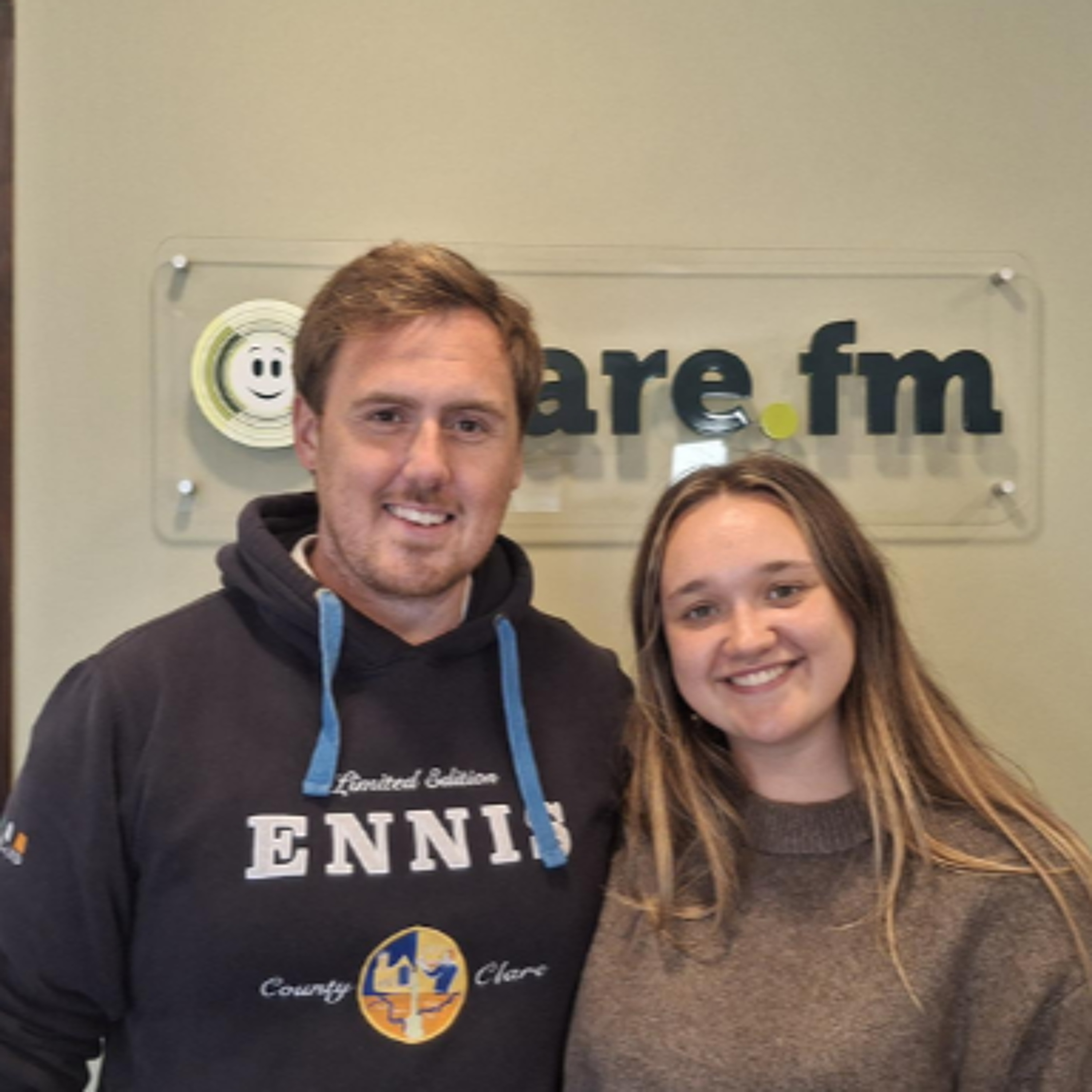
Begin with the topic of heart disease, which can happen to anyone and sometimes at an age when you least expect it. So we're focusing on heart health and the Arche Heart Fundations Love Your Heart campaign, which is encouraging people to take small steps to reduce the risk of heart disease and stroke. And joining me this morning in the studio are Ben Swini who suffered a heart attack at just 29 and subsequently required a quadruple bypass. Also, this is the Ardenkursch Fienafol counselor Rachel Hartgen, Ben's partner who's been campaigning for greater awareness of cardiovascular disease and a national strategy on heart health. You're both very welcome to the program. How are you? Thanks very much for coming in. I think people, naturally enough, Ben would be alarmed to hear that anyone who suffered a heart attack in their 20s. Can you take us back to what happened, the circumstances? And in the interest of full disclosure, I was there, but didn't realize what was going on at the time. You were there and I didn't realize myself what was going on. This was Monday, the 19th of January. I've been playing this game of Fivocide soccer,
this casual game for about four years now. It's of a very high quality, isn't it? Well, not on my side. You're the better end of it, but I'm not so great. But I turned up anyways at 6 o'clock on a Monday as usual and took off running. And about two minutes into what I realized there's something seriously around here. Now, obviously, I didn't think it's of a serious medical event, but I thought I've gotten more and fit than I'd realized or I don't know why you can't get my breath. I have a serious pain in my chest. To the point where I considered saying, I'm after getting a very important work call there, I need to go and just make some excuses and going because it was so uncomfortable. But I don't know. I just, that's something about men and the kind of reluctance to admit that there might be a weakness or some sort of held related issue. I think so. So you would rather say you received a work call. Then say, look, let's not feel in the middle. I'm not feeling I need to go. Yeah. I think so. And again, I hadn't realized, I think if I'd known that I was having a heart attack, I probably would have left probably.
But as it turns out, I was having either a heart attack right there or in the couple of hours afterwards prompted by that exercise. So I returned home, didn't say any of this to Rachel. I was still in quite a lot of discomfort. To the point that several hours later at midnight, I was in the bathroom Googling, am I having a heart attack? And when it's caught and ambled, it's really got to stand and die. Several hours later. Was there anyone I had to encounter at anyone else in this time who might have said to you, you don't seem a writer? Yeah. Well, I sound like a horrible girlfriend, but he was honestly totally fine. Like he seemed totally himself. He was a bit quieter than normal. I can't just say it's fobully. He wasn't any faster or slower than he normally was. So it was hard to tell the difference. That's because I normally quite slow. I couldn't even run for the 55 minutes. I was left to the point that one of them... I wasn't much better to be honest. One of the lines even rang me afterwards and said, like, you were right. You didn't seem yourself, you were whatever. And it's just, I was completely in denial that there could be something wrong. When he fell to school, I thought he wasn't a bad mood. So I was like, I'd have an argument with him
because I was like, why are you so quiet? Why are you so off with me? But no, that was the only way he displayed anything was wrong. He just seemed more quiet, more tired than normal. And I think it'd be fair to say that a lot of people, no matter what age you are, might be completely offay with the symptoms of a heart attack or would know, oh, I'm so from from a heart attack, least of all, when you're 29, you're... You know, you just want to know. And that's the thing, you're thinking, I'm not as fit or maybe it's January either flu or there's something around my lungs or for some reason, I'm not feeling well, but it's obviously not a heart attack. Now, for the sake of context here, since I was 21, I've known that I've had a high cholesterol and to people who would know cholesterol numbers, my LDL, which should be about three, I think, was up at 8.7 at one point. So like, half the scales, but I wasn't taking this seriously because I was 21 at the time and then, you know, as it went on, I wasn't overly compliant with my medication and I should have been better. No, that as it happens, it probably didn't help the process,
but I was still heading where I was heading at a family history of cardiac issues and board sites. And, you know, again, wasn't thinking, okay, well, if I cholesterol, I live a family history of cardiac issues, I could be having a cardiac issue here. I just passed it off. To the point that it was a week later and it still hadn't sought any medical help. And just a week after the... A week after, yeah. So I let it go on and then it kind of relaxes itself as small bits of the following day, I felt a bit better and a bit better the day after that. Just by the look of God, I had a GP's appointment scheduled for Wednesday. So nine days after the day, I had the heart attack. Just to kind of stare at the ear, help check, just make sure everything was fine for the ear. And I'd gone for a 30 minute walk that morning, which was incredibly difficult and normally isn't. To the point that I'd sit down for a couple of minutes when I came back. And I said, this is a doctor and he said, look, clearly, that's... There's something around here you need to get hospital. He sent me to NS hospital. They were going to do a stress test, but they didn't even get to that point because when they took my bloods as part of the preparation,
there was this enzyme called trapone in it. That's released. I think it's always present, but it's elevated when there's damage to the heart, such the heart attack, a tear to the wall, inflammation of the heart. If it's elevated, there's a problem. So they came back and they said, look, we suspect you've had a heart attack. And we think you have one blockage and he was showing me on the back of his hand where he told him where he had it was. And you're going to be going to Limerick. So I said, all right, that's okay. I just look at the carol side. I'll just turn it in. There's an ambulance waiting for you. You're going by ambulance to Limerick right now. And I was still in complete denial. So I rang Rachel and I said, look, there's a couple of things to not assure about. So they're going to send me to Limerick. It's not an tutorial about it. There's not an run. Keeping with the rest of the story, I was being told as little information that I was going to say. Yeah, that's a scan, scan information being passed in your direction. I was trying to gatekeeper. I was thinking, there's no way that I'm having heart attack. They're wrong. Everyone's wrong. This can't be what's happening. Sure, you're only 29. I'm only 29. That doesn't happen. Yeah. So got into Limerick and got admitted.
I was stable. You know, there was no major emergency happening. So I did what's called an echocardiogram, which is an ultrasound of your heart. And thankfully, that showed that everything was working perfectly. So whatever heart attack I'd had, was a smaller one and I can explain why in a minute. So what was left in to do was an angiogram. And that's when they went through your arm. The you squint through your groin, they went through your wrist now, and they basically inject dye into the look around your heart and see what's going on. So it was when that happened, they realized this is a lot more severe than we thought it was. To the point that the cardiologist who did the angiogram came out and said, I was almost given out to my team. There's a 29 year old. He's a clear echo. And what's he needs? He was suffering my list for the day. Like, why is he coming in? But you're not fired for fairly serious blockages. And actually to the point where I was doing the angiogram and I don't know if anyone has ever, he was listening, has done one or knows from his dormant, but you're kind of do stop kind of a painkiller which kind of puts you out a little bit. And so you watch them looking at the screen and your heart
and staring looking at different things and zooming in and oh yeah, yeah, that's there, whatever. And then he explained something to me which went over my head and the nurse who was with me, she's from Kila Loo and she was talking about, okay, that's what that means and this is what that is. She turned to me at the end, she said, did you get that? So you're going for a quadruple bypass. And I said, all right, yeah, because we kind of worked us up to the point that maybe... You're going to get a stent maybe in that he could kind of come all the day after. Yeah, so in the couple of days between going to hospital and getting the angiogram, Rachel, without telling her, had worked through the symptoms and figured out from Google I'd probably had her at a heart attack. And she'd come to the... That's a research. Yeah, she'd come to the exact same conclusion that the guy in the nurse had had, that it's, you've won territory, blocked probably in the tarish tech, whatever. So I kind of worked myself up to maybe getting a stent and then when she said, no, you're going for quadruple bypass, I said, all right, just a not a stent, no, not a stent. And will I need to take work off for the bite? You will, yeah. And I was kind of going, a week or two and she said, no, you're going to be off work for several months here. Like this is really serious. So, I mean, hearing that you're going to need a higher bypass
of any description as alarming enough, a quadruple. You know, I suppose maybe you're out of it a little bit. And hit home as hard as the chud of it. But once, you know, you became more lucid, how did that news settle with your did it at all? I mean, the enormity of, I can't believe I'm going for a quadruple bypass. Yeah, so a camping. So what happened? Rachel landed in, so Rachel was unruised to collect me because we thought we might be going home today. And I rang and said, look, won't be going home. I'd explain when you get in, but don't worry about it. So she landed in and it was when I started, like when Rachel came in, my family came in and they were getting upset and I said, oh, this is probably a bit more serious than I'm appreciating at the minute. But what they do then, I was lucky that I wasn't, you know, actively in cardiac arrest or having her actually, I didn't need surgery today. I could wait a couple of days. And what they do is they do checks for like the vein in your neck to make sure not a high risk of stroke and your lung capacity just basic checks to make sure you have a decent chance or a very good chance of surviving a surgery. And it was the following day. So the angiogram was Tuesday. It was the Wednesday that I was inside in my room.
I was all hooked up to telemetry. So we're reading all my vitals the whole time. And I heard a porter saying, oh, we're here for Ben and the nurse is saying, oh, is he going now? Is he going already? And I thought this was the ambulance, it's a Dublin and I got, that was when it, like I can't do this. I'm not ready to go. This is too serious. I can't do it. Turns out it was just one of these checks downstairs, which was great news. But it was kind of then I was like, right, this is really serious. This is going to be fairly big. And I think after that, I didn't know there were a couple of days to get used to it before. I actually went for surgery. So that was fine. I'd had the initial scare. It was a false narrative. And I timed in to kind of process it for what it was. I mean, from your side, the defense Rachel, hearing all of this and as the news develops, what do you think? I can't believe my other half has had a heart attack and be needs a quadruple hard bypass. Yeah, I think it was, there's probably no way to describe the shock of it. I think more than anything else, I'm aware of it anyway. So I naturally err on, well, what's the worst outcome
of this going to be? But even for me, I couldn't have predicted. You know, I couldn't have predicted. He's 29 years at a hair check. And not only does he need any kind of surgery, but like a quadruple bypass, like the seriousness of it. And for me, I had only ever known like grandparents and friends grandparents and literally people that had gone for that surgery. So I think it was overwhelmingly shock. And then it was just trying to make sure that he was kind of doing OK and dealing with it OK. But he, throughout the entire process, was what I would call really brave. And he just said, well, it was no bother. And he was very strong throughout the whole thing. And I think not only was he strong for me, but I think he was really strong for his entire family, which made me feel guilty sometimes, because I worried that he was too busy trying to mind everyone else that he wasn't kind of properly dealing with his own feelings about it. But it was just a case of once we knew what was happening, I think taking the day or two for me to kind of get over the shock of it. And then it was like, OK, well, it was kind of rolling into what's happening next. So we're having a couple of days of doing the checks and then we're waiting for a date for the surgery.
And then it just kind of rolled one event into the other. And then the surgery recovery bringing him back home. And you just kind of take a day by day, I think. Yeah. I guess that's the only way you can really do it. Obviously surgery was a success, but you were told you're going to have to take a good few months off work. So what was the post surgery road like? I mean, how easy or difficult was it? I think it was probably tougher than it expected. It would be because I was up to the point in straight. We'll do the surgery, fingers crossed it. I'll wake up in the first. I don't ever go from there. But when I woke up in ICU, that was a lot harder than I thought that was going to be. I hadn't quite anticipated that part of it. I'm also a spurs fan. I woke up to my brother, telling me, Thomas Frank had been sacked and taught he was joking. This man's under quadruple. Her bypass. Let's don't give him any more bad news. It was great news. I was so scared. It was great. Yeah. So it was I was three or four days in the matron house in the matron dobbin is where I got it done under Jim Macarity.
And then it was brought home. So I'd Rachel there who had moved staying to do everything. I couldn't even bend over to take a phone charger over the wall. It couldn't cook all that kind of stuff. So I'd Rachel there to help me. And that was just a lot of sitting down and watching telly and we got really into medical programs, which I thought was strange. I just one I couldn't watch enough surgery and all that kind of stuff. And but I actually went back into us a little bit three weeks later and having not learned from my initial mistake, it turns out I had developed pneumonia. And I woke up to watch the Australian Grand Prix practice two a.m. on a Friday. And over a couple of hours became increasingly difficult to breathe. And I was like, there's nothing around here. You know what I did? I'm fine. I'm just worried. Have you not learned your lesson yet? That was what I was like. I was like, okay, I get it the first time. The second time I'm lying in bed asleep. And little do I know there's someone sitting in the bed beside me who cannot breathe and is like having serious chest pain again. So about that because I was thinking, look, if this got to become a whole thing and this time I definitely don't need it.
I know I'm fine and whatever. So about half six I couldn't breathe. Had to wake Rachel up and called an ambulance. And the three ambulances came out. I think they were like, this is okay. We're taking all chances this time. And turns out it in the morning. So that was a couple of days. So that was the, I think the first time I got frustrated and this isn't going to be a straightforward as I think it is. And there's ups and downs and there's, and you know, all these challenges come along the way. And then, you know, I have three scars. I mean, I wanted down the chest, I wanted down my arm, I wanted down my leg. And the chest wound just wouldn't close. You know, I kept re-opening. And it's just a lot of kind of, and what did that like, was that actually a sore sensation? Or it wasn't or really, it was more... I think it was more the frustration of it, I think, was getting to you. Yeah, that was refusing to hear it. Why, just heal, you know, like why, why, just eager. I've been through an awful lot, right? Yeah, yeah, just let me get on with this now. But then it kind of became more the frustration of it. And it's not even that it's gotten really angry that I had a heart attack and whatever.
Because like, all things considered, I'm extremely lucky. And actually, I never got to the circulation. So I had four blackages in my heart. The reason the heart attack wasn't a lot more severe was collateral circulation, which is basically veins that had opened up around my blocked arteries, which acted as arteries. So it's kind of a stopgap that the body can do. It doesn't all this happen, but it's common enough. And that's what saved me from having a much more. So they offset the worst potential impact of... Yeah, they probably stopped me from having some sort of Christian aerics thing. I'm playing with you when I dropped, you know, they kept me going until I could see proper help. But it was... So like, the whole thing along, I've been very lucky and I got the medical attention, I've no lasting damage, but there's just frustration. And I think that's something that the Irish Harry Foundation have been very good, Pauline or Cheyenne or Crush has been very good for both myself and Rachel in talking to us about like, this is normal and emotions come up and down. And it's just... It kind of hits you every now and again that I can't believe that a heart attack.
At 29, what was I doing? You know? But it's... We're on the very side of it now. Yeah, we are. I think when he was first told, and it was a lot of the time it was just going to me and him, especially at nighttime, and I found it really, really difficult to go from... He's been in hospital for the last two over many weeks under 24 or 7 care. Like there's constantly someone monitoring him. He's hooked up to all of the telemetry. They can see all of these vitals all the time to all of a sudden. It felt like kind of like jumping off a cliff edge. All of a sudden it was just the two of us in an apartment alone and like on this... And he was almost afraid of he says he's going to go to the toilet or he's out of your sight for a few minutes. That's... I mean, I was throwing the blood pressure monitor on him every couple of minutes and everything just trying to make sure everything was okay. But I think after the first few weeks, you kind of... You set it back into normality, but like Ben said, like it still is, ups and downs. And like every so often, I'll just have an evening where I still find it really difficult to sleep because I'm listening out for his breathing and I'm just kind of trying to make sure that he's not acting abnormally in his sleep or anything. So it is still kind of ups and downs,
but definitely, definitely on the right side of it, like he said. And you are working with the R-sharp foundation on the Love Your Heart campaign, which undoubtedly would have realized it's important prior to all this, but I guess given everything that we've just heard this morning, maybe you have a new appreciation for why something like this is. So important, I mean, the figures are striking around 16 heart attacks, 20 strokes every day in this country. And 75% of people have suffered heart attacks between 2017 and 2020. Didn't know they had any risk factors, which maybe you've been to that category a bit as well, because it was only subsequently you discovered your familiar hypercholestrolemia. Yeah, so this is, that was the cause of it. And that was why the cholesterol had been so high at 21, but it was turned out just genetic 3D had left me in this position. Actually, when I was first diagnosed with the cholesterol, it was my GP said, look, you could sit in the coronary lettuce for the rest of your life, but you're going to have, you're going to lean towards high cholesterol, you know? But it is about making those changes. And while you've a predisposition to a genetic condition,
it's having the high cholesterol was what kickstabbed it for me. You know, in someone else, it could be that they did not move enough, that they have too much weight, this more of a, they drink too much alcohol, this kind of thing. And it's really about, you know, listening to your body, being aware of what's going on. And if you know you've a family history of something, like I should have had 21 gun. Well, I'm relatively fit. You know, I don't overeat excessively or I don't smoke and vape. You know, like, why do I have high cholesterol? And if I suppose I'd looked more into it, then we could have been in a position where I still would have had to be heavily medicated like I am now, but it could have prevented if I'm going in a particular direction. And I suppose it's that message to get out that don't be ignoring signs. You know, I, in hindsight, knew I was having a heart attack. I just was refusing to believe it. And while it might not be a heart attack, it's, listen to your body. And if something's wrong, don't be embarrassed to ring an ambulance, which I was twice.
Twice. And it could have been without more serious, you know. And if not for the coronaries are the collateral circulation, you know, that could have been a much more serious situation. I could have walked away from the game, but had a serious thing. And while it might not have, it could have been a fate live in, or it could have been just a heart attack that would have left a lot more damage to the heart. And so I think it's the embarrassment factor. And I think you said earlier about the main, and you know, is it, is it a, a lads thing that I don't want to cause the fuss here? And I won't go, will you show it? Like when I got pneumonia three weeks later, it was, I got to cause a whole thing now. It turns out I needed oxygen. I couldn't breathe without it. And so I did need medical help. So it's, and people will understand. I mean, in that situation, your family were rushed to help you, but even in the situation with playing football, a load of guys, if you actually tell them what the situation is, they'll only be concerned. It's just in our own heads, we think, they'll think I'm weak or whatever. Absolutely. And it's about saying it to someone, so that if something happens, someone knows what's going on. And just generally not being afraid.
Just seek help. If you call an ambulance, if you feel that it's something seriously around, if you've chest pains, you've pain down your arm, it's in your jaw, whatever, if you call an ambulance, they'll assess you there. It's not like you're going to be definitely brought to hospital. They'll be able to tell you, look, we've done a couple of checks here, and you're fine, maybe go to GP in the morning, or you're going to Limerick, or you need to seek specialist care right now, you're going to double in the car. You know, yeah. It's just about asking for that help and letting the professionals figure out what help you need. It has taken a moment as a currency in his life for a child, but Ben clearly has a huge awareness of heart health and cardiovascular disease now. And I guess part of the message from the Archheart Foundation around this campaign, you know, they're mentioned 80% of early heart disease and stroke is preventable through lifestyle changes, but I guess not enough people are aware of that. That's an important message to get out there, how they can, you know, stay on top of their heart health. It's so important. And I think one thing that I've learned and definitely want to kind of kind of go down the policy and advocacy side of things in the last couple of months, we've normalized heart attacks and cardiac events
so much in society, and it's not just here in Ireland, it's all over the world. Like you're nearly anticipating that someone of a certain age is going to have a heart attack at some point, or it's going to need something as severe as a bypass surgery, and like these are in most part, maybe not in Ben's case, because it is familial hyperglystralemia and all of these genetic things that play, but for most people, there is no need for you to ever have to have heart attack. There's no need for you to ever have to have a bypass surgery, even a stent for most people that don't have a genetic predisposition to it. You're never going to have to encounter those things if you make the proper lifestyle changes, if you get your blood checked, if you're regularly taking your blood pressure, you can go on, we have excellent, very effective preventative medications that have been around for decades. And it really is just about minding yourself, and I think being aware of, do I have risk factors? Am I getting my blood stone regularly with the GP? Am I taking my blood pressure at home, and just being aware of all those risk factors, and trying to just, it's not about scaring people either. I think it's just, we're all guilty of it. I think we all live busy lives,
everyone lives busy lives these days, and it's just about actually taking the time to be inquisitive about your own body, and your own symptoms, and your own health, and taking the precautions when you can. Yeah, important to get that message out there. We're almost out of time, but I do have to briefly ask you about your, you know, this whole experience has led you to go for the publication of a new national card. You have asked your policy and strategy. The previous one expired seven years ago. How important is it to put a new one in place and where are we at with that? Yeah, it's massively important, and I think I was surprised. Obviously, as you said, her health has always been something that I've been interested in. I've had family members affected before, but it definitely took on new meaning after going through it so personally with Ben. But we are operating in a seven year policy vacuum at the moment. It's really, really important for bodies such as the Irish Health Foundation, but also our hospitals, our consultants, our HSE, everything like that to have that strategy published. We also have the long awaited National Review of Cardiac Services that was published. They've been waiting on that for quite some time as well, but we're still waiting on the detail of the implementation plan on that.
So at the moment, it's just about advocating to our rock dis members and to the Minister for Health to try and get those things split up. Pressure on. Let's keep the pressure on you. Okay, look, we do have to live there, but really appreciate both of you coming in and Ben, thanks for sharing your story. It's an important one to get out there. People, particularly those of us who are male should keep on top of our health Ben Sweeney and Rachel Hartigan. Thank you to both of you for joining me on the show.
More episodes
More from Clare FM
Sunday Prayer - Sunday 13th September 2026
Clare FM
Sunday Prayer - Sunday 13th September 2026
Clare FM
Ennis MD To Explore Potential Sites For Dog Park In County Town
Clare FM

Clare FM Sideline View Friday September 11th
Clare FM