Loading...
About this Episode
European leaders met in Brussels late last week for a summit to tackle the sharp rise in energy prices, driven in part by ongoing instability in the Middle East.
The EU is now looking at a range of measures, including cutting electricity taxes and allowing governments more flexibility to support households and businesses.
But what will that mean for people here in Ireland—and what should our representatives be pushing for at European level?
Alan Morrissey was joined by Ireland South MEPs, Independent Michael McNamara and Fianna Fáil’s Billy Kelleher to find out.
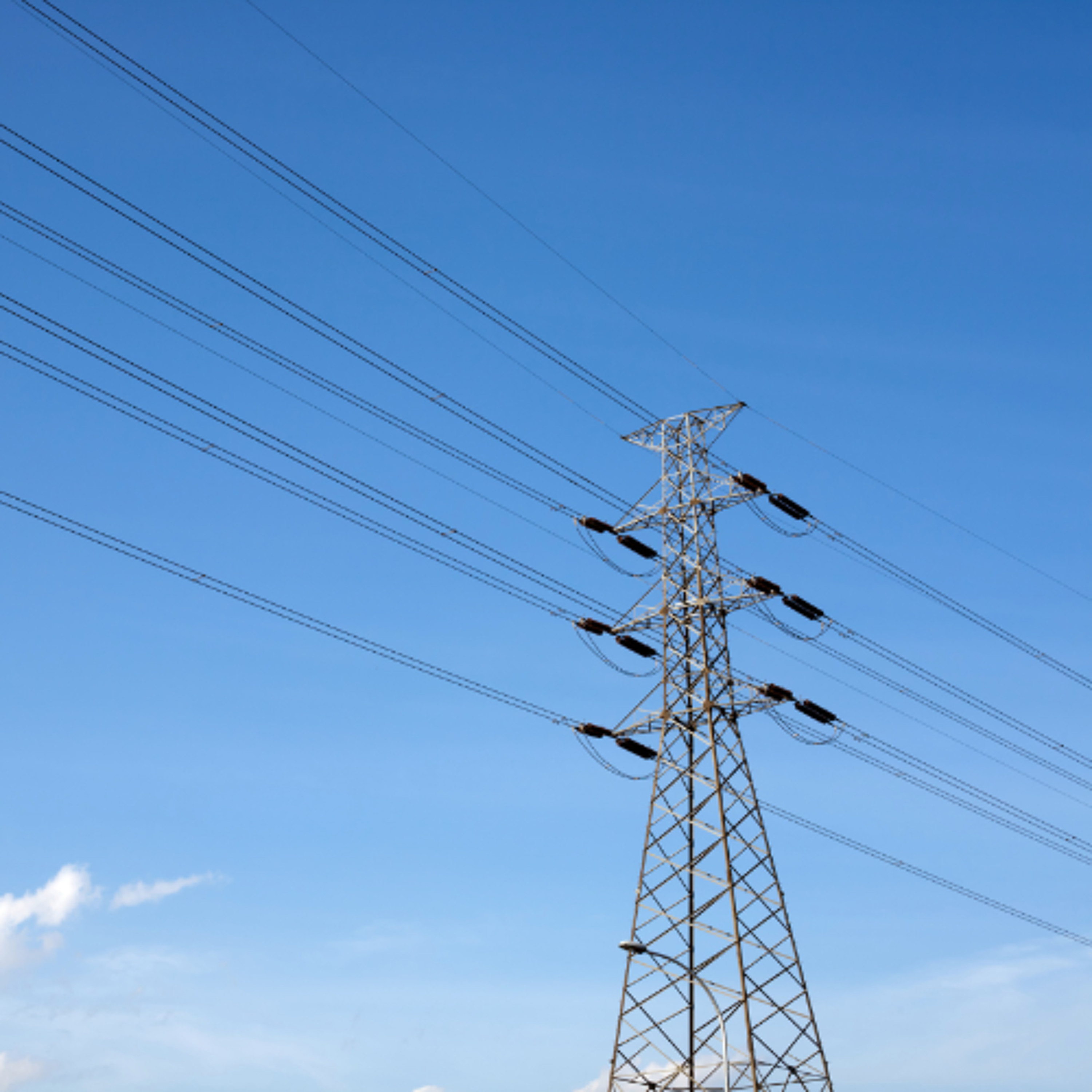
Image © Getty Images via Canva
Hosts & Guests

Transcript
European leaders met in Brussels late last week for a summit to tackle the sharp rise
in energy prices driven apart by the ongoing stability instability in the Middle East.
The EU is now looking at a range of measures including cutting electricity taxes and allowing
governments more flexibility to support households and businesses.
But what will that mean for people here in Ireland and what should our representatives
be pushing for at European level for more of this?
I'm joined by the Ireland South, MEP independent, of course from Scariff Michael McNamara.
Michael, good morning to you.
Good morning, Ireland.
Thanks very much for being with us.
So the talk of tax cuts on electricity, more state aid, people will wonder, are these
short term fixes enough?
Are we facing a longer term energy crisis?
And when they hear the Commission say measures to be temporary and targeted, people will
be thinking, how long or how little are we going to get any relief for?
You know, I mean, it's, I agree completely with you, I mean, this is not going to be a
short, unfortunately, regardless of what happens in the coming weeks, and I'm not very
optimistic, but regardless of what happens, and this crisis is going to continue for some
time.
I mean, we saw COVID measures introduced, and we were told that this was going to be a
very temporary, for a couple of weeks measure, and it dried out for a couple of years equally.
We saw custom living measures introduced.
I mean, I think the government have to acknowledge the reality that this is going to be where we're
in this for some time now, and we're going to be in it for some time.
But as regards EU measures, I mean, I'm happy with what the Commission is proposing.
I want to see it brought to a reality, but, you know, the vast majority of taxes that
are levied on fuels in Ireland are levied by the national government, and at the behest
of the national government, while EU does have minimum excise rates on both petrol and diesel,
there are only about two-thirds of the rate of the excise rate that the Irish government
choose to levied.
The EU does require that on fuel, but again, it's only about two-thirds of what the Irish
government choose to levied.
The carbon tax is a unique Irish measure.
It increased at the start of this year.
The better energy levied was increased at the start of this year.
That's a unique Irish proposal that Singapore introduced when they were in government with
the Greens.
The blended rates increased at the start of this year, which made it more expensive.
To all of these are uniquely Irish measures, and you know, it's something I raised with
Michael McGuire, recalled with him in the parliament last Strasbourg couple of weeks ago, that,
you know, when the pressure comes on locally, the tendency is of national politicians is
to show the shoulders and blame Europe, but the majority of taxes are levied by Europe.
But moreover, there are other measures that we've taken in Ireland, which is to me,
you don't make a huge amount of sense.
I mean, we have banned exploration for natural gas off the West Coast of Ireland.
We know that there are, that there was a car of gas fields for the measure, the method
in which it was done was highly controversial, but there is more gas off the West Coast
of Ireland.
And we need to start looking at that now instead of wondering where on earth are we going
to get gas from to make electricity?
I mean, people start to be in Ireland and say, oh, let's, you know, electricity, let's
move to electricity, that's a magic solution.
But not if our electricity has been generated by gas, and of course, a large part of that
gas comes from the goals from Qatar states that are along the export to that.
And so it's our journey in Michael, but can I ask you about that?
Do you think, I mean, this crisis, you know, as you've said, and I think a lot of people
agree to it, it looks like it's going to continue for some time, what we're hearing, energy
bosses saying that this conflict in the Middle East is very severe and it is going to continue
for some time.
Is this the wake up call we need here in Ireland to prioritize acceleration towards, as you
say, exploring what gas is there, renewables as well to reduce our dependence on important
fossil fuels?
Absolutely, but I mean, I think, you know, people who think that we can just put up more
windmills and natural solver problems, I think are igniting the extreme.
I mean, we do need to look at other solutions, including exploration as well as renewables,
because I mean, the risk that I see now is that we're going to just plunk in wind farms
in the very few remaining places where there's a bit of biodiversity, because the wind farm
going in near where I live, I mean, farmers can't cost Russia's because in order to protect
the hen harrier.
But I mean, quill chain ESB can put in a wind farm where the hen harriers are nesting.
And farmers are going to look up and see that.
I mean, we do need to have a bit of a reality about what we do as well, and sort of, there's
always this tendency in Ireland to historically jump at the latest proposal.
I mean, wind farms are fine, but they have to be properly situated in Ireland.
Like the planning system is not in place to determine the environmentally consequences
of where they're going.
And they are tending to be going in the two places where there's any biodiversity left.
But wind farms alone, notwithstanding all of the wind farms that we see in Ireland,
and there's a lot of them coming online now, the amount, the share of energy being produced
from wind farms is no greater than it was before, because of the increased amount of energy
we use.
No people say data centers are appalling, et cetera.
But they are part of our economy, I mean, you know, people, there will be people listening
to this program later when it's been streamed from the internet, that means it's coming
from a data center, people use, Facebook, people use, TikTok, people use, search engines,
Google all of those regularly, they're all, they all require data centers.
And we are, we are probably the biggest beneficiaries in Europe of that tech revolution because
all those companies are the vast majority of those companies that are European headquarters
here and pay taxes here.
If they leave, then we can't afford our social welfare system, so we do need to be realistic
about the energy demands of a first world economy, and I don't believe that they will
be met from windmills, essentially, don't, but I'm not, I'm not against them, we're
properly situated.
The other thing we have to look at is that in countries like Denmark, there's a community
dividend in Ireland, they supply football jerseys and other relatively nice sort of things,
but ultimately economically meaningless contributions to the local economy and there's actually
no real gain for the local economy, and there is a reduction in land values, et cetera.
We do need to look at the structure of those in firms, so the companies like Queen
U20SB can't come in and make you killing off local communities without meaningfully
contributing back in football jerseys, yeah, great, I mean, I put up a set of gold posts
in the local G8 open, then walk away and make billions in profits, I mean, that's kind
of what's happening, and we do need to look at that too in terms of how we're going to
structure energy supply in Ireland with the world.
Okay.
I want to get back to what can and should and will happen at European level, but you touched
on what our own national government could and maybe should do, and we're hearing
horse details of measures to cut the cost of fuel, they'll be agreed by me, Hallmark and
Simon Harris and independent leaders in government tonight, it's expected, there'll be a mixture
of excise cuts, extended fuel allowance payments for households, there'll be diesel rebates
for hauliers, we were joined by Eugene Drennan last week to talk about this, of course,
they held back on their protest action, and indeed hauliers, one government supports
for the industry to be capped on review, it is what's been proposed by the government's
sufficient, what do you think the government should should bring in, I mean, these excise
cuts should be, should there be longer term?
I think excise cuts and vast reduction for fuel, I mean, the cost of diesel, now even
before this happens, it's pretty unsustainable, I mean, obviously all fuel defect every household,
but if you look at who's most affected by the cost of diesel, if people are getting up
in the morning driving long distances, who use diesel as a fuel to get them to and from
work and who use diesel as a fuel to do their work, and I mean, it's very, I think, economically
damaging to, to middle Ireland that I think there's a tendency of government to kind of
look down on, I mean, I noticed when I was last in the doll, like small, representative
bodies of art and repeat, they'll open down the way it's first weren't had no access
to government, where it's big corporations, where we've been pictured marching in and out
of government buildings, and we do have to tailor our economy to suit, like the ordinary
people, the self-employed, those who are implying one or two people, and they're the ones
who are most affected by these energy jobs. I mean, the other thing that's got to be hugely
affected, of course, is first riser, is the cost of a farming generally, because farmers
use diesel and B and fertilizers, which are intrinsically linked to, to, to, to, costs
as well, I mean, of, of fuel, and they come from that part of the world, I mean, a lot
of fertilizers come from the part of the world, it's affected, a lot of fertilizers come
from Ukraine and Russia, which, obviously, that's embarrassing over the European Union.
We do need to look at this, because it's going to be a massive increase in the cost of
producing food in Ireland, this spring, I mean, I think, even in terms of those who
cut silage, et cetera, are starting to think, well, look, unless there's huge measures
taken, and we're simply not going to be able to cut silage, et cetera, who's not
supposed to be, but we're not going to do it, because we're not going to be able to afford
to do it. Of course, if there's no silage, we're not going to keep cattle to the next
winter, and let's go to have a huge impact. So this is having, this is going to be one
of the biggest shocks to the Irish economy that we've seen in decades, far greater than
COVID, and some respects, and the government are going to have to plan for the enormity
of this, and plan long term, because this isn't going to be over by, by mid-summer, in my
view, anyway. I mean, the first thing, and I appreciate, I mean, credibly, looking to
be able to do it, but the first thing that I did when I heard that they'd start to bumming
Iran was to order some fuel. I appreciate that not everybody can do that. I know I'm
very lucky, but the point I'm trying to make is that Donald Trump says nobody told
him it was going to have an impact on fuel prices. I mean, that beggars belief, I mean,
that's just a, you know, a local representative, and he's supposed to be the leader of the
free world, and he didn't guess that our graph that this is going to happen. I find
that extraordinary. That's the level of leadership we have in the world. The problems are going
to continue for some time. Just getting back to what can be done
at European level. So we've mentioned the tax cuts and electricity, more stay-date. What
else can the EU realistically do right now, outside of what we should expect from our
national government to bring down energy bills for households in Ireland? And will we
see an noticeable difference?
The big, the big, the big, other thing that can be done is breaking that link between
the cost of electricity and the cost of gas. So there's not going to have as big an
impact in Ireland as it is in other parts of Europe because so much of our, and even under
the Greens, new gas generators were imported into Ireland as a solution. So intrinsically,
the cost of making electricity in Ireland is oiling to the cost of gas. But I mean, one
thing the EU can do and is doing is going to be improving and investing and improving
into great infrastructure so that electricity can flow from parts of Europe where there
is a greater excess at any given time to parts where there's a deficit as any given time.
But that's not something that's going to take, you know, that will ultimately take a decade
or more. But it is something that needed to be done ten years ago. It wasn't so now
we suffer the consequences. We need to make sure that we're not suffering those consequences
in ten years' time. But I don't want to see those, it's money being thrown around like
you are during coal, but wherever you see that there's still tens of millions of euros
old for money that was literally just washed around the place because I just say these
corporations pay taxes in Ireland. We're a watch with money. Sometimes it seems the government
doesn't know what to do with us. It needs to be targeted. And I think the tax decreases
and long-term tax decreases on fuels are welcome and are one of the few things the government
can do and should be doing. I mean, also they need to examine this old carbon tax and
better energy and nor a tax, and they marry the taxes that they need all of them.
That doesn't seem likely. It doesn't seem like looking at the carbon tax. It was something
certainly when haulers were speaking with Daryl Bryan, it seemed like any sort of review
of the carbon tax was just off the table. No, it doesn't seem likely, but I mean, we
were told that these carbon taxes would be introduced so that the money would be there
to invest in alternatives. But I mean, if you live in Eastlayer or Westlayer or where
are the additional trains if you want to get to Dublin, I mean, you're still getting
in your car. And like, for a few years, going from a drive to the local railway station
here to get a train now, there are no more trains now than there are then despite the
increased demand. So I mean, where are these carbon taxes going? Where are the alternatives
measures? I mean, particularly now with the cost of fuel, there's a huge incentive
to get a train if there were additional trains. But I mean, like Bart Hale is a railway
station, and many listeners across the air might know where it is, but for those of us
in Eastlayer would know well from basically Scariff Downstone, Lara Bertil would be the
local railway station. It's barely served. And there's a lot of people from that area
driving up and down Dublin regularly, burning fuel at 212 a liter now. It's the until 19
to 20 a liter for diesel. I mean, people were told to be able to get trains. But where
are they? What's the government doing with these carbon taxes? Very little things, unfortunately,
the others in talking about building an underground line to Dublin airport, which is, yeah, great.
I welcome it. I mean, I questioned the cost of it. I mean, there's alternatives, true
language, and which are a fraction of that, but maybe not as glamorous. But how about
putting on just trains for people in the rest of Ireland so that they can move around?
So this, I mean, like, if you've to drive from from from player to car, they're clear
to to watch for it. I mean, that, you know, if you could get a train, it's one you would
because because of the length of time it takes and the quality of the roads, but where are
the trains? I'm not there. The easing of state aid rules, Michael, could widen gaps between
the larger and smaller countries, the richer or poorer countries, if you will. How do we
ensure a level playing field and could Irish businesses be at a disadvantage compared
to French or German companies? I don't, I mean, really see that. I mean, I don't think
Ireland is a poor country by European standards by any stretch. I mean, it is, it was certainly
when we joined the European Union, but our progress has been remarkable. I mean, I simply
don't think that that's a concern for Ireland. It might be a concern for for some other
smaller countries, maybe in the east of the block, but certainly not for Ireland.
Okay. Michael, thank you very much for being with us. That is the independent MEP for
Ireland South, Michael McNamara, and joining us now is the Fienafol Ireland South MEP
Billy Keller, who's with us as well. Billy, good morning to you and thanks very much for
joining us. So we've just been chatting with Michael about all of that. Just wonder, asking
you and indeed, I'll put it out to the listeners as well. We'd love to get your thoughts on this
and what Michael had to say, oh, 818, 40964 to call us, no, 868, 18964 is our text and WhatsApp
number. Michael was putting the onus really on national governments. We've heard that
the details of the measures to cut the cost of fuel will be agreed tonight by the T-Shock
that honest and the in leaders of the independence. What do you make of what you're seeing? And is
it enough? Well, look, I mean, obviously, they're going to have the targets and energy supports
and the cost of energy is going to continue to escalate if this crisis in the Middle East
continues to unfold. You know, we've really seen an escalation of last number of days, not only
the rhetoric, but in terms of actual exchange of missiles and drones across the Middle East.
So this really is putting huge pressure on infrastructure and then, ultimately, on the
cost of energy, both of the pump, but in terms of generation as well. So, I mean, national
governments will have to address this issue in terms of targeted measures, targeted supports
for families. And in terms of what you're hearing about those targeted supports, it
sounds like the measures that are going to be announced will contain a mix of excise cuts,
extended fuel allowance payments for households. There'll be diesel rebates for hauliers and
we heard from hauliers last week. They want to see any supports kept under review and to be
more long term. Is that sufficient in your view? Well, look, I mean, it's a start because
I mean, this is this situation is continually unfolding. We don't know how long these particular
crisis will last, how long it will have an impact on, you know, the cost of fuel and the cost
of energy in general. So, I mean, it is a start between a half weeks into the war. You know,
this is unfolding. So I do welcome the potential announcement and I look forward to tomorrow.
It needs to be targeted. It needs to be measured. It needs to, you know, go to those that are
most vulnerable and also to the areas of the economy that are critically important.
Hmm. Can I possibly do that? You know, coach, should the time frame be more open ended?
Because we don't know how long this conflict is going to go on for, but it does seem like it's
going to continue for some time. Should these measures be brought in and last as long as this crisis
lasts? Well, we don't know how long the crisis will last, but I mean, I think it's clear that the
government has reacted to a situation with regard to the cost of energy and the cost of fuel.
We welcome that, but I mean, we also have to try and ensure that, you know, at some stage,
we have to get to a dialogue whereby energy is not used to put pressure on the entire world
economy and, you know, the United States and the Israel and Iran, the trade protagonist in this,
you know, we have to get to a stage where the entire population of the world is not being
held to random with the cost of energy and now energy being used as the key
bargaining chip between the United States, Israel and Iran, you know, tricks to destroy Iranian
energy retaliatory strikes on Gulf states and states, you know, oil infrastructure and gas infrastructure
just will clearly have a potentially detrimental effect on the global economy and those that are
heart-moving are the ones that, you know, are least likely to carry that cost.
The European Commission is saying the measures it's likely to bring in tax cuts and electricity
more state aid and so on are going to be temporary and targeted.
Again, should the time frame in those be more open-ended because we don't know how long
this conflict's going to last and is what's been announced at European level sufficient as well?
I mean, will it make much of a difference to Irish consumers and our energy bills?
Well, look, ultimately from the European perspective, I mean, we have to ensure that we've
said sufficient supply. That's a critically important component in all of this, that the
European Union has the capacity to, you know, keep itself supplied with energy and fuel. That's
the first step. The second step then is to see where they can, you know, maybe address some of
the policies that are in place, which regard to, you know, emissions trading schemes, sea bams and
other areas that we have been using to good effect to win ourselves off, you know, fossil fuels
and whether or not there are no impediment at the moment. All these things are continuing on the
review and, you know, it is a completely, you know, uncertain period of time we're in. So I think
what's happening is national governments have to address these. You immediately would regard to
tax cuts, excise cuts, etc. on fuel and energy and then the European Union has to look at it in
the context of, you know, what areas they're causing difficulties in, which regard to additional
costs. But most importantly, we need to guarantee that we've sufficient supply of fuel and energy
in general across the European Union. And that could be a significant challenge. This drags out
much longer. And what will you be fighting for in Brussels over the coming weeks to ensure the
people of Ireland are as protective as possible from rising energy costs? Well, if there's absolute
flexibility with regard to M state aid, for example, that in the event of there being key areas
of an economy that are under huge pressure, that's, you know, we can act swiftly to address those
particular issues that we were one of the major concerns that we don't, that we have, you know,
enough flexibility to respond quickly. So I welcome those announcements from the commission.
We have to continually look at areas of European policy that that may be impacting on the cost of,
you know, fuel initially, also the issue of fertilizer, fertilizer is a significant issue here as well.
You know, the price goes up. Well, then that means a knock on effect in the cost of food
to families as well. So it's just not fuel directly. It is also the secondary cost that will
be encorred by citizens, which increase fertilizer costs, increase food costs. And that's spiraling
inflationary cycle where you've got a potentially interest rate rises again into the future. So
look, there's a lot of uncertainty out there. There's a lot of anxiety out there. But most
importantly, governments and the European Union have to do two things, addresses in a targeted
manner. And also make sure that we've sufficient energy for the future. Okay, we do have to leave
it there. Thanks to the Finafall, Ireland South, MEP, Billy Keller for being with us.
Whatever measures are brought in by the government or GD European level. And I'm
trying to ask and believe about it there. At the time frame, you know, the European
Commission saying to be temporary and targeted, how long or how short a time period is temporary,
and whatever's announced by the government, should that be more open end in terms of the time frame?
It's no point in having cuts to excise, Judy, and all this kind of stuff if it's only going to last
for a month and the conflict's going to last until the end of the year or longer.