About this episode
Isaiah 49: 8-15;
John 5: 17-30;
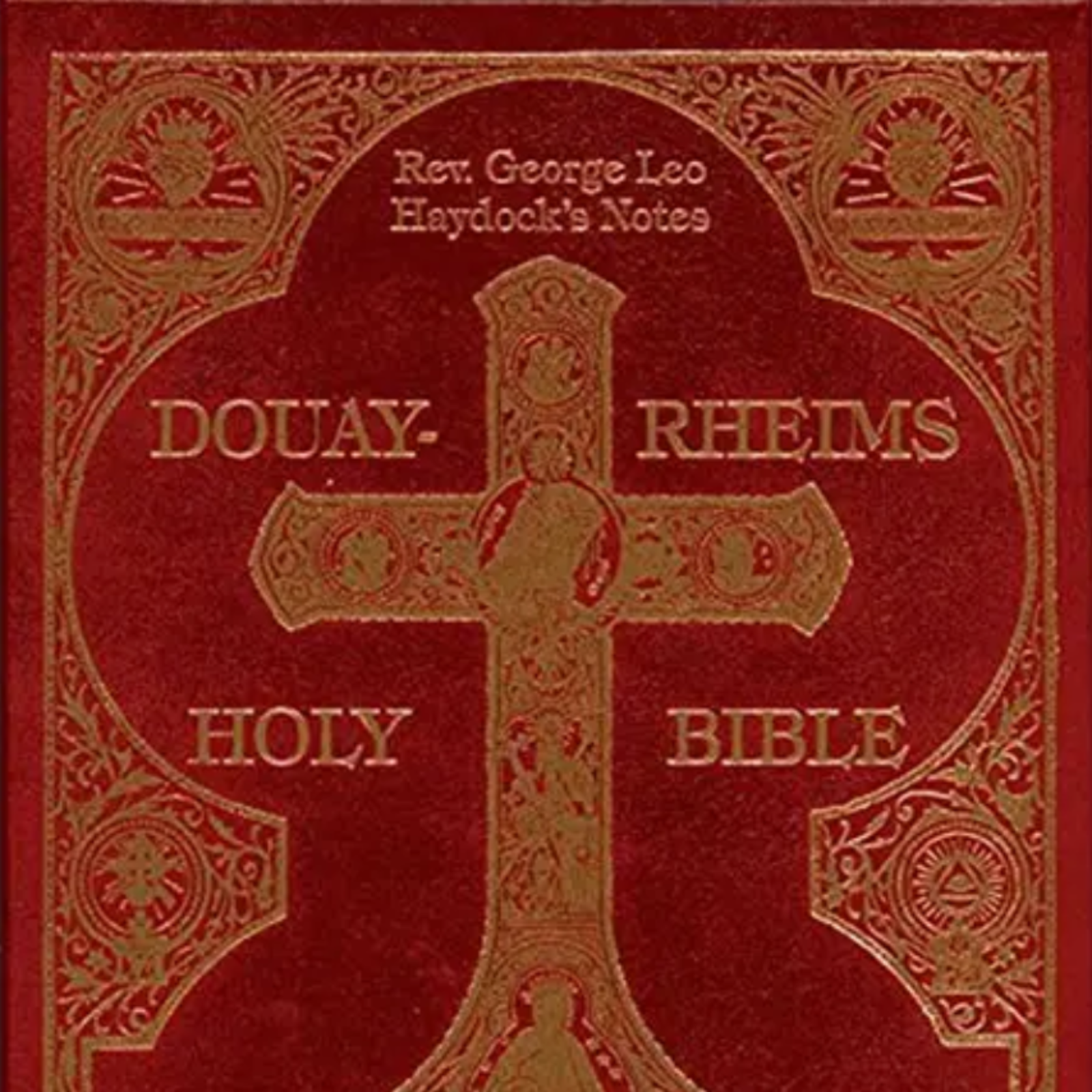
Haydock Commentary
Please consider donating to help keep this podcast going by going to buymeacoffee.com/catholicdailybrief Also, if you enjoy these episodes, please give a five star rating and share the podcast with your friends and family
Get every episode summarized
Each time Catholic Daily Brief publishes, we email you a written briefing from the transcript — the topics, who appeared, and any specific claims, with the ad reads skipped.
Email me new episodesFree for 3 shows. No card needed.
Hosts & guests



Transcript ready
105 searchable segments. Every word is indexed and playable.
Full transcript
Catholic Daily Brief — Commentary on the Mass Readings: Wed, Mar 18. Machine-transcribed; use the interactive transcript above to jump the player to any line.
When's day March 18th? The first reading from Isaiah chapter 49 verses 8-15. Thus says the Lord, In a time of favor I answer you, on the day of salvation I help you, and I have kept you and given you as a covenant to the people, to restore the land and a lot the desolate heritages, saying to the prisoners, come out, to those in darkness show yourselves. Along the ways they shall find pasture, on every bare height shall their pastures be. They shall not hunger or thirst, nor shall the scorching wind or the sun strike them. For he who pities them leads them and guides them beside the springs of water. I will cut a road through all my mountains and make my highways level. See, some shall come from afar, others from the north and the west, and some from the land of Sain. Sing out, O heavens, and rejoice, O earth, break forth into song, you mountains,
for the Lord comforts his people and shows mercy to his afflicted. But Zion said, the Lord has forsaken me, my Lord has forgotten me. Can a mother forget her infant be without tenderness for the child of her womb? Even should she forget, I will never forget you. The Gospel from John chapter 5 verses 17-30 Jesus answered the Jews, my father is at work until now, so I am at work. For this reason they tried all the more to kill him, because he not only broke the Sabbath, but he also called God his own father, making himself equal to God. Jesus answered and said to them, Amen, amen, I say to you, the son cannot do anything on his own, but only what he sees the father doing, for what he does, the son will do also. For the father loves the son and shows him everything that he himself does, and he will show him greater works than these, so that you may be amazed.
For just as the father raises the dead and gives life, so also does the son give life to whomever he wishes, nor does the father judge anyone, but he has given all judgment to the son, so that all may honor the son just as they honor the father. Whoever does not honor the son does not honor the father who sent him. Amen, amen, I say to you, whoever hears my word and believes in the one who sent me, has eternal life, and will not come to condemnation, but has passed from death to life. Amen, amen, I say to you, the hour is coming and is now here, when the dead will hear the voice of the Son of God, and those who hear will live. For just as the father has life in himself, so also he gave to the son the possession of life in himself, and he gave him power to exercise judgment, because he is the son of man. Do not be amazed at this, because the hour is coming in which all who are in the tombs will hear his voice and will come out, those who have done good deeds to the resurrection of life, but those who have done wicked deeds to the resurrection of condemnation.
I cannot do anything on my own, I judge as I hear, and my judgment is just, because I do not seek my own will, but the will of the one who sent me. Haydha Commentary My father worketh until now, and I work. The Jews looked upon it of obligation to do nothing on the Sabbath, because God is said to have rested on the seventh day, on which account the rest on the seventh day was commanded. Christ puts them in mind that, though it be said he rested on the seventh day, that is, produced no more new kinds of creatures, yet God may be said to work always by preserving and continually governing the world. And I, says he, do all the things that he does, I work with him, being one in the same nature and substance with him. Nay, even as man, I do nothing but what is conformable to his will, and so you need not fear that I break the Sabbath. If Christ had not been the natural son of God, these words which he says an excuse of his seeming breach of the Sabbath would rather have increased the strength of their accusation.
For no governor, when accused of any crime, excuses himself by saying the king does the same. But as the sun is equal to the father, his excuse is a true one, so says St. John Chrysostom. The rest that God entered into after the creation, and which he was pleased to honor by the day of the Sabbath, is no hindrance to the operations of his power in the preservation of his works, nor to the operations of his grace in the sanctification of souls. In many places in the Old Testament, God is called the Father of the Israelites, and they his children. But here, and on several other occasions, the Jews very well saw that Christ called God his Father in a quite different sense from that in which he could be said to be their Father, that his words made him equal to God, and that he made himself God. And therefore St. Augustine says on this verse, Behold the Jews understand what the Aryan heretics do not. The sun cannot do anything of himself, but what he see if the Father do. In like manner, Christ says, I can do nothing of myself, as I hear, so I judge.
And again, I do nothing of myself, but as the Father had taught me, I speak these things. All these and the like expressions may be expounded of Christ as man, but the ancient Father's commonly allowed them to be understood of Christ as God, and as the true Son of God proceeding from him from all eternity. As when it is said, the sun cannot do anything of himself, it is true because the eternal sun is not of himself, but always proceeds from the Father. And because the works of all the three persons, by which all things are produced and preserved, are inseparable. And when it is said that the sun does nothing but what he sees the Father doing, that he hears as the Father has taught him, these expressions bear not the same sense as when they are applied to men, or to an inferior or a scholar who learns of his master and follows him. But here says Saint Augustine, to see, to hear, and to be taught by the Father, is no more than to proceed from him, to do and produce by the same action, all that the Father does and produces. This is the general interpretation of the ancient Father's, Saint Athanasius, Saint Basil, Saint Gregory Nazienzin, Saint John Chrysostom,
Saint Cyril, Saint Ambrose, and Saint Augustine. The words immediately following confirm this exposition, when it is said, for what things so ever the Father does, these also in the like manner the sun does, that is, the very same things by a unity of nature, of will and of action. Nor could these words be true unless the sun was the same true God with the Father. When we say that God cannot sin, we do not estimate a want of power. So when the sun says he cannot do anything of himself, his meaning is that he cannot do anything contrary to the will of the Father, which certainly is a great perfection. So says Saint John Chrysostom. As the Father gives life, so also the sun gives life to whom he will. These words show the power of the Son and the Father to be equal. Our Savior here mentions the greater works he spoke of in the preceding verse, for it is much more wonderful that the dead should rise than that the sick should recover their health. We are not to understand these words as if they meant some were raised to life by the Father and others by the Son, but that the Father raises those whom the Son raises. If man labors with so much solicitude, if they strain every nerve
to prolong their life but for a few years, how foolish and blind to their interest must those be, who live in such a manner as to be deprived of the light of eternal day? So says Saint Augustin. Neither does the Father judge any man. It is certain that God is the judge of all by diverse places of the Holy Scriptures, and to judge belongs both to the Father and to the Son as they are the same God. So that when it is added, the Father has given all judgment to the Son. This is meant of the exterior exercise of his judgment upon all mankind at the end of the world. In as much as Christ then will return in his human body to judge all men. The hour comeeth when the dead shall hear the voice of the Son of God. Though some understand this of the raising of Lazarus and others of those that rose with Christ at his resurrection, yet these words when the dead shall hear the voice of the Son of God seems rather to be signified the general resurrection at the end of the world. And though it be said that now is the hour, this may be spoken of the last age of the world. And as Saint John says, it is the last hour.
Some interpreters understand these words of a spiritual resurrection from sin, which Christ came to bring to the world. So that when the dead shall hear the voice of the Son of God, the Father shall be the same God. So that when the dead shall hear the voice of the Son of God, the Father shall
More episodes
More from Catholic Daily Brief

1962 Missal - Commentary on the Mass Readings: Sat, Aug 22 (Immaculate Heart of...
Catholic Daily Brief

Commentary on the Mass Readings: Sat, Aug 22 (Queenship of the Blessed Virgin Ma...
Catholic Daily Brief

Commentary on the Mass Readings: Fri, Aug 21 (Pope St. Pius X)
Catholic Daily Brief

1962 Missal - Commentary on the Mass Readings: Fri, Aug 21 (St. Jane Frances de...
Catholic Daily Brief