Loading...
businessinvestingeducation
Could It Now Be Easier for Organic Crops to Contribute to Your Profitability?
About this Episode
Organic farming isn’t the hard part.
The paperwork is.
Visit quickorganics.com to learn more!
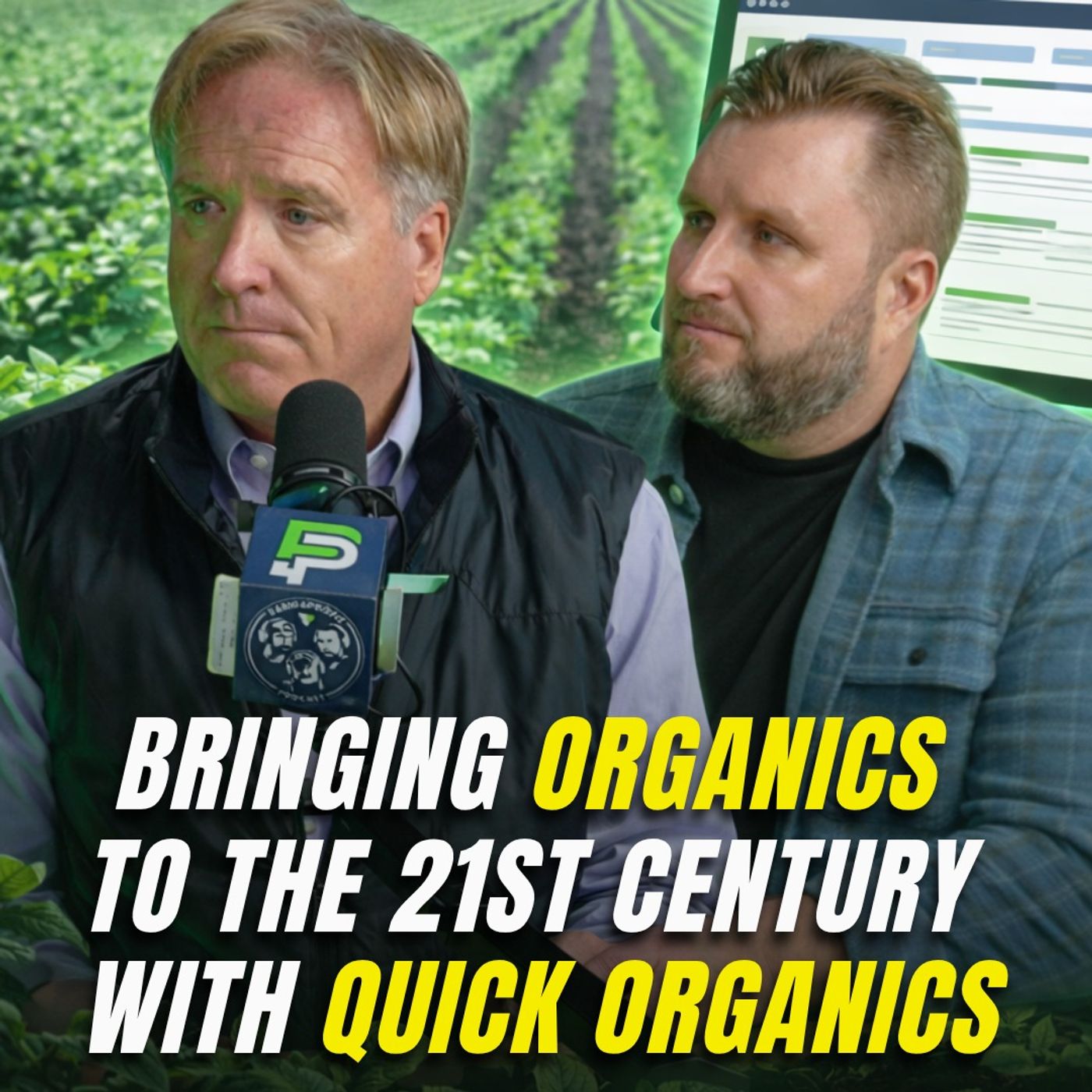
In this episode of the Farm4Profit Podcast, we sit down with the team behind Quick Organics — a platform built by farmers who experienced firsthand just how complicated organic certification can be.
After developing one of the most organized farm systems inspectors had ever seen, they realized something:
the problem wasn’t the farmers — it was the system.
So they built a better one.
We dive into:
• Why organic certification feels overwhelming (even for experienced farmers)
• The real problem with Organic System Plans (OSPs)
• Why the current system is compared to “every CPA having different tax forms”
• How farmers are wasting time on unnecessary documentation
• The biggest mistakes ag software companies make (and why farmers stop using them)
• What makes technology actually stick on the farm
• How Quick Organics simplifies year-round certification tracking
• Why traceability and digital records will matter even more in the future
We also explore how simplifying certification doesn’t just save time — it creates better decision-making, stronger records, and long-term farm value.
Because at the end of the day, farmers don’t want to be data entry clerks.
They want to farm.
And the operations that win in the future will be the ones that can prove what they’re doing — without drowning in paperwork.
Want Farm4Profit Merch? Custom order your favorite items today!
https://farmfocused.com/farm-4profit/
Don’t forget to like the podcast on all platforms and leave a review where ever you listen!
Website: www.Farm4Profit.com
Shareable episode link: https://intro-to-farm4profit.simplecast.com
Email address: [email protected]
Call/Text: 515.207.9640
Subscribe to YouTube: https://www.youtube.com/channel/UCSR8c1BrCjNDDI_Acku5Xqw
Follow us on TikTok: https://www.tiktok.com/@farm4profitllc
Connect with us on Facebook: https://www.facebook.com/Farm4ProfitLLC/
Hosted by Simplecast, an AdsWizz company. See pcm.adswizz.com for information about our collection and use of personal data for advertising.
Transcript
How can we lower input costs?
Like my dad would go to his whole group and just say, we buy this seen bulk, we can lower
that input cost, right?
Or, you know what, we found that we increase yield based on XYZ and we share that information
with each other.
So that's the why behind Quick Organics is the excitement of really empowering those
farmers to stay on their land, not want to leave like Oracle came out today that the
next generation of kids just don't want to be farming, right?
And I get it.
Yeah.
When you watch your parents struggle so long.
So we're doing this in organic right now, but I think there's opportunities just in farming
in general when we share knowledge base with each other.
Ladies and gentlemen, farmers, ranchers and distinguished guests, thank you for listening
to the Farm for Profit Podcast where we discuss the latest ideas, methods, trends and techniques
available to help your farm achieve higher levels of farm profitability.
Remember, if you aren't farming for profit, you won't be farming for long.
This time for the Farm for Profit Podcast, this is Tanner, this is Cory, what is studio?
This is weird.
I haven't met in the studio for a while.
It's a beautiful day to be in this studio.
It is.
Maybe too beautiful.
It's literally a, it's a beautiful early fall day.
It feels like in mid-February.
Yep.
Absolutely.
Well, thank you listeners for giving us the opportunity to be in studio for giving us topics
like this to talk about.
Send those to connectatfarmforprofit.com.
You can always text us or give us a voicemail 5152079640.
We just got a voicemail this afternoon, didn't we?
Yeah.
Well, actually, your phone was ringing quite a bit, so which one are you referring to?
We had one that was looking for millennial farmer.
Yeah.
That was funny.
Yeah, a lot of people just call us because they see that we hang out with Zach and go,
hey, could you give us his number?
We don't do that.
Sorry.
Yeah.
You can keep trying, but make sure when you do that, you head out and hit subscribe
on our YouTube channel as well.
So that way you see our content in between your favorite videos of his.
We've got a lot of topics this year in 2026 focused on how we can help our listeners find
different types of profitability, whether that's different seat varieties, text credits,
the opportunity to do some different business planning all the way down to maybe we should
try farm and organically.
Yeah.
That's several of our listeners, several friends, even one of our friends at performance
livestock analytics that you would have never guessed that they were organic and they
are.
And the fun part about where we think this show is going to go is if you are just curious,
you're going to learn something, maybe some quick, easy steps that you can start progressing
towards that transition over to organic.
But if you are an existing organic producer, this could knock your socks right off.
Maybe.
Maybe.
No, we've got to find out what's fine, sock knockoffable or not all the way to the farm
for profit studios.
Happy to have both Greg and Frankie here from quick organics.
Thank you guys.
Welcome.
Thank you for having us.
So we got to get a little background and before we dive into this too much, you guys
flew in to Des Moines just for this.
Where'd you fly in from?
I flew in from Fort Collins, Colorado and very easy to get here and it was a great drive
up.
Yeah.
From Fort Myers, Florida.
Okay.
So you guys kind of meet in the middle here.
You're both coming from different forts.
Yeah.
That's right.
Did you see the new wing getting built down there at the Des Moines Airport?
I did not.
Yeah.
When you go back through it, you'll see it.
It's a, I don't know when that's going to be done and I don't know what that's really
going to gain us, but they are expanding.
Good.
I just don't want to make it so I have to go to the airport any earlier than we already
have to.
We got a pretty good gig in Des Moines.
The only need, especially if you're TSA pre-check, you can kind of sail right through.
Yeah.
Pretty much.
Good to know for tomorrow.
Yes.
It was easy to get through.
Very easy.
Yes.
Yeah.
So first, let's start off.
We love going into the backgrounds.
Greg, we're going to start with you and tell us a little bit about, little Greg, what it
was like growing up as a kid.
Great question.
Did not have grow up on a farm, but had a farm three, four miles away.
I grew up in Illinois, a farm country, northern Illinois, rode my bike every day to work with
a farmer and actually ended up loving it and wanted to be a farmer all my life.
Out of college, though, I ended up heading towards landscape maintenance, construction
and snow removal.
So that was kind of my forte end of business, where was college?
College was an honest state university in Minnesota.
Okay.
But I think for me, always wanted to be a farmer.
I kind of had to feel all my life that it was an urban farmer since I was making landscapes
beautiful.
But it ended up doing a couple of exits, started a couple of companies and accident and was
able to afford to stir farming.
And ended up in Fort Collins, Colorado, there was organic farm for sale around 1100 acres
and not knowing what I didn't know.
I was always with conventional farmers and started seeing some of the pricing that we could
get for organic farming and that it was already organic.
So I think it was just an amazing opportunity that I looked back on that I fell into and
glad that I had the money to purchase those farms and then we grew from there.
So I feel like a very blessed life and things have gone well.
I've got four great kids and they're all doing well.
So it was a great, great, great start to become a farmer and then we can talk more about
that.
Yeah, I do want to get back into that here in a little bit, but let's meet Frankie first.
What about little Frankie?
So growing up in a family of entrepreneurs, that was the only thing I ever wanted to be.
So now wait a minute, growing up in a family and you pointed to Greg.
So we have to get that off our listeners.
Well, you had to picked up on that before, but yeah, we had to get that out.
Yeah, absolutely.
And so it was interesting when he came and told my sisters and I that he wanted to be a farmer
and he wanted to be ever since he was a kid.
We didn't know that.
He never shared that with us and that was probably 15 years ago now, but it was kind of surprising.
So for me, growing up in a family of entrepreneurs, I just always want to be an entrepreneur.
And I've been through different businesses and construction, healthcare, service based
industries.
And it was in 2019 that he and I were driving on the fields, just looking at corn because
that's what you do.
And you just appreciate how beautiful it is, right?
And he said, you know, I love this organic thing.
And to be clear, for our family, the organic farm, it just penciled better in Colorado at
that time, right?
And because you were in a demanding organic food at the Garfer store, exactly.
Yeah, no.
And just the investment pencil better.
And I do have to say though, before that time, I never really thought about where food
came from.
And you know, just it was at a restaurant, it was at the grocery store and there's where
it was.
And, you know, fast forward a couple years into witnessing my dad farming, it really opened
my eyes to what it means to provide, you know, food for the human population.
It's a really big deal.
And it's a, it's a business model that's really challenging.
So anyway, in 2019, he just said, Hey, you know, I love this organic thing.
It's so great.
But man, the certification is really hard.
And so that's kind of where quick organics originated from was that conversation.
Okay.
So let's, let's drive right into it there.
What is the certification process, the timing and all that?
How do you become organic as a conventional farm?
Yeah.
So there's 74 certified bodies in your organic world, 70's lord.
Yeah.
Is that like one for each crop or no, it's actually each individual certified body can
certify an organic row crop, livestock, dairy and then handling, which is your food grade
stuff.
But I would say that was concerning for us, right, 74 different ways, because there's
not one organic system plan, which we'll get into in a little bit here.
But, but as far as becoming an organic farmer from a conventional farmer, I've got some
ideas for your listeners, but basically, you've got to get with a certified body.
And then from there, you have to learn their paperwork.
And that's where the, where it gets tough, right?
And then it also takes three years to transition to a piece of land.
So the, the last prohibitive substance, whatever that date is that was put on that land, that's
where the clock starts taking.
So to your question, it's, it's a long process.
And during that process, you've got increased costs, you know, due to just different inputs,
different ways of being able to fund that land.
So it, it's a, it's kind of a daunting thing when you think about transitioning, but
you transition and how many acres?
Well, the good thing is 800 acres were already organic.
So that's really nice to have the base, but we can go into this a little bit later if
you want, but there are ways to get this third crop organic, which is kind of nice.
It's only two year transitions.
So yeah, it's going to say something.
I think one of our listeners wrote in that it's three calendar years, but it can be down
to two crop years.
If like you said, that last date of substance, whatever you want, because our substances
would be herbicides, insecticides, commercial fertilizers, maybe like a GMO seed, things
of that nature.
But it's a little like the only things, right?
Yeah, I think it's really about the weak control, you know, and maybe the synthetic fertilizer,
but you actually put that on the spring.
So we want to make sure that fall was your last application to get to that two year.
So yeah.
And you're, you know, two years ago, your last probably thing would have been the herbicide,
right?
Your post pass or potentially maybe use spray to fund your side, but obviously that's before
harvest.
But if you did in September, October, if that third crop off in October, it works out
really well.
So we've got some things that we can talk to you about today that might entice them,
and there's some reasons why conventional farmers should think about it.
Yeah.
So you've got on the farm, and what do you say 2019?
No, it was 20.
It was 2010 that we started farming.
Frankie was talking more about when we started thinking about this quicker gains in their
airports.
And so, but we had the original 800 acres, and then we seemed to, we grew from about 800
to 1000 in that first purchase to 2100 acres over the 10 year period.
And we had some creative ways to buy those farms along with pay for some of those farms.
Ultimately, getting to that third year being on a sell at crop, but it was nice having
the 8 to 1000 acres of organic farm ground first.
So yeah, because that's to be able to have a base and then transition into it's got to
be helpful.
But what kind of crops are you growing?
Yeah.
So that's the cool thing about conventional organic is corn.
Now out there, we couldn't do soybeans, but we did pino beans and wheat.
So we had a three year rotation, so it's pretty comparable to a conventional farmer.
I was expecting you to say, we've got organic cucumbers, and we've got lettuce, and that's
where my mind goes.
I understand there's organic corn.
I just didn't expect it mainly real crop farming that you're doing.
Now, now that's what we did.
So there are many big companies in California, California, do investable.
Absolutely.
You could do cucumbers.
A very similar path, right?
It's the three year calendar years and the 74 bodies.
I'm wondering, like, what were the pain points?
I mean, it didn't happen right away, 2010 to 2019.
Yeah.
You had 10 years of headaches you dealt with.
Yeah.
What is that?
What finally drove you to starting this company?
Well, why don't you tell a story when we were out of there?
I mean, it was a frustrating day, and Frankie mentioned, why don't we create a weapon?
I think, actually, it was his comment was, you know, I love growing organically.
Like, I love what we're doing, but the certification stresses me out.
And every year we get audited, and that inspector comes, and I'm nervous that I've got things
right.
He's like, why isn't there a turbo tax for this process?
I said, well, there's got to be.
We just never looked for one.
So that's where I, in early 2020, went and started, kind of, like, searching around
and saying, like, where's the software platform for the farmer?
And there wasn't one.
And it led me to a conversation with the head of the National Organic Program, Dr. Jennifer
Tucker.
And I just asked her, I said, hey, is there anyone supporting farmers, you know, with this
process?
And she said, there's not a software platform.
So that's where, you know, like one of the things, not being generational family farmers,
we brought some business acumen into farming and, you know, nothing big.
It's just some spreadsheets, leading and lagging indicators, things like that, business intelligence.
And so we used that within our, our farm.
And so we said, well, you know, if we just put like a little user interface over a spreadsheet,
would a farmer like that?
And that's kind of where we started with Kirk Organics.
Another thing that we had in our community, which is really cool, is that, you know, my
dad went out and he developed relationships with local farmers in the community and said,
hey, I don't know what I'm doing.
Would you help me out?
And if you help me out, like, I'm really good at selling things.
So he could get contracts that he could never fill.
But he could go to a farmer and say, listen, I got, what are you growing?
We can fulfill that, right?
And so we started this little, it's not technically a co-op.
But what we started doing is information sharing, right?
And all of a sudden, everyone's bottom line profitability started to creep up, right?
And that was the thing that got me really excited was, like, once I understood how important
farming is in general, it doesn't matter if it's conventional or organic, feeding humans
is a really big deal and a business model where I got to go borrow money and hope that
I get a crop that can pay that loan back so I can borrow it again.
That has really stressful and it's really challenging.
So if we can figure out how to, like, when I saw, you know, some of the stress that
was happening with my dad, I started research a little bit of like, what's going on in
the farming population, right?
And the stress that is on families, I mean, 75% of all US farming families have two to
three sources of income outside of farming just to make ends meet, it just doesn't work,
right?
It's broken.
So for us, this business, the real reason why is because we believe that we can increase
bottom line profitability for farmers based on data insights around like, hey, how can
we lower input costs?
Like my dad would go to his whole group and just say, we buy this scene bulk, we can lower
that input cost, right?
Or he knows we found that we increase yield based on XYZ and we share that information
with each other.
So that's the why behind quick organics is the excitement of really empowering those
farmers to stay on their land, not want to leave like Oracle came out today that the
next generation of kids just don't want to be farming, right?
And I get it.
When you watch your parents struggle so long, so we're doing this in organic right now,
but I think there's opportunities just in farming in general when we share knowledge
base with each other.
I would piggyback on there's a generation that doesn't want to come back because they've
seen them struggle.
And then there's a generation that does want to come back, but there's no room on the
farm for them because of like you said earlier, they all have to have off farm jobs, three
jobs in town.
So we're looking for profitability and sometimes it's not there in conventional and this could
potentially be a way to do that.
So I understand the stress is there in agriculture.
We have mental health episodes to focus on that.
It's real in everyday life, but explain more what this certification process is, what
these inspections are.
Okay, we've got the acres transitioned in organic.
Why is it so stressful in season?
Why are you getting audited?
Is it a mandatory audit every year?
Yes.
Yeah.
So that's an audit no matter what.
Frankie could go from the technical side, but as a farmer, if you're asking as a farmer,
see start out with what they call an organic system plan.
And it really maps everything you're going to do for the whole year on every field.
So in one way, that's a good thing, right?
Probably all conventional farmers should, I mean, they all do it anyway.
A lot of our listeners do, right?
Right.
So this hybrid on this field, we've already got this many units of nitrogen out there.
We're going to side dress.
Corey's got that plan.
It's maybe in a pocketbook in his pocket.
He's got that plan.
Well, and I think that right there, the organic system does do a good job, right?
So that is in February.
That's in January.
That's in March.
But once you go from that, each module, so let's say there's 12 modules, so it can be
anywhere from your parcels, right?
And you've got to have the 60-foot barrier for no drift to the seed you're going to use.
You have to bring back every label off the bag.
So in organic, we usually use bags.
We don't have the big tubs like you guys have, but bottom line is you've got to bring that
back to the office.
So it seems like everything you do every day.
So if I plant, I got to put the date, the field, what I used.
So that is one thing that has to get back to the office, right?
So if you're planting all day, you want to go back and start putting in all that data.
So I would also say a great office administrator is really needed in organics.
But as you go down through the year, everything you do, if you wash a tractor, you've got
to throw the label on for Don Soap or whatever it might be, right?
So that you're keeping track of everything you're doing.
So at that point then, and you can take over from there, the certifier gets involved.
And what they call a...
Yeah, so essentially the organic system plan is like your budget for the year, right?
And then you got to go through and provide actuals.
And then when inspection comes, you got to show the budget to the actual.
And do we document everything?
Can we show?
So a good example of, like, see tags are way tickets.
They sit in the dashboard of the truck.
You start driving down the road and they fly out the window and you forget it just well
in organic.
If we don't have that information, all of a sudden we could lose our certification.
So you've got all this land that you're in inspection.
And if you don't have the documentation to prove that you did what you said he did,
all of a sudden they could take that from you and then you lose that premium, right?
So that's where this idea of quicker gas came from.
Why can't we just take a picture of the phone?
I mean, we were doing that in 2010, just taking pictures of the phone.
But then all of a sudden it's living in someone's photo app and like this idea of a one
stop shop for everything that you need to prove that you did what you did and not take time,
right?
Like the one thing that in agriculture, everyone is time-starts.
So we have to look for ways to provide time back.
And if anyone's going to invest in doing anything, especially when it comes to software, it's
got to be simple and easy.
Like the one thing about my dad is he's an early adopter.
So we were on granular, when they first came out, we were on farmers at, we used them
out.
But the thing was they were software platforms designed by software people, not farmers.
And so they were too complicated and they didn't really understand what it was like being
out in the field.
And so that was the challenge for us.
And so this is where quick, quick organics kind of comes into place.
We spent four years having farmers test our product before we ever put down the market
to make sure that we designed something that was simple, easy to use, not hardware dependent.
So you don't need the latest grace, phone, you don't need the latest grace, computer,
could work out in the field if you don't have connectivity.
Like those are all the important things.
And I think to expand maybe to the point of where it goes to by keeping all those records
at the end when you, well, let's start with rotary hoe cultivation.
I mean, we're back in the 70s farm and really in that point of view.
But with the John Deere track, or excuse me, all the tractors that are out there with
the GPS now, we can actually, you know, get within an inch of a row.
So the weak control issue in organic farming really is about in the row.
It's not really, you know, in between the rows.
But I think keeping all that data there, all these things is what you're doing.
It just, if I was telling you, you have to come in every night and fill out that paperwork.
Farming would look a lot different for you, right?
So number one, great office administrators.
You can talk to them all day long and plug in information.
But the big thing about organics is really tracing this product once it gets grown.
So if we've got organic corn, if I grow 100, our last year, we did 203 bush on our organic
corn.
Well, that was on 1,000 acres because you have a third and a third of the rotation.
That 1,000 acre, or that 1,000, excuse me, 1,000 acres on the bushels.
When I go to sell it, they have to equal.
It's called a mass balance on it.
So as I put it in the grain bins, as it comes out, if I sold 200,000 bushels,
it's got to be around 1,99, 500.
Well, I was actually 300 bushel off my final year of farming and I was in trouble.
And I had to find that 300 bushel.
That's got to be within a margin of error.
If some sort, doesn't it?
Well, I forgot.
I, a neighbor that was feeding her hogs, or they were organic hogs.
She came by and got a couple of totes.
So it worked out perfect.
But, but yeah, that's how serious it is.
Yeah, to your point though, like there is an margin of error.
There isn't like, I mean yield monitors need to be calibrated.
Grand cards need to be waist, waist, waist, waist, waist.
It needs to be calibrated.
The only thing you can really trust is going over the scale at a certified scale at a co-op.
Yeah.
And then you're just hoping that they've had a certified reasonably, you know, that's
what I'm saying.
It's like you got to, even the RMA for crop insurance has a margin of error of what one or
one and a half, 2%.
Yeah.
So there's got to be something.
The USDA does not, and that's, and so that was the stress.
So when we're having this conversation in 2019, he's like, I love doing this.
I love farming organic, but it is so stressful because I could lose my certification.
And all of a sudden, that means we're back into that three-year cycle.
So that's the why behind this, this product is because it is being an organic, it's stressful.
But I mean, being farmer in general is stressful.
But then on top of it, to your point, and I love that you pointed this out because that's
how we felt.
I mean, he had to give us a little wiggle, nope.
But you have to import organic from another country.
We will.
And we can get into that kind of the next podcast.
But you guys actually know the expert in that space.
Yeah.
Yeah.
Yeah.
But I think, you know, to answer the final question is, it is a tracking of everything.
So, you know, if conventional, I mean, I think conventional farmers already do that.
They just can't replicate the next year unless we believe it's in a PDF or, you know,
one type of form.
So, another reason why we started quick organics is to help that organic farmer make it
really simple.
So I would, but I would finish up, we probably could talk about it, but I would think if
you really got in a bad situation, they're still, you're drying down, I mean, I was drying
down grain.
If I didn't dry it perfectly, we're going to lose bushels, right?
Right.
Yeah.
As strong as the USDA, NLP is on that, you know, that module and mass balance audits,
I would think there'd be some leeway.
Well, yeah.
I mean, but you're scared.
And we can get into the, you were in the inspector side, it's, that's why you really
want to know.
It's kind of typical government stuff there.
It's like the USDA inspects the co-ops and nose and their shrink.
I mean, the co-ops shrink bushels, one knee dry and all that.
So some of that would just need to fix the right hand talking to the left.
Yeah.
I do.
Right.
Yeah.
I think that's one of the biggest things that I'm proud of, but it does start with great
people, right?
In the field.
But it starts with that great office administrator because she ended up building spreadsheets
for all these modules.
And that's kind of how quick, you know, we could see that there was something there for
us to build.
I mean, I think what we also realize is not everyone can afford to have that person.
Right.
Yeah.
I mean, we should talk how if you didn't have that person, how many hours a week would
you have been spending, you know, as an office administrator?
Well, that's actually the way of quick.
Yeah.
Actually, I bet it's 20, 20 hours on a 2,000 acre farm, but it was not a farm, right?
It not sit in an office.
Yeah.
But we can get into the pricing.
I mean, when you talk about the prices we're making, you could afford somebody.
Right.
I would think.
Right.
But maybe not in that first three years.
No.
Exactly.
Right.
Yep.
That's, I mean, there's, and then you still got to recoup costs a couple of, I mean, so
it might not be a thing.
So that's why I'm asking the question of like 20 hours a week times our biggest asset.
Okay.
So now, okay.
Now it takes 20 hours a week.
We got that established.
That's why the software platform, like, so it's, it was because we knew not everyone
could afford that person.
Right.
And so it literally, like, we have farmers who have filled out the organic system plan
on their phone and their tractor while they're planning that simple, whereas we had
a person who she spent days doing that.
And a lot of it is just, it's, it's an industry that just hasn't innovated with technology,
right?
If you have paper forms and you say it doesn't apply to me, but then you start reading the
next 10 questions and then you start getting in your head a little bit of like, wait, maybe
I do do that.
Whereas digitally, if you just sit, doesn't apply those 10 questions, just where?
And yeah.
So we didn't reinvent the wheel.
We didn't come up with anything, you know, super special.
What we did is just digitized a very manual process and then made it easy to where you
could do it out in the field.
And so now, like, our office manager, who used to go out and talk to all the guys and
say, hey, where are those weight tickets, now you just take pictures and she didn't have
to go out there.
It's like Corey, when he buys a case of bourbon on our trip to Louisville, he can just
give me their seat, take a picture of it, and we're done.
I'm going to give you an account to the platform and I'll link it to you.
And then you guys, that's how do you do it.
Sacrackling going off.
It's like an expensive.
Yeah.
There it goes.
It is.
But I think the reviewers, so once we get our organic system plan ready, so they're
do at some point, right?
They're do April 1st usually.
Oh, I'm sorry.
Before you plan.
Different.
Right.
But different certifiers are different times.
But let's just say in row crop that I know it was April 1st.
So you get to that point, then typically there is back and forth between a reviewer and
a farm operation.
And that review process could mean you missed this, you missed that.
What kind of seed you didn't put time, what kind of variety seed you're going to have.
So I would say all of a sudden, there's back and forth that creates time at the certified
body's reviews process.
But let's say we get all that under control and everything's happy.
As we grow that crop and do certain things, we have to continually update that organic
system plan again, very hard in the office, not hard with cook organics.
But then it goes to the inspector.
So the reverial handed to inspector, they get it on a date when they come out and inspect
your farm.
And then that becomes a really fun day with your inspector.
Yeah.
Yeah.
So this is fast forward 2019, you started thinking about this, but it's 2026.
We're just talking about it.
Is that taken that long to create, to get the government to accept it or is it the fact
there are 74 different ways of doing this?
You just nailed it.
So for us, it was very cost prohibitive to try to build out everyone's paperwork, right?
Thought about it.
You did.
Thought about trying it, but it just wasn't going to work.
And that first conversation I had with NOP in 2020, I said, why isn't there a universal
set of forms?
If you think about it, basically the standards were written by the USDA.
And then what happens is every certifier interprets those on their own and comes up with different
paperwork.
So think about if every CPA in the country had a different set of tax forms, that's essentially
what's been created in the organic world.
Whereas for taxes, it's one standard set.
The USDA never gave that standard set of forms.
We've been working with a couple of different groups over the last four years to get a standard
set of forms.
Oh, really?
Yep.
And it was actually just soft-launched about a month ago.
And at the NOSB meeting in May, it's going to be a public announcement, but there will
be a standard set of forms now.
NOSB, what is that?
NOSB.
National Organic Standards Board.
Board.
They meet twice a year?
Yep.
That's a big deal, right?
Oh.
Well, if you think about the last four years, Frankie's part of the build team and runs
the whole company.
And he's had to learn about software and all the different ways to create software and
platform.
And he's done a heck of a job.
But our uphill battle was always the 74 certifiers, right?
And then the NLP coming up.
And so the announcement's going to be common organic system plan.
We're very excited.
And that is really a tribute to Frankie working with the NLP almost weekly, if not, daily.
But creating that relationship.
It's a relationship, I think, also, though the current administration is actually pretty
interested in streamlining certification and making it easier.
So the Maha report that came out, that was actually one of the big initiatives was
making organic certification easier.
And so this kind of just dovetails right into that, right?
So I think there's a combo of different factors.
Like one, the pandemic, all of a sudden, like inspections all had to be done in person
for organic.
And then they couldn't be anymore, right?
And then there is new updates to organic called the strengthening organic enforcement,
which to your point about imports and much further is.
And so the combo of all these different factors, start putting downward pressure on certifiers
to where they finally just said, we understand, like, the certifiers finally understood that
they just need to be taken care of their producers.
And anything that's getting in the way, we just have to get rid of.
And so this is where we're starting to see an acceptance of this common organic system
plan.
And in a way that we didn't even think, like, in the soft launch a month ago, we've had
so many certifiers come to us and said, we'll accept it.
So we just have it.
It's a, it's public domain.
It's going to be posted as a PDF on the USDA and OP website.
We just happen to be the digital solution for that.
So you're not, you're not one of the bodies that's, that's certifying.
You're the, you're the tool for it.
I was going to ask who's policing you, but it's almost self-policing, right?
Because the certifiers are reviewing your work.
Exactly.
It's literally, like, I think the TurboTax is such a good analogy or QuickBooks or something
like that, right?
Like, whatever information you put in, it's just that we're an aggregator for information.
That's all we are.
We're not a certifier.
We don't want to be a certifier.
We just want to make it easier for that producer to have a one-stop shop
for everything or gain certification.
Yeah, it doesn't take a step out of what they're doing.
They still need to document their hybrid.
They still need to document the bag of seed they used.
Still need to document that trip over the field with their tractor, whatever it is.
Just that is just, I love your tax example because I can take a picture of my receipt
that we spent at this restaurant and I can put it right up into my QuickBooks and I have it.
Now, I'm still paranoid.
The audit's still going to take place.
Yeah.
Exactly.
Yeah.
So if they have a question, they'll ask it.
Now, I still make Cory give me the receipt when I still take the receipt home and I still
shove that receipt into a box that I marked 2026, but when I go to do my taxes, I already
have the information that I can prepare to my CPA and send on.
If I ever had to reproduce it, I still have the hard copy.
Exactly.
That's, you just, I mean, you drilled down right into what it is.
And remember, we haven't talked about it.
There are surprise inspections for organic farmers also.
Oh, really?
So instead of scrambling and worrying, you always worry about your inspection because it's
got big ramifications, but I think the surprise inspection of worries everybody and with
Quick Organics, you don't have to worry anymore.
So talk about, I mean, I know we've talked about taking pictures of scale tickets and things
like that, but what is the app, like what all does it do, what doesn't it do?
We're not a farm management software.
So we were very clear on like making sure we stayed in our lane.
We are the platform for everything for your organic certification.
So there's three different components to it.
The organic system plan, document management system, which is like a digital filing cabinet,
and then activity tracker, which is essentially just your calendar that you have hanging on
the wall and you say, a plant harvest did this, this, this, it's just all digital.
So that's, those are the components of it.
So when you do have an inspection, it's all right there.
When we talked to certifiers, we said, what's your biggest pain point?
They said, incomplete information coming to us.
And so essentially, we're just bridging that, and then it's the back and forth, right?
So then the, the reviewer says, hey, you missed this, okay?
They sent it over and they get through more of the application.
Oh, you missed this.
We're just showing that up so that the producer doesn't have to spend their time doing that,
like going back to what we were talking about, right?
Like just giving time back, that's all we want to do.
And as you can imagine, we're starting to want to show some ROI on some of our, you know,
features.
And we believe the data is not all out yet, but the reviewer should not have any back and
forth.
So how, I mean, if 40% of their time right now is going back and forth of the farm operation,
and we all of a sudden take 40% away from reviewers, can that certifier grow?
You know, there's a lot of possibilities for them, along with inspection.
Do you have integrations with like John Deere opts, or is that not required, is that
too in depth for what you're trying to do?
So it can be, it can be, and so currently right now we don't, but there's APIs that are
out there that we can plug into.
And that's more of, as we grow our user base and we get feedback from our users, we
can build for that.
Right.
This is something they think would be effective.
This is, is another time saving opportunity.
Well, I'm just, yeah, I'm just thinking like I'm going to go out and row cultivate John
Deere knows you're in the 8345, it knows you got the 12 row cultivator on the back.
It knows you went out and cultivated like you don't even have to go, yep, this is what
I did.
It just knows it.
Put it on the calendar for you.
And we use JD opts when we were farming.
And that was one of the ideas, just like, oh, man, if we could push that information
in there.
And it's just there.
So that's one step that's saved, right?
We haven't gotten there yet because we just came out of stealth mode.
So in the tech world, before you go public, you're in stealth mode.
Yeah.
So we just came public facing last August.
We've got a good group of users on the platform right now.
We're getting great feedback.
One of the comments that we just got recently was what took me four days and that takes
me four hours.
That's a big deal.
That's a big deal.
Sounds like a title of the show.
Are you writing that down?
Four hours.
Yeah.
I do like that.
You can imagine over the four years that Frankie's been building this platform and the
team that we've created.
We've created an amazing set of a team that comes from the certifier role, the reviewer
role, the inspector role.
So we just didn't build this thing.
We got everybody's opinion, farmers all the way down the line.
But believe me, in our strategic sessions, we're thinking, you know, JD ops, how do we
help them the farmer with every time they get in a tractor?
It goes right into the module, it goes back to John Deere.
So there's a lot of things that we think about, but definitely something that we hope
someday will happen.
So do you think that comment of what used to take me four days will now just takes me
four hours is going to drive more producers to switch to organic?
Do you think there was a fear out there of this is I could do this.
I think I could do that.
Are you going to switch, Corey?
I have this question wrote down as a devil's advocate question of what happens when it's
so easy and everyone's doing it, right?
Because organic is a premium only because not very many people, not very many farmers do
it.
I think it's twofold.
I think it could be pricing, but it could also be manure management.
I mean, you've got to be around a manure source, right?
Until we find we're pretty excited about the fact that there are some companies right
now looking at manure, chicken manure, especially in trying to create a pellet that can go through
a strip tiller.
If we can figure that out for the organic farmer, that's going to be good.
We can truck this thing, we can bag it, we can just be lower cost.
But for now, it's definitely around a manure source.
But remember, if you think about there's such room for the conventional farm and move
over to organics because we're importing more than half of what we're using, right?
So there's room for us not to import as much, use organic, or US organically grown as
a model for conventional farmers to switch over.
We're working on some data right now that on 1500 acre conventional farms, 2500, 3500
acre farms.
If they just did one-third of their farming operation and move it to organic, after the
second year, you would never be out.
Well, my goal is to help farmers transition during $5 corn and $5.25 corn because then there's
no pain points.
But no matter what, after those two years, you literally will never lose money again if
you go a third of your crop into organic.
Now you'd say, well, if everybody does it, then we've got a problem with pricing.
It could be, but I'm just saying, there's only so many that want to take on the old 70s
farming, which is we clean manure plots, right?
We had three semis and a loader and a skid steer and we actually clean feed lots and hauled
every day.
That's a big pain.
I think to your point though, like US, US organic demand is there, like the consumer wants
it.
Sorry.
Got off track there.
Yeah.
And the one thing that we don't have is there's not a market for regenerative yet, right?
So that's a buzzword that's out there right now, but the US consumer at this moment, they
might hear like, oh, that's nice and maybe I want that or I don't want that, but there
is a really big demand for organic.
And so my dad said this to his friends who are big commercial growers in the Midwest just
convert just a little bit, right?
So it's just it's offsetting a little bit like we're not big believers that everyone
has to go organic.
We just need more food produced in this country and how we get there is XYZ ways.
But what we care the most about is, and this is the reason we're with you guys farming
for profit.
Yeah.
Right?
Like I want to hear more stories about families who are going on vacations and it's
it's not something they had to save for for 15 years and all the other farmers would
just give them crap because they have enough money to go.
I'm a cashman.
Oh, most renewers.
What if they all could do it?
Yeah.
The transition in a small portion sounds great to me on paper, but then scares the living
crap out of me from someone that sprays chemicals and has not GMO seed and all that because
that to me, it's throws it.
It's like I got to be all or nothing, right?
Because I want to make sure everything is clean in my augers, my bins, my trucks, my
combine, my seed tender, like my sprayer.
How do I get that, you know, or whatever, like I'm that makes me nervous.
Yeah.
It's an interesting thought for our listeners because you know, we also get the question
about labor is a big issue and this is a more labor intense way to grow the same crop,
right?
We're going to need full time help all year round because the extra hours, the extra trips,
the extra thought that goes into being organic too, yeah, because you're out in the field
a lot more, right?
Yeah.
Yeah.
You're making nine passes instead of three or four.
Have you started using any autonomy or do you think that that has a role in your guy's
system going forward?
Definitely fall.
It looks like falls the big push right now, right?
So yes.
But I've seen some of these like, we got farm progress show last year in the laser weaters
with these cameras that are like all over the place.
Yeah.
We met with a couple of companies three years ago at the organic grower conference in
Monterey and they've come a long way.
They've got new iterations and I truly believe that conventional farmers will be using one
company that has an amazing laser weater.
Now right now can only go about, you know, 2.7 mile an hour, so that's going to take some
time.
But it is actually day and night.
You can run it.
But I think that's where I think the American conventional farmer thinks about organic,
yes, the paperwork, yes, the manure versus synthetic, yes, I can't spare any more.
But we can get rid of weeds now.
There's some really good tools between time weaters and cultivators, which we all know.
But the time weaters crossing it across the cornfield or we field, you're going to get
the weeds out.
But farmers don't want to see weeds.
You guys pride yourself on no weeds and straight rows used to be didn't I mean you didn't
either.
Yeah, that's true.
Maybe you had some extra passes because you didn't like the weeds either.
I think going back to your point though, right?
It's concerning, right?
Like it's either all or nothing.
And I guess what would you say because you've had some friends that have converted some
of their acreage, like when they have that, you know, concern of, you know, man, what
if I screw this thing up?
Well, the good thing is quick organics is here.
So that I think we're taking away that headache for a farmer.
So that's the first thing.
The second thing, it's only two pieces of quimmy you need.
It's really a tiny weeder cultivator and probably the manure spreader.
But you can subcontract that out so quick.
Like when we talk about that difference right there, that's the only three things you
have to worry about.
Now you'd also say, well, what about bugs and messing that?
There's some biologicals out there that are working that are OMRI certified, which is
organic material institute that actually certifies use for organic.
So people would be surprised because sometimes you look at the social media organic folks and
they've got the cover crop, which means they had to have a drill or that early applied.
Then they've got a crimper or rollers are going to plant green into it.
And then then they come back with these other tools and you said, you're thinking, well,
I'm going to have my whole grove full of iron.
All these pieces of tools and then the cool ones are those flame throwers, you know, go
out there and just burn the heck out of these weeds.
That is the most amazing implement, but have you ever had to light it?
Isn't that it?
It's not fun.
When you, you know, you think about an hydrous application, I'm always worried there.
But when you light a flame or going, there's a lot of things that can go wrong.
Yeah.
And to see your corn, see your corn, turn black and blue, it'll freak you out the first
time to do it.
What's a farmer got to do that's interested in this?
Just go to the app store and download it.
I suppose you guys got a subscription of some of sorts.
Yeah, it's really just come to our website, quickworknex.com and everything from there is
kind of self-explanatory and higher surfer, they've got to find a surfer.
You got to have that before you get the app.
You can come to us and we can help you.
Yeah.
I mean, 74 surfer fires.
I imagine there's some better than others, right?
You might know.
You got to, you got to, you guys have to tell you what you guys have to work on.
Yeah.
Let's go under our next episode.
Yeah.
But that's what that's the point of being a part of a podcast and a group of network of
cool farmers that you could call other people and say, Hey, how do you get along with that?
That I don't use those guys, that wasn't good.
Yeah.
Well, and that's the, that's the best marketing, right?
And this in agriculture is farmer to farmer, like, yeah, for us.
When you said, you know, to your neighbor, what did you plan?
And he said, there was great.
You planted it, right?
It's, it's, trust is really something that's very important.
It's earned.
It's not just given.
And I think for us, like, that's why we were so intentional about before we rolled out
our product.
So anyway, yeah, come to quickreganx.com and we'll kind of go from there.
We've got a resource center on there that talks about what organic farming is, the different
ins and outs.
So if somebody's got questions, they're curious, but ever, they can just go there.
I do have one more thing to say.
Yeah, yeah, I literally did it in, but our frankenized vision has always been if, if everybody
used quick, let's just say that happened, you would have all the information coming to
one body, right?
So I, you know, Prairie Hybrid 149, I probably can't use that, but whatever that seed variety
is, and we see in four location United States that it did 210 bushel organically, and you're
getting $10 a bushel, and we're grossing $2,100 an acre.
But all these best practices that are being found out about through the mass balance
audit, we could actually give that information back to the farmer to make better decisions.
Because in organics, many seed person will come in, salesperson will come in and talk
to me, tell me I'm going to do 180, 200 bushel corn, 250, I've heard it all, and I did 125.
Well, I lost a whole year of production, lost money, disappointed.
So we are gathering everything, all the information, if we can give it back to that farmer to make
better decisions and become a better organic farmer, it's going to be pretty cool.
Is that information available to all the other farmers, or do they have to go grab it?
Well, so that's our vision.
Okay, because it's in their data, or worried about that, right?
Like, yeah, I don't want, no, it won't be by person, but if I use a seed variety, if
you had a buddy that had 300 bushel and he's done it three year in a row, and he's not
doing anything different, and he told you about it?
I mean, there are some of these networks in conventional crops right now, and it's typically
tied to a high yield contestant grower.
They've got their groups, or that's three or four of them together in their group, and
they will.
They'll pool from their audience, FBN, does it?
My premier growers, does it.
They have a group of 400,000 acres in North Central Iowa, then they're anonymizing the
data, and we have a one group meeting.
It's not out there to everyone, but I think most farmers are worried about them taking
like that data, and then selling it to a bear, or a corteva, or a USDA type of stuff
like that.
Now, they've always said they're worried about it, but I don't know what it really is.
I mean, it always stops aggregating it, but there is a ton of value to it, because it's
benchmarking.
Am I holding my seed dealer's feet to the fire, and what they brought me, or am I really
just not a good producer, and I could do better.
I need to now hit a couple seminars up, or inquire about my neighbors.
I still remember the comment you made at the beginning of the interview talking about
how in the beginning, you kind of pulled together a cooperative like we did in the old
days, right?
You shared a compound.
You shared a thresher.
You shared a seed cleaner back when we could get by or doing that, and you really did
kind of rebuild a community, which is where quick is potentially headed in the future
here, is your rebuilding another community.
Yeah, I think going back to when Frankie talked about it, he imagined me calling 15 or
getting farmers when I'm the new guy up there, and I said, let's do a best practices winter
meeting.
They all came, and I had an agenda, and it was all about best practice.
And I had one year in my belt, but I started sharing, they started sharing.
We find out a time we were crossing, we'll take weeds out of the road, we're finding out
all these things, you know, where we find manure.
So having little small farm groups that help each other, it's pretty amazing.
Well, that's how we started what's working an ag.
We've got short segments that we put out on our podcast, and now we've started putting
them out independently because Dave went to an auction convention, and they had a meeting
to where the speaker didn't show up.
So we stood up on stage and just asked the auctioneers, what's been working for their business.
And it took a little while to get people warmed up to share anything, but once you said,
one person, and then another person, then a respected person, and then you continue down
the line, nice, and that's going to be the growth pattern of quick, is you're going to
get some uptake, right, where are we late this year?
Are we okay?
Can we still join in this year and use the program?
What's the timing look like on that?
Well, that's the nice thing about the platform is it's meant for year round use.
So it doesn't matter where you're at in a renewal cycle.
Just get on, start using it.
Start taking pictures, start documenting what you did, because the usually what happens
is two weeks before, like you get a notice, hey, you're going to have an inspection.
They never give you a date.
They say, within the next two weeks, your inspectors are going to show up.
And you start stressing out and you start scrambling, you start putting things together.
The idea about quick is when you get that notice, you're just like, oh, okay, great.
Whenever they show up, I'll be here because all my stuff's in that platform.
So to your question, any time of year, just jump on, start using it.
Well, then that should help with the uptake and the adoption, because you don't have to
wait until you start with a new OSB.
You can start midstream and get comfortable with the system to where you can really set
yourself up for success in 27.
But yeah, absolutely, having that data at your fingertips, the potential opportunity
to benchmark yourself against others, sounds like the right path forward for success.
You're still writing things down over there.
I was just making a note for the cuts.
What is the future?
Because I know we talked a little bit like, hey, we'd like to have, you know, the John
DeRopp's API opened up, but we got it, you came out of stealth mode in August.
That's only six months ago.
We're launched and fully running now.
We've got the opportunity for a big announcement in May that is going to put everybody on
the same page for me to just say it simply, what's next?
So my thing that gets me up and gets me excited every day when I kind of come to work
is the potential to really create something that's never happened before in organic, which
is this vision of a marketplace.
And, you know, why are we shipping organic carrots from California over the east coast?
When you've got 20 local growers that could fulfill the same order for a whole foods,
for a Costco or something like that.
Those 20 local growers don't know each other.
And so you can't fulfill that order.
So all of a sudden, we do have to ship it over there, right?
And this is this vision of, you know, everyone on the platform, we start aggregate that information.
All of a sudden, those 20 local growers can be empowered and they can start fulfilling
orders.
And this came from a conversation with the farmer, just said, you know, my dream would
be to get out of the farmer's market and actually get into whole foods.
Because I just don't know how to do it because I don't grow enough.
So well, you probably got 20 growers around you that you guys can grow enough.
And you're so proud of his product, right?
He's like, he's like, he's like, I've got the best carrot there is.
It should be in that grocery store.
So that's the thing that keeps me going.
So yes, you turn, you turn competitors into cooperators because they probably all
20 of them have a stand at the same farmer's market that are trying to draw a consumer
in to buy their carrot.
Exactly.
You nailed it.
Yeah, I would, you're, you're really on the phone.
When you talk about the two or three things that a conventional farmer has to think about
get into organics, the last piece is pricing, right?
And finding a buyer.
And so that is our vision, too, is create a platform where there's buyers everywhere.
And we put them all together.
I mean, it's the marketplace he's talking about.
But for me, it's so many organic farmers, I would have known that there were six corn
buyers in the front range of Colorado, but you start looking around.
And so did our operation do a little bit more homework?
Because conventional, you just send it to the elevator and, you know, do your marketing.
But so it's all a tougher and organics to find a marketplace.
But when you do, it seems to be rewarding.
I was hoping you'd say that because that was, that was my only other concern, too, was
okay, you got to send it now.
Where's the best place to go?
Because I bow guarantee the first person that comes and wants to buy your organic corn
isn't probably the best.
Yeah.
But you're in the great, there's places everywhere and you're in a great state for it.
I'm going to make it my personal challenge to have you come over for a third of your acres
and organic.
But so now this is an interesting challenge because just like in conventional,
there's still a generational wealth of knowledge that has to get transferred down.
You know, his dad's never farmed organic.
So now, I mean, he's farmed in the, in the ways of organic.
Just not certified.
Right.
Okay.
That's, that's fair.
But even then, I assume quicks going to help with generational knowledge, you know,
from how do you deal with the inspector?
How do you deal with the audits?
How do you deal with the certification, filling out your OSP?
Like you're going to now have a platform.
Exactly.
And that's already available.
And that's like just on our website.
It's, it's called the resource center and all those questions are right there.
All that knowledge is right there because you're like, that is the gap that we
noticed when we came into it, right?
We didn't know what you're doing.
And that's why we started going talking to other people doing it, but having one
place where you can just research at your own leisure and do it when, when you do
have time, which you're going to take the challenge.
So it was 100% of my acres.
That's third.
Well, what does he get, though, if he, if he does it, after that, well, we're
you're going to make money every year as for sure.
But getting back to your point, you know, with the activity tracker, this is
generation now.
If you think about Frankie, when he builds this platform out and is with the dev team
every day, we can go back five years.
That gentleman or woman comes off the, you know, university and they come home,
they can start reading what's happened the last five years.
So it's pretty awesome.
Yeah, you, you talk about what data premiere gives you, you know, even down to
the best weeks to start planting corn.
Oh, yeah, even though I'm ready, the field appears ready.
You've got the data that for you, it paid to wait, you know, a certain window,
probably the same thing with organics is you don't go and be the first plan
to run it in your area.
There's, there's some more strategy that goes into this need heat to get
seeded. Yeah.
So one more time for the audience.
Thank you again, so much for being here and educating us.
We really had no true idea.
Obviously a little bit based upon our audience size, but remind them where they
can go to find more information and use you guys as a resource.
Yeah, it's quick organics.com.
And we've got people that will answer the phone if you call and all the resources
are there. And guys, just thank you so much for having us today.
Yeah, we learned a ton.
Yeah, and you asked the right questions.
I mean, you were right on it.
So thank you so much.
And really getting this out there is the whole system.
How it works.
It's pretty awesome.
And we have more to say if there's ever another chance.
Hey, if you want more information listeners, make sure you reach out.
Let us know what you thought of the episode.
Let us know if you're going to start transitioning your farm over.
And if you find a quick organics is a helpful tool for you.
Until next time, have a good one.
Remember, if you aren't farming for profit, you won't be farming for long.


