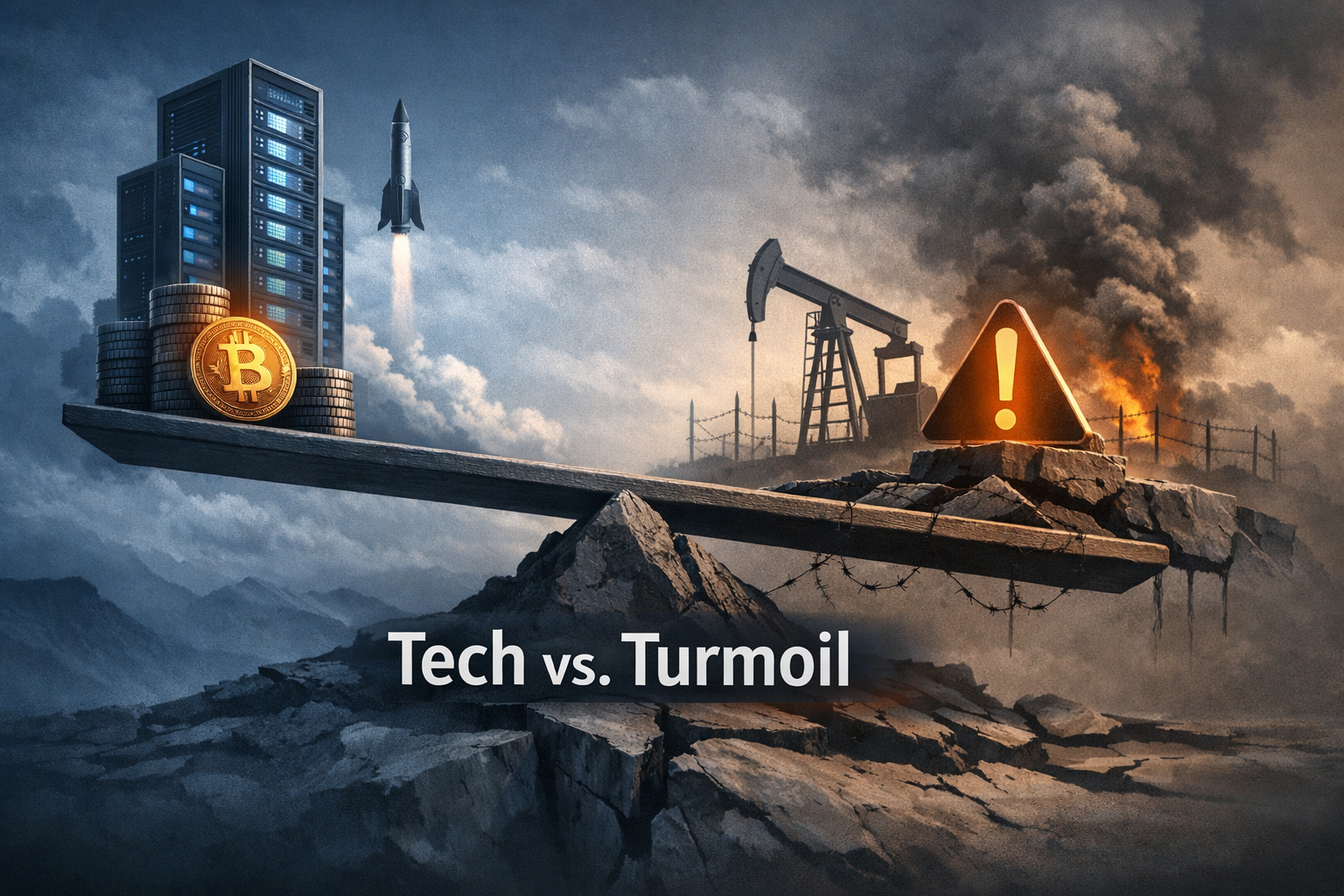
Crosscurrents: AI and Energy Drive Gains While Policy, Security and Execution Risks Cap Some Sectors
About this episode
Get every episode summarized
Each time Alpha Casts - AI Market Intelligence publishes, we email you a written briefing from the transcript — the topics, who appeared, and any specific claims, with the ad reads skipped.
Email me new episodesFree for 3 shows. No card needed.
Hosts & guests
Transcript ready
270 searchable segments. Every word is indexed and playable.
Full transcript
Alpha Casts - AI Market Intelligence — Crosscurrents: AI and Energy Drive Gains While Policy, Security and Execution Risks Cap Some Sectors. Machine-transcribed; use the interactive transcript above to jump the player to any line.
Welcome back to Alpha Recap. I'm glad you could join us. Markets just closed and we've got a lot to unpack. As always, if you have questions, you can reach us at stockalpha.ai. Today we're digging into two big cross currents that defined the tape, an AI and data center push that helped tech rally and an energy shock that said oil toward $100 and reshaped sentiment across utilities, materials, and real assets. Thanks for having me. Lots of moving pieces today. Happy to walk through what mattered and why the pieces connect across sectors. So what really stands out here is that it wasn't just one theme. Tech and energy both had headlines that drove flows. Give us the top level read from your fixed income lens. At a high level, markets closed mixed. We saw gains in technology and energy while crypto, some parts of healthcare, and cannabis lagged. From the fixed income side, the big takeaway was capital continuing to flow
into long lead infrastructure and hyper-scale compute, even as short-term shocks in energy and regulatory headlines created pockets of volatility. Let's start with tech and AI. Funding and product cadence seemed to be the headline. What drove the tech strength today? A couple of things. Large funding rounds for AI native firms. There were reports of sizable financings like the one for Mistral. Plus, ARMS roadmap on next generation server and mobile GPUs. Hyperscalers showing renewed interest in expanding data center footprints also supported the space. Product news, Meta's new Muse rollout, and the upcoming Apple foldable event added near-term excitement. Momentum indicates spending on compute, memory, and networking is likely to continue, which helps related real estate and utility demand too. Right, right. And those are the kinds of stores that ripple into chip suppliers, data center reads,
and even power providers. Exactly. When hyper-scalers expand, you need more servers, more cooling, more power. That correlation is driving a cross-sector growth axis from tech into real estate, utilities, and materials. Okay, shifting gears. Energy was a big mover. Oil approaching $100 after supply concerns. Walk us through the implications. Attacks in the Middle East and diesel tightness, tightened markets, and pushed crude up. In simple terms, higher oil boosts near-term cash flows for upstream producers and oil field services. But it also raises costs for transport and heavy industries. For fixed income, higher energy prices can complicate inflation dynamics and influence central bank rhetoric, especially if the move is sustained. Mm-hmm. So higher energy is a two-edged sword. Good for producers, tougher for airlines and trucking. Yes, and that was reflected across sectors we saw today.
Materials and industrials feel input-cost pressure from diesel, while refiners and energy services get a short-term tailwind. Also, China's rising crude imports added to the bid tone. Let's touch on some of the big single headlines that mattered. There was a multi-billion-dollar fiber commitment. Why does that matter beyond telecom? Large fiber deals are demand signals for networking gear and construction activity. They stimulate spending on passive optical network equipment, civil works, and related materials. Analysts note that multi-year upgrade cycles could benefit vendors and contractors, and it connects back to data use and cloud adoption, kind of a demand multiplier across several sectors. And the Department of Energy Lone, $1.9 billion for Duane Arnold. That was a headline grabber for utilities, right? Absolutely. A $1.9 billion loan signals public capital backing for centralized low-emission base load capacity.
Combined with Google-backed long-duration storage projects we saw, it showed private and public capital aligning on grid resilience. That supports long-duration storage, virtual power plants, and some nuclear projects, all of which change grid planning and long-term utility capex. Big move. Now, some sectors underperformed, crypto, healthcare, cannabis, let's start with crypto. It felt like institutional interest bubbed up against security issues. Yeah, it was a classic bifurcation. On one hand, there were headlines about institutional activity, pilots with payments, firms, and notable purchases of digital assets. On the other hand, exchange probes and hacks hit confidence. The result is continued wide volatility. Institutional flows suggest adoption is growing, but security incidents and regulatory probes keep headline risk elevated. Not a great day for crypto headlines. No. Security is a gating factor.
That's why analysts are stressing custody providers and regulatory clarity as primary inputs for future stability. Healthcare was mixed, some trial wins, but policy worries kept multiples in check. Say more. We saw patchwork results. Mid-stage trial wins for some biotech names, but those positives were offset by cost and access headlines. Payer and policy uncertainty keeps dispersion high. Some companies rallied on trial news, while others were held back by concerns around reimbursement and regulation. And cannabis, even with federal commutation chatter, state-level enforcement and compliance details complicated the picture. Correct. Federal discussions provided some optimism, but state enforcement and potential licensing cases, including ones that could reach the Supreme Court, kept headline risk high. California reported compliance near 99.3%, which sound strong, but that top line number
masks a lot of nuance around licensing and enforcement that impacts operators differently. Right, right. Inventory and execution risks in retail were also called out. Retailers preparing for a holiday season north of $1 trillion. Exactly. With retailers stocking up, execution matters. Inventory accuracy, product data integrity, and fulfillment capability all determine whether a company benefits from the season. Analysts note that poor execution can quickly wipe out expected gains. So seasonality introduces event-driven volatility. OK. Let's go through the cross-sector themes you mentioned. Start with AI and hyperscale compute as a growth axis. AI and hyperscale compute are creating correlated demand across semiconductors, networking, data center real estate, and power. Funding rounds, arms server roadmap, and hyperscaler deployments combine to support suppliers of chips, cooling systems, and even specialty materials.
So tech gains were not isolated. They fed real estate and utilities too. And the energy shock theme. Higher oil helps producers, but pressures transport and industrial margins. Yes. The immediate pass-through to fuel costs can compress margins in airlines, trucking, and some industrials. It also changes investor focus toward energy producers and away from duration-sensitive assets if inflation concerns pick up. Policy and regulatory risk was another big theme. Right. Cannabis, health care, crypto, and AI litigation are all examples where regulatory clarity, or the lack of it, is a primary driver of dispersion. Analysts recommend tracking legal calendars and agency moves, because outcomes can materially change market access and valuations. Security and operational execution were noted as gating factors. How should listeners think about that? Operational and cybersecurity incidents create idiosyncratic drawdowns. From a risk perspective, stress-testing holdings
against custody or supply chain failures make sense. Vendors that offer security and operational resilience could see re-rated demand profiles. Short reaction. Right. Short answer. Security matters more than ever. Let's cover a few of the most significant single moves and why they mattered. Quick bullet style. OK. One. Big fiber deal signaled multi-year network upgrade cycles. Two. The DOE loan and Google backed storage highlighted capital focus on grid resilience. Three. Oil near $100, tighten diesel and refined spreads, and shifted attention to energy names. Four. Tech funding and product cadence underpinned compute-related capex. Five. Crypto was mixed with institutional flows, but security incidents creating volatility. Six. Real estate finance activity, like a $141 million CNBS refinance in Raleigh, showed liquidity,
but permitting constraints for data centers remain a theme. That's a lot to track. Before we wrap, walk us through the practical takeaways listeners can use to frame their thinking next week. Sure. First, re-evaluate exposure to the AI and data center value chain. Analysts note durable capex signals from funding rounds and vendor roadmaps. Second, monitor fuel prices and refined product spreads, because oil moves can rapidly alter sector returns. Third, keep an eye on regulatory calendars for cannabis, health care, and AI litigation. Legal outcomes can cause event risk. Fourth, factor security and operational resilience into risk assessments, especially for crypto, payments, and logistics. Fifth, for real assets, location and permit pipelines matter. Data center permitting bottlenecks can change local economics.
And finally, prepare for event-driven volatility around the consumer season and product launches like the Apple Foldable. Quick check. What specific signals should people watch this week? Watch AI legal developments. Any Supreme Court movement on cannabis licensing. OPEC plus statements and refinery utilization rates. Diesel crack spreads. Apple's event and vendor commentary. And any crypto exchange probe updates or custody policy announcements. Short reaction. So lots of potential headline drivers. Before we sign off, a reminder, this is informational only. Analysts note this is not a recommendation to buy, sell, or hold any security. And it's not personalized investment advice. Individual circumstances vary, and listeners should consult a licensed advisor if needed. Thanks. To recap in three quick takeaways. One, capital-favored AI, hyperscale compute, and select infrastructure today. Two, the energy shock pushed oil toward $100
and introduced near-term inflation and margin pressure risks. And three, policy, security, and execution risk are concentrating volatility in crypto, health care, and cannabis until regulatory clarity emerges. Perfect. If you have questions about anything we covered today, head to stockalpha.ai, where you can ask us directly, and we'll answer live. For more market analysis and insights, visit stockalpha.ai. Thanks for listening to Alpha Recap. We'll see you next time after the market closes.
More episodes
More from Alpha Casts - AI Market Intelligence

Tech Sector: AI Debate Dominates Sep 13
Alpha Casts - AI Market Intelligence

$ORCL — AI Triumph Meets Policy Risk: Oracle’s Blowout Quarter Collides with a F...
Alpha Casts - AI Market Intelligence

AI IPO Sparks Sector Watch as Jumbo Volume Trades and Penny-Stock Turmoil Domina...
Alpha Casts - AI Market Intelligence

$ORCL — Fed Jitters and an AI-First Market: CPI in Line, Hot PPI, Oracle’s Beat...
Alpha Casts - AI Market Intelligence