About this episode
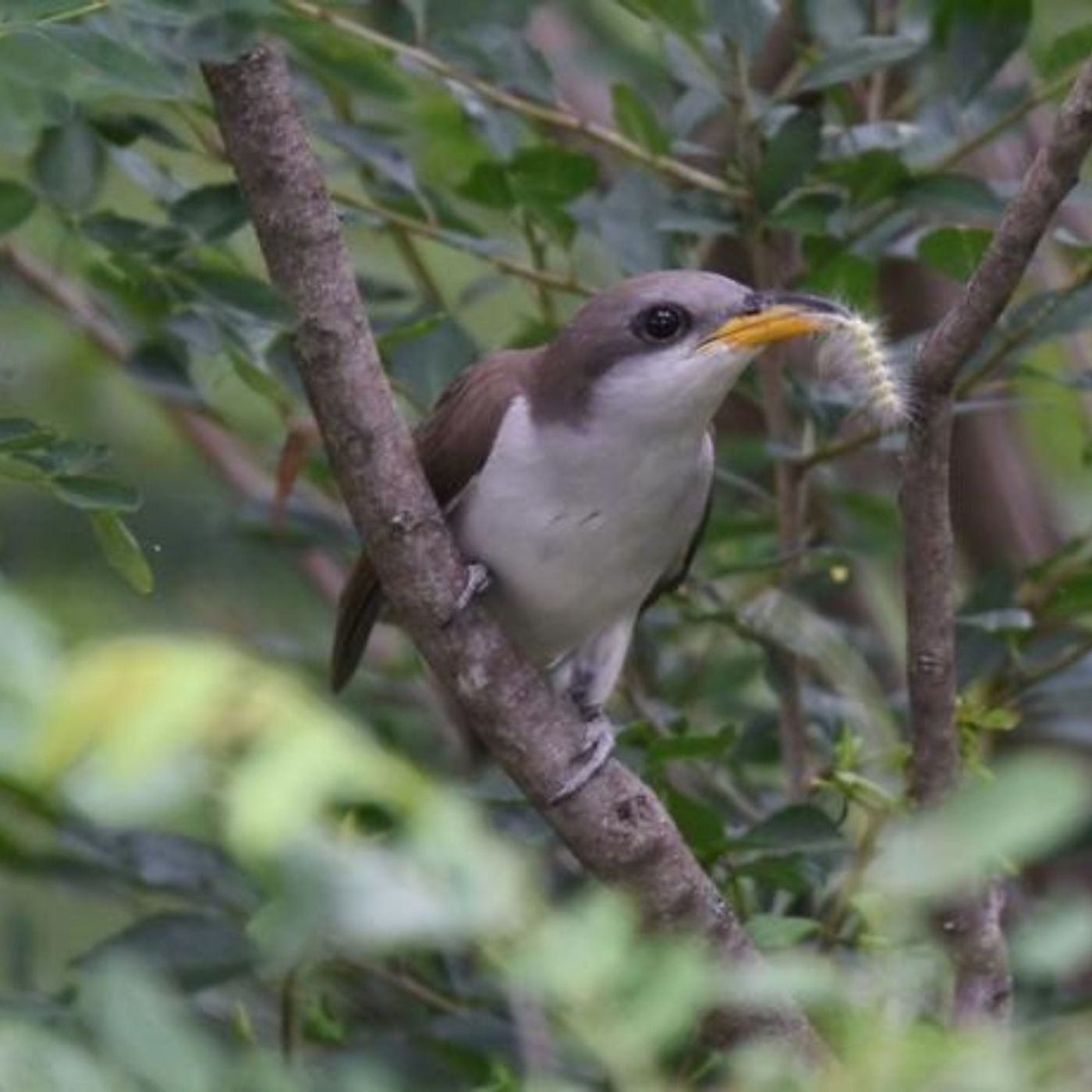
The Yellow-billed Cuckoo, one of two species of cuckoos in North America, lives in broadleaf forests throughout the East and riparian stands in the Southwest. Cuckoos were common breeding birds in the Pacific Northwest as late as the 1920s, but then they disappeared. The Black-billed Cuckoo is a more northerly species that lives in dense woodland, even conifer forests. Cuckoos perch quietly and scan their surroundings for food. Hairy tent caterpillars, shunned by most birds, are often on their meal ticket.
More info and transcript at BirdNote.org.
Want more BirdNote? Subscribe to our weekly newsletter. Sign up for BirdNote+ to get ad-free listening and other perks.
BirdNote is a nonprofit. Your tax-deductible gift makes these shows possible.
Hosted by Simplecast, an AdsWizz company. See pcm.adswizz.com for information about our collection and use of personal data for advertising.
Get every episode summarized
Each time BirdNote Daily publishes, we email you a written briefing from the transcript — the topics, who appeared, and any specific claims, with the ad reads skipped.
Email me new episodesFree for 3 shows. No card needed.
Hosts & guests
Transcript ready
39 searchable segments. Every word is indexed and playable.
Full transcript
BirdNote Daily — Cuckoos - Tent Caterpillar Birds. Machine-transcribed; use the interactive transcript above to jump the player to any line.
This is Bird Note. This staccato call tells us there's a yellow-billed cuckoo nearby. One of two species of cuckos in the woodlands of North America. The yellow-billed lives in broadly forests throughout the east and riparian stands in the southwest. They work common breeding birds in the Pacific Northwest as late as the 1920s. But then they disappeared. Ornithologists still don't know why. The black-billed cuckoo is a more northerly species living in dense woodland, even conifer forests. Cuckos perch quietly and scan their surroundings for food. Hairy tent caterpillars, shunned by most birds, are often on their meal ticket. So, if you have an infestation of tent caterpillars, you might see one of these slender brown and white birds with long, white-spotted tails.
The cuckoo plugs a caterpillar from its tent and manipulates it back and forth in its bill, taking off many of the bothersome hairs. But some of them remain, and cuckoostumics are sometimes lined with these hairs. When the hairs are dense enough to prevent digestion, the entire stomach lining is cast off and regurgitated. Nature finds surprising ways to deal with problems. For Bird Note, I'm Mary McCann. Bird notes from love to action campaign to inspire a million people to take action for birds. It's rooted in the idea that when we love something, we feel moved to protect it. By hearing a bird's song, understanding its story and place in the ecosystem, we're more likely to care for and protect our shared environment. Your contribution today, or recurring monthly gift of any amount at birdnote.org, will power stories about birds in nature
that turn daily appreciation into real-world impact. Together, we can turn love into action. Donate today at birdnote.org.
More episodes
More from BirdNote Daily

Letter to an Olive-sided Flycatcher
BirdNote Daily

Arctic Dispatch: Sandpipers Sing at Teshekpuk Lake
BirdNote Daily

Wilson’s Warbler near Summer’s End
BirdNote Daily

Migration: Long, Short, and In-Between
BirdNote Daily