Loading...
sports
Danielle Scott on medals, music and telling her family to stay away
About this Episode
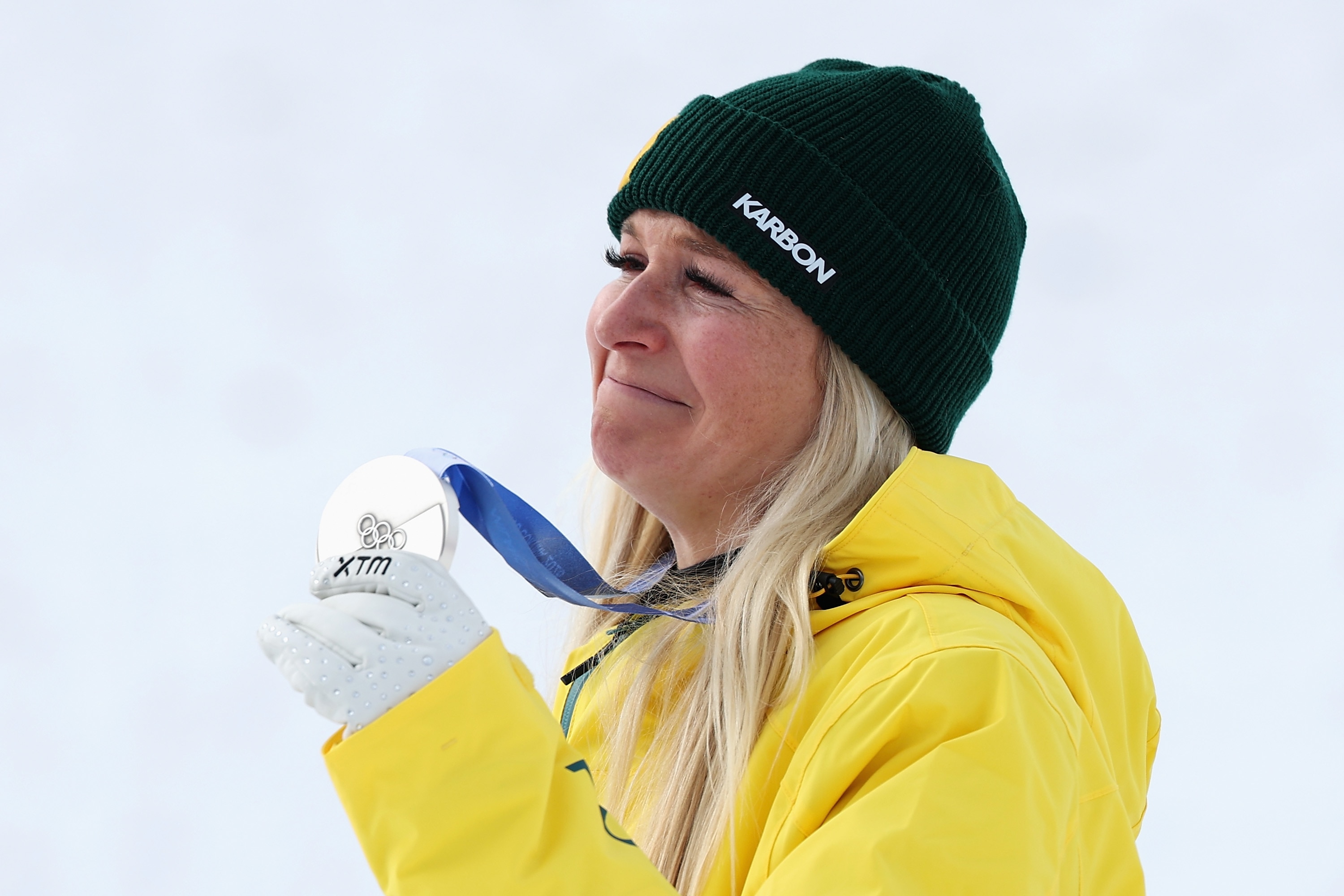
Danielle Scott is an Olympic silver medallist. At her fourth Winter Games the aerial skier finally won that elusive Olympic medal. The weight of expectation was so much that she told her family and friends to stay home. We talk to her about that decision, what the reunion was like and the secret behind Australia's most successful Winter Olympic team in history.
Featured: Danielle Scott, Olympic silver medallist.
Hosts & Guests
Transcript
ABC Listen, podcasts, radio, news, music, and more.
This is a lot heavier than you'd think it would be, it's finally, finally for me.
I knew I had it in me and the last two Olympics were extremely heartbreaking, so to finally
put it down today is just, I'm just so stoked.
That's Ariel Skier, Danielle Scott, talking about the weight of her newly minted silver
medal.
It's taken her four winter games to stand on an Olympic podium, so you get the sense she's
talking about more than just the physical weight of her new accessory.
In fact, she was so nervous ahead of these games, she told her family not to come.
I can imagine that was some reunion.
Scott was one of six medalists at these games, making them the most successful winter
team Australia have ever sent.
What's it like to be part of something like that?
And what's the secret to Australia's success on the snow and ice?
In a weekend treat for you, we asked Danielle Scott herself.
I'm Poppy Penny and this is ABC Sport Daily.
Danielle Scott is an Ariel Skier and now Olympic silver medalist.
Danny, welcome back to Australia.
How does it feel to come home and have that medal around your neck?
Thank you.
Oh my gosh, it's just been so cool to bring this medal home and especially after telling
friends and family not to come and watch.
It's just been the best thing ever and there's a lot of weight behind this medal physically
and heavy, but there is a lot of weight behind it.
How hard was that conversation to tell your friends and family not to come?
You said to them, you were so nervous you didn't want them there.
How hard was that conversation?
Yeah, I felt horrible.
I'd really, you know, it took me a while to actually make the decision and commit to it.
But I think this being my fourth games and knowing exactly what I wanted to achieve, I
knew it was the right decision and I would rather have brought a medal home to them than,
you know, potentially given them a hug after a not so great performance in Italy.
So I really trusted myself on that and I'm glad I did follow through with it because
it's obviously paid off and the love and support means the world, but I just needed
that focus.
How did they take it?
And do you have, I mean, a gut feeling, I know that my family probably would have tried
to sneak on a plane and be somewhere in Italy so that, you know, they could be there if
there was a medal.
Did you have any sort of inkling that anyone might try and sneak into Italy?
And how did they take you saying, hey guys, please don't come?
It did cross my mind, you know, maybe they've popped up somewhere, but I think back in the
World Cup season, you know, when they're qualifying and all of that was still going, they
seemed me, unfortunately not at my potential, you know, I wasn't quiet in the right headspace
and there was a lot going on.
So I think experiencing that with me, they really understood what I needed and they were
very good about it and they, you know, they didn't mind.
So they were honestly the best thing ever and I'm just grateful for them.
What was the reunion like?
It was so many tears of joy, so many screams and hugs and it's just, it, I can't
even describe it, you know, this is the best feeling in the world and exactly why I do it,
because we spend so much time on the road and so much sacrifice and I miss a lot of birthdays
and Christmases and all that kind of thing.
So to bring this joy home is everything I've been working hard towards you.
Can you talk to me about the pressure you were feeling ahead of these games as you fourth
Olympics and if, you know, you've been really open about it and I can't imagine how badly
you wanted an Olympic medal.
How big, I guess, was the weight on your shoulders coming into Milano Cortena?
Oh, look, it was huge.
Looking back at just the last four years, you know, I didn't even know if I was going to be at
these Olympics. The heartbreak after Pyongyang and Beijing was huge and I almost walked away
because I was just so frustrated and had come so close to getting medals before but never
been able to make it happen and this four years, I just said one year at a time,
let's see how we go. Things are gone really well, you know, after Beijing I was able to get
number one in the world and then back it up the next year and get number one in the world.
So that trust in my team around me was building and it just kept getting better and better.
So I had the belief that it was possible but at the same time being my fourth Olympics, you know,
it was, here we go again, am I ready to go through all this heartbreak if it doesn't go well and
I just said, you know what, it doesn't even matter. I've got the team around me that I need so
let's just focus on that and it's exactly what it needed to be.
When you made that back full, full, full, when you were, you know, skiing to the bottom of the
landing hill to wait for your score, did you know that you were a really good medal chance or
were you kind of unsure? I was very unsure. I didn't want to focus on what the other girls were doing
so I was listening to my music at the top and just trying to keep myself distracted and focus on
my own performance. So when I skied out, I kind of thought, okay, what did I just do? You know,
it was pretty good. I was happy with the air in form. You know, the landing was not quite perfect
but it still was good and I just sort of, I don't know, was trying to take everything in, you know,
what the crowd was doing, the announces and all of that and I was, yeah, really confused actually.
So then when my score popped up, I was just elated. I mean, obviously I was so close to getting
that gold medal but at the Olympics, any medal is, you know, it doesn't matter what the color is
and I was just, yeah, I mean, it's still sinking in really like it's, it's incredible.
I can hear the joy in your voice, which is fantastic. What music do you listen to at the top?
I have a, one of the old school shuffles that I keep in my pockets, I would push the buttons
through my suit and that's the best thing about it is that it is on shuffles. So it can go anywhere
from, you know, G Flip to Rianna to a bit of AC, DC to, you know, whatever fires on a shuffle and
I think that really helps me just to keep that focus and distraction when I need to.
Do you remember what the song was before you did that final jump that won you a silver medal at
the Olympics? I actually don't recall. I took it back because it's still on pause. It'll be
still on the song that it is. I'm going to go find that out after this. Yeah, well, that'll be your
lucky song. You have to make sure you play that at the top of every single jump moving forward.
You were one of six medalists at these games, which is the best ever showing for an Australian
team at an Olympic Winter Games. What did that feel like to be part of that success?
Oh, look, Australia is on fire right now. We defy the odds. We aren't necessarily known for our
winter sports, but I think we've just shown the world that we need to be known now and we go
Canada around for their money on the medal telly though. We're getting a bit nervous. We were in
front of them. So to be a part of such a high caliber of athletes and just beautiful people and
beautiful personalities means a lot because we've stuck together and we've had that fighting spirit
together in all the sports. And yeah, I'm honestly just so proud to be a part of it.
And the closing ceremony, the flag bearer there, that must have been a really special conversation
to have with Elissa Campbell and then a really special moment to have walked into the closing
ceremony as one of the two flag bearers. Did you have a moment of like, oh my god, I did it?
Yeah, well, that privilege was just unbelievable. You know, these games for me have just kind of
built on, you know, success, just building and building. And Elissa was a bit cheeky. She came
and surprised Kipper and I we thought we were just taking some photos on the rings. He's stuck
up on us and we couldn't believe it. You know, it's a pinched me moment. We had a lot of those
moments. And when we actually were holding the flag on the night waiting behind the beautiful arena
and everything, it was so surreal. And the lead Australia's most successful winter team out is
the biggest privilege of my life. I'm, yeah, it's still thinking, you know, keep saying that,
but obviously it is. Do you think it will ever sink in?
I don't think it's ever going to sink in. There's so many special moments around just bringing
this metal home, you know, whether it's the local kids and friends and family and they actually
hold in their hands and they just can't believe it themselves. And that reignites that excitement
and just honor it in myself. So I think it's always going to come with me. It's my new accessory.
Well, we saw that some of the metals were breaking in Milano Cortena as you're still intact.
Luckily, my vent was towards the end of the Olympics. So they'd figured that out by the time
I got mine, but it's been funny seeing the state of a few metals out there.
Well, it means the celebrations were maybe going a little bit too strong. The one thing that always
fascinates me with Australian winter Olympians is how growing up somewhere like the coast of
New South Wales, for example, do you end up in aerial skiing? Yeah, and you look at, you know,
Cooper and I were both from small coastal towns and I think we've just figured out a really good
balance. We spend a lot of time on the road and in a winter world, but to come home and
just relax on the beach and enjoy other sports like surfing or fishing and
being able to completely switch off is kind of a competitive advantage. So I saw these. I think
we figured it out and maybe we'll keep that a secret from the rest of the world.
Aside from your own metal and your own personal experiences, did you have a favorite moment
from the games like an event that you went to or something amazing that you saw? Oh, look,
there's so many of these moments. It was, we watched a lot of the other disciplines from afar
because we didn't get to the games until late, you know, we're busy training in Switzerland.
So I think looking back at that, the moment where we had our own opening ceremony in Switzerland,
we had Kazakhstan, Switzerland, Ukraine, Germany and Czech and we all put on our official uniforms
and we just did this little parade around a conference centre while we watched the opening ceremony
and I think when you look at the sport as a whole, we are a family, we are competitors but we
are still a family and that was really special. That's the Olympic spirit, the getting together of
all of these nations and I think that's so wonderful. It's been a huge few months for you between
World Cup events and then of course Olympic winter games. Do you get some time to now kick back
and as you say, the secret to the Australian success, enjoy some of this coastal time and
thaw out a little bit before you head back to the snow? Yes, I'm so so happy to finally be home.
Jonathan, the ocean with my dog and just spend the time with friends and family.
It's been a big four years and we obviously work in four-year cycles so I can't wait to debrief
with the team eventually once we've had our rest and recovery and start planning the next four
years because it's super exciting and now that we have the water amp up in Brisbane, you know,
it's a privilege to be able to train on home soil and not have to spend more time overseas.
So yeah, I'm just enjoying this moment and can't wait to get planning again.
Does this mean we should expect to see you in the French Alps in four years time?
Oh, without a doubt, you know, these Olympics has just been inspirational for myself
to put down some of the best jumps in my life is a really cool feeling so to be silly to stop now,
wouldn't it? Yeah, you've got a medal to defend and good luck with the next four-year cycle.
I hope to be speaking to you a lot across that time. Daniel Scott, congratulations again and
thanks so much for your time. Thank you guys, appreciate it.
I'm Poppy Penny and this is ABC Sport Daily. We'll be back in your feeds as normal on Monday.
See you then. Discover more great ABC podcasts, live radio and exclusives on the ABC Listen app.
More from ABC SPORT Daily
View all episodes →
If the PNG Chiefs can sign Jarome Luai, is anyone off limits?
ABC SPORT Daily
Apr 29, 2026·14:50·failed

Millie Elliott was training a month postpartum, on Thursday she’ll play Origin
ABC SPORT Daily
Apr 28, 2026·14:30·failed

Sabastian Sawe’s miracle marathon has made the unbelievable, believable
ABC SPORT Daily
