Loading...
religionspirituality
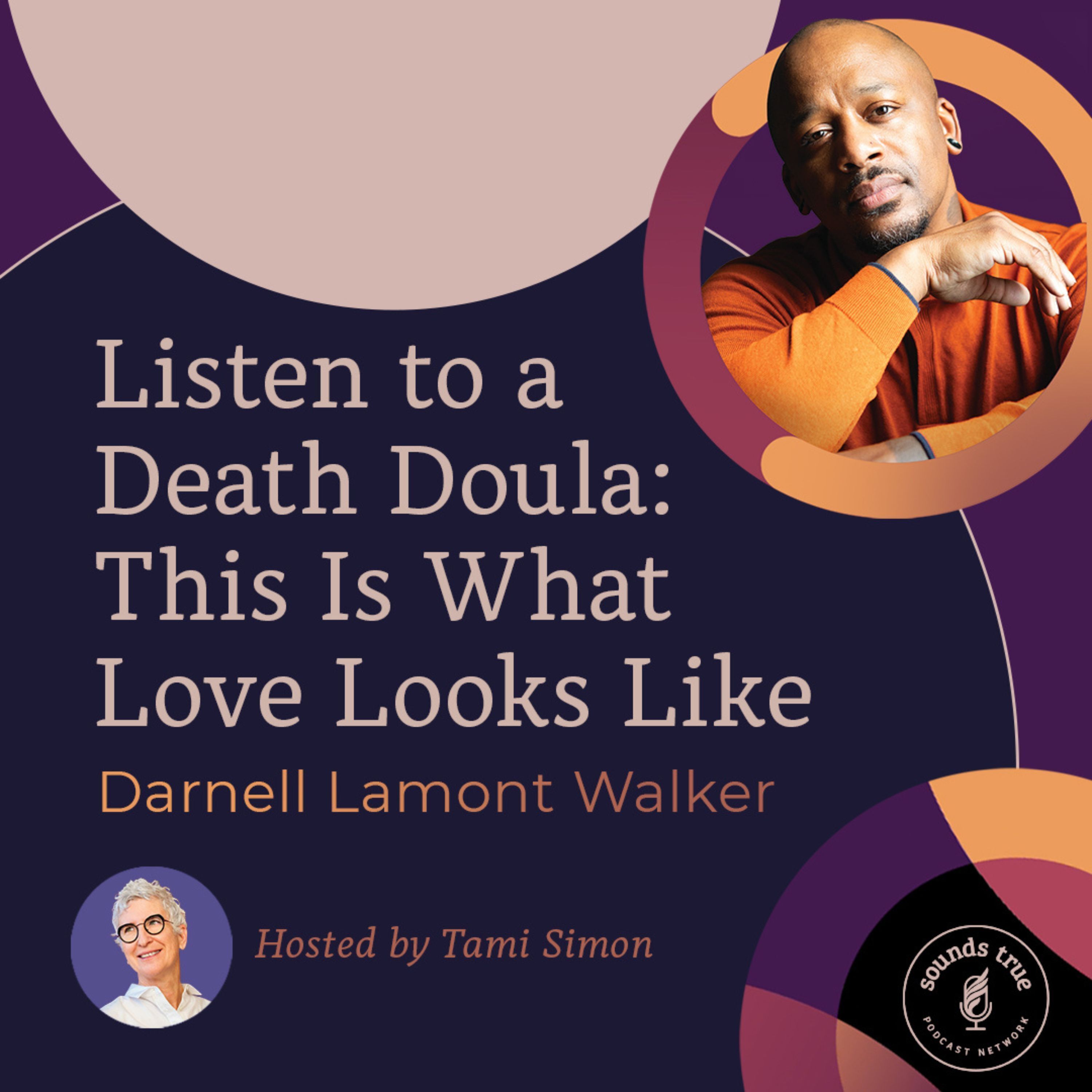
Darnell Lamont Walker: Listen to a Death Doula: This Is What Love Looks Like
About this Episode
“Let people love you.” Death doula Darnell Lamont Walker finds himself saying this phrase again and again at bedsides —to those afraid of being “seen” in their final days, to those who’ve built walls around receiving care. In this moving conversation with Tami Simon, the Emmy-nominated writer shares what decades of accompanying the dying have taught him about love, grief, and letting ourselves be held.
This conversation offers genuine transmission—not just concepts about awakening, but the palpable presence of realized teachers exploring the growing edge of spiritual understanding together. Originally aired on Sounds True One.
See Privacy Policy at https://art19.com/privacy and California Privacy Notice at https://art19.com/privacy#do-not-sell-my-info.
Hosts & Guests
Transcript
The Sounds True podcast network.
In our last days some people don't want to be seen in the hospital or in the
on their deathbed where I don't want to be a burden. I don't want people to see me like this.
I feel ashamed and I try to explain that listen this is sometimes what love looks like.
There's nothing to be ashamed of. This is love. People want to love you. Let people love you.
Welcome friends. In this episode of Insights at the Edge, my guest is Darnell Lamont Walker.
Darnell is a death doula. Someone who provides end of life accompaniment and support to
individuals and families during the final stages of life. He's also an Emmy-nominated
children's television writer and producer and an acclaimed documentary filmmaker.
Darnell is tremendously talented and generous of heart. And he's written a new book.
It's called Never Say Goodbye, The Life of a Death Dua, and The Art of a Peaceful End. Friends,
stay with us.
Darnell, welcome. Thank you so much. Thanks for having me. It's always love to hear the
introduction. I'm like, oh, yeah, that makes sense. That is me. That's you. That's me. That's me.
Thanks for having me. I'm so honored to be here. I'll tell you where I want to start.
Something that really got my attention. When you were 22 years old, you were told by a doctor,
you should have been dead a month ago. Tell me what happened and also how that event
has informed your life. No, absolutely. Yeah, so I was 22. I was having a
for about a month from the beginning of October. I would walk maybe a couple of blocks and I was
out of breath, you know, really, really fast. And one day, I'm 22. I'm thinking, you know, I'm at
the height of health, you know, 22, 22-year-olds don't die. This whole thing. And one day,
I woke up and I couldn't walk. And this is a month into, you know, being out of being sure
that breath walking upstairs, being sure that breath just taking the walk down the block.
Couldn't understand what was happening. But I woke up and couldn't walk. And again,
didn't relate to, but decided if tomorrow is this bad, then I'll go to the doctor. The next day was
worse. And so I went to the hospital and thinking that pulled a growing, you know, I'm like, I
put a muscle in my growing and possibly in my calf. And he comes back and he says, how long have
you been out of breath after running the test? And I say, oh, you know, since last month, the beginning
of October, and he says, oh, you, you should have been dead a month ago. You have 16 clots going from
your ankle all the way up into your lungs. And one of, at least one of those should have killed you.
And I've thinking, oh, well, it didn't, but that moment for me showed me that one at any moment we
could go to how, just how precious life is and how precious life should be like now, you know,
having to face that mortality, having to say, oh, I could be dead at any given moment. This is
something now that I live with, you know, going forward. This is something that I have to go see my
hematologist every year and hear her say, oh, glad you're still here. How can we keep you moving
forward? But because of that, I live a fantastic life. And I just so honored to be able to say, I choose
to make this Tuesday or this Wednesday, to make this Wednesday bright. And I choose to make this
Wednesday as great and as colorful and as beautiful as possible. Instead of waking up and just
merely exist. So there's this difference between, you know, for me, between living and existing
and that diagnosis, that that moment helped me see what that difference is. And so, you know,
having to face that mortality, I talk a lot about that. I talk a lot to people. I'm just saying, you
know, when you having to face that mortality and how much it helps us live the life that we deserve
to live. Like I tell the friend yesterday, I said, you know, we'd all be so blessed to be diagnosed
with something that could kill us at any moment. That's why I wanted to start the conversation there.
Because I think this idea of living with an awareness that death can come at any moment,
it's very powerful. And in reading your book and in getting to learn more about your life story,
you're a tremendously creative, adventurous, fun, loving, joyful person. And I thought to myself,
some of this must come from the fact that Darnell is aware that he could really go at any moment,
hit his blood clots. He could go at any moment. And so, my question is, how do people live
with that kind of awareness without having to have the kind of medical condition I'm sorry that you have?
Yeah, no, you know, it's about being intentional. It's about honoring the moment. And it doesn't have
to be this thing that we, you know, recognize and pay close attention to every day. You know,
every day I don't think about this, you know, their days or weeks that might pass and
wasn't a thought in my mind that at any moment I could go. But when it does come, it's a moment that
I honor and I say, oh, that's true about me. That's a thing. Maybe today I should do something
that I want to do or maybe, you know, now that I recognize that, maybe I should do something
beautiful and meaningful and honor this moment. And I think that's what it is. You know,
there are moments that come for everyone that when we're alone, like even before this,
there were moments where I'd be alone in my room at night and I'd say, you know, what
of tonight's the last night? And then I journal or find something the next day that, oh, I should go
to the bookstore tomorrow, find a book that I really want to read in case the time goes, you know.
And so, it's about honoring those moments when they come. We don't have to live in this constant
fear that we could die at any second. But when it does come, sit with it, you know,
savor that moment and say, okay, glad that's here. This is what I'm going to do.
You were an unusual kid. I read that at 13, you were volunteering at a hospice in home care
facility after school. And I thought, God, I've never met a 13-year-old who was a hospice
volunteer. You know, they're off going to some sporting gymnastics, something or other.
What brought you to want to volunteer at a hospice at 13?
Yeah, you know, it's strange how my life lined up that way. Like I didn't volunteer at the
place because it was a hospice. Although, you know, looking back, it's wild to see all the dots
that are connected. But my friends were working, you know, had real joy. I had a couple of years older
than me. They were getting, you know, work permits at parties and McDonald's and all these things.
And I wanted to work, but I couldn't because I was too young. And I remember the public access
channel that just flipped through with ads of things that were happening in the city all the time.
And I was sitting there watching it one day. And it said that they needed volunteers. And I thought,
well, maybe I could volunteer. So after school, I went up there and I did it because it was a job.
And my job was to help residents do arts and crafts and make toast and change calendars in the rooms.
But while I was doing it, I'd go into the rooms and they asked me to sit with them for a while
because they hadn't had visitors and, you know, however long. I'd be able to be the, I was the
person who was able to be there for them when others weren't coming. And even then, you know,
at 13, I didn't think I was doing anything spectacular or necessary. I just thought, oh, this is
this is what I do. This is what people do. Yeah, sure. I'll sit here and play checkers or
monopoly with you or play cards or just sit and talk with you. And I learned so much from those,
from those people there. And it was such a beautiful time that now when I look back, I think, oh,
well, of course, this is where all of that led me. This is where all of those things brought me
to this work. I've been doing it since then. But yeah, it wasn't, wasn't on purpose, I'll say,
but it was what was aligned, you know. And early in your life, though, you noticed an affinity
that you had for being with people who were in the dying process. Tell us about that.
Yeah, I, mostly because I was with my grandma, you know, I, if it was possible, I would have spent
every waking hour with her. And she recognized early that I was, I think, maybe the only one in the
family who wasn't afraid to talk about death besides her. And so when she was helping people with,
you know, and doing the work that, you know, death doulas do, although she wasn't a death doula
by title, I was able to be there with her, you know, her friends. We had her sister when I was a kid,
when I was nine, that's as early as I recognized that in me. And then, you know, 13 also,
the year I had a cousin, her nephew who came home to die. And she says, well, you can,
you can come to my house, I'll take care of you. And it was me and her. They're taking care of him
when other family members didn't, didn't want to be around because this was the height of the AIDS
epidemic. People were, or weren't informed, you know, and it was tough. But it was, that was the first
time I was able to have this hands-on experience with the end of life and say, this is how we take
care of people. This is what we do. We love people. This is what it is to witness people at their,
at their end. And it kind of stayed with me. I took that to school when the first time I had a
friend die and the schools weren't very resourceful. They just said, here, if you want to talk to
the guidance counselor, come on in. Otherwise, have a nice day. And I was able to say, well,
maybe we should talk about, you know, talk about her at lunch or at recess. And we should do some.
And I was able to bring that into that as well. And so it kind of carried on from, you know,
nine years old until now. You mentioned how close you were with your grandma and that she didn't have
anything like a professional title called Death Dula. And really, that's a, a profession
that has come in under that title only really in recent years, at least that I started hearing it.
And yet it's a function in families, communities, culture. It's a function that has always been
played. And I wonder if you can speak to that, the professionalizing of Death Dula. And it's
ordinary heart-flowing function in communities. No, absolutely. It's, you're right. I hadn't heard
the term until about 10 years ago, 2015, fall of 2015, when I was talking to a hospice nurse
after telling her these experiences, you know, that I'm talking about with you. And she says,
oh, it sounds like you're a Death Dula. And I look it up. And I'm like, I've never heard this before.
But this is exactly what I've been doing since I was a kid. And then I had to think like,
this is exactly what my grandmother, my mother, my grandmother's, like all these people in my family
have been doing this work for, you know, centuries. And it's interesting to see what is happening,
the professionalizing of it, you know, that people are going to get certified. And this thing that
we once, you know, this is what you do for love. This is what you do when you love someone.
And I'm not against that. You know, I have a certification. It's not necessary. It's,
I tell people that you get certified when you want to figure out how to run it as a business.
Otherwise, you are more than welcome to go volunteer at a hospice and learn this work
just as fast or even more so with the hands-on work rather than the classroom work.
The professionalizing of it has, you know, made it, has put it into the,
into the lexicon of the world now. And not against that at all. Like I love, I have friends who
are running their certification programs that are doing amazing work. We're getting more people
out there, people are paying attention. And we get more people who don't have to be alone at the
end now that this is happening. And adding that title has shown people that, oh, it feels,
it feels special, you know, to a lot of people and they say, oh, this thing exists. And so
people are being called in to, to be there at the end for, for a lot of folks. And I,
I'm grateful for that. My big thing is I just don't want people to be alone. And I've carried that
with me since I was at that hospice at 13. And I'm seeing that this is allowing for that to happen.
What do you think about the idea, Darnone? I'm sure you've had this experience that some people
actually want to be alone. Like they choose the moment to die when no one else is there.
Oh, yeah, I've seen that even, even for my grandmother. And I have clients who will wait
for the family or, you know, whoever is there to leave to do it. And I think a lot of times,
it's all about the reasoning. If that's what you want to do, I'm completely here for that.
A lot of times, so many of us have felt, we feel that there's a burden, right? It feels like
death is this thing we don't want to have to put off on someone. And so it's like, I don't want
them to have to carry that around. Let me do it while they're not here. And I've had people say
that to me. I've had clients say that to me like, I don't want anyone in the room because they
are, I don't want them to be haunted by that, to be haunted by that final site. I know people
who don't want to be visiting, you know, in our last days, some people don't want to be seen
in the hospital or in the, on their deathbed. And I understand and I try to explain that, listen,
this is sometimes what love looks like. When my grandfather was dying, I was there for him. And
I remember it was a fast decline right at the end. And I had to help change his bed sheets and
get him out of bed and put a new gown on him. And he's like, I don't want you to see me like this.
And I had to remind him that this is what love looks like. And I am honored to be able to see him
like this. So I, when people tell me they want to be alone, I like to ask why. And then if it's
one of those reasons where I don't want to be a burden, I don't want people to see me like this,
I feel ashamed. Then I try to work with that and say, there's nothing to be ashamed of.
This is love. People want to love you. Let people love you. You know, and a lot of times you see
that shift, which is like, oh, you're right. You're right. You've sat at the bedside now of
many dying people. You write about it and never can say goodbye. The stories of your experience
with these people. And I wonder if you could share, here's a couple of the big themes. This is just
a general question, Darnell, that I've learned firsthand from being there. This is what I've learned.
This is what I've come to know. Yeah. So what I've come to know is that people
in the end want to share pieces of themselves. They want to, they want to be asked those questions
that we sometimes avoid asking them. They want to be reminded of things. And they don't want to leave
this place with so much inside that could help others. I've had clients who tell their family.
You know, ask me whatever questions you want to know the answer to. I am a writer and a lot of
what I do in this work is I want to come in and help share the story and maybe help them find
closure in sharing that story. And so a lot of times I come in and they say, I want to write
about this because this is what I want my family to know. No one's ever asked me this. No one's
ever talked to me about this part of my life. I have these things. I want to tell my daughter. I'm
going to tell my husband. I want to tell my wife. And I see the, the load that's lifted off of
them when it's asked. And not just for them, but also for the family that's left behind.
It's a thing for them too. It's to say, oh, something they've been carrying around for years.
And I've seen what happens when they don't get to do that. I've seen what happens when they are
afraid to ask those questions. I had a client recently who her daughter wanted to ask questions,
but was afraid to do it. Not knowing. These are her last days. I don't want her to feel ashamed or
bothered by them. But I also, after talking with the mom, she wanted her daughter to ask these
questions. So now I'm mediating that thing. And so that's one. Another, of course, are the regrets.
People die with these regrets that I'm working toward helping people lessen those or
find ways to one, face their mortality. And if there's a way to lighten that, then let's get
to that work. There's so many people who are saying, I wish I had lived the life that I
wanted to live, not the life that I wanted to live to make this person happy. And that keeps showing
up. It's like, I lived the life. I had one client who lived the life to make his grandmother's dreams
come true. He was there at the end of her life. And she told him, and he's told her that he's like,
I wanted to have all these things for you before you died. And I'm sorry, I couldn't get those.
And she says, I'd never wanted any of that. She's like, I just wanted you to be happy. I wanted
you to live your life. And he's telling me this from his deathbed. And he says, I'd never got
to do that because I was so focused on that. And here I am now. He's like, so now I just need to
pass this information down to my nephews. So they don't do what I did. And so it's a, I'm grateful
to be able to be there and to pass that message down to his nephews and to pass that message to
everyone. You know, these are lessons that I learned from each of my clients that I get to bring
into the world. Like, even as a, you know, children's television writer, I get to somehow incorporate
these into scripts. And maybe it's not about death, but I can, I can get that same message across.
Like you live your life. Do these things that you want to do now.
I want to go back to the first observation you made about how people are carrying, I'll use
my language, a certain gift or medicine or something inside of them. And they want to be sure
to give it, to tell their story, what they learned, the wisdom they discovered before they die.
And I know you teach storytelling workshops and storytelling as a preparation to die. And one
thing I heard you say that really got my attention is that one of the prompts you offer at the
beginning of some of these workshops is tell your life story to me in three sentences. And I thought
that's really good. I wonder where Darnell came up with that. And as I was driving around, I did
come up with how I would tell my life story. But I'm going to ask you now, tell me your life story
in three sentences. My life story in three sentences would be, he came into this world
very curious, didn't quite figure it out along the way. But knows it will all make sense in the end.
And those are my three sentences. Because I gave up long ago trying to find the answer to all
these big questions that I had. Because I know that I see that sparking people on their deathbed
where they say, oh, that was why that happens. And that's where it hits. That's where it lands.
If it lands sooner, if it lands tomorrow, and I'm still here fine, but I see that a lot of these,
a lot of this stuff will figure it out in the end. And I love that exercise. I've had it from a
teacher. I, you know, randomly, I don't even remember the teacher that taught me that. But I've
been able to evolve it and say, tell me your life in three sentences and then help people
to guide them into making those three sentences into a full story. I said, some have written memoirs
from this. And it's such a beautiful thing. It's like, okay, well, now you have just think about
the theme of your life. Just think, think about themes again. You know, think about the themes of
your life. What are these relationships? What are these, you know, this profession you chose,
these big ideas or whatever that is. What, how do those things tell a full story? And then those
three, you have a full story in there a lot of times. And it's your beginning, middle, and
not necessarily the end, but where you are now. And if you don't like where you are now,
then these three sentences also give you a chance to look at that and say, oh, I can change how
this goes from now. Most of the time, that's what happens. It's like, oh, I don't like this at all.
I can pivot now. And it's, yeah, you can.
Now, you mentioned sometimes people can write a whole memoir just from these three sentences,
their movements in their life. And I know that a lot of people in the sounds true audience are
wanting to write their life story. But they run up against certain blocks or obstacles like, okay,
does it have to get published? Who's going to read it? Am I really just writing this for myself?
There's so many places I don't want to go historically. Like, here you are. You're both a writer
and a death doula. People need to spill themselves out before they die and story form. What do you suggest,
Darnell? One, everyone has a story to tell. Everyone has a story to tell. And everyone has a story
worth telling. And people are ready to listen. We are not alone in this. That inner critic tells us
that. Tell us that we're not a good writer. We are alone. No one cares about what we have to say.
Our grammar is horrible. We can't spell all this crazy, crazy stuff that this inner critic tells us.
The first thing I do when I go into these, when I leave these workshops, the very first thing I do is
have people fight against that inner critic slash affirm themselves. So write down everything that
you need to hear as a writer. Because now, as soon as you pick up that pen in that paper,
or you pull that computer up, you are now a writer. So write down everything you need to hear
to encourage you to not stop. And then don't edit as you go. And the big thing is that if you don't
write this story, this story will never exist in any other way. Like, no one else can tell this.
So if you leave here without telling this story, then no one will ever know it. And
we need your words. We really need your words. And so I tell people that all the time, I think it's
a, you know, it's our way in. And as soon as, and this is for me too, like I'm a writer, I've,
you know, I've been awarded and I have a published book and things. But I have to do this work
every time I sit down to write something. This is not a thing that goes away. I don't think I
called myself a writer. I've been writing since I was seven. I don't think I called myself a writer
to maybe 10 years ago actually 10 years ago this year. And I was like, okay, I guess people say
I'm a writer. I guess I'm a writer. And by then, I'd been writing plays and poetry and everything.
And so we have to affirm ourselves. We have to fight against that thing that tells us these
stories aren't worthy. I do a lot of, when I go to bookstores, I go through the memoir section
and find memoirs by people I've never heard of that most of us have never heard of because I,
it shows me that they too have a story. Like, this story is important. And I love that and I read it
and now I'm like, oh, yes. And now I know this person and I need it their words and I share it
with everyone who I know also needs their words. So people are waiting for it. People are waiting for
your story. Now, Darnel, I also work in publishing. And what I would say from that perspective for a
moment is we don't need more memoirs on the shelves that are going to sell 500 copies or 200 copies
or at least publishers don't want to invest in the printing and marketing, etc. So how does somebody
who writes their story, who's, you know, may not be social media influencer with lots of fans who
are ready to buy it? How do they get their story actually heard? Yeah. Because it's not going to
be through traditional publishing. Absolutely. And it's sometimes that story is not for the world.
Sometimes that story is for your family. Like I said, I come in and I, a large part of what I do
is to help people tell their story. And it's not for the masses. It's for their nieces and their son
and their daughters and mothers and, you know, whoever is left, who they feel can benefit from that.
And so we don't have to produce for, you know, Barnes and Noble. It could be for our friends down
the block. It's like, I want to leave this printed out pieces of paper that I've folded and
stapled it at the edges. And I want to leave a copy of this for everyone. You know, a lot of people
we journal. And it's like, well, what happens to your journals when you die? And most of my friends
are like, they all burned. But some of them are like, I want these to pass down to my kids
if they want to read them. And so that's who we leave these stories for. It doesn't have to go
on the shelves. You know, and self publishing, if you self publishing is a thing, there are places
you can go to self publish. There are many sites where you don't have to, you know, spend the
dime. And you can just put it out and sell your books for $3 a piece if you want to do it that way.
But the important part is leaving the story here for others to use. And I talk often about dying
empty. Like if it's inside of you, it has to come out. It should come out. You know, die empty.
I don't want to leave this place with anything inside, anything I should have written. I don't
want to be on my deathbed thinking, oh, I should have written this. I'm quite sure that if I am able,
if I'm fortunate enough to have a deathbed, I will be there. And I'm still responsive and I can
still move around writing down little notes or having my phone, you know, telling it to take notes
because they're going to be things that I still want to come out. And hopefully someone will carry
that torch for me. But that, you know, that's it. It's like, it has to come out some way. And if
however it's going to happen, you know, if I write another book and the publisher says,
doesn't want it, I'm still going to write it. And I'm still going to, it's still going to exist
somewhere because it has to. What do you think about the need people have to confess and how that
comes up at the end of life? And I'm using this word very intentionally confessed. There's something
that I've been, that I feel guilty about or something that I've been hiding a secret, but I need
to get this out. Oh, yeah. It's all of that. We don't want to die with that pain inside.
Like those things that we feel we need to confess are often painful for us.
For the person we might need to confess it to. And we don't, we know that this thing is final.
When you, when you reach that end, it's like, oh, this is, this is it. If I don't do this,
then it will never happen. These people might not ever have these answers or they will never know
this about me. And we see as, as one as we get older, for sure, but also at the end, you see just how
unnecessary it was or maybe it was in the beginning. But now it's not so necessary to keep that in.
And if, if confessing it can bring us any closer to peace, any closer to
someone else's peace or bring someone else close as close as possible to the peace that they
need or the healing they need or the joy they need, then we are, if this is what I can give you
now, then I'm going to give it to you. And it also goes to, you know, in a time where we don't have
much control over what's happening, death, then this confession kind of gives us at least a
little bit of control over some. And so often so many people look for as much of that as possible.
And then it's like, okay, well, let me do this too. So I, so you know that I'm still here.
Yeah, I think it's a beautiful thing. I've seen, you know, beautiful things happen on the death
bit, you know, relationships that were broken for 20 years, you know, have been mended because
of a confession or an apology or I was wrong, you know, whatever that is. But it's necessary.
Another thing I'm curious about as someone who has really thought about dying quite a lot is
if you've experienced when you're at the bedside, spirits or ancestors gathering in the room,
if that's something you yourself have palpably felt.
I, not for me, I've never felt it for my clients. But I've seen them experience it for themselves.
And my grandmother, most of my clients, I remember sitting with one client who we were in full
conversation, you know, I'm talking to him about music. He was a musician and we're talking about
music and then he stops and looks over to the right and then starts a full conversation
over this way. And by now I know that his grandmother would visit him, you know, and I say,
oh, it's your grandma here. And he's like, oh, yes, she's right there. Can't you see her?
I'm like, no, I can't, but I'm glad she's here for you, you know, and so I've seen it often.
I've never seen it for clients. I've seen it for myself. Not on my, of course, not on my deathbed,
but I've seen spirits for myself. And even when I was at the very beginning of this journey,
that's when my grandmother's sister was dying, that's how I knew her time was coming to an end
because they came home from the hospital and told me that, you know, she said, she said,
her mom came to see her and her mom had been dead for years. And I, you know, at nine, I'm thinking,
you know, a dead person came to see her. Oh, that must mean she's about to die too.
And I've seen it countless times since, to deny it, you know, and good for them. I always,
I always ask people, you know, friends and so it's one way into conversations that I have. I say,
you know, well, who do you want to come back for you? You know, when it's your time to go,
who do you want to be standing there, welcoming you to that next place?
Is your sense that there are spirit allies of some form that come and help us at the time of our
dying? Yeah, absolutely. I think it's, I think it's love that comes back. I have a friend who tells
a story of her dad when her dad was dying and she asked him, she's like, you know, who do you want,
who do you want it to be? Because he had seen, you know, his grandfather and his mother experienced
this on their deathbed. And she says, who do you want to come back? And he's like, oh, I want,
you know, my dog that I had when I was, you know, eight. And then on his deathbed, he sees the other
dog. And he's like, no, no, and he's talking. He's like, not that dog. It's like, you know,
it's like, oh, well, dang, you know, and, um, but it's still a good enough dog to come back for him.
But I think, yes, I, that is my sense that it is love that comes back for us and makes that
transition out a bit easier. Okay. I'm just going to ask you your perspective on it,
which is somebody might say, yeah, you know, we make this stuff up so that we can feel good. And
it's part of what we make up in the dying process, the forms that love comes back in. And
I'm just curious what you think about that or if your sense is like, actually, that's not what
people aren't making it up. It's happening to them. Yeah, no, I, you know, there are, I've seen
it happen for people who are, who are very, very much who go to the end, very much saying,
no, you know, I don't believe all that. That's not going to happen. And then watch them interact
with these folks who come back for them. I personally cannot believe that it's made up. I have seen it
even when my grandmother sister who I just explained, she said, you know, Mama came for me and she
said, she's coming back tomorrow. They're just getting my room ready. And then next day is when she
died with my grandmother, very, very similar thing. And so I knew when she was going because of how it
happened. Every client I know, many of them have given, they've seen these, they've seen these spirits,
they've seen these people who come back for them and they've given, you know, far too many details.
They've died exactly when they said they were going to die when this person was going to come
back for them. So I can't personally believe that, but because I've seen it and I've felt it. And
being connected to that world myself, I, you know, it's just, it's just such a, you know,
beautiful thing to have. One, and I'm grateful that they do have that. And so I, yeah, I couldn't
accept that. But, you know, and I hope someone comes back for us all, even those of us who don't
believe it, even for those of us who believe it's made up that it's a trick of the brain. Whatever it
is, I'm glad it, I'm glad it's happening. Okay, you use this interesting phrase. I really liked it.
Dying empty. And we've talked some, okay, confessing, writing your story. But for that person
who has the sense of, you know, there's all this stuff I didn't, I didn't do that I wanted to do.
There's all these unlived, there's all this unlived life, unlived dreams. How do you help people
make peace with that? That's the hard part. It's, you know, sometimes you can't, honestly,
sometimes you can't help people make peace with the things they didn't get a chance to do.
Or, you know, I had a client recently who just wanted to put on a backpack and go through
Italy one more time. But on her deathbed knowing it couldn't happen. So we, we traveled through
these moments of, okay, you didn't get to do this. But let's talk about all the, all the amazing
things you did get to do. Let's talk about all the people who you, who you've encouraged to do,
exactly that thing that you wanted to do. You didn't get to do, but now they can. You know,
it's these, these folks are coming back to share their stories, to share, you know, how you help me,
how, how beautiful my life is because of you. Even because of your sometimes it's a sacrifice.
Sometimes they didn't get to do it because they had to sacrifice for someone else who did get to
have this beautiful thing. But sometimes, honestly, you don't get to have that moment where like,
oh, I made peace with that, with not doing it. Sometimes it's just I didn't get to do that. And I
hate that I didn't get to do it. I'm going to die knowing that. And honestly, you know, I talk a
lot about, I don't think, I don't think any of us get to the end without regrets. I think we,
we have them, you know, but I think if we can remember more beauty and more, you know,
greatness and the things we did get to do, I try to hold on to those also. And you know,
for those who are listening to this, they're still time, you know, for those who are out there
saying, I didn't get to, I want to go through Italy and I want to do this. If you, if,
you can do it, do it. They're still time. That's a thing I like to drive home the fact that we,
we don't have time, we don't have as much time as we want. And so if you are still able, do it now
or do it when you can, plan to do it. And hopefully you get to it.
The subtitle of Never Can Say Goodbye, the life of a death doula and the art of a peaceful end,
it's that last part of the subtitle that I wanted to ask you about, the notion of a peaceful end.
It seems to me that at times death can be a mess, a messy process, not particularly peaceful.
So what do you mean by a peaceful end? Yes, death can be very chaotic, very violent a lot of times,
and very messy. The peaceful end, like my goal as a death doula is to come in, find out how you
want to die. And that's actually my first question is how do you want to die? And try to get them as
close to that death as possible. But, but don't let me ask you a question about that because whenever I,
you know, just in casual conversations like most people and talk, how do you want everybody
wants to die in their sleep peacefully, blah, blah, blah, blah, and it just doesn't happen most of
the time. And most of the most of the time it does not. But what does happen is now we start
that conversation. And now you're thinking about it. And although it may not happen,
there's a chance that it could, but it may not. But you start planning for that. You start
planning this life up until that moment. All these beautiful things unravel up until that moment.
Even if it's a car accident, you're like, oh, I want to die at 80 in my gardens surrounded by
my family, holding my hands. And, but it's a car accident. But up until that car accident,
you were headed toward that very peaceful end that you imagined. And so there's so much beauty that
happens in there. And that can happen in there if we are intentional about it. And so even when
my client, you know, each of my, they all have a way they want to go. You know, my last client,
she wanted a party. She wanted to, she wanted it to be at a party surrounded by family. Everyone,
everyone wearing purple and having a good time. And she didn't get that, but she did get the
party planning. She did get to the, you know, who's going to be there? Who do I not want to be
there? How much food do I want? Well, everyone wear purple. And she did, she, you know, she died two
weeks before two weeks. Yeah, a week and a half before the party happens. But it happened to be
Thanksgiving. She died the day after Thanksgiving. But Thanksgiving, a lot of family came and they
were able to do everything that she hoped they would do at the party. And so the planning still
happened. And she still found the happiness and peace in that planning, even though she didn't
get the death that she necessarily wanted. And so for most of us, no one wants to, I've, I've
known one person actually who wanted to die in the hospital, but no one wants to die in the hospital.
And so when I talk to people, they're like, oh, I want to be at home and I want to be this, but,
you know, the chances are, you know, they will die in the hospital if, if it comes to that. And
but everything leading up to that moment brought them some form of peace, hopefully. If they've
done it with intention, if they've honored the moment, if they've done the work, they can find
peace in those in those moments. So you're saying, if I understand correctly, just let me see,
that it's okay to have find peace in a fantasy that very well may not happen.
Oh, absolutely. I think, you know, it's that, it's that audacity of hope type of situation,
where it's like, hope is dangerous, but, you know, but it's there. And so this may not happen,
but this is what I want. And okay, let me get, let me start getting these pieces in order. And
so once I have them in order, it's like, oh, okay, I'm going to, I'm going to have that.
But then things unfold in ways that we can't imagine and we don't get it. But for that, for
up until then, there was that thing of like, oh, this is going to be much different than the way
my mom died or the way my grandfather died in a very, you know, unplanned hadn't had never talked
about death kind of way. After someone dies as a death doula, you also help the family
with grieving. And you have this great line. So I want to bring it forward because I wrote it down
and I'm going to keep it with me. Grief is the sequel to love. And in a way, it's kind of obvious,
but it helped me as somebody who has gone through periods of my life of tremendous grief.
No, oh, that's also a sign of the deep love that I've had in this situation.
No, absolutely. It's, you know, when we love, I mean, it's just the, it's what we're left with.
It's, you know, you, you grieve, we grieve what we lost.
Yeah, it's, it's, it shows that we loved correctly or a lot of times. It shows that we, that it was,
this, you know, not saying that the deeper the grief, the deeper the love, that's not true at all.
But it shows that we love this person. We love this thing. We loved, we held onto it.
We honored it. And now they're, they're gone. It's gone. And all of this pain and grief isn't always
pain. Grief can sometimes be many other things. But we're left with that. And there was because we loved,
we loved, you know, and it's as simple as that. You know, I think about the many people
that I lost and I know that when it's, when it's time for them to go, it's, it's going to be hard.
You know, when my grandmother died, it was hard, but I, I am so filled with the thought of how I loved
her, you know, and it's, it's what gets me through. And it's, it's the pay, the price we pay.
It's the price we pay for being able to have those moments with those, with those folks to have
those beautiful days and, and stories and memories. We have to have that thing that comes after
those things are gone and those people are gone, which is grief.
In a conversation, someone asked you, how do you decide which projects to work on? You know,
you're making films, you're writing for various TV shows, you're doing this doula work. How do you
decide? And you answered my overarching theme, my overarching goal is to help people find,
you ready for this? Joy, to help people find joy. And here you've written a book, never can say
goodbye, all about being at the bedside of people dying and the grieving process. And somehow
it brings people to joy. The book brings people to joy. And I wonder if you can speak to
that how going through being present for death and helping people grieve brings joy.
Yeah, I was talking about, like, I try to take people, I serve as this bridge, right, where I take,
I hope I'm someone who gets people from where they are to where they want to be. And I hope,
you know, a lot of times where we want to be is the joy. But there's joy in that, there's joy
in going through that and realizing that, oh, I loved going back to that. I loved this transition
doesn't have to be what it was for all these folks who came before me. It doesn't have to be tough,
it doesn't have to be any of the, I can, I can, oh, I can plan, I can do these things. I, you know,
I wrote this book, letting people know that they've too have done the work, they've already done the
work for other people. They've helped people find peace in the end and find love and closure. And
in all of that, and like, all of that leads us to this place, hopefully, where we can say,
huh, you know, I'm glad that have, I'm glad I had it. It didn't work out, sometimes it didn't work
out the way I wanted it to, but I'm glad I had that. And for me, you know, all of that,
everything in this book, everything I've experienced facing my own mortality, you know,
losing some of some of the people in my life who I, I thought would never die. You know,
even in that, it's like, oh, and I sit back and I honor those moments and I can, and I think
about it when I, and I'm filled with so much joy that I got to have those moments, though.
And I want that for us all, even when I sit down, like deciding which project, you know,
I sit down and I write these kids shows. And it's like, they're, they're all about, like, whether
I'm writing for kids, whether I'm helping, you know, folks die, it's all about transitions,
and it's all about getting people from where they are to where they are going. And for me,
that's getting it out there and that's helping them also find that peace in the end and that,
that happiness and that love and that joy. And it's, it's really all about that for me. It's,
I want us all to experience it. And maybe that, that's a, it's a huge goal to, to really have.
But I think it's possible. I think, I think it really is if we can just move toward.
This is what love looks like. To end, I'd be curious to know in your own life. This is what love looks
like. What you've done to live into that sentence that you found really challenging. Didn't come
naturally to you, but you did it anyway. This is what love looks like. Love looks like
going into going into the heart, going into the heart moments, going into the, into the very
difficult corners and the darkness and saying, I am here and I don't know if this will break me.
I don't know if I will make it out of here, but I am here and I am here because I know
that I'm, I'm not alone. It's, it's finding the courage to say that and to believe that,
but to show up there and not, and, and not be ashamed of being afraid and not being
finding any guilt in that, but just showing up. Love looks like showing up in all the moments,
in all the moments and, and, and welcoming others to do the same.
Darnell Lamont, Walker, author of the new book, Never Can Say Goodbye, the life of a death doula
and the art of a peaceful end. Thank you so much. Thank you so much for your big heart,
tremendous creativity, all you pour out. Thank you. I appreciate it so much. I am so honored and
thank you all for listening. Yeah, that's, that's it. Show up and, and, and for those who want to
write, I, I drive at home, fight that in a critic, affirm yourselves and we need your stories.
They are worth listening to and worth reading and hearing. Thank you, Darnell. Thank you.
Thank you for listening. I'd also like to invite you to join us on SoundsTrue1, where you can
enjoy early, ad-free access to episodes of Insights at the Edge. SoundsTrue1 is our premium membership
platform. It's built around live classes and online events, award-winning specials, intimate
learning experiences and Q&A sessions with the world's leading wisdom teachers. You can get
your first month free at join. SoundsTrue.com.
The SoundsTrue podcast network.


