Loading...
sports
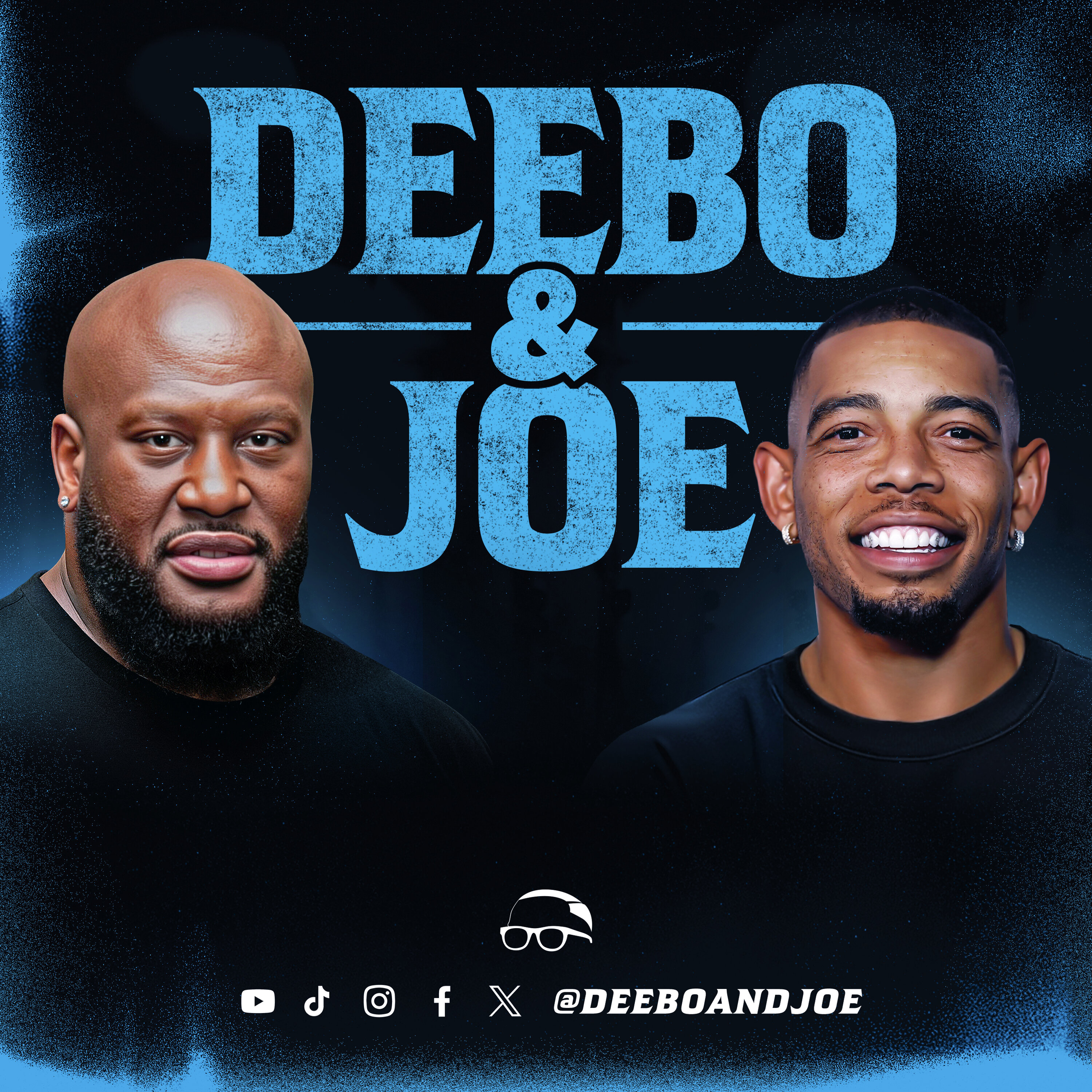
Deebo & Joe - Part 1: Dick LeBeau on Hall of Fame Playing Career, Zone Blitz Scheme & Legacy
About this Episode
Join NFL Legends James "Deebo" Harrison and Joe Haden are joined by NFL and Pittsburgh Steelers legend Dick LeBeau to discuss his historic playing and coaching career, NFL stories, the modern NFL, and much more!
Download the PrizePicks app today and use code DEEBOJOE to get $50 in lineups after you play your first $5 lineup! https://prizepicks.onelink.me/LME0/DEEBOJOE
Timeline:
00:00 - Welcome Coach Dick LeBeau
05:11 - Cut by the Browns
09:28 - Coach LeBeau didn't use a play sheet
17:40 - Coaching Troy Polamalu & Ryan Clark
22:12 - Dick LeBeau's Hall of Fame career
28:16 - Coach LeBeau's legendary scheme
31:57 - Writing the book 'Legendary'
(Timestamps may vary based on advertisements.)
#Club #Nightcap
See omnystudio.com/listener for privacy information.
Hosts & Guests
Transcript
This is an iHeart podcast, guaranteed human.
On the Serving Pancakes podcast, conversations about volleyball go beyond the court.
Today we have a little best friend compatibility test.
Hey, how long have we been best friends?
It's just a day we met.
As the league won volleyball season heads towards its final stretch,
there's no better time to tune in.
You'll hear unfiltered analysis behind the scene stories and conversations
with leaders making an impact across the sport.
Whether you're following the final push of love season or just love the game,
Serving Pancakes brings you closer to the action and the people shaping the future
of volleyball.
Open your free iHeart radio app, search Serving Pancakes, and listen now.
Presented by Capital One, founding partner of iHeart Women's Sports.
Ready for a different take on Formula One?
Look no further than no grip, a new podcast tackling the culture of Motor Racing's
most coveted series.
Join me, Lily Herman, as we dive into the under-explored pockets of F1,
including the astrology of the current grid,
the story of the sports' most consequential driver's strike,
and plenty of other mishaps, scandals, and sagas that have made Formula One a delightful,
decadent dumpster fire for more than 75 years.
Listen to no grip on the iHeart Radio app, Apple podcasts, or wherever you get your podcasts.
Hi, I'm Bob Pittman, Chairman and CEO of iHeart Media,
and I'm kicking off a brand new season of my podcast,
Math and Magic Stories from the Frontiers of Marketing.
Math and Magic takes you behind the scenes of the biggest businesses and
industries while sharing insights from the smartest minds in marketing.
Coming up this season on Math and Magic,
CEO of Liquid Death Mike Cicero.
People think that creative ideas are like these light bulb moments that happen when you're
in the shower.
Or it's really like a stone sculpture.
You're constantly just chipping away and refining.
Take two interactive CEO, Strauss Selnik,
and our own chief business officer, Lisa Coffee.
Listen to Math and Magic on the iHeart Radio app,
Apple Podcast, or wherever you get your podcast.
It's Financial Literacy Month, and the podcast Eating While Broke is bringing
real conversations about money, growth, and building your future.
This month, here from top streamers,
Zoe Spencer, and Venture Capitalist LaKisha,
Landrum Pierre, as they share their journeys from starting out to leveling up.
There's an economic component to community striving.
If there's not enough money and entrepreneurship happening in communities,
they failed.
Listen to Eating While Broke from the Black Effect Podcast Network on the iHeart Radio app,
Apple Podcast, or wherever you get your podcast.
I'm Daniel Alarcon, and this is my friend.
He's much more famous than I am.
I wouldn't go that far, but I'm John Green, co-host of the podcast The Away End,
with my old friend Daniel.
On our podcast The Away End, we'll share with you the magic of international football,
all leading up to the 2026 World Cup.
Together, we'll find out why of all the unimportant things, football,
soccer is the most important.
Listen to The Away End with Daniel Alarcon,
and John Green on the iHeart Radio app, Apple Podcast,
or wherever you get your podcasts.
Shoot the shot on price picks and get $50 instantly in line-ups when you play your first $5.
That's right.
Price picks is now giving you $50 in line-ups when you sign up to play your first $5.
Price picks makes every dunk, every dime, every board, that much more exciting.
So don't miss your chance and get started on America's number one app for sports picks.
Basketball season is here, and it's time to build your line-ups on price picks.
Right now, we're rolling with Cleveland.
Down in Mitchell, James Hardin, more threes, more points, just more.
Find your community on price picks, and with the new social feeds feature,
you can share price picks with your friends and copy line-ups with winners with a single click.
Copy line-ups you like, or use them as inspiration for your own picks.
You can even follow price picks partners like us and play or fade our picks with just one click.
Price picks is easy to play.
Just download price picks after date and use the code dbojo to get $50 in line-ups
after you play your first $5 line-up.
That code is dbojo to get $50 in line-ups after you play your first $5 line-up.
Price picks, it's good to be right.
Welcome back to this episode of dbojo.
I'm your host, James.
Dbo Harrison, and I'm here with my co-host, Joe Hayden.
Please make sure you like subscribing.
Download where you get your show.
How you doing the day, Joe?
Brother Dbojo, I'm doing great.
It's going to be a great one.
We, I'm going to let you, you know, say you go ahead, pop off.
Yes, sir.
Yes, sir.
Let me go ahead and get out of the way.
Hey, y'all know, we got a special guest with us today, Joe.
Hey, that's we do.
He is a national champion from the Ohio State University book, guys.
Yes, sir.
Yes, sir.
And the fifth round in 1959 made quarterback for the Lions for 14 years.
Yes, he did.
And he is also the Lions all-time interception leader with 62.
That's tied for seventh in NFL history.
That's what you're talking about.
Football, Hall of Famer.
Yes.
It's the greatest D-coordinator of all time.
The father of the dreaded fire zone, blitz zone defense.
Let's see.
Coach, 45 years in the NFL,
architect of the greatest defensive play in Super Bowl history,
the McLean interception.
And the pride of London, Ohio.
Joe, give me a hand in welcoming.
The great Dick LeBault.
Yes, sir.
You're in this, baby.
Yeah.
Good afternoon, man.
It's an honor to be in the presence of two great NFL players, man.
And I had a feeling for the guys like you when I was coaching.
And that's why I'm still getting around on some of these shows, man.
Come on, coach.
That's too cramp me up, finding Dandy.
Hey, coach, hey, coach, look here.
With Joe to understand, as you was drafted in the fifth round.
And that was when they had like 30 rounds back then.
So that was hot.
Okay.
Now, there's a second round now.
Joe, they don't understand right here.
Coach, look here, coach, let me say this for him.
Coach, if I'm not mistaken,
1959, you was drafted by the Cleveland rounds.
Yes.
And they cut you.
Is that right, coach?
They slashed me right out down the road, man.
Coach, please, I've been fucking up since 1959.
I promise you, I saw that.
He was drafted to Cleveland.
I'm like, how did Coach LeBault end up playing for Detroit, then?
And it says you got cut.
Coach LeBault, what happened there?
Was it, did you, did you, were you hurt?
Were you injured?
I know you, you never hurt.
Well, my feelings were hurt, but I did play in 170 straight games.
But one thing that I'm always quick to point out,
there were only 12 teams in the league.
Okay.
And roster size was 31 players.
So there were only five DBS on everybody's roster.
Okay.
That meant that there was actually 60 guys in the world that were making any money
playing defensive back.
Okay.
And to be the last guy cut
in when there's only 60 guys in the world playing the position,
I didn't feel too good about it.
I'll tell you what, man, it was the first time anybody ever said to me
athletically, you know, you're not good enough.
Yes.
That's a sure.
I said, uh, yeah, I drove my car up to the training camp.
It was a little town called Hiram Ohio.
And, uh, I hadn't, I had my car in spring,
loading in the own position, man, because the way they cut you in those days,
they called you in, they called in about 12 guys,
and then they cut maybe three.
But they started calling me in about three or four times before the final cut.
You know, so I knew that I was ripe on the fire.
And, uh, he's talking about, uh,
tightening you up a little bit in your coverage.
You know, you're saying, yeah, you can't let this guy get a three yard hits today.
I mean, or I'm down the road.
But, uh, I, I'm driving home.
I'll never forget from, uh, I was about in those days,
about a four and a half hour drive, because it weren't the interstates.
Because, you know, as James has already pointed out, it was 1959.
And, uh, I said, well, uh, Lebo, you got to make your mind up here, man.
Somebody then told you they didn't want you.
You, you're going to go in the high corner, or are you going to work a little bit harder,
and, uh, and getting a little bit of shape, or just see, see what you can do better.
And I wasn't ready to, to go south.
And, uh, in those days, you had, uh, still, well, I think it's still the same way.
There's a 48 hour waiting period before anybody can, uh, claim you.
Okay.
Are you become a free agent?
You got to clear, yeah.
Yeah, and clear waivers.
Yeah.
And I, I think that's still the same.
But when my 48 hours were up, about the four teams called me,
and, uh, said we'd like you to come, uh, be on a practice squad.
And, uh, I took, uh, uh, Baltimore, because they were, they were, uh, the closest team,
that called me, except for Detroit.
And, uh, I had a good buddy of mine, Howard Hoppe Long Cassie, uh, who won the Heisman
Trophy in college.
And, uh, Hoppe was in about his, uh, I see how I think I was a freshman in his senior year.
Uh, and I called him up and I said, what, what's it look like on the defensive back situation
up there in, in Detroit?
Yes.
Oh, he said, Dick, they're young and they're good.
They really got, we really got great defensive backs.
And I said, well, I said, they call him me about coming up there and being on the practice squad.
Oh, he said, I don't know, Dick.
So I said, well, a Baltimore was a defending world champion at that time.
So I said, I got a chance to go with the best.
So, um, to go to Baltimore.
I went over there, but it ended up, I went straight to Cleveland and, uh,
uh, or excuse me.
I went, I went to Detroit.
But, and, uh, that I was called asking Hoppe about the DB's in Detroit.
And, uh, I had to, it was a long time ago, man.
I got to get to know, no, no, that's all right.
That's all right.
Coach, coach, coach, uh, I've been telling Joe that you are the only decordinated, uh,
ever seen, not use a call sheet on the sideline.
How were you able to do that and be successful?
Well, the way I called, uh, defenses, uh, I, I, uh, researched my history with every, uh,
I looked up and found out who was calling the offense for the people we were playing that week.
And, uh, you know, if they were in your, your division, you, you knew how much, uh,
what he was going to call and what he liked and stuff like that.
But, uh, I would, I would get, uh, home of every film I could get a hold of,
the guy that I was going up against.
And, uh, I didn't want to, I didn't want to have a great big, long, uh,
list of all of our defense.
We had 50 blitzes and, uh, you wouldn't enjoy that, Joe.
Oh, for sure.
Of course, the corner, all he got, all he got to worry about is just, uh, who I got, you know,
who I got.
Yeah.
Put it back.
Make sure the ball come on back.
So, uh, I would, uh, familiarize myself for that game.
I tried to prepare for the game like I asked you guys to, James, uh, and, uh,
you guys always did a great job of, uh, studying everything that we gave you that week.
And, uh, I had, uh, a knowledge of what I wanted to do against the team we were playing.
And that, I was very constantly, uh, I was like shooting pool.
They don't really do any good to make the ball.
You're shooting that right now.
If you can't have a shot on the next ball, yeah, it's turned the table over to the other guy.
I had to, I had to make one ball.
So I was always thinking what, if what, if what happens in this down,
it's going to control what I do on the next town.
And, uh, I didn't need a call sheet for that.
Of course, uh, uh, every now and then with, with 50 blitzers, I would forget what we call
some of them.
Well, I'd have to have a win.
But, uh, I always try to, and you remember this, James, I always tried to put, uh,
the words in the call that meant something to you guys.
One word meant something to the line, one, one meant something to the linebackers,
one meant something to the DBs and the coverage rotation, things of that nature.
And, uh, that way, uh, I could carry so many blitzers because I didn't want to ever get caught.
One of my early days of coaching and we'd lose one in the fourth quarter, a tough game.
You know, you ain't going to sleep.
And, uh, I think, why the hell did I do that?
You know, why didn't I do this?
And I didn't want to have, uh, that night where you said, I should have done this or I should
have done that. You want to have your alternative ideas ready to go right there Sunday afternoon
because when, when you're calling, it's not working.
In a sense, leaving that gun, uh, on, on shots.
You got to pull the trigger and I just started calling, uh, different stuff.
And I would have that prethought of the week that we were going into the game.
So I didn't need a comp sheet because I wasn't exactly sure what was going to,
what I was going to call the next day.
And, and my experience playing helped me a lot in that because the,
I was blessed with a good memory and I remembered mistakes that I made.
And I remembered some stuff that we did that was successful.
And I said, well, uh, if, if that's not working, let's go to this.
And it wasn't like getting one of the magic eight balls, you know, and shaking.
And you said, oh, hey, let's try it.
It's retreating under the ship, you know, you have to have a rhyme or a reason.
No, for sure.
The reason that that, uh, I came to that, uh, chain of thought, I could sleep with that that I knew
that I had, uh, prepared myself as much as humanly possible.
There's only 24 hours in the day, but I didn't just sit there and say, well,
why didn't I do this?
I was going to do it.
So yeah, listen, Joe, whatever it comes up in my head with coach, that makes for my sense.
Joe, we would be on the sideline, brother.
And it'd be a defense that we had did in training camp.
On the serving pancakes podcast, conversations about volleyball go beyond the court.
Today, we have a little best-spring compatibility test.
Yeah, how long have we been best friends for?
This is the day we met.
As the league won volleyball season heads towards its final stretch,
there's no better time to tune in.
We really are like Ian and Yang, vodka and tequila.
You'll hear unfiltered analysis behind the scene stories and conversations
with leaders making an impact across the sport.
Today, we have Logan Limeke.
I feel like our fan base, in general, is very connected.
It's like a comforting feeling getting to play at home.
Whether you're following the final push of love season
or just love the game, serving pancakes brings you closer to the action
and the people shaping the future of volleyball.
Jordan Thompson had that microphone out.
Doctor, maybe we make mistakes or cuss at our coach.
Open your free iHeartRadio app, search serving pancakes and listen now.
This has been serving pancakes and we'll catch you on the flip side.
Okay.
Presented by Capital One, founding partner of iHeartWomenSports.
Ready for a different take on Formula One?
Look no further than no grip, a new podcast tackling the culture
of Motor Racing's most coveted series.
Join Neigh-Lili Herman as we dive into the under-explored pockets of F1,
including the astrology of the current grid.
Lewis Hamilton, Crapacorn Sun, Cancer Moon, wouldn't you know it?
Michael Schumacher is also a Capricorn Sun, Cancer Moon.
The story of the sport's most consequential driver's strike.
We have one man who upon hearing that he was going to be fired,
freaked out and apparently climbed out the window of the bathroom.
And was Daniel Riccardo's illustrious F1 career a success story,
a cautionary tale or some combination of both.
He started getting all this attention and he may be started to think,
I'm bigger than this, I'm better.
And plenty of other mishaps, scandals and sagas that have made Formula One a delightful,
decadent dumpster fire for more than 75 years.
Listen to no grip on the iHeart Radio app, Apple Podcasts or wherever you get your podcasts.
I'm John Green, you may know me as the author of the Faulkner Stars,
and now I guess also is the co-host of The Away End,
a brand new world soccer podcast.
I'm Daniel Alargon, a writer and journalist,
and John and I have known each other since we were kids.
My first world cup was Mexico 86, I was 9 years old,
I watched every game and I fell in love.
On our new podcast The Away End, we'll share with you the magic of international football,
all leading up to the 2026 world cup.
For us, soccer, football is a story we've shared for over 30 years.
Since Daniel was the star player on our high school soccer team, very debatable,
and I was their most loyal and sometimes only fan.
I love this game, I love its history, its hope, its heartbreak,
and above all its beauty.
Together we'll find out why of all the unimportant things,
football, soccer is the most important.
Listen to The Away End with Daniel Alargon and John Green on the iHeart Radio app,
Apple Podcasts, or wherever you get your podcasts.
This is Julian Edelman, host of Games with Names.
On our latest episode we got comedian Blake Anderson from Workaholics and the hilarious,
this is important podcast.
Let's go!
We did beat him in improv.
You had an improv against the team?
Yes, we would pull up.
Their schools would be their signs for us.
It's competition.
It's what you would win is a bottle of gold slugger.
James Fester threw it out of the van because he didn't want us drinking it.
For more games with Names, visit the iHeart Radio app or wherever you get your podcast.
If you are a founder or a freelancer or the friend who always says,
Hey, you know what?
What if I started that?
This is for you.
I'm telling you I had nothing to my name.
I didn't know a single person in New York.
And somehow I'm dressed by Oscar De La Renta walking down that red carpet.
This month we sit down with entrepreneurs and creators who actually did it who turned
this scary leap into a business, a paycheck, and a life they are proud of.
Direct center of our happiness or our regrets is whether or not we're taking action on the
things that matter to us.
They're not selfish.
They're so important.
They actually lead to our greatest contributions because when we're living fulfilled,
we actually show up better everywhere.
We lead better, we're better friends, we're better.
Relationships and collaborators and all those things because we have passion about
the things we're doing.
If you're trying to build something of your own this year, join us in these conversations
that will make you braver and smarter with your money.
Listen to those amigos as part of the Microtuda podcast network available on the iHeartRadio app,
Apple Podcasts or wherever you get your podcast.
And culture come to the sideline and he'd be just sitting there on the side and he'd look and
he'd be like, okay, he'd come to the sideline and get everybody together.
Hey, do you remember that defense we ran a training camp?
Everybody be like, okay, yeah, we remember to run that.
We may not have it ran that for three, four, five, six weeks,
but he'd come and it already being this roller dex and we did it since training camp.
And he'd like, oh, just right here, just let's go kill him.
Let's do this.
That's not having a way.
He ain't using no analytics.
No, for sure.
He's using what he learned and saw.
When you say in the memory and plan in the game and not already having a preconceived plan,
like, I'm going to run this regardless.
Knowing if they do this, I have this bullet in the chamber.
Let's go back to this.
Like not having it.
I love that.
I love that thought process.
And you got to realize coaches, coaches so smart.
We were going to attack it.
That's why I carried so many blitzes and these guys had to learn them.
But I utilized fully a walkthrough period.
I would continually go to Bill and Mike, my bosses
and say, give me a little more walkthrough time.
And for a situation like that, I didn't like to call a defense that we hadn't run.
For a while, but James was absolutely correct.
It was something that we had done somewhere.
I would walk through, walk through, walk through.
And guys didn't have to take but three steps to show me that they knew what I was calling.
That way, if he gave us an eight minute walkthrough,
we could hit 50 plays.
Guys didn't have to go ahead and rush all the way through and everything like that.
The second day would rotate and show me they knew what they had.
And then the line would work their blitz pattern in with the linebackers and the backers would go
to their coverage. And that was something that we almost didn't run without at least walking
through it. I loved to walk through because we could hit so many different things.
But James is totally correct, Bill.
And there's a couple of times that I was saying,
you remember when we was playing Baltimore?
And but I was blessed not only with the best athletes, but they were smart all of them.
And they worked together. And they knew that if it blew up, I was going to take the blame.
Anyhow, if I was throwing something on him that they hadn't done for a while.
That's what great coaches do, coach.
We were a group that we shared success and we shared failures.
That's that's 100% true, man. He would call it defense.
And he'd be like, okay, I'm calling this right here.
This is where the weakness is at.
If they hit it, it's on me.
Talk to the catch.
They may get 10, 12 yards.
And that was, you know, that was that's a loss to us.
You know what I'm saying?
That's a loss to us.
But dude, Coach Lebo is so smart that when people talk about,
oh, we playing chess. Coach Lebo is playing chess.
He's playing chess against himself because he's sitting over there and he's saying
as a decordinator, if I do this, I have to know all aspects of what this dude would do.
So now he flips to the other side and says, this is how I would tack that.
So in return, he comes back to the other side.
He's playing chess against himself.
So if at some point the defense that he's putting in or thinking about putting in
doesn't translate out to that.
It's going to be something that's successful.
He doesn't use it.
Then, you know, so I'm assuming, Coach, that you've watched the stillers over the last
couple of years, the defense.
I would write in my root form every time I tee it up.
How much of that defense can you recognize from watching it be played as far as
scheme and responsibilities of defenders?
Because I was telling Joe, dude, I don't know what I'm looking at right now.
Like, I'm thinking that this guy should be here.
That guy should be there and there's something totally different.
Well, I'd been gone for quite a while and, you know, things are going to change.
And it changed.
When you was talking about playing chess and checkers and everything like that.
There's a chain of thought that I tried to apply, you know,
bench who I was calling against.
If he did this, I would say he was a simpleton.
But if he was doing this, thinking because I was going to do that,
he would be once removed from a simpleton.
But if he then did that because he thought I was going to do that,
and he did that, and then I did that, we were twice removed from a simpleton.
So we were simpleton each other up back and forth for 60 minutes, man.
But that was the fun of playing.
That's one of the things that you miss most when you get out of the game.
I miss the games a lot.
And the only thing that I miss more than the games is I miss the players.
I miss the sessions that we're having right here.
Because you've both been down the same road and you both have paid the same price.
There's a silent law between players.
I mean, one look will tell you everything that he knows exactly what's happening
and what you're thinking.
When you get real good and you can keep the same group together for several years,
you have the best of all worlds.
And you can do the things that we did that James was alluding to.
We could adjust quicker than most teams because I'd just say one or two things.
And if there was any questions, they would work it out.
I knew they knew what to do.
And when you had Troy, sometimes he was better off with him,
just going wherever the hell he wanted to go anywhere.
So it worked out for us because we had Ryan Clark playing with Troy.
Ryan Clark, he should get to the shoes that Troy got for going into the Hall of Fame.
Because wherever Troy went, Ryan was always there to failsafe him.
And they always kept communication.
And they were, they were talking about prepping for a game, man.
And they're each godfathers for each other's kids. I mean, they were close.
And they, they would just, I don't know how they communicated.
Sometimes because I watch them and it wasn't verbally, I guarantee you that.
If Troy would go like this and Ryan would go like this and look at the head now.
Coach was big calling me in the all season, say, Dick, how you do that with, with, with Troy,
when, when you don't have this going behind it, then I said, oh, I don't know.
Ryan already knows when we get a head nod.
I see something coming everything back there.
Yeah, but, but we, we had the best of all worlds.
We called, we had James and Woodley outside and they were my bookends, man.
And you, you couldn't get away from them.
And we had Casey Hampton in the middle and you couldn't block him.
And in foot dog and, and James Ferrier,
they always knew where the hell the ball was going for.
They snapped it and one of them guys, or Ryan and, and Troy, who was in the middle of field,
they were going to get to whatever was left to clean up.
There wasn't much left because Aaron Smith and Brett Kiesel, they weren't blocking them.
They're lying.
It was fun to coach, man, because you just call the defense and get the hell out of the way and let
them go, man. I love it, Debo. Everything that you saying, Dope Swaboe, I can feel the love right now.
I'm unfortunate that I unfortunately didn't get the play for you, but just the way that you're talking
now, the way that Debo speaks about you, the way that every player that ever played for you speaks
about you, it just says everything. And I could feel it right now. Like, I wish I was able to play
for you, but I'm going to say your coaching thing, amazing. I'm so impressed by your football career
that you played. And I think that's what's also so relatable because you did 14 years, you played
171 consecutive games in a row, the longevity at corner. Like, and that's what I played.
And you 62 picks is not a game. I had 29 picks. The Royal Reavans had 29 picks.
Once you get to the number like 60s, there's only 10 players in NFL history that have 60 career
picks. So I played corner. I know how hard that is. When I'm looking at you, I'm like, how
did you get 62 picks? And do you have like any of the most memorable ones? But the 62 career picks
for me, I just, I could, it baffles me coach. Hey, that wouldn't even throw it like that back,
62. I'm not. That's right. So three times a game coach.
They didn't throw much more than 15 or 16 times a game back in those days. Everybody was
too tired to answer hardly any wide receivers, one or two wide receivers in every formation. And
it was, it was more of a ground game. And you had to take advantage of the situations when
you had teams where they had to throw. And that's where you're going to get your picks.
We had, I played on great defenses. I played further Detroit lines all 14 years in my career.
And we really had a good pressure. That's why I was a pressure coach. I saw the results.
The only way you're going to affect that quarterback, you got to make him say, oh,
this ain't practice now. You got to make him feel this. This ain't what they were doing on the
practice field when they were showing us what this defense was going to be.
The first thing I would tell our guys is we're going to try to balance up this
playing table and then level the odds a little bit instead of us having to worry about where they
going all the time. They're going to worry about where we going. Yes. I said, you had to spend
some extra time learning some stuff. But we ain't going to say, wherever we are,
with pre snap, ain't where we're going to be after they snap it. And sometimes we're going to be
behind the step or two. I'm going to take the blame for that. I said, because I don't want the
quarterback to know what we're doing. If you tell a quarterback what you're in,
it's nice to put Paul Legge, it's over, man. And that's the way we worked. But I was lucky
playing that I always had a good front seven in front of us to get some pressure on the quarterback.
But you got to be a decent athlete to pick on. Come on. Yes. Don't short yourself.
Now, let me tell you something. No, Joe. If I had called as many as I dropped,
Hill, I would have went by night train and my third deer playing. People said, well, you must
have great hands. No. Well, let me ask you this after about how many tackles you make.
500 tackles. So you knew your hands are all beat up anyhow. Yes. No, you're right. All that you
would normally catch. It ain't the same. Yep. And we were playing in Chicago and we were playing
in Minnesota. And we were playing outdoors. There weren't any indoor stadiums. And half of that
season, man, your hands were freezing in the house though. But you had the flip side of that was
the receiver. He had to catch the same weather conditions and everything.
Yeah, but he wasn't out to tackle nobody all season long. So yeah, he had a little bit,
he had a little bit easier. Of course, back then, y'all could, y'all could really hit him then.
You could really hit him. You know, you play me leather helmet. Didn't even have any cushion in
the couch. See, that's crazy. I see some of them helmets we wore. But it was just what they
called a suspension helmet. You know, and actually, it wouldn't have done any good for them to
give me helmet like they weren't today anyhow. Because I couldn't, you had to run, chase these guys
all over the field. Man, I want the lightest thing I could get. Yes, without. I got a little foam
rubber and cut it for my five cars. I didn't wear no pads, man. And usually because you're a real
DB, we don't want no pads, no pads, no weight. I like that when when Artificial Turf came in
and it was, it was like playing on cement with a little linoleum flower over there or something.
But I loved it because you were never going to trip. You were never going to, because we spent
half, half the day back pedaling, you know? Yes. And I said, this, how can you beat this, man?
This is like covering some dude in your front room. You know, I like that. That's how I know
you're athlete. You just wanted your foot and long as your foot is good. I'm you're straight. Oh
yeah. And I played, I played in high, high tops, man, most of it, most of my career. Why? Because
when I'm living in low, low cuts, man, you could fly in them, but you get the least little bit of
sprinkle on mud. You were going to stand up, man. And then slip it. And you're going to slide,
slip and slide. And like I say, if you're slipping and sliding, people didn't hide in that wide
receiver, going to be sliding by you, man. So I gave up a step or two so that I could always be
there. If I couldn't get the ball, I could get him. Yes. Get him on the ground so that my James
Harrison could go sack your ass in the next play. You know,
coaching coach. It's just people today that say your defensive scheme, the way we did defense
under your true fire zone, you know, blitz zone defense, that that wouldn't be successful against
offensive schemes today. What do you have to say to that? Well, I'd say the more they spread it
out, the better we liked it, man, thin it out inside. We're going to come now. You might,
you might hit us, but we're going to get DBs of contact. And when they get you on the ground,
you got to get us the next time. Yes. Do I think I think this, James, and no one could have
a greater respect for the group that we had there collectively. And with you guys,
hell, we could have run straight four, three, cover three. They wouldn't have done too much
moving that ball because they couldn't block you. And I wrote that book just because I knew
the statistics that you guys put up was so unusual. I was always a stat guy.
And I recognized that this is ridiculous. What these guys are doing. Plus, the schedule that we
had that year was the toughest preseason schedule from the previous year, the way they rate
the difficulty of schedules is what did that team record the year before?
On the serving pancakes podcast, conversations about volleyball go beyond the court. Today,
we have a little best-spring compatibility test. Okay. How long have we been best friends for?
This is the day we met. As the league won volleyball season heads towards its final stretch,
there's no better time to tune in. We really are like Ian and Yang, vodka and tequila.
You'll hear unfiltered analysis behind the scenes stories and conversations with leaders
making an impact across the sport. Today, we have Logan Limeke. I feel like our fan base in general
is very connected. It's like a comforting feeling getting to play at home. Whether you're following
the final push of love season or just love the game, serving pancakes brings you closer to the
action and the people shaping the future of volleyball. Jordan Thompson had that microphone out.
We got to make mistakes or cuss at our coach. Open your free iHeartRadio app, search serving pancakes
and listen now. This has been serving pancakes and we'll catch you on the flip side.
Okay. Presented by Capital One, founding partner of iHeartWomenSports.
Ready for a different take on Formula One? Look no further than no grip, a new podcast
tackling the culture of motor racing's most coveted series. Join Neigh-Lili Herman as we dive
into the under-explored pockets of F1, including the astrology of the current grid.
Lewis Hamilton, Crapacorn Sun, Cancer Moon, wouldn't you know it? Michael Schumacher is also
a Crapacorn Sun, Cancer Moon. The story of the sports was consequential driver's strike.
We have one man who upon hearing that he was going to be fired, freaked out and apparently climbed
out the window of the bathroom. And was Daniel Riccardo's illustrious F1 career a success story,
a cautionary tale or some combination of both. He started getting all this attention and he
may be started to think, I'm bigger than this, I'm better. And plenty of other mishaps,
scandals and sagas that have made Formula One a delightful, decadent dumpster fire for more than
75 years. Listen to no grip on the iHeartRadio app, Apple podcasts or wherever you get your podcasts.
I'm John Green, you may know me as the author of the Faulkner Stars and now I guess also is the
co-host of The Away End, a brand new world soccer podcast. I'm Daniel Alargon, a writer and journalist
and John and I have known each other since we were kids. My first World Cup was Mexico 86.
I was 9 years old, I watched every game and I fell in love. On our new podcast The Away End,
we'll share with you the magic of international football, all leading up to the 2026 World Cup.
For us, soccer, football is a story we've shared for over 30 years since Daniel was the star player
on our high school soccer team very debatable and I was their most loyal and sometimes
only fan. I love this game, I love its history, its hope, its heartbreak and above all its beauty.
Together we'll find out why of all the unimportant things football, soccer is the most important.
Listen to The Away End with Daniel Alargon and John Green on the iHeartRadio app,
Apple Podcasts or wherever you get your podcasts.
This is Julian Edelman, host of Games with Names. On our latest episode we got comedian Blake
Anderson from Workaholics and the hilarious This is Important Podcast. Let's go!
We did beat him in improv. You had an improv against the team?
Yes, we would pull up, their schools would be their signs for us. It's competition.
It's what you would win is a bottle of gold slugger. James Fester threw it out of the van because
he didn't want us drinking it. For more games with names, visit the iHeartRadio app or wherever you
get your podcasts. If you are a founder or a freelancer or the friend who always says,
hey, you know what? What if I started that? This is for you.
I'm telling you I had nothing to my name. I didn't know a single person in New York and somehow
I'm dressed by Oscar DeLorenda walking down that red carpet. This month we sit down with
entrepreneurs and creators who actually did it who turned this scary leap into a business,
a paycheck, and a life they are proud of. Direct center of our happiness or our regrets is
whether or not we're taking action on the things that matter to us. They're not selfish.
They're so important. They actually lead to our greatest contributions because when we're
living fulfilled, we actually show up better everywhere. We lead better, we're better friends,
we're better relationships and collaborators and all those things because we have passion about
the things we're doing. If you're trying to build something of your own this year, join us in
these conversations that will make you braver and smarter with your money. Listen to those
amigos as part of the microtuda podcast network available on the iHeartRadio app, Apple podcasts or
wherever you get your podcast. Our record that year was the toughest one ever up till that date
and that was 2008. Let me tell you something. It's now 2026 and it's still the toughest
schedule that any team went into preseason playing against teams that had one lost records.
And when I said with this schedule that we had and we had a good offense, it could move the ball,
you know, and that helps the defense too. But it was phenomenal. I said to somebody that got to
put a record of this down where people couldn't read about this some point in time. And that's
what I did with that. And that's why I wrote that bit. But to do that, I got all 19 of those games
and looked at them again because I was writing the book 15 years after when we did it.
Nobody could do anything against you. It was fun to watch. When you're working and going through it,
you just focus on the game, the game's over. You're right away. In good job and we go to the next week.
And you don't have time to sit there and just really look at play after play after play
of a defense that is just flat everywhere at the same time. And they had the ability, sure,
they hit us. It couldn't hit any defense. It's a national football league. But we always got
stronger as the game went on. And that was the mark to me of a great group of athletes.
And they were special. And that's why these guys they all stick together today. Any time
any of them is going anywhere near each other, they're going to get together. So they, yeah.
Hey coach, let me guess people some insight. We're coach talking about here is the book
Legendary that coach wrote. We got a picture of that, right? We can put a picture of the book
of Legendary. Okay. It's up there. D. Well, make sure. Okay. You guys check this book out.
Like coach said, it's about the 2008 Pittsburgh still is defense. It's a,
matter of fact, coach, you go ahead and tell them the whole thing behind it. You got a better,
you know, you got a better, you got a better Jill or spill of it than I do. You know,
me and Troy just did the forwards. That's all.
Well, I had a categories. Like I told you, I was always a stat man. And I had 11 critical areas
that the defense had to compete well in to play well. All I was ever looking for as a coach
was a way to evaluate a defense's performance so that when I got up in front of you guys on
Monday after the game or goal sheet, I was giving you a realistic statistic based on what was
successful past present and probably in the future in the National Football League.
And that was going to be what we had to reach those levels in order to be a successful defense.
And as you can't, you can't be a successful team without good offense defense and special teams.
But I was focused on defense because that's what we were all and that's the only time we were
getting on the field. And I wanted to be able to evaluate our performance so that if I was
an upset coach that I could give them statistic reasons that this is why we didn't play well.
Or if I if I was very happy with the performance, I wanted to be able to associate to them.
This is why we did well and this is why we succeeded. And in doing that, I had a collection over
I coached for 45 years. So I had a lot of defensive records. And this particular group of people
in that 2008 defense, which ended up being the world champion team, they were it was unheard of
by the 11 key areas, they led the league in nine. No one's ever done that. No one's ever
going to do it again because you can't do it, but they did it. And they did it against a season
opponents that had the highest percentage of wins from the previous year. It wasn't like they
were playing slap jacks. They were playing the game. It's cream it in. I felt that to be
warranted a book. And what I always said that so much is write a book about that year. And I
didn't know I was going to coach till I was 80 years old, man. So when I got to be 80 and retired,
I said, nobody ever wrote a wrote that book. I'm going to write it. And in doing so, I went back
and looked at every play of every game and took as much time as I wanted to for each game.
Actually, we split it up into 19 chapters there where each chapter was a game. So it's
it's a good easy read. It's a light read for sports fans. Great read. It's a must read. Y'all
make sure y'all go get that book. Y'all don't want to miss it every time. The book's done well. And
I didn't really care if it's so one book. I just wanted to tell the story of my guys, man,
to be honest with you. Hey, Joe, remember I was telling you about the goal sheet. Yes. You never
had one, right? I don't think we had a goal sheet. Okay. So like he said, it was I thought it was
a 12 or 13 categories, whatever. I thought it was 11. It's 11 categories, right? It was a
14, but there was a 14 key. Okay. I thought it was more. Okay. So it's 14 categories. You're right.
You're right. You're right. Change. So it's 14 categories. And these categories are basically
like what's going to make you what it was a coach like a top five defensive top 10 defense. How
was it? It was an average number from the top 10 of the previous year. Right. So it's the average
number of defense in each of the top 10. Each category. So if you had the average of that,
then you're obviously we're going to do well. That sheet got thrown away in like 15,
16 because we couldn't even get we couldn't touch it. We couldn't touch it. Yeah. I think I
remember that. It got thrown away. Yeah. They shouldn't have thrown a little way. I know they
shouldn't have. They can't just throw it away because it's not giving you the results you want.
These guys got to know you're doing bad. You're not doing what you need to do. You need to
improve. And instead of making them improve, they said, Hey, let's just get that stop looking at
it. Yeah. And got rid of it. Well, that's the only reason that I carried them because to say,
why did the team win that game? You know, and there's if you're a team coach, which I like to think
that I was because I wanted only team players. It's all I wanted to be working with.
You know that you have to execute well offensively defensively and special teams. It's a
group effort. But as a coach who was working with a group of men who only played defense,
I wanted to wait to evaluate what we were doing with the other defenses in the league.
And I didn't I didn't do it to say, Oh, well, we did this, but we still lost. And the other
or the other guys would have done. And we've had times where we've we've caught a lot of goals.
And we've, you know, we're sitting up there. Like he said, with 11 goals and we lost the game.
And we didn't eight. And it's still our fault because our job is to stop them from scoring. And
they scored. Period. I mean, nowhere else. That that's what we would stand by. But at the same time
as a coach, I didn't want to be ripping the hell out of my guys. If I'm statistically, I've given
them a goal and they're reaching most of them. And I felt that's the way I coached. And I said,
look, we need to do better here and here. I spent more time talking about the goals that we didn't
make than the ones that we did. But I would go over those after every game, after every game.
Without the first thing we did on Monday. And fortunately with that group of guys, we were usually
smiling and laughing quite a bit, James. Yes, definitely, definitely. What was the average if we got
between nine and 10 of the 14? It was 80 something percent win chance or something like that? What was
the coach? Well, the big figure on that percentage was if you get a score eight point, if you,
if the defense scores a test and you're going to win 90% of your games, if you can score on defense.
And that's just, that's what I call cutting.
Unimportant stats, but I was that guy. And I would, I would always stress you with stuff like that.
But what the big thing was yards per carry, yards per throw points, of course, is the number one
thing. But if you, if you're making up every, all the other stuff, they ain't going to be that many
points. And I never, I didn't count in my mind. I didn't count the points if they recovered a
fumble on our three yard line. You got bonus points if, if you held on to three, but if you, if they
scored on that, the defense, I tried to evaluate everything from a defensive standpoint, because
that's what I was coaching. And that's, that was the purpose of getting all those categories. And
that was the purpose of writing that book. Because when you see the numbers right there on the page,
first, first, first, first, first, first. And what happened after studying a lot of years of the stats,
one team would be maybe up in two or three areas, but then they may be 14th or 15th in, in yards per
catch aloud. Percentage of passes completed. That was always an important thing for me is how much
would they get in every time they threw it? And you had to figure in sacks into that and take the
negative yards off of that. And how effective was your past defense that game? And it was a,
it was a relative number that fluctuated week to week. But I still, there are 32 teams today.
And every, every week, the ones that aren't on by are putting those stats out there. And you're
going to have at the end of the year, you're going to have whatever body in the league average,
what was good and what was not good. And that's what I was looking for. Strictly, when I could tell my
guys, hey, we're below average in this situation, we cannot win with that. We got to get rid of that
number. Or we're leading this thing, keep that there. But here's where we got to get better. And
that's that's all the purpose that I had for those things. But when I got done, that's super critical
ones. I say it's 11. We were number one in nine of those categories. I mean, they don't
never happen again. Yeah. You speak on a me and Dibo always talk about this. And I think it's like
you're giving them tangible results, tangible goals. Like you get your contemporaries against
people in the league. And you were giving it to these guys and you're giving them love because
they had to go out and execute. You're not telling them nothing that's impossible to do. Some things
like you said, we might get hit on this play. That'll be fine. We can't guard everything. If you're
trying to guard everything, you're guarding nothing. So being able to had a coach like knowing, okay,
we're here. We might get hit on this one. Get them on the ground. We're going to the next play
because you got things that you're already playing like the you called it the triple back and double
back that like y'all are playing games with the other coaches that you already know. So
I wish I could have played for you because everything is saying right now, I thought I'm sitting
that fire pit. And I could just be listening to you talk because we speak the same way. Don't
say don't you love about it. Love the game. We love the same position. Play the same position.
Like you play you a corner back. You have 62 picks. So now when I'm listening to you talking
about how you approach the game, how you would set up the deepness is how you just think about
ball. I'm like, I love that. That makes so much sense. Everything Dibo says makes complete sense.
You I see why I will follow you through a brick wall because you you you get it. You understand
what's going on in the players. You think like that's how I'm playing Joe for you to say that.
But I'll tell you what I the other thing that I know I know you would have enjoyed.
I tried to coach the way I wanted to be coached and I had enough experience of both sides of
that ball. And I tried to teach from the film. And I didn't I just I just didn't say to a player
well you got to do this. You got to get better at this. You got I will show him
why what he's doing is putting half a step behind where he needs to be. And a half a step
for for a corner is a whole lot of yards when he gets down to where the ball's going to be
completed. Oh yeah. And I would eat guys different. I didn't have one standard stance or one
standard shift or plan or pivot or whatever. I tried to tailor everything that I taught
around his physical capability. What I what I knew he could do best. That's what great coaches
and the same thing was was true with with guys at James's position. I tried to call
I invented defenses that let them do what they could do the best.
On the Serving Pancakes podcast conversations about volleyball go beyond the court. Today we have
a little best friend about ability test. How long have we been best friends? It's a day we met.
As the league won volleyball season heads towards its final stretch there's no better time to tune in.
You'll hear unfiltered analysis behind the scene stories and conversations with leaders making
an impact across the sport. Whether you're following the final push of love season or just love
the game, Serving Pancakes brings you closer to the action and the people shaping the future of
volleyball. Open your free iHeart Radio app search Serving Pancakes and listen now.
Presented by Capital One, founding partner of iHeart Women's Sports.
Ready for a different take on Formula One? Look no further than no grip. A new podcast tackling
the culture of motor racing's most coveted series. Join me Lily Herman as we dive into the
under explored pockets of F1 including the astrology of the current grid, the story of the sports
most consequential driver's strike and plenty of other mishaps, scandals and sagas that have made
Formula One a delightful, decadent dumpster fire for more than 75 years. Listen to no grip on the
iHeart Radio app, Apple podcasts or wherever you get your podcasts.
Hi I'm Bob Pittman, Chairman and CEO of iHeart Media and I'm kicking off a brand new
season of my podcast, Math and Magic, Stories from the Frontiers of Marketing. Math and
Magic takes you behind the scenes of the biggest businesses and industries while sharing insights
from the smartest minds in marketing. Coming up this season on Math and Magic, CEO of liquid death
Mike Cesario. People think that creative ideas are like these light bulb moments that happen
when you're in the shower. Or it's really like a stone sculpture. You're constantly just
chipping away and refining. Take two interactive CEO Strauss Selnik and our own cheap business
officer, Lisa Koffee. Listen to Math and Magic on the iHeart Radio app, Apple podcast or wherever
you get your podcast. It's financial literacy month and the podcast Eating While Broke is bringing
real conversations about money, growth and building your future. This month here from top streamer
Zo Spencer and venture capitalist Lakisha, Landrum Pierre as they share their journeys from starting
out to leveling up. There's an economic component to community striving. If there's not enough money
and entrepreneurship happening in communities, they failed. Listen to Eating While Broke from
the Black Effect podcast network on the iHeart Radio app, Apple Podcast or wherever you get your
podcast. I'm Daniel Alarcon and this is my friend is much more famous than I am. I wouldn't go
that far but I'm John Green co-host of the podcast The Away End with my old friend Daniel.
On our podcast The Away End we'll share with you the magic of international football.
All leading up to the 2026 World Cup. Together we'll find out why of all the
unimportant things football, soccer is the most important. Listen to The Away End with Daniel
Alarcon and John Green on the iHeart Radio app, Apple Podcast or wherever you get your podcasts.
This is an iHeart Podcast. Guaranteed Human.


